
Great Spangled Fritillary Butterfly: Ultimate Guide!

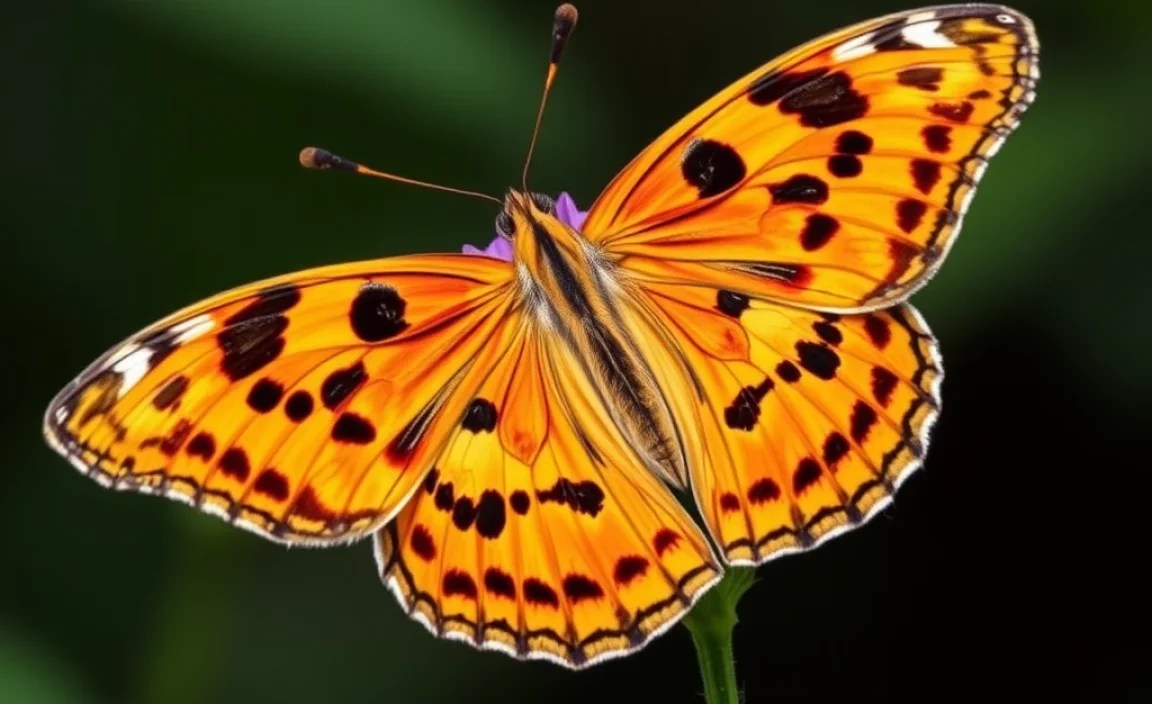
The Great Spangled Fritillary butterfly is a large, striking butterfly known for its bright orange wings adorned with bold black markings.
Found across North America, these butterflies are often seen fluttering through meadows and gardens, adding a splash of vibrant color. Their caterpillars feed on violet plants, making them an important part of the local ecosystem.
Have you ever been captivated by a flash of orange as a large butterfly dances through your garden? Chances are, you’ve spotted a Great Spangled Fritillary! These beauties are common across North America, but identifying them can sometimes be tricky.
You might wonder about their favorite plants, how to attract them to your yard, or even what those striking patterns on their wings mean. Don’t worry; understanding these butterflies is easier than you think.
In this guide, we’ll explore everything you need to know about the Great Spangled Fritillary. We’ll cover their life cycle, habitat, and fascinating behaviors, helping you become a true butterfly enthusiast. Get ready to discover the secrets of these magnificent creatures and learn how you can help protect them!
What is a Great Spangled Fritillary Butterfly?
The Great Spangled Fritillary (Speyeria cybele) is one of the larger and more recognizable fritillary butterflies in North America. Belonging to the Nymphalidae family, it’s celebrated for its vibrant orange wings marked with distinctive black spots and lines. Let’s dive deeper into what makes this butterfly so special.
Appearance and Identification
Identifying a Great Spangled Fritillary involves looking at several key features:
- Size: With a wingspan of 2.5 to 4 inches, it’s one of the larger fritillary species.
- Color: The upper side of the wings is a bright, rich orange with bold black spots and lines.
- Underside: The underside of the hindwings has distinctive silver spots, giving the “spangled” appearance.
- Sexual Dimorphism: Females are generally darker than males and may have a greenish tint on the underside of their hindwings.
Here’s a table summarizing the key identification features:
| Feature | Description |
|---|---|
| Wingspan | 2.5 – 4 inches |
| Upper Wing Color | Bright orange with black spots and lines |
| Underside Hindwing | Silver spots (spangled appearance) |
| Female Appearance | Darker, sometimes greenish tint on hindwings |
Habitat and Distribution
Great Spangled Fritillaries are widespread across North America. They thrive in open, sunny habitats such as:
- Meadows: Open fields with plenty of wildflowers.
- Prairies: Grasslands that support a variety of violet species.
- Gardens: Especially those with host plants and nectar sources.
- Woodland edges: Areas where forests meet open spaces.
They are commonly found from southern Canada through most of the United States, excluding the desert southwest. Their adaptability allows them to flourish in various environments, as long as their host plants (violets) are present.
Life Cycle
Understanding the life cycle of the Great Spangled Fritillary can deepen your appreciation for these insects:
- Eggs: Females lay their eggs near violet plants in late summer or early fall. The eggs overwinter and hatch in the spring.
- Larva (Caterpillar): The caterpillars feed exclusively on violet leaves. They are dark in color with spines, helping them blend in with their surroundings.
- Pupa (Chrysalis): After several weeks of feeding, the caterpillar forms a chrysalis, usually attached to a violet stem or nearby plant.
- Adult Butterfly: The adult butterfly emerges from the chrysalis after about two weeks. Adults feed on nectar from various flowers, mate, and the cycle begins again.
Attracting Great Spangled Fritillaries to Your Garden

Want to see more of these beautiful butterflies in your backyard? Here’s how you can create a butterfly-friendly habitat:
Planting Host Plants
The most crucial step is providing host plants for the caterpillars. Great Spangled Fritillary caterpillars feed exclusively on violets. Consider planting these violet species:
- Common Blue Violet (Viola sororia): A widespread and easily grown violet.
- Bird’s Foot Violet (Viola pedata): Prefers well-drained, sandy soil.
- Canada Violet (Viola canadensis): Thrives in moist, shaded areas.
Planting a variety of violets ensures a continuous food source for the caterpillars throughout their development.
Providing Nectar Sources
Adult butterflies need nectar for energy. Plant a variety of nectar-rich flowers that bloom throughout the butterfly season:
- Butterfly Bush (Buddleja davidii): A classic butterfly magnet.
- Coneflowers (Echinacea): Provide nectar and seeds for birds.
- Milkweed (Asclepias): Essential for Monarch butterflies and also attracts fritillaries.
- Zinnias (Zinnia elegans): Easy to grow and come in many colors.
- Joe-Pye Weed (Eutrochium purpureum): A native plant that attracts many pollinators.
Aim for a mix of colors and flower shapes to attract a wide variety of butterflies and other pollinators.
Creating a Butterfly-Friendly Environment
Beyond host and nectar plants, consider these additional factors:
- Sunlight: Butterflies need sunny spots to warm their wings.
- Shelter: Provide shrubs and trees for shelter from wind and predators.
- Water Source: A shallow dish of water with pebbles allows butterflies to drink safely.
- Avoid Pesticides: Pesticides can harm or kill butterflies and other beneficial insects.
By creating a welcoming environment, you’ll significantly increase your chances of attracting Great Spangled Fritillaries.
Behavior and Ecology
Understanding the behavior and ecology of the Great Spangled Fritillary can give you a deeper appreciation for its role in the environment.
Flight Patterns and Mating
Great Spangled Fritillaries are strong fliers, often seen soaring through meadows and gardens. Their flight pattern is characterized by rapid wing beats interspersed with gliding.
Mating behavior is fascinating:
- Courtship: Males actively search for females, often engaging in aerial displays.
- Pheromones: Males use pheromones to attract females.
- Mating: Once a female is receptive, the pair will mate, often remaining connected for several hours.
Mating typically occurs in mid-summer, ensuring that females have enough time to lay their eggs before winter.
Diet and Feeding Habits
Adult Great Spangled Fritillaries primarily feed on nectar from flowers. They have a long proboscis (a straw-like tongue) that they use to extract nectar from deep within flower blossoms. Favorite nectar sources include:
- Milkweed
- Thistle
- Butterfly Bush
- Coneflowers
Caterpillars, on the other hand, have a much more limited diet, feeding exclusively on the leaves of violet plants.
Ecological Role
Great Spangled Fritillaries play several important roles in the ecosystem:
- Pollination: As they feed on nectar, they transfer pollen from flower to flower, aiding in plant reproduction.
- Food Source: They serve as a food source for birds, spiders, and other predators.
- Indicator Species: Their presence or absence can indicate the health of the local environment.
By supporting these butterflies, you’re also supporting a healthy and balanced ecosystem.
Threats and Conservation

Like many butterfly species, Great Spangled Fritillaries face several threats:
Habitat Loss
One of the most significant threats is habitat loss due to:
- Urban Development: Conversion of natural habitats into housing and commercial areas.
- Agriculture: Clearing land for farming and livestock grazing.
- Forestry Practices: Unsustainable logging practices that destroy butterfly habitats.
Protecting and restoring natural habitats is crucial for the survival of these butterflies.
Pesticide Use
Pesticides, especially broad-spectrum insecticides, can have devastating effects on butterfly populations. These chemicals can:
- Directly Kill Butterflies: Contact with pesticides can be lethal.
- Contaminate Host Plants: Pesticides on violet leaves can poison caterpillars.
- Reduce Nectar Sources: Killing flowering plants reduces food for adult butterflies.
Opt for organic gardening practices and avoid using pesticides to protect butterflies and other beneficial insects.
Climate Change
Climate change can disrupt butterfly life cycles and habitats:
- Altered Plant Growth: Changes in temperature and rainfall can affect the availability of host plants and nectar sources.
- Range Shifts: Butterflies may need to move to new areas as their current habitats become unsuitable.
- Extreme Weather Events: Severe storms and droughts can decimate butterfly populations.
Supporting efforts to mitigate climate change is essential for the long-term survival of Great Spangled Fritillaries and other species.
Conservation Efforts
Several conservation efforts can help protect Great Spangled Fritillaries:
- Habitat Restoration: Restoring meadows and prairies with native plants.
- Creating Butterfly Gardens: Encouraging homeowners to create butterfly-friendly habitats.
- Reducing Pesticide Use: Promoting organic gardening and sustainable agriculture.
- Education and Outreach: Raising awareness about the importance of butterflies and their conservation.
Organizations like the Xerces Society are actively involved in butterfly conservation. You can support their work through donations, volunteering, or by implementing conservation practices in your own backyard.
Great Spangled Fritillary vs. Other Fritillaries

Identifying fritillary butterflies can be challenging because many species look similar. Here’s a comparison to help you distinguish the Great Spangled Fritillary from other common fritillaries:
| Feature | Great Spangled Fritillary (Speyeria cybele) | Aphrodite Fritillary (Speyeria aphrodite) | Atlantis Fritillary (Speyeria atlantis) |
|---|---|---|---|
| Wingspan | 2.5 – 4 inches | 2 – 3 inches | 1.75 – 2.75 inches |
| Upper Wing Color | Bright orange with bold black markings | Orange with less distinct black markings | Orange-brown with less distinct markings |
| Underside Hindwing | Large, distinct silver spots | Smaller, less distinct silver spots; may have reddish-brown patches | Small, rounded silver spots; may have a purple hue |
| Habitat | Open meadows, gardens, woodland edges | Dry open fields, meadows, roadsides | Moist meadows, forests, higher elevations |
| Distribution | Southern Canada, most of US (except desert southwest) | Eastern and Midwestern US, southern Canada | Northern US, Canada, higher elevations in the West |
By paying attention to these details, you can confidently identify the Great Spangled Fritillary and appreciate its unique characteristics.
Symbolism and Cultural Significance
Butterflies, in general, hold deep symbolic meanings across various cultures. The Great Spangled Fritillary, with its vibrant colors and graceful flight, is no exception.
Transformation and Rebirth
The butterfly’s life cycle, from egg to caterpillar to chrysalis to adult, is a powerful symbol of transformation and rebirth. This symbolism is often associated with:
- Personal Growth: Overcoming challenges and evolving into a better version of oneself.
- Spiritual Awakening: A journey of self-discovery and enlightenment.
- New Beginnings: Leaving the past behind and embracing new opportunities.
Seeing a Great Spangled Fritillary can be a reminder of the potential for positive change in your own life.
Joy and Beauty
The bright orange wings and graceful flight of the Great Spangled Fritillary evoke feelings of joy and beauty. Butterflies are often seen as symbols of:
- Happiness: A reminder to appreciate the simple pleasures in life.
- Creativity: Inspiring artistic expression and innovation.
- Freedom: Representing a carefree spirit and the ability to explore new horizons.
Their presence in a garden or meadow can bring a sense of wonder and delight.
Connection to Nature
As a pollinator and an integral part of the ecosystem, the Great Spangled Fritillary symbolizes our connection to nature. It reminds us of the importance of:
- Environmental Stewardship: Protecting and preserving natural habitats.
- Harmony: Living in balance with the natural world.
- Interdependence: Recognizing the interconnectedness of all living things.
By supporting these butterflies, we are also supporting a healthier planet for future generations.
FAQ About Great Spangled Fritillaries
What do Great Spangled Fritillary caterpillars eat?
Great Spangled Fritillary caterpillars exclusively feed on the leaves of violet plants. They need violets to survive and grow into healthy butterflies.
How can I tell the difference between male and female Great Spangled Fritillaries?
Females are generally darker than males and may have a greenish tint on the underside of their hindwings. Males tend to be brighter orange without the greenish tint.
What is the lifespan of a Great Spangled Fritillary?
Adult Great Spangled Fritillaries typically live for about two to four weeks. The entire life cycle, from egg to adult, takes about a year, with most of that time spent as a caterpillar or pupa.
Are Great Spangled Fritillaries migratory?
No, Great Spangled Fritillaries are not migratory. They overwinter as eggs and emerge as caterpillars in the spring. The adult butterflies stay within their local habitat.
How can I attract Great Spangled Fritillaries to my garden?
Plant violets for the caterpillars and nectar-rich flowers like butterfly bush, coneflowers, and milkweed for the adults. Provide a sunny spot, shelter, and a shallow dish of water. Avoid using pesticides.
What is the best time of year to see Great Spangled Fritillaries?
The best time to see adult Great Spangled Fritillaries is typically from late June to September, depending on the region. This is when they are most active and visible in their habitats.
Are Great Spangled Fritillaries endangered?
Great Spangled Fritillaries are not currently listed as endangered, but their populations are threatened by habitat loss, pesticide use, and climate change. Supporting conservation efforts can help protect them.
Conclusion
The Great Spangled Fritillary is more than just a beautiful butterfly; it’s a vital part of our ecosystem and a symbol of transformation, joy, and our connection to nature. By understanding their life cycle, habitat needs, and the threats they face, we can all play a role in their conservation. Whether you’re planting violets in your garden, reducing pesticide use, or supporting conservation organizations, every effort counts.
So, the next time you see a flash of orange in your garden, take a moment to appreciate the Great Spangled Fritillary. Observe its graceful flight, admire its intricate wing patterns, and remember the importance of protecting these magnificent creatures for generations to come. Let’s continue to learn, educate, and inspire others to create a world where butterflies thrive!


