
Species Identification in Wetland: A Powerful Guide

Wetlands are cool places. They are full of plants and animals. Have you ever wondered what lives there? Figuring it out is called species identification in wetland areas. It helps us learn about nature. It also helps us protect these special places.
Why is it important to know what lives in a wetland? Imagine a puzzle. Each plant and animal is a piece. Knowing all the pieces helps us see the whole picture. Then we can keep the wetland healthy.
Sometimes, identifying species in wetlands can be tricky. Some plants and animals look very similar. But don’t worry! There are tools and tricks to help us. Let’s explore how we can become wetland detectives!
Key Takeaways
- Species identification in wetland areas is key for understanding and protecting these habitats.
- Using field guides helps to identify plants and animals by their unique features.
- Careful observation of tracks, sounds, and behaviors aids in species identification.
- Technology like apps and cameras can assist in recording and identifying species.
- Learning about wetland species helps us appreciate and conserve these ecosystems.
Why Species Identification in Wetland Matters

Species identification in wetland areas is super important. Wetlands are like giant sponges. They hold water and help stop floods. They also clean the water. Many animals and plants live in wetlands. Knowing what lives there helps us protect them. When we know what species are in a wetland, we can tell if it is healthy. If there are fewer animals or plants, it could mean the wetland is in trouble. Maybe the water is dirty. Or maybe something else is wrong. By identifying the species, scientists can find out what is happening. They can then work to fix the problem. This helps keep the wetland healthy for everyone. It also helps keep the plants and animals safe. Understanding the types of species in a wetland helps us understand the whole world better.
- Wetlands help clean our water.
- They also give homes to many creatures.
- Species identification shows if a wetland is healthy.
- Knowing the plants helps us understand food chains.
- Animals can tell us if the water is clean or dirty.
Imagine a classroom without a teacher. Things might get a little chaotic, right? Wetland species are like the teachers of their environment. Each one plays a role in keeping things balanced. Some animals eat plants, others eat other animals. Plants make food for everyone. When we identify these species, we learn about their roles. We see how they help each other. This knowledge helps us make smart choices. We can protect the wetland’s delicate balance. If we don’t know what’s there, we might accidentally hurt the ecosystem. So, species identification helps us be good stewards of these important places. We can make sure they stay healthy and vibrant for a long time.
What are the benefits of species identification?
Have you ever wondered why some birds sing different songs? Or why some frogs are different colors? These are clues that help us identify them! Species identification has many benefits. It helps scientists study how animals and plants live. It helps them understand how they interact with each other. This knowledge is important for protecting wetlands. It helps us know which species are in danger. We can then work to save them. Identifying species also helps us understand how the environment is changing. For example, if some plants start to disappear, it could mean the climate is changing. By keeping track of the species in a wetland, we can learn a lot about the world around us. This knowledge helps us make good decisions about how to take care of our planet.
How can species identification help protect wetlands?
Imagine you are a doctor. A patient comes to you feeling sick. What’s the first thing you do? You try to figure out what’s wrong! Species identification is like being a doctor for a wetland. When we identify the species, we can see if the wetland is healthy. If some species are missing or sick, it tells us something is wrong. Maybe the water is polluted. Maybe there isn’t enough food. Knowing this helps us take action. We can clean up the water. We can protect the plants and animals. This helps the wetland recover. So, species identification is a key step in protecting these important ecosystems. It helps us keep them healthy for all the creatures that live there.
What tools are used for species identification?
Think about a detective solving a mystery. They use tools like magnifying glasses and notebooks. Scientists use tools too! For species identification, they use things like field guides. These are books with pictures and descriptions of plants and animals. Scientists also use binoculars to see animals from far away. They might use nets to catch insects or frogs. Sometimes, they use special equipment to test the water. All these tools help them gather clues. The clues help them identify the species living in the wetland. With the right tools, anyone can become a wetland detective!
Fun Fact or Stat: Did you know that some wetlands are home to more than half of the world’s plant and animal species?
Field Guides for Wetland Species Identification

Field guides are like treasure maps for nature! They help us find and identify species in wetland areas. These books have pictures and descriptions of plants and animals. They tell us where they live and what they look like. Field guides are very useful for beginners. They make species identification easier. You can learn to tell the difference between different types of frogs. Or you can learn to recognize different wetland plants. Some field guides even have recordings of bird songs. This helps you identify birds by what they sound like. Using a field guide is like having an expert with you. It helps you learn about the amazing creatures that live in wetlands. It helps you become a better observer of nature.
- Field guides have pictures of plants and animals.
- They describe what each species looks like.
- Some guides include information about habitats.
- Bird song recordings help with identification.
- Field guides are great for learning about nature.
Imagine you are going on a scavenger hunt. You need a list of things to find. A field guide is like that list. It tells you what to look for when identifying wetland species. It helps you notice important details. For example, you might see a bird with a bright red beak. The field guide can tell you what kind of bird it is. Or you might see a plant with purple flowers. The field guide can tell you its name. Field guides also help you learn about the animal’s or plant’s behavior. Do they like to hide? Do they like to eat insects? All these details help you understand the species better. So, next time you visit a wetland, bring a field guide. It will make your adventure even more exciting! You’ll be amazed at what you can discover.
How do field guides help with species identification?
Have you ever tried to describe something you’ve never seen before? It can be hard! Field guides give us the words to describe plants and animals. They help us notice the important features. This makes species identification much easier. A field guide is like a translator. It helps us understand the language of nature. It tells us what to look for. It helps us match what we see to a known species. With a field guide, we can learn the names of the creatures around us. We can also learn about their lives. This makes our time in nature more meaningful and fun.
What features are included in field guides?
Think of a field guide as a super-detailed profile of a plant or animal. It includes lots of information! There are pictures, of course. These help you see what the species looks like. There are also descriptions of its size, color, and shape. The field guide tells you where the species lives. It tells you what it eats. It might even tell you how it behaves. Some field guides have maps. These show you where the species is commonly found. All these features work together. They help you identify species accurately and easily.
Are there different field guides for different areas?
Imagine trying to find a polar bear in the desert! It wouldn’t work, would it? Just like that, different places have different field guides. A field guide for a wetland in Florida will be different from one in Alaska. That’s because the plants and animals are different in each place. So, when you choose a field guide, make sure it’s for the right area. This will help you identify species correctly. It will also help you learn about the unique wildlife in that specific place.
Fun Fact or Stat: The first field guides were created in the 19th century to help people learn about birds!
Observing Tracks and Signs for Wetland Species Identification

Imagine you are a detective. You are trying to solve a mystery in a wetland. The plants and animals don’t talk, but they leave clues! Tracks are like footprints. They show where an animal has walked. Droppings are like messages. They can tell you what an animal eats. Scratches on trees can show you where an animal lives. All these clues help you identify species in wetland areas. By learning to read these signs, you can discover the secrets of the wetland. You can learn about the animals that live there, even if you don’t see them. Observing tracks and signs is like learning a new language. It helps you understand the world around you.
| Sign | What it Tells You |
|---|---|
| Tracks | The type of animal and where it went. |
| Droppings | What the animal ate and its size. |
| Nests | Where animals live and raise their young. |
| Chew Marks | What animals eat and how big they are. |
- Tracks show animal footprints in the mud.
- Droppings can help identify what animals eat.
- Nests show where animals make their homes.
- Chew marks on plants tell what animals are eating.
- Scratch marks on trees can show where animals live.
Have you ever seen muddy footprints after a rain? Those are tracks! In a wetland, tracks can tell you a lot. Big tracks might mean a deer. Small tracks might mean a raccoon. You can even tell which way the animal was going! Droppings are another important sign. Different animals have different droppings. Some are round, some are long, and some are even colorful! By looking closely, you can learn which animal left them. Nests are also good clues. Bird nests are usually in trees or bushes. But some animals build nests on the ground. By observing these signs, you can start to identify wetland species. It’s like putting together a puzzle. Each clue helps you solve the mystery!
How do tracks help identify animals?
Think about your own footprints. They’re different from your friend’s footprints, right? Animal tracks are the same! Each animal has a unique track. The size, shape, and number of toes can tell you what animal made it. For example, a bird track has three toes pointing forward and one pointing backward. A deer track looks like two pointy hearts. By learning to recognize different tracks, you can become a master animal tracker. You’ll be able to identify species even when you don’t see them!
What can droppings tell you about wetland species?
Okay, this might sound a little gross, but droppings are full of information! They can tell you what an animal eats. For example, if you see droppings with seeds in them, you know the animal eats seeds. They can also tell you how big the animal is. Bigger animals usually have bigger droppings. Sometimes, droppings can even tell you if an animal is sick. So, even though they’re not pretty, droppings are a valuable tool for species identification.
How can you tell the difference between different animal nests?
Imagine building your own house. You would probably build it differently than your friend, right? Animals do the same thing! Different animals build different kinds of nests. Bird nests are often made of twigs and leaves. Squirrel nests are usually in tree holes. Muskrat nests are made of plants and mud. By learning to recognize different nests, you can learn about the animals that live in the wetland. You can also learn about their habits and behaviors. This is all part of species identification!
Fun Fact or Stat: Some animals, like beavers, build dams that create wetlands!
Listening for Sounds in Wetland Species Identification
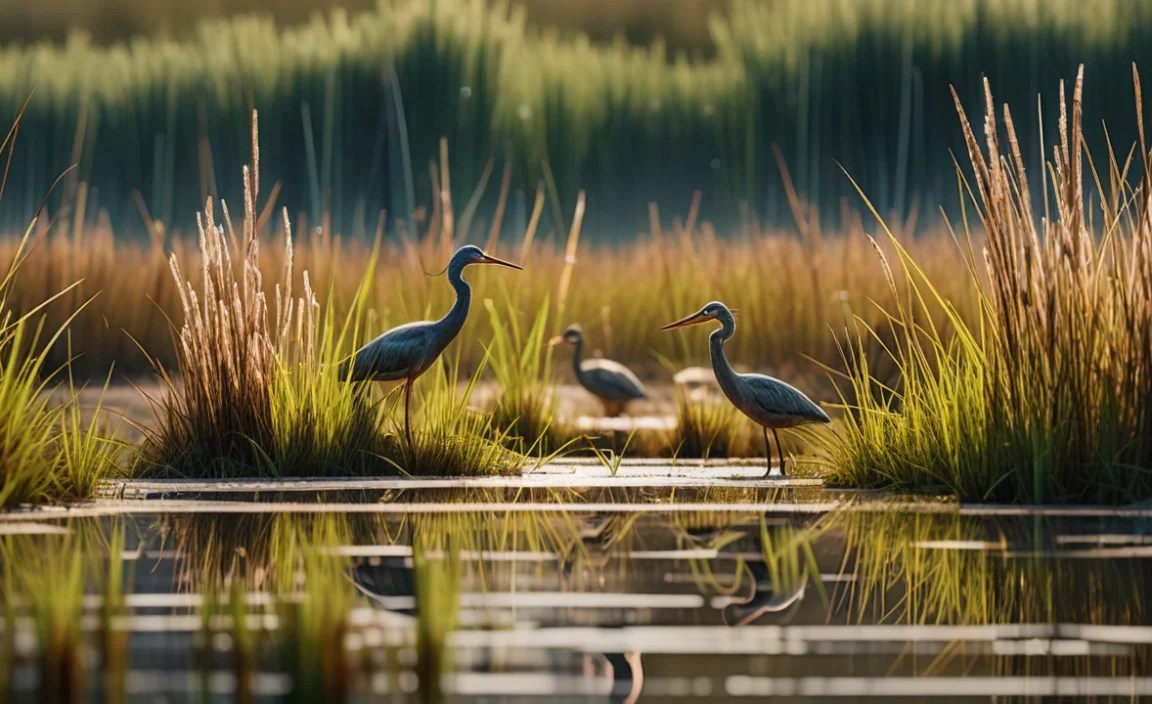
Close your eyes for a moment. What do you hear? Maybe you hear birds singing or frogs croaking. Wetlands are full of sounds! Each animal has its own unique call or song. Learning to recognize these sounds can help you identify species in wetland areas. It’s like learning a new language. You can learn to understand what the animals are saying. Some sounds are loud, like a frog’s croak. Some are soft, like a bird’s chirp. By listening carefully, you can discover a whole world of sounds. This can help you find animals that are hiding. It can also help you understand their behavior. Are they calling to find a mate? Are they warning others of danger? Listening for sounds is a fun and easy way to learn about wetland species.
- Frogs make different croaking sounds.
- Birds have unique songs and calls.
- Insects chirp and buzz in the wetland.
- Some animals make warning calls.
- Listening helps find hidden animals.
Imagine you are walking through a wetland. You hear a “ribbit” sound. That’s probably a frog! But what kind of frog? Different frogs make different sounds. Some make a deep “croak,” while others make a high-pitched “peep.” You can use a field guide to help you identify the frog by its sound. Birds are another great example. Each bird species has its own unique song. Some birds sing beautiful melodies. Others make simple chirps or tweets. By listening carefully, you can learn to tell the difference between them. You can even find online resources that play bird songs. This can help you practice identifying wetland species by ear. It’s a fun and rewarding way to connect with nature.
How can you learn to recognize different animal sounds?
Think of learning animal sounds like learning a new song. You need to practice! Start by listening to recordings of different animal sounds. There are many websites and apps that can help. Pay attention to the different pitches, tones, and rhythms. Try to imitate the sounds yourself. This can help you remember them better. When you’re in a wetland, listen carefully to the sounds around you. Try to match the sounds you hear to the recordings you’ve studied. With practice, you’ll become a master of wetland sounds. You’ll be able to identify species just by listening!
What are some common wetland sounds?
Wetlands are full of interesting sounds! You might hear the “croak” of a frog, the “chirp” of a cricket, or the “buzz” of a mosquito. Birds make a variety of sounds, from the “tweet” of a sparrow to the “honk” of a goose. You might also hear the rustling of leaves as animals move through the undergrowth. By learning to recognize these common sounds, you’ll be able to get a better sense of what’s happening in the wetland. You’ll also be better able to identify species that you might not see.
Why is listening important for species identification?
Imagine trying to find a hidden treasure. You wouldn’t just look with your eyes, would you? You would listen for clues too! Listening is just as important as seeing when it comes to species identification. Many animals are shy and hide in the vegetation. You might not see them, but you can still hear them! By listening to their calls and songs, you can learn about their presence. You can also learn about their behavior. Are they calling to attract a mate? Are they warning others of danger? Listening gives you a whole new way to experience the wetland and understand the lives of its inhabitants.
Fun Fact or Stat: Some frogs can be identified by their unique calls, even from miles away!
Using Technology for Wetland Species Identification
Technology can be a big help when identifying species in wetland areas. There are apps that can identify plants and animals from photos. You can take a picture of a leaf and the app will tell you what kind of plant it is. Some apps even let you record animal sounds. Then, the app will tell you what animal made the sound. Cameras are also useful. You can take pictures of tracks or signs. Then, you can use the pictures to identify the animal later. GPS devices can help you mark where you saw different species. This helps scientists keep track of what lives in the wetland. Technology makes species identification easier and more fun! It also helps us learn more about the amazing creatures that live in wetlands.
- Apps identify plants and animals from photos.
- Cameras take pictures of tracks and signs.
- GPS devices mark locations of species.
- Sound recorders capture animal calls.
- Technology makes identification easier.
Imagine you are on a nature walk. You see a strange plant, but you don’t know what it is. No problem! Just take a picture with your phone and use a plant identification app. The app will compare your picture to thousands of other pictures. It will tell you the name of the plant in seconds! Or imagine you hear a bird singing. You can record the song with your phone and use a bird identification app. The app will analyze the song and tell you what kind of bird it is. Technology is like having a super-smart nature expert in your pocket! It can help you identify wetland species quickly and accurately. It can also help you learn more about the natural world.
What are some useful apps for species identification?
There are many great apps that can help you identify species! One popular app is iNaturalist. You can take a picture of a plant or animal and upload it to the app. Other users will help you identify it. Another useful app is Merlin Bird ID. It can identify birds from their songs or from photos. There are also apps that focus on specific types of plants or animals. For example, there are apps for identifying mushrooms, insects, and trees. These apps are like having a field guide in your pocket. They make it easy to learn about the natural world.
How can cameras help with species identification?
Think of a camera as your extra pair of eyes. It can capture details that you might miss. You can use a camera to take pictures of tracks, droppings, or nests. Then, you can study the pictures later to identify the species. Cameras are also useful for taking pictures of animals that are far away or hard to see. You can zoom in on the picture to get a better look. Some cameras even have built-in GPS. This allows you to record the exact location where you took the picture. This information can be very helpful for scientists who are studying wetland species.
How do GPS devices help with species identification?
Imagine you are a scientist studying a rare plant in a wetland. You want to keep track of where the plant is growing. A GPS device can help you do that! You can use the GPS to record the exact location of the plant. Then, you can come back later to check on it. GPS devices can also be used to map the distribution of different species in the wetland. This information can help scientists understand how the species are interacting with each other and with their environment. GPS is a valuable tool for species identification and conservation.
Fun Fact or Stat: Some scientists use drones to take aerial photos of wetlands and identify species from above!
Challenges in Wetland Species Identification
Sometimes, species identification in wetland areas can be tricky. Some plants and animals look very similar. It can be hard to tell them apart. Also, some species are very small or hide very well. It can be hard to find them. Weather can also make it difficult. Rain or fog can make it hard to see. Mud can make it hard to walk. Despite these challenges, it is still important to try to identify wetland species. The more we know about these ecosystems, the better we can protect them. With patience and practice, anyone can become a skilled wetland detective!
- Some species look very similar.
- Small animals hide well.
- Weather makes it hard to see.
- Mud can make it hard to walk.
- Species identification takes practice.
Imagine you are trying to find a specific grain of sand on a beach. It would be very difficult, right? Identifying wetland species can sometimes feel like that. Some plants and animals are very small. They blend in with their surroundings. Others are only active at night. This makes them hard to see during the day. Weather can also play a role. Heavy rain can wash away tracks. Fog can make it hard to see. Despite these challenges, there are things you can do to improve your chances of success. Be patient. Take your time. Look closely. Use a field guide. And don’t be afraid to ask for help from experts. With persistence, you can overcome these challenges and learn to identify wetland species with confidence.
Why is it hard to tell some species apart?
Think about twins. They often look very similar! Some plant and animal species are like that too. They have evolved to look alike. This can help them blend in with their environment. It can also help them avoid predators. For example, some insects mimic the appearance of leaves or twigs. This makes it hard for birds to see them. Other species have similar colors or patterns. This can make it hard to tell them apart at a glance. To identify these species, you need to look closely at their subtle differences. You might need to examine their leaves, stems, or flowers. You might need to listen carefully to their songs or calls.
How does size affect species identification?
Imagine trying to find a tiny ant in a field of grass. It would be very difficult, right? Size is a big factor in species identification. Small species are harder to see. They are also harder to study. They might require special equipment, like magnifying glasses or microscopes. Large species, on the other hand, are easier to spot. But they might be more wary of humans. This can make it difficult to get close enough to identify them. Regardless of size, it’s important to be respectful of all species and their habitats.
How does weather impact species identification?
Think about trying to read a book in the rain. It would be hard, right? Weather can have a big impact on species identification. Rain can wash away tracks and droppings. Fog can make it hard to see. Wind can make it hard to hear animal sounds. Extreme temperatures can also affect animal behavior. They might be less active during hot or cold weather. To overcome these challenges, it’s important to be prepared for different weather conditions. Dress appropriately. Bring rain gear. And be patient. Sometimes, you just have to wait for the weather to clear up before you can identify species.
Fun Fact or Stat: Some wetlands are covered in ice and snow for part of the year, making species identification even harder!
Conservation and Wetland Species Identification
Species identification in wetland areas is important for conservation. When we know what species live in a wetland, we can protect them. We can make sure they have enough food and shelter. We can also protect their habitat from pollution and development. If we don’t know what species are there, we can’t protect them effectively. Identifying species helps us understand the health of the wetland. If some species are disappearing, it could be a sign that the wetland is in trouble. By monitoring the species, we can take action to protect the wetland before it’s too late. Conservation and species identification go hand in hand. They are both essential for protecting these important ecosystems.
- Species identification helps protect wetlands.
- Knowing species helps conserve habitats.
- Monitoring species shows wetland health.
- Conservation protects species from harm.
- We can help wetlands by learning about species.
Imagine a wetland is like a house. The plants and animals are like the people who live in the house. If the house is damaged, the people will suffer. If the wetland is polluted, the plants and animals will suffer. Species identification helps us see if the “house” is healthy. If there are fewer “people” living there, it could mean the “house” needs repairs. Conservation is like fixing the house. It involves cleaning up the pollution, protecting the habitat, and making sure the plants and animals have what they need. By working together, we can protect these important ecosystems for future generations. We can ensure that wetlands continue to thrive and provide homes for a diverse array of species.
How does species identification help with wetland management?
Think of a wetland manager as a doctor for a wetland. The first thing a doctor does is diagnose the problem. Species identification is like a diagnosis for a wetland. It helps the manager understand what’s happening in the ecosystem. Are there too many of some species? Are there too few of others? Are there any invasive species that are causing problems? By knowing what species are present, the manager can make informed decisions about how to manage the wetland. They can take steps to protect endangered species, control invasive species, and restore damaged habitats.
What are some threats to wetland species?
Imagine a wetland being squeezed between two buildings. That’s what development can do! Development is one of the biggest threats to wetland species. It destroys their habitat and pollutes their water. Other threats include pollution, climate change, and invasive species. Pollution can come from many sources, such as factories, farms, and sewage treatment plants. Climate change can cause sea levels to rise, which can flood coastal wetlands. Invasive species can outcompete native species for food and habitat. To protect wetland species, we need to address these threats.
How can we help protect wetland species?
Think about what you can do to help your local park. You can pick up trash, plant trees, and educate others about the importance of nature. You can do the same for wetlands! You can support organizations that are working to protect wetlands. You can reduce your use of pollutants, such as pesticides and fertilizers. You can also learn more about wetland species and share your knowledge with others. By working together, we can make a difference in protecting these important ecosystems.
Fun Fact or Stat: Many wetland species are endangered or threatened due to habitat loss and pollution!
Summary
Species identification in wetland areas is a very important skill. It helps us understand what plants and animals live in these special places. We can use field guides to identify species by their looks. We can also look for tracks and signs. Listening to animal sounds is another way to identify them. Today, we also use technology like apps and cameras. However, there are challenges. Some species look alike. Some are small and hide well. Weather can also make it hard. But with practice, we can become better at identifying species in wetland areas.
Knowing what species live in wetlands helps us protect them. When we know what animals and plants are there, we can make sure they have what they need. We can also protect them from threats like pollution and habitat loss. Species identification is key to wetland conservation. By learning about these amazing ecosystems, we can help keep them healthy for years to come.
Conclusion
Learning about species identification in wetland areas is fun. It helps us become better observers of nature. Wetlands are important habitats. They support a wide variety of plants and animals. By identifying these species, we can understand their roles. We can also protect them from harm. So next time you visit a wetland, take a closer look. See what you can discover!
Frequently Asked Questions
Question No 1: What is a wetland?
Answer: A wetland is a special kind of place where the land is covered by water for at least part of the year. Think of it like a mix between land and water! Wetlands can be found in many different places, from coastal areas to inland areas. They are home to a wide variety of plants and animals. Some common types of wetlands include swamps, marshes, and bogs. Wetlands play an important role in the environment. They help clean the water, prevent floods, and provide habitat for wildlife. Protecting wetlands is important for the health of our planet. Understanding species identification in wetland areas is the first step!
Question No 2: Why is species identification important?
Answer: Species identification is like figuring out who’s who in a neighborhood. Imagine you’re trying to help your community. You’d need to know who lives there, right? It’s the same with wetlands! Knowing what plants and animals live in a wetland helps us understand how it works. Each species plays a role in the ecosystem. Some species eat plants, others eat animals. Some species help clean the water, others help pollinate flowers. By identifying the species, we can learn about their roles and how they interact with each other. This knowledge is important for protecting the wetland and keeping it healthy. If we don’t know what’s there, we can’t protect it effectively!
Question No 3: What are some common wetland plants?
Answer: Wetlands are home to many different types of plants. Some common wetland plants include cattails, reeds, and sedges. Cattails are tall plants with long, brown flower spikes. Reeds are similar to cattails, but they have feathery flower heads. Sedges are grass-like plants that grow in wet areas. Other common wetland plants include water lilies, duckweed, and mangroves. Each of these plants plays a role in the wetland ecosystem. They provide food and shelter for animals. They also help clean the water and prevent erosion. Learning to identify wetland plants is a great way to learn more about these important ecosystems.
Question No 4: What are some common wetland animals?
Answer: Wetlands are full of amazing animals! Some common wetland animals include frogs, turtles, snakes, and birds. Frogs are amphibians that live in or near water. They eat insects and other small creatures. Turtles are reptiles that have a hard shell. They eat plants and animals. Snakes are reptiles that slither on the ground. They eat rodents, birds, and other small animals. Birds are warm-blooded animals that have feathers and wings. They eat insects, seeds, and fish. Other common wetland animals include muskrats, beavers, and alligators. Each of these animals plays a role in the wetland ecosystem. They help control populations of other species. They also help recycle nutrients and maintain the health of the wetland.
Question No 5: How can I learn more about species identification in wetland areas?
Answer: There are many ways to learn more about species identification in wetland areas! One way is to visit a local wetland and explore. Bring a field guide with you to help you identify the plants and animals you see. You can also take a class or workshop on wetland ecology. These classes will teach you about the different types of wetlands and the species that live there. Another way to learn is to join a local nature club. These clubs often organize field trips to wetlands and other natural areas. You can also find many resources online, such as websites, videos, and apps. With a little effort, you can become a wetland expert!
Question No 6: What can I do to help protect wetlands?
Answer: There are many things you can do to help protect wetlands! One simple thing is to reduce your use of pollutants. Avoid using pesticides and fertilizers in your yard. These chemicals can run off into wetlands and harm the plants and animals that live there. You can also support organizations that are working to protect wetlands. Donate your time or money to these groups. Another way to help is to educate others about the importance of wetlands. Tell your friends and family about the benefits of wetlands and the threats they face. By working together, we can make a difference in protecting these important ecosystems. Understanding species identification in wetland helps us protect those species.


