
Green Butterfly Species: See These Amazing Types!

Quick Summary
Looking for green butterflies? Several stunning species boast vibrant green wings, like the Emerald Swallowtail and the Green Hairstreak. These beauties often blend seamlessly into leafy environments. Attracting them to your garden involves planting host plants like citrus trees (for swallowtails) or bird’s-foot trefoil (for hairstreaks). Watch for caterpillars, avoid pesticides, and enjoy their dazzling presence!
Have you ever caught a flash of emerald green in your garden and wondered if it was a fairy? More likely, it was one of the world’s beautiful green butterflies! Identifying these winged jewels can sometimes feel tricky, but don’t worry. This guide will walk you through some common green butterfly species, how to spot them, and how to create a garden that makes them feel right at home. Get ready to discover the captivating world of green butterflies!
Identifying Green Butterfly Species

Many butterfly species incorporate green into their wing patterns as effective camouflage. Let’s explore some of the most notable ones:
1. Emerald Swallowtail (Papilio palinurus)
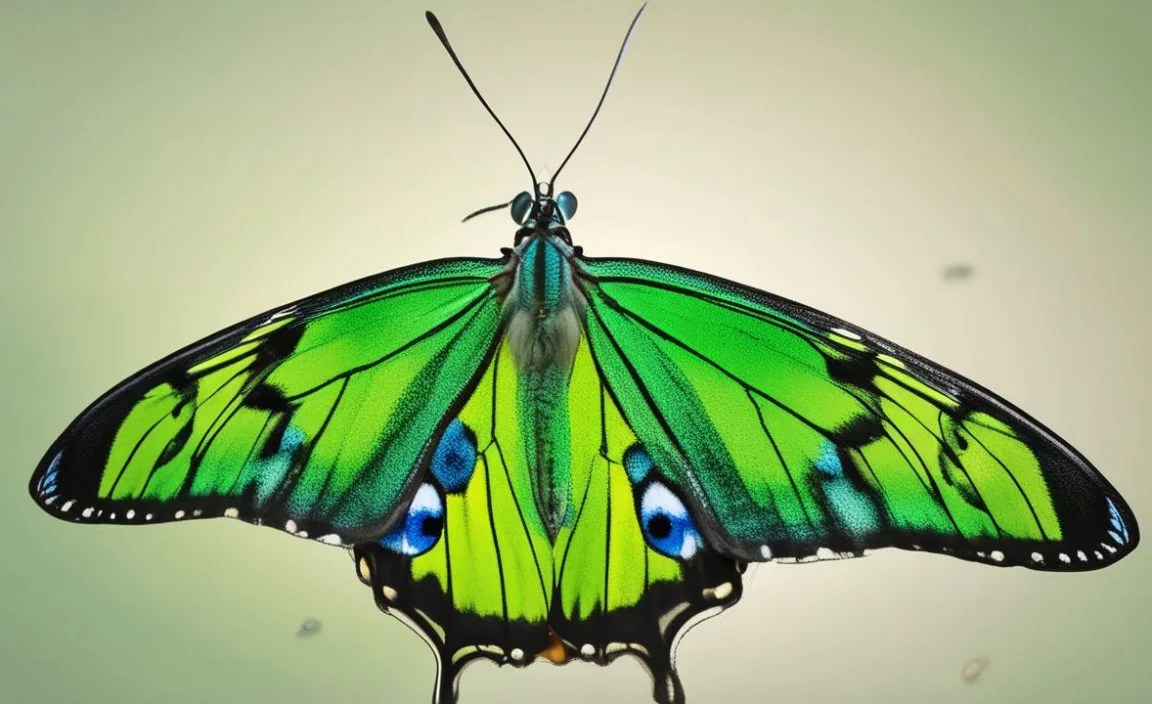
The Emerald Swallowtail is perhaps the most iconic of the green butterflies. Its shimmering green bands make it instantly recognizable.
Identifying Features:
- Wings: Velvety black with iridescent green bands that appear to shimmer in the light. The green is caused by structural coloration, meaning it’s the physical structure of the scales that creates the color, not pigment.
- Size: Medium to large, with a wingspan of 3 to 4 inches (7.5 to 10 cm).
- Habitat: Tropical Southeast Asia, including Malaysia, Indonesia, and the Philippines. Look for them in forests and gardens.
- Flight Pattern: Strong and graceful, often seen gliding between trees.
Life Cycle and Host Plants:
Emerald Swallowtail caterpillars feed on citrus plants, making these trees ideal for attracting the butterflies. Females lay their eggs on the leaves, and the caterpillars go through several instars (growth stages) before pupating.
2. Green Hairstreak (Callophrys rubi)
The Green Hairstreak is a small but striking butterfly found in Europe and parts of Asia.
Identifying Features:
- Wings: The undersides of the wings are a uniform bright green, providing excellent camouflage when resting on leaves. The upper sides are usually brown.
- Size: Small, with a wingspan of about 1 inch (2.5 cm).
- Habitat: Heathland, grasslands, and woodland edges. They prefer areas with plenty of low-growing vegetation.
- Flight Pattern: Quick and erratic, often staying close to the ground.
Life Cycle and Host Plants:
Green Hairstreak caterpillars are less picky than some other species. They feed on a variety of plants, including bird’s-foot trefoil, gorse, and broom. This adaptability helps them thrive in different habitats.
3. Cleopatra Butterfly (Gonepteryx cleopatra)
While not entirely green, the male Cleopatra butterfly has a distinct greenish-yellow hue on its wings, making it a noteworthy mention.
Identifying Features:
- Wings: Males have bright yellow wings with an orange patch on the forewing. The yellow can appear greenish in certain lights. Females are paler yellow or almost white.
- Size: Medium, with a wingspan of about 2 to 2.5 inches (5 to 6.5 cm).
- Habitat: Southern Europe and North Africa. They are often found in woodland and scrub areas.
- Flight Pattern: Strong and fast, capable of long-distance flights.
Life Cycle and Host Plants:
Cleopatra butterfly caterpillars feed on buckthorn (Rhamnus) species. Planting buckthorn can encourage these butterflies to visit your garden.
4. Eastern Tailed-Blue (Cupido comyntas)
While primarily blue, the Eastern Tailed-Blue butterfly often exhibits a greenish sheen, especially in females.
Identifying Features:
- Wings: Males are typically bright blue on the upper side, while females have more brown or gray with blue scaling near the base. The underside has intricate patterns with small tails on the hindwings. A greenish sheen can be noticeable in some individuals.
- Size: Very small, with a wingspan of less than 1 inch (2.5 cm).
- Habitat: Fields, gardens, and open woodlands across eastern North America.
- Flight Pattern: Weak and fluttering, often close to the ground.
Life Cycle and Host Plants:
Eastern Tailed-Blue caterpillars have a broad diet, feeding on various legumes like clover, beans, and peas. This makes them relatively easy to attract to gardens.
5. Various Swallowtail Variations
Several other swallowtail species, while not predominantly green, may display green hues or markings. Examples include certain variations of the Spicebush Swallowtail (Papilio troilus) and the Chinese Yellow Swallowtail (Papilio xuthus) which can exhibit subtle green tones depending on the light and individual variation.
Note: Identifying butterflies can be challenging due to regional variations and similar-looking species. A good field guide specific to your region is invaluable.
Attracting Green Butterflies to Your Garden

Creating a butterfly-friendly garden is easier than you might think! By providing the right food sources and habitat, you can attract these beautiful creatures to your backyard.
1. Plant Host Plants
Host plants are essential for butterfly caterpillars. Research which green butterfly species are native to your area and plant their preferred host plants.
- Emerald Swallowtail: Citrus trees (lemons, limes, oranges)
- Green Hairstreak: Bird’s-foot trefoil, gorse, broom
- Cleopatra Butterfly: Buckthorn
- Eastern Tailed-Blue: Clover, beans, peas
2. Provide Nectar Sources
Adult butterflies need nectar for energy. Plant a variety of flowering plants that bloom at different times of the year to provide a continuous food source.
- Good nectar plants: Butterfly bush (Buddleja davidii), zinnias, coneflowers (Echinacea), lantana, salvia
3. Create a Butterfly-Friendly Habitat
Butterflies need more than just food. They also need shelter, water, and places to bask in the sun.
- Shelter: Plant shrubs and trees to provide protection from wind and predators.
- Water: Create a shallow dish of water with pebbles for butterflies to land on and drink.
- Basking spots: Place flat rocks in sunny areas for butterflies to warm their wings.
4. Avoid Pesticides
Pesticides can harm or kill butterflies and other beneficial insects. Avoid using pesticides in your garden, or choose organic options that are less harmful. Consider using natural pest control methods, such as introducing beneficial insects like ladybugs.
5. Observe and Enjoy
Once you’ve created a butterfly-friendly garden, take time to observe and enjoy the butterflies that visit. Keep a journal to record the species you see and their behavior. This can be a rewarding and educational experience for the whole family.
The Ecological Importance of Butterflies

Butterflies play a crucial role in our ecosystem. Understanding their importance can help us appreciate them even more.
1. Pollination
Like bees, butterflies are important pollinators. As they feed on nectar, they transfer pollen from one flower to another, helping plants reproduce. While bees are generally more efficient pollinators, butterflies can play a significant role, especially for certain plant species. The US Forest Service has more information on this topic.
2. Food Source
Butterflies and their caterpillars are an important food source for birds, reptiles, and other animals. By supporting butterfly populations, we also support the animals that depend on them.
3. Indicators of Environmental Health
Butterflies are sensitive to changes in their environment. Their presence or absence can indicate the health of an ecosystem. Declining butterfly populations can be a warning sign of habitat loss, pollution, or climate change.
Conservation Efforts
Many butterfly species are threatened by habitat loss, climate change, and other factors. There are many things we can do to help protect these beautiful creatures.
1. Support Butterfly Conservation Organizations
Many organizations are working to protect butterflies and their habitats. Consider donating to or volunteering with a butterfly conservation organization.
- The Xerces Society is a leading invertebrate conservation organization.
- The Butterfly Conservation Society focuses on protecting butterflies in the UK.
2. Create Butterfly-Friendly Habitats
Even small actions, like planting a butterfly garden or avoiding pesticides, can make a big difference. Encourage your friends and neighbors to do the same.
3. Educate Others
Spread the word about the importance of butterflies and the threats they face. The more people who care about butterflies, the more likely we are to protect them.
Green Butterflies in Culture and Symbolism

Butterflies, especially those with striking colors like green, often hold significant cultural and symbolic meaning.
1. Symbolism of Transformation and Rebirth
The butterfly’s life cycle, from caterpillar to pupa to winged adult, has long been a symbol of transformation and rebirth. This symbolism is often associated with personal growth, spiritual awakening, and new beginnings.
2. Cultural Significance
In some cultures, butterflies are believed to be messengers from the spirit world. They may represent departed loved ones or spiritual guidance. The color green, often associated with nature, growth, and harmony, further enhances these symbolic meanings when found in butterflies.
3. Artistic Inspiration
Green butterflies have inspired artists and writers for centuries. Their beauty and grace make them a popular subject in paintings, poems, and other works of art. They often represent hope, freedom, and the beauty of the natural world.
Frequently Asked Questions (FAQ)
1. What is structural coloration in butterflies?
Structural coloration refers to the way certain butterfly wings produce color. Instead of pigment, tiny structures on the wing scales bend and reflect light, creating iridescent or metallic effects. This is how the Emerald Swallowtail gets its shimmering green.
2. How can I tell the difference between a male and female butterfly?
Sometimes, it’s tricky! But often, males are brighter and more colorful, while females may be larger or have different wing patterns. For example, male Cleopatra butterflies have bright yellow wings, while females are paler.
3. What do butterfly caterpillars eat?
Caterpillars are picky eaters! They usually only eat specific host plants. Emerald Swallowtail caterpillars love citrus leaves, while Green Hairstreaks munch on bird’s-foot trefoil.
4. How can I protect butterflies from predators?
Provide shelter like shrubs and trees in your garden. This gives butterflies a safe place to hide from birds and other predators. Avoid using pesticides, which can harm or kill butterflies and their caterpillars.
5. What is butterfly puddling?
Puddling is when butterflies gather around puddles or damp soil to drink water and extract minerals. You can create a puddling station in your garden by providing a shallow dish of water with some sand or mud.
6. Are green butterflies rare?
Some green butterfly species are relatively common in their specific habitats, while others may be less frequently seen. Factors like habitat loss and climate change can impact their populations.
7. What should I do if I find a butterfly caterpillar in my garden?
If you find a caterpillar, try to identify its host plant and make sure it has plenty to eat. Avoid moving the caterpillar unless it’s in immediate danger. Watch it grow and transform into a beautiful butterfly!
Conclusion
Exploring the world of green butterflies opens up a fascinating window into nature’s artistry. From the shimmering Emerald Swallowtail to the camouflaged Green Hairstreak, these butterflies showcase the beauty and diversity of the insect world. By understanding their life cycles, habitat needs, and ecological importance, we can take steps to protect them and create butterfly-friendly environments in our own backyards. So, grab your binoculars, plant some host plants, and get ready to witness the enchanting dance of green butterflies in your garden!


