
Glasswing’s Evolutionary Tree: Discover the Secrets!

Quick Summary:
The evolutionary tree of glasswing butterflies (Ithomiini tribe) shows their relationships to other butterfly groups, particularly within the nymphalid family. Glasswings evolved unique transparent wings through natural selection, offering camouflage and predator evasion advantages. Scientists use DNA and physical features to map their evolutionary history and understand how wing transparency developed.
Have you ever seen a butterfly with wings so clear, it’s like looking through glass? These are glasswing butterflies, and their see-through wings are one of nature’s most amazing adaptations. Understanding how they evolved can seem complicated, but it’s like tracing a family tree. We’ll explore the fascinating story of how glasswings developed their unique wings and where they fit in the butterfly world.
In this guide, we’ll break down the evolutionary tree of glasswings. We’ll look at their relatives, the science behind their transparent wings, and how they adapted to their environments. By the end, you’ll have a clear picture of the glasswing’s journey through time!
What is the Evolutionary Tree of Glasswing Butterflies?

The evolutionary tree, also known as a phylogenetic tree, is a diagram that shows how different species are related to each other through common ancestors. For glasswing butterflies, this tree illustrates their connection to other butterfly groups, mainly within the family Nymphalidae, often called brush-footed butterflies.
Understanding this tree involves looking at both physical characteristics and genetic data. Scientists compare the DNA of different butterfly species to see how closely related they are. They also study physical traits, like wing patterns and body structure, to piece together the evolutionary puzzle.
Key Butterfly Families and Superfamilies
Before diving deeper, let’s review some key butterfly families and superfamilies that help frame the glasswing’s place in the world:
- Superfamily Papilionoidea: This group includes all true butterflies.
- Family Nymphalidae: Known as brush-footed butterflies, this large family includes glasswings. They are called brush-footed because their front legs are reduced and used for sensing rather than walking.
- Subfamily Danainae: Includes milkweed butterflies like Monarchs, which are closely related to glasswings.
How Did Glasswing Butterflies Evolve Transparent Wings?

The most striking feature of glasswing butterflies is, of course, their transparent wings. This transparency isn’t just a pretty feature; it’s a result of millions of years of evolution driven by natural selection. Here’s how it happened:
- Natural Selection: Butterflies with slightly clearer wings were better at avoiding predators because they were harder to see. Over generations, these butterflies were more likely to survive and pass on their genes, leading to increasingly transparent wings.
- Nanostructures: The wings of glasswing butterflies have tiny structures called nanostructures. These structures reduce the reflection of light, making the wings appear transparent.
- Reduced Scales: Unlike most butterflies, glasswings have fewer scales on their wings. Scales scatter light, so fewer scales mean more transparency.
The Science Behind Wing Transparency
The transparency in glasswing butterfly wings is a marvel of natural engineering. Here’s a closer look at the science:
- Light Interference: The nanostructures on the wings are arranged in a way that minimizes light reflection and scattering. This allows light to pass through the wings, making them transparent.
- Scale Structure: Regular butterfly wings have many layers of scales that cause light to bounce off in different directions. Glasswings have minimized these layers, reducing the scattering effect.
- Material Composition: The material that makes up the wing membrane also plays a role. It is very thin and uniform, which helps to maintain transparency.
Where Do Glasswing Butterflies Fit on the Evolutionary Tree?
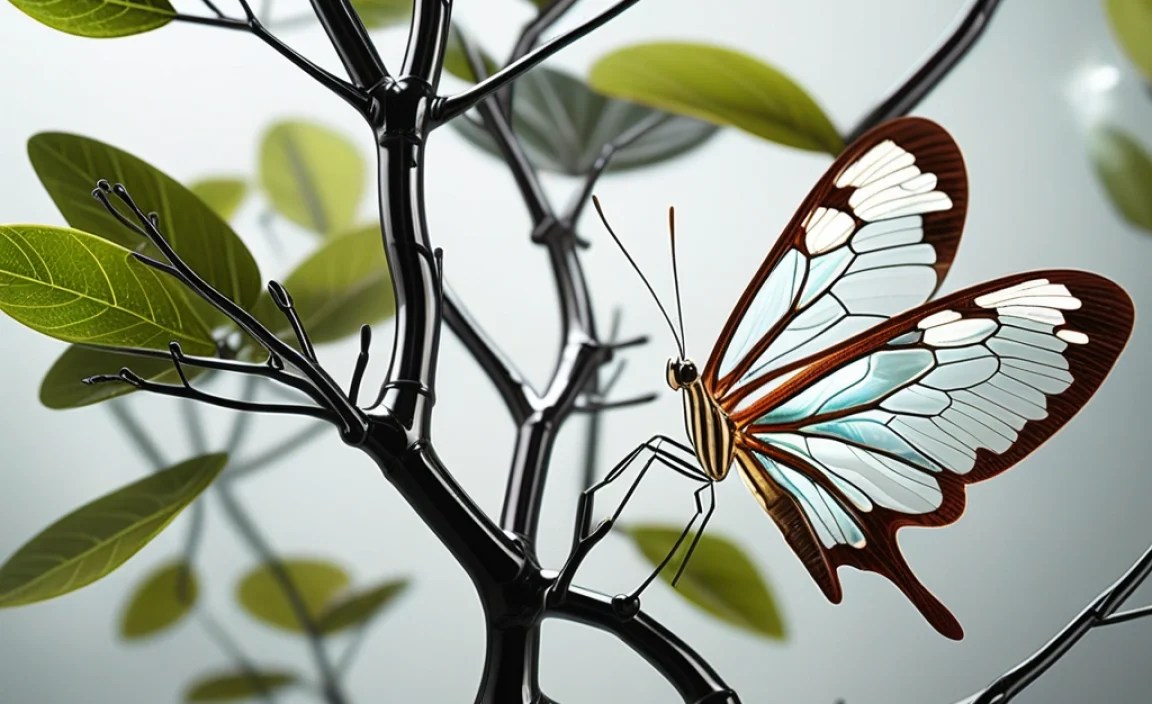
Glasswing butterflies belong to the tribe Ithomiini within the subfamily Danainae of the family Nymphalidae. This placement tells us a few important things:
- Relationship to Milkweed Butterflies: Being in the same subfamily as Monarchs (Danainae) means they share a common ancestor. Both groups have adapted to feeding on plants that contain toxic compounds, which protect them from predators.
- Specialized Adaptations: The Ithomiini tribe has evolved unique adaptations, like transparent wings, that set them apart from other members of the Danainae subfamily.
- Geographic Distribution: Glasswings are primarily found in Central and South America, which suggests their evolutionary history is closely tied to this region.
Understanding Their Closest Relatives
To fully understand the glasswing’s evolutionary tree, it’s helpful to know about some of their closest relatives:
- Monarch Butterflies (Danainae): Share a common ancestor and similar feeding habits on toxic plants.
- Other Ithomiini Species: Various species within the Ithomiini tribe, each with unique wing patterns and levels of transparency.
- Nymphalidae Family Members: Other brush-footed butterflies, which share a broader evolutionary history but have different adaptations.
How Do Scientists Study Butterfly Evolution?

Scientists use a variety of methods to study butterfly evolution and construct evolutionary trees. These methods include:
- DNA Analysis: Comparing the DNA of different species to determine how closely related they are. This is one of the most accurate ways to build evolutionary trees.
- Morphological Studies: Examining the physical characteristics of butterflies, such as wing patterns, body shape, and antennae structure.
- Fossil Records: Although butterfly fossils are rare, they can provide valuable information about the history of butterfly evolution.
- Behavioral Studies: Observing butterfly behavior, such as mating rituals and feeding habits, to understand how different species interact and evolve.
Tools and Techniques Used
Here are some specific tools and techniques scientists use:
- DNA Sequencing: Determining the exact order of nucleotides in a DNA molecule.
- Phylogenetic Software: Computer programs that analyze DNA data to create evolutionary trees.
- Microscopy: Using microscopes to study the fine details of butterfly wings and other structures.
- Field Observations: Collecting data on butterfly behavior and distribution in their natural habitats.
What Can the Evolutionary Tree Tell Us About Glasswing Butterflies?
The evolutionary tree of glasswing butterflies can reveal a lot about their history, adaptations, and ecological roles. Here are some key insights:
- Adaptation to Environment: The evolution of transparent wings is a clear adaptation to the rainforest environment, where camouflage is essential for survival.
- Co-evolution with Plants: Glasswings have co-evolved with certain plants, particularly those containing toxic compounds. This relationship has shaped their feeding habits and defense mechanisms.
- Biodiversity: Understanding the evolutionary tree helps us appreciate the diversity of butterfly species and the importance of conserving their habitats.
Ecological Significance
Glasswing butterflies play an important role in their ecosystems:
- Pollination: Like other butterflies, glasswings help pollinate plants as they feed on nectar.
- Food Source: They serve as a food source for birds, reptiles, and other predators.
- Indicator Species: Their presence or absence can indicate the health of the ecosystem.
Conservation Status and Threats to Glasswing Butterflies
While glasswing butterflies are not currently listed as endangered, they face several threats that could impact their populations:
- Habitat Loss: Deforestation and habitat destruction are major threats to glasswing butterflies, as they rely on specific plants and environments for survival.
- Climate Change: Changes in temperature and rainfall patterns can disrupt their life cycles and reduce their food sources.
- Pesticide Use: Pesticides can harm or kill glasswing butterflies and other beneficial insects.
What Can Be Done to Protect Them?
There are several ways to help protect glasswing butterflies:
- Habitat Conservation: Supporting efforts to protect and restore rainforest habitats.
- Sustainable Practices: Promoting sustainable agriculture and forestry practices that minimize habitat destruction.
- Reducing Pesticide Use: Avoiding the use of pesticides in gardens and agricultural areas.
- Education and Awareness: Raising awareness about the importance of glasswing butterflies and their role in the ecosystem.
Examples of Glasswing Butterfly Species
Here are a few examples of glasswing butterfly species that showcase the diversity within this group:
| Species Name | Appearance | Habitat | Interesting Fact |
|---|---|---|---|
| Greta oto | Clear wings with a reddish-brown border | Central and South American rainforests | Known for its exceptional camouflage |
| Thyridia psidii | Transparent wings with black and orange markings | Tropical regions of the Americas | Feeds on toxic plants, making it unpalatable to predators |
| Oleria paula | Clear wings with a delicate, lacy pattern | South American rainforests | Prefers shaded areas within the forest |
| Hyalenna buckleyi | Almost completely transparent wings | Ecuador, Peru | Rarely seen, one of the most elusive glasswings |
Glasswing Butterfly Life Cycle
The life cycle of a glasswing butterfly is similar to that of other butterflies, involving four stages: egg, larva (caterpillar), pupa (chrysalis), and adult.
- Egg: Glasswing butterflies lay their eggs on specific host plants, which the caterpillars will feed on.
- Larva (Caterpillar): The caterpillar eats constantly, growing and molting several times. Glasswing caterpillars often feed on toxic plants, which makes them unpalatable to predators.
- Pupa (Chrysalis): The caterpillar forms a chrysalis, inside which it undergoes metamorphosis. This stage can last from a few days to several weeks.
- Adult: The adult butterfly emerges from the chrysalis, ready to reproduce. Adult glasswings feed on nectar and play a role in pollination.
Tips for Spotting Glasswing Butterflies
If you’re hoping to see a glasswing butterfly in the wild, here are some tips:
- Visit Rainforests: Glasswings are primarily found in Central and South American rainforests.
- Look for Host Plants: Learn which plants glasswing caterpillars feed on and look for butterflies near these plants.
- Go During the Day: Glasswings are most active during the day, especially in sunny weather.
- Be Patient: Glasswings can be hard to spot due to their transparency, so be patient and observant.
Cultural Significance of Glasswing Butterflies
Glasswing butterflies hold cultural significance in various communities:
- Symbol of Transformation: Like other butterflies, glasswings symbolize transformation and change.
- Symbol of Transparency: Their clear wings can represent honesty, clarity, and openness.
- Inspiration for Art and Design: Glasswing butterflies have inspired artists and designers with their unique beauty.
Glasswing Butterfly FAQs
What makes glasswing butterfly wings transparent?
Glasswing butterfly wings are transparent because they have nanostructures that reduce light reflection, and fewer scales compared to other butterflies.
Where do glasswing butterflies live?
Glasswing butterflies primarily live in the rainforests of Central and South America.
Are glasswing butterflies endangered?
No, glasswing butterflies are not currently listed as endangered, but they face threats from habitat loss and climate change.
What do glasswing caterpillars eat?
Glasswing caterpillars often feed on toxic plants, which makes them unpalatable to predators.
How can I help protect glasswing butterflies?
You can help by supporting habitat conservation, promoting sustainable practices, reducing pesticide use, and raising awareness about their importance.
What family do glasswing butterflies belong to?
Glasswing butterflies belong to the family Nymphalidae, also known as brush-footed butterflies.
What is the scientific name for the glasswing butterfly?
One of the most well-known glasswing butterflies is Greta oto.
Conclusion
Exploring the evolutionary tree of glasswing butterflies reveals the incredible story of adaptation, survival, and ecological importance. From their unique transparent wings to their role in rainforest ecosystems, these butterflies are a testament to the power of natural selection.
By understanding their evolutionary history and the threats they face, we can take steps to protect these beautiful creatures and their habitats. Whether it’s supporting conservation efforts, reducing pesticide use, or simply spreading awareness, every action counts.
So, next time you see a glasswing butterfly, take a moment to appreciate its journey through time and the intricate web of life that connects us all. It’s a reminder of the beauty and fragility of our natural world, and the importance of preserving it for future generations.


