
Species Identification Using DNA: The Smart Guide

Have you ever wondered what makes a zebra different from a horse? Or how scientists know if a new bug is a new type? One way they find out is by looking at DNA. It’s like a special code inside every living thing. This code helps with {species identification using DNA}.
Imagine you find a feather. You want to know what bird it came from. Scientists can use {species identification using DNA} to help. They can take a tiny bit of the feather and look at its DNA. Then, they can compare it to the DNA of other birds. This helps them figure out what kind of bird the feather belongs to. It is like a detective using clues to solve a mystery.
Every living thing has its own special DNA. This DNA tells it how to grow and what it will look like. It’s like a secret recipe. {Species identification using DNA} helps us read these recipes. It lets us learn more about all the amazing plants and animals on our planet. It also helps us protect them.
Key Takeaways
- DNA barcoding is a quick and easy way to identify different species.
- Scientists use DNA to learn about how species are related to each other.
- {Species identification using DNA} helps protect endangered animals and plants.
- DNA is like a special code that is unique to each living thing.
- It helps us understand the amazing variety of life on Earth.
How Does Species Identification Using DNA Work?
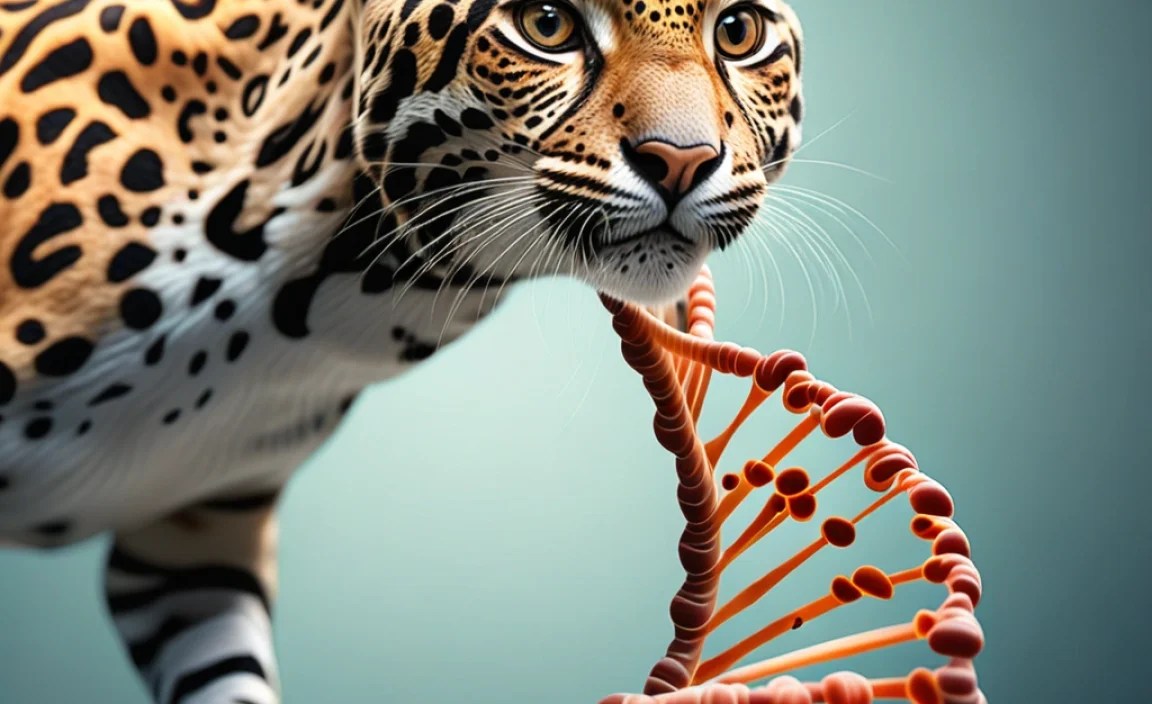
DNA is found in almost every cell of every living thing. It’s like a set of instructions. These instructions tell the cell what to do. DNA is made up of smaller parts called bases. These bases are like letters in a code. The order of these letters is different for every species. Scientists can read this code and use it to identify what species something is. This is {species identification using DNA} in action. It is a powerful tool for understanding the world around us.
- Scientists collect a small sample from the organism.
- They extract the DNA from the sample.
- They use special machines to read the DNA code.
- They compare the DNA code to a library of known species.
- This helps them identify the species.
- It works for plants, animals, and even tiny microbes.
Sometimes, scientists find a new plant or animal. They might not know what it is. They can use {species identification using DNA} to help. They can compare its DNA to other known species. This helps them figure out if it is a new species or not. It also helps them understand how it is related to other species. This can tell us how different plants and animals evolved over time. It is important to protect all kinds of life on Earth. Understanding what they are is the first step.
What is a DNA Barcode?
Have you ever scanned a barcode at the store? DNA barcoding is similar. It uses a short piece of DNA to identify a species. This short piece is like a barcode for that species. Why is it helpful? It is much faster and easier than looking at the whole DNA. It is especially useful for identifying things when you don’t have much to go on. A tiny piece of a plant, a feather, or even just some waste can be enough. Scientists can use DNA barcoding to quickly identify what it is.
How Do Scientists Collect DNA?
Imagine you are a scientist studying butterflies. You need to collect DNA from a butterfly. How do you do it without hurting the butterfly? Scientists use gentle methods. They might take a tiny clipping from a wing. They can also use a swab to collect cells from the butterfly’s body. For plants, they might take a small leaf. The important thing is to collect the DNA without harming the plant or animal. They want to study and protect them. Scientists are very careful when they collect samples.
What Happens if the DNA is Damaged?
What if the DNA is old or damaged? Can scientists still use it? Sometimes, it is harder, but not impossible. Scientists have special tools. These tools can help them fix the DNA. They can also use special techniques to read the damaged DNA. It is like piecing together a puzzle. The more damaged the DNA, the harder it is. But with new technology, scientists can often still get the information they need. Even from very old or damaged samples, {species identification using DNA} is often possible.
Fun Fact or Stat: The DNA in one human cell is about 6 feet long if you stretch it out!
Why is Species Identification Using DNA Important?
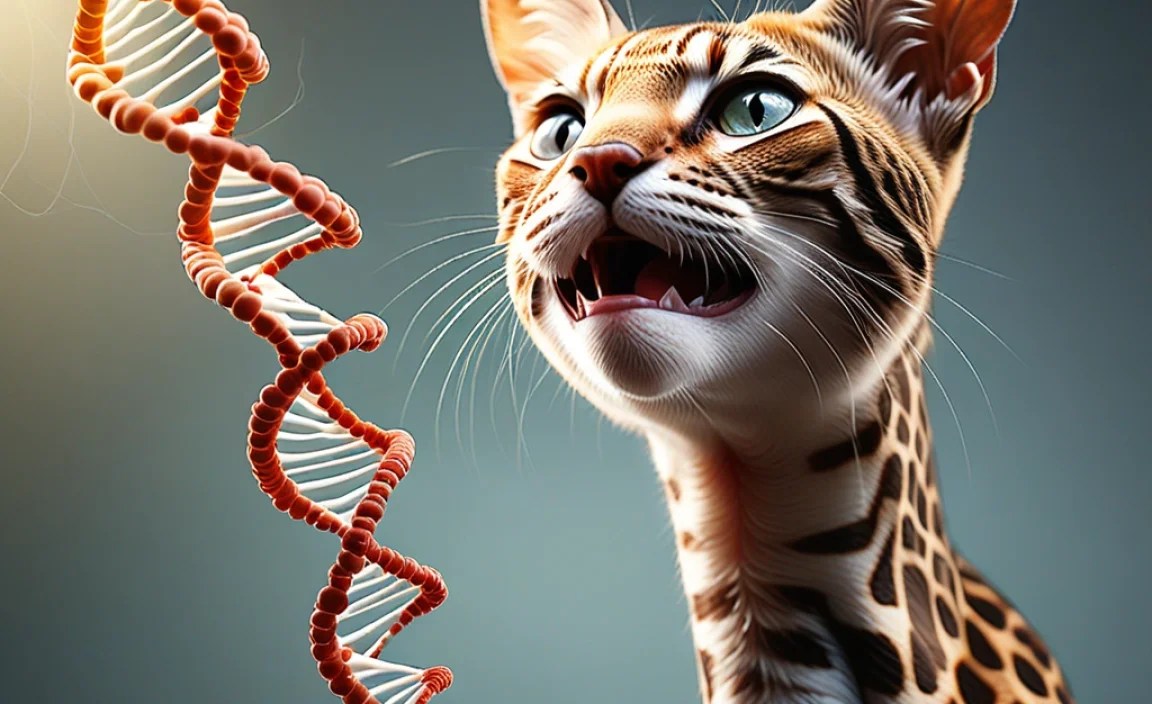

{Species identification using DNA} is important for many reasons. It helps us understand the world around us. It helps us protect endangered species. It also helps us find new medicines. Imagine you are a doctor. You need to identify a dangerous bacteria. You can use {species identification using DNA} to find out what kind of bacteria it is. This helps you choose the right medicine to treat it. It is also important for protecting our food supply. If a disease is affecting crops, scientists can use DNA to identify the disease and stop it from spreading.
- It helps us understand biodiversity.
- It helps us protect endangered species.
- It helps us discover new medicines.
- It helps us protect our food supply.
- It helps us track the spread of diseases.
- It helps us understand how species are related.
There are many animals and plants in the world that are in danger. Some are at risk of disappearing forever. {Species identification using DNA} can help us protect these animals and plants. By knowing what they are, we can create plans to help them survive. We can protect their habitats. We can also stop people from hunting them. DNA can even help track illegal wildlife trade. Understanding the code of life helps us to save it. It is our responsibility to protect the amazing variety of life on Earth.
How Does DNA Help Track Illegal Wildlife Trade?
Imagine that someone is selling a rare animal part illegally. How can you prove it came from that animal? {Species identification using DNA} can help. Scientists can take a sample of the animal part. They can compare its DNA to a database of known species. This can tell them if it came from a protected animal. This can help catch criminals who are harming endangered animals. DNA is a powerful tool to fight wildlife crime.
Can DNA Help Us Find New Medicines?
Did you know that many medicines come from plants and animals? Scientists use plants and animals to make new medicines. They can use {species identification using DNA} to find new plants and animals. Then, they can study these plants and animals to see if they have chemicals that can help treat diseases. It is like searching for treasure. DNA can help guide them to find new cures.
How Does DNA Help Protect Our Food Supply?
Imagine a disease is attacking a farmer’s crops. The farmer needs to know what disease it is. They can use {species identification using DNA} to find out. Scientists can take a sample from the sick plant. They can compare its DNA to a database of known diseases. This can help the farmer choose the right treatment. This protects our food supply from diseases and pests.
Fun Fact or Stat: Scientists have identified about 1.8 million species on Earth, but they think there may be as many as 10 million!
DNA Sequencing for Species Identification
DNA sequencing is like reading the book of life. It is the process of figuring out the exact order of DNA bases. Remember, these bases are like letters in a code. The order of these letters tells us what species something is. DNA sequencing is a very powerful tool for {species identification using DNA}. It allows scientists to identify species with great accuracy. It has opened up a whole new world of understanding about the relationships between different living things.
- DNA sequencing reads the order of DNA bases.
- It is very accurate for identifying species.
- It helps us understand how species are related.
- It can be used on very small samples.
- New technology makes sequencing faster and cheaper.
- It is used in many different fields of science.
Imagine you find a tiny piece of bone. You want to know what animal it came from. You can use DNA sequencing to find out. Scientists can extract the DNA from the bone. Then, they can use a machine to read the DNA sequence. They can compare the sequence to a library of known species. This helps them identify what animal the bone came from. DNA sequencing is a powerful tool for solving mysteries and learning about the past.
What is a DNA Sequencing Machine?
A DNA sequencing machine is a special machine. It reads the order of DNA bases. It is like a super-powered microscope that can see the smallest parts of DNA. The machine uses lasers and computers to read the DNA sequence. It is a very complex piece of technology. But it allows scientists to do amazing things. It helps us understand the code of life.
How Accurate is DNA Sequencing?
DNA sequencing is very accurate. It can identify species with almost 100% accuracy. This is because every species has a unique DNA sequence. But sometimes, there can be mistakes. This can happen if the DNA is damaged or if the machine is not working properly. Scientists use special techniques to check the accuracy of the DNA sequence. They want to be sure that they are identifying the species correctly.
What are the Different Types of DNA Sequencing?
There are many different types of DNA sequencing. Some types are faster and cheaper than others. Some types are more accurate than others. The type of DNA sequencing that scientists use depends on what they are trying to do. For example, if they are trying to identify a species quickly, they might use a faster type of sequencing. If they need to be very accurate, they might use a more accurate type of sequencing. {Species identification using DNA} can utilize different methods.
Fun Fact or Stat: The first human genome sequence took 13 years and cost billions of dollars. Now, it can be done in a few days for only a few thousand dollars!
Comparing DNA to Identify Species
To do {species identification using DNA}, scientists compare DNA samples. They look for differences and similarities. These differences and similarities tell them how closely related different species are. It is like comparing family trees. If two species have very similar DNA, they are probably closely related. If they have very different DNA, they are probably not closely related. This helps us understand how life on Earth has evolved over time.
- Scientists compare DNA sequences.
- They look for differences and similarities.
- This tells them how closely related species are.
- It is like comparing family trees.
- It helps us understand evolution.
- It can be used to build evolutionary trees.
Imagine you are a scientist studying birds. You want to know how different kinds of birds are related to each other. You can use DNA to find out. You can collect DNA samples from different kinds of birds. Then, you can compare their DNA sequences. This will tell you how closely related they are. You can use this information to build an evolutionary tree. This tree shows how different kinds of birds have evolved over time. Comparing DNA is a powerful way to understand the history of life.
What is an Evolutionary Tree?
An evolutionary tree is a diagram. It shows how different species are related to each other. It is like a family tree for all living things. The branches of the tree show how species have evolved over time. Species that are close together on the tree are closely related. Species that are far apart on the tree are not closely related. DNA helps us build accurate evolutionary trees.
How Much DNA Do Species Need to Share to Be Related?
How much DNA do two species need to share to be considered related? It depends on how closely related they are. Closely related species share a lot of DNA. Distantly related species share less DNA. Scientists use special rules to decide if two species are related. {Species identification using DNA} relies on shared genetic markers.
Can DNA Tell Us When Species Diverged?
Yes, DNA can tell us when species diverged. DNA changes over time. Scientists can use the rate of DNA change to estimate when two species split apart. It is like a clock. The more the DNA has changed, the longer ago the species diverged. This helps us understand the timeline of evolution.
Fun Fact or Stat: Humans share about 98% of their DNA with chimpanzees!
Advantages of Species Identification Using DNA

{Species identification using DNA} has many advantages over traditional methods. Traditional methods often rely on looking at the physical features of an organism. This can be difficult, especially if the organism is small or damaged. DNA can be used to identify species even if the organism is incomplete. DNA is also very accurate. It can identify species with a high degree of certainty. This is important for many applications, such as protecting endangered species and tracking the spread of diseases.
- DNA is very accurate for identifying species.
- It can be used on small or damaged samples.
- It is faster than traditional methods.
- It can be used to identify cryptic species.
- It helps us understand biodiversity.
- It has many applications in science and conservation.
Imagine you are trying to identify a plant. You only have a small piece of a leaf. It might be hard to identify the plant just by looking at the leaf. But you can use {species identification using DNA} to find out. You can extract the DNA from the leaf. Then, you can compare it to a library of known species. This will help you identify the plant, even if you only have a small sample. DNA is a powerful tool for identifying things, even when there is not much to go on.
What are Cryptic Species?
Cryptic species are species that look very similar to each other. It can be hard to tell them apart just by looking at them. But they are actually different species. DNA can help us identify cryptic species. By comparing their DNA, we can see the differences between them. This helps us understand the true diversity of life.
Is DNA Identification Faster Than Traditional Methods?
Yes, DNA identification is often faster than traditional methods. Traditional methods can take a long time. You might have to grow the organism. You might have to look at it under a microscope. DNA identification can be done in a few hours. This makes it a very useful tool for quickly identifying species.
Can DNA Identification Be Used on Any Organism?
Yes, DNA identification can be used on almost any organism. It works on plants, animals, fungi, and bacteria. It even works on viruses. As long as you can extract DNA from the organism, you can use DNA identification. It is a very versatile tool for studying life.
Fun Fact or Stat: DNA barcoding can identify a species in as little as 24 hours!
Limitations of Species Identification Using DNA
While {species identification using DNA} is powerful, it has limitations. It relies on having a good DNA library. This is a collection of DNA sequences from known species. If the species you are trying to identify is not in the library, you will not be able to identify it. DNA can also be damaged over time. This can make it hard to extract and analyze. It can also be expensive to do DNA analysis. However, the cost is coming down as technology improves.
| Advantage | Disadvantage |
|---|---|
| Accurate identification | Requires a good DNA library |
| Can be used on small samples | DNA can be damaged |
| Faster than traditional methods | Can be expensive |
| Works on many organisms | Can be difficult to interpret results |
- It relies on having a good DNA library.
- DNA can be damaged over time.
- It can be expensive to do DNA analysis.
- It can be difficult to interpret results.
- Some species have very similar DNA.
- Contamination can lead to false results.
Imagine you are trying to identify a rare insect. You collect a sample and send it to a lab for DNA analysis. The lab runs the analysis, but they cannot identify the insect. This is because the insect is not in the DNA library. The library does not have a DNA sequence for that species. This is a limitation of {species identification using DNA}. It only works if you have a good DNA library to compare to.
What Happens if the DNA is Contaminated?
DNA contamination can cause problems. If the DNA sample is mixed with DNA from another organism, it can lead to false results. The lab might think that the sample came from a different species than it actually did. This is why it is important to be very careful when collecting and handling DNA samples. Scientists use special techniques to avoid contamination.
Can All Species Be Identified With DNA?
No, not all species can be identified with DNA. Some species have very similar DNA. It can be hard to tell them apart just by looking at their DNA. Also, some species are not in the DNA library. If the species is not in the library, you cannot identify it using DNA analysis.
How Can We Improve DNA Identification?
We can improve DNA identification in several ways. We can build better DNA libraries. We can develop new techniques for extracting and analyzing damaged DNA. We can also make DNA analysis cheaper and faster. This will make it easier to use DNA to identify species. {Species identification using DNA} will become even more useful in the future.
Fun Fact or Stat: The cost of DNA sequencing has dropped dramatically in recent years, making it more accessible to researchers.
Future of Species Identification Using DNA
The future of {species identification using DNA} is bright. As technology improves, it will become even more powerful and accurate. Scientists are developing new ways to extract DNA from difficult samples. They are also building bigger and better DNA libraries. This will allow us to identify more species than ever before. DNA will play a key role in protecting biodiversity and understanding the world around us.
- Technology is making it more powerful.
- Scientists are improving DNA extraction methods.
- They are building bigger DNA libraries.
- It will help protect biodiversity.
- It will help us understand evolution.
- It will have many new applications.
Imagine you are a scientist in the future. You have a small device that can identify any species instantly. You can point the device at a plant or animal. The device will analyze its DNA and tell you what species it is. This technology could revolutionize how we study and protect life on Earth. It would make it easier to track endangered species. It would also help us discover new species. The future of {species identification using DNA} is full of possibilities.
Will DNA Identification Become More Affordable?
Yes, DNA identification is becoming more affordable. The cost of DNA sequencing is dropping rapidly. This is making it easier for scientists to use DNA to identify species. In the future, it may be cheap enough for anyone to use DNA identification. It could be used by farmers, teachers, and even students.
Will DNA Identification Help Us Discover New Species?
Yes, DNA identification will help us discover new species. There are many species on Earth that we have not yet discovered. DNA can help us find these species. By analyzing DNA from different environments, we can identify new species that we did not know existed. It is like exploring a new world.
How Will DNA Identification Help Protect Biodiversity?
DNA identification will help protect biodiversity in many ways. It can help us track endangered species. It can help us identify areas with high biodiversity. It can also help us understand the relationships between different species. This information can be used to create conservation plans. These plans help protect the amazing variety of life on Earth.
Fun Fact or Stat: Scientists estimate that there are millions of species yet to be discovered on Earth!
Summary
DNA is like a secret code inside every living thing. {Species identification using DNA} helps us read this code. It lets us learn about different kinds of plants and animals. It helps us understand how they are related to each other. It is a powerful tool for understanding the world around us. It has many advantages over traditional methods. It is very accurate and can be used on small samples. It is also becoming cheaper and faster. While it has some limitations, {species identification using DNA} is a valuable tool.
The future of {species identification using DNA} is bright. Technology is improving and making it more powerful. Scientists are building bigger and better DNA libraries. This will allow us to identify more species than ever before. DNA will play a key role in protecting biodiversity and understanding the world around us.
Conclusion
DNA is a powerful tool. It helps us understand the world around us. {Species identification using DNA} is important for many reasons. It helps us protect endangered species. It helps us discover new medicines. It helps us protect our food supply. As technology improves, DNA will become even more important. It will help us solve mysteries and learn about the past. DNA is the key to understanding life.
Frequently Asked Questions
Question No 1: What is DNA?
Answer: DNA is like a set of instructions inside every living thing. It tells the cells what to do. It is like a code that is unique to each species. DNA is made up of smaller parts called bases. The order of these bases tells us what species something is. It is like a secret recipe for life. Every living thing has its own unique DNA recipe. This helps scientists with {species identification using DNA}. It helps them learn about all the amazing plants and animals on our planet.
Question No 2: How does DNA help identify species?
Answer: Scientists can read the DNA code of a plant or animal. They compare it to a library of known species. This library is like a collection of DNA recipes. If the DNA code matches a recipe in the library, they can identify the species. It is like matching a fingerprint to a database. Every species has its own unique DNA fingerprint. {Species identification using DNA} relies on comparing DNA to find the species’ identity. It is an amazing way to learn about the living world.
Question No 3: What are some of the advantages of using DNA for species identification?
Answer: DNA is very accurate. It can identify species with a high degree of certainty. It can be used on small samples. This means you do not need a whole plant or animal to identify it. It is faster than traditional methods. DNA analysis can be done in a few hours. Traditional methods can take days or even weeks. These advantages make {species identification using DNA} very useful. It helps scientists learn about life quickly and accurately. This is key to protecting plants and animals.
Question No 4: Are there any limitations to using DNA for species identification?
Answer: Yes, there are some limitations. DNA analysis can be expensive. It also requires a good DNA library. If the species you are trying to identify is not in the library, you will not be able to identify it. DNA can also be damaged over time. This can make it hard to extract and analyze. Even with these limitations, {species identification using DNA} is a powerful tool. It is still very useful for learning about the living world.
Question No 5: How is DNA collected from an organism?
Answer: Scientists can collect DNA in different ways. They might take a small piece of a leaf from a plant. They might take a clipping from a wing of a butterfly. They can also use a swab to collect cells from an animal’s body. The important thing is to collect the DNA without harming the organism. Scientists are very careful when they collect samples. They want to protect the plants and animals they are studying. {Species identification using DNA} starts with collecting the DNA carefully.
Question No 6: What is DNA barcoding?
Answer: DNA barcoding is like using a barcode scanner at the store. It uses a short piece of DNA to identify a species. This short piece is like a barcode for that species. It is faster and easier than looking at the whole DNA. It is especially useful for identifying things quickly. Scientists can use DNA barcoding to identify things when they don’t have much to go on. {Species identification using DNA} becomes faster with barcoding. A tiny piece of a plant, a feather, or even waste can be enough.


