
Orange Acraea Butterfly: See This Beauty!

The Orange Acraea butterfly (Acraea eponina) is a vibrant, medium-sized butterfly common across Africa. Known for its bright orange wings adorned with black spots, it’s a fast flier often seen in open grasslands and gardens. Its caterpillars feed on passionflower vines, making it a familiar sight to many gardeners.
Have you ever spotted a flash of bright orange in your garden and wondered what butterfly it was? Identifying butterflies can be tricky, especially with so many beautiful species fluttering around. One that often catches the eye is the Orange Acraea. Its striking color and energetic flight make it a joy to observe. But how can you be sure it’s an Orange Acraea and not another similar butterfly? And how can you attract these lovely creatures to your garden? Don’t worry, you’re in the right place! This guide will walk you through everything you need to know, from identification to creating a butterfly-friendly habitat. Get ready to become an Orange Acraea expert!
What is the Orange Acraea Butterfly?

The Orange Acraea, scientifically known as Acraea eponina, is a butterfly belonging to the Nymphalidae family, also known as the brush-footed butterflies. This family is one of the largest butterfly families, boasting a wide variety of colors, shapes, and sizes. The Orange Acraea is particularly well-known for its vibrant orange wings, dotted with black spots, which make it easily recognizable. It is a medium-sized butterfly, with a wingspan typically ranging from 4.5 to 5.5 cm (approximately 1.8 to 2.2 inches).
Geographical Distribution and Habitat
The Orange Acraea is widespread across the African continent, thriving in a variety of habitats. From the lush, tropical rainforests of West Africa to the open grasslands and savannahs of East and Southern Africa, this adaptable butterfly has made its home in diverse environments. You’ll often find them flitting about in gardens, along roadsides, and in disturbed areas, making them a familiar sight in both rural and urban settings.
Life Cycle of the Orange Acraea
Like all butterflies, the Orange Acraea undergoes a complete metamorphosis, passing through four distinct life stages: egg, larva (caterpillar), pupa (chrysalis), and adult butterfly. Each stage plays a crucial role in the butterfly’s development and survival.
- Egg: The life cycle begins when the female Orange Acraea lays her eggs, usually on the leaves of passionflower vines (Passiflora species). The eggs are typically small, yellowish, and laid in clusters.
- Larva (Caterpillar): Once the eggs hatch, the caterpillars emerge. These larvae are voracious eaters, feeding primarily on the leaves of their host plant. The Orange Acraea caterpillar is distinct, with a dark brown or black body adorned with orange or yellow spines. As they grow, they molt several times, shedding their skin to accommodate their increasing size.
- Pupa (Chrysalis): After several weeks of feeding and growing, the caterpillar enters the pupa stage. It forms a chrysalis, which is usually suspended from a stem or leaf of the host plant. The chrysalis is a mottled brown color, providing camouflage against predators. Inside the chrysalis, a remarkable transformation takes place, as the caterpillar’s body is broken down and reorganized into the adult butterfly.
- Adult Butterfly: After about one to two weeks, the adult butterfly emerges from the chrysalis. Its wings are initially crumpled, but they quickly expand as hemolymph (insect blood) is pumped through the veins. Once the wings are fully expanded and hardened, the butterfly is ready to fly and reproduce.
Identifying the Orange Acraea
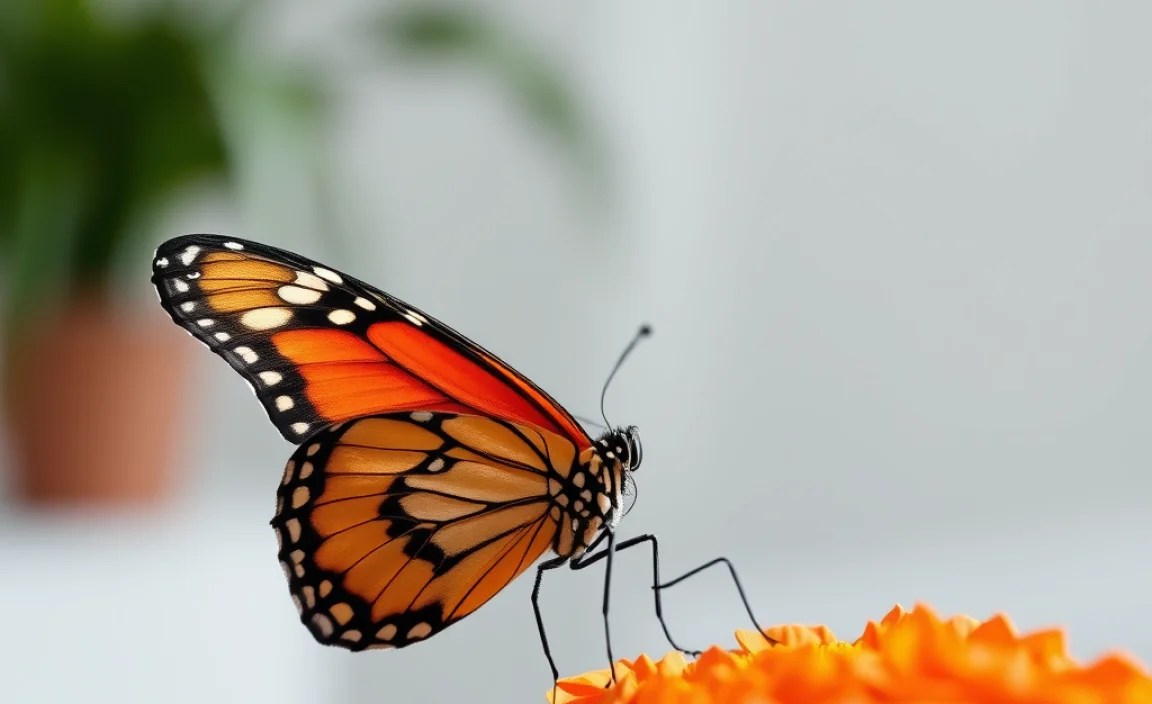
Identifying the Orange Acraea butterfly involves looking at several key characteristics, including wing patterns, size, and behavior. Here’s a detailed guide to help you distinguish it from other similar butterflies.
Key Characteristics
- Wingspan: Typically 4.5 to 5.5 cm (1.8 to 2.2 inches).
- Wing Color: Predominantly bright orange.
- Wing Markings: Black spots scattered across both the forewings and hindwings. The spots are generally small and well-defined.
- Body: The body is usually black, which contrasts with the bright orange wings.
- Flight Pattern: A fast, erratic flight pattern. They are often seen flitting quickly from flower to flower.
Distinguishing from Similar Species
Several other orange butterflies can be mistaken for the Orange Acraea. Here’s how to tell them apart:
- Garden Acraea (Acraea horta): This butterfly is very similar but typically has a more faded orange color and less distinct black spots. The Garden Acraea is also more common in Southern Africa.
- African Monarch (Danaus chrysippus): While also orange with black markings, the African Monarch has a more uniform wing pattern and a larger size. It also lacks the numerous small spots characteristic of the Orange Acraea.
- Painted Lady (Vanessa cardui): This butterfly has a more intricate pattern with a mix of orange, brown, and black. The Painted Lady also has distinct white spots on the tips of its forewings.
Here’s a table summarizing the key differences:
| Butterfly Species | Wing Color | Wing Markings | Size | Distribution |
|---|---|---|---|---|
| Orange Acraea (Acraea eponina) | Bright Orange | Numerous small black spots | 4.5-5.5 cm | Widespread across Africa |
| Garden Acraea (Acraea horta) | Faded Orange | Less distinct black spots | 4.5-5.5 cm | Southern Africa |
| African Monarch (Danaus chrysippus) | Orange | Uniform pattern, fewer spots | Larger | Widespread across Africa |
| Painted Lady (Vanessa cardui) | Orange, Brown, Black | Intricate pattern, white spots on forewings | Medium | Worldwide |
Behavioral Traits
Observing the behavior of the butterfly can also aid in identification. Orange Acraeas are known for their quick, darting flight. They are often seen basking in the sun with their wings open, and they are attracted to a variety of flowers for nectar. They are also quite resilient and can be found in disturbed habitats, showing their adaptability.
Attracting Orange Acraeas to Your Garden

Creating a butterfly-friendly garden is a rewarding experience that not only beautifies your surroundings but also supports local butterfly populations. Here’s how you can attract Orange Acraeas to your garden:
Planting Host Plants
The most crucial step in attracting Orange Acraeas is to plant their host plants – the plants on which the females lay their eggs and the caterpillars feed. For the Orange Acraea, passionflower vines (Passiflora species) are the primary host plants. These vines come in a variety of species, so choose one that is well-suited to your local climate and garden conditions. Some popular choices include:
- Passiflora edulis (Passion Fruit): This species produces edible fruit and beautiful flowers, making it a great addition to any garden.
- Passiflora incarnata (Maypop): This hardy species is native to North America but can be grown in many other regions. It is known for its resilience and attractive flowers.
- Passiflora caerulea (Blue Passionflower): This species is known for its striking blue and white flowers and is relatively easy to grow.
Providing Nectar Sources
Adult butterflies feed on nectar, so planting a variety of nectar-rich flowers will attract them to your garden. Choose flowers with bright colors and tubular shapes, as these are particularly attractive to butterflies. Some good nectar sources for Orange Acraeas include:
- Lantana: These colorful flowers are butterfly magnets and bloom for a long period.
- Pentas: These star-shaped flowers come in a variety of colors and are a favorite of many butterfly species.
- Zinnias: These easy-to-grow annuals provide a profusion of colorful blooms that attract butterflies.
- Cosmos: These daisy-like flowers are available in a variety of colors and are a great addition to any butterfly garden.
- Buddleja (Butterfly Bush): As the name suggests, these bushes are highly attractive to butterflies and provide a long season of bloom.
Creating a Butterfly-Friendly Environment
In addition to providing host plants and nectar sources, there are several other things you can do to create a welcoming environment for Orange Acraeas and other butterflies:
- Provide a Water Source: Butterflies need water, but they can’t drink from open water sources like ponds or bird baths. Instead, create a “puddling” area by filling a shallow dish with sand or gravel and keeping it moist. The butterflies will land on the damp surface and sip the water.
- Offer Shelter: Butterflies need shelter from wind and rain. Plant shrubs and trees to provide them with protected areas.
- Provide Sunny Basking Spots: Butterflies are cold-blooded and need to bask in the sun to warm up. Place flat rocks or pavers in sunny areas of your garden to provide basking spots.
- Avoid Pesticides: Pesticides can be harmful to butterflies and other beneficial insects. Avoid using pesticides in your garden, or choose organic alternatives that are less harmful.
Specific Tips for Passionflower Vines
Passionflower vines are vigorous growers and can quickly cover fences, walls, or trellises. Here are some tips for growing them successfully:
- Provide Support: Passionflower vines need a strong support structure to climb on. Use a trellis, fence, or arbor to provide support.
- Prune Regularly: Passionflower vines can become overgrown if not pruned regularly. Prune them in the late winter or early spring to control their size and shape.
- Protect from Frost: Some passionflower species are sensitive to frost. If you live in an area with cold winters, choose a hardy species or protect your plants with mulch or row covers.
Ecological Importance of the Orange Acraea

Butterflies, including the Orange Acraea, play a vital role in the ecosystem. They are important pollinators, transferring pollen from flower to flower as they feed on nectar. This pollination is essential for the reproduction of many plants, including some of the food crops that we rely on.
Role in the Food Chain
Butterflies and their caterpillars are also an important food source for other animals. Caterpillars are eaten by birds, reptiles, and other insects, while adult butterflies are preyed upon by birds, lizards, and spiders. By providing food for other animals, butterflies help to support the food chain.
Indicator Species
Butterflies are often used as indicator species, meaning that their presence or absence can indicate the health of the environment. Because they are sensitive to changes in habitat and climate, butterflies can serve as an early warning system for environmental problems. A decline in butterfly populations can signal that something is wrong with the ecosystem, such as habitat loss, pollution, or climate change.
Conservation Status
The Orange Acraea is not currently considered to be threatened or endangered. However, like many butterfly species, it faces threats from habitat loss, pesticide use, and climate change. By protecting and restoring butterfly habitats, and by reducing our use of pesticides, we can help to ensure that the Orange Acraea and other butterflies continue to thrive.
Cultural Significance and Symbolism
Butterflies have long held cultural significance and are often associated with symbolism in various cultures around the world. The Orange Acraea, with its vibrant color and graceful flight, is no exception.
Symbolism
In many cultures, butterflies are seen as symbols of transformation, rebirth, and hope. The butterfly’s metamorphosis from a crawling caterpillar to a beautiful flying insect is often interpreted as a metaphor for personal growth and spiritual transformation. The Orange Acraea, with its bright orange color, can also symbolize joy, enthusiasm, and creativity.
Cultural References
Butterflies have appeared in art, literature, and mythology throughout history. They are often depicted as symbols of beauty, freedom, and the ephemeral nature of life. In some cultures, butterflies are believed to carry the souls of the dead, while in others, they are seen as messengers from the spirit world.
The presence of the Orange Acraea in a garden or natural setting can bring a sense of wonder and joy. Its vibrant color and graceful flight are a reminder of the beauty and diversity of the natural world. By appreciating and protecting butterflies, we can help to preserve this beauty for future generations.
Frequently Asked Questions
What do Orange Acraea caterpillars eat?
Orange Acraea caterpillars primarily feed on the leaves of passionflower vines (Passiflora species). These vines are their host plants, providing the necessary nutrients for their growth and development.
How can I tell the difference between a male and female Orange Acraea?
Distinguishing between male and female Orange Acraeas can be subtle. Generally, females tend to be slightly larger and have rounder wings compared to the males. However, the most reliable way is to examine their abdomens; females have a more pointed abdomen for laying eggs.
Are Orange Acraea butterflies poisonous?
Orange Acraea butterflies are not poisonous in the sense of actively injecting venom. However, they are unpalatable to predators. The caterpillars accumulate toxins from the passionflower vines they feed on, which makes both the caterpillar and the adult butterfly distasteful to birds and other predators. This is a form of defense called aposematism.
How long do Orange Acraea butterflies live?
The lifespan of an Orange Acraea butterfly typically ranges from a few weeks to a couple of months, depending on environmental conditions and the availability of resources. The entire life cycle, from egg to adult, takes about one to two months.
Do Orange Acraea butterflies migrate?
Orange Acraea butterflies are not known for long-distance migrations like some other butterfly species, such as the Monarch. However, they may undertake local movements in response to seasonal changes or to find suitable breeding sites and food sources.
What is the best time of year to see Orange Acraea butterflies?
The best time to see Orange Acraea butterflies depends on your location. In tropical regions, they can be seen year-round. In areas with distinct seasons, they are most common during the warmer months when passionflower vines are actively growing and flowering.
How can I help protect Orange Acraea butterflies?
You can help protect Orange Acraea butterflies by creating butterfly-friendly habitats in your garden, avoiding the use of pesticides, supporting conservation organizations, and educating others about the importance of butterflies and their role in the ecosystem.
Conclusion
The Orange Acraea butterfly is a delightful and important part of the African landscape. Its vibrant colors, interesting life cycle, and ecological role make it a fascinating subject for nature enthusiasts and gardeners alike. By learning how to identify this beautiful butterfly and by taking steps to create a butterfly-friendly habitat, you can help to support its populations and contribute to the health of the environment. So, plant some passionflower vines, scatter some nectar-rich flowers, and enjoy the beauty of the Orange Acraea in your own backyard. Every small effort counts in preserving these enchanting creatures for future generations to admire and cherish. Happy butterfly watching!


