
Smart Monarch Butterfly Oviposition (Laying Eggs) Tips

Quick Summary: Monarch butterfly oviposition, or egg-laying, is crucial for their survival. Female monarchs lay their eggs exclusively on milkweed plants. To encourage oviposition, plant various milkweed species native to your area in a sunny spot, protect them from pesticides, and provide a water source. Regularly check your milkweed for tiny, pearl-white monarch eggs on the undersides of the leaves. By understanding their needs, you can help sustain the monarch population.
Have you ever wondered how to help the beautiful monarch butterfly thrive? One of the most important things we can do is understand and support their egg-laying process, called oviposition. It might seem tricky, but it’s actually quite simple once you know what monarchs need. Many gardeners and nature lovers find it frustrating when they don’t see monarch caterpillars despite having milkweed. Don’t worry! With a few easy steps, you can create the perfect environment for monarch moms to lay their precious eggs. Let’s explore how to make your garden a monarch haven!
Understanding Monarch Butterfly Oviposition

Monarch butterfly oviposition is the process where female monarch butterflies lay their eggs. This is a critical stage in the monarch’s life cycle. Unlike some butterflies that can lay eggs on various plants, monarchs are specialists. They only lay their eggs on milkweed plants (Asclepias species). This is because monarch caterpillars exclusively feed on milkweed leaves.
Why Milkweed is Essential
Milkweed contains compounds called cardenolides, which are toxic to most herbivores but harmless to monarch caterpillars. In fact, these cardenolides are stored in the caterpillar’s body, making them unpalatable to predators like birds. This is a fascinating example of co-evolution, where two species have evolved together, each influencing the other’s survival.
The Xerces Society, a leading invertebrate conservation organization, emphasizes the importance of providing milkweed for monarch butterflies. Without milkweed, monarchs cannot complete their life cycle.
The Oviposition Process
A female monarch butterfly will carefully inspect milkweed plants before laying her eggs. She uses receptors on her feet to “taste” the plant and ensure it is a suitable host for her offspring. Once she finds a suitable plant, she lays a single, tiny, pearl-white egg, usually on the underside of a leaf. She may lay hundreds of eggs over several weeks, but typically only one egg per plant to increase the caterpillar’s chances of survival.
Creating the Ideal Oviposition Habitat

To encourage monarch butterflies to lay eggs in your garden, you need to create the right environment. Here’s a step-by-step guide to help you:
Step 1: Choose the Right Milkweed
Not all milkweed is created equal. Native milkweed species are the best choice for monarch butterflies. They are adapted to your local climate and provide the best nutrition for monarch caterpillars. Here’s a table showing some popular milkweed varieties and their characteristics:
| Milkweed Species | Native Region | Characteristics |
|---|---|---|
| Common Milkweed (Asclepias syriaca) | Eastern and Midwestern US | Fragrant flowers, spreads easily |
| Butterfly Weed (Asclepias tuberosa) | Eastern and Southwestern US | Bright orange flowers, drought-tolerant |
| Swamp Milkweed (Asclepias incarnata) | Eastern and Midwestern US | Pink flowers, prefers moist soil |
| Showy Milkweed (Asclepias speciosa) | Western US | Large leaves, showy pink flowers |
| Antelope Horns Milkweed (Asclepias asperula) | Southwestern US | Unique horn-shaped flowers, drought-tolerant |
To find out which milkweed species are native to your area, consult with your local native plant society or agricultural extension office. Avoid planting non-native species like tropical milkweed (Asclepias curassavica) as it can disrupt monarch migration patterns and increase the risk of disease.
Step 2: Plant Milkweed in the Right Location
Monarchs prefer to lay their eggs on milkweed plants that are in sunny locations. Choose a spot in your garden that receives at least six hours of sunlight per day. Ensure the soil is well-drained, as milkweed does not like to sit in soggy soil. Here are some tips for planting milkweed:
- Prepare the soil: Loosen the soil and amend it with compost to improve drainage and fertility.
- Planting time: The best time to plant milkweed is in the spring or fall.
- Spacing: Space milkweed plants about 1-3 feet apart, depending on the species.
- Watering: Water the plants regularly until they are established.
Step 3: Protect Milkweed from Pesticides
Pesticides can be harmful to monarch caterpillars and butterflies. Avoid using pesticides in your garden, especially on or near milkweed plants. Even organic pesticides can be harmful to beneficial insects. Consider these alternatives:
- Handpicking: Remove pests by hand and drop them into a bucket of soapy water.
- Water spray: Use a strong stream of water to dislodge aphids and other small pests.
- Beneficial insects: Encourage beneficial insects like ladybugs and lacewings, which prey on pests.
The Environmental Protection Agency (EPA) provides resources on safe pest control methods that minimize harm to pollinators.
Step 4: Provide a Water Source
Butterflies need water to stay hydrated. Provide a shallow dish of water with pebbles or marbles for them to land on. This will prevent them from drowning. Change the water regularly to prevent mosquito breeding.
Step 5: Offer Nectar Plants for Adult Butterflies
While milkweed is essential for monarch caterpillars, adult butterflies need nectar for energy. Plant a variety of nectar-rich flowers that bloom throughout the growing season. Some good choices include:
- Zinnia
- Butterfly Bush (Buddleja davidii)
- Salvia
- Lantana
- Aster
Choose native nectar plants whenever possible, as they are best adapted to your local climate and provide the most nutrition for butterflies.
Monitoring for Monarch Eggs and Caterpillars

Once you have created the ideal oviposition habitat, it’s time to start monitoring your milkweed plants for monarch eggs and caterpillars. This is a fun and rewarding activity that allows you to witness the monarch life cycle firsthand.
Identifying Monarch Eggs
Monarch eggs are tiny, about the size of a pinhead. They are pearl-white or cream-colored and have a slightly ribbed texture. They are usually laid on the underside of milkweed leaves, but can sometimes be found on the stems or flower buds. Use a magnifying glass to get a closer look.
Caring for Monarch Caterpillars
If you find monarch eggs or caterpillars on your milkweed plants, resist the urge to move them. They are safest where they are. However, if you are concerned about predation or a shortage of milkweed, you can carefully move them to another milkweed plant. Here are some tips for caring for monarch caterpillars:
- Provide fresh milkweed: Ensure caterpillars have a constant supply of fresh milkweed leaves. If the leaves on your plants are running low, you can supplement with milkweed from another source.
- Protect from predators: Protect caterpillars from predators like birds, wasps, and spiders. You can cover your milkweed plants with netting or move the caterpillars indoors to a screened enclosure.
- Clean the enclosure: If you are raising caterpillars indoors, clean the enclosure regularly to prevent disease. Remove frass (caterpillar poop) and replace the milkweed leaves daily.
Witnessing the Chrysalis Stage
After about two weeks, the monarch caterpillar will be ready to pupate. It will hang upside down from a leaf or stem and shed its skin to reveal a beautiful green chrysalis. The chrysalis stage lasts about 10-14 days. During this time, the caterpillar undergoes a complete transformation into a butterfly. It’s a truly wondrous process!
Releasing the Monarch Butterfly
When the chrysalis turns clear, you will be able to see the butterfly’s wings inside. This means the butterfly is about to emerge. Once the butterfly emerges, it will hang upside down to dry its wings. This process can take several hours. Once the wings are dry and fully expanded, the butterfly is ready to be released. Release the butterfly in a safe location, away from predators and traffic. Watch it flutter away and continue the monarch cycle!
Troubleshooting Common Oviposition Problems
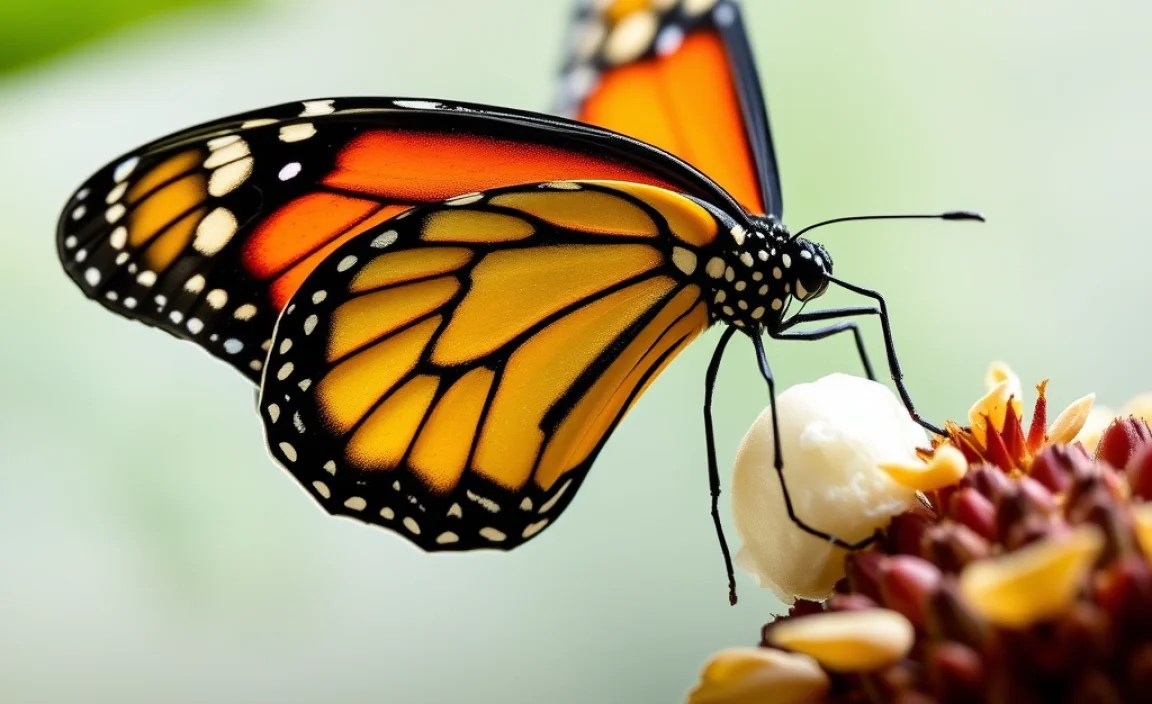
Sometimes, despite your best efforts, monarch butterflies may not lay eggs on your milkweed plants. Here are some common problems and how to solve them:
Problem: No Monarchs Visiting
Solution: Attract monarchs to your garden by planting nectar-rich flowers. Make sure your garden is in a sunny location and free from pesticides. You can also try using a butterfly feeder filled with sugar water to attract them.
Problem: Milkweed is Eaten by Other Insects
Solution: Monitor your milkweed plants for pests like aphids, milkweed bugs, and spider mites. Remove them by hand or use insecticidal soap. Encourage beneficial insects to control pest populations.
Problem: Tropical Milkweed Issues
Solution: If you have tropical milkweed, cut it back in the fall to encourage monarchs to migrate rather than stay and potentially become infected with parasites. Consider replacing it with native milkweed species.
Problem: Not Enough Sunlight
Solution: Milkweed needs at least six hours of sunlight per day. If your milkweed is not getting enough sunlight, consider transplanting it to a sunnier location or pruning nearby trees or shrubs to allow more light to reach the plants.
The Importance of Citizen Science

You can contribute to monarch conservation efforts by participating in citizen science projects. These projects help scientists track monarch populations and migration patterns. Some popular citizen science projects include:
- Monarch Watch: Tag monarch butterflies to track their migration.
- Journey North: Report monarch sightings and milkweed emergence.
- iNaturalist: Share photos of monarch butterflies and milkweed plants.
By participating in these projects, you can help scientists gather valuable data and make informed decisions about monarch conservation.
Frequently Asked Questions
Here are some frequently asked questions about monarch butterfly oviposition:
Why do monarch butterflies only lay eggs on milkweed?
Monarch caterpillars can only eat milkweed leaves. Milkweed contains toxins that protect the caterpillars from predators.
How can I tell if a monarch butterfly has laid eggs on my milkweed?
Look for tiny, pearl-white eggs on the underside of milkweed leaves. They are about the size of a pinhead.
What is the best type of milkweed to plant for monarch butterflies?
Native milkweed species are the best choice. Consult with your local native plant society to find out which species are native to your area.
How can I protect monarch caterpillars from predators?
Cover your milkweed plants with netting or move the caterpillars indoors to a screened enclosure.
What do I do if I run out of milkweed for my caterpillars?
Supplement with milkweed from another source. You can also ask other gardeners in your area if they have extra milkweed.
Can I raise monarch butterflies indoors?
Yes, you can raise monarch butterflies indoors. Provide them with fresh milkweed leaves and clean their enclosure regularly.
When is the best time to release a monarch butterfly?
Release the butterfly in a safe location, away from predators and traffic, after its wings are dry and fully expanded.
Conclusion
Encouraging monarch butterfly oviposition is a rewarding way to support these magnificent creatures. By planting milkweed, protecting it from pesticides, and providing a water source, you can create a haven for monarch moms to lay their eggs. Remember, native milkweed is best, and avoid using pesticides that can harm the caterpillars. Monitoring your milkweed and participating in citizen science projects can further contribute to monarch conservation efforts. Every small action counts, and together, we can help ensure that future generations can enjoy the beauty of monarch butterflies.


