
Grassland Butterfly Guide: Your Easy ID Toolkit

Quick Summary:
Identifying grassland butterflies involves noting key features like size, color patterns, and behavior. Observe them feeding on nectar or basking in the sun to get a good look. Common grassland species include skippers, meadow browns, and fritillaries. Use field guides and online resources to confirm your sightings and contribute to citizen science projects to help track butterfly populations!
Have you ever strolled through a sunny meadow and been mesmerized by the flutter of delicate wings? Grassland butterflies are a joy to behold, but identifying them can feel overwhelming. Don’t worry! With a few simple tips and tricks, you can become a butterfly expert in your own backyard. This guide will walk you through the basics of butterfly identification, focusing on the beautiful species you’re likely to find in grasslands.
We’ll cover everything from recognizing common butterfly families to understanding their unique behaviors and habitats. Get ready to discover the amazing world of grassland butterflies!
Identifying Grassland Butterflies: A Beginner’s Guide
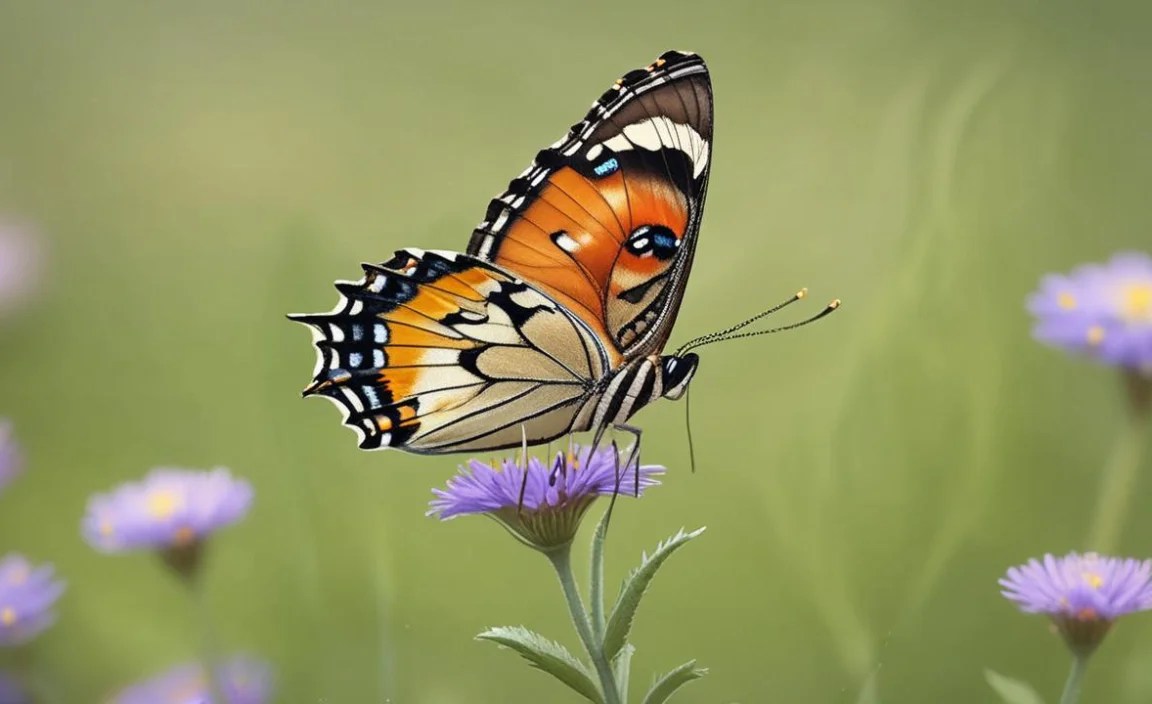
Grassland butterflies are a diverse group, each species uniquely adapted to its environment. Learning to identify them opens a window into the fascinating world of insect ecology and the importance of preserving these vital habitats. Here’s how to get started:
1. Observe Key Characteristics
Before you can name a butterfly, you need to observe it carefully. Here’s what to look for:
- Size: Is it small, medium, or large? Note the approximate wingspan.
- Color and Pattern: Describe the colors on the upper and lower sides of the wings. Are there spots, stripes, or bands?
- Wing Shape: Are the wings rounded, pointed, or elongated?
- Flight Pattern: Does it fly quickly and erratically, or slowly and gracefully?
- Habitat: Where did you see the butterfly? What plants were nearby?
2. Get Familiar with Common Grassland Butterfly Families
Butterflies are grouped into families based on shared characteristics. Here are some of the most common families you’ll encounter in grasslands:
a. Skippers (Hesperiidae)
Skippers are small, fast-flying butterflies with hooked antennae. They often have orange or brown wings with checkered patterns. They get their name from their quick, skipping flight.
- Key Features: Hooked antennae, stout bodies, rapid flight.
- Common Species: Fiery Skipper, Sachem, Least Skipper.
b. Brushfoots (Nymphalidae)
Brushfoots are a large and diverse family that includes fritillaries, admirals, and crescentspots. They are called “brushfoots” because their front legs are small and hairy, resembling brushes.
- Key Features: Reduced front legs, often brightly colored, diverse wing patterns.
- Common Species: Meadow Fritillary, Monarch, Viceroy.
c. Whites and Sulphurs (Pieridae)
These butterflies are typically white, yellow, or orange, with black markings. They are often seen flying in open fields and meadows.
- Key Features: Predominantly white, yellow, or orange wings, often with dark markings.
- Common Species: Cabbage White, Clouded Sulphur, Orange Sulphur.
d. Blues, Coppers, and Hairstreaks (Lycaenidae)
These small butterflies are often brightly colored, with metallic hues. Many have delicate tails on their hindwings.
- Key Features: Small size, bright metallic colors, often with tails or spots on the hindwings.
- Common Species: Eastern Tailed-Blue, American Copper, Gray Hairstreak.
3. Use Field Guides and Online Resources
Field guides are invaluable tools for butterfly identification. Look for guides specific to your region. Here are some excellent resources:
- National Audubon Society Field Guide to North American Butterflies: A comprehensive guide with detailed descriptions and illustrations.
- Butterflies of North America: A website with photos, range maps, and life history information.
- iNaturalist: A citizen science platform where you can upload photos of butterflies and get help with identification.
4. Pay Attention to Host Plants
Butterflies are often closely associated with specific host plants, which their caterpillars feed on. Knowing the host plants in your area can help you narrow down the possibilities.
- Monarchs: Milkweed (Asclepias spp.)
- Black Swallowtails: Parsley, dill, and fennel (Apiaceae family)
- Baltimore Checkerspots: White Turtlehead (Chelone glabra)
Attracting these host plants to your garden is a great way to support local butterfly populations!
5. Learn About Butterfly Behavior
Observing butterfly behavior can provide additional clues for identification:
- Basking: Butterflies often bask in the sun to warm up. Note how they hold their wings – open, closed, or partially open.
- Nectaring: Watch which flowers they visit for nectar. Different species have different preferences.
- Puddling: Male butterflies often gather at puddles or damp soil to obtain minerals.
- Territoriality: Some butterflies are territorial and will defend their patch from intruders.
6. Common Grassland Butterfly Species
Let’s take a closer look at some of the butterflies you’re most likely to find in grassland habitats:
a. Meadow Fritillary (Boloria bellona)
The Meadow Fritillary is a small, orange butterfly with black markings. It is common in meadows and open fields throughout North America.
- Identification Tips: Small size, orange wings with black spots, silver spots on the underside of the hindwings.
- Habitat: Meadows, pastures, and open fields.
- Host Plants: Violets (Viola spp.)
b. Monarch (Danaus plexippus)
The Monarch is perhaps the most well-known butterfly in North America, famous for its long-distance migration. It has bright orange wings with black veins and a black border.
- Identification Tips: Large size, bright orange wings with black veins and border, white spots along the border.
- Habitat: Open fields, meadows, and gardens with milkweed.
- Host Plants: Milkweed (Asclepias spp.)
c. Clouded Sulphur (Colias philodice)
The Clouded Sulphur is a common yellow butterfly found throughout North America. Males have solid yellow wings, while females may be white or yellow with darker markings.
- Identification Tips: Yellow or white wings, black border on the forewing (more prominent in males), small pink spot on the hindwing.
- Habitat: Open fields, meadows, and roadsides.
- Host Plants: Clover, alfalfa, and other legumes.
d. Eastern Tailed-Blue (Cupido comyntas)
The Eastern Tailed-Blue is a tiny, blue butterfly with delicate tails on its hindwings. It is found in a variety of habitats, including grasslands, woodlands, and gardens.
- Identification Tips: Small size, blue wings (males are brighter blue than females), delicate tails on the hindwings, orange spot near the tail.
- Habitat: Grasslands, woodlands, and gardens.
- Host Plants: Legumes, such as clover, beans, and peas.
e. Common Buckeye (Junonia coenia)
The Common Buckeye is a striking butterfly with large eyespots on its wings. It is found in open habitats throughout North America.
- Identification Tips: Brown wings with prominent eyespots, orange bars on the forewings, wavy brown lines on the hindwings.
- Habitat: Open fields, roadsides, and disturbed areas.
- Host Plants: Plantains, snapdragons, and other weedy plants.
7. Document Your Observations
Keep a notebook or use a mobile app to record your butterfly sightings. Note the date, time, location, habitat, and any identifying features. Photos are extremely helpful!
- Take clear photos: Capture images of both the upper and lower sides of the wings.
- Note the location: Record the GPS coordinates or a detailed description of the location.
- Observe the behavior: Describe what the butterfly was doing (e.g., nectaring, basking, flying).
8. Contribute to Citizen Science
Your butterfly observations can contribute to valuable scientific research. Consider participating in citizen science projects such as:
- The North American Butterfly Association (NABA) Butterfly Count: An annual count held each summer to monitor butterfly populations.
- Journey North: A program that tracks the migration of Monarch butterflies.
- iNaturalist: A platform for sharing and identifying observations of plants and animals.
By sharing your data, you can help scientists track butterfly populations, understand their distribution, and assess the impact of environmental changes.
9. Create a Butterfly-Friendly Habitat
One of the best ways to learn about grassland butterflies is to create a habitat that attracts them. Here are some tips:
- Plant native wildflowers: Choose a variety of flowers that bloom at different times of the year to provide a continuous source of nectar.
- Include host plants: Plant the host plants that caterpillars need to survive.
- Provide a water source: Create a shallow puddle or a birdbath with rocks for butterflies to land on.
- Avoid pesticides: Pesticides can harm or kill butterflies and other beneficial insects.
- Leave some areas undisturbed: Allow some areas of your yard to grow wild to provide shelter and breeding habitat.
Table: Quick Guide to Common Grassland Butterflies
| Butterfly Species | Key Features | Habitat | Host Plants |
|---|---|---|---|
| Meadow Fritillary | Small, orange with black spots, silver spots underneath | Meadows, pastures | Violets |
| Monarch | Large, orange with black veins and border, white spots | Open fields, gardens with milkweed | Milkweed |
| Clouded Sulphur | Yellow or white, black border on forewing | Open fields, roadsides | Clover, alfalfa |
| Eastern Tailed-Blue | Tiny, blue, delicate tails on hindwings | Grasslands, woodlands, gardens | Legumes (clover, beans) |
| Common Buckeye | Brown with large eyespots, orange bars | Open fields, roadsides | Plantains, snapdragons |
Table: Butterfly Families and Their Characteristics

| Family | Common Name | Key Characteristics | Examples |
|---|---|---|---|
| Hesperiidae | Skippers | Hooked antennae, stout bodies, rapid flight | Fiery Skipper, Sachem |
| Nymphalidae | Brushfoots | Reduced front legs, diverse wing patterns | Monarch, Viceroy, Meadow Fritillary |
| Pieridae | Whites and Sulphurs | White, yellow, or orange wings, often with dark markings | Cabbage White, Clouded Sulphur |
| Lycaenidae | Blues, Coppers, Hairstreaks | Small size, bright metallic colors, often with tails | Eastern Tailed-Blue, American Copper |
FAQ: Identifying Grassland Butterflies
1. What is the best time of day to see butterflies?
Butterflies are most active on warm, sunny days, typically between mid-morning and mid-afternoon. They need the sun’s warmth to raise their body temperature for flight.
2. How can I attract more butterflies to my garden?
Plant a variety of native wildflowers that provide nectar for adult butterflies and host plants for caterpillars. Avoid using pesticides, and provide a shallow water source.
3. What is the difference between a butterfly and a moth?
Butterflies typically have slender bodies, clubbed antennae, and hold their wings upright when at rest. Moths have fuzzy bodies, feathery or comb-like antennae, and usually rest with their wings spread out.
4. Are butterflies endangered?
Many butterfly species are facing population declines due to habitat loss, climate change, and pesticide use. Some species, like the Monarch butterfly, are of particular concern.
5. How can I tell the difference between male and female butterflies?
In some species, males and females have different wing patterns or colors. Males are often brighter and more colorful than females. Look for field guides that illustrate these differences.
6. What do butterflies eat?
Adult butterflies primarily feed on nectar from flowers. Caterpillars eat the leaves of their host plants.
7. Is it okay to touch a butterfly’s wings?
It’s best to avoid touching a butterfly’s wings, as the scales are delicate and can be easily damaged. Damaged wings can impair a butterfly’s ability to fly and survive.
Conclusion
Identifying grassland butterflies can be a rewarding and educational experience. By observing their unique characteristics, learning about their host plants, and using field guides and online resources, you can unlock the secrets of these beautiful creatures. Remember to document your observations and contribute to citizen science projects to help protect butterfly populations for future generations. So, grab your binoculars, head out to your nearest meadow, and start exploring the wonderful world of grassland butterflies!


