Swallowtail Butterfly vs Monarch: Amazing Differences!

The main difference between swallowtail butterflies and monarch butterflies lies in their appearance, size, and host plants. Swallowtails have diverse patterns, often with tail-like extensions on their hindwings, and are generally larger. Monarchs have a distinct orange and black pattern and rely exclusively on milkweed plants for their caterpillars to feed on.
Have you ever been enjoying your garden, admiring the colorful butterflies flitting about, and wondered, “Is that a swallowtail or a monarch?” It’s a common question! These two butterfly families are among the most beautiful and recognizable, but telling them apart can be tricky. Don’t worry; I’m here to help you become a butterfly identification expert in no time.
In this article, we’ll explore the key differences between swallowtail and monarch butterflies. We’ll look at their appearance, size, habitat, and the plants they depend on. By the end, you’ll be able to confidently identify these lovely creatures and impress your friends with your butterfly knowledge. Let’s get started!
Swallowtail Butterfly vs. Monarch: Key Differences
Swallowtails and monarchs are both stunning butterflies, but they belong to different families and have distinct characteristics. Let’s break down the main differences in detail:
Appearance
One of the most obvious ways to tell them apart is by looking at their wings:
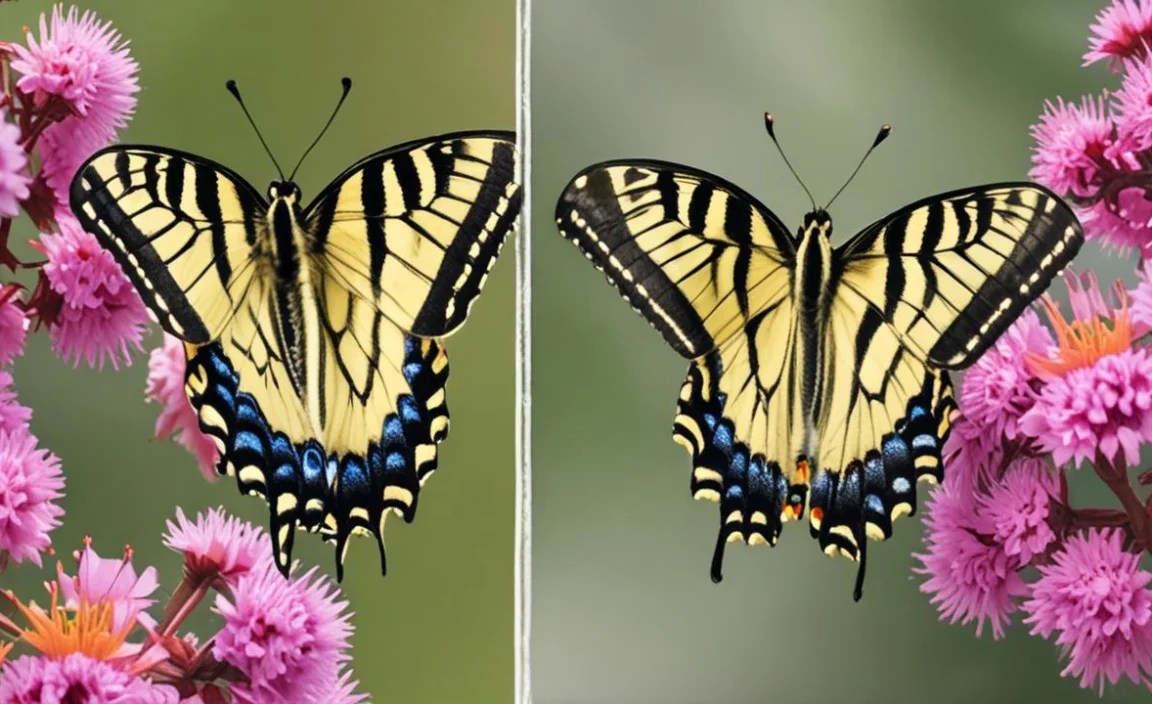
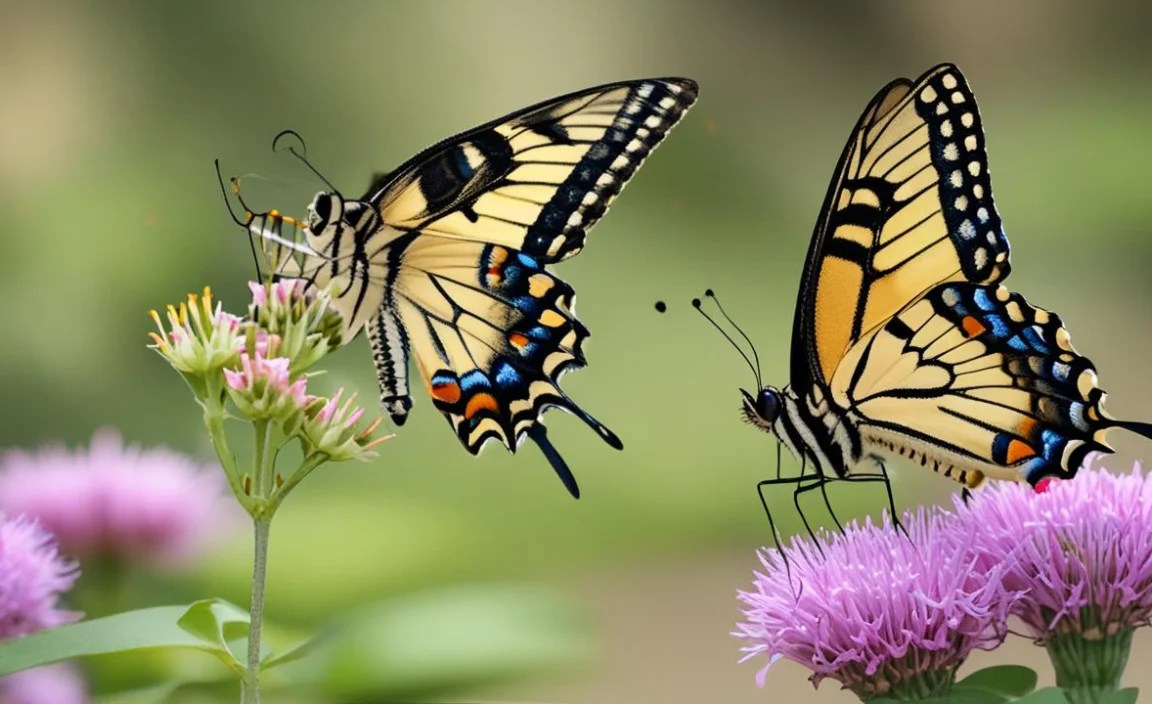
- Swallowtails: These butterflies are known for their elegant tail-like extensions on their hindwings, giving them their name. Their colors and patterns vary widely depending on the species. You might see black, yellow, blue, orange, and even green markings.
- Monarchs: Monarchs have a very recognizable bright orange color with black veins and a black border. The edges of their wings are marked with white spots. This striking pattern serves as a warning to predators, as monarchs are poisonous due to the milkweed they eat as caterpillars.
Size
Generally, swallowtails are larger than monarchs:
- Swallowtails: Their wingspan can range from 2.5 to 5.5 inches, depending on the species. Some of the larger swallowtails, like the Giant Swallowtail, can be quite impressive.
- Monarchs: Monarchs typically have a wingspan of 3.5 to 4 inches. While they aren’t small butterflies, they are usually smaller than most swallowtail species.
Habitat and Range
Where you spot these butterflies can also give you a clue:
- Swallowtails: Swallowtails are found all over the world, except for Antarctica. Different species prefer different habitats, from forests and meadows to gardens and urban areas.
- Monarchs: Monarchs are native to North and South America. They are famous for their long migrations, traveling thousands of miles between their breeding grounds and overwintering sites. You’ll often find them in open fields, meadows, and along roadsides where milkweed grows.
Host Plants
The plants that caterpillars eat are a crucial part of a butterfly’s life cycle:
- Swallowtails: Swallowtail caterpillars are not picky eaters! They feed on a variety of plants, including citrus trees, dill, parsley, fennel, and spicebush. Each swallowtail species tends to prefer specific host plants.
- Monarchs: Monarch caterpillars are specialists, feeding exclusively on milkweed plants. Milkweed contains toxins that make the caterpillars (and later the butterflies) poisonous to predators. This is why planting milkweed is so important for monarch conservation.
Flight Patterns
Observing how these butterflies fly can also help with identification:
- Swallowtails: Swallowtails tend to have a strong, erratic flight pattern. They are often seen soaring and gliding, making them a delight to watch.
- Monarchs: Monarchs have a more deliberate and steady flight. During migration, they can fly for long distances, covering up to 80 miles a day.
Detailed Comparison Table
Here’s a quick reference table summarizing the key differences between swallowtail and monarch butterflies:
| Feature | Swallowtail Butterfly | Monarch Butterfly |
|---|---|---|
| Appearance | Diverse colors and patterns, often with tail-like extensions on hindwings | Bright orange with black veins and borders, white spots on wing edges |
| Size (Wingspan) | 2.5 to 5.5 inches | 3.5 to 4 inches |
| Habitat | Worldwide, various habitats | North and South America, open fields and meadows |
| Host Plants | Various plants, including citrus, dill, parsley, fennel, spicebush | Exclusively milkweed plants |
| Flight Pattern | Strong, erratic | Deliberate, steady |
Swallowtail Butterfly Species: A Closer Look

Swallowtail butterflies belong to the family Papilionidae, which includes over 550 species worldwide. Let’s explore some of the most common and fascinating swallowtail species you might encounter.
Eastern Tiger Swallowtail (Papilio glaucus)
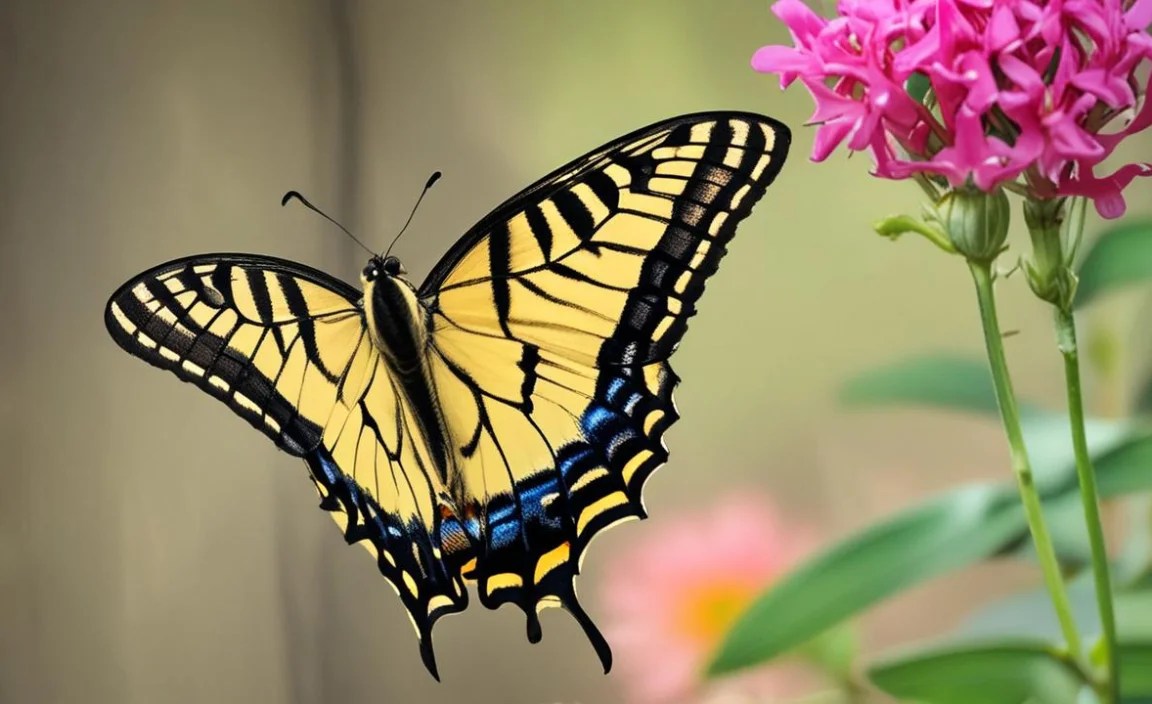
The Eastern Tiger Swallowtail is one of the most recognizable swallowtails in North America. Males are typically bright yellow with black stripes, resembling a tiger. Females can be either yellow like the males or a darker black form. Both forms have iridescent blue markings on their hindwings.
- Habitat: Deciduous forests, woodlands, gardens, and parks.
- Host Plants: Wild cherry, tulip tree, sweetbay, and other deciduous trees.
- Fun Fact: The black form females are more common in the southern parts of their range, possibly as a form of mimicry to avoid predation.
Black Swallowtail (Papilio polyxenes)
The Black Swallowtail is a beautiful butterfly with black wings and rows of yellow spots along the edges. Females have more iridescent blue on their hindwings compared to males. The caterpillars are also quite striking, with green, black, and yellow bands.
- Habitat: Open fields, gardens, and meadows.
- Host Plants: Plants in the parsley family, such as dill, parsley, fennel, and carrot tops.
- Fun Fact: This butterfly is often seen in vegetable gardens, where its caterpillars can sometimes be considered pests. However, many gardeners plant extra host plants to support these beautiful butterflies.
Giant Swallowtail (Papilio cresphontes)
As the name suggests, the Giant Swallowtail is one of the largest butterflies in North America. It has a wingspan of up to 7 inches! Its wings are dark brown with a diagonal band of yellow spots. The caterpillars are masters of disguise, resembling bird droppings to avoid predators.
- Habitat: Citrus groves, woodlands, and gardens.
- Host Plants: Citrus trees, prickly ash, and other members of the citrus family.
- Fun Fact: The Giant Swallowtail is also known as the “orange dog” butterfly because its caterpillars can be found feeding on orange and other citrus trees.
Spicebush Swallowtail (Papilio troilus)
The Spicebush Swallowtail is a lovely dark butterfly with iridescent blue-green markings on its hindwings. It gets its name from its primary host plant, the spicebush. The caterpillars are green with large eyespots that resemble a snake, another clever defense mechanism.
- Habitat: Woodlands, forests, and swamps.
- Host Plants: Spicebush and sassafras.
- Fun Fact: The Spicebush Swallowtail is known for its strong association with its host plants. The female butterflies lay their eggs exclusively on spicebush and sassafras leaves.
Monarch Butterfly: A Deep Dive
Monarch butterflies, scientifically known as Danaus plexippus, are famous for their striking orange and black wings and their incredible migratory journeys. Let’s take a closer look at this iconic butterfly.
Appearance and Life Cycle
Monarchs have a distinctive appearance that makes them easy to identify. Their wings are bright orange with black veins and a black border, and the edges are marked with white spots. This vibrant coloration serves as a warning to predators, indicating that they are toxic.
The monarch life cycle consists of four stages:
- Egg: Monarch eggs are small, cream-colored, and laid singly on milkweed leaves.
- Larva (Caterpillar): The caterpillar is black, yellow, and white striped and feeds exclusively on milkweed.
- Pupa (Chrysalis): The caterpillar transforms into a green chrysalis with gold dots.
- Adult Butterfly: The adult butterfly emerges from the chrysalis, ready to reproduce and continue the cycle.
Migration
Monarchs are renowned for their long-distance migration. Each fall, monarchs east of the Rocky Mountains migrate thousands of miles to overwintering sites in the oyamel fir forests of central Mexico. Monarchs west of the Rocky Mountains migrate to overwintering sites along the California coast. These migrations are multigenerational, meaning that it takes several generations of butterflies to complete the entire journey.
The migration is triggered by changes in temperature and day length. As the days get shorter and the weather cools, monarchs begin their southward journey. They use a combination of environmental cues, including the position of the sun and the Earth’s magnetic field, to navigate.
Conservation Status
Monarch populations have declined significantly in recent decades due to habitat loss, climate change, and the use of pesticides. The loss of milkweed, their primary food source, is a major threat. Efforts are underway to conserve monarch butterflies, including:
- Planting Milkweed: Encouraging gardeners and landowners to plant milkweed to provide food for monarch caterpillars.
- Protecting Overwintering Sites: Conserving the oyamel fir forests in Mexico and the coastal habitats in California.
- Reducing Pesticide Use: Promoting the use of integrated pest management practices to minimize the impact on monarch populations.
How to Attract Swallowtails and Monarchs to Your Garden

Creating a butterfly-friendly garden is a wonderful way to support these beautiful creatures and enjoy their presence up close. Here are some tips for attracting both swallowtails and monarchs to your garden:
Plant Host Plants
- For Swallowtails: Plant a variety of host plants, such as dill, parsley, fennel, citrus trees, spicebush, and wild cherry. Research which swallowtail species are common in your area and plant their preferred host plants.
- For Monarchs: Plant milkweed! This is the only food source for monarch caterpillars. There are many different species of milkweed, so choose one that is native to your region. Common milkweed (Asclepias syriaca) and butterfly weed (Asclepias tuberosa) are popular choices.
Provide Nectar Sources
Butterflies need nectar to fuel their flight and reproduction. Plant a variety of nectar-rich flowers that bloom throughout the growing season. Some good choices include:
- Asters
- Black-Eyed Susans
- Coneflowers
- Lantana
- Salvia
- Zinnias
Offer a Water Source
Butterflies need water to stay hydrated. Create a shallow water source by placing a dish of water with pebbles or marbles in your garden. The butterflies can land on the pebbles and drink without the risk of drowning.
Avoid Pesticides
Pesticides can harm or kill butterflies and other beneficial insects. Avoid using pesticides in your garden, or choose organic and natural alternatives.
Provide Shelter
Butterflies need shelter from the wind and rain. Plant trees, shrubs, and tall grasses to provide them with a safe haven.
Create a Sunny Spot
Butterflies are cold-blooded and need sunlight to warm up. Create a sunny spot in your garden where they can bask and soak up the sun’s rays.
Ecological Importance of Swallowtails and Monarchs
Swallowtail and monarch butterflies play important roles in the ecosystem. They are pollinators, helping to transfer pollen from one flower to another, which is essential for plant reproduction. They also serve as a food source for birds, reptiles, and other animals.
Monarch butterflies are particularly important because their migration helps to connect different ecosystems across North America. They also serve as an indicator species, meaning that their health reflects the overall health of the environment. Declining monarch populations can signal problems with habitat loss, climate change, and pesticide use.
Cultural Significance and Symbolism
Butterflies have been admired and revered in cultures around the world for centuries. They are often seen as symbols of transformation, rebirth, and hope.
- Swallowtails: In some cultures, swallowtail butterflies are associated with good luck and prosperity. Their elegant tails are seen as a sign of grace and beauty.
- Monarchs: Monarch butterflies have a special significance in Mexican culture. They are believed to be the souls of ancestors returning to visit their families during the Day of the Dead celebrations.
FAQ: Swallowtail Butterfly vs. Monarch
Here are some frequently asked questions about swallowtail and monarch butterflies:
- Are swallowtail butterflies poisonous?
- No, swallowtail butterflies are not generally poisonous. However, some swallowtail caterpillars feed on toxic plants, which can make the butterflies unpalatable to predators. Monarch butterflies are poisonous because their caterpillars feed exclusively on milkweed, which contains toxins.
- Do swallowtail butterflies migrate?
- Some swallowtail species migrate, but not to the same extent as monarch butterflies. Monarchs are famous for their long-distance multigenerational migrations, while swallowtails tend to have shorter, less predictable movements.
- What is the lifespan of a swallowtail butterfly?
- The lifespan of a swallowtail butterfly varies depending on the species and environmental conditions. Generally, adult swallowtails live for about two weeks to a month.
- How can I tell the difference between male and female monarch butterflies?
- Male monarch butterflies have thinner veins on their wings and a black spot on each hindwing. Female monarchs have thicker veins and lack the black spot.
- What should I do if I find a monarch caterpillar on a plant that isn’t milkweed?
- Gently move the caterpillar to a milkweed plant. Monarch caterpillars can only survive on milkweed, so it’s important to ensure they have access to this essential food source.
- Are monarch butterflies endangered?
- Monarch butterflies are not currently listed as endangered, but their populations have declined significantly in recent decades. They are considered a vulnerable species, and conservation efforts are crucial to protect them.
- Can I raise monarch butterflies at home?
- Yes, you can raise monarch butterflies at home. Provide them with fresh milkweed leaves and a safe, enclosed habitat. Be sure to release the butterflies back into the wild once they emerge from their chrysalises.
Conclusion
Now you’re equipped with the knowledge to confidently distinguish between swallowtail and monarch butterflies! From their unique wing patterns and sizes to their preferred host plants and habitats, these differences make each butterfly family special. By understanding these distinctions, you can better appreciate the diversity and beauty of the butterfly world.
More than just beautiful insects, butterflies are vital to our ecosystem. By planting host and nectar plants, avoiding pesticides, and supporting conservation efforts, you can play a part in protecting these amazing creatures for generations to come. So, get outside, explore your garden, and enjoy the magic of butterflies!