
Male vs Female Monarch Butterfly: Spot the Secret!

Quick Summary:
Telling male from female Monarch butterflies is easy! Just look at their wings and legs. Males have a black spot on each hind wing, which the females lack. Also, males have thinner wing veins, while females have thicker veins, making them look more defined. By observing these key differences, you can confidently identify the sex of Monarch butterflies in your backyard or during their amazing migration!
Have you ever watched a Monarch butterfly flutter by and wondered if it was a boy or a girl? It’s a common question! Many people find it tricky to tell them apart at first glance. But don’t worry, it’s easier than you think! Knowing the difference helps us understand their behavior and life cycle better.
In this guide, I’ll walk you through the simple steps to identify male and female Monarchs. We’ll look at their wings, bodies, and even their behavior. Get ready to impress your friends with your newfound butterfly expertise!
How to Tell Male vs Female Monarch Butterfly

Identifying male and female Monarch butterflies is straightforward once you know what to look for. Here’s a detailed guide:
1. Check the Hind Wings for Spots
This is the easiest and most reliable method. Male Monarchs have a distinctive black spot (called a scent patch or androconial spot) on each hind wing. These spots contain pheromones that attract females.
Females do not have these spots. Their hind wings are uniformly orange with black veins and white spots along the edges.
- Male: Black spot on each hind wing.
- Female: No black spot on hind wings.
2. Examine the Wing Veins
Look closely at the black lines (veins) on the wings. This method requires a bit more practice, but it’s a helpful secondary indicator.
Female Monarchs tend to have thicker, more prominent veins compared to males. This is because females need stronger wings for laying eggs throughout their lives. The thicker veins provide the extra support needed for flying with the added weight of the eggs.
Males have thinner, less defined veins on their wings.
- Male: Thinner wing veins.
- Female: Thicker, more defined wing veins.
3. Observe Their Size and Shape
While not always definitive, there can be slight differences in size and wing shape between male and female Monarchs.
Females are often slightly larger than males, with broader wings. This is another adaptation to help them carry and lay eggs. A larger body and wings allow for better flight stability and endurance.
Males tend to be a bit smaller with more angular wings. However, size can vary depending on the individual butterfly and its environment, so this is not always a reliable indicator.
- Male: Slightly smaller, more angular wings (less reliable).
- Female: Slightly larger, broader wings (less reliable).
4. Watch Their Behavior
Observing the behavior of Monarchs can sometimes provide clues, especially during mating season. However, this method is less reliable for sex identification on its own.
Males are often more active in seeking out females. You might see them flying around and displaying their scent patches to attract a mate. They engage in courtship rituals, such as aerial displays and chasing after females.
Females are often seen near milkweed plants, the host plant for Monarch caterpillars. They spend a lot of time inspecting the plants and laying eggs. Their behavior is more focused on reproduction and ensuring the survival of the next generation.
- Male: More active, seeking mates (seasonal).
- Female: Often near milkweed, laying eggs (seasonal).
5. Check the Abdomen Shape
A less obvious but still helpful indicator is the shape of the abdomen (the butterfly’s body). This can be a bit tricky to observe without disturbing the butterfly, but with a careful eye, you might notice some differences.
Females tend to have a more rounded and plumper abdomen, especially during the egg-laying season. This is because they are carrying eggs. The abdomen might appear swollen or distended.
Males have a slimmer and more streamlined abdomen. Their abdomen is less rounded and does not appear as full as the female’s.
- Male: Slimmer abdomen.
- Female: More rounded abdomen.
Visual Guide: Male vs Female Monarch Butterfly
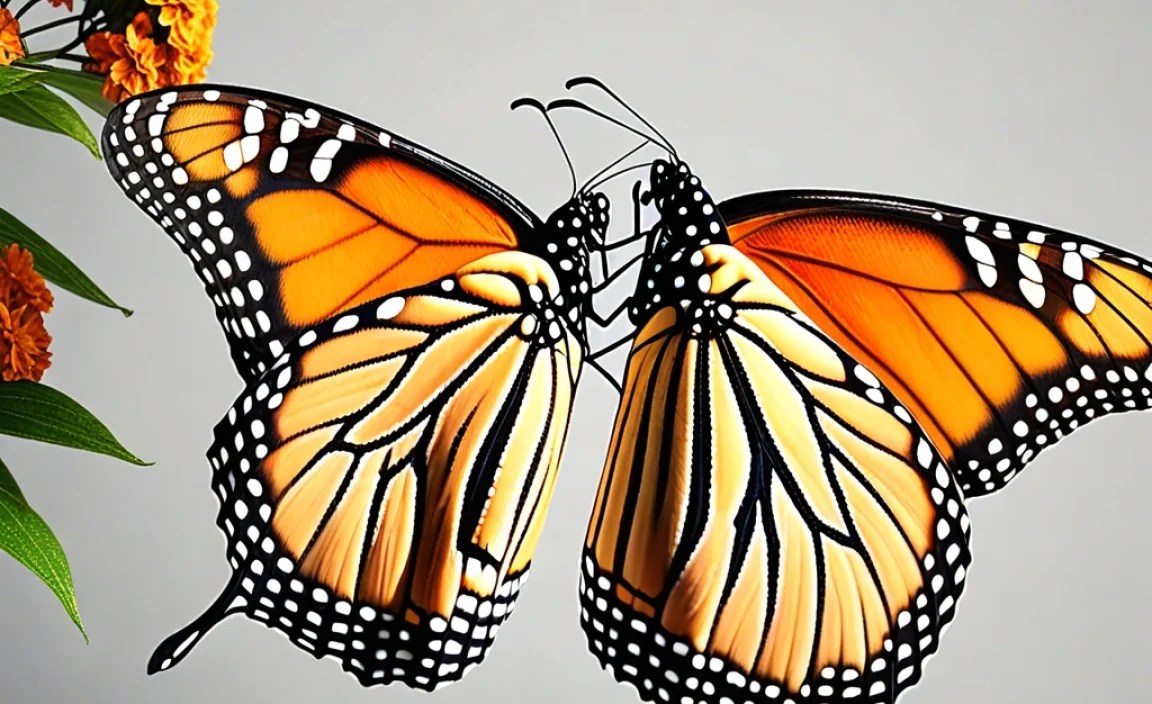
Here’s a table summarizing the key differences between male and female Monarch butterflies:
| Characteristic | Male Monarch | Female Monarch |
|---|---|---|
| Hind Wing Spot | Present (black spot) | Absent (no spot) |
| Wing Veins | Thinner | Thicker |
| Size | Slightly smaller | Slightly larger |
| Abdomen | Slimmer | More rounded |
| Typical Behavior | Actively seeks mates | Lays eggs on milkweed |
The Monarch Butterfly Life Cycle
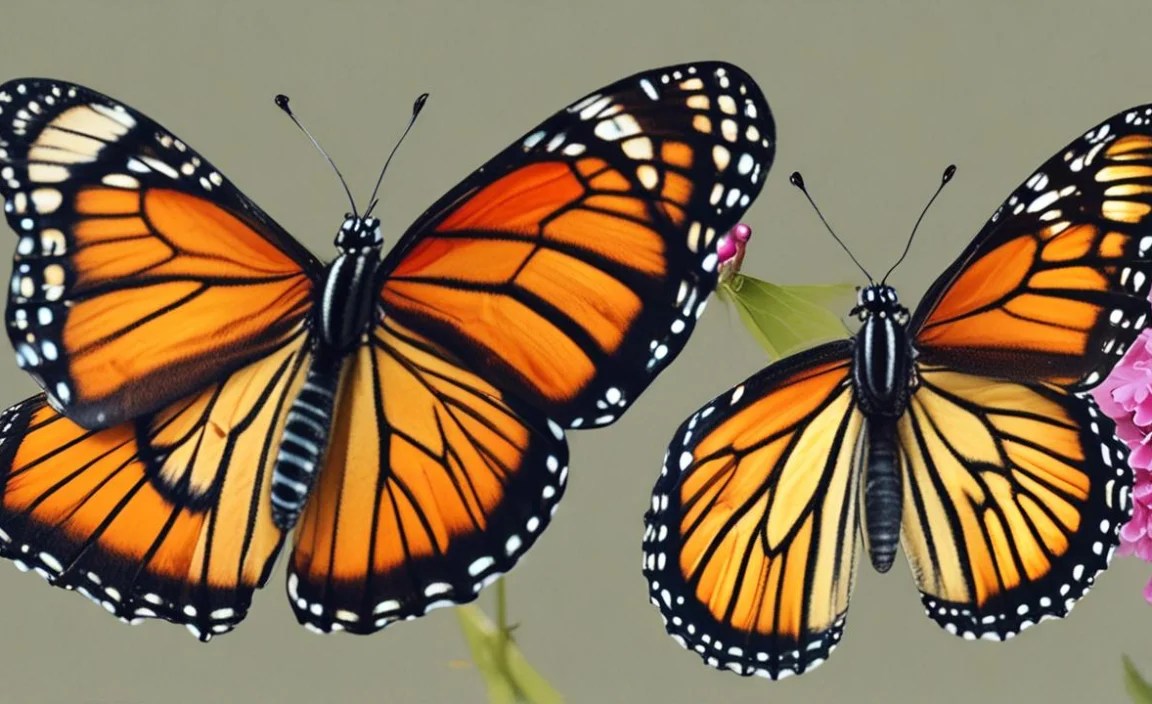
Understanding the Monarch butterfly life cycle is essential for appreciating the roles of both males and females. Here’s a quick overview:
1. Egg Stage
Female Monarchs lay their eggs exclusively on milkweed plants. These eggs are tiny, cream-colored, and usually found on the underside of milkweed leaves. Milkweed is crucial because it’s the only food source for Monarch caterpillars.
2. Larva (Caterpillar) Stage
Once the egg hatches, a tiny caterpillar emerges. The caterpillar eats milkweed leaves voraciously, growing rapidly and molting (shedding its skin) several times. Monarch caterpillars are easily recognizable with their black, yellow, and white stripes. This stage lasts about two weeks.
3. Pupa (Chrysalis) Stage
After reaching full size, the caterpillar forms a chrysalis, a jade-green protective shell. Inside the chrysalis, the caterpillar undergoes metamorphosis, transforming into a butterfly. This stage lasts about 10-14 days.
4. Adult Butterfly Stage
Finally, an adult Monarch butterfly emerges from the chrysalis. The butterfly’s wings are soft and crumpled at first, but they soon expand and harden. Adult Monarchs feed on nectar from flowers, using their long proboscis (tongue) to sip the sweet liquid. They then reproduce, and the cycle begins again.
The Importance of Milkweed

Milkweed is the cornerstone of the Monarch butterfly’s life cycle. Without milkweed, Monarchs cannot survive. Here’s why milkweed is so important:
- Food Source: Milkweed is the only food that Monarch caterpillars eat. They need it to grow and develop into healthy butterflies.
- Egg-Laying Site: Female Monarchs lay their eggs exclusively on milkweed plants. The presence of milkweed signals to the butterfly that it is a safe and suitable place to lay her eggs.
- Protection: Milkweed contains toxins (cardenolides) that make the caterpillars and butterflies poisonous to some predators. This natural defense mechanism helps protect them from being eaten.
How to Help Monarchs
You can play a vital role in helping Monarch butterflies thrive. Here are some simple actions you can take:
- Plant Milkweed: Grow milkweed in your garden or community. There are many different species of milkweed, so choose one that is native to your area. The Xerces Society provides excellent resources for finding native milkweed species.
- Plant Nectar Flowers: Provide a variety of nectar-rich flowers that bloom throughout the Monarch season. This will give adult Monarchs the energy they need for migration and reproduction.
- Avoid Pesticides: Pesticides can harm or kill Monarchs and other beneficial insects. Use organic gardening practices and avoid spraying insecticides.
- Create a Butterfly Garden: Design a garden that provides food, water, and shelter for butterflies. Include host plants (like milkweed) and nectar plants, as well as a shallow dish of water with pebbles for butterflies to land on.
- Support Conservation Efforts: Donate to organizations that are working to protect Monarchs and their habitat. Participate in citizen science projects, such as Monarch tagging programs, to help researchers track Monarch populations.
Monarch Migration
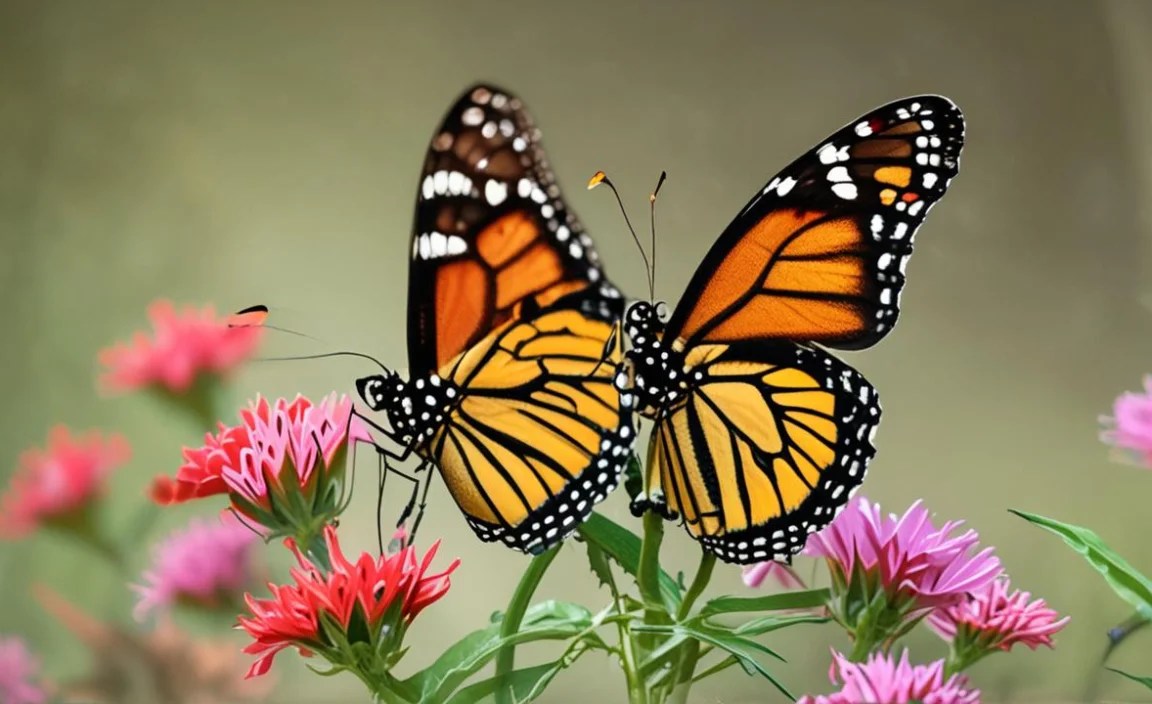
Monarch butterflies are famous for their incredible migration. Every year, millions of Monarchs travel thousands of miles to reach their overwintering grounds. Here’s a brief overview of this amazing phenomenon:
Eastern Monarchs
Monarchs east of the Rocky Mountains migrate to the oyamel fir forests in the mountains of central Mexico. They gather in huge colonies, clinging to the trees to stay warm during the winter months. In the spring, they begin their journey north, laying eggs on milkweed plants along the way. It takes several generations for the Monarchs to complete the entire migration cycle.
Western Monarchs
Monarchs west of the Rocky Mountains migrate to the California coast. They overwinter in groves of trees, such as eucalyptus and Monterey pine. Like their eastern counterparts, they rely on specific habitat conditions to survive the winter. The population of western Monarchs has declined dramatically in recent years, making conservation efforts even more critical.
Threats to Monarch Butterflies

Monarch butterflies face numerous threats that have led to a significant decline in their populations. Understanding these threats is essential for effective conservation efforts.
Habitat Loss
The loss of milkweed and nectar sources due to agricultural practices, development, and herbicide use is a major threat. As milkweed disappears from the landscape, Monarch caterpillars have less food, and fewer butterflies survive to adulthood.
Climate Change
Extreme weather events, such as droughts, floods, and temperature fluctuations, can disrupt Monarch migration and breeding patterns. Changes in temperature can also affect the availability of milkweed and nectar sources.
Pesticide Use
Insecticides, especially neonicotinoids, can harm or kill Monarch butterflies and other beneficial insects. Even small amounts of pesticides can be lethal to Monarch caterpillars and adults.
Illegal Logging
In the oyamel fir forests of Mexico, illegal logging threatens the overwintering habitat of eastern Monarchs. The removal of trees reduces the protective canopy, exposing the butterflies to cold temperatures and harsh weather.
Parasites and Diseases
Monarchs can be affected by parasites, such as Ophryocystis elektroscirrha (OE), which can weaken and deform butterflies. OE spores accumulate on milkweed plants and can infect Monarch caterpillars when they eat the leaves. Diseases, such as bacterial and viral infections, can also impact Monarch populations.
Frequently Asked Questions (FAQ)
1. Why is it important to tell the difference between male and female Monarch butterflies?
Knowing the difference helps us understand their roles in reproduction and conservation efforts. It allows us to track populations and study their behavior more effectively.
2. What is the black spot on the male Monarch’s wing for?
The black spot, called a scent patch, contains pheromones that the male uses to attract female Monarchs for mating.
3. Can I attract Monarch butterflies to my garden?
Absolutely! Plant milkweed and nectar-rich flowers to provide food and habitat for Monarchs. Avoid using pesticides that can harm them.
4. How long do Monarch butterflies live?
Monarchs typically live for a few weeks to several months, depending on the generation. The generation that migrates to Mexico can live up to nine months.
5. What should I do if I find a Monarch caterpillar on a plant that isn’t milkweed?
Gently move the caterpillar to a milkweed plant. Monarch caterpillars can only eat milkweed, so it’s essential to provide them with their food source.
6. Are Monarch butterflies endangered?
Monarch butterfly populations have declined significantly in recent years, and they are considered a threatened species. Conservation efforts are crucial to help them recover.
7. Where can I learn more about Monarch butterflies?
There are many great resources available online and in libraries. Some reputable organizations include the U.S. Forest Service, the National Wildlife Federation, and the Xerces Society.
Conclusion
Learning to distinguish between male and female Monarch butterflies not only enriches our understanding of these beautiful creatures but also empowers us to contribute to their conservation. By observing the telltale black spots, wing vein thickness, and subtle behavioral cues, you can confidently identify Monarchs in your garden or during their incredible migration.
Remember, every action counts. Whether you’re planting milkweed, avoiding pesticides, or supporting conservation organizations, you’re making a difference in the lives of Monarchs. Let’s continue to cherish and protect these iconic butterflies for generations to come!


