Painted Lady Butterfly Diagram Labeled: The Ultimate Guide

Have you ever seen a butterfly? They are so pretty. Butterflies fly around in gardens. They also fly in parks. One kind is the painted lady. Do you know what its parts are called? A painted lady butterfly diagram labeled can show you.
Key Takeaways
- A painted lady butterfly diagram labeled helps us learn butterfly parts.
- Painted lady butterflies go through four life stages.
- Butterflies use antennae to smell and feel their way around.
- The proboscis helps butterflies drink nectar from flowers.
- Painted lady wings have colorful patterns for camouflage.
Understanding the Painted Lady Butterfly Diagram Labeled

A painted lady butterfly diagram labeled is like a map. It shows all the parts of the butterfly. Each part has a name and a job. The diagram helps us understand how butterflies work. Butterflies are insects. They have a head, thorax, and abdomen. They also have wings and legs. Looking at a diagram makes learning easy. We can see where each part is located. We learn what each part does. This makes studying butterflies fun. Diagrams are helpful for students. They are also helpful for anyone who loves butterflies. You can find many diagrams online or in books.
- Butterflies have three main body parts.
- Wings help butterflies fly.
- Antennae help them smell.
- Legs help them walk.
- The proboscis helps them eat.
Learning about butterfly parts is interesting. The head has eyes and antennae. The thorax is where the wings and legs attach. The abdomen holds the butterfly’s organs. Each part is important for the butterfly to live. When we study a painted lady butterfly diagram labeled, we see how everything fits together. It is like a puzzle. Each piece has its place. Understanding the parts helps us understand the whole butterfly. This is why diagrams are so useful. They make learning about nature easier and more fun. Keep exploring and discovering!
Fun Fact or Stat: Painted lady butterflies can fly up to 100 miles in a single day during migration!
What Are the Main Body Parts?
Butterflies have three main body parts. These are the head, thorax, and abdomen. The head is at the front. It has the eyes and antennae. The thorax is the middle part. It is where the wings and legs attach. The abdomen is the back part. It contains the butterfly’s insides. Each part is important for the butterfly’s survival. The head helps the butterfly see and smell. The thorax helps it move. The abdomen helps it digest food. All three parts work together. They help the butterfly live and thrive. Understanding these parts is key to understanding butterflies.
What Do Antennae Do?
Have you ever wondered what butterfly antennae do? Antennae are like tiny sensors. They help butterflies smell and feel. Butterflies use antennae to find food. They also use them to find mates. Antennae are on the butterfly’s head. They are long and thin. Butterflies can move their antennae around. This helps them detect scents from different directions. Imagine using your nose to find your favorite cookie. Butterflies use their antennae in a similar way. They are amazing tools for survival.
How Do Wings Help?
Wings are very important for butterflies. They help butterflies fly. Butterfly wings are covered in tiny scales. These scales give the wings their color. The colors help butterflies attract mates. They also help them hide from predators. Butterfly wings are delicate. But they are also strong. Butterflies can fly long distances. They can even fly across oceans. Without wings, butterflies could not survive. Wings are essential for their life.
Exploring the Wing Structure in a Butterfly Diagram
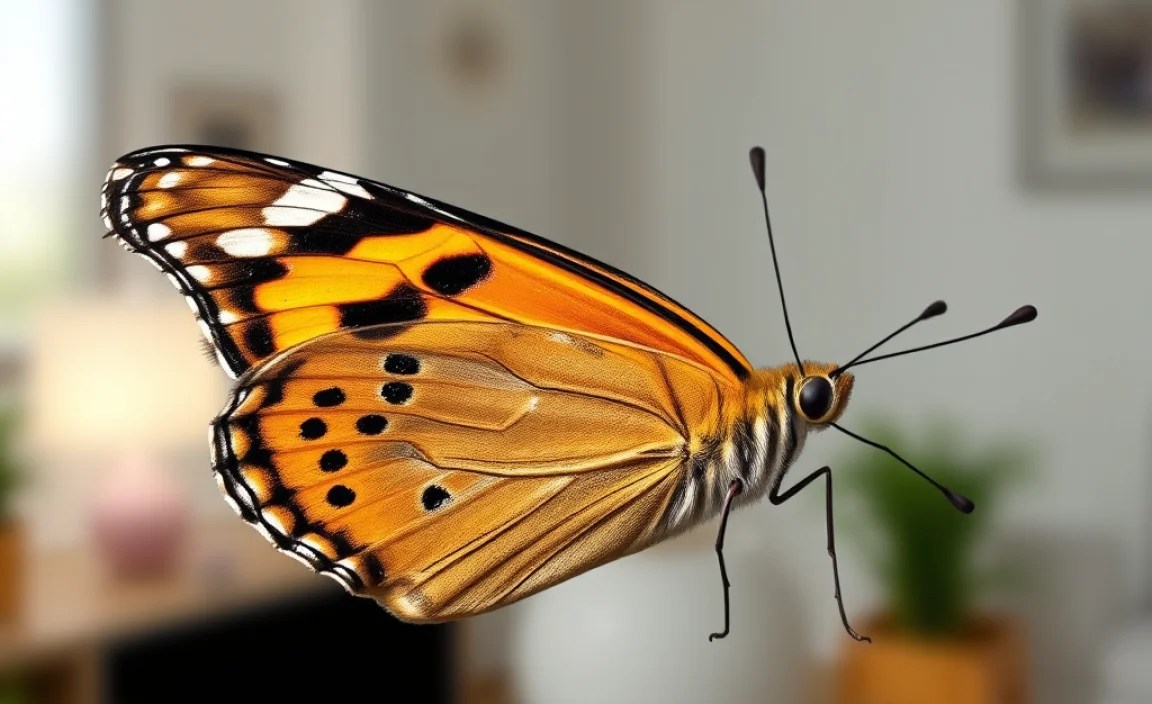
The wing structure is very important. A butterfly diagram shows the parts of the wing. The wing has veins. Veins support the wing. They also carry fluids. The wing has scales. Scales give the wing color. The pattern on the wing helps the butterfly. It can hide from enemies. It can also attract a mate. The shape of the wing helps the butterfly fly. Some wings are round. Some wings are pointy. Each shape helps in a different way. Studying the wing structure is fascinating. It helps us understand how butterflies fly and survive.
- Wings have veins for support.
- Scales give wings color and patterns.
- Wing shape affects flight.
- Patterns help with camouflage.
- Wings help attract mates.
- Different butterfly types have different wings.
Understanding the wing structure requires close examination. Veins are like tiny roads. They carry nutrients and fluids. Scales are like tiny tiles. They overlap to protect the wing. The arrangement of scales creates the patterns we see. These patterns can be simple or complex. Some patterns look like eyes. These scare away predators. Other patterns blend in with leaves. This helps the butterfly hide. The wing’s shape also matters. A long, narrow wing helps the butterfly fly fast. A broad wing helps it glide. Every part of the wing has a purpose. By studying the wing structure, we learn about butterfly survival. A painted lady butterfly diagram labeled is a great tool for this.
Fun Fact or Stat: Butterfly wings are transparent; the scales give them color!
What Are Wing Veins?
Wing veins are like tiny roads inside the wing. They support the wing. They also carry fluids. These fluids help keep the wing healthy. Veins run throughout the wing. They create a network of support. Without veins, the wing would be weak. It would tear easily. Veins are essential for flight. They help the butterfly control its movements. They also help it stay in the air. When you look at a butterfly wing, you can see the veins. They are like tiny lines on the wing’s surface.
How Do Scales Help?
Scales are tiny, colorful plates. They cover the butterfly’s wings. These scales give the wings their color. They also protect the wings. Scales overlap like tiles on a roof. They provide a barrier against the environment. When you touch a butterfly wing, some scales come off. This does not hurt the butterfly. But it can make the wing less colorful. Scales are important for camouflage. They help butterflies blend in with their surroundings.
Why Is Wing Shape Important?
The shape of a butterfly’s wing affects how it flies. Some butterflies have long, narrow wings. These wings help them fly fast. Other butterflies have broad wings. These wings help them glide. The shape of the wing depends on the butterfly’s lifestyle. Butterflies that migrate long distances need strong wings. Butterflies that live in forests need wings that can maneuver through trees. Wing shape is an adaptation. It helps butterflies survive in their environment.
The Head and Sensory Organs in a Labeled Butterfly Diagram

The head of a butterfly is small. It is packed with important parts. A labeled butterfly diagram shows these parts clearly. The head has eyes. Butterflies have compound eyes. These eyes see in many directions. The head also has antennae. Antennae help butterflies smell. They also help them feel. The proboscis is on the head too. The proboscis is like a straw. Butterflies use it to drink nectar. The head is essential for survival. It helps the butterfly find food. It also helps it avoid danger. Understanding the head is key to understanding the butterfly.
- Butterflies have compound eyes.
- Antennae help them smell and feel.
- The proboscis is used for drinking nectar.
- The head is small but important.
- Sensory organs are located on the head.
- Butterflies find food with their head.
Let’s explore the sensory organs in more detail. Compound eyes are made of many tiny lenses. Each lens sees a small part of the world. Together, they create a mosaic image. This helps butterflies detect movement. Antennae are covered in sensory cells. These cells detect smells and chemicals. Butterflies can smell food from far away. The proboscis is usually coiled up. When the butterfly finds nectar, it uncoils the proboscis. It then sucks up the nectar like a straw. All these parts work together. They help the butterfly find food and survive. A painted lady butterfly diagram labeled can show this clearly.
Fun Fact or Stat: Butterflies taste with their feet!
How Do Compound Eyes Work?
Compound eyes are made of many small lenses. Each lens is like a tiny eye. These lenses work together. They create a picture. Butterflies can see in all directions. They can see movement very well. This helps them avoid danger. It also helps them find food. Compound eyes are different from human eyes. Human eyes have one lens. Butterflies see the world in a different way. They see a mosaic of images. This is why compound eyes are so special.
What is the Proboscis?
The proboscis is like a long straw. Butterflies use it to drink nectar. When the butterfly is not eating, the proboscis is coiled up. When the butterfly finds a flower, it uncoils the proboscis. It then sucks up the nectar. The proboscis is a very important tool. Without it, butterflies could not eat. The proboscis is adapted for drinking. It is long and thin. It can reach deep into flowers.
How Do Butterflies Smell?
Butterflies smell with their antennae. Antennae are covered in sensory cells. These cells detect smells and chemicals. Butterflies can smell food from far away. They can also smell mates. Butterflies use their sense of smell to navigate. They can find their way back to their homes. The sense of smell is very important for butterflies. It helps them survive in their environment.
Thorax and Locomotion Explained with Butterfly Diagram

The thorax is the middle part of the butterfly. A butterfly diagram shows how the legs and wings attach here. The thorax is strong. It supports the butterfly’s movements. Butterflies have six legs. They use these legs for walking and holding onto plants. The wings are attached to the thorax. Muscles in the thorax power the wings. This allows the butterfly to fly. The thorax is essential for movement. It helps the butterfly move around its environment. Understanding the thorax helps us understand how butterflies move.
| Part | Function | Description |
|---|---|---|
| Thorax | Supports movement | Middle part of the body |
| Legs | Walking, holding | Six legs attached to the thorax |
| Wings | Flight | Attached to the thorax, powered by muscles |
| Muscles | Power flight | Located in the thorax |
- The thorax supports movement.
- Six legs help butterflies walk.
- Wings are powered by thorax muscles.
- The thorax is the center for motion.
- Butterflies need a strong thorax to fly.
Let’s look closer at how the thorax enables movement. The legs are jointed. This allows the butterfly to walk easily. The legs also have tiny claws. These claws help the butterfly grip surfaces. The wings are connected to powerful muscles. These muscles contract and relax. This makes the wings move up and down. The butterfly controls its flight by adjusting these muscles. The thorax is like a control center. It coordinates the movements of the legs and wings. This allows the butterfly to move with precision and grace.
Fun Fact or Stat: Butterflies can walk, but they usually prefer to fly!
How Do Butterfly Legs Work?
Butterfly legs are designed for walking and holding. They have six legs. Each leg has several segments. These segments allow the butterfly to bend its legs. The legs have tiny claws at the end. These claws help the butterfly grip surfaces. Butterflies use their legs to walk on flowers. They also use them to hold onto leaves. The legs are important for finding food. They also help the butterfly avoid predators.
What Muscles Power the Wings?
The muscles that power the wings are located in the thorax. These muscles are very strong. They contract and relax rapidly. This makes the wings move up and down. The muscles are attached to the wings. They pull the wings up and down. The butterfly controls its flight by adjusting these muscles. The muscles work together. They allow the butterfly to fly with precision.
How Do Butterflies Control Flight?
Butterflies control their flight by adjusting the muscles in their thorax. They can change the angle of their wings. They can also change the speed of their wingbeats. Butterflies use their antennae to sense the air. This helps them stay balanced. Butterflies are skilled fliers. They can fly in different directions. They can also hover in place. They use their wings and antennae to control their flight.
Abdomen and Internal Organs: Diagram of a Painted Lady

The abdomen is the back part of the butterfly. It contains important organs. A diagram of a painted lady shows these organs. The abdomen contains the digestive system. This system breaks down food. It also contains the reproductive organs. These organs help the butterfly reproduce. The abdomen is protected by a hard exoskeleton. This exoskeleton protects the organs inside. The abdomen is essential for survival. It helps the butterfly digest food and reproduce.
- The abdomen contains digestive organs.
- Reproductive organs are in the abdomen.
- The exoskeleton protects internal organs.
- The abdomen is important for survival.
- Butterflies digest food in the abdomen.
- They reproduce using organs in the abdomen.
Let’s explore the internal organs in more detail. The digestive system breaks down food into nutrients. These nutrients provide energy for the butterfly. The reproductive organs allow the butterfly to lay eggs. These eggs hatch into caterpillars. The exoskeleton is like a suit of armor. It protects the butterfly from injury. The abdomen works like a control center. It manages digestion and reproduction. All these functions are essential for the butterfly’s survival. Understanding the abdomen helps us understand how butterflies live.
Fun Fact or Stat: The abdomen helps butterflies maintain balance in flight!
What is the Exoskeleton?
The exoskeleton is a hard outer covering. It protects the butterfly’s body. It is like a suit of armor. The exoskeleton is made of a tough material called chitin. The exoskeleton is not flexible. Butterflies must shed their exoskeleton as they grow. This process is called molting. The new exoskeleton is soft at first. It hardens over time. The exoskeleton protects the butterfly from predators. It also helps it retain moisture.
How Does Digestion Work?
Butterflies have a simple digestive system. They drink nectar from flowers. The nectar goes into their stomach. The stomach breaks down the nectar. The butterfly absorbs the nutrients. The waste is eliminated from the body. Butterflies do not eat solid food. Their digestive system is adapted for liquid food. The digestive system provides energy. This energy helps the butterfly fly and reproduce.
What Are Reproductive Organs?
Reproductive organs are important for reproduction. Female butterflies have ovaries. Ovaries produce eggs. Male butterflies have testes. Testes produce sperm. When the butterfly mates, the sperm fertilizes the egg. The fertilized egg develops into a caterpillar. The reproductive organs are essential for the butterfly to continue its life cycle.
Life Cycle Stages: Using a Painted Lady Diagram Labeled
Butterflies go through four life cycle stages. A painted lady diagram labeled can show these stages. The first stage is the egg. The egg is laid on a plant. The second stage is the larva. The larva is also called a caterpillar. The caterpillar eats leaves. It grows quickly. The third stage is the pupa. The pupa is also called a chrysalis. The pupa does not eat. It transforms into a butterfly. The fourth stage is the adult butterfly. The adult butterfly can fly and reproduce. The life cycle is amazing.
- Eggs are laid on plants.
- Larvae eat leaves and grow.
- Pupae transform into butterflies.
- Adult butterflies can fly.
- The life cycle has four stages.
- Each stage is important.
Understanding the life cycle is fascinating. The egg is tiny. It contains all the information needed to create a butterfly. The larva eats constantly. It grows bigger and bigger. The pupa is a resting stage. Inside the pupa, the caterpillar transforms. It changes into a butterfly. The adult butterfly emerges from the pupa. It is ready to fly and reproduce. The life cycle is a miracle of nature. Each stage is essential for the butterfly’s survival. A painted lady butterfly diagram labeled helps us understand this process.
Fun Fact or Stat: The caterpillar grows 100 times its size before becoming a pupa!
What Happens in the Egg Stage?
The egg stage is the first stage of the butterfly’s life. The egg is laid on a plant. The plant is usually the caterpillar’s food. The egg is small and round. It can be different colors. The egg contains the developing caterpillar. The egg hatches after a few days. The caterpillar emerges from the egg. The egg stage is short but important. It starts the butterfly’s life cycle.
What Does the Larva Do?
The larva is also called a caterpillar. The caterpillar eats leaves. It grows quickly. The caterpillar molts its skin. It sheds its old skin. It grows a new skin. The caterpillar does this several times. The caterpillar prepares for the pupa stage. It stops eating. It finds a safe place to pupate. The larva stage is all about eating and growing.
How Does the Pupa Transform?
The pupa is also called a chrysalis. The chrysalis is a protective shell. Inside the chrysalis, the caterpillar transforms. It changes into a butterfly. This process is called metamorphosis. The caterpillar’s body breaks down. New cells form. These cells create the butterfly’s body. The transformation takes time. After a few weeks, the butterfly emerges.
Painted Lady Butterfly Identification: Diagram for Accuracy
Identifying a painted lady butterfly is easy. A diagram for accuracy helps. Painted ladies have orange and brown wings. They have black spots on their wings. They have white spots on the tips of their wings. Painted ladies are common butterflies. They live in many places. They migrate long distances. They are beautiful butterflies. Identifying them is fun. Use a diagram to help you. Look for the key features. The orange wings and black spots are important.
- Orange and brown wings are key.
- Black spots mark the wings.
- White spots are on wing tips.
- Painted ladies migrate.
- They are common butterflies.
- Use a diagram for identification.
Let’s look at some key features. The orange color is vibrant. The brown color is muted. The black spots are irregular. The white spots are small. The size of the butterfly is medium. Painted ladies are often seen in gardens. They are also seen in fields. They are attracted to flowers. They feed on nectar. They are important pollinators. They help plants reproduce. Identifying them helps us appreciate nature. A painted lady butterfly diagram labeled makes it simple.
Fun Fact or Stat: Painted lady butterflies are one of the most widespread butterfly species!
What Colors Are Painted Ladies?
Painted ladies are orange and brown. The orange is bright. The brown is a darker shade. The colors help them camouflage. They blend in with flowers and leaves. The colors also attract mates. Butterflies use colors to communicate. The colors are important for survival. They help the butterfly avoid predators. They also help them find food.
What Spots Do They Have?
Painted ladies have black spots. The spots are irregular in shape. They are scattered on the wings. The spots help to break up the butterfly’s outline. This makes it harder for predators to see them. The spots are a form of camouflage. They help the butterfly blend in with its surroundings. The spots are a key feature for identification.
Where Do They Live?
Painted ladies live in many places. They are found all over the world. They migrate long distances. They can travel thousands of miles. They are common in gardens and fields. They are attracted to flowers. They feed on nectar. They are important pollinators. They help plants reproduce. They are adaptable butterflies. They can survive in different climates.
Summary
Butterflies are beautiful insects. They have different parts. A painted lady butterfly diagram labeled shows these parts. The diagram helps us learn. We learn about the wings, legs, and antennae. We also learn about the head, thorax, and abdomen. Each part has a job. The wings help the butterfly fly. The antennae help it smell. The legs help it walk. Understanding these parts is important. It helps us appreciate butterflies. The diagram makes learning easy and fun.
Painted lady butterflies go through four life stages. These stages are egg, larva, pupa, and adult. The diagram can show these stages too. The larva is called a caterpillar. It eats leaves and grows. The pupa transforms into a butterfly. The adult butterfly can fly and reproduce. The life cycle is amazing. Using a diagram helps us understand it better.
Conclusion
Butterflies are fascinating creatures. They have unique body parts. They also have an amazing life cycle. A painted lady butterfly diagram labeled is a helpful tool. It helps us understand these things. We can learn about the butterfly’s anatomy. We can also learn about its life stages. Studying butterflies is a fun way to learn about nature. We can appreciate their beauty and importance.
Frequently Asked Questions
Question No 1: What is a painted lady butterfly diagram labeled?
Answer: A painted lady butterfly diagram labeled is a picture. It shows all the parts of a painted lady butterfly. Each part has a name. The diagram helps you learn about butterfly anatomy. You can see where the wings, legs, and antennae are. It helps you understand what each part does. It is a great tool for learning about butterflies. You can find these diagrams in books or online. They are helpful for students and nature lovers.
Question No 2: What are the main parts of a painted lady butterfly?
Answer: The main parts of a painted lady butterfly are the head, thorax, and abdomen. The head has eyes and antennae. The thorax has wings and legs. The abdomen contains the butterfly’s organs. Each part is important for survival. The head helps the butterfly see and smell. The thorax helps it move. The abdomen helps it digest food. All these parts work together. They help the butterfly live and thrive. A painted lady butterfly diagram labeled shows where each part is located.
Question No 3: How do painted lady butterflies use their antennae?
Answer: Painted lady butterflies use their antennae to smell. Antennae are like tiny sensors. They help butterflies find food. They also help them find mates. Butterflies can detect scents from far away. This helps them locate flowers. They use their antennae to navigate. Antennae are essential for survival. They help butterflies find what they need to live. The antennae are shown clearly in a painted lady butterfly diagram labeled.
Question No 4: What is the proboscis and how does it work?
Answer: The proboscis is a long, straw-like tube. Butterflies use it to drink nectar from flowers. When the butterfly is not eating, the proboscis is coiled up. When the butterfly finds a flower, it uncoils the proboscis. It then sucks up the nectar. The proboscis is adapted for drinking liquid food. It is a very important tool for butterflies. Without it, they could not eat. You can see the proboscis in a painted lady butterfly diagram labeled.
Question No 5: What are the stages of the painted lady butterfly life cycle?
Answer: The painted lady butterfly has four life stages. First is the egg. The egg is laid on a plant. Second is the larva. The larva is also called a caterpillar. It eats leaves and grows. Third is the pupa. The pupa is also called a chrysalis. It transforms into a butterfly. Fourth is the adult butterfly. It can fly and reproduce. The life cycle is amazing. A painted lady butterfly diagram labeled can show these stages.
Question No 6: How can I identify a painted lady butterfly?
Answer: You can identify a painted lady butterfly by its orange and brown wings. It has black spots on its wings. It also has white spots on the tips of its wings. Painted ladies are common butterflies. They live in many places. They migrate long distances. They are beautiful butterflies. Use a painted lady butterfly diagram labeled to help you identify the different parts and markings on their wings.