Cabbage White Butterfly Species: Easy ID Guide

The Cabbage White butterfly species includes several butterflies known for their white or yellowish wings and preference for cabbage family plants.
Common species are the Large White (Pieris brassicae) and Small White (Pieris rapae). These butterflies are widespread, often seen in gardens and fields, and are known for their caterpillars feeding on cruciferous vegetables.
Have you ever noticed delicate white butterflies fluttering around your garden, only to find their caterpillars munching on your precious cabbages and broccoli? It’s a common frustration for gardeners everywhere! These are likely Cabbage White butterflies, and understanding their life cycle and habits is the first step to managing them effectively. Don’t worry, you’re not alone in this!
In this guide, I’ll walk you through identifying these butterflies, understanding their impact, and implementing simple strategies to protect your plants while still appreciating these fascinating creatures. Let’s dive in and learn how to coexist peacefully with the Cabbage White!
Identifying Cabbage White Butterfly Species
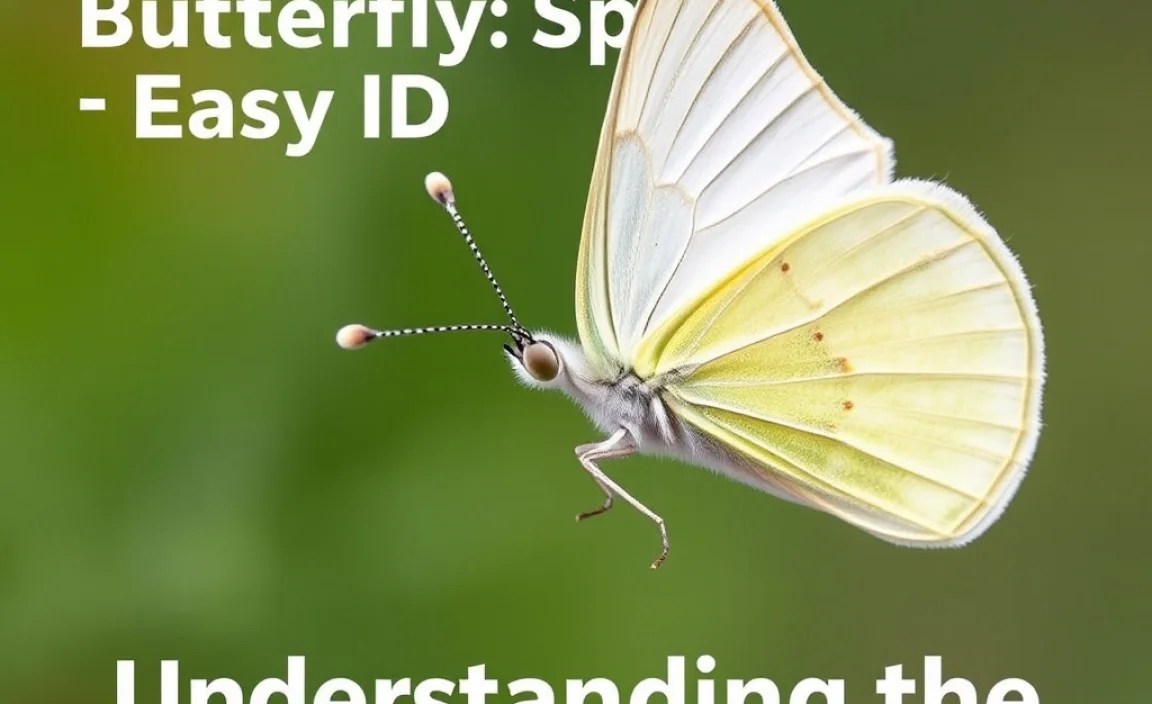
Distinguishing between different Cabbage White butterfly species is essential for effective garden management. Let’s explore the key characteristics of the most common types.
Large White (Pieris brassicae)
The Large White, also known as the “Cabbage Butterfly,” is one of the most recognizable and widespread species. Here’s how to identify it:
- Wings: Predominantly white with black tips on the forewings. Females have two black spots on each forewing.
- Size: Larger than other common white butterflies, with a wingspan of about 2 to 2.5 inches (5 to 6.5 cm).
- Body: Black and white body.
- Caterpillars: Brightly colored with yellow and black markings. They often feed in groups, causing significant damage.
Large Whites are robust fliers and can be seen in both gardens and open fields. Their caterpillars are notorious for defoliating cabbage and related plants.
Small White (Pieris rapae)
The Small White is another common species, often mistaken for the Large White. Here’s what to look for:
- Wings: White with a single black spot on the forewings in males, and two spots in females. The black tip is less pronounced than in the Large White.
- Size: Smaller, with a wingspan of about 1.5 to 2 inches (3.8 to 5 cm).
- Body: Black and white body.
- Caterpillars: Green and well-camouflaged, making them harder to spot. They feed individually and cause less dramatic damage than Large White caterpillars.
Small Whites are adaptable and can thrive in various habitats, including urban gardens and agricultural areas. They are often seen fluttering close to the ground.
Green-veined White (Pieris napi)
The Green-veined White is less common in gardens but can still be found in certain regions. Key features include:
- Wings: White with distinct gray or greenish veins, especially on the underside of the hindwings.
- Size: Similar in size to the Small White.
- Body: Black and white body.
- Caterpillars: Green with a slightly bluish tint, blending well with foliage.
Green-veined Whites prefer damp habitats and are often found near streams and woodlands. Their caterpillars feed on a variety of cruciferous plants.
Checkered White (Pontia protodice)
The Checkered White butterfly is common in North America. Easily identifiable, it has distinct markings:
- Wings: White with a checkered pattern of black or dark gray markings, more prominent in females.
- Size: Medium-sized, with a wingspan of approximately 1.5 to 2 inches (3.8 to 5 cm).
- Body: The body is white with some black markings.
- Caterpillars: Green with white stripes and small black dots, blending well with host plants.
West Virginia White (Pieris virginiensis)
The West Virginia White is native to eastern North America. It is often found in deciduous forests. Here are its features:
- Wings: Pure white with rounded forewings. The underside has faint gray markings along the veins.
- Size: Small to medium-sized, with a wingspan around 1.5 to 1.75 inches (3.8 to 4.4 cm).
- Body: The body is white with minimal black markings.
- Caterpillars: Green, feeding primarily on toothwort plants in the forest understory.
Comparing the Species
To help you quickly differentiate between these species, here’s a comparison table:
| Species | Wings | Size (Wingspan) | Caterpillars |
|---|---|---|---|
| Large White (Pieris brassicae) | White with black tips; females have two black spots | 2-2.5 inches (5-6.5 cm) | Brightly colored, feed in groups |
| Small White (Pieris rapae) | White with one (male) or two (female) black spots; less black at tips | 1.5-2 inches (3.8-5 cm) | Green, feed individually |
| Green-veined White (Pieris napi) | White with greenish veins, especially underneath | Similar to Small White | Green with bluish tint |
| Checkered White (Pontia protodice) | White with a checkered pattern of black or dark gray markings. | 1.5-2 inches (3.8-5 cm) | Green with white stripes and small black dots |
| West Virginia White (Pieris virginiensis) | Pure white with rounded forewings and faint gray markings along the veins on the underside. | Around 1.5-1.75 inches (3.8-4.4 cm) | Green, feeds primarily on toothwort plants |
Understanding the Life Cycle

To effectively manage Cabbage White butterflies, it’s crucial to understand their life cycle. These butterflies undergo complete metamorphosis, which includes four distinct stages:
Egg Stage
- Appearance: Small, yellowish-white eggs laid singly or in small clusters on the underside of host plant leaves, particularly those of the cabbage family (Brassicaceae).
- Duration: Eggs typically hatch in about 4 to 7 days, depending on temperature and environmental conditions.
Larva (Caterpillar) Stage
- Appearance: Caterpillars vary in color depending on the species. Large White caterpillars are often brightly colored with yellow and black markings, while Small White caterpillars are green.
- Feeding: Caterpillars are voracious eaters, feeding on the leaves of host plants. This is the stage where they cause the most damage to gardens and crops.
- Growth: As they grow, caterpillars molt several times, shedding their skin to accommodate their increasing size.
- Duration: The larval stage lasts about 2 to 4 weeks, depending on the species and environmental conditions.
Pupa (Chrysalis) Stage
- Appearance: The caterpillar transforms into a pupa, also known as a chrysalis. The pupa is typically green or brown and blends in with its surroundings.
- Location: Pupae are often attached to stems, leaves, or nearby structures.
- Transformation: Inside the pupa, the caterpillar undergoes a remarkable transformation, reorganizing its tissues into the adult butterfly form.
- Duration: The pupal stage lasts about 1 to 3 weeks, depending on the species and environmental conditions.
Adult Stage
- Appearance: The adult butterfly emerges from the pupal case. Its wings are initially crumpled but expand and harden within a few hours.
- Reproduction: Adult butterflies mate and lay eggs, continuing the life cycle.
- Lifespan: Adult Cabbage White butterflies typically live for about 2 to 4 weeks, during which they feed on nectar from flowers.
Understanding this life cycle allows gardeners to target the most vulnerable stages, such as the egg and larval stages, to control populations and minimize damage to plants.
Impact on Gardens and Crops

Cabbage White butterflies are well-known for the damage their caterpillars can inflict on gardens and agricultural crops. Here’s a detailed look at their impact:
Damage to Plants
- Defoliation: The primary damage is caused by the caterpillars, which feed voraciously on the leaves of host plants. Heavy infestations can lead to complete defoliation, weakening or even killing the plants.
- Target Plants: Cabbage White caterpillars primarily target plants in the cabbage family (Brassicaceae), including cabbage, broccoli, cauliflower, kale, Brussels sprouts, and mustard greens.
- Aesthetic Damage: Even if plants survive, the damage can be unsightly, reducing their aesthetic value, especially in ornamental gardens.
Economic Impact
- Crop Losses: In agricultural settings, Cabbage White caterpillars can cause significant crop losses, reducing yields and impacting farmers’ livelihoods.
- Control Costs: Farmers and gardeners often need to invest in control measures, such as pesticides or protective netting, to manage Cabbage White populations, adding to their expenses.
Ecological Impact
- Competition: High populations of Cabbage White caterpillars can outcompete other herbivores, potentially disrupting local ecosystems.
- Pesticide Use: The widespread use of pesticides to control Cabbage White butterflies can have negative impacts on non-target organisms, including beneficial insects and pollinators.
Organic and Natural Control Methods

Fortunately, there are many effective organic and natural methods to control Cabbage White butterflies and protect your plants without resorting to harmful chemicals. Here are some strategies you can use:
Handpicking
- Method: Regularly inspect your plants for eggs and caterpillars, and remove them by hand. Drop them into a bucket of soapy water to kill them.
- Effectiveness: This method is most effective for small gardens and early infestations.
- Pros: Environmentally friendly, cost-effective, and safe for other beneficial insects.
- Cons: Time-consuming and may not be practical for large gardens or severe infestations.
Protective Netting
- Method: Cover your plants with fine mesh netting to prevent adult butterflies from laying eggs on the leaves.
- Effectiveness: Very effective when properly installed and maintained.
- Pros: Prevents infestation without the need for pesticides.
- Cons: Can be expensive for large areas, and requires regular maintenance to ensure there are no gaps or tears.
Companion Planting
- Method: Plant aromatic herbs and flowers alongside your cabbage family plants to deter Cabbage White butterflies.
- Recommended Plants:
- Marigolds: Their strong scent repels many pests, including Cabbage White butterflies.
- Nasturtiums: Act as a trap crop, attracting butterflies away from your cabbages.
- Rosemary and Thyme: Their pungent aroma deters butterflies and other pests.
- Effectiveness: Can be moderately effective as part of an integrated pest management strategy.
- Pros: Enhances garden biodiversity, attracts beneficial insects, and adds beauty to your garden.
- Cons: May not be sufficient for severe infestations.
Bacillus Thuringiensis (Bt)
- Method: Apply Bacillus thuringiensis (Bt), a naturally occurring bacterium that is toxic to caterpillars, to your plants.
- Effectiveness: Highly effective against Cabbage White caterpillars.
- Pros: Safe for humans, pets, and most beneficial insects.
- Cons: Needs to be reapplied after rain, and only effective against caterpillars.
Diatomaceous Earth (DE)
- Method: Sprinkle diatomaceous earth (DE), a natural powder made from fossilized algae, around your plants.
- Effectiveness: DE damages the exoskeleton of caterpillars and other insects, causing them to dehydrate and die.
- Pros: Non-toxic to humans and pets, and can also control other garden pests.
- Cons: Needs to be reapplied after rain, and can harm beneficial insects if used indiscriminately.
Encourage Natural Predators
- Method: Attract natural predators of Cabbage White caterpillars to your garden.
- Beneficial Insects:
- Wasps: Parasitic wasps lay their eggs inside caterpillar eggs, killing the caterpillars.
- Lacewings: Lacewing larvae feed on caterpillars and other soft-bodied insects.
- Birds: Many birds, such as chickadees and wrens, feed on caterpillars.
- How to Attract Predators: Plant native flowers and provide water sources to attract beneficial insects and birds to your garden.
- Effectiveness: Can be an effective long-term strategy for pest control.
- Pros: Promotes a healthy garden ecosystem and reduces the need for other control measures.
- Cons: May take time to establish a strong population of natural predators.
Creating a Butterfly-Friendly Garden
While managing Cabbage White butterflies is essential for protecting your plants, it’s also important to create a garden that supports a diverse range of butterflies and other pollinators. Here are some tips for building a butterfly-friendly habitat:
Plant Host Plants
Provide host plants for butterfly caterpillars to feed on. In addition to cabbage family plants, consider planting other host plants that attract different butterfly species.
- Monarch Butterflies: Milkweed
- Swallowtail Butterflies: Dill, parsley, fennel
- Painted Lady Butterflies: Thistles, mallows
Provide Nectar Sources
Plant a variety of nectar-rich flowers that bloom throughout the growing season to provide food for adult butterflies.
- Butterfly Bush (Buddleja davidii): A classic butterfly magnet with long, colorful flower spikes.
- Zinnia: Easy-to-grow annuals with bright, daisy-like flowers.
- Lavender: Fragrant and attractive to many pollinators.
- Coneflowers (Echinacea): Native perennials that provide nectar and seeds for birds.
Offer Shelter and Water
Provide shelter from wind and rain by planting shrubs and trees. Create a shallow water source, such as a bird bath or a dish filled with pebbles and water, for butterflies to drink from.
Avoid Pesticides
Minimize or eliminate the use of pesticides in your garden, as they can harm or kill butterflies and other beneficial insects. Use organic and natural control methods instead.
Provide Sunny Areas
Butterflies need sunny spots to warm themselves. Ensure your garden has open, sunny areas where butterflies can bask and regulate their body temperature.
Frequently Asked Questions (FAQs)
Q: How do I distinguish between male and female Cabbage White butterflies?
A: Male Small White butterflies typically have one black spot on their forewings, while females have two. Large White females also have two black spots on their forewings, whereas males have none.
Q: Are Cabbage White butterflies harmful to all plants?
A: No, Cabbage White caterpillars primarily feed on plants in the cabbage family (Brassicaceae), such as cabbage, broccoli, and kale. They generally don’t bother other types of plants.
Q: What is the best time of year to look for Cabbage White butterflies?
A: Cabbage White butterflies are most active during the warmer months, from spring through fall. You’ll likely see them fluttering around your garden during this time, laying eggs on host plants.
Q: Can I attract Cabbage White butterflies to my garden intentionally?
A: While you might not want to attract them specifically, providing host plants (like cabbage) will naturally draw them in. If you want to enjoy butterflies without the damage, focus on plants that attract other, less destructive species.
Q: How can I prevent Cabbage White butterflies from laying eggs on my plants?
A: Cover your plants with fine mesh netting to create a physical barrier that prevents butterflies from reaching the leaves. Regularly inspect your plants for eggs and remove them by hand.
Q: Are there any natural predators that control Cabbage White caterpillars?
A: Yes, several natural predators feed on Cabbage White caterpillars, including parasitic wasps, lacewing larvae, and birds. Attracting these predators to your garden can help control caterpillar populations.
Q: Is it safe to eat vegetables that have been infested with Cabbage White caterpillars?
A: Yes, it is generally safe to eat vegetables that have been infested with Cabbage White caterpillars, as long as you wash them thoroughly to remove any caterpillars or their droppings. Cooking the vegetables will also kill any remaining bacteria or parasites.
Conclusion
Managing Cabbage White butterflies in your garden doesn’t have to be a daunting task. By understanding their life cycle, impact, and implementing organic control methods, you can protect your plants while still fostering a healthy, diverse garden ecosystem. From handpicking caterpillars to using protective netting and companion planting, there are numerous ways to keep these cabbage-loving critters at bay.
Remember, a balanced approach that combines control measures with habitat creation is key. Plant nectar-rich flowers, provide water sources, and avoid harmful pesticides to attract beneficial insects and create a thriving butterfly garden. With a little effort and knowledge, you can enjoy the beauty of butterflies without sacrificing your precious vegetables. So, get out there, explore your garden, and embrace the wonders of nature!