
Butterfly Sensory Adaptations: Amazing Secrets!

Butterflies use a fascinating array of senses beyond just sight! They taste with their feet, smell with their antennae, and even use vibrations to perceive the world around them. These unique adaptations help them find food, avoid predators, and locate mates.
Have you ever wondered how butterflies navigate the world? They don’t experience it quite like we do! Butterflies possess a unique set of sensory adaptations that allow them to perceive their environment in amazing ways. Instead of relying primarily on sight like humans, butterflies use a combination of senses – taste, smell, touch, and even vibration – to find food, avoid danger, and locate the perfect place to lay their eggs. Learning about these adaptations opens a window into the complex and beautiful world of these creatures. Let’s explore the incredible sensory toolkit that butterflies use to thrive!
Frequently Asked Questions About Butterfly Senses
- How do butterflies taste with their feet?
- Butterflies have chemoreceptors on their feet that allow them to taste the plants they land on. This helps them determine if a plant is a suitable host for their eggs.
- What do butterflies use their antennae for?
- Antennae are the primary organs for smelling. They detect pheromones and floral scents, helping butterflies find mates and food sources.
- Can butterflies hear?
- While they don’t have ears like humans, butterflies can detect vibrations through sensory organs located in their bodies, particularly in their legs and wings. This helps them sense approaching predators or potential mates.
- How far can butterflies see?
- Butterflies have good color vision, especially for ultraviolet light, which helps them locate nectar-rich flowers. Their vision is sharpest at shorter distances.
- Why are butterfly senses important?
- Butterfly senses are essential for survival. They help butterflies find food, avoid predators, locate mates, and choose suitable host plants for their offspring.
- Do all butterflies have the same senses?
- While the basic sensory organs are the same, the sensitivity and reliance on each sense can vary among different butterfly species.
- What is the most important sense for a butterfly?
- Smell is arguably the most crucial sense for butterflies, as it guides them to food sources and potential mates from long distances.
Butterfly Sensory Adaptations: A World Beyond Our Senses

Butterflies, those beautiful, fluttering creatures, perceive the world in ways that are vastly different from our own. They possess a unique suite of sensory adaptations that allow them to navigate their environment, find food, avoid predators, and locate mates. Let’s delve into the fascinating world of butterfly senses and discover how these delicate creatures experience life.
The Power of Smell: Antennae as Sensory Superpowers

Imagine smelling with your fingers – that’s essentially what butterflies do with their antennae! These slender appendages are covered in chemoreceptors, specialized sensory cells that detect a wide range of odors. Smell is arguably the most critical sense for butterflies, playing a vital role in several key aspects of their lives.
- Finding Food: Butterflies use their antennae to locate nectar-rich flowers from considerable distances. They are particularly sensitive to the sweet, alluring scents that signal a food source.
- Locating Mates: Pheromones, chemical signals released by butterflies, are detected by the antennae. These pheromones play a crucial role in attracting mates, even over long distances.
- Identifying Host Plants: Female butterflies rely on their sense of smell to identify the specific plants that their caterpillars can feed on. This ensures that their offspring have a suitable food source when they hatch.
The sensitivity of a butterfly’s antennae is remarkable. They can detect incredibly faint odors, allowing them to navigate complex landscapes and find essential resources. The Xerces Society is a great resource to learn more about butterfly conservation and habitat restoration which highlights the importance of these sensory adaptations.
Tasting with Feet: A Unique Sensory Experience
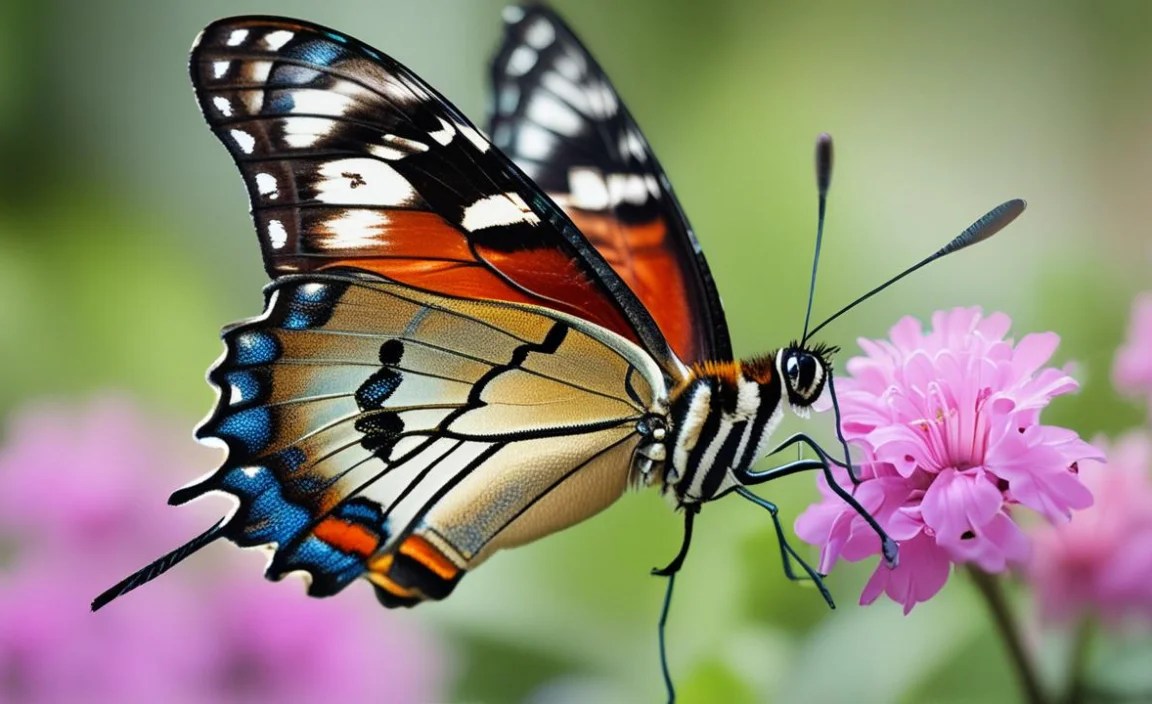
One of the most peculiar and fascinating adaptations of butterflies is their ability to taste with their feet. This seemingly bizarre feat is made possible by the presence of chemoreceptors on their tarsi, the last segment of their legs. These chemoreceptors are specifically tuned to detect certain chemicals found in plants.
When a butterfly lands on a plant, it uses its feet to “taste” the surface. If the chemoreceptors detect the presence of chemicals that indicate a suitable host plant, the butterfly will then use its proboscis (a long, straw-like tongue) to sample the plant’s fluids and confirm its suitability. This adaptation is particularly important for female butterflies searching for the right plant to lay their eggs on.
The ability to taste with their feet allows butterflies to quickly assess the potential of a plant without wasting precious time or energy. It’s a highly efficient way to ensure that their offspring have access to the nutrients they need to thrive. Here’s a table summarizing the role of chemoreceptors:
| Sensory Organ | Location | Function |
|---|---|---|
| Chemoreceptors | Antennae | Detect odors, pheromones, and floral scents |
| Chemoreceptors | Tarsi (feet) | Detect chemicals in plants to determine suitability as host plants |
Vision Beyond the Rainbow: Seeing Ultraviolet Light
While butterflies don’t have the same visual acuity as humans, their vision is far from simple. They possess compound eyes, which are made up of thousands of individual lenses called ommatidia. These eyes provide butterflies with a wide field of view and excellent motion detection, which is crucial for avoiding predators.
One of the most remarkable aspects of butterfly vision is their ability to see ultraviolet (UV) light. Many flowers have UV patterns that are invisible to the human eye but are highly attractive to butterflies. These patterns act as nectar guides, leading butterflies to the most rewarding parts of the flower.
Furthermore, UV vision plays a role in mate recognition. Some butterflies have UV-reflective scales on their wings that are used to attract potential partners. These patterns are often unique to each species, helping butterflies to identify and choose the right mate.
- Nectar Guides: UV patterns on flowers lead butterflies to nectar.
- Mate Recognition: UV-reflective scales attract potential mates.
- Motion Detection: Compound eyes provide excellent motion detection for avoiding predators.
Feeling the Vibrations: Sensing the World Through Touch
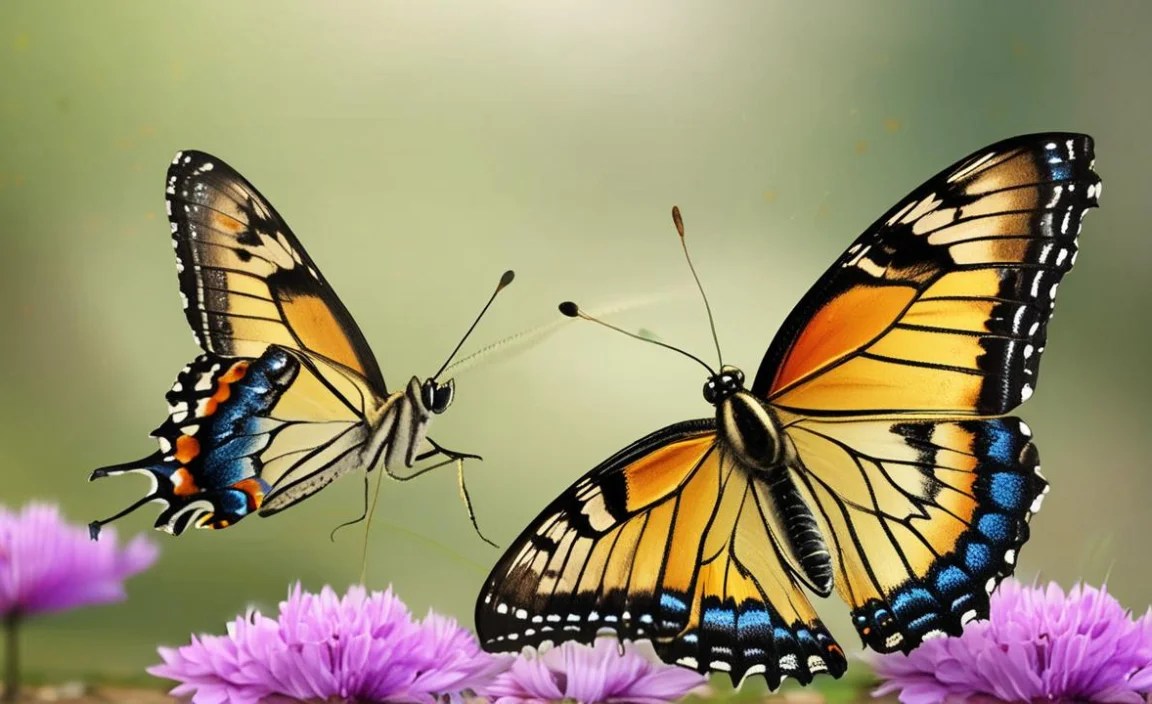
Butterflies are highly sensitive to touch and vibration. They have sensory receptors located all over their bodies, including their wings, legs, and antennae. These receptors allow them to detect even the slightest vibrations in their environment.
The ability to sense vibrations is particularly important for detecting predators. When a bird or other predator approaches, the vibrations caused by their movement can alert the butterfly, giving it a chance to escape. Butterflies also use vibrations to communicate with each other, especially during courtship rituals.
Interestingly, some butterfly caterpillars also use vibrations to communicate. When threatened, they may tap their bodies against the plant they are feeding on, creating vibrations that warn other caterpillars of danger. This is a fascinating example of how sensory adaptations can play a role in social behavior.
Navigational Skills: Using Sensory Input for Direction

Many butterfly species are known for their incredible migratory journeys, some spanning thousands of miles. How do these tiny creatures navigate such vast distances? The answer lies in their sophisticated use of sensory information.
- Sun Compass: Butterflies use the sun as a compass, relying on their internal biological clock to compensate for the sun’s movement throughout the day.
- Magnetic Fields: There is evidence that some butterflies may be able to detect and use the Earth’s magnetic field for navigation.
- Landmark Recognition: Butterflies may also use visual landmarks, such as mountains and rivers, to guide their way.
The exact mechanisms behind butterfly navigation are still being studied, but it’s clear that they rely on a combination of sensory inputs to stay on course. The National Geographic website often features articles and research on animal migration, including butterflies. It’s a testament to the power of sensory adaptation and the remarkable abilities of these seemingly fragile creatures.
Camouflage and Mimicry: Sensory Deception for Survival

Sensory adaptations aren’t just about gathering information; they can also be used to deceive predators. Many butterflies have evolved camouflage and mimicry strategies that rely on manipulating the senses of their enemies.
- Camouflage: Some butterflies have wing patterns that resemble leaves or bark, allowing them to blend seamlessly into their surroundings and avoid detection.
- Mimicry: Other butterflies mimic the appearance of poisonous or distasteful species, deterring predators from attacking them.
These strategies are effective because they exploit the sensory biases of predators. By altering their appearance, butterflies can effectively “trick” their enemies into thinking they are something else, increasing their chances of survival. The Smithsonian Institution has extensive resources on camouflage and mimicry in the natural world.
The Sensory World of Butterfly Caterpillars

It’s important to remember that butterflies spend the first part of their lives as caterpillars, and their sensory experiences during this stage are crucial for their development and survival. Caterpillars have different sensory needs than adult butterflies, and their adaptations reflect this.
- Taste and Smell: Caterpillars rely heavily on their sense of taste and smell to find suitable food plants. They have chemoreceptors on their antennae and mouthparts that allow them to identify the specific plants they can feed on.
- Touch: Caterpillars are also very sensitive to touch. They use sensory hairs on their bodies to detect changes in their environment, such as the presence of predators or obstacles.
- Light: While caterpillars don’t have the same complex eyes as adult butterflies, they can still detect light and dark. This helps them to orient themselves and find suitable feeding locations.
| Sensory Adaptation | Function in Butterflies | Function in Caterpillars |
|---|---|---|
| Smell (Antennae) | Find nectar, mates, host plants | Find suitable food plants |
| Taste (Feet/Mouthparts) | Determine host plant suitability | Identify edible plants |
| Vision (Compound Eyes) | Navigate, find nectar, detect mates | Detect light and darkness for orientation |
| Touch (Sensory Hairs) | Detect predators, communicate | Detect predators and obstacles |
How to Enhance Butterfly Senses in Your Garden

Understanding butterfly sensory adaptations can help you create a more butterfly-friendly garden. By providing the right sensory cues, you can attract more butterflies and help them thrive.
- Plant Nectar-Rich Flowers: Choose flowers that are known to attract butterflies, such as milkweed, butterfly bush, and zinnias. Consider a variety of colors and shapes to appeal to different species.
- Provide Host Plants: Don’t forget to include host plants for caterpillars, such as milkweed for monarchs and parsley for swallowtails.
- Avoid Pesticides: Pesticides can harm butterflies and other beneficial insects. Opt for natural pest control methods instead.
- Create a Sunny Spot: Butterflies need sunlight to warm their bodies and fly. Provide a sunny spot in your garden where they can bask.
- Offer a Water Source: Butterflies need water to stay hydrated. Provide a shallow dish of water with pebbles or stones for them to land on.
By creating a sensory-rich environment, you can transform your garden into a butterfly paradise. Your efforts will not only benefit these beautiful creatures but also enrich your own appreciation for the natural world.
Conclusion
Butterflies are far more than just pretty faces. Their sensory adaptations are a testament to the power of evolution and the incredible diversity of life on Earth. By understanding how butterflies perceive the world, we can gain a deeper appreciation for these fascinating creatures and work to protect their habitats. From tasting with their feet to seeing ultraviolet light, butterflies possess a sensory toolkit that allows them to thrive in a complex and ever-changing world. So, next time you see a butterfly fluttering by, take a moment to consider the incredible sensory world it inhabits. It’s a world full of smells, tastes, vibrations, and colors that are beyond our own comprehension, a world that reminds us of the beauty and wonder of nature.


