
Monarch Butterfly Eyes & Vision: See Their Secret?

Monarch butterflies have compound eyes that allow them to see a wide range of colors, especially ultraviolet light. This UV vision helps them find nectar-rich flowers and navigate during their long migrations. They also have simple eyes, called ocelli, that help them sense light and shadow.
Have you ever wondered how monarch butterflies find their way during their incredible migrations? Or how they spot the perfect flower to sip nectar from? It’s all thanks to their amazing eyes! Monarchs have a unique visual system that helps them navigate, find food, and avoid predators. Understanding how these beautiful creatures see the world can give us a deeper appreciation for their delicate lives and the importance of protecting their habitats. Let’s explore the fascinating world of monarch butterfly vision and discover the secrets behind their colorful world.
Understanding Monarch Butterfly Eyes


Monarch butterflies have a sophisticated visual system that is perfectly adapted to their lifestyle. Unlike humans, who have two eyes with a single lens each, monarch butterflies have compound eyes. Let’s dive into the details of their unique vision.
Compound Eyes: A Mosaic of Vision
Compound eyes are made up of thousands of tiny individual units called ommatidia. Each ommatidium is like a miniature eye with its own lens and light-sensitive cells. These units work together to create a mosaic-like image of the world.
- Structure: Each ommatidium has a lens, a cone-shaped crystalline structure, and light-sensitive cells.
- Function: Each ommatidium captures a small part of the visual field. The brain then combines all these individual images to form a complete picture.
- Advantages: Compound eyes provide a wide field of view and excellent motion detection, which is crucial for avoiding predators and navigating complex environments.
Ocelli: Simple Eyes for Light Detection
In addition to their compound eyes, monarch butterflies also have three simple eyes called ocelli. These are small, single-lens eyes located on the butterfly’s head.
- Location: Ocelli are typically located between and slightly behind the compound eyes.
- Function: Ocelli are primarily used to detect changes in light intensity. They help the butterfly sense light and shadow, which is important for orientation and triggering escape responses.
- Advantages: Ocelli are very sensitive to light and can react quickly to changes in illumination, helping the butterfly detect potential threats or changes in its environment.
The Science of Monarch Butterfly Vision

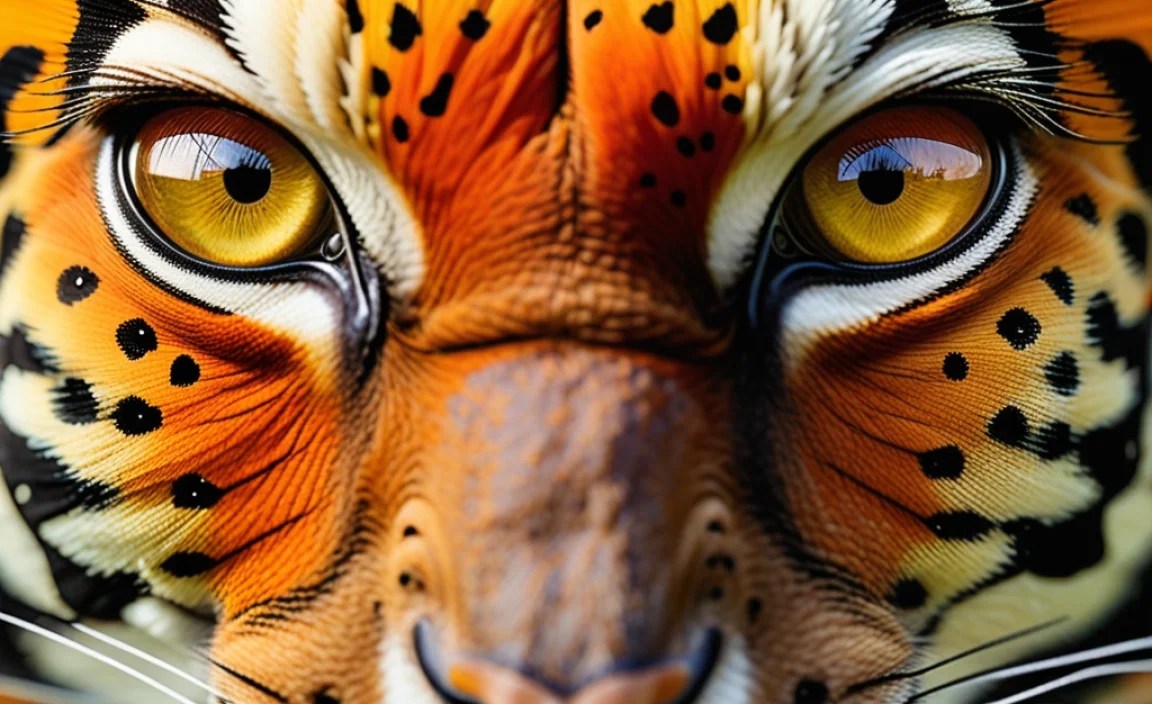
Monarch butterfly vision is not just about the structure of their eyes; it’s also about how they perceive color and light. Their visual system is tuned to see the world in a way that helps them survive and thrive.
Color Perception: Seeing the Unseen
Monarch butterflies have a different color perception than humans. They can see ultraviolet (UV) light, which is invisible to us. This ability is crucial for finding nectar-rich flowers.
- UV Vision: Many flowers have UV patterns that act as nectar guides for pollinators like butterflies. These patterns help the butterflies locate the nectar source quickly and efficiently.
- Color Range: Monarchs can see a range of colors including blue, green, and UV. They are particularly attracted to orange and yellow flowers, which often contain high levels of nectar.
- Importance: Color vision helps monarchs distinguish between different types of flowers and choose the ones that provide the most energy for their long migrations.
Light and Polarization: Navigational Tools
Monarch butterflies use polarized light to help them navigate during their long migrations. Polarized light is light that has been filtered so that its waves vibrate in a single direction. This type of light is created by the scattering of sunlight in the atmosphere.
- Polarized Light Detection: Monarchs have specialized receptors in their eyes that can detect the polarization of light.
- Navigation: By sensing the direction of polarized light, monarchs can maintain a consistent flight path, even on cloudy days when the sun is not directly visible.
- Migration: This ability is particularly important during their multi-generational migration, helping them stay on course as they travel thousands of miles.
How Monarchs Use Their Vision

Monarch butterflies rely on their vision for various essential tasks, from finding food to avoiding predators. Their unique visual abilities play a crucial role in their daily lives.
Finding Food: Nectar and Host Plants
Vision plays a key role in helping monarchs find both nectar sources for adult butterflies and host plants for their larvae (caterpillars).
- Nectar Sources: Adult monarchs use their color vision, especially their ability to see UV light, to locate nectar-rich flowers. They are attracted to bright colors like orange, yellow, and purple.
- Host Plants: Female monarchs use visual cues to find milkweed plants, which are the only food source for their caterpillars. They can identify milkweed by its leaf shape, color, and texture.
- Efficiency: By using their vision to locate the best food sources, monarchs can conserve energy and maximize their chances of survival.
Avoiding Predators: Staying Safe
Monarch butterflies are preyed upon by birds, insects, and other animals. Their vision helps them detect and avoid potential threats.
- Motion Detection: The compound eyes of monarchs are excellent at detecting movement. This allows them to quickly spot approaching predators.
- Escape Responses: When a monarch detects a threat, it can quickly fly away or take evasive maneuvers to avoid being captured.
- Camouflage: While not directly related to vision, the bright colors of monarch butterflies also serve as a warning to predators. The colors indicate that the butterfly is toxic and distasteful, deterring predators from attacking.
Navigation: The Great Migration
Perhaps the most impressive use of monarch butterfly vision is in their incredible multi-generational migration. These butterflies travel thousands of miles each year, relying on a combination of visual and other cues to find their way.
- Sun Compass: Monarchs use the position of the sun to orient themselves and maintain a consistent flight direction. They have an internal biological clock that helps them compensate for the sun’s movement across the sky.
- Polarized Light: As mentioned earlier, monarchs can also use polarized light to navigate, especially on cloudy days.
- Landmark Recognition: While not fully understood, it is believed that monarchs may also use visual landmarks such as mountains, rivers, and forests to help them stay on course.
Threats to Monarch Vision and Conservation
Several factors can threaten the vision and overall health of monarch butterflies. Understanding these threats is crucial for effective conservation efforts.
Habitat Loss
Habitat loss is one of the biggest threats to monarch butterflies. The destruction of milkweed plants and nectar sources reduces the availability of food and breeding sites, impacting their ability to thrive.
- Milkweed Decline: The widespread use of herbicides in agriculture has led to a decline in milkweed populations, which is the sole food source for monarch caterpillars.
- Nectar Source Loss: The conversion of natural habitats into urban and agricultural areas reduces the availability of nectar-rich flowers for adult butterflies.
- Fragmentation: Habitat fragmentation isolates monarch populations, making it harder for them to find mates and migrate successfully.
Pesticide Use
Pesticides can have a direct and harmful effect on monarch butterfly vision and overall health. Exposure to pesticides can impair their ability to find food, avoid predators, and navigate during migration.
- Direct Toxicity: Some pesticides are directly toxic to butterflies, causing neurological damage that can affect their vision and coordination.
- Indirect Effects: Pesticides can also harm monarchs indirectly by killing the plants they rely on for food and shelter.
- Neonicotinoids: Neonicotinoid insecticides are particularly harmful to pollinators like butterflies. These chemicals can disrupt their nervous systems and impair their ability to see and navigate.
Light Pollution
Artificial light at night can disrupt the natural behaviors of many animals, including monarch butterflies. Light pollution can interfere with their ability to navigate and find suitable habitats.
- Disorientation: Artificial light can disorient monarchs, causing them to fly in the wrong direction or become trapped in illuminated areas.
- Disrupted Migration: Light pollution can disrupt the migration patterns of monarchs, making it harder for them to reach their overwintering sites.
- Impact on Reproduction: Artificial light can also affect the reproductive behavior of monarchs, reducing their ability to find mates and lay eggs.
How to Help Monarch Butterflies
There are many things you can do to help protect monarch butterflies and their incredible vision. By taking simple actions in your own backyard and community, you can make a big difference in their survival.
Plant Milkweed and Nectar Flowers
One of the best ways to help monarchs is to plant milkweed and nectar-rich flowers in your garden. This provides them with the food they need to survive and reproduce.
- Choose Native Milkweed: Select milkweed species that are native to your area. Native plants are best adapted to the local climate and provide the most benefits to monarchs.
- Plant a Variety of Flowers: Plant a variety of nectar-rich flowers that bloom throughout the growing season. This will ensure that monarchs have a constant supply of food.
- Avoid Pesticides: Do not use pesticides in your garden, as these chemicals can harm monarchs and other pollinators.
Create a Butterfly-Friendly Habitat
In addition to providing food, you can also create a butterfly-friendly habitat by providing shelter and water.
- Provide Shelter: Plant shrubs and trees to provide shelter from wind and rain. Butterflies also need sunny spots to bask and warm up.
- Offer Water: Provide a shallow dish of water with pebbles or marbles for butterflies to land on. This will allow them to drink without the risk of drowning.
- Avoid Disrupting Habitat: Leave leaf litter and dead stems in your garden over the winter. These provide important overwintering habitat for many insects, including butterflies.
Support Conservation Efforts
You can also support monarch butterfly conservation by donating to organizations that are working to protect their habitats and promote sustainable practices.
- Donate to Conservation Groups: Support organizations like the Xerces Society and Monarch Watch, which are dedicated to protecting butterflies and their habitats.
- Advocate for Change: Contact your elected officials and urge them to support policies that protect pollinators and their habitats.
- Educate Others: Share your knowledge about monarch butterflies with your friends, family, and community. The more people who care about these amazing creatures, the better their chances of survival.
Monarch Butterfly Vision: FAQ
Here are some frequently asked questions about monarch butterfly vision:
- Can monarch butterflies see colors?
- Yes, monarch butterflies can see a range of colors, including blue, green, and ultraviolet (UV) light. They are particularly attracted to orange and yellow flowers.
- Do monarch butterflies have good eyesight?
- Monarch butterflies have excellent eyesight, thanks to their compound eyes. These eyes provide a wide field of view and excellent motion detection, which is crucial for finding food and avoiding predators.
- How do monarch butterflies use their vision during migration?
- Monarch butterflies use a combination of visual cues to navigate during their long migrations. They use the position of the sun as a compass, detect polarized light, and may also use visual landmarks to stay on course.
- What are ocelli, and what do they do?
- Ocelli are simple eyes that monarch butterflies use to detect changes in light intensity. They help the butterfly sense light and shadow, which is important for orientation and triggering escape responses.
- How does light pollution affect monarch butterflies?
- Light pollution can disrupt the natural behaviors of monarch butterflies, causing them to become disoriented and interfering with their ability to navigate and find suitable habitats.
- What can I do to help protect monarch butterflies?
- You can help protect monarch butterflies by planting milkweed and nectar-rich flowers, creating a butterfly-friendly habitat, avoiding pesticides, and supporting conservation efforts.
- Why is UV vision important for monarch butterflies?
- UV vision allows monarch butterflies to see patterns on flowers that are invisible to humans. These patterns act as nectar guides, helping the butterflies locate the nectar source quickly and efficiently.
Conclusion
Monarch butterfly eyes and vision are truly remarkable adaptations that allow these creatures to navigate the world in their unique way. From their compound eyes that provide a wide field of view to their ability to see ultraviolet light and detect polarized light, monarchs have a visual system perfectly suited to their needs. By understanding how monarch butterflies see the world, we can better appreciate the challenges they face and take steps to protect them. Planting milkweed and nectar flowers, avoiding pesticides, and supporting conservation efforts are just a few of the ways we can help ensure that these beautiful butterflies continue to grace our world for generations to come. So, let’s all do our part to protect these amazing creatures and the habitats they depend on.


