
Blue Morpho Classification: The ULTIMATE Guide

Have you ever seen a butterfly with bright blue wings? It might have been a Blue Morpho! These butterflies are known for their amazing color. But how do scientists know what to call them? It all has to do with Blue Morpho classification.
Classification helps us organize living things. It’s like sorting toys into different boxes. Scientists use a system to group animals by what makes them alike. This helps us learn about the Blue Morpho and its place in nature.
Learning about the Blue Morpho classification can be fun. We can see how it’s related to other butterflies. We can also learn about its unique features. Are you ready to discover more about this beautiful insect?
Key Takeaways
- Blue Morpho classification helps scientists organize and understand these butterflies.
- These butterflies belong to the genus Morpho, known for large, bright wings.
- They live in rainforests of Central and South America.
- Blue Morphos are famous for their shiny, iridescent blue color on their wings.
- They eat sap, fruit, and nectar using a long, straw-like tongue.
Understanding Blue Morpho Classification
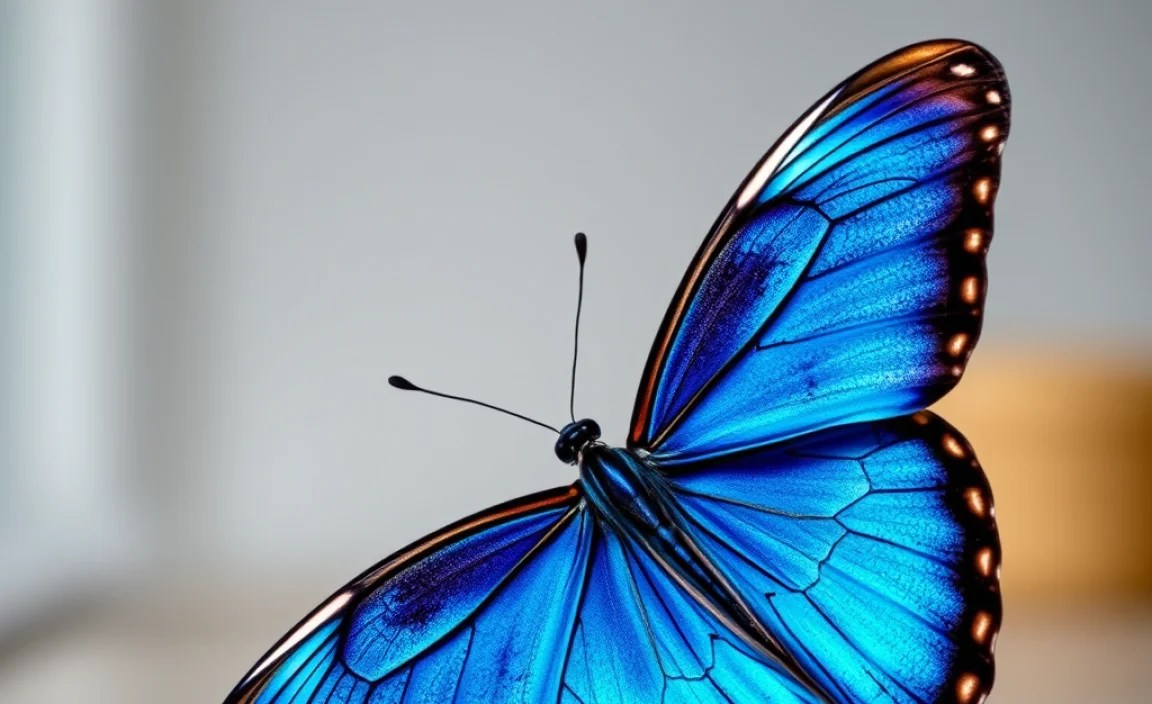
Blue Morpho classification is part of a bigger system. This system helps scientists organize all living things. It starts with broad groups and gets more specific. Think of it like a family tree. The biggest group is like the whole family. Smaller groups are like smaller branches. The Blue Morpho belongs to the animal kingdom. Then it’s grouped into arthropods because it’s an insect. Next, it goes into the class Insecta. After that, it’s in the order Lepidoptera, which includes butterflies and moths. The family is Nymphalidae, which is for brush-footed butterflies. Finally, we get to the genus Morpho and species menelaus. That’s the full name: Morpho menelaus!
- Kingdom: Animalia (animals)
- Phylum: Arthropoda (insects)
- Class: Insecta (true insects)
- Order: Lepidoptera (butterflies and moths)
- Family: Nymphalidae (brush-footed butterflies)
- Genus: Morpho
- Species: menelaus
The Blue Morpho’s scientific name tells us a lot. It shows its closest relatives. Other Morpho butterflies share similar traits. They all have large, bright wings. They also live in rainforests. The scientific name helps scientists around the world. They all know exactly which butterfly we are talking about. This is important for studying and protecting these amazing creatures. Without classification, it would be hard to keep track of all the different kinds of animals.
Why Classify Organisms?
Have you ever wondered why we need to classify things? Imagine a library with no system. Books would be all mixed up. You couldn’t find what you need! Classifying organisms is similar. It helps us organize and understand the natural world. Biologists use classification to study relationships between different species. They can track how animals have changed over time. Classification also helps us protect endangered species. We can learn what they need to survive and thrive. So, classification is like a map that guides us through the world of living things.
Linnaeus and Taxonomy
Have you heard of Carl Linnaeus? He was a famous scientist. He created the system of classification we use today. It’s called taxonomy. Linnaeus wanted to bring order to the study of nature. He developed a way to name and group living things. His system uses two names: the genus and the species. This is called binomial nomenclature. For example, humans are Homo sapiens. This system is still used by scientists all over the world. It helps everyone communicate about different species. Linnaeus’s work was a big step in understanding our world.
The Importance of Genus and Species
Why are genus and species so important? Think of your first and last name. Your first name is like the genus. It groups you with your close relatives. Your last name is like the species. It’s unique to you and your family. The genus tells us about the Blue Morpho’s close relatives. The species tells us exactly which Blue Morpho we mean. It’s like having a specific address. This makes it easy to identify and study different animals. Genus and species help us avoid confusion. They give us a clear and precise way to talk about life on Earth.
Fun Fact or Stat: There are over 80 species of Morpho butterflies. They are all found in Latin America, Mexico, and South America!
Morphological Characteristics of the Blue Morpho

One of the best ways to classify the Blue Morpho is by its looks. Morphological characteristics mean the physical traits of an animal. The Blue Morpho has large, bright blue wings. The wingspan can be up to 8 inches! The underside of the wings is brown with eye spots. These spots help to camouflage the butterfly. They look like eyes to scare away predators. The body of the Blue Morpho is black. It has small white spots on its head. The antennae are also black. These physical traits help us identify the Blue Morpho easily. They also help us understand how it has adapted to its environment.
- Large, iridescent blue wings
- Wingspan up to 8 inches
- Brown underside with eye spots
- Black body with white spots
- Black antennae
- Brush-footed legs
The Blue Morpho’s appearance is not just for show. The bright blue color helps them attract mates. The eye spots on the underside of their wings protect them from predators. The shape and size of their wings help them fly through the rainforest. Even their legs are special! They have brush-like hairs that help them taste food. All these physical traits play a role in the Blue Morpho’s life. By studying these characteristics, scientists can learn even more about this amazing butterfly. Each part of its body is perfectly suited for its rainforest home.
Wing Structure and Coloration
Have you ever wondered how the Blue Morpho gets its color? It’s not from pigment! The color comes from the structure of the wings. Tiny scales on the wings reflect light. The scales are shaped in a way that bends the light. This creates the bright blue color we see. This is called structural coloration. It’s different from the color of a flower. Flowers have pigments that absorb certain colors. The Blue Morpho’s wings use light itself to create color. It’s like a tiny prism on each wing scale! This makes the blue color even more vibrant and shiny.
Body Size and Shape
The Blue Morpho’s body is also important. It’s not too big and not too small. The perfect size for flying through the rainforest. The body is streamlined. This helps the butterfly move quickly. The legs are long and thin. They are used for perching on branches. The antennae are sensitive. They help the butterfly find food and mates. The body shape and size are all adapted for life in the rainforest. It’s a perfect example of how animals evolve to fit their environment.
Camouflage and Mimicry
Why does the Blue Morpho have brown undersides with eye spots? It’s all about survival! The brown color helps the butterfly blend in with the trees. This is called camouflage. It helps them hide from predators. The eye spots look like the eyes of a larger animal. This can scare away birds or lizards. This is called mimicry. The Blue Morpho uses both camouflage and mimicry to stay safe. These adaptations are very important for survival in the rainforest. It’s a clever way to avoid being eaten!
Fun Fact or Stat: The bright blue color is only on the top side of their wings. When they fold their wings, they disappear against the forest!
Habitat and Distribution of Blue Morphos

Habitat and distribution tells us where an animal lives. Blue Morphos live in the rainforests of Central and South America. They like warm, humid places. They can be found from Mexico to Brazil. These butterflies need rainforests to survive. The trees provide shelter and food. The caterpillars eat leaves. The adult butterflies drink sap and nectar. Rainforests are important for many animals. They are home to a huge variety of plants and animals. Protecting rainforests is important for protecting Blue Morphos.
- Rainforests of Central and South America
- Warm, humid climates
- Mexico to Brazil
- Depend on rainforest trees for food and shelter
- Need specific plants for caterpillars to eat
Blue Morphos are not found everywhere in the rainforest. They prefer the understory. This is the layer of plants below the tallest trees. They also like to be near water. Rivers and streams provide moisture. Blue Morphos are adapted to this specific environment. They need the right temperature, humidity, and food sources. Changes in their habitat can affect their survival. Deforestation is a big threat to Blue Morphos. When rainforests are cut down, they lose their homes. Protecting their habitat is crucial for their survival.
The Rainforest Ecosystem
What is a rainforest ecosystem? It’s a community of plants and animals. They all depend on each other. Trees provide shelter and food for animals. Animals help to pollinate plants. The soil is rich in nutrients. Everything is connected. Blue Morphos play a role in this ecosystem. They help to pollinate flowers. They also serve as food for predators. When one part of the ecosystem is damaged, it affects everything else. Protecting rainforests means protecting all the plants and animals that live there.
Threats to Their Habitat
What are the biggest threats to the Blue Morpho’s habitat? Deforestation is a major problem. People cut down trees for wood and to clear land for farming. This destroys the rainforest. Climate change is also a threat. Changes in temperature and rainfall can affect the plants and animals. Pollution can also harm the rainforest. Protecting the rainforest is important for the Blue Morpho and many other species. We need to find ways to protect these valuable ecosystems.
Conservation Efforts
What can we do to help protect Blue Morphos? There are many things we can do. We can support organizations that protect rainforests. We can reduce our use of paper and wood products. We can also educate others about the importance of rainforests. Some organizations are working to restore rainforests. They are planting trees and helping to protect the land. By working together, we can help to ensure that Blue Morphos have a home for many years to come.
Fun Fact or Stat: Some Blue Morpho species are becoming rare due to habitat loss. Protecting their home is very important!
Diet and Feeding Habits of Blue Morphos

Diet and feeding habits tell us what an animal eats. Blue Morpho caterpillars eat leaves. They like the leaves of certain plants. The adult butterflies have a different diet. They drink sap from trees. They also eat rotting fruit and fungi. They use a long, straw-like tongue called a proboscis. They unroll the proboscis to suck up liquids. They don’t eat solid food. Their diet provides them with energy. It also gives them the nutrients they need to survive. Their feeding habits are important for their role in the ecosystem.
- Caterpillars eat leaves
- Adults drink sap, fruit, and fungi
- Use a long proboscis to suck up liquids
- Do not eat solid food
- Diet provides energy and nutrients
The Blue Morpho’s diet changes as it grows. The caterpillars need lots of leaves to grow big. The adult butterflies need energy for flying and mating. They find food by using their antennae. They can smell rotting fruit from far away. They also use their eyes to find flowers with nectar. The Blue Morpho’s feeding habits are an important part of its life cycle. Without the right food, they cannot survive. Protecting their food sources is important for their conservation.
Caterpillar Diet
What do Blue Morpho caterpillars eat? They are picky eaters! They only eat the leaves of certain plants. These plants contain special chemicals. The chemicals help to protect them from predators. The caterpillars eat a lot of leaves. They grow very quickly. They shed their skin several times as they grow. This is called molting. The caterpillar stage is important for building up energy. This energy will be used later when they become butterflies.
Adult Butterfly Diet
What do adult Blue Morphos eat? They have a very different diet than the caterpillars. They don’t eat leaves. They drink liquids. They like sap from trees. They also eat rotting fruit and fungi. These foods provide them with sugar. The sugar gives them energy for flying. They use their proboscis to suck up the liquids. The proboscis is like a long straw. They can unroll it to reach the food. Then they roll it back up when they are done.
The Role of the Proboscis
Why is the proboscis so important? It allows the Blue Morpho to eat without chewing. They can reach liquids that other insects cannot. The proboscis is very long and flexible. It can reach deep into flowers. It can also suck up sap from tree trunks. The proboscis is a key adaptation for the Blue Morpho. It helps them to survive in the rainforest. It’s a perfect example of how animals adapt to their environment.
Fun Fact or Stat: The Blue Morpho can taste with its feet! This helps them find the best food sources.
Life Cycle and Reproduction of Blue Morphos

Life cycle and reproduction describe how an animal grows and makes more of its kind. Blue Morphos go through metamorphosis. This means they change a lot during their life. They start as eggs. The eggs hatch into caterpillars. The caterpillars eat and grow. Then they turn into pupae. The pupa is like a sleeping bag. Inside the pupa, the caterpillar changes into a butterfly. The butterfly emerges from the pupa. It flies away to find a mate. The female lays eggs. The cycle starts again. Reproduction is how Blue Morphos make more butterflies. They need to find a mate to reproduce. The female lays her eggs on plants. The eggs hatch into caterpillars. The life cycle and reproduction are important for the survival of the species.
- Eggs hatch into caterpillars
- Caterpillars eat and grow
- Caterpillars turn into pupae
- Butterflies emerge from pupae
- Butterflies reproduce and lay eggs
The Blue Morpho’s life cycle is amazing. Each stage is different. The caterpillar looks nothing like the butterfly. The pupa is a time of great change. The butterfly emerges with beautiful wings. The whole process takes several weeks. The adult butterfly lives for only a few months. During that time, it needs to find a mate and reproduce. The Blue Morpho’s life cycle is a reminder of the wonders of nature. It shows us how animals can adapt and change over time.
Egg Stage
What happens during the egg stage? The female Blue Morpho lays her eggs on plants. The eggs are small and round. They are often green or yellow. The eggs are attached to the leaves. The eggs contain everything the caterpillar needs to grow. The egg stage lasts for about a week. Then the eggs hatch into caterpillars. The egg stage is a vulnerable time. The eggs can be eaten by predators. They can also be damaged by weather.
Pupa Stage
What happens during the pupa stage? The caterpillar turns into a pupa. The pupa is also called a chrysalis. It’s like a hard shell. Inside the pupa, the caterpillar changes into a butterfly. This process takes about two weeks. The pupa is often green or brown. It hangs from a branch. The pupa is a time of great change. The caterpillar’s body is broken down. Then it’s rebuilt into a butterfly. This is an amazing transformation!
Adult Butterfly Reproduction
How do adult Blue Morphos reproduce? They need to find a mate. The male butterflies are very colorful. They use their bright wings to attract females. The male and female butterflies mate. The female lays her eggs on plants. The eggs will hatch into caterpillars. The cycle starts again. Reproduction is important for the survival of the species. Without reproduction, there would be no more Blue Morphos.
Fun Fact or Stat: The whole Blue Morpho life cycle, from egg to adult, takes about 115 days!
Predators and Defense Mechanisms of Blue Morphos
Predators and defense mechanisms tell us who eats an animal and how it stays safe. Blue Morphos have several predators. Birds, lizards, and monkeys all eat them. To protect themselves, Blue Morphos have several defenses. The eye spots on their wings scare away predators. Their fast, erratic flight makes them hard to catch. They also have a bad taste. This discourages predators from eating them again. These defenses help them survive in the rainforest.
- Birds, lizards, and monkeys are predators
- Eye spots scare away predators
- Fast, erratic flight makes them hard to catch
- Bad taste discourages predators
- Camouflage when wings are closed
The Blue Morpho’s defenses are not perfect. Predators still catch and eat them. But these defenses increase their chances of survival. The eye spots are a form of mimicry. They look like the eyes of a larger animal. This can startle predators and give the butterfly time to escape. The Blue Morpho’s defenses are an example of how animals adapt to their environment. They have evolved ways to protect themselves from predators.
Camouflage and Concealment
How does camouflage help the Blue Morpho? When the butterfly closes its wings, it blends in with the trees. The brown underside of its wings looks like bark. This helps them to hide from predators. They can rest on a branch without being seen. Camouflage is an important defense mechanism. It helps them to avoid being detected by predators. It’s a simple but effective way to stay safe.
Flight Patterns
Why is the Blue Morpho’s flight so erratic? They don’t fly in a straight line. They zig and zag through the air. This makes it hard for predators to catch them. Birds and lizards have trouble tracking their movements. The erratic flight is a defense mechanism. It helps them to escape from predators. It’s like a game of chase. The butterfly tries to outsmart the predator.
Chemical Defenses
Why do Blue Morphos taste bad? The caterpillars eat leaves that contain toxins. These toxins stay in their bodies even after they become butterflies. The toxins make them taste bad to predators. Birds and lizards will learn to avoid them. This is called chemical defense. It’s a way to protect themselves from being eaten. The bad taste is a warning signal to predators.
Fun Fact or Stat: Some predators avoid Blue Morphos because of their bright color. They associate the color with a bad taste!
Comparing Blue Morpho to Other Butterflies
Comparing Blue Morpho to other butterflies helps us understand what makes it special. Blue Morphos are different from many other butterflies. They are much larger. Their bright blue color is also unique. Most other butterflies are smaller and have different colors. Blue Morphos also have different feeding habits. They eat sap and rotting fruit. Other butterflies eat nectar from flowers. These differences help us classify them into their own group. The Morpho genus is special because of these traits.
- Larger size than many other butterflies
- Unique bright blue color
- Different feeding habits (sap and fruit)
- Distinctive erratic flight pattern
- Found in specific rainforest habitats
While Blue Morphos are unique, they also share some traits with other butterflies. They all have wings and antennae. They all go through metamorphosis. They all play a role in the ecosystem. By comparing them to other butterflies, we can learn more about their evolution. We can also understand how they have adapted to their environment. Blue Morphos are just one part of the diverse world of butterflies.
Size and Color Comparison
How does the Blue Morpho’s size compare to other butterflies? It’s one of the largest butterflies in the world! Its wingspan can be up to 8 inches. Most other butterflies are much smaller. The Monarch butterfly, for example, has a wingspan of about 4 inches. The Blue Morpho’s color is also unique. Its bright blue wings are very striking. Other butterflies have different colors and patterns. The size and color make the Blue Morpho easy to identify.
Habitat and Diet Comparison
Where do other butterflies live? Many butterflies live in gardens and meadows. They eat nectar from flowers. The Blue Morpho lives in rainforests. It eats sap and rotting fruit. These different habitats and diets affect their appearance and behavior. Butterflies that live in gardens are often smaller and more colorful. Butterflies that live in rainforests are often larger and more camouflaged. Habitat and diet play a big role in the lives of butterflies.
Behavioral Differences
How does the Blue Morpho behave differently from other butterflies? It has a distinctive flight pattern. It flies quickly and erratically. Other butterflies often fly more slowly and gracefully. The Blue Morpho is also more active during the day. It flies around looking for food and mates. Other butterflies may be more active at dawn or dusk. These behavioral differences help them to survive in their environment.
| Feature | Blue Morpho | Monarch Butterfly | Swallowtail Butterfly |
|---|---|---|---|
| Size | Large (up to 8 inches) | Medium (4 inches) | Large (4-6 inches) |
| Color | Bright blue | Orange and black | Black with yellow and blue |
| Habitat | Rainforests | Gardens and meadows | Gardens, forests, and fields |
| Diet | Sap and rotting fruit | Nectar | Nectar |
Fun Fact or Stat: Some butterflies migrate thousands of miles. The Blue Morpho stays in its rainforest home!
Summary
The Blue Morpho is a beautiful butterfly. Its classification helps us understand its place in the world. It belongs to the genus Morpho. These butterflies live in rainforests. They have bright blue wings. They eat sap and rotting fruit. Their life cycle is amazing. They go through metamorphosis. They have defenses against predators. They are different from other butterflies. They are larger and have different feeding habits. Protecting their habitat is important.
Understanding the Blue Morpho classification provides a great example. It shows how scientists organize living things. Each level of classification gives more information. From kingdom to species, it all matters. Learning about the Blue Morpho can teach us a lot about biology. It also helps us appreciate the beauty of nature.
Conclusion
The Blue Morpho is a fascinating creature. Its bright blue wings make it stand out. Classification helps us understand its place in the world. It is part of the Morpho genus. Protecting its rainforest habitat is very important. We can all help to protect these beautiful butterflies. Learning about them is the first step. Let’s work together to keep them safe.
Frequently Asked Questions
Question No 1: What does Blue Morpho classification mean?
Answer: Blue Morpho classification means how scientists organize and group Blue Morpho butterflies. It’s like sorting them into categories based on their traits. They are part of the animal kingdom. Then they are grouped into arthropods. After that, they go into the class Insecta. They are in the order Lepidoptera, which includes butterflies and moths. The family is Nymphalidae. Finally, we get to the genus Morpho and species menelaus. This helps us understand where they fit in the natural world.
Question No 2: Why is classification important?
Answer: Classification is important because it helps us organize and understand the world around us. Imagine if all the books in a library were mixed up. It would be hard to find anything! Classification helps scientists study different species. They can track how animals have changed over time. It also helps us protect endangered species. We can learn what they need to survive. So, classification is like a map that guides us through the world of living things.
Question No 3: What are some other interesting facts about Blue Morphos?
Answer: Blue Morphos have many interesting features. Their bright blue color comes from the structure of their wings. They don’t use pigment! They taste with their feet. This helps them find the best food. They live in rainforests. They eat sap and rotting fruit. Their caterpillars are picky eaters. They only eat certain leaves. They also have eye spots on their wings. These spots scare away predators. They are truly amazing creatures!
Question No 4: How can I help protect Blue Morphos?
Answer: There are many ways to help protect Blue Morphos. You can support organizations that protect rainforests. These organizations work to preserve their habitat. You can reduce your use of paper and wood products. This helps to reduce deforestation. You can also educate others about the importance of rainforests. Tell your friends and family about Blue Morphos. The more people know, the more they will care. Even small actions can make a big difference.
Question No 5: What do Blue Morpho caterpillars eat?
Answer: Blue Morpho caterpillars are very picky eaters. They only eat the leaves of certain plants. These plants contain special chemicals. The chemicals help to protect them from predators. The caterpillars eat a lot of leaves. They grow very quickly. They shed their skin several times as they grow. This is called molting. The caterpillar stage is important for building up energy. This energy will be used later when they become butterflies. So, their diet is very important for their growth and survival.
Question No 6: Where do Blue Morphos live?
Answer: Blue Morphos live in the rainforests of Central and South America. They like warm, humid places. They can be found from Mexico to Brazil. These butterflies need rainforests to survive. The trees provide shelter and food. The caterpillars eat leaves. The adult butterflies drink sap and nectar. Rainforests are important for many animals. Protecting rainforests is important for protecting Blue Morphos. Deforestation is a big threat to their habitat.


