Blue Morpho Butterfly Facts: Amazing Secrets!

Have you ever seen a butterfly with wings that shine like the sky? The Blue Morpho is a real wonder. Its bright blue wings catch your eye. These amazing insects live in rainforests. Let’s explore some cool {Blue Morpho butterfly facts}.
Did you know these butterflies taste with their feet? Or that their bright color helps them stay safe? Get ready to learn more about these beauties. We will uncover the secrets of the Blue Morpho.
Key Takeaways
- The Blue Morpho’s shiny wings help it scare away predators in the rainforest.
- These butterflies use their feet to taste, helping them find the best food.
- Blue Morpho caterpillars eat different plants than the adults.
- The bright blue color is only on the top side of their wings.
- Learning {Blue Morpho butterfly facts} teaches us about rainforest life.
Amazing Blue Morpho Butterfly Facts
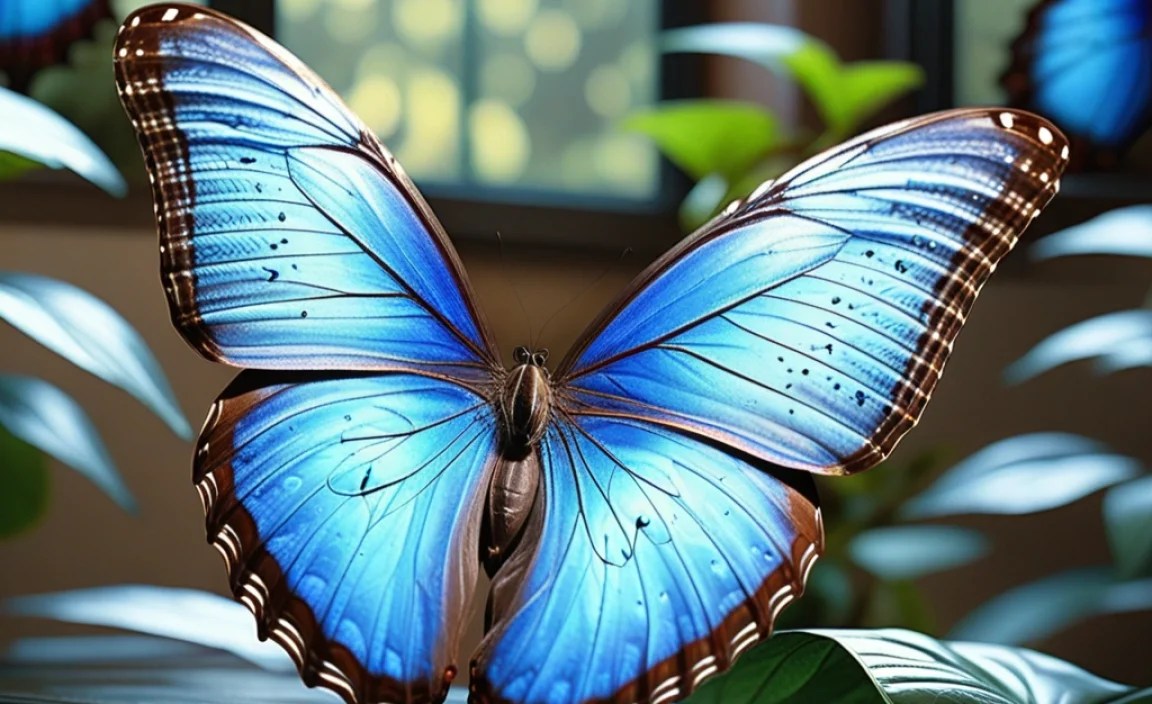
The Blue Morpho is famous for its shimmering blue wings. But did you know that only the top side of the wings is blue? The underside is brown with spots. This helps the butterfly hide when its wings are closed. The bright blue color comes from tiny scales on the wings. These scales reflect light in a special way. This makes the blue color seem to change as the butterfly moves. Male Blue Morphos are usually brighter than females. They use their bright color to attract mates. These butterflies are truly a sight to see in the rainforest. Their wings can span from five to eight inches wide. That’s about the size of your hand!
- Their bright blue color helps them attract mates.
- The underside of their wings helps them hide.
- Blue Morphos live in rainforests.
- They are among the biggest butterflies in the world.
- The scales on their wings reflect light.
Blue Morphos are not just pretty faces. They also play an important role in their ecosystem. As they fly around, they help to pollinate plants. This is important for the health of the rainforest. These butterflies also serve as food for other animals. Birds and lizards love to eat them. Blue Morphos are also sensitive to changes in their environment. This makes them a good indicator of the health of the rainforest. Protecting these butterflies helps to protect the entire rainforest ecosystem. Learning about them can help us be good stewards.
What Do Blue Morpho Butterflies Eat?
Have you ever wondered what these beautiful butterflies eat? As caterpillars, they munch on different plants than the adults. Caterpillars eat leaves, and they can be quite picky. They like plants from the pea family. Adult Blue Morphos have a sweet tooth. They sip juices from rotting fruit. They also drink tree sap and fungi. Sometimes, they even feed on the fluids from dead animals. This might sound gross, but it’s important for their diet. They use their long, straw-like tongue to drink. This tongue is called a proboscis. When they are not eating, they curl it up.
Where Do Blue Morpho Butterflies Live?
Blue Morpho butterflies live in the tropical rainforests of Central and South America. You can find them from Mexico to the Amazon rainforest. They like warm, humid places. They spend most of their time in the understory of the rainforest. This is the area between the forest floor and the canopy. They fly through the trees, looking for food and mates. They are most active during the hottest part of the day. At night, they hide under leaves to stay safe. Blue Morphos are an important part of the rainforest ecosystem. They need our help to protect their home.
How Do Blue Morpho Butterflies Defend Themselves?
These butterflies have some clever ways to stay safe. Their bright blue color can actually confuse predators. When they fly, the blue flashes in the sunlight. This makes it hard for birds to track them. The brown underside of their wings also helps them hide. When they land, they close their wings. This makes them blend in with the leaves and branches. Blue Morpho caterpillars also have defenses. They have stinging hairs that can irritate the skin of predators. They also eat toxic plants, which makes them taste bad. These defenses help them survive in the rainforest.
Fun Fact or Stat: The Blue Morpho’s wings reflect light so strongly that they can be seen from up to half a mile away!
Blue Morpho Butterfly Life Cycle

The life of a Blue Morpho is a journey of transformation. It starts as a tiny egg, laid on a leaf. The egg hatches into a caterpillar. The caterpillar eats and grows, shedding its skin several times. This shedding is called molting. After growing, the caterpillar turns into a pupa, also known as a chrysalis. The pupa is like a sleeping bag. Inside, the caterpillar changes into a butterfly. This process is called metamorphosis. After a few weeks, the butterfly emerges from the pupa. It unfolds its wings and flies away. The entire life cycle takes about four months. Each stage is important for the butterfly’s survival.
- The life cycle starts with an egg.
- Caterpillars eat and grow quickly.
- The pupa is a stage of transformation.
- Metamorphosis happens inside the pupa.
- Adults emerge with bright blue wings.
- The whole cycle takes about four months.
Understanding the life cycle of the Blue Morpho can help us to protect them. We need to protect the plants that the caterpillars eat. We also need to protect the rainforest where they live. By learning about their life cycle, we can better understand their needs. We can also help to educate others about the importance of protecting these beautiful butterflies. Blue Morphos are a reminder of the wonders of nature. Their transformation is a symbol of hope and renewal. Their life cycle shows us how everything is connected.
What Does a Blue Morpho Caterpillar Look Like?
Blue Morpho caterpillars look very different from the adult butterflies. They are usually brown or reddish-brown. They have long, bristly hairs that can sting. These hairs help to protect them from predators. The caterpillars also have bright markings on their bodies. These markings can warn predators that they are poisonous. They also have a forked tail. This tail helps them to grip onto leaves. As they grow, they shed their skin several times. Each time they shed, they look a little different. They are fascinating creatures to observe.
How Long Do Blue Morpho Butterflies Live?
The adult Blue Morpho butterfly does not live very long. They usually live for about one to two months. During this time, they focus on two things: feeding and mating. They need to find enough food to keep their energy up. They also need to find a mate to reproduce. The males are very active in their search for a mate. They fly around, showing off their bright blue wings. The females are more secretive. They hide in the understory of the rainforest. Even though they don’t live long, they make the most of their time.
What Happens Inside the Chrysalis?
The chrysalis is a magical place. It is where the caterpillar transforms into a butterfly. Inside, the caterpillar’s body breaks down. Special cells called imaginal discs create the butterfly’s body. These cells build new structures, like wings and antennae. The process is complex and amazing. It takes about two weeks for the transformation to complete. When the butterfly is ready, it breaks out of the chrysalis. It unfolds its wings and flies away. This process is one of nature’s greatest wonders.
Fun Fact or Stat: The Blue Morpho caterpillar eats so much that it can increase its weight by over 3,000 times before it turns into a pupa!
Habitat and Distribution of Blue Morphos

Blue Morphos are found in the lush rainforests of Central and South America. Their habitat stretches from Mexico down to the Amazon basin. These butterflies thrive in warm, humid environments. They prefer the understory of the rainforest, where they can find shelter and food. Within this habitat, they flutter among the trees. They search for ripe fruits and tree sap. Specific locations include Costa Rica, Panama, and Brazil. Deforestation threatens their habitat, as forests are cleared for agriculture and logging. Protecting these rainforests is vital for their survival. Conservation efforts are crucial to maintain their populations.
- They live in Central and South American rainforests.
- They prefer warm, humid environments.
- The understory is their favorite place.
- Deforestation is a major threat.
- Conservation efforts are important.
- They are found from Mexico to Brazil.
The distribution of Blue Morphos is closely tied to the availability of their food sources. They need a steady supply of ripe fruits and tree sap. The caterpillars require specific host plants to feed on. These plants are also found in the rainforest. Changes in climate can also affect their distribution. As temperatures rise, they may need to move to cooler areas. Protecting their habitat is essential for their long-term survival. We can support conservation organizations that work to protect rainforests. We can also make sustainable choices in our daily lives. These choices can help to reduce deforestation and protect Blue Morpho habitats.
How Does Climate Change Affect Blue Morphos?
Climate change is a big threat to Blue Morpho butterflies. As the Earth gets warmer, their habitat changes. The rainforests may become drier. This can make it harder for them to find food and water. Changes in temperature can also affect their life cycle. They may emerge from their pupae too early or too late. This can disrupt their breeding patterns. Extreme weather events, like hurricanes and floods, can also damage their habitat. We need to take action to reduce climate change. This will help to protect Blue Morphos and other rainforest animals.
What Type of Rainforest Do Blue Morphos Prefer?
Blue Morphos prefer tropical rainforests with high humidity. They need a lot of moisture in the air to survive. They also need a dense canopy of trees to provide shade. The understory of the rainforest is their favorite place. This is where they can find shelter from the sun and wind. The rainforest also provides them with a variety of food sources. They need a mix of ripe fruits, tree sap, and host plants for their caterpillars. Protecting these rainforests is essential for their survival.
Why Are Rainforests Important?
Rainforests are very important for many reasons. They are home to a huge variety of plants and animals. They also help to regulate the Earth’s climate. Rainforests absorb carbon dioxide from the atmosphere. This helps to reduce global warming. They also release oxygen, which we need to breathe. Rainforests also provide us with many important resources. They provide us with medicines, food, and timber. We need to protect rainforests for the benefit of all living things.
Fun Fact or Stat: Rainforests, which are the Blue Morpho’s home, cover less than 6% of the Earth’s surface but contain over half of the world’s plant and animal species!
Diet and Feeding Habits of Blue Morphos

The diet of a Blue Morpho butterfly is quite interesting. As caterpillars, they have a very different diet than the adults. Caterpillars munch on leaves, especially those from the pea family. They can eat a lot in a short amount of time. Adult butterflies, however, prefer to sip liquids. They use their long, straw-like proboscis to drink. They enjoy the juices from rotting fruit. They also drink tree sap and fungi. Sometimes, they even feed on the fluids from dead animals. This provides them with important nutrients. Their feeding habits play a role in the rainforest ecosystem. They help to pollinate plants as they fly around.
- Caterpillars eat leaves.
- Adults sip liquids.
- They drink from rotting fruit.
- They also drink tree sap.
- They use a proboscis to feed.
- They help pollinate plants.
Understanding the diet and feeding habits of Blue Morphos is important for their conservation. We need to protect their food sources. This includes the host plants for the caterpillars. It also includes the fruits and tree sap that the adults feed on. We can support sustainable agriculture practices. These practices help to protect rainforests and their resources. We can also reduce our consumption of products that contribute to deforestation. By making informed choices, we can help to ensure that Blue Morphos have enough to eat. Their survival depends on a healthy and balanced ecosystem.
How Do Blue Morphos Find Food?
Blue Morphos use their senses to find food. They have special sensors on their feet that can taste. When they land on a leaf or a piece of fruit, they can tell if it is good to eat. They also use their eyes to find food. They can see colors, which helps them to locate flowers and ripe fruit. They also use their antennae to smell. This helps them to find food from a distance. They are very good at finding the food they need to survive.
Why Do Blue Morphos Eat Rotting Fruit?
Rotting fruit may seem like a strange food choice, but it is actually very nutritious for Blue Morphos. As fruit rots, it ferments. This means that it produces alcohol and other compounds. These compounds provide the butterflies with energy. Rotting fruit is also a good source of vitamins and minerals. It helps them to stay healthy and strong. So, even though it may not look appealing to us, rotting fruit is a valuable food source for Blue Morphos.
Do Blue Morphos Eat Anything Else?
Besides rotting fruit and tree sap, Blue Morphos sometimes eat other things. They have been known to feed on the fluids from dead animals. This may sound gross, but it provides them with important nutrients. They also sometimes drink from puddles of water. This helps them to stay hydrated. They are not very picky eaters. They will eat whatever they can find to survive.
Fun Fact or Stat: Blue Morphos use their proboscis, which can be longer than their body, to reach nectar deep inside flowers!
Predators and Threats to Blue Morphos
Blue Morpho butterflies face many dangers in the rainforest. Predators like birds, lizards, and frogs love to eat them. Their bright blue color can make them easy to spot. However, they have some clever ways to avoid being eaten. Their erratic flight pattern makes them hard to catch. The underside of their wings is brown with eye spots. This helps them to blend in with the leaves when they land. Deforestation is also a major threat. As rainforests are destroyed, they lose their habitat and food sources. Climate change also poses a threat. Changes in temperature and rainfall can affect their life cycle. Protecting these butterflies requires protecting their rainforest home.
- Birds and lizards are predators.
- Deforestation destroys their habitat.
- Climate change affects their life cycle.
- Eye spots confuse predators.
- Erratic flight makes them hard to catch.
- They blend in with closed wings.
Conservation efforts are crucial for the survival of Blue Morphos. We need to protect rainforests from deforestation. This can be done by supporting sustainable agriculture and reducing our consumption of products that contribute to deforestation. We also need to address climate change by reducing our carbon emissions. We can support organizations that work to protect rainforests and educate others about the importance of conservation. By working together, we can help to ensure that Blue Morphos continue to thrive in their rainforest home. Their beauty and importance to the ecosystem make them worth protecting.
How Do Blue Morphos Avoid Predators?
Blue Morphos have several strategies to avoid predators. Their bright blue color can actually confuse predators. When they fly, the blue flashes in the sunlight, making it hard for birds to track them. The brown underside of their wings also helps them hide. When they land, they close their wings, blending in with the leaves and branches. They also fly in an erratic pattern, making it hard for predators to catch them. These strategies help them to survive in the dangerous rainforest.
What Animals Eat Blue Morphos?
Many animals in the rainforest eat Blue Morpho butterflies. Birds are one of their main predators. Lizards and frogs also eat them. Even some insects will prey on them. The caterpillars are also vulnerable to predators. They are eaten by birds, insects, and other animals. Blue Morphos are an important part of the rainforest food web. They provide food for many other animals.
What Can We Do to Help Blue Morphos?
There are many things that we can do to help Blue Morphos. We can support organizations that work to protect rainforests. We can also reduce our consumption of products that contribute to deforestation. This includes products like palm oil and beef. We can also educate others about the importance of conservation. By working together, we can help to ensure that Blue Morphos continue to thrive in their rainforest home. Every little bit helps to make a difference.
Fun Fact or Stat: The Blue Morpho’s defense mechanisms are so effective that they have a higher survival rate compared to many other butterfly species!
Conservation Status and Efforts for Morphos
The conservation status of the Blue Morpho varies depending on the specific species. Some species are relatively common, while others are more threatened. Deforestation is the biggest threat to their survival. As rainforests are destroyed, they lose their habitat and food sources. Climate change is also a concern. Changes in temperature and rainfall can affect their life cycle. Conservation efforts are focused on protecting rainforests and promoting sustainable land use practices. Organizations are working to educate local communities about the importance of conservation. They are also working to restore degraded habitats. By working together, we can help to ensure that Blue Morphos continue to thrive in their rainforest home.
- Deforestation is a major threat.
- Climate change is also a concern.
- Conservation efforts protect rainforests.
- Education is key for communities.
- Habitat restoration is important.
- Status varies by species.
There are many ways that we can support conservation efforts for Blue Morphos. We can donate to organizations that work to protect rainforests. We can also reduce our consumption of products that contribute to deforestation. This includes products like palm oil, beef, and timber. We can also educate others about the importance of conservation. By making informed choices and supporting conservation efforts, we can help to ensure that these beautiful butterflies continue to grace our planet. Their survival depends on our actions.
Here is a table comparing different conservation efforts:
| Effort | Description | Benefits | Challenges |
|---|---|---|---|
| Rainforest Protection | Creating and managing protected areas | Preserves habitat, protects biodiversity | Requires funding, enforcement |
| Sustainable Agriculture | Promoting eco-friendly farming practices | Reduces deforestation, protects soil | Requires education, market access |
| Community Education | Raising awareness about conservation | Empowers local communities, fosters stewardship | Requires long-term commitment, trust |
| Habitat Restoration | Replanting trees, restoring degraded areas | Increases habitat, improves ecosystem health | Requires time, resources |
Why Is Conservation Important?
Conservation is important for many reasons. It helps to protect biodiversity. It also helps to maintain healthy ecosystems. Healthy ecosystems provide us with many benefits, such as clean air and water. They also provide us with food, medicine, and other resources. Conservation also helps to protect the beauty and wonder of nature. We have a responsibility to protect the planet for future generations. Conservation is essential for our survival and well-being.
How Can Local Communities Help?
Local communities play a crucial role in conservation efforts. They are the stewards of the land. They can help to protect rainforests by practicing sustainable agriculture. They can also help to monitor and protect wildlife. Education is key. Communities need to understand the importance of conservation. They also need to have the resources and support to protect their environment. By empowering local communities, we can create a more sustainable future.
What Laws Protect Blue Morphos?
The laws that protect Blue Morphos vary depending on the country. Some countries have laws that protect rainforests. These laws can help to protect their habitat. Other countries have laws that protect endangered species. These laws can help to protect Blue Morphos from being hunted or traded. International agreements, like the Convention on Biological Diversity, also help to protect them. By enforcing these laws and agreements, we can help to ensure their survival.
Fun Fact or Stat: Some Blue Morpho species are listed as “Near Threatened” due to habitat loss, highlighting the urgency of conservation efforts!
Summary
The Blue Morpho is a stunning butterfly. It has bright blue wings. They live in the rainforests of Central and South America. Blue Morphos have unique life cycles. The caterpillars eat leaves. Adult butterflies sip juices. They face threats from deforestation and predators. Their bright colors and erratic flight help them survive. Conservation efforts are crucial to protect them. Protecting rainforests is key to their survival. Learning about {Blue Morpho butterfly facts} helps us understand them better.
Blue Morpho butterflies play an important role in their ecosystem. They help to pollinate plants. They also serve as food for other animals. By protecting them, we are also protecting the entire rainforest ecosystem. It is important to support conservation efforts. We can help by reducing our consumption of products that contribute to deforestation. We can also educate others about the importance of protecting these butterflies.
Conclusion
Blue Morpho butterflies are truly amazing creatures. Their bright blue wings make them a sight to behold. They play an important role in the rainforest ecosystem. They face threats from deforestation and climate change. We must protect their habitat to ensure their survival. Learning {Blue Morpho butterfly facts} can inspire us to take action. By supporting conservation efforts, we can help these beautiful butterflies thrive. Let’s work together to protect these wonders of nature.
Frequently Asked Questions
Question No 1: What makes the Blue Morpho butterfly’s wings so blue?
Answer: The Blue Morpho’s wings are blue because of tiny structures on the scales. These structures reflect blue light. This is called structural coloration. It’s like a prism splitting light. The wings aren’t actually blue. The structure of the scales creates the color we see. This is different from pigments, which absorb certain colors. Blue Morpho wings use a physical trick to appear blue. This makes them shimmer and shine in the sun. It’s a fascinating example of nature’s ingenuity.
Question No 2: Where do Blue Morpho butterflies live?
Answer: Blue Morpho butterflies live in the tropical rainforests of Central and South America. You can find them from Mexico to the Amazon basin. They prefer warm, humid environments. They like to live in the understory of the rainforest, where they can find shelter and food. Specific countries where they live include Costa Rica, Panama, and Brazil. These rainforests provide the perfect habitat for them. They have plenty of food and places to hide. Protecting these rainforests is essential for their survival.
Question No 3: What do Blue Morpho butterflies eat?
Answer: Blue Morpho caterpillars and adult butterflies have different diets. Caterpillars eat leaves, especially from the pea family. They can eat a lot of leaves to grow. Adult butterflies sip liquids using their proboscis. They enjoy the juices of rotting fruit. They also drink tree sap and fungi. Sometimes, they even feed on the fluids from dead animals. This gives them important nutrients. This varied diet helps them thrive in the rainforest. Each stage of life has different food needs.
Question No 4: Are Blue Morpho butterflies endangered?
Answer: The conservation status of Blue Morpho butterflies varies. Some species are common, while others are threatened. Deforestation is a major threat to their survival. As rainforests are destroyed, they lose their habitat. Climate change also poses a threat. Changes in temperature can affect their life cycle. While not all are endangered, protecting rainforests is key. Learning {Blue Morpho butterfly facts} can help conservation. We can support organizations that protect rainforests. This will help all species of Blue Morpho.
Question No 5: How do Blue Morpho butterflies defend themselves from predators?
Answer: Blue Morpho butterflies have several ways to defend themselves. Their bright blue color can confuse predators. When they fly, the blue flashes, making it hard to track them. The underside of their wings is brown with eye spots. This helps them blend in when they land. They also fly in an erratic pattern. This makes it difficult for predators to catch them. These defenses help them survive in the rainforest. They have adapted well to their environment.
Question No 6: What can I do to help protect Blue Morpho butterflies?
Answer: There are many things you can do to help Blue Morpho butterflies. You can support organizations that protect rainforests. You can reduce your consumption of products that contribute to deforestation. This includes products like palm oil and beef. You can also educate others about the importance of conservation. By making informed choices, you can help protect these beautiful butterflies. Even small actions can make a big difference. Understanding {Blue Morpho butterfly facts} can inspire us to act. Every little bit helps to make a difference for their future.