
Blue Morpho Educational Videos: The Ultimate Guide

Have you ever seen a butterfly with bright blue wings? These butterflies are called Blue Morphos. They are beautiful and amazing creatures. Do you want to learn more about them? There are many {Blue Morpho educational videos} that can help. These videos show you where they live. They also show you what they eat. Learning about Blue Morphos is fun!
Imagine you are walking in a rainforest. Suddenly, a flash of blue catches your eye. It’s a Blue Morpho butterfly! It flits through the trees. You can learn all about these butterflies. Just watch some {Blue Morpho educational videos}.
Why are Blue Morphos so blue? What do they eat? How do they stay safe? These are all great questions! You can find the answers in educational videos. Learning about nature is always exciting.
Key Takeaways
- Blue Morpho butterflies are known for their bright blue, shiny wings.
- Watching {Blue Morpho educational videos} is a fun way to learn about them.
- These butterflies live in the rainforests of Central and South America.
- Blue Morphos eat plant sap, fruit, and sometimes dead insects.
- Their bright colors help them scare away predators.
Discovering Blue Morpho Butterfly Facts

Blue Morpho butterflies are truly amazing insects. Their wings shimmer with a bright, iridescent blue. But did you know that the blue color isn’t actually a pigment? It’s created by tiny structures on their wings. These structures reflect light in a special way. This makes the wings appear blue. These butterflies live in rainforests. They are found in Central and South America. Blue Morphos are important to their ecosystem. They are also beautiful to observe. You can discover many facts about them. Just watch {Blue Morpho educational videos}. These videos can teach you about their life cycle. You can also learn about their habitat. It’s a great way to explore the natural world.
- Blue Morpho wings can span up to 8 inches.
- They use their bright colors to startle predators.
- Caterpillars eat leaves.
- Adults drink sap and fruit juice.
- They have a short lifespan as butterflies.
Learning about Blue Morphos helps us understand rainforests better. These butterflies are part of a complex web of life. When we protect them, we also protect their habitat. This helps many other plants and animals. Watching {Blue Morpho educational videos} is a great first step. You can learn about the threats they face. You can also find out how to help. Even small actions can make a big difference. You can support organizations that protect rainforests. You can also share what you learn with others. Together, we can help these beautiful butterflies thrive. We must help protect the Blue Morpho.
Fun Fact or Stat: The Blue Morpho’s wings are so reflective they can be seen from up to 400 meters away in the rainforest!
What Do Blue Morphos Eat?
Have you ever wondered what Blue Morpho butterflies eat? They don’t sip nectar from flowers like many other butterflies. Instead, they have a different diet. Blue Morphos primarily feed on the sap of plants. They also enjoy the juices of rotting fruit. Sometimes, they even eat fungi or decaying animals. This might sound a little gross, but it’s important for their survival. Their diet provides them with the nutrients they need. The caterpillars of Blue Morphos have a different diet. They eat the leaves of various plants. Learning about their diet can be fascinating. You can watch {Blue Morpho educational videos} to see them feeding. This will give you a better understanding of their life cycle.
Where Do They Live?
Blue Morpho butterflies live in the rainforests of Central and South America. These rainforests are hot and humid. They provide the perfect environment for these butterflies. The butterflies need lots of trees and plants. They also need a warm climate. Blue Morphos can be found in countries like Brazil, Costa Rica, and Mexico. They fly among the trees. The butterflies are a beautiful sight to see. They are also an important part of the rainforest ecosystem. If you ever visit a rainforest, keep an eye out for a flash of blue. You might just spot a Blue Morpho butterfly.
How Do They Protect Themselves?
Blue Morpho butterflies have some clever ways to protect themselves. Their bright blue wings can startle predators. When they fly, the flashing blue color can confuse enemies. The undersides of their wings are brown. This helps them blend in with the trees when they are resting. They also have a strong odor that repels some predators. Blue Morpho caterpillars also have defenses. Some caterpillars have hairs that irritate the skin of predators. Others blend in with the leaves they eat. These defenses help them survive in the rainforest. You can learn more about their defenses. Just watch {Blue Morpho educational videos}.
Exploring the Blue Morpho Life Cycle
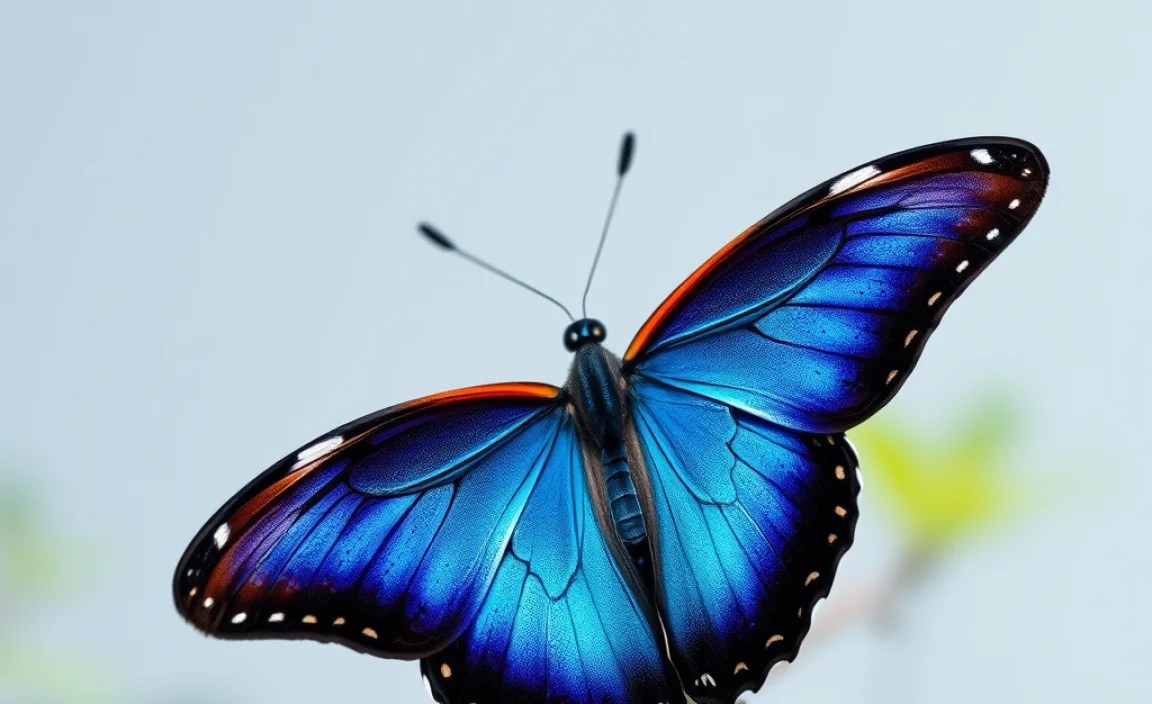
The life cycle of a Blue Morpho butterfly is truly amazing. It starts with an egg. The female butterfly lays her eggs on a host plant. When the egg hatches, a caterpillar emerges. The caterpillar eats a lot of leaves. It grows quickly. After a few weeks, the caterpillar turns into a pupa. The pupa is also called a chrysalis. Inside the chrysalis, the caterpillar transforms. It becomes a butterfly. This transformation takes about two weeks. Finally, a beautiful Blue Morpho butterfly emerges. The butterfly flies off to find a mate. Then the cycle begins again. You can see this whole process in {Blue Morpho educational videos}.
- Eggs are laid on specific host plants.
- Caterpillars eat constantly to grow.
- The pupa is a protective shell.
- The butterfly emerges with wet wings.
- It takes a few hours for wings to dry.
- The butterfly then flies off to reproduce.
Understanding the life cycle of the Blue Morpho is important. It helps us appreciate the complexity of nature. Each stage of the life cycle is important for the butterfly’s survival. Protecting their habitat is crucial. This ensures they have the resources they need. Rainforest conservation is important. You can support organizations. They work to protect rainforests. You can also educate others about the importance of these ecosystems. This helps to protect these beautiful butterflies. Watching {Blue Morpho educational videos} can inspire you to take action.
Fun Fact or Stat: The Blue Morpho caterpillar is cannibalistic, meaning it sometimes eats other caterpillars!
What Does the Caterpillar Look Like?
The Blue Morpho caterpillar looks quite different from the butterfly. It is usually brown or reddish-brown. It has long, bristly hairs. These hairs can irritate the skin of predators. The caterpillar also has bright spots. These spots can warn predators that it is not tasty. The caterpillar blends in with the leaves. This helps it hide from danger. The caterpillar is a eating machine. It eats lots of leaves to grow quickly. Watching {Blue Morpho educational videos} can show you the caterpillar. You can see how it moves and eats. It is a fascinating creature.
How Long Does Each Stage Last?
The life cycle of a Blue Morpho has different stages. Each stage lasts a different amount of time. The egg stage lasts only a few days. The caterpillar stage lasts several weeks. The pupa stage lasts about two weeks. The adult butterfly stage lasts only a few weeks. The entire life cycle takes about two to three months. This can vary depending on the environment. Warmer temperatures can speed up the process. Cooler temperatures can slow it down. Learning about the duration of each stage helps us understand the butterfly’s life. It shows how quickly it transforms. You can see the time frames in {Blue Morpho educational videos}.
What Happens Inside the Chrysalis?
The chrysalis is a magical place. It is where the caterpillar transforms into a butterfly. Inside the chrysalis, the caterpillar’s body breaks down. Then it reorganizes. The cells rearrange themselves. They form the wings, legs, and other body parts of the butterfly. This process is called metamorphosis. It is a complex and amazing transformation. The chrysalis protects the caterpillar during this time. It provides a safe environment for the changes to occur. After about two weeks, the butterfly emerges. It is ready to fly and reproduce. The transformation inside the chrysalis is a wonder of nature. You can learn more about it. Just watch {Blue Morpho educational videos}.
Understanding the Habitat of Blue Morphos

Blue Morpho butterflies live in rainforests. Rainforests are warm and wet. They are full of trees and plants. These butterflies need this kind of environment. They need the plants for food. They also need the trees for shelter. Rainforests provide everything they need to survive. The butterflies fly among the trees. They are a beautiful sight to see. They are also an important part of the rainforest ecosystem. When we protect rainforests, we also protect Blue Morpho butterflies. We need to conserve their habitat. We can do this by reducing deforestation. We can also support organizations. They are working to protect rainforests. You can learn more about their habitat. Watch {Blue Morpho educational videos}.
- Rainforests are hot and humid environments.
- They are full of diverse plant life.
- Blue Morphos need specific host plants.
- Deforestation threatens their habitat.
- Climate change also poses a threat.
- Protecting rainforests is crucial for their survival.
Learning about the habitat of Blue Morphos helps us understand the importance of rainforests. These ecosystems are vital for the health of our planet. They provide clean air and water. They also support a huge variety of life. When we protect rainforests, we protect many other species. This helps to preserve biodiversity. We can all do our part to protect these important ecosystems. We can reduce our consumption. We can also support sustainable products. We can also educate others about the importance of rainforests. You can inspire others. Share what you learn in {Blue Morpho educational videos}.
Fun Fact or Stat: Rainforests cover less than 6% of the Earth’s surface but contain over half of the world’s plant and animal species!
Why Are Rainforests Important?
Rainforests are important for many reasons. They provide clean air and water. They also help regulate the climate. Rainforests absorb carbon dioxide. This helps to reduce global warming. They are home to a huge variety of plants and animals. Many of these species are found nowhere else on Earth. Rainforests also provide resources for people. They provide food, medicine, and timber. Protecting rainforests is essential for the health of our planet. We need to make sure they are around for future generations. Learning about rainforests is the first step. You can learn more from {Blue Morpho educational videos}.
What Threats Do Rainforests Face?
Rainforests face many threats today. Deforestation is one of the biggest threats. Trees are cut down for timber, agriculture, and mining. This destroys the habitat of many plants and animals. Climate change is another threat. Rising temperatures and changing rainfall patterns can harm rainforests. Pollution also threatens rainforests. Chemicals and waste can poison the soil and water. We need to take action to protect rainforests from these threats. We can reduce deforestation. We can also reduce our carbon footprint. We can also support sustainable practices. Learn about the threats they face by viewing {Blue Morpho educational videos}.
How Can We Protect Rainforests?
There are many ways we can protect rainforests. We can reduce our consumption of products that contribute to deforestation. We can also support companies that use sustainable practices. We can donate to organizations. They are working to protect rainforests. We can also educate others about the importance of rainforests. We can encourage them to take action. Even small actions can make a big difference. Together, we can help protect these important ecosystems. You can share the facts you learned from {Blue Morpho educational videos}.
The Beauty and Wonder of Blue Morpho Wings

The wings of a Blue Morpho butterfly are truly stunning. They shimmer with a bright, iridescent blue. This color is not from pigments. It is created by tiny structures on the wings. These structures reflect light in a special way. This makes the wings appear blue. The undersides of the wings are brown. This helps the butterfly blend in with trees. The wings can span up to 8 inches. This makes them easy to see. The wings are not only beautiful. They also help the butterfly survive. The bright colors can startle predators. You can see the beauty of these wings. Just watch {Blue Morpho educational videos}.
| Wing Feature | Description |
|---|---|
| Color | Bright iridescent blue |
| Size | Up to 8 inches across |
| Underside | Brown with eye spots |
| Function | Camouflage and startling predators |
The beauty of Blue Morpho wings has inspired artists and scientists. Their iridescent blue color is unique. People have tried to recreate it. Scientists study the structures on their wings. They want to learn how to create new materials. These materials could have unique optical properties. The wings are a reminder of the beauty and complexity of nature. They can also inspire us to be creative. You can appreciate the beauty of these wings. Just look at {Blue Morpho educational videos}.
Fun Fact or Stat: The microscopic structures on a Blue Morpho’s wings that create the blue color are called “lamellae.”
How Do They Get Their Color?
The blue color of Blue Morpho wings is not from pigments. It is from tiny structures on the wings. These structures are called scales. The scales are arranged in a special way. They reflect light in a certain way. This creates the iridescent blue color. This type of color is called structural color. It is different from pigment-based color. Pigments absorb certain wavelengths of light. They reflect others. Structural color is created by the way light interacts with the structures. The scales on Blue Morpho wings are a marvel of nature. You can learn more about how they work. Watch {Blue Morpho educational videos}.
Why Are the Undersides Brown?
The undersides of Blue Morpho wings are brown. This helps the butterfly blend in with the trees. When the butterfly is resting, it closes its wings. This hides the bright blue color. The brown color helps it to camouflage. This protects it from predators. The undersides of the wings also have eye spots. These spots can startle predators. This gives the butterfly a chance to escape. The brown color and eye spots are important for the butterfly’s survival. These features help it stay safe in the rainforest. You can see the contrast between the top and bottom of the wings. Just watch {Blue Morpho educational videos}.
How Big Are Their Wings?
Blue Morpho wings can be quite large. They can span up to 8 inches. This makes them one of the largest butterflies in the world. Their large wings help them fly. The butterflies can travel long distances. They can also glide through the air. Their wings are also delicate. The wings are made of thin membranes. They are covered in scales. These scales can be easily damaged. It is important to be careful when handling butterflies. Admire their beauty from a distance. You can see how big their wings are. Just watch {Blue Morpho educational videos}.
Conserving Blue Morpho Populations
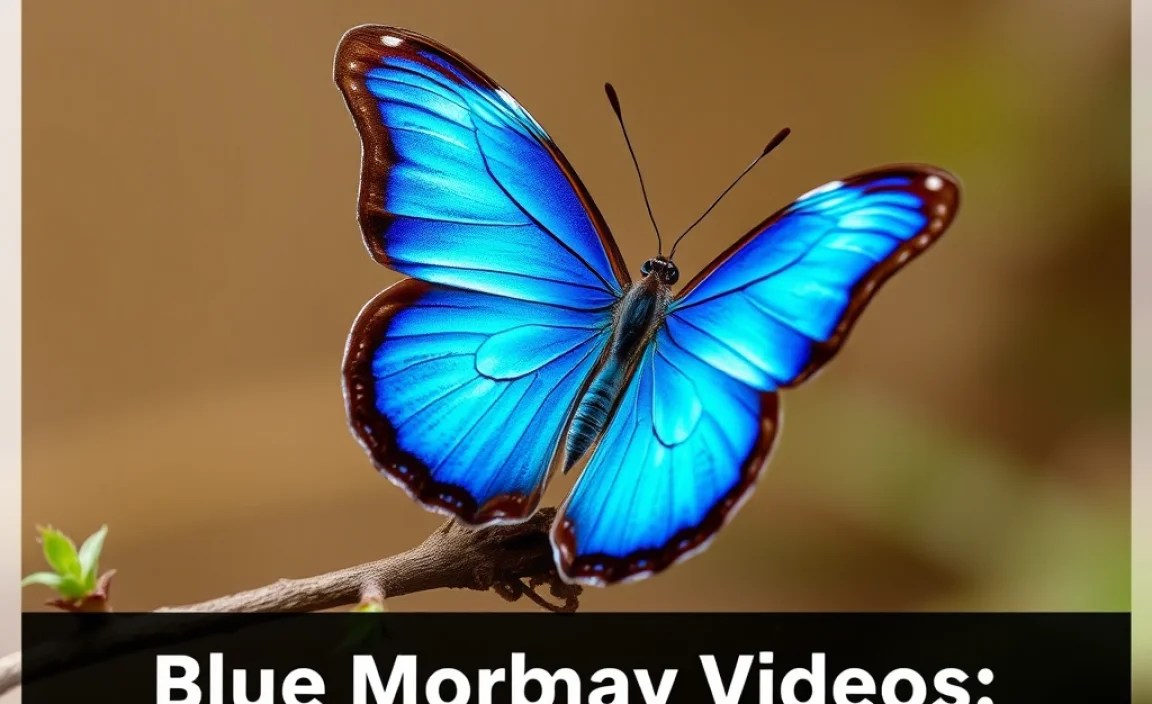
Conserving Blue Morpho populations is very important. These butterflies are a part of the rainforest. They help the rainforest to stay healthy. These butterflies face many threats. Deforestation is a big problem. This means that people cut down the trees. The butterflies need these trees to live. Climate change is also a threat. The climate is changing. This makes it hard for the butterflies to survive. We need to take action to protect these butterflies. We can support organizations that protect rainforests. We can also reduce our carbon footprint. This helps to slow down climate change. {Blue Morpho educational videos} can teach you more about conservation.
- Protect their rainforest habitat.
- Reduce deforestation by using sustainable products.
- Combat climate change by reducing your carbon footprint.
- Support organizations working to conserve rainforests.
- Educate others about the importance of conservation.
Learning about Blue Morphos can inspire us to take action. We can all do our part to protect these beautiful butterflies. Even small actions can make a big difference. You can reduce your consumption. You can also support sustainable products. You can also educate others about the importance of conservation. Share what you learn from {Blue Morpho educational videos}. Together, we can help ensure that these butterflies thrive. We can also protect the rainforests. The butterflies need these rainforests to survive.
Fun Fact or Stat: Some organizations offer “adopt-a-butterfly” programs to raise money for conservation efforts!
What Are the Biggest Threats?
Blue Morpho butterflies face several threats. Deforestation is one of the biggest threats. This destroys their habitat. Pesticides are another threat. These chemicals can poison the butterflies. Climate change is also a threat. Rising temperatures and changing rainfall patterns can harm them. We need to address these threats. This will help protect these butterflies. We can reduce deforestation. We can also reduce our use of pesticides. We can also combat climate change. Learn more about the threats they face by viewing {Blue Morpho educational videos}.
How Can We Help?
There are many ways we can help Blue Morpho butterflies. We can support organizations that protect rainforests. We can reduce our consumption of products that contribute to deforestation. We can also reduce our carbon footprint. We can also educate others about the importance of conservation. Even small actions can make a big difference. We can all do our part to protect these beautiful butterflies. Share your knowledge from viewing {Blue Morpho educational videos}.
Why Is Conservation Important?
Conservation is important for many reasons. It helps to protect biodiversity. This means protecting all the different plants and animals on Earth. Conservation also helps to maintain healthy ecosystems. Ecosystems provide us with clean air, water, and other resources. Conservation also helps to protect our planet for future generations. We need to conserve Blue Morpho butterflies. They are a valuable part of the rainforest ecosystem. Their conservation will help protect the rainforest. It will also preserve biodiversity. Learn more about why conservation is important. Just watch {Blue Morpho educational videos}.
Engaging Blue Morpho Educational Videos
{Blue Morpho educational videos} are a fun and easy way to learn. They are a great way to learn about these beautiful butterflies. These videos show you their life cycle. You can see where they live. You can also learn what they eat. The videos are engaging. They keep your attention. They use colorful images and interesting facts. They also use music and narration. This makes learning fun. You can watch these videos at home. You can also watch them at school. They are a great resource for anyone. They want to learn more about Blue Morphos.
- Videos offer visual learning.
- They can explain complex topics easily.
- They make learning fun and engaging.
- You can watch them anytime, anywhere.
- They are a great resource for students.
Using {Blue Morpho educational videos} can enhance your learning experience. They provide a visual way to learn. This can help you understand the information better. They can also make learning more fun. You can learn at your own pace. You can pause and rewind the videos as needed. They are a great resource for students. They are also a great resource for anyone. They want to learn more about Blue Morphos. Share these videos. You can help others learn about these amazing butterflies.
Fun Fact or Stat: Many educational videos about Blue Morphos include time-lapse footage of the butterfly emerging from its chrysalis!
What Topics Do They Cover?
Blue Morpho educational videos cover many topics. They cover the butterfly’s life cycle. They also cover their habitat. They cover their diet. They also cover their defenses. They also cover the threats they face. These videos provide a comprehensive overview. They provide a detailed look at Blue Morphos. They are a great resource for learning about these butterflies. You can learn about all aspects of their life. Just watch these videos.
Where Can You Find Them?
You can find Blue Morpho educational videos online. Many websites offer these videos. You can find them on YouTube. You can also find them on educational websites. You can also find them on nature websites. These videos are easy to access. You can watch them anytime. You can watch them anywhere. They are a great resource for learning. You can learn about Blue Morphos. Just search for them online.
Why Are Videos Effective?
Videos are effective for many reasons. They provide a visual way to learn. This can help you understand the information better. They can also make learning more fun. Videos can also capture your attention. They can keep you engaged. Videos can also be paused and rewound. You can watch them at your own pace. Videos are a great resource for learning. They are also a great resource for teaching. Use videos to enhance your learning. They are a wonderful tool for education.
Fun Activities After Watching Videos
After watching {Blue Morpho educational videos}, you can do some fun activities. You can draw a picture of a Blue Morpho butterfly. You can write a story about its life. You can create a diorama of its habitat. You can also share what you learned with others. These activities can help you reinforce what you learned. They can also make learning more fun. They can also help you be creative. You can create art inspired by the Blue Morpho. The possibilities are endless. Engage in fun activities. This will enhance your learning experience.
- Draw a Blue Morpho butterfly.
- Write a story about its life.
- Create a diorama of its habitat.
- Share what you learned with others.
- Research other rainforest animals.
Doing activities after watching {Blue Morpho educational videos} can make learning more memorable. When you engage with the material in different ways, you are more likely to remember it. Activities can also help you develop new skills. You can develop your drawing skills. You can also develop your writing skills. You can also develop your research skills. These skills will be valuable to you. They will help you in school. They will also help you in life. Make learning fun and engaging. Do activities after watching videos.
Fun Fact or Stat: Many classrooms use Blue Morpho-themed crafts to teach about rainforest ecosystems and butterfly life cycles!
Draw a Blue Morpho
Drawing a Blue Morpho butterfly is a fun activity. You can use colored pencils, crayons, or paint. Start by drawing the basic shape of the butterfly. Then add the details. Draw the wings. Draw the body. Draw the antennae. Use bright blue for the wings. Use brown for the undersides. Add the eye spots. Be creative. Have fun with it. Drawing can help you appreciate the beauty. It can also help you remember what you learned. Draw a Blue Morpho. This is a wonderful way to engage with the topic.
Write a Story
Writing a story about a Blue Morpho butterfly is a great way to use your imagination. You can write about its life cycle. You can write about its adventures. You can write about its challenges. Be creative. Have fun with it. Use what you learned from the videos. Make your story interesting. Make it engaging. Share your story with others. They will enjoy reading it. Writing is a wonderful way to learn and express yourself. Write a story about a Blue Morpho butterfly. It is a fun learning experience.
Create a Diorama
Creating a diorama of a Blue Morpho’s habitat is a fun project. You can use a shoebox. You can also use other materials. Create a rainforest scene. Add trees. Add plants. Add other animals. Add a Blue Morpho butterfly. You can use a drawing. You can also use a toy. Be creative. Have fun with it. This project will help you learn about the rainforest. It will also help you learn about the Blue Morpho. Dioramas are a fun and engaging way to learn. Create a diorama. Learn about the Blue Morpho.
Summary
Blue Morpho butterflies are beautiful insects. They live in the rainforests of Central and South America. They are known for their bright blue wings. {Blue Morpho educational videos} are a great way to learn about them. These videos cover their life cycle, habitat, and diet. They also cover the threats they face. Learning about Blue Morphos can inspire us to take action. We can help protect these butterflies. We can also help protect their habitat. Rainforest conservation is very important. We can all do our part to help.
Watching {Blue Morpho educational videos} is a fun and easy way to learn. They are engaging and informative. You can also do fun activities after watching the videos. These activities can reinforce what you learned. They can also make learning more fun. You can draw a picture of a Blue Morpho. You can write a story about its life. You can create a diorama of its habitat. The possibilities are endless. Blue Morphos are a reminder of the beauty and wonder of nature.
Conclusion
Blue Morpho butterflies are amazing creatures. They show us the beauty of nature. Learning about them is fun and important. We can all help protect them. We can protect their rainforest habitat. Blue Morpho butterflies are a valuable part of our world. Watching {Blue Morpho educational videos} can help you learn more. It can also inspire you to take action. Let’s work together. Let’s protect these beautiful butterflies.
Frequently Asked Questions
Question No 1: What is a Blue Morpho butterfly?
Answer: A Blue Morpho butterfly is a type of butterfly. It is famous for its bright blue, shiny wings. These butterflies live in the rainforests. They are found in Central and South America. The bright blue color comes from tiny structures on their wings. These structures reflect light. They make the wings look blue. The Blue Morpho is a beautiful and fascinating insect. You can learn more about them in {Blue Morpho educational videos}.
Question No 2: Where do Blue Morphos live?
Answer: Blue Morphos live in rainforests. These forests are in Central and South America. They need warm and wet places to live. The rainforests have many trees and plants. The butterflies use these plants for food and shelter. They fly among the trees. They are a beautiful sight to see. Protecting their habitat is very important. This will help the butterflies to survive. {Blue Morpho educational videos} often show their natural habitat.
Question No 3: What do Blue Morphos eat?
Answer: Blue Morphos do not eat nectar like other butterflies. They eat the sap of plants. They also eat the juices of rotting fruit. Sometimes they eat dead insects. The caterpillars eat leaves. They grow very fast. Their diet gives them the nutrients they need to survive. This is a unique diet. It helps them thrive in the rainforest. You can see them feeding in {Blue Morpho educational videos}.
Question No 4: How do Blue Morphos protect themselves?
Answer: Blue Morphos have several ways to protect themselves. Their bright blue wings can startle predators. The undersides of their wings are brown. This helps them blend in with the trees. They also have a strong odor. This smell repels some predators. The caterpillars also have defenses. Some have hairs that irritate the skin. These defenses help them survive. Learn about their defenses in {Blue Morpho educational videos}.
Question No 5: Why are rainforests important?
Answer: Rainforests are very important for the planet. They provide clean air and water. They also help regulate the climate. Rainforests absorb carbon dioxide. This helps to reduce global warming. They are home to many plants and animals. Many of these species are found nowhere else. Rainforests also provide resources for people. Protecting rainforests is essential. This helps to protect Blue Morphos and many other species. {Blue Morpho educational videos} can show you the importance of the rainforest.
Question No 6: How can I help protect Blue Morphos?
Answer: There are many ways you can help Blue Morphos. You can support organizations. They protect rainforests. You can reduce your consumption. You can also support sustainable products. You can educate others about conservation. Even small actions can make a big difference. You can watch and share {Blue Morpho educational videos}. This will help others learn about these butterflies. Together, we can protect them.


