
Blue Morpho Academic Articles: Powerful Insights!

Do you know about the Blue Morpho butterfly? It is a beautiful, shiny blue color. Many people want to learn about it. Some read {Blue Morpho academic articles} to find out more. These articles help us understand these amazing insects.
Imagine you’re walking in a rainforest. Suddenly, a flash of blue catches your eye. It’s a Blue Morpho butterfly! These butterflies are famous for their bright color. Scientists study them to learn about nature. They write {Blue Morpho academic articles} with what they find.
Have you ever wondered how butterflies get their colors? Or what they eat? Scientists explore these questions. They share their discoveries in {Blue Morpho academic articles}. These articles teach us about butterfly life.
Learning about butterflies can be fun. We can read about their habitats. We can also learn about their life cycles. {Blue Morpho academic articles} give us lots of information. Let’s explore the world of the Blue Morpho!
Key Takeaways
- Blue Morpho academic articles offer in-depth knowledge about these stunning butterflies.
- Blue Morphos live in rainforests of Central and South America.
- Their bright blue wings help them to stand out and attract mates.
- These butterflies eat sap, fruit, and nectar using a long tongue.
- Scientists study them to learn about insect behavior and ecology.
Blue Morpho Academic Articles: An Overview
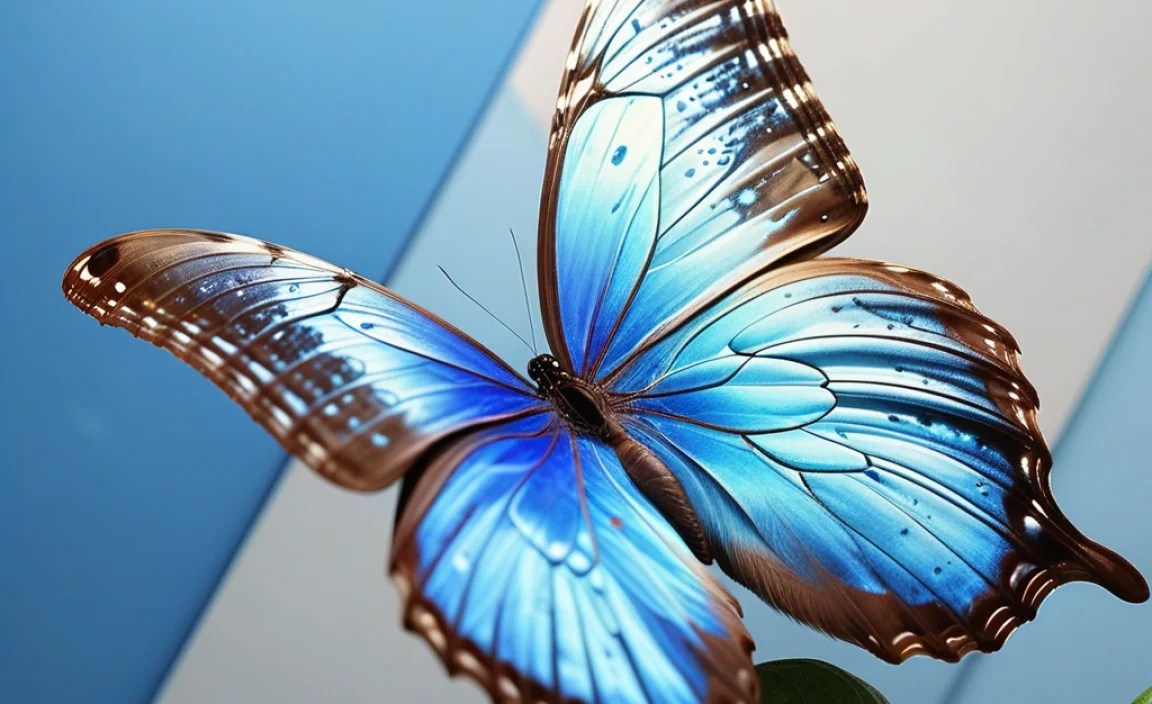
Blue Morpho academic articles are very important. They help scientists share what they learn. These articles cover many topics. They talk about the butterfly’s life cycle. They also discuss where it lives and what it eats. The articles often have detailed information. Scientists use special words and data. This helps them explain their findings clearly. The articles are usually published in science journals. Other scientists can read them. This helps everyone learn more about Blue Morphos. These articles are a key part of understanding these insects. They show how much we can learn by studying nature. The articles help protect the Blue Morpho.
- Articles discuss the butterfly’s habitat.
- They explain its life cycle.
- Scientists share research findings.
- Articles use data and special terms.
- They help protect the Blue Morpho.
Imagine reading a science book about butterflies. The book mentions a new study. This study is about Blue Morpho butterflies. You can find the study in a science journal. It is one of the Blue Morpho academic articles. The article tells you about the butterfly’s wings. It explains how the wings get their color. The article also talks about how the butterfly flies. Scientists use special tools to study the butterfly. They write down everything they find. This helps them understand the Blue Morpho better.
What Makes Them Special?
Have you ever wondered what makes Blue Morphos special? Their shiny blue wings are one reason. The color comes from tiny scales. These scales reflect light in a special way. This makes the wings look very bright. Blue Morphos also have large wings. They can fly very fast. This helps them escape from predators. They also have a long tongue. They use it to drink nectar from flowers. Blue Morphos are important to their ecosystem. They help pollinate plants. They also serve as food for other animals. All these things make Blue Morphos special.
How Do Scientists Study Them?
Scientists study Blue Morphos in different ways. They might catch butterflies in the wild. Then, they study them in a lab. Scientists also use cameras to watch them. They record how they fly and eat. Some scientists study the butterfly’s DNA. This helps them understand how Blue Morphos are related to other butterflies. Scientists also track where the butterflies go. They use small tags to follow them. All these methods help scientists learn more. They can then write Blue Morpho academic articles.
Why Is Research Important?
Why is research on Blue Morphos important? It helps us understand nature better. By studying these butterflies, we learn about ecosystems. We also learn about how animals adapt to their environment. Research can help us protect Blue Morphos. If we know where they live, we can protect their habitat. We can also learn about the threats they face. This can help us find ways to help them survive. Blue Morpho academic articles play a vital role in conservation.
Fun Fact or Stat: Blue Morpho wings can span up to 8 inches!
Finding Blue Morpho Academic Articles

Finding Blue Morpho academic articles is easier than you think. You can start by using online search engines. Type in “Blue Morpho butterfly research.” You can also use special databases for science articles. These databases have many journals and studies. Your school library might have access to these databases. Look for keywords like “Morpho” or “Lepidoptera.” These words can help you find the right articles. Many universities also have online libraries. You can search for articles there. Remember to check who wrote the article. Look for scientists or researchers. This helps you know the information is reliable.
- Use online search engines.
- Search science databases.
- Check your school library.
- Look for keywords like “Morpho.”
- Check the author’s credentials.
Imagine you’re doing a school project on butterflies. You want to learn about Blue Morphos. You can ask your teacher for help. They might know where to find Blue Morpho academic articles. Your teacher might have access to special online resources. These resources can help you find the articles you need. You can also visit a local library. Librarians can help you search for articles. They can show you how to use the library’s databases. Don’t be afraid to ask for help. Many people want to help you learn.
Using Online Databases
Online databases are great for finding Blue Morpho academic articles. Some popular databases include Google Scholar and JSTOR. These databases have millions of articles. You can search for articles by keyword or author. You can also filter your search results. This helps you find the most relevant articles. Many databases require a subscription. Your school or library might have a subscription. This means you can access the articles for free. Remember to cite your sources. This gives credit to the authors of the articles.
Checking University Websites
Many universities have websites with research information. You can often find Blue Morpho academic articles on these sites. Look for the university’s biology department. They might have a list of published research. You can also search the university’s online library. Some universities offer free access to their research. Others require you to be a student or faculty member. Check the website’s terms of use. This will tell you how to access the articles. University websites are a great resource for science information.
Asking Experts for Help
Don’t be afraid to ask experts for help finding Blue Morpho academic articles. You can ask your science teacher for advice. They might know about relevant research. You can also contact a local butterfly expert. Many museums have experts on staff. They can point you to helpful resources. You can also email scientists who study Blue Morphos. They might be willing to share their research with you. Remember to be polite and respectful. Experts are often happy to help students learn.
Fun Fact or Stat: Some online databases have over 10 million academic articles!
Understanding Blue Morpho Wing Structure
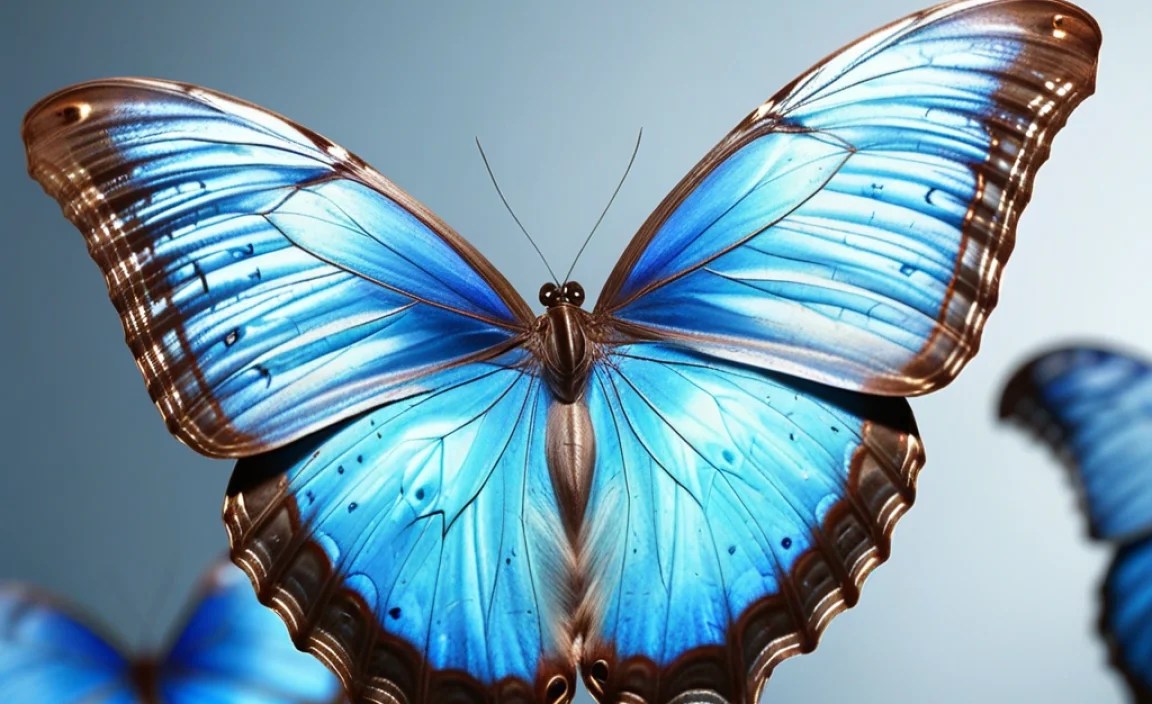
The Blue Morpho academic articles often discuss wing structure. The wings are made of tiny scales. These scales are arranged in rows. The scales reflect light to create the blue color. The top of the wing is bright blue. The underside is brown with eye spots. The eye spots help scare away predators. The shape of the wing is also important. It helps the butterfly fly efficiently. Scientists study the wing structure using microscopes. They can see the tiny details of the scales. Understanding the wing structure helps us understand the butterfly’s adaptations.
- Wings are made of tiny scales.
- Scales reflect light to create color.
- Underside has eye spots for defense.
- Wing shape helps with efficient flight.
- Microscopes help study wing structure.
Imagine you have a magnifying glass. You look closely at a Blue Morpho wing. You see tiny, overlapping scales. Each scale is like a small tile. These tiles are arranged in a pattern. The pattern helps reflect light. This creates the bright blue color. The Blue Morpho academic articles explain this in detail. They use scientific words to describe the scales. They also use pictures to show the scale arrangement. Understanding the wing structure is like solving a puzzle. It helps us appreciate the beauty of the Blue Morpho.
Scales and Light Reflection
The scales on a Blue Morpho’s wings reflect light in a special way. This is called structural coloration. The scales have tiny ridges. These ridges are arranged in a pattern. When light hits the ridges, it bounces off. Some colors of light are cancelled out. The blue color is amplified. This makes the wings look very bright blue. Blue Morpho academic articles explain the physics of light reflection. They use diagrams to show how light interacts with the scales. This is a fascinating example of how nature uses science.
The Role of Pigments
Pigments also play a role in the wing color. Pigments are chemicals that absorb certain colors of light. The scales on a Blue Morpho’s wings have some pigments. These pigments absorb other colors of light. This makes the blue color stand out even more. Blue Morpho academic articles discuss the different types of pigments. They explain how the pigments interact with the structural coloration. The combination of pigments and structural coloration creates the stunning blue color.
Evolutionary Advantages of Wing Color
The bright blue color of the wings has evolutionary advantages. It helps the butterfly attract mates. Male Blue Morphos use their bright color to attract females. The color also helps them stand out from predators. Predators might have a hard time seeing the blue color against the green rainforest background. The eye spots on the underside of the wings also help. They startle predators and give the butterfly a chance to escape. Blue Morpho academic articles discuss the evolutionary advantages of wing color.
Fun Fact or Stat: The blue color is created by light bouncing off tiny structures, not by pigments!
Blue Morpho Habitat and Distribution
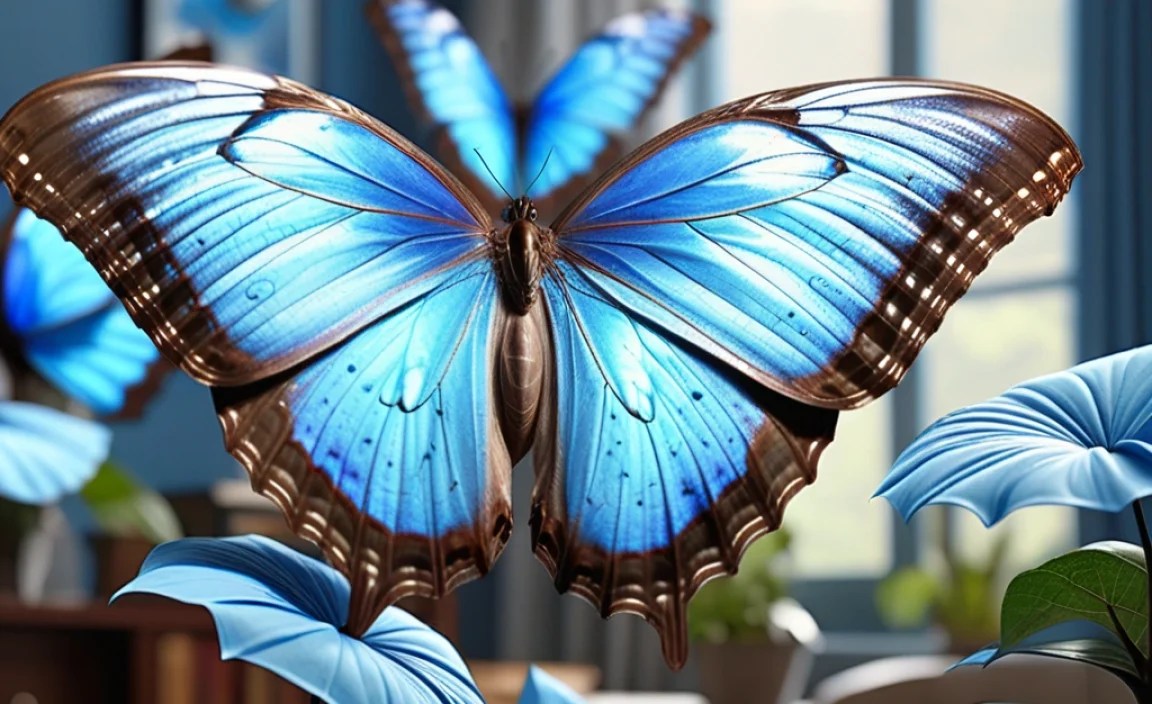
Blue Morpho academic articles provide information about where these butterflies live. Blue Morphos live in rainforests. They are found in Central and South America. The rainforests provide them with food and shelter. They need warm, humid conditions to survive. They are often seen near rivers and streams. The caterpillars feed on plants in the rainforest. The butterflies feed on fruit and nectar. The articles describe the specific regions where Blue Morphos are found. They also discuss the threats to their habitat.
- Live in rainforests of Central and South America.
- Need warm, humid conditions.
- Often found near rivers and streams.
- Caterpillars eat plants.
- Butterflies eat fruit and nectar.
Imagine you’re on a trip to the Amazon rainforest. You’re walking through the dense forest. Suddenly, you see a flash of blue. It’s a Blue Morpho butterfly! It flits through the trees. It lands on a flower to drink nectar. The Blue Morpho academic articles describe this scene. They explain how the butterfly is adapted to its environment. The rainforest provides everything the butterfly needs to survive.
Specific Regions Where They Live
Blue Morphos are found in several specific regions. These include the Amazon rainforest. They also live in the rainforests of Costa Rica and Panama. They can be found in parts of Mexico and Colombia. The Blue Morpho academic articles often include maps. These maps show the butterfly’s distribution. The articles also discuss the specific types of forests where they live. They explain why these forests are important for their survival. Understanding the distribution helps with conservation.
Importance of Rainforests
Rainforests are very important for Blue Morphos. The rainforests provide them with food and shelter. The caterpillars feed on specific plants in the rainforest. The butterflies feed on fruit and nectar from rainforest flowers. The rainforest also provides a humid environment. This is important for the butterfly’s survival. Blue Morpho academic articles emphasize the importance of rainforest conservation. Protecting the rainforest protects the Blue Morpho.
Threats to Their Habitat
Blue Morpho habitats face many threats. Deforestation is a major threat. When forests are cut down, the butterflies lose their homes. Pollution also harms the butterflies. Pesticides can poison them. Climate change can alter their habitat. Warmer temperatures can make it harder for them to survive. Blue Morpho academic articles discuss these threats. They also suggest ways to protect the butterflies. Conservation efforts are crucial for their survival.
Fun Fact or Stat: Rainforests are home to over half of the world’s plant and animal species!
Diet and Feeding Habits of Blue Morphos

Blue Morpho academic articles explain what these butterflies eat. The caterpillars have a different diet than the adults. Caterpillars feed on the leaves of specific plants. Adult butterflies drink sap, fruit, and nectar. They use a long, straw-like tongue called a proboscis. This helps them reach the nectar inside flowers. They also get nutrients from rotting fruit. The articles describe the specific plants and fruits they eat. Understanding their diet is important for conservation.
- Caterpillars eat leaves.
- Adults drink sap, fruit, and nectar.
- Use a proboscis to drink nectar.
- Get nutrients from rotting fruit.
- Diet is important for conservation.
Imagine you’re watching a Blue Morpho butterfly. It lands on a ripe banana. It unrolls its long tongue. It sips the sweet juice. The Blue Morpho academic articles explain this process. They describe how the butterfly’s tongue works. They also explain why they need to eat fruit. The fruit provides them with energy. This energy helps them fly and reproduce.
Caterpillar Food Sources
Caterpillars have very specific food sources. They feed on the leaves of certain plants. These plants are called host plants. Different species of Blue Morphos feed on different host plants. The Blue Morpho academic articles list the common host plants. These include pea plants and other legumes. The caterpillars eat a lot of leaves. This helps them grow quickly. They need to grow big enough to become butterflies.
Adult Butterfly Food Sources
Adult butterflies have a more varied diet. They drink nectar from flowers. They also drink sap from trees. They eat rotting fruit. The Blue Morpho academic articles describe the different types of flowers they visit. They also explain why they eat rotting fruit. Rotting fruit provides them with important nutrients. These nutrients help them reproduce. The butterflies use their long tongue to drink.
Importance of Their Diet
Their diet is very important for their survival. They need the right food to grow and reproduce. If their food sources disappear, they will struggle. Deforestation can reduce their food sources. Pollution can also harm the plants and fruits they eat. Blue Morpho academic articles emphasize the importance of protecting their food sources. Conservation efforts must focus on preserving their diet.
| Food Source | Description | Nutrients Provided |
|---|---|---|
| Leaves | Eaten by caterpillars | Energy for growth |
| Nectar | From flowers, eaten by adults | Sugar for energy |
| Sap | From trees, eaten by adults | Minerals and sugars |
| Rotting Fruit | Eaten by adults | Vitamins and minerals |
Fun Fact or Stat: A butterfly’s tongue can be longer than its body!
Life Cycle of the Blue Morpho Butterfly
Blue Morpho academic articles detail the butterfly’s life cycle. The life cycle has four stages. These are egg, larva (caterpillar), pupa (chrysalis), and adult. The female butterfly lays eggs on a host plant. The egg hatches into a caterpillar. The caterpillar eats leaves and grows. It then forms a pupa. Inside the pupa, it transforms into a butterfly. The adult butterfly emerges from the pupa. The articles describe each stage in detail. They also explain how long each stage lasts.
- Four stages: egg, larva, pupa, adult.
- Female lays eggs on host plant.
- Caterpillar eats leaves and grows.
- Forms a pupa to transform.
- Adult emerges from pupa.
Imagine you’re watching a Blue Morpho butterfly’s life cycle. First, you see a tiny egg on a leaf. Then, the egg hatches into a caterpillar. The caterpillar eats and grows. It sheds its skin several times. Finally, it forms a chrysalis. Inside the chrysalis, something amazing happens. The caterpillar turns into a butterfly. The Blue Morpho academic articles explain this transformation. They describe the science behind it.
Egg Stage
The egg stage is the first stage of the life cycle. The female butterfly lays small, green eggs. She lays them on the underside of a host plant’s leaves. The eggs are very tiny. They are hard to see. The Blue Morpho academic articles describe the egg’s appearance. They also explain how long it takes for the egg to hatch. The egg stage is a vulnerable time. The eggs are easily eaten by predators.
Larva (Caterpillar) Stage
The larva stage is when the caterpillar eats and grows. The caterpillar sheds its skin several times. Each time it sheds its skin, it gets bigger. This is called molting. The Blue Morpho academic articles describe the caterpillar’s appearance. They also explain what it eats. The caterpillar needs to eat a lot to prepare for the pupa stage.
Pupa (Chrysalis) Stage
The pupa stage is when the caterpillar transforms into a butterfly. The caterpillar forms a hard shell around itself. This shell is called a chrysalis. Inside the chrysalis, the caterpillar’s body changes. It turns into a butterfly. The Blue Morpho academic articles describe this process. They explain how the caterpillar’s cells rearrange themselves. This is a complex and amazing transformation.
Fun Fact or Stat: Butterflies taste with their feet!
Conservation Status and Efforts for Blue Morphos
Blue Morpho academic articles discuss the conservation of these butterflies. Blue Morphos are not currently endangered. However, their habitat is threatened. Deforestation and pollution are major concerns. Scientists are working to protect their habitat. They are also studying their populations. This helps them understand how to best conserve them. Conservation efforts are crucial for their long-term survival. The articles describe the different conservation strategies.
- Not currently endangered.
- Habitat is threatened by deforestation.
- Pollution is a major concern.
- Scientists study their populations.
- Conservation efforts are crucial.
Imagine you’re a scientist working to protect Blue Morphos. You study their habitat. You learn about the threats they face. You work with local communities to protect the rainforest. You help replant trees. You educate people about the importance of conservation. The Blue Morpho academic articles inspire this work. They provide the knowledge needed to protect these beautiful butterflies.
Threats to Blue Morpho Populations
Blue Morpho populations face several threats. Deforestation is the biggest threat. When rainforests are cut down, the butterflies lose their homes. Pollution also harms the butterflies. Pesticides can poison them. Climate change can also affect their habitat. Blue Morpho academic articles detail these threats. They explain how each threat impacts the butterflies. Understanding the threats is the first step to conservation.
Conservation Strategies
There are several conservation strategies for Blue Morphos. Protecting their habitat is the most important strategy. This means stopping deforestation. It also means reducing pollution. Reforestation is also important. Planting new trees can help restore their habitat. Blue Morpho academic articles discuss these strategies. They also suggest ways to involve local communities.
How You Can Help
You can help protect Blue Morphos in several ways. You can support organizations that protect rainforests. You can also reduce your use of paper products. This helps reduce deforestation. You can educate others about the importance of conservation. Blue Morpho academic articles can inspire you to take action. Every little bit helps. Together, we can protect these beautiful butterflies.
Fun Fact or Stat: You can help by planting butterfly-friendly plants in your garden!
Summary
Blue Morpho academic articles are important for understanding these butterflies. These articles cover many topics. They discuss their habitat, diet, and life cycle. They also explain how scientists study them. These articles help us learn about the threats they face. Deforestation and pollution are major concerns. Conservation efforts are crucial for their survival. These articles provide the knowledge needed to protect them.
By reading these articles, we can learn about the amazing adaptations of Blue Morphos. We can also learn about the importance of rainforests. We can all play a role in protecting these butterflies. Blue Morpho academic articles inspire us to take action. They show us how much we can learn from nature. They also remind us of the importance of conservation.
Conclusion
Blue Morpho butterflies are fascinating creatures. They have bright blue wings and a unique life cycle. They live in rainforests and eat a variety of foods. Scientists study them to learn more about nature. Blue Morpho academic articles help us understand these butterflies. We can all help protect them by supporting conservation efforts. By learning about them, we can appreciate their beauty and importance.
Frequently Asked Questions
Question No 1: What are Blue Morpho academic articles?
Answer: Blue Morpho academic articles are reports written by scientists and researchers. These articles share information about Blue Morpho butterflies. They cover topics like their habitat, diet, life cycle, and behavior. The articles are published in science journals. Other scientists and students can read them to learn more. These articles help us understand the science behind these amazing insects. They are an important resource for conservation efforts. They also help us appreciate the beauty of nature. By reading these articles, we can all become better informed about Blue Morphos.
Question No 2: Where do Blue Morpho butterflies live?
Answer: Blue Morpho butterflies live in rainforests. They are found in Central and South America. These rainforests provide them with the warm, humid conditions they need. They also provide them with food and shelter. The caterpillars eat leaves of specific plants. The adult butterflies drink nectar from flowers and juice from fruit. Blue Morpho academic articles often include maps showing their distribution. Deforestation threatens their habitat. Protecting the rainforests is important for their survival. We need to conserve these areas. This will ensure that Blue Morphos continue to thrive.
Question No 3: What do Blue Morpho butterflies eat?
Answer: Blue Morpho butterflies have different diets at different stages. Caterpillars eat the leaves of specific plants. These are called host plants. Adult butterflies drink nectar from flowers. They also drink sap from trees and juice from rotting fruit. They use a long, straw-like tongue called a proboscis. This helps them reach the nectar inside flowers. Blue Morpho academic articles describe the specific plants and fruits they eat. Understanding their diet helps with conservation. We need to protect their food sources. This will ensure they have enough to eat to survive.
Question No 4: How do Blue Morpho butterflies get their color?
Answer: Blue Morpho butterflies get their color from tiny scales on their wings. The scales are arranged in a special way. They reflect light to create the blue color. This is called structural coloration. It is different from pigment-based color. Pigments absorb certain colors of light. Structural coloration reflects specific colors. Blue Morpho academic articles explain the physics of light reflection. The blue color helps them attract mates. It also helps them stand out from predators. The underside of their wings is brown with eye spots. This also helps scare away predators.
Question No 5: What is the life cycle of a Blue Morpho butterfly?
Answer: The life cycle of a Blue Morpho butterfly has four stages. These are egg, larva (caterpillar), pupa (chrysalis), and adult. The female butterfly lays eggs on a host plant. The egg hatches into a caterpillar. The caterpillar eats leaves and grows. Then, it forms a pupa. Inside the pupa, it transforms into a butterfly. The adult butterfly emerges from the pupa. Blue Morpho academic articles describe each stage in detail. Understanding the life cycle helps with conservation. We need to protect each stage of their life.
Question No 6: Are Blue Morpho butterflies endangered?
Answer: Blue Morpho butterflies are not currently endangered. However, their habitat is threatened. Deforestation and pollution are major concerns. Climate change can also affect their habitat. Scientists are working to protect them. They are studying their populations. They are also working to conserve their habitat. Blue Morpho academic articles discuss the threats they face. They also suggest ways to protect them. We can all help by supporting conservation efforts. We can also reduce our impact on the environment. This will help ensure their long-term survival.


