Desert Butterfly Identification: The Ultimate Guide

Quick Summary:
Desert butterfly identification can feel tricky because of the harsh environment. Focus on key features like size, color patterns, and wing shape. Note the plant species nearby, as many desert butterflies are closely tied to specific host plants. Observing behavior, such as flight patterns and feeding habits, also helps narrow down the possibilities. A good field guide specific to your region is invaluable.
Have you ever been hiking in the desert, spotted a flash of color, and wondered what kind of butterfly it was? Identifying butterflies in the desert can feel like a real challenge. The heat, the vastness, and the sometimes subtle differences between species can make it seem almost impossible. But don’t worry! With a few simple techniques and a little practice, you can become a desert butterfly identification pro.
This guide will walk you through a step-by-step approach to identifying these beautiful creatures. We’ll cover everything from basic butterfly anatomy to specific characteristics that are key to desert species. Get ready to discover the hidden world of desert butterflies!
Frequently Asked Questions (FAQs)
What is the best time of day to see desert butterflies?
The best time to see desert butterflies is typically in the late morning and early afternoon, when the temperature is warm and the sun is shining. They are most active when it’s warm, as they need the sun’s warmth to fly.
What kind of plants attract desert butterflies?
Many desert butterflies are attracted to native desert wildflowers and shrubs. Some popular choices include milkweed, desert marigold, and various species of acacia. Planting these in your garden can help attract butterflies.
How can I tell the difference between a male and female butterfly?
In some species, males and females have different color patterns or wing shapes. For example, males may have brighter colors or more distinct markings. Observing their behavior, such as courtship displays, can also help.
What should I bring with me when trying to identify desert butterflies?
Bring a field guide specific to your region, a notebook and pen, binoculars, and a camera. A water bottle and sun protection are also essential for your comfort and safety in the desert.
Are there any endangered desert butterflies?
Yes, some desert butterfly species are endangered due to habitat loss and other factors. The Quino Checkerspot Butterfly is one example. Conservation efforts are crucial to protect these species.
How can I help protect desert butterflies?
You can help protect desert butterflies by planting native plants in your garden, avoiding the use of pesticides, and supporting conservation organizations that work to protect their habitats. Educating others about the importance of these creatures is also very helpful.
What if I can’t identify a butterfly?
Don’t worry! Butterfly identification can be challenging. Take a photo and consult online resources or local experts. Many online forums and communities are dedicated to butterfly identification and can offer valuable assistance.
Step 1: Observe Basic Characteristics
Before diving into specific species, let’s cover some fundamental aspects of butterfly identification. These initial observations will help you narrow down the possibilities.
Size and Shape
Start by noting the butterfly’s size. Is it small, medium, or large? Also, observe the shape of its wings. Are they rounded, angular, or elongated? These characteristics are often key identifiers.
Color and Pattern
The color and pattern of a butterfly’s wings are crucial for identification. Note the dominant colors, any distinct markings (spots, stripes, etc.), and the overall pattern. Take a close look at both the upper and lower sides of the wings, as they can differ.
Step 2: Examine Wing Details
Once you’ve noted the basic characteristics, it’s time to get into the details. Wing patterns can be incredibly diverse and offer valuable clues.
Spots and Markings
Pay attention to the presence, size, and arrangement of spots and markings. Are there eyespots? Are the markings symmetrical or asymmetrical? Do the markings extend to the edge of the wing?
Veins and Borders
Examine the veins on the wings. How prominent are they? What color are they? Also, note the color and texture of the wing borders. Are they smooth, scalloped, or fringed?
Step 3: Consider Location and Habitat
Knowing where you saw the butterfly and what kind of habitat it was in can significantly narrow down the possibilities. Desert butterflies are often highly adapted to specific environments.
Geographic Range
Different butterfly species are found in different geographic regions. Consult a field guide or online resource to determine which species are known to occur in your area. The Butterfly Identification website from Butterflies and Moths of North America ([https://www.butterfliesandmoths.org/](https://www.butterfliesandmoths.org/)) is a great resource.
Habitat Type
Desert butterflies are often associated with specific habitat types, such as rocky hillsides, washes, or areas with particular host plants. Note the surrounding vegetation and terrain.
Step 4: Identify Host Plants
Many desert butterflies are closely tied to specific host plants, which their caterpillars feed on. Identifying these plants can be a major key to identification.
Common Desert Host Plants
Here are some common desert host plants and the butterflies that use them:
- Milkweed (Asclepias spp.): Monarch, Queen, and Soldier butterflies
- Acacia (Acacia spp.): Various hairstreaks and skippers
- Desert Marigold (Baileya multiradiata): Several small butterfly species
- Buckwheat (Eriogonum spp.): A wide range of blues and coppers
Observing Caterpillar Feeding
If you see caterpillars on a particular plant, try to identify the plant and then research which butterfly species use it as a host. This can provide a direct link to the adult butterfly.
Step 5: Observe Behavior
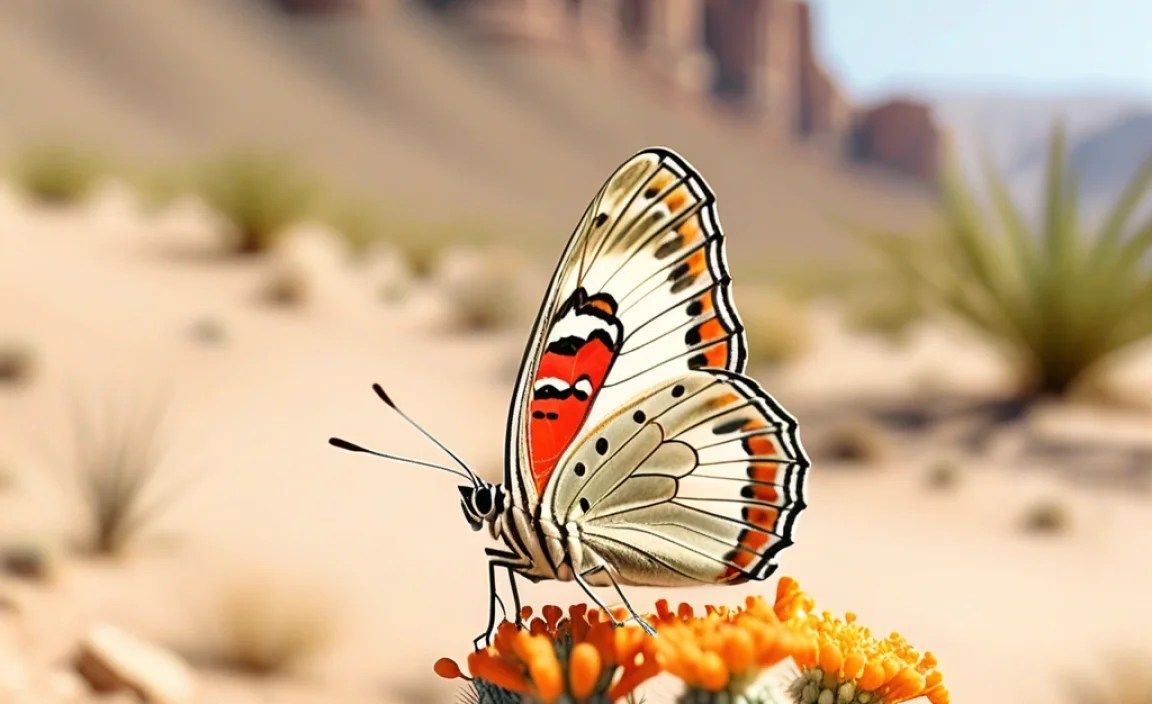
A butterfly’s behavior can also offer clues to its identity. Pay attention to its flight patterns, feeding habits, and other behaviors.
Flight Patterns
Does the butterfly fly quickly or slowly? Does it flutter or glide? Does it prefer to fly close to the ground or higher up? These flight characteristics can be distinctive.
Feeding Habits
What flowers does the butterfly visit for nectar? Does it also feed on other substances, such as sap or mud? Some butterflies have very specific feeding preferences.
Step 6: Use a Field Guide
A good field guide is an essential tool for butterfly identification. Look for one that is specific to your region and includes detailed descriptions and illustrations of desert butterfly species.
Recommended Field Guides
Here are a few recommended field guides for desert butterflies:
- “Butterflies of Southeastern Arizona” by Richard Bailowitz and Jim Brock: A comprehensive guide to the butterflies of southeastern Arizona, which is a hotspot for desert butterfly diversity.
- “Butterflies of Southern California” by Arthur M. Shapiro and Alan C. Waltner: Covers the butterflies of Southern California, including many desert species.
- “National Audubon Society Field guide to North American butterflies” by Robert Michael Pyle: A general guide to North American butterflies, including many desert species.
How to Use a Field Guide Effectively
Start by browsing the guide to familiarize yourself with the different butterfly families and genera. Then, use the steps outlined above to narrow down the possibilities and find a matching description and illustration in the guide. The Smithsonian Institution’s butterfly information ([https://www.si.edu/spotlight/butterflies](https://www.si.edu/spotlight/butterflies)) is another great resource.
Step 7: Document Your Observations
Taking notes and photos is a great way to improve your butterfly identification skills and create a record of your observations.
Taking Notes
Record the date, time, and location of your observation, as well as the butterfly’s size, color, pattern, and behavior. Note any host plants or other relevant details.
Taking Photos
Take clear, close-up photos of the butterfly from different angles. Try to capture both the upper and lower sides of the wings. Photos will be invaluable for later identification and comparison.
Step 8: Compare with Online Resources
Many online resources can assist with butterfly identification. These resources often include photos, descriptions, and distribution maps.
Useful Websites
Here are some useful websites for butterfly identification:
- Butterflies and Moths of North America (BAMONA): A comprehensive website with photos, descriptions, and distribution maps of North American butterflies and moths. ([https://www.butterfliesandmoths.org/](https://www.butterfliesandmoths.org/))
- BugGuide.Net: A community-driven website with photos and information on a wide range of insects, including butterflies. ([https://bugguide.net/node/view/15740](https://bugguide.net/node/view/15740))
- iNaturalist: A citizen science platform where you can upload photos of butterflies and get help with identification from other users. ([https://www.inaturalist.org/](https://www.inaturalist.org/))
Using Online Forums
Many online forums and communities are dedicated to butterfly identification. Post your photos and descriptions on these forums and ask for help from experienced butterfly enthusiasts. The Xerces Society ([https://xerces.org/](https://xerces.org/)) also has conservation information.
Step 9: Practice and Persistence
Butterfly identification takes practice. The more you observe and study butterflies, the better you will become at identifying them. Don’t get discouraged if you can’t identify every butterfly you see. Keep learning and exploring, and you’ll gradually develop your skills.
Join a Butterfly Club
Consider joining a local butterfly club or nature group. These groups often organize field trips and workshops where you can learn from experienced butterfly enthusiasts. This is also a great way to meet other people who share your passion for butterflies.
Visit Butterfly Gardens
Butterfly gardens are a great place to observe a variety of butterfly species up close. Many botanical gardens and nature centers have butterfly gardens. Take advantage of these opportunities to practice your identification skills.
Common Desert Butterflies: Identification Guide
Now, let’s look at some common desert butterfly species and their identifying characteristics.
The Queen (Danaus gilippus)
The Queen butterfly is a close relative of the Monarch and is often found in desert areas. It is a medium-sized butterfly with orange-brown wings and white spots along the edges.
| Characteristic | Description |
|---|---|
| Size | Medium |
| Color | Orange-brown with white spots |
| Host Plant | Milkweed |
| Habitat | Desert areas |
The Sleepy Orange (Eurema nicippe)
The Sleepy Orange is a small, bright orange butterfly commonly found in desert washes and open areas. Its name comes from its habit of resting with its wings closed.
| Characteristic | Description |
|---|---|
| Size | Small |
| Color | Bright orange |
| Host Plant | Partridge Pea (Chamaecrista fasciculata) |
| Habitat | Desert washes, open areas |
The Painted Lady (Vanessa cardui)
The Painted Lady is a widespread butterfly species that can be found in a variety of habitats, including deserts. It is a medium-sized butterfly with orange, brown, and black markings on its wings.
| Characteristic | Description |
|---|---|
| Size | Medium |
| Color | Orange, brown, and black |
| Host Plant | Thistles, mallows, and other plants |
| Habitat | Various habitats, including deserts |
The Western Pygmy Blue (Brephidium exilis)
The Western Pygmy Blue is one of the smallest butterflies in the world. It is found in desert areas and is often associated with saltbush and other desert plants. It’s tiny and easy to overlook!
| Characteristic | Description |
|---|---|
| Size | Very small |
| Color | Blue-gray with orange spots |
| Host Plant | Saltbush (Atriplex spp.) |
| Habitat | Desert areas |
The Ceraunus Blue (Hemiargus ceraunus)
The Ceraunus Blue is a small butterfly with silvery-blue wings. The underside has distinct black spots outlined in white. It is commonly found in the southern United States and into South America.
| Characteristic | Description |
|---|---|
| Size | Small |
| Color | Silvery-blue |
| Host Plant | Various legumes |
| Habitat | Open areas, gardens |
The Importance of Desert Butterflies
Desert butterflies play a vital role in the ecosystem. They are pollinators, helping to ensure the reproduction of many desert plants. They also serve as a food source for birds, lizards, and other animals. Protecting desert butterflies and their habitats is essential for maintaining the health and biodiversity of desert ecosystems.
Tips for Attracting Desert Butterflies to Your Garden
If you live in a desert area, you can attract butterflies to your garden by planting native host plants and nectar sources.
- Plant a variety of nectar-rich flowers: Choose flowers that bloom at different times of the year to provide a continuous source of nectar.
- Provide a water source: Butterflies need water to survive. Provide a shallow dish of water with pebbles or marbles for them to land on.
- Avoid using pesticides: Pesticides can harm or kill butterflies and other beneficial insects.
- Create a butterfly puddling area: Butterflies often gather at puddles or damp soil to obtain minerals and nutrients. Create a puddling area by wetting a patch of soil and adding a small amount of salt.
Conclusion
Identifying desert butterflies can be a rewarding and fascinating experience. By following these steps and practicing your observation skills, you can learn to identify these beautiful creatures and appreciate their important role in the desert ecosystem. Remember to consult field guides, online resources, and local experts for assistance. Happy butterflying!