
Zebra Longwing Butterfly: Attract These Beauties!

The Zebra Longwing butterfly (Heliconius charithonia) is a striking, easily recognizable butterfly known for its distinctive black and white stripes. It’s one of the few butterfly species that feeds on pollen as well as nectar, giving it a longer lifespan than most butterflies. Zebra Longwings are found primarily in the southern United States, Central America, and South America, often seen gracefully fluttering in gardens and woodlands.
Have you ever been captivated by a butterfly’s beauty and wanted to know more? Many people find butterflies fascinating but struggle to identify different species and understand their unique behaviors. It can be frustrating to see these beautiful creatures and not know their names or how to attract them to your garden. But don’t worry! This guide will help you identify the Zebra Longwing butterfly, understand its life cycle, and learn how to create a butterfly-friendly habitat. Let’s explore the amazing world of the Zebra Longwing together!
What is a Zebra Longwing Butterfly?

The Zebra Longwing is not just another pretty butterfly; it’s a unique and fascinating species. Known scientifically as Heliconius charithonia, this butterfly is the official state butterfly of Florida, a testament to its beauty and prevalence in the region.
Distinguishing Features
What sets the Zebra Longwing apart? It’s all in the details:
- Wings: Elongated black wings with striking zebra-like white or pale yellow stripes.
- Size: Wingspan typically ranges from 2.5 to 4 inches (6.4 to 10.2 cm).
- Body: A slender black body with small white or yellow spots.
- Flight: Graceful, fluttering flight pattern, often seen in sunny areas.
Habitat and Distribution
Where can you find these beauties? The Zebra Longwing is commonly found in:
- Southern United States: Especially Florida, Texas, and other Gulf Coast states.
- Central America: Throughout many countries in the region.
- South America: As far south as Argentina.
They prefer habitats such as open woodlands, gardens, and roadsides where their host plants thrive.
Unique Behavior
One of the most fascinating aspects of the Zebra Longwing is its unique diet. Unlike most butterflies that rely solely on nectar, the Zebra Longwing also feeds on pollen. This unusual diet gives it a significantly longer lifespan compared to other butterfly species, often living for several months.
Life Cycle of the Zebra Longwing

Understanding the life cycle of the Zebra Longwing is essential for appreciating its journey and for supporting its conservation. Like all butterflies, it undergoes complete metamorphosis, which includes four distinct stages.
Egg Stage
The life cycle begins with the egg. Female Zebra Longwings lay their eggs on or near the leaves of their host plant, typically passionflower vines (Passiflora species).
- Appearance: Small, yellow eggs.
- Location: Laid singly on the host plant.
- Hatching: Eggs hatch in about 3 to 5 days, depending on environmental conditions.
Larva (Caterpillar) Stage
Once the eggs hatch, the larvae emerge. These caterpillars are voracious eaters, growing rapidly as they consume passionflower leaves.
- Appearance: The caterpillars are initially small and dark, but they develop distinctive black and white stripes with bright orange spines as they mature.
- Feeding: They feed almost exclusively on passionflower leaves.
- Molting: The caterpillars go through several molts, shedding their skin as they grow.
Pupa (Chrysalis) Stage
After reaching their full size, the caterpillars transform into pupae, also known as chrysalises. This is a transitional stage where the caterpillar undergoes a complete metamorphosis inside the pupal casing.
- Appearance: The chrysalis is brown and elongated, often resembling a dried leaf or twig, providing excellent camouflage.
- Duration: This stage lasts about 10 to 14 days.
- Transformation: Inside the chrysalis, the caterpillar’s body is broken down and reorganized into the adult butterfly form.
Adult Stage
The final stage is the emergence of the adult butterfly. This is when the Zebra Longwing displays its full beauty and begins its reproductive life.
- Emergence: The butterfly emerges from the chrysalis, its wings crumpled and wet. It takes a few hours for the wings to expand and dry.
- Lifespan: Thanks to their pollen-rich diet, adult Zebra Longwings can live for several months, much longer than many other butterfly species.
- Reproduction: Adult butterflies mate and the females lay eggs, starting the cycle anew.
Attracting Zebra Longwings to Your Garden

Creating a butterfly-friendly garden is a rewarding experience that brings beauty and life to your backyard. Here’s how to attract Zebra Longwings:
Plant Host Plants
The most crucial step is to provide the host plants that Zebra Longwing caterpillars need to survive. Passionflower vines are their primary food source.
- Passionflower Varieties: Some popular species include Passiflora incarnata (Maypop), Passiflora lutea (Yellow Passionflower), and Passiflora caerulea (Blue Passionflower).
- Planting Tips: Passionflowers thrive in sunny locations with well-drained soil. They can be grown on trellises, fences, or as ground cover.
- Caution: Some passionflower species can be toxic to pets, so research before planting.
Provide Nectar Sources
While Zebra Longwings feed on pollen, they also need nectar for energy. Plant a variety of nectar-rich flowers that bloom at different times of the year.
- Popular Nectar Plants: Lantana, salvia, pentas, and zinnias are excellent choices.
- Color Preferences: Butterflies are attracted to bright colors, especially red, orange, yellow, and purple.
- Continuous Bloom: Choose a mix of plants that bloom throughout the growing season to provide a continuous food source.
Offer a Water Source
Butterflies need water, but they can’t drink from open water sources. Provide a shallow dish with wet sand or pebbles where they can safely drink.
- Butterfly Puddler: Create a butterfly puddler by filling a shallow dish with sand or small stones and adding water to keep it moist.
- Location: Place the puddler in a sunny spot where butterflies can easily find it.
- Maintenance: Keep the puddler clean and refill it regularly to provide a fresh water source.
Avoid Pesticides
Pesticides can be harmful to butterflies and other beneficial insects. Avoid using chemical pesticides in your garden.
- Organic Gardening: Use organic gardening practices to control pests and diseases.
- Natural Pest Control: Encourage natural predators like ladybugs and lacewings to control pests.
- Handpicking: Remove pests by hand whenever possible.
Provide Shelter
Butterflies need shelter from wind and rain. Plant shrubs and trees to provide a protected habitat.
- Windbreaks: Plant dense shrubs to create windbreaks.
- Resting Spots: Provide flat stones or sunny leaves where butterflies can rest and bask in the sun.
- Variety: A diverse garden with different layers of vegetation will provide the best shelter for butterflies.
Identifying Zebra Longwing Look-Alikes
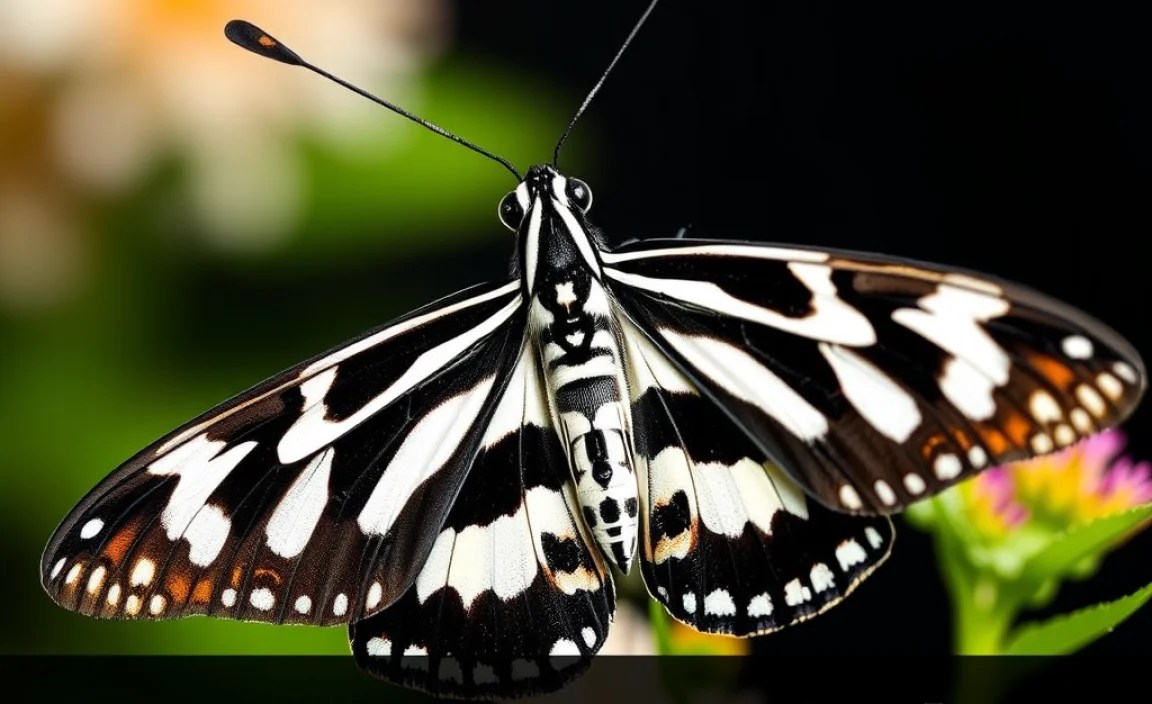
While the Zebra Longwing is quite distinctive, there are a few other butterflies that might be confused with it. Here’s how to tell them apart:
Zebra Swallowtail (Eurytides marcellus)
The Zebra Swallowtail also has black and white stripes, but there are key differences:
- Tail: Zebra Swallowtails have long, distinctive tails on their hindwings, while Zebra Longwings do not.
- Wing Shape: Swallowtails have a more angular wing shape compared to the elongated wings of the Zebra Longwing.
- Color: Zebra Swallowtails have a paler, more translucent appearance.
Gulf Fritillary (Agraulis vanillae)
The Gulf Fritillary is another orange butterfly that is commonly found in the same areas as the Zebra Longwing, and also uses passionflower as a host plant.
- Color: Gulf Fritillaries are bright orange with black markings, while Zebra Longwings have black and white stripes.
- Shape: The Gulf Fritillary has a more rounded wing shape compared to the elongated wings of the Zebra Longwing.
- Flight: Gulf Fritillaries have a faster, more erratic flight pattern.
Other Striped Butterflies
Some other butterflies may have stripes, but they are usually distinctly different in color or pattern.
- Check the Pattern: Look closely at the pattern and color of the stripes. Zebra Longwings have a very specific black and white (or pale yellow) stripe pattern.
- Consider the Location: The Zebra Longwing is most common in the southern United States, Central America, and South America. If you are outside of these areas, it is less likely to be a Zebra Longwing.
- Consult a Guide: Use a butterfly identification guide or app to help you identify the butterfly.
| Butterfly Species | Key Features | Habitat |
|---|---|---|
| Zebra Longwing (Heliconius charithonia) | Black and white stripes, elongated wings, pollen-feeding | Southern US, Central and South America |
| Zebra Swallowtail (Eurytides marcellus) | Black and white stripes, long tails on hindwings | Eastern US |
| Gulf Fritillary (Agraulis vanillae) | Bright orange with black markings | Southern US, Central and South America |
Ecological Importance of Zebra Longwings

Zebra Longwings play a vital role in their ecosystems. They are important pollinators, contributing to the health and diversity of plant communities. As they feed on nectar and pollen, they transfer pollen from flower to flower, facilitating plant reproduction.
Pollination
Butterflies are essential pollinators, and the Zebra Longwing is no exception. Their feeding habits help ensure the survival of many plant species.
- Plant Reproduction: Pollination is necessary for many plants to produce fruits and seeds.
- Ecosystem Health: Healthy plant communities support a wide range of other organisms, contributing to overall ecosystem health.
Food Source
Zebra Longwings and their caterpillars serve as a food source for other animals, such as birds, reptiles, and other insects.
- Caterpillars: Caterpillars are a protein-rich food source for many birds and other animals.
- Adult Butterflies: Adult butterflies are also eaten by birds and other predators.
Indicator Species
Butterflies are often used as indicator species, meaning their presence or absence can indicate the health of an ecosystem. A decline in butterfly populations can signal environmental problems such as habitat loss, pollution, or climate change.
- Environmental Health: Monitoring butterfly populations can provide valuable insights into the overall health of the environment.
- Conservation Efforts: Protecting butterfly habitats can help conserve a wide range of other species.
Conservation Status and Efforts
While the Zebra Longwing is not currently listed as endangered, it faces several threats, including habitat loss and pesticide use. Conservation efforts are essential to ensure its continued survival.
Habitat Loss
One of the biggest threats to Zebra Longwings is the loss of their natural habitats due to development, agriculture, and deforestation.
- Urbanization: As cities and towns expand, natural habitats are destroyed.
- Agriculture: Clearing land for agriculture can eliminate butterfly habitats and food sources.
- Deforestation: Logging and deforestation can destroy butterfly habitats and disrupt ecosystems.
Pesticide Use
Pesticides can be harmful to butterflies and other beneficial insects. Even pesticides that are not directly toxic to butterflies can harm them by killing their host plants or nectar sources.
- Chemical Pesticides: Chemical pesticides can kill butterflies directly or indirectly by poisoning their food sources.
- Habitat Contamination: Pesticides can contaminate butterfly habitats, making them unsuitable for survival.
Conservation Strategies
There are several strategies that can be used to conserve Zebra Longwings and other butterfly species.
- Habitat Preservation: Protecting and restoring butterfly habitats is essential.
- Sustainable Gardening: Encouraging sustainable gardening practices that avoid pesticide use and promote native plants.
- Education: Educating the public about the importance of butterflies and the threats they face.
- Citizen Science: Engaging citizens in monitoring butterfly populations and habitats.
Fun Facts About Zebra Longwings
To wrap things up, here are some fun and interesting facts about Zebra Longwings:
- State Butterfly: The Zebra Longwing is the official state butterfly of Florida.
- Pollen Feeding: It is one of the few butterfly species that feeds on pollen as well as nectar, giving it a longer lifespan.
- Roosting Behavior: Zebra Longwings often roost together in groups at night, forming communal roosts.
- Warning Coloration: Their distinctive black and white stripes serve as a warning to predators that they are distasteful.
- Host Plant Specificity: Zebra Longwing caterpillars feed almost exclusively on passionflower vines.
FAQ About Zebra Longwing Butterflies
What do Zebra Longwing caterpillars eat?
Zebra Longwing caterpillars primarily eat the leaves of passionflower vines (Passiflora species). These vines are their essential host plant, providing all the nutrients they need to grow.
How long do Zebra Longwing butterflies live?
Adult Zebra Longwing butterflies can live for several months, which is longer than many other butterfly species. This extended lifespan is due to their unique diet, which includes both nectar and pollen.
Are Zebra Longwing butterflies poisonous?
Zebra Longwing butterflies are not poisonous in the traditional sense, but their caterpillars consume passionflower leaves, which contain compounds that make them distasteful to predators. This gives the butterflies a degree of protection.
Where can I find Zebra Longwing butterflies?
Zebra Longwing butterflies are commonly found in the southern United States (especially Florida and Texas), Central America, and South America. They prefer open woodlands, gardens, and roadsides where their host plants thrive.
How can I attract Zebra Longwing butterflies to my garden?
To attract Zebra Longwing butterflies to your garden, plant passionflower vines (their host plant) and nectar-rich flowers like lantana, salvia, pentas, and zinnias. Also, provide a shallow dish with water and avoid using pesticides.
What is the difference between a Zebra Longwing and a Zebra Swallowtail?
The Zebra Longwing has elongated wings with black and white stripes and does not have tails. The Zebra Swallowtail also has black and white stripes, but it has long, distinctive tails on its hindwings.
Are Zebra Longwing butterflies endangered?
No, Zebra Longwing butterflies are not currently listed as endangered. However, they face threats such as habitat loss and pesticide use, so it’s important to support conservation efforts to ensure their continued survival.
Conclusion
The Zebra Longwing butterfly is a remarkable creature with its striking appearance, unique diet, and fascinating life cycle. By understanding its needs and providing a suitable habitat, you can attract these beautiful butterflies to your garden and contribute to their conservation. Whether you’re a seasoned naturalist or a beginner, there’s always something new to discover in the world of butterflies. So, get outside, explore nature, and enjoy the beauty of the Zebra Longwing!


