
Species Identification in Deserts: Your Smart Guide

Did you ever get lost in a big place? Imagine being a scientist in the desert. They need to know what plants and animals live there. This is called species identification in deserts. It can be tricky because deserts are vast and life can be hidden.
Why is species identification in deserts so important? It helps us understand and protect these fragile environments. Let’s explore how scientists find and name the living things in the desert.
Key Takeaways
- Scientists use many tools for species identification in deserts, like tracks and DNA.
- Knowing desert species helps us protect them from harm and extinction.
- Deserts are home to amazing plants and animals that have adapted to survive.
- Learning about desert life teaches us about the importance of biodiversity.
- Species identification is the first step in understanding desert ecosystems.
The Importance of Species Identification in Deserts

Species identification in deserts is like being a detective. Scientists look for clues to figure out what lives there. Deserts are not empty places. Many plants, animals, and even tiny creatures call the desert home. Knowing what these species are is important for many reasons. It helps us understand how they live and interact with each other. This knowledge is needed to protect them. Without species identification, we would not know what we are trying to save. We might accidentally harm a rare or endangered species. Correct identification also helps us track changes in the environment. If a species disappears, it could be a sign of a bigger problem. Species identification is the first step towards conservation. It is the key to keeping desert ecosystems healthy.
- Deserts cover about one-fifth of the Earth’s land surface.
- Many desert animals are nocturnal, meaning they are active at night.
- Some desert plants store water in their leaves or stems.
- Deserts can be hot or cold, depending on their location.
- Understanding desert life helps us appreciate its beauty.
Think of the desert as a giant puzzle. Each plant and animal is a piece of that puzzle. Species identification helps us put the pieces together. When we know what each piece is, we can see the whole picture. This picture shows us how the desert works. It shows us how everything is connected. By identifying each species, we can better understand the desert ecosystem. We learn about food chains, habitats, and survival strategies. This knowledge allows us to make better decisions about how to protect these fragile environments. It is like having a map that guides us in the right direction. Species identification is the foundation for all desert conservation efforts.
Fun Fact or Stat: The Sahara Desert is larger than the entire United States!
Why Is Classification Important?
Imagine you are a librarian. You have thousands of books. How would you find a specific book? You would need a system to organize them. Classification is like that system for living things. It helps scientists organize and understand the diversity of life. Without classification, it would be impossible to keep track of all the different species. Species identification relies on a good classification system. It allows scientists to group similar organisms together. This makes it easier to study them and understand their relationships. Classification also helps us communicate about species. When we use a scientific name, everyone knows exactly what organism we are talking about. This is important for research, conservation, and education. Classification is the backbone of biology.
What Are the Benefits of Knowing Species?
Knowing what species live in the desert has many benefits. It helps us understand how the desert ecosystem works. We can learn about food chains, habitats, and interactions between species. This knowledge is important for conservation. We can protect endangered species and their habitats. Knowing species also has economic benefits. Some desert plants have medicinal properties. Others can be used for food or other products. Species identification is the first step towards discovering these resources. It also helps us prevent problems. We can identify invasive species that might harm the desert ecosystem. Knowing species is essential for managing and protecting deserts.
What Is the Role of Taxonomy?
Taxonomy is the science of naming and classifying living things. It is the foundation of species identification. Taxonomists study the characteristics of organisms. They use these characteristics to group them into different categories. These categories include kingdoms, phyla, classes, orders, families, genera, and species. Each species has a unique scientific name. This name is made up of two parts: the genus and the species. For example, the scientific name for the saguaro cactus is Carnegiea gigantea. Taxonomy provides a universal language for scientists. It allows them to communicate about species accurately and consistently. Without taxonomy, species identification would be much more difficult.
Traditional Methods for Desert Species Identification
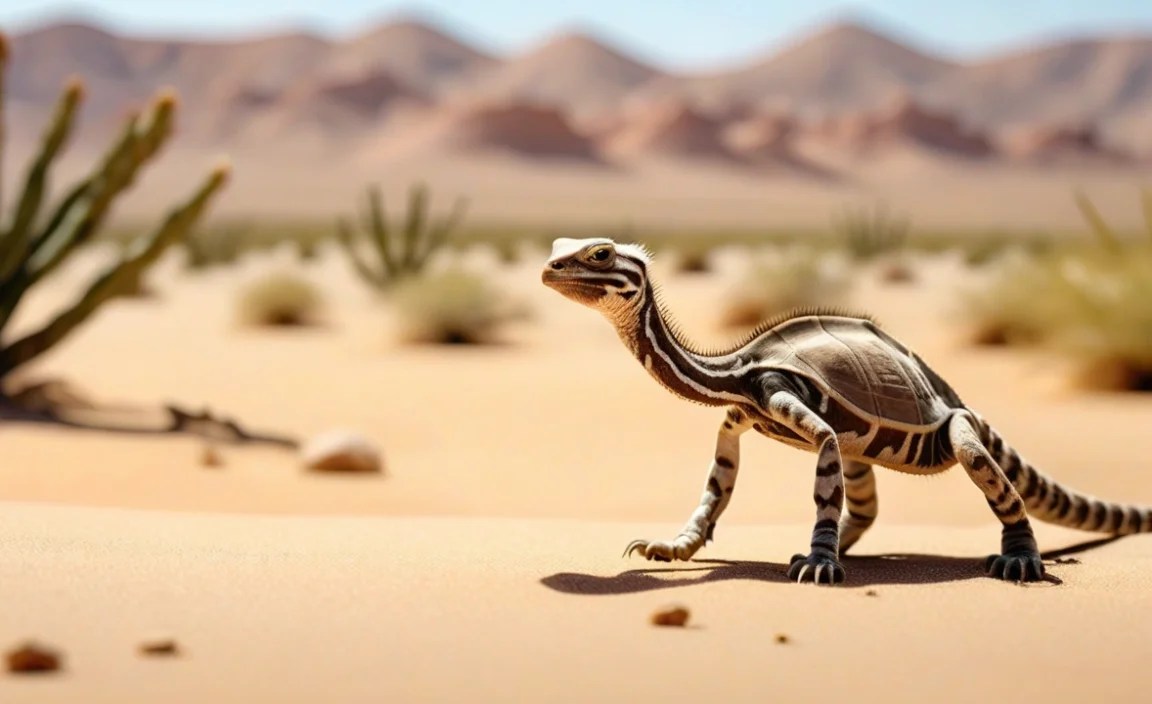
Long ago, people who lived in the desert had their own ways of species identification. They learned from experience, watching plants and animals over many years. They knew which plants were safe to eat and which animals were dangerous. This knowledge was passed down through generations. Today, scientists still use some of these traditional methods. They observe animals in their natural habitats. They look at their tracks, droppings, and other signs. They also collect plant specimens and compare them to known species. These methods can be time-consuming and require a lot of expertise. But they are still valuable for species identification in deserts. They provide a foundation for more modern techniques.
- Tracking animals by their footprints is a common method.
- Local knowledge from indigenous people is very useful.
- Examining plant structures like leaves and flowers helps.
- Listening to animal calls can help identify different species.
- Observing animal behavior provides clues about their identity.
- Traditional methods are often combined with modern techniques.
Imagine you are walking in the desert. You see a set of tracks in the sand. How can you tell what animal made them? You might look at the size and shape of the tracks. You might also look for other clues, like droppings or scratches on rocks. Experienced trackers can identify many different species just by their tracks. They know the difference between a coyote track and a fox track. They can tell if an animal is walking, running, or hunting. This skill takes years to develop. But it is an essential part of species identification in deserts. Traditional methods like tracking are still important today. They provide valuable information that can be used to protect desert wildlife.
Fun Fact or Stat: Some desert animals can survive for days or even weeks without water!
What Are Some Visual Clues?
Visual clues are important for species identification. What does the animal look like? Is it big or small? What color is it? Does it have any distinctive markings? What shape are its ears, tail, and legs? For plants, visual clues include the shape of the leaves, flowers, and stems. What color are the flowers? How are the leaves arranged on the stem? Are there any thorns or spines? All of these visual clues can help you narrow down the possibilities. You can compare your observations to pictures and descriptions in field guides. With practice, you can learn to identify many different species just by looking at them.
How Does Habitat Play a Role?
The habitat where you find a plant or animal can be a clue to its identity. Some species are found only in certain types of habitats. For example, some plants grow only in sandy soils. Others grow only in rocky areas. Some animals live only near water sources. Others can survive in very dry conditions. Knowing the habitat where you found a species can help you narrow down the possibilities. You can consult habitat maps and descriptions to see which species are likely to be found in that area. Habitat is an important piece of the puzzle for species identification in deserts.
What Is the Role of Local Knowledge?
People who live in the desert often have a deep understanding of the local plants and animals. They may know things that scientists do not. They may have different names for the same species. They may know about traditional uses of plants and animals. Local knowledge can be a valuable resource for species identification. Scientists often work with local communities to learn about the desert ecosystem. They can combine traditional knowledge with scientific methods to get a more complete picture. Local knowledge is an important part of conservation efforts.
Modern Technological Approaches
Today, scientists have many new tools for species identification in deserts. These tools use technology to help them identify plants and animals more quickly and accurately. One tool is DNA barcoding. This involves taking a small sample of DNA from an organism. Then, scientists compare the DNA sequence to a database of known species. This can help them identify the species, even if they cannot see it. Another tool is remote sensing. This involves using satellites or airplanes to collect data about the desert environment. Scientists can use this data to map vegetation, identify water sources, and track animal movements. These technologies are changing the way we study deserts.
- DNA barcoding uses genetic information to identify species.
- Remote sensing uses satellites to observe desert environments.
- GPS tracking helps scientists monitor animal movements.
- Camera traps capture images of animals in their natural habitat.
- Acoustic monitoring records animal sounds for identification.
Imagine a tiny camera hidden in the desert. It is called a camera trap. It waits patiently for an animal to walk by. When it does, the camera takes a picture. Scientists can use these pictures to identify the animals that live in the area. They can also learn about their behavior. Camera traps are just one example of how technology is helping us study deserts. GPS tracking devices can be attached to animals to track their movements. Acoustic monitoring devices can record animal sounds. These technologies are providing us with a wealth of information about desert life. They are helping us to understand and protect these fragile ecosystems. Species identification is becoming more accurate and efficient thanks to these modern tools.
Fun Fact or Stat: Some desert plants can live for hundreds of years!
How Does DNA Barcoding Work?
DNA barcoding is like a fingerprint for living things. Each species has a unique DNA sequence. Scientists can use this sequence to identify the species. The process involves taking a small sample of tissue from an organism. Then, they extract the DNA and amplify a specific region. This region is called the barcode. The barcode sequence is then compared to a database of known species. If the sequence matches a known species, the organism is identified. DNA barcoding is a powerful tool for species identification. It can be used to identify plants, animals, and even fungi. It is especially useful for identifying cryptic species, which are species that look very similar to each other.
What Are the Benefits of Remote Sensing?
Remote sensing allows scientists to study deserts from afar. They can use satellites and airplanes to collect data about the environment. This data can be used to map vegetation, identify water sources, and track animal movements. Remote sensing is useful for studying large areas. It can also be used to monitor changes in the environment over time. For example, scientists can use remote sensing to track the spread of invasive species. They can also use it to assess the impact of climate change on desert ecosystems. Remote sensing provides a valuable overview of desert environments. It helps scientists to understand the big picture.
How Are Camera Traps Used?
Camera traps are automated cameras that are triggered by motion. They are used to capture images of animals in their natural habitat. Scientists can use these images to identify the animals that live in the area. They can also learn about their behavior. Camera traps are especially useful for studying nocturnal animals. They can capture images of animals that are rarely seen by humans. Camera traps are also used to monitor populations of endangered species. They can provide valuable information about their distribution and abundance. Camera traps are a non-invasive way to study desert wildlife. They allow scientists to observe animals without disturbing them.
Challenges in Desert Species Identification
Species identification in deserts is not always easy. Deserts are vast and remote. It can be difficult to access some areas. The climate can be harsh, with extreme temperatures and little water. Many desert plants and animals are small and well-camouflaged. They can be hard to find. Some species are active only at night. Others are rare or endangered. All of these factors make species identification challenging. Scientists must be patient, persistent, and resourceful. They must use a variety of methods and tools. They must also work together with local communities. Despite the challenges, species identification is essential for understanding and protecting desert ecosystems.
| Challenge | Description |
|---|---|
| Remoteness | Deserts are often far from populated areas. |
| Harsh climate | Extreme temperatures and lack of water make fieldwork difficult. |
| Camouflage | Many desert species blend in with their surroundings. |
| Nocturnal behavior | Many desert animals are active only at night. |
| Rarity | Some desert species are very rare and hard to find. |
Imagine trying to find a tiny lizard in a sea of sand. The lizard is the same color as the sand. It moves quickly and hides under rocks. This is the challenge that scientists face when identifying species in deserts. They must be skilled observers. They must know where to look. They must be able to distinguish between different species. It takes a lot of practice and experience. But the rewards are great. By identifying desert species, scientists can learn about their adaptations. They can understand how they survive in this harsh environment. This knowledge is essential for protecting these amazing creatures and their habitats.
Fun Fact or Stat: Some desert animals can get all the water they need from the food they eat!
What About Cryptic Species?
Cryptic species are species that look very similar to each other. They can be difficult to distinguish based on their appearance alone. This makes species identification challenging. Scientists often need to use DNA barcoding or other genetic techniques to identify cryptic species. Cryptic species are common in deserts. Many desert plants and animals have evolved to look like their surroundings. This camouflage helps them avoid predators and find food. But it also makes it difficult for scientists to tell them apart. Cryptic species highlight the importance of using multiple methods for species identification.
How Does Climate Change Impact Identification?
Climate change is altering desert ecosystems. Temperatures are rising, and rainfall patterns are changing. This is affecting the distribution and abundance of desert plants and animals. Some species are moving to new areas. Others are becoming more rare or endangered. Climate change makes species identification even more important. Scientists need to monitor how species are responding to these changes. They need to identify which species are most vulnerable. This information can be used to develop conservation strategies. Climate change is a major challenge for species identification in deserts.
What Role Do Invasive Species Play?
Invasive species are plants and animals that are introduced to a new area. They can cause harm to the native ecosystem. Invasive species can compete with native species for resources. They can also prey on native species. Invasive species can make species identification more difficult. Scientists need to be able to distinguish between native and invasive species. They also need to monitor the spread of invasive species. This information can be used to manage and control invasive species. Invasive species are a major threat to desert ecosystems.
Conservation Implications of Accurate Identification
Accurate species identification in deserts is essential for conservation. If we don’t know what species live in a desert, we cannot protect them. Identification helps us understand the distribution and abundance of different species. It helps us identify rare and endangered species. It also helps us monitor the impacts of threats like habitat loss and climate change. This information is used to develop conservation plans. These plans can include protecting habitats, controlling invasive species, and restoring degraded areas. Accurate species identification is the foundation for effective conservation.
- Accurate identification helps protect endangered species.
- It informs conservation plans and management strategies.
- Knowing species helps manage habitat and reduce threats.
- Monitoring species helps track changes in desert ecosystems.
- Identification is crucial for assessing conservation success.
Imagine a desert tortoise. It is a slow-moving reptile that lives in the Mojave Desert. Desert tortoises are threatened by habitat loss, vehicle collisions, and disease. To protect them, we need to know where they live. We need to know how many there are. We need to know what their habitat needs are. Accurate species identification is essential for gathering this information. Scientists use a variety of methods to study desert tortoises. They track their movements with GPS devices. They monitor their populations with camera traps. They study their genetics to understand their relationships. All of this information is used to develop conservation plans. These plans aim to protect desert tortoises and their habitat.
Fun Fact or Stat: The Gobi Desert is one of the coldest deserts in the world!
How Does It Help With Habitat Protection?
Knowing what species live in an area helps us protect their habitat. Different species have different habitat needs. Some species need specific types of plants for food or shelter. Others need access to water sources. By identifying the species in an area, we can understand their habitat needs. This information can be used to protect and manage their habitat. We can create protected areas that include important habitats. We can also manage land use to minimize impacts on sensitive habitats. Habitat protection is essential for conserving desert species.
What Is the Role of Species Monitoring?
Species monitoring involves tracking the distribution and abundance of species over time. This helps us understand how populations are changing. It also helps us detect threats to species. For example, we can monitor the impacts of climate change on desert species. We can track the spread of invasive species. We can also assess the effectiveness of conservation actions. Species monitoring provides valuable information for conservation management. It helps us adapt our strategies to ensure that they are effective.
How Does Identification Aid Restoration Efforts?
Restoration efforts aim to restore degraded ecosystems. This can involve planting native plants, removing invasive species, and restoring water sources. Accurate species identification is essential for restoration. We need to know which species were originally present in the area. We need to use native species in our restoration efforts. We also need to monitor the success of our restoration projects. We can assess whether native species are returning and whether invasive species are being controlled. Species identification is a key component of successful restoration.
Future Directions in Desert Species Identification
Species identification in deserts is a constantly evolving field. New technologies and methods are being developed all the time. In the future, we can expect to see even more sophisticated tools for identifying desert species. For example, artificial intelligence (AI) is being used to analyze images and sounds. This can help scientists identify species more quickly and accurately. Nanotechnology is also being developed. This could allow scientists to track individual animals and plants in real time. These advances will revolutionize the way we study and protect desert ecosystems.
- AI can analyze images and sounds for identification.
- Nanotechnology may allow real-time tracking of species.
- Citizen science can contribute to data collection efforts.
- Improved databases will enhance identification accuracy.
- International collaboration is crucial for desert conservation.
Imagine a world where everyone can help with species identification. This is the promise of citizen science. Citizen science projects involve members of the public in scientific research. People can collect data, analyze images, and identify species. This can greatly expand the amount of data that scientists can collect. It can also raise awareness about desert conservation. Citizen science is a powerful tool for species identification in deserts. It allows everyone to contribute to our understanding of these amazing ecosystems. By working together, we can protect deserts for future generations.
Fun Fact or Stat: The Atacama Desert in Chile is the driest desert in the world!
What Is the Role of Artificial Intelligence?
Artificial intelligence (AI) is changing the way we approach many problems. AI can be used to analyze large datasets, identify patterns, and make predictions. In species identification, AI can be used to analyze images of plants and animals. It can also be used to analyze sounds, such as bird songs. AI can identify species more quickly and accurately than humans. It can also be used to identify rare or cryptic species. AI is a powerful tool for species identification in deserts. It can help us to better understand and protect these ecosystems.
How Can Citizen Science Help?
Citizen science involves members of the public in scientific research. This can be a valuable way to collect data over large areas. It can also increase public awareness of scientific issues. In species identification, citizen scientists can help to collect data on the distribution and abundance of species. They can also help to identify species from photographs or recordings. Citizen science can make a significant contribution to our understanding of desert ecosystems. It can also empower people to take action to protect them.
What Are the Benefits of International Collaboration?
Deserts are found in many different countries around the world. These countries often face similar challenges in protecting their desert ecosystems. International collaboration can help to share knowledge, resources, and best practices. Scientists from different countries can work together to study desert species. They can share data and develop conservation plans. International agreements can also help to protect migratory species that cross borders. International collaboration is essential for the long-term conservation of desert ecosystems.
Summary
Species identification in deserts is the process of figuring out what plants and animals live in these dry lands. It is like being a detective, using clues to solve a mystery. Scientists use many tools and methods, from traditional tracking to modern DNA analysis. Knowing what species are present is important for understanding how the desert ecosystem works. Accurate identification helps us protect endangered species and their habitats. It also helps us manage invasive species and restore degraded areas. Deserts face many challenges, including climate change and habitat loss. By improving our ability to identify species, we can better protect these fragile environments.
Conclusion
Species identification in deserts is important work. Scientists use many tools to find out what lives there. This helps us protect these plants and animals. Deserts are special places and we need to keep them safe. We can all learn more about desert life. Understanding the desert is the first step to protecting it. By working together, we can help species identification in deserts and conserve these unique ecosystems for future generations.
Frequently Asked Questions
Question No 1: Why is species identification in deserts so important?
Answer: Species identification in deserts is very important because it helps us understand the desert ecosystem. When we know what plants and animals live there, we can learn how they interact with each other and their environment. This knowledge is necessary for protecting endangered species and managing the desert’s resources. Without proper identification, conservation efforts would be much more difficult, and we could risk harming the very species we are trying to save. It is the first step in understanding and protecting these unique environments.
Question No 2: What are some traditional methods for species identification?
Answer: Traditional methods for species identification include visual observation. Scientists look closely at the physical characteristics of plants and animals, such as their size, shape, color, and markings. They also use tracking, which involves identifying animals by their footprints, droppings, and other signs. Local knowledge from indigenous people is invaluable. They often have a deep understanding of the plants and animals in their area. These traditional methods are often combined with modern techniques to provide a more complete picture. These tried-and-true methods are still useful today.
Question No 3: How does DNA barcoding help with species identification in deserts?
Answer: DNA barcoding is a modern tool that helps with species identification in deserts by using genetic information. Each species has a unique DNA sequence, like a fingerprint. Scientists can take a small sample of tissue from a plant or animal and extract its DNA. They then compare the DNA sequence to a database of known species. If the sequence matches a known species, the organism is identified. This is especially helpful for identifying cryptic species, which look very similar to each other. DNA barcoding makes identification more accurate and efficient.
Question No 4: What are some challenges in species identification in deserts?
Answer: There are many challenges in species identification in deserts. Deserts are vast and remote, making it difficult to access some areas. The climate can be harsh, with extreme temperatures and little water. Many desert plants and animals are small and well-camouflaged, making them hard to find. Some species are active only at night, and others are rare or endangered. These factors require scientists to be patient, persistent, and resourceful. They must use a variety of methods and work together to overcome these challenges. Overcoming these hurdles is essential for protecting the desert’s biodiversity.
Question No 5: How does climate change affect species identification?
Answer: Climate change is making species identification even more critical. As temperatures rise and rainfall patterns change, the distribution and abundance of desert plants and animals are also changing. Some species are moving to new areas, while others are becoming rarer. Scientists need to monitor these changes to understand how species are responding to climate change. By accurately identifying species and tracking their movements, we can develop effective conservation strategies to protect vulnerable populations. Climate change adds urgency to the task of species identification in deserts.
Question No 6: How can citizen science help with species identification in deserts?
Answer: Citizen science involves members of the public in scientific research. This can be a valuable way to collect data over large areas. In species identification, citizen scientists can help collect data on the distribution and abundance of species. They can also help identify species from photographs or recordings. This greatly expands the amount of data scientists can collect. It also raises awareness about desert conservation. Citizen science is a powerful tool for species identification in deserts because it allows everyone to contribute to our understanding of these ecosystems.


