
Blue Morpho “How” Questions: Ultimate Guide!

Have you ever seen a butterfly so blue it looks like the sky? That might be a Blue Morpho! These amazing butterflies live in rainforests. People often wonder: How do they get so blue? How do they fly so well? Let’s find out all about these beautiful creatures!
They shimmer and shine. But are they really blue? Keep reading to learn the secrets of the Blue Morpho. You’ll discover how they live and thrive. You will also learn how they avoid predators. It’s a wild world in the rainforest!
Key Takeaways
- The Blue Morpho‘s wings aren’t actually blue; they reflect light in a special way.
- These butterflies live in the rainforests of Central and South America.
- Blue Morphos eat tree sap, fruit, and even dead animals.
- They use their bright blue color to confuse predators. Knowing how they do this is amazing.
- Blue Morpho caterpillars are red-brown and have a prickly defense system.
How Do Blue Morphos Get Their Color?
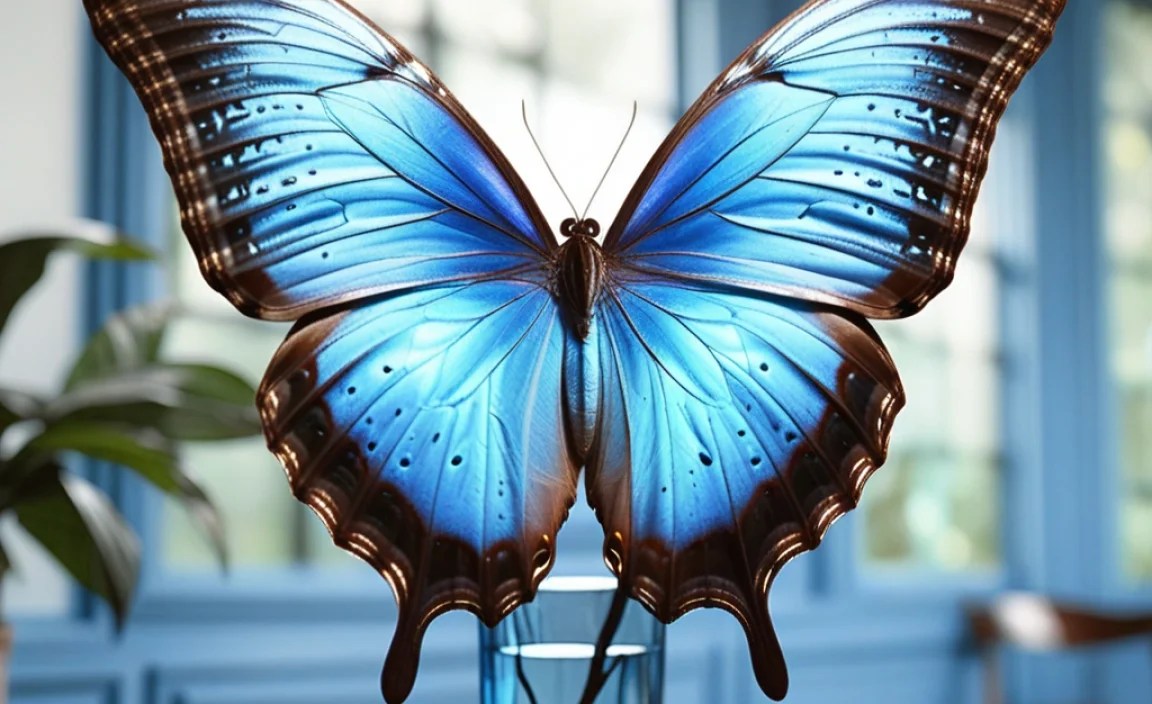
Have you ever wondered how the Blue Morpho gets its amazing blue color? It’s not what you think! They don’t have blue pigment. Instead, their wings have tiny structures. These structures reflect light. This is called iridescence. The structures are like tiny prisms. They break light into different colors. The blue color is most visible to our eyes. This is why they look so blue. It’s like a magic trick of nature! The scales on their wings do something incredible. They bend and bounce light. It is all how the light interacts with the wing structure. This makes them one of the most stunning butterflies in the world.
- Their wings have tiny structures.
- These structures reflect blue light.
- It’s called iridescence.
- They don’t have blue pigment.
- The scales act like tiny prisms.
Imagine a rainbow made on a butterfly’s wing! That’s kind of what’s happening. The light hits the wing. It bounces back as a brilliant blue. This also helps them in the rainforest. The bright color flashes as they fly. This can confuse predators. It makes it hard for them to track the butterfly. So, the blue color is not just pretty. It’s also a survival tool. It is amazing how nature uses light and color. It is for both beauty and protection. The Blue Morpho is a true master of disguise and display.
What is Iridescence?
Iridescence is when something changes color. It depends on the angle you look at it. Think of a soap bubble. It shows many colors. This is iridescence. The Blue Morpho‘s wings work the same way. The tiny structures cause light to scatter. Only blue light reflects back to your eyes. That’s how they appear blue. If you could zoom in, you would see the structures. They look like tiny Christmas trees! These structures are perfectly shaped. They are to reflect blue light. It’s a natural wonder of engineering. Isn’t it cool how science can explain beauty?
How Does Light Affect the Color?
Light is very important for the Blue Morpho. The amount of light changes the color. On a sunny day, they appear very bright blue. On a cloudy day, they may look duller. The angle of the sun also matters. When the sun is low, the blue is more intense. At midday, the blue can seem lighter. The butterfly can control this too. They can angle their wings. This makes the blue flash even brighter. So, the Blue Morpho is a master of light. They know how to use it to their advantage. It is a dance of light and color in the rainforest.
Why Isn’t It Just Blue Pigment?
You might think blue pigment would be easier. But nature often chooses the more complex path. Pigments can fade over time. Iridescence is more durable. The structures on the wings last longer. They also create a brighter, more vibrant color. Blue pigment can also absorb heat. This could be bad for the butterfly. The iridescent structures reflect heat. This helps keep the butterfly cool. So, there are many reasons. Nature chose iridescence over pigment. It’s not just about color. It’s about survival. It shows how smart nature can be.
Fun Fact or Stat: The Blue Morpho‘s wings can reflect up to 70% of the blue light that hits them!
How Do Blue Morphos Fly?
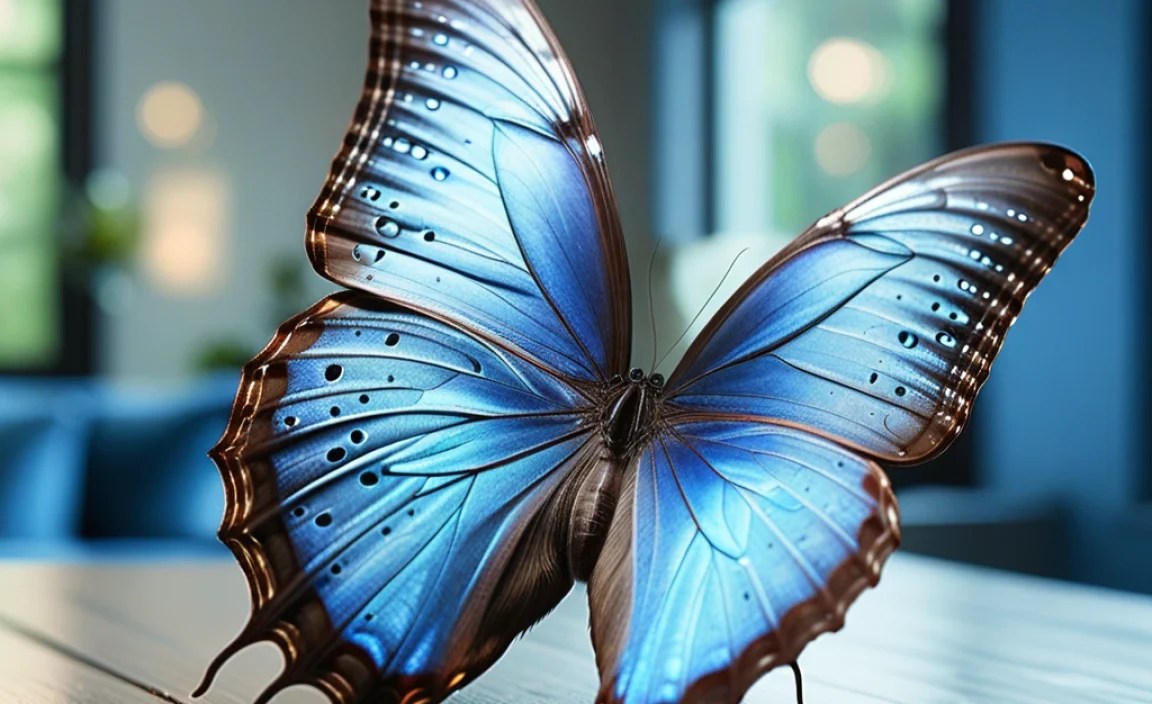
Have you ever seen a Blue Morpho fly? Their flight is beautiful and a bit strange. They don’t fly in a straight line. They flutter and glide. This is how they avoid predators. Their bright blue color flashes. This makes it hard to track them. The underside of their wings is brown. When they close their wings, they disappear. This is another way they trick predators. They are masters of hide-and-seek. The Blue Morpho uses its wings in clever ways. It is not just for flying. It is for survival.
- They flutter and glide in the air.
- Their flight is erratic and unpredictable.
- Bright blue flashes confuse predators.
- Brown undersides help them disappear.
- They use wind currents to save energy.
The way a Blue Morpho flies is like a dance. They use the air currents to help them. This saves energy. They don’t have to flap their wings constantly. They glide along the breeze. They also use their large wings to their advantage. The wings act like sails. This helps them catch the wind. It is amazing how they use their bodies. They use their bodies to move through the air. They are true aerial acrobats. Watching them fly is like watching a living jewel sparkle through the rainforest.
What Makes Their Flight Erratic?
The erratic flight of the Blue Morpho is key to survival. Predators have a hard time tracking them. The sudden changes in direction throw them off. It’s like trying to catch a soap bubble in the wind. You think you have it, but it floats away. The butterfly changes direction suddenly. This makes it hard to predict where they will go. The bright blue flashes add to the confusion. The predator loses sight of them. The butterfly escapes. It is how they stay alive. It is a clever trick.
How Do They Use Wind Currents?
Blue Morphos are smart about using wind. They can sense the slightest breeze. They use this to their advantage. They glide on the wind. This saves energy. They don’t have to flap their wings as much. It’s like sailing a boat. You use the wind to move forward. The butterfly does the same thing. They angle their wings. They catch the wind. They move effortlessly through the air. It shows how they are adapted to their environment. They know how to use what’s around them.
Why Are Their Wings So Big?
The large wings of the Blue Morpho serve many purposes. They help them glide. They also help them display their colors. The bigger the wing, the bigger the flash of blue. This attracts mates. It also scares away predators. The wings also act like solar panels. They absorb sunlight. This helps keep the butterfly warm. So, the large wings are not just for flying. They are for survival. They are for communication. They are an important part of their lives. It all shows how connected they are to their world.
Fun Fact or Stat: A Blue Morpho can fly up to 12 miles per hour!
Where Do Blue Morphos Live?

Blue Morphos live in the rainforests. These forests are in Central and South America. They love warm, wet places. You can find them in countries like Brazil and Costa Rica. They live high in the trees. They like to be near rivers and streams. The rainforest provides them with food. It also gives them shelter. They need these things to survive. The rainforest is their home. They are perfectly suited to live there. It is how they thrive in the wild.
- They live in Central and South America.
- They prefer warm, wet rainforests.
- They live high in the trees.
- They are often near rivers and streams.
- The rainforest provides food and shelter.
- They need the rainforest to survive.
Imagine walking through a rainforest. The air is thick and humid. You hear the sounds of animals all around you. Suddenly, a flash of blue catches your eye. It’s a Blue Morpho! It flits through the trees. It disappears as quickly as it appeared. This is their world. It is full of life and danger. They must be careful to avoid predators. They must find food and mates. The rainforest is a tough place to live. But the Blue Morpho has adapted. They know how to survive in this amazing environment.
Why Rainforests?
Rainforests are perfect for Blue Morphos. The warm, wet climate is ideal. There are many plants for food. There are also places to hide. The tall trees give them shelter. The rivers provide water. The rainforest is full of life. It is a complex ecosystem. The Blue Morpho plays a part in this system. They pollinate plants. They are food for other animals. Everything is connected. It is how the rainforest thrives. It is a web of life.
Which Countries Do They Inhabit?
Blue Morphos live in many countries. These include Brazil, Costa Rica, and Mexico. You can also find them in Panama and Colombia. They live in other parts of South America too. These countries all have rainforests. These rainforests are where the butterflies thrive. Each country has its own unique ecosystem. The Blue Morpho has adapted to each one. They are a symbol of the rainforest. They are a reminder of its beauty. They show how important it is to protect these places.
How High in the Trees Do They Live?
Blue Morphos like to live high in the trees. They are often in the canopy. This is the top layer of the rainforest. It is where most of the sunlight is. It is also where many flowers and fruits are. The butterflies can find food and mates there. They are safe from some predators. Living high up has its challenges. It can be windy. It can also be hard to find water. But the Blue Morpho has adapted. They know how to survive in the treetops. They are the kings and queens of the canopy.
Fun Fact or Stat: Some rainforests get over 100 inches of rain per year!
What Do Blue Morphos Eat?
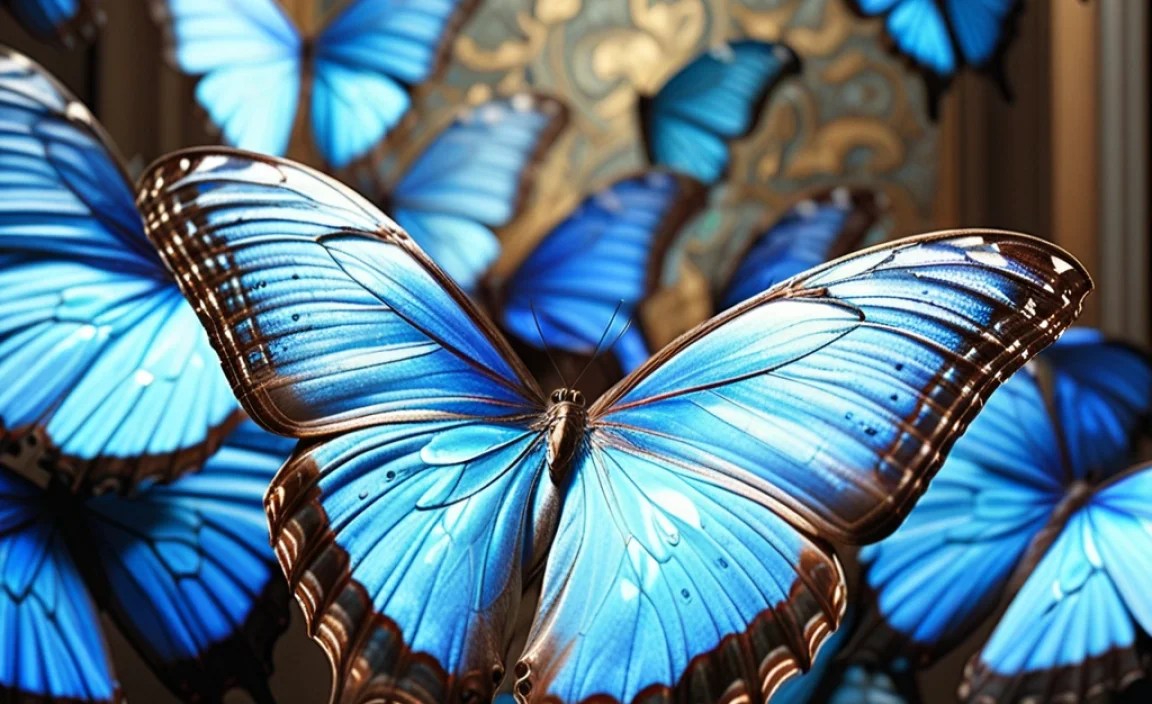
Blue Morphos have a strange diet. They don’t just eat flower nectar. They also eat tree sap and rotting fruit. Sometimes, they even eat dead animals! This gives them the nutrients they need. They use their proboscis to drink. It is like a long straw. They unroll it and sip their food. It is how they get their energy. They are not picky eaters. They will eat almost anything. This helps them survive in the rainforest.
- They eat tree sap.
- They also eat rotting fruit.
- Sometimes, they eat dead animals.
- They use a proboscis to drink.
- Their diet is varied and unusual.
Imagine a butterfly eating a dead animal! It sounds gross, but it’s true. The Blue Morpho needs the nutrients. They get them from these unusual sources. They are not like other butterflies. They are more like scavengers. They find food wherever they can. They are resourceful and adaptable. This is how they survive. They are not afraid to get their proboscis dirty. They know what they need. They will do anything to get it. This makes them unique and fascinating creatures.
Why Rotting Fruit?
Rotting fruit is a good source of sugar. It also has other nutrients. These are important for the Blue Morpho. The fruit is easy to eat. It is soft and mushy. The butterfly can easily suck it up. The rotting fruit also attracts other insects. The butterfly can eat these too. So, rotting fruit is a buffet for the Blue Morpho. It provides them with everything they need. It shows how nature recycles everything. Even rotting fruit has a purpose.
How Does the Proboscis Work?
The proboscis of the Blue Morpho is like a straw. It is long and thin. The butterfly keeps it curled up. When it wants to eat, it unrolls it. It sticks it into the food. It sucks up the liquid. The proboscis is very delicate. The butterfly must be careful not to damage it. If it breaks, the butterfly cannot eat. So, they treat it with care. It is their lifeline. It is how they get their food. It is an amazing adaptation.
Do They Eat Flower Nectar at All?
Yes, Blue Morphos do eat flower nectar. But it is not their main food. They prefer tree sap and rotting fruit. Nectar is a good source of sugar. It gives them energy. But it does not have all the nutrients they need. So, they supplement it with other foods. They are not picky eaters. They will eat whatever they can find. It is how they survive in the rainforest. They take what they can get. They make the most of it.
Fun Fact or Stat: A Blue Morpho can extend its proboscis up to four times the length of its head!
What Are Blue Morpho Caterpillars Like?
The caterpillars of Blue Morphos look very different. They look different than the adult butterflies. They are red-brown. They have bristles on their bodies. These bristles are irritating. They protect them from predators. The caterpillars eat leaves. They grow quickly. They shed their skin several times. This is how they get bigger. They are not as beautiful as the butterflies. But they are important. They are the next generation of Blue Morphos.
- They are red-brown in color.
- They have irritating bristles.
- They eat leaves.
- They shed their skin as they grow.
- They look very different from adults.
Imagine a tiny, spiky creature crawling on a leaf. That’s a Blue Morpho caterpillar. It doesn’t look anything like the beautiful butterfly. But it is just as important. It spends its days eating and growing. It sheds its skin several times. Each time, it gets bigger. It is preparing for its transformation. It will turn into a pupa. Then, it will emerge as a butterfly. It is an amazing process. It shows how nature changes things. It is a miracle of life.
Why Are They Red-Brown?
The red-brown color helps them camouflage. They blend in with the leaves and branches. This makes it harder for predators to see them. They are also poisonous. This is because of what they eat. Their color warns predators. It tells them to stay away. It is how they protect themselves. They are not defenseless. They have their own ways of surviving. They are masters of disguise and defense.
What Do They Eat?
Blue Morpho caterpillars eat leaves. They eat a lot of leaves. They need the energy to grow. They eat leaves from specific plants. These plants contain toxins. The toxins make them poisonous. This protects them from predators. They are careful about what they eat. They know what they need. It is how they stay alive. They are picky eaters. But it is for a good reason.
How Do They Shed Their Skin?
As the caterpillar grows, its skin gets too tight. It needs to shed it. This is called molting. The caterpillar makes a new skin underneath. Then, it splits the old skin. It crawls out of it. The new skin is soft at first. It hardens over time. The caterpillar eats the old skin. This gives it extra nutrients. It is how they recycle. It is an amazing process. It happens several times. The caterpillar gets bigger each time.
Fun Fact or Stat: Blue Morpho caterpillars can grow up to 3 inches long!
How Do Blue Morphos Avoid Predators?
Blue Morphos have many ways to avoid predators. Their bright blue color confuses predators. Their erratic flight makes them hard to track. The brown undersides of their wings help them disappear. They are also poisonous as caterpillars. They have spines that irritate predators. They are masters of survival. They know how to stay alive. They use all their tools to protect themselves.
Here is a table showing some of the Blue Morpho’s defense mechanisms:
| Defense Mechanism | How It Works | Life Stage |
|---|---|---|
| Bright Blue Color | Confuses predators with flashing light. | Adult |
| Erratic Flight | Makes it hard to track their movements. | Adult |
| Brown Undersides | Helps them disappear when wings are closed. | Adult |
| Irritating Bristles | Deters predators from eating them. | Caterpillar |
| Poisonous | Toxins from plants make them unpalatable. | Caterpillar |
Imagine being a small, colorful butterfly. The world is full of danger. Birds, lizards, and other animals want to eat you. You have to be smart to survive. The Blue Morpho is very smart. It uses its colors to confuse predators. It flies in a crazy pattern. It hides when it needs to. It is a master of disguise and evasion. It knows how to stay one step ahead. This is how it survives in the dangerous rainforest. It is a true survivor.
How Does the Blue Color Confuse Predators?
The bright blue color flashes in the sunlight. This catches the predator’s eye. But it also makes it hard to track the butterfly. The color appears and disappears. It is like a magic trick. The predator gets confused. It loses sight of the butterfly. The butterfly escapes. It is a clever tactic. It uses its beauty to its advantage. It shows how nature can be deceiving.
Why Are the Undersides Brown?
The brown undersides are for camouflage. When the butterfly closes its wings, it disappears. It blends in with the leaves and branches. The predator loses sight of it. It thinks it has vanished. This gives the butterfly time to escape. It is a simple but effective trick. It uses its colors to hide. It knows how to blend in. It is a master of disguise.
What Do the Bristles Do?
The bristles on the caterpillar are irritating. They make predators uncomfortable. If a predator tries to eat the caterpillar, it will get a mouthful of bristles. This is unpleasant. The predator will learn to avoid the caterpillars. It will leave them alone. It is a good defense. It protects them from being eaten. It shows how even small creatures can defend themselves. It is a spiky defense.
Fun Fact or Stat: Some predators avoid Blue Morphos because they associate the bright blue color with poison!
Summary
The Blue Morpho is a fascinating butterfly. They have bright blue wings. They get their color from iridescence. This is how they reflect light. They live in rainforests. They eat tree sap, rotting fruit, and sometimes dead animals. Their caterpillars are red-brown. They have bristles for protection. Blue Morphos use many ways to avoid predators. They use their color and flight patterns. They are masters of survival. They are a symbol of the rainforest. They are a reminder of its beauty and complexity.
We learned how they trick predators. Their bright blue color flashes in the sun. This makes it hard to track them. The brown undersides of their wings help them disappear. They are truly amazing creatures. They show us the wonders of nature. They remind us to protect the rainforests. These forests are their home. They are also home to many other amazing animals. We must do our part to keep them safe.
Conclusion
Blue Morphos are beautiful and interesting. They show us the magic of nature. Their blue color is not pigment. It is from light reflecting off their wings. They live in rainforests and eat strange things. The caterpillars look very different from the butterflies. Blue Morphos know how to survive. They use clever tricks to avoid predators. We must protect their rainforest homes. These fragile ecosystems need our help. Let’s all learn more about these amazing creatures. We can help them thrive for years to come.
Frequently Asked Questions
Question No 1: How do Blue Morphos get their bright blue color?
Answer: Blue Morphos get their color from iridescence. This is not from pigment. The scales on their wings have tiny structures. These structures reflect light. They reflect blue light the most. This is how we see them as blue. It’s like a natural magic trick. The structures are perfectly shaped. They bounce light in a way that creates the vibrant blue color. It’s a beautiful example of science in nature. It is not pigment, it is reflected light. They are masters of light and color.
Question No 2: What do Blue Morphos eat?
Answer: Blue Morphos have a varied diet. They don’t just eat flower nectar. They also eat tree sap and rotting fruit. They sometimes eat dead animals. This might sound gross, but it helps them survive. They use their proboscis to drink. It’s like a long straw that they unroll. This is how they get their nutrients. They need these nutrients to fly and reproduce. They are not picky eaters. They will eat anything they can find. It helps them survive in the rainforest.
Question No 3: Where do Blue Morphos live?
Answer: Blue Morphos live in rainforests. These forests are in Central and South America. They need warm, wet places to survive. You can find them in countries like Brazil and Costa Rica. They live high in the trees. They like to be near rivers and streams. The rainforest provides them with everything they need. It is how they thrive. They are perfectly adapted to this environment. Protecting the rainforest is important for their survival. It is our duty to protect their habitat.
Question No 4: How do Blue Morphos avoid predators?
Answer: Blue Morphos have many ways to avoid predators. Their bright blue color flashes in the sun. This confuses predators. Their erratic flight makes them hard to track. The brown undersides of their wings help them disappear. They also have irritating bristles as caterpillars. This is how they protect themselves. They are masters of disguise and evasion. They know how to stay safe in the rainforest. These defense mechanisms are key to their survival.
Question No 5: What are Blue Morpho caterpillars like?
Answer: Blue Morpho caterpillars look very different than the butterflies. They are red-brown. They have bristles on their bodies. These bristles are irritating to predators. The caterpillars eat leaves. They grow quickly. They shed their skin several times. This is how they get bigger. They are not as beautiful as the butterflies. But they are important. They are the next generation. They are a vital part of the Blue Morpho life cycle.
Question No 6: Why is it important to protect Blue Morphos and their habitat?
Answer: It is important to protect Blue Morphos. They are a part of the rainforest ecosystem. They are also beautiful and fascinating creatures. Their habitat is threatened by deforestation. People are cutting down the rainforests. This destroys their homes. We need to protect the rainforests. We can do this by supporting sustainable practices. We can also donate to conservation organizations. It is how we can help. We can help ensure that these amazing butterflies. They will continue to thrive for generations to come. Protecting their habitat is protecting our planet.


