
Blue Morpho Defense Mechanisms: Powerful Secrets!

Have you ever seen a butterfly so bright it looks like the sky? That might be a Blue Morpho! These butterflies are famous for their shiny, blue wings. But did you know they have amazing ways to stay safe? Let’s explore the cool Blue Morpho defense mechanisms that help them survive. It is a wild world out there for a butterfly.
Imagine you are a Blue Morpho. Big birds want to eat you! How would you hide? How would you trick them? These butterflies have some clever tricks up their sleeves. They use colors, patterns, and even how they fly to stay alive. Let’s learn more about these awesome Blue Morpho defense mechanisms.
Key Takeaways
- The bright blue wings of the Blue Morpho help them startle predators.
- Their brown undersides act as camouflage when their wings are closed.
- Blue Morpho defense mechanisms include erratic flight patterns to evade capture.
- They have a bad taste that deters predators from wanting to eat them.
- These butterflies often live in groups, making it harder for predators to target one.
Understanding Blue Morpho Defense Mechanisms
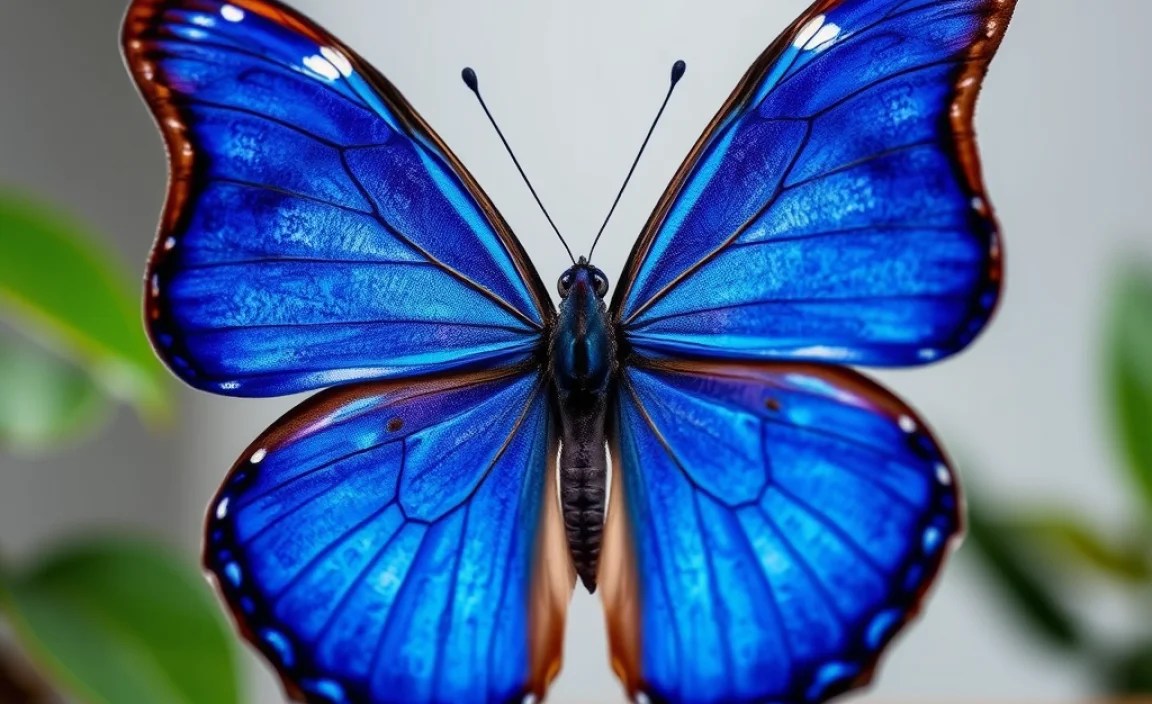
Blue Morpho butterflies are not just pretty. They are also smart survivors. Their defense mechanisms are a mix of colors, behaviors, and even taste. The bright blue color of their wings is the first thing you notice. But this flashy color is not just for show. It actually helps them in several ways. When the Blue Morpho is flying, the bright blue flashes. This can confuse predators. The sudden flash of color makes it hard for birds to track them. Think of it like a magician’s trick. The quick movements distract the audience. The Blue Morpho also has brown undersides on its wings. When it lands and closes its wings, it blends in with the forest. This is called camouflage. It is like wearing an invisibility cloak. This combination of bright colors and camouflage is a key part of their defense mechanisms.
- Bright blue wings startle predators.
- Brown undersides provide camouflage.
- Erratic flight makes them hard to catch.
- Bad taste deters predators.
- They often live in groups for safety.
The Blue Morpho’s habitat also plays a role in its survival. These butterflies live in rainforests. Rainforests are full of dangers. But they also offer many places to hide. The Blue Morpho uses the dense vegetation to its advantage. It can quickly disappear into the leaves. The butterfly also uses its antenna to sense danger. The antenna can detect changes in the air. This helps them know when a predator is near. The Blue Morpho’s defense mechanisms are not just about color and flight. They also involve using their senses and environment to stay safe. They are truly amazing creatures that have adapted to survive in a challenging world. Nature is amazing.
Fun Fact or Stat: The Blue Morpho can live for about 115 days!
How Color Helps Protect Them
Have you ever wondered why the Blue Morpho is so blue? The bright blue color is not just beautiful. It is also a clever way to stay safe. When the butterfly is flying, the blue flashes in the sunlight. This flashing can confuse predators like birds. Imagine trying to catch something that keeps disappearing and reappearing. It would be very difficult! The bright color also serves as a warning. Some predators know that bright colors can mean the animal is poisonous or tastes bad. This is why many poisonous frogs are brightly colored. The Blue Morpho is not poisonous, but its bright color gives predators a reason to think twice before attacking. The Blue Morpho uses its color to trick and confuse predators. It is like a superhero using their powers to protect themselves.
The Role of Wing Patterns
The Blue Morpho’s wings have more than just color. They also have patterns that help with defense. The undersides of the wings are brown with small spots. These spots look like eyes. When the butterfly is resting with its wings closed, the eye spots can startle predators. The predator might think it is looking at a larger animal. This gives the Blue Morpho a chance to escape. The patterns also help with camouflage. The brown color blends in with the trees and leaves. This makes it harder for predators to see the butterfly. The combination of eye spots and camouflage is a clever way to hide in plain sight. The Blue Morpho uses its wing patterns to trick predators and stay safe. It is like a master of disguise.
Camouflage in the Rainforest
Living in the rainforest can be dangerous. There are many predators looking for a meal. The Blue Morpho uses camouflage to blend in with its surroundings. When the butterfly is resting, it closes its wings. The brown undersides of its wings look like dead leaves. This makes it very hard for predators to spot them. The rainforest is full of shadows and dappled light. The brown color of the wings helps the butterfly disappear into this background. Camouflage is a very important defense mechanism for the Blue Morpho. It is like having an invisibility cloak that helps them hide from danger. They are very well adapted to their environment.
Flight Patterns as Defense
Blue Morpho butterflies are not just pretty to look at. Their flight patterns are also a key part of their defense mechanisms. They do not fly in a straight line. Instead, they fly in a jerky, erratic pattern. This makes it hard for predators to predict where they will go next. Imagine trying to catch a ball that keeps changing direction. It would be very difficult! The Blue Morpho’s erratic flight is like a built-in escape plan. They also fly very quickly. This speed makes it even harder for predators to catch them. They can quickly dart away from danger. The combination of speed and erratic flight makes them a difficult target. The Blue Morpho’s flight is not just random. It is a carefully evolved strategy for survival. They are masters of the air.
- Erratic flight makes them hard to track.
- Quick movements help them escape predators.
- They can change direction suddenly.
- Flight patterns confuse predators.
- They use speed to avoid capture.
The Blue Morpho’s flight is also influenced by its environment. They often fly through dense forests. This means they need to be able to navigate through trees and branches. Their erratic flight helps them avoid obstacles. They can quickly change direction to avoid hitting a tree. The butterfly also uses its wings to create lift. This helps them fly higher and faster. The Blue Morpho’s flight is a complex combination of instinct and adaptation. They are perfectly suited to flying in the rainforest. Their flight is truly a work of art. It’s beautiful to watch.
Fun Fact or Stat: Blue Morphos can fly up to 12 miles per hour!
The Element of Surprise
Have you ever been surprised by something unexpected? Blue Morphos use the element of surprise to their advantage. Their bright blue wings can suddenly appear in the forest. This can startle predators and give the butterfly a chance to escape. The sudden flash of blue is like a burst of light. It catches the eye and distracts the predator. The butterfly can then quickly fly away before the predator can react. The Blue Morpho also uses its erratic flight to create surprise. It can suddenly change direction or speed. This keeps predators guessing and makes it harder to catch them. Surprise is a powerful defense mechanism. The Blue Morpho uses it to stay one step ahead of its enemies. They are masters of deception.
Speed and Agility in Flight
Imagine a race car zooming around a track. Blue Morphos are like race cars in the sky. They are incredibly fast and agile. They can quickly change direction and speed. This makes them very hard to catch. Their wings are designed for speed. They are large and powerful. This allows the butterfly to generate a lot of lift. They also have strong muscles that allow them to flap their wings very quickly. This combination of wing design and muscle power gives them amazing speed and agility. Predators have a tough time keeping up. The Blue Morpho’s speed and agility are key to their survival. They are truly amazing fliers.
Navigating the Rainforest Canopy
The rainforest canopy is a complex and challenging environment. It is full of trees, branches, and vines. Blue Morphos are perfectly adapted to navigate this environment. They can quickly fly through the dense vegetation. Their erratic flight helps them avoid obstacles. They can also use their wings to create lift and fly over trees. The Blue Morpho is like a skilled pilot navigating a difficult course. They use their knowledge of the environment to their advantage. They know where the best places to hide are. They also know how to avoid predators. The Blue Morpho’s ability to navigate the rainforest canopy is essential for its survival. They are truly masters of their environment.
The Role of Taste in Blue Morpho Defense

Would you eat something that tasted really bad? Probably not! Blue Morpho butterflies have a secret weapon: a bad taste. This is another one of their defense mechanisms. When a predator tries to eat a Blue Morpho, it gets a nasty surprise. The butterfly’s body contains chemicals that taste awful. This usually makes the predator spit the butterfly out. The bad taste is a warning signal. It tells predators that this butterfly is not a good meal. This is a very effective way to avoid being eaten. The Blue Morpho does not have to fight or run away. It just has to taste bad! The taste is an important part of their survival strategy. They are like walking, flying, bad-tasting warnings. They also get the toxins by eating certain plants as caterpillars.
- Bad taste deters predators.
- They ingest toxins from plants.
- Predators learn to avoid them.
- Taste acts as a warning signal.
- It’s a passive defense mechanism.
The Blue Morpho’s bad taste is not just a random accident. It is a result of their diet. As caterpillars, they eat certain plants that contain toxic chemicals. These chemicals are not harmful to the caterpillar. But they make the butterfly taste bad. The Blue Morpho is like a chef who uses special ingredients to create a dish that no one wants to eat. Predators learn to avoid Blue Morphos because of their bad taste. This is a form of learning. The predator remembers the bad experience and avoids similar butterflies in the future. The Blue Morpho’s bad taste is a powerful defense mechanism that helps them survive in a dangerous world. They are truly masters of chemical warfare.
Fun Fact or Stat: Birds are the main predators deterred by the Blue Morpho’s bad taste.
Chemical Compounds and Defense
Have you ever mixed ingredients together and created something unexpected? Blue Morphos do this in a way. They eat plants with special chemical compounds. These compounds make them taste bad to predators. The caterpillars eat these plants. The chemicals stay in their bodies when they become butterflies. These chemicals are not poisonous. They just taste really awful. When a bird tries to eat a Blue Morpho, it gets a mouthful of these chemicals. The bird quickly learns that Blue Morphos are not a tasty meal. The Blue Morpho is like a walking chemical factory. They are able to turn plants into a defense mechanism. This is a very clever way to stay safe.
How Predators Learn to Avoid Them
Imagine touching a hot stove. You would quickly learn not to do it again. Predators learn in a similar way. When a predator eats a Blue Morpho and tastes something bad, it learns to avoid them. This is called “learned aversion.” The predator remembers the bad taste and associates it with the Blue Morpho’s appearance. This makes the predator less likely to attack another Blue Morpho in the future. The Blue Morpho is like a teacher. It teaches predators a valuable lesson. This lesson helps the Blue Morpho survive. It is a very effective way to reduce the risk of being eaten.
The Long-Term Impact on Predator Behavior
What happens when many predators learn to avoid Blue Morphos? Over time, this can change the behavior of the entire predator population. If Blue Morphos are known to taste bad, predators will focus on other prey. This can lead to a decrease in attacks on Blue Morphos. It can also lead to an increase in the population of Blue Morphos. The Blue Morpho’s bad taste has a long-term impact on the ecosystem. It helps maintain the balance of nature. It is a powerful example of how a single defense mechanism can have far-reaching effects. They help the ecosystem.
Living in Groups for Protection

Have you ever felt safer when you are with your friends? Blue Morpho butterflies also benefit from being in groups. This is another one of their defense mechanisms. When many Blue Morphos fly together, it can confuse predators. The predators have a hard time focusing on a single butterfly. It is like trying to count the stars in the sky. There are just too many to keep track of! Living in groups also provides more eyes to watch for danger. If one butterfly sees a predator, it can alert the others. This gives the group a better chance to escape. The Blue Morpho is like a team player. They work together to stay safe. They are truly social butterflies.
- Groups confuse predators.
- More eyes watch for danger.
- Alarm signals alert others.
- Groups provide safety in numbers.
- Easier to find mates in groups.
The Blue Morpho’s tendency to live in groups is also influenced by their environment. They often gather near food sources. This makes it easier for them to find food. It also brings them together in a common area. The Blue Morpho is like a social animal that enjoys being around others. They communicate with each other using colors and patterns. They also use pheromones, which are chemical signals. These signals help them find mates and warn each other of danger. The Blue Morpho’s social behavior is an important part of their survival strategy. They are truly connected to each other. They have a great community.
Fun Fact or Stat: Group living helps Blue Morphos find mates more easily!
Increased Vigilance Against Predators
Imagine a neighborhood watch program. Everyone is looking out for each other. Blue Morphos in a group act like a neighborhood watch. With more butterflies around, there are more eyes watching for predators. This increased vigilance makes it harder for predators to sneak up on the group. If one butterfly spots a predator, it can give an alarm signal. This alerts the other butterflies and gives them time to escape. The Blue Morpho is like a security guard. They are always on the lookout for danger. This helps protect the entire group.
Confusion Effect on Predators
Have you ever been in a crowded place and felt disoriented? Predators can feel the same way when they encounter a group of Blue Morphos. The many butterflies flying together create a “confusion effect.” It becomes difficult for the predator to focus on a single target. The predator may become confused and give up the hunt. The Blue Morpho is like a magician. They use their numbers to create an illusion. This illusion makes it harder for predators to catch them. It is a very clever defense mechanism.
Shared Resources and Communication
Blue Morphos in a group can share resources. They can also communicate with each other. This helps them survive. For example, if one butterfly finds a good source of food, it can share this information with the others. They can also warn each other of danger. They do this by changing their flight patterns or releasing pheromones. The Blue Morpho is like a team player. They work together to make sure everyone has what they need. This helps the entire group thrive. They are truly a community.
Habitat and Environmental Factors

Where you live can make a big difference in your life. The same is true for Blue Morpho butterflies. Their habitat and environment play a key role in their defense mechanisms. These butterflies live in rainforests. Rainforests are full of trees, plants, and other animals. This provides many opportunities for camouflage and hiding. The dense vegetation makes it harder for predators to spot them. The rainforest also provides a variety of food sources. This helps the Blue Morpho stay healthy and strong. The environment is an important part of their survival strategy. They are perfectly suited to living in the rainforest. They thrive in the rich environment.
- Rainforest provides camouflage.
- Dense vegetation aids hiding.
- Abundant food sources are available.
- Climate affects their activity.
- Habitat loss threatens them.
The Blue Morpho’s environment is not just a place to live. It is also a source of danger. Rainforests are full of predators. These predators are always looking for a meal. The Blue Morpho must be constantly vigilant to avoid being eaten. The environment also affects the Blue Morpho’s behavior. For example, they are more active during the day when the sun is shining. They are less active at night when it is dark. The Blue Morpho’s survival depends on their ability to adapt to their environment. They are truly masters of adaptation. They have evolved well.
Fun Fact or Stat: Deforestation is a major threat to Blue Morpho habitats.
Adapting to Rainforest Conditions
Have you ever tried to walk through a dense forest? It can be difficult! Blue Morphos are perfectly adapted to the rainforest. They can fly through the dense vegetation with ease. Their wings are strong and flexible. This allows them to navigate through tight spaces. They also have good eyesight. This helps them spot predators and find food. The Blue Morpho is like a skilled athlete. They are able to perform amazing feats in a challenging environment. This helps them survive.
Impact of Climate on Behavior
Imagine trying to play outside on a very cold day. It would be difficult! Climate has a big impact on Blue Morpho behavior. They are more active on warm, sunny days. They are less active on cold, cloudy days. This is because they need sunlight to warm their bodies. They also need warmth to fly. The Blue Morpho is like a solar-powered machine. They need sunlight to function properly. This influences how they live.
The Threat of Habitat Loss
What happens when a forest is cut down? The animals that live there lose their homes. Habitat loss is a major threat to Blue Morpho butterflies. When rainforests are destroyed, the Blue Morpho loses its food sources and hiding places. This makes it harder for them to survive. Habitat loss is caused by human activities such as logging, farming, and mining. We need to protect rainforests. This will help the Blue Morpho and other animals that depend on them. We must preserve nature.
Comparing Blue Morpho Defense Mechanisms
The Blue Morpho has many ways to defend itself. Each defense mechanism plays a role in helping them survive. Some are about confusing predators. Some are about hiding. And some are about tasting bad! The Blue Morpho’s survival depends on having this range of defenses. Each one adds a layer of protection. Different defenses work better in different situations. For example, camouflage is useful when resting. Erratic flight is useful when being chased. The Blue Morpho is like a well-equipped warrior. It has a variety of weapons and tactics to use in battle. Nature is smart to create this insect.
| Defense Mechanism | How it Works | Benefits | Limitations |
|---|---|---|---|
| Bright Blue Wings | Startles and confuses predators with flashes of color. | Effective at deterring predators from a distance. | May attract attention in some situations. |
| Brown Undersides | Provides camouflage when wings are closed. | Helps them blend in with the environment. | Only effective when wings are closed. |
| Erratic Flight | Makes it difficult for predators to track them. | Effective at evading capture. | Requires a lot of energy. |
| Bad Taste | Deters predators from eating them. | Effective after a predator has tried to eat them. | Does not prevent initial attacks. |
| Living in Groups | Confuses predators and provides more eyes to watch for danger. | Increases vigilance and reduces the risk of attack. | May attract more attention from predators. |
The Blue Morpho’s defense mechanisms are not perfect. Each one has its limitations. For example, the bright blue wings may attract attention in some situations. The bad taste does not prevent initial attacks. But overall, the Blue Morpho’s defenses are very effective. They have allowed them to survive for millions of years. The Blue Morpho is a true survivor. They are able to thrive in a dangerous world. The combination of defense mechanisms they use is impressive. It all works together to help this species.
Fun Fact or Stat: Some predators have learned to tolerate the Blue Morpho’s bad taste!
Effectiveness of Different Strategies
Which defense mechanism is the most effective? It depends on the situation. Camouflage is very effective when the butterfly is resting. Erratic flight is very effective when the butterfly is being chased. The bad taste is very effective after a predator has tried to eat the butterfly. Each strategy has its strengths and weaknesses. The Blue Morpho uses a combination of strategies to maximize its chances of survival. This helps them stay safe.
Trade-offs in Defense Mechanisms
Every defense mechanism has its trade-offs. For example, the bright blue wings may attract attention from predators. But they also help the butterfly find mates. The erratic flight requires a lot of energy. But it also makes it harder for predators to catch them. The Blue Morpho must balance the costs and benefits of each defense mechanism. This is a constant challenge. They have adapted to this well.
How Defenses Work Together
The Blue Morpho’s defense mechanisms do not work in isolation. They work together to create a comprehensive defense system. For example, the bright blue wings startle predators. This gives the butterfly time to escape. The erratic flight makes it harder for predators to track the butterfly. The bad taste deters predators from trying to eat the butterfly again. The Blue Morpho is like a team of superheroes. Each one has a special power. But they are even stronger when they work together. The teamwork helps them.
Summary
Blue Morpho butterflies have amazing ways to stay safe. Their bright blue wings flash to confuse predators. The brown undersides of their wings help them hide. They fly in a way that is hard to follow. They also taste bad to predators. Blue Morpho defense mechanisms also include living in groups. This helps them watch out for danger. They also use their environment to stay safe. These butterflies are true survivors. They have adapted to live in a dangerous world. They are an incredible species.
These butterflies are an example of nature’s amazing designs. The mix of colors, flight, and taste helps them. It makes them hard to catch. The Blue Morpho’s survival depends on these defenses. They are a key part of their life. Studying these butterflies helps us learn about nature. It also shows how animals adapt to their environment. The Blue Morpho is a symbol of the rainforest’s beauty and complexity.
Conclusion
Blue Morpho butterflies are more than just pretty insects. They use a variety of defense mechanisms to survive. These include bright colors, camouflage, erratic flight, and bad taste. They also live in groups for protection. Their environment also plays a role in their survival. These butterflies are perfectly adapted to living in the rainforest. They showcase the incredible power of nature and the importance of protecting their habitats. The Blue Morpho defense mechanisms help them to live in a dangerous habitat.
Frequently Asked Questions
Question No 1: What makes the Blue Morpho’s wings so blue?
Answer: The Blue Morpho’s wings are blue because of their structure, not pigment. Tiny scales on the wings reflect blue light. This is called structural coloration. It is like a prism splitting light into different colors. The scales are arranged in a way that cancels out other colors, leaving only blue. This gives the wings their bright, shiny appearance. It is a clever trick of nature. The bright blue color plays a role in their defense mechanisms. They are very interesting insects.
Question No 2: How does camouflage help the Blue Morpho?
Answer: Camouflage helps the Blue Morpho hide from predators. The undersides of their wings are brown. This color blends in with the trees and leaves in the rainforest. When the butterfly is resting with its wings closed, it is very hard to see. This helps them avoid being eaten by birds and other animals. Camouflage is an important part of their defense mechanisms. It is like having an invisibility cloak. They are masters of disguise.
Question No 3: Why do Blue Morphos fly in such an erratic pattern?
Answer: Blue Morphos fly in an erratic pattern to confuse predators. Their jerky, unpredictable flight makes it hard for predators to track them. Imagine trying to catch something that keeps changing direction. It would be very difficult! This erratic flight is an important part of their defense mechanisms. It is like having a built-in escape plan. They are very agile fliers. They are hard to catch because they are so erratic. It makes them unpredictable to predators.
Question No 4: What makes Blue Morphos taste bad to predators?
Answer: Blue Morphos taste bad because of the plants they eat as caterpillars. These plants contain toxic chemicals that make the butterfly unpalatable. The chemicals are not harmful to the butterfly, but they make it taste awful to predators. This bad taste is an important part of their defense mechanisms. It is like having a secret weapon. The taste deters predators from eating them. It is a good way to stay safe.
Question No 5: How does living in groups help Blue Morphos?
Answer: Living in groups helps Blue Morphos in several ways. First, it confuses predators. When many butterflies fly together, it is hard for predators to focus on a single target. Second, it provides more eyes to watch for danger. If one butterfly sees a predator, it can alert the others. This gives the group a better chance to escape. Group living is an important part of their defense mechanisms. They are social butterflies. They look out for each other.
Question No 6: What can we do to help protect Blue Morphos?
Answer: We can help protect Blue Morphos by protecting their rainforest habitats. Deforestation is a major threat to these butterflies. We can support organizations that work to conserve rainforests. We can also reduce our consumption of products that contribute to deforestation. Every action helps. By protecting their habitat, we can help ensure that these beautiful butterflies continue to thrive. Their defense mechanisms are only effective if they have a safe place to live. The Blue Morpho is an amazing butterfly.


