
Blue Morpho Flash Coloration: The Secret is Out!

Have you ever seen a butterfly disappear? The Blue Morpho does this with a trick. It is called flash coloration. These butterflies are big and bright. But they can vanish in a blink!
Why do they do this? It helps them stay safe. It confuses predators. Let’s learn about {Blue Morpho flash coloration}!
Key Takeaways
- Blue Morpho flash coloration helps them avoid getting eaten by predators.
- The bright blue color is only on the top side of their wings.
- When they fly, they quickly flash blue and then brown.
- This flashing makes it hard for predators to track them.
- The underside of their wings helps them hide when they land.
Understanding Blue Morpho Flash Coloration
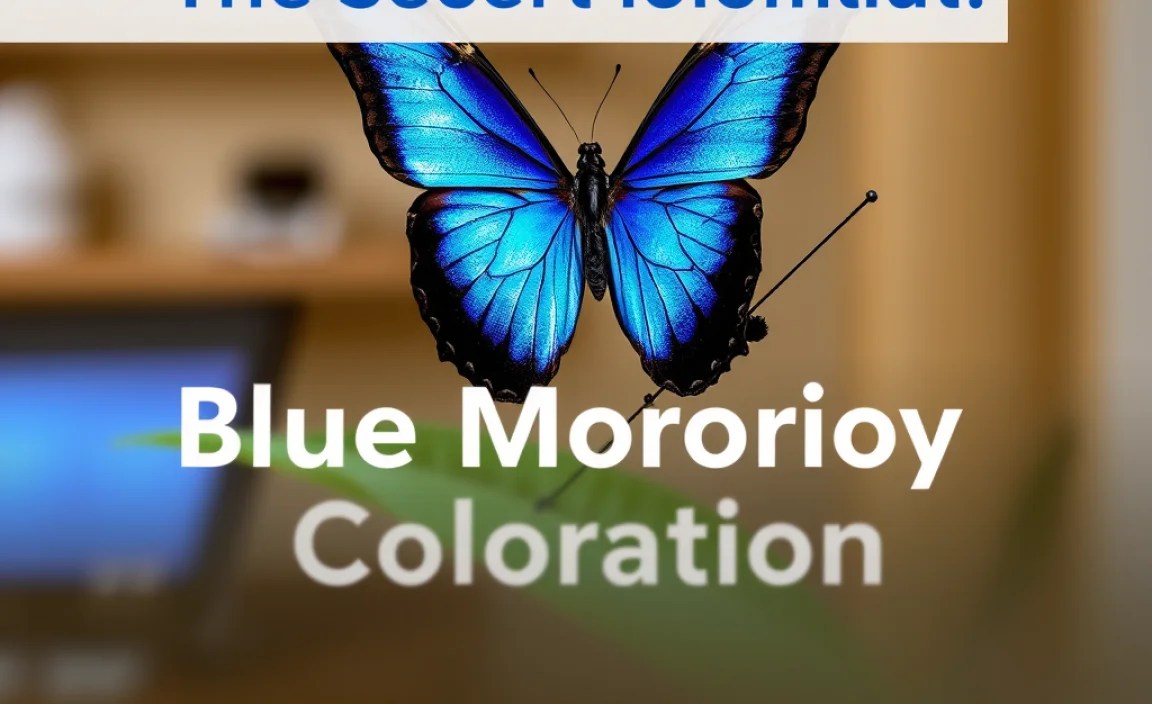
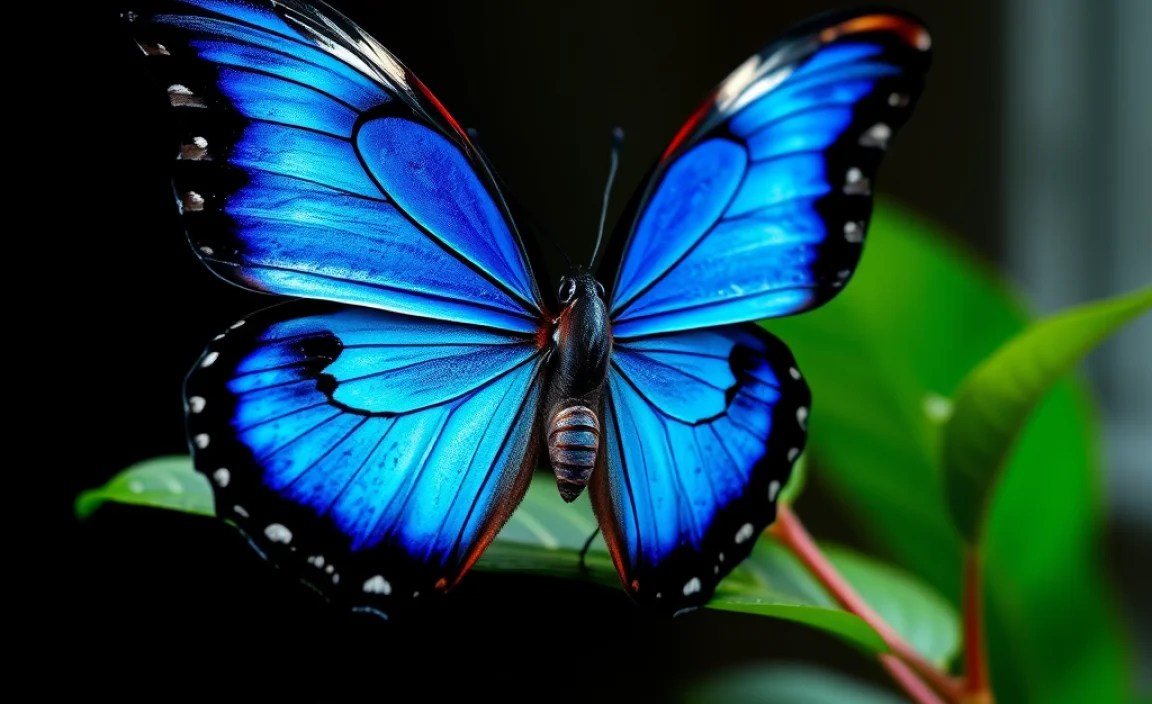
The Blue Morpho butterfly is famous for its bright blue wings. But did you know they don’t stay blue all the time? These butterflies use a special trick called flash coloration. The top side of their wings is a vibrant, shiny blue. The bottom side is brown with spots. When the Blue Morpho flies, it opens and closes its wings. This creates a flashing effect. It looks like the butterfly is disappearing and reappearing. This is because you see blue, then brown, then blue again. This fast change in color confuses predators. They have a hard time following the butterfly. This helps the Blue Morpho stay safe from birds and other animals that want to eat it. This amazing adaptation is key to their survival in the rainforest.
- Blue Morpho wings have bright blue on top.
- The bottom of their wings are brown with eye spots.
- Flash coloration confuses predators.
- They quickly open and close their wings.
- This creates a disappearing effect.
- It helps them avoid being eaten.
Imagine you are trying to catch a Blue Morpho. One moment you see a flash of bright blue. The next moment, it’s gone! All you see is a brown blur. This is exactly what happens to predators. The flashing blue distracts them. It makes it difficult to predict where the butterfly will go next. The brown underside of the wings blends in with the trees and leaves. This helps the Blue Morpho hide when it lands. So, the flash coloration is not just about looking pretty. It’s a clever way to stay alive. The Blue Morpho uses its colors to trick and escape danger, making it a true survivor in its rainforest home.
Fun Fact or Stat: The Blue Morpho’s wings can span up to 8 inches wide!
Why is Flash Coloration Important?
Have you ever played hide-and-seek? Flash coloration is like hide-and-seek for butterflies. It helps them hide from predators. The bright blue color is easy to see. But the quick flash to brown makes it hard to follow. Imagine a bird trying to catch the butterfly. The bird sees a flash of blue. It tries to fly towards it. But then the blue disappears. The bird only sees brown. This confuses the bird. It loses track of the butterfly. The Blue Morpho can then fly away to safety. Flash coloration is a very important defense. It helps the butterfly survive in a dangerous world. Without it, they would be much easier to catch.
How Does the Blue Color Work?
The blue color on a Blue Morpho’s wings is special. It is not like paint. The color comes from tiny structures on the wings. These structures are like tiny mirrors. They reflect light in a special way. This creates the bright blue color. This is called structural coloration. The structures are so small you cannot see them with your eyes. They are smaller than the width of a human hair! The angle of the light changes the color we see. That is why the blue looks so shiny. The butterfly can control how much light is reflected. This makes the blue look even brighter. It’s like having tiny spotlights on their wings!
What Other Animals Use Flash Coloration?
The Blue Morpho is not the only animal that uses flash coloration. Many other animals use this trick. Some moths have bright colors on their hind wings. They hide these colors under their front wings. When a predator attacks, they flash the bright colors. This startles the predator. It gives the moth a chance to escape. Some fish also use flash coloration. They have bright spots that they can quickly show and hide. This confuses predators and helps them swim away. Flash coloration is a common survival strategy in nature. It shows how animals have adapted to stay safe.
Fun Fact or Stat: The Blue Morpho’s scientific name is Morpho menelaus.
The Science Behind Flash Coloration
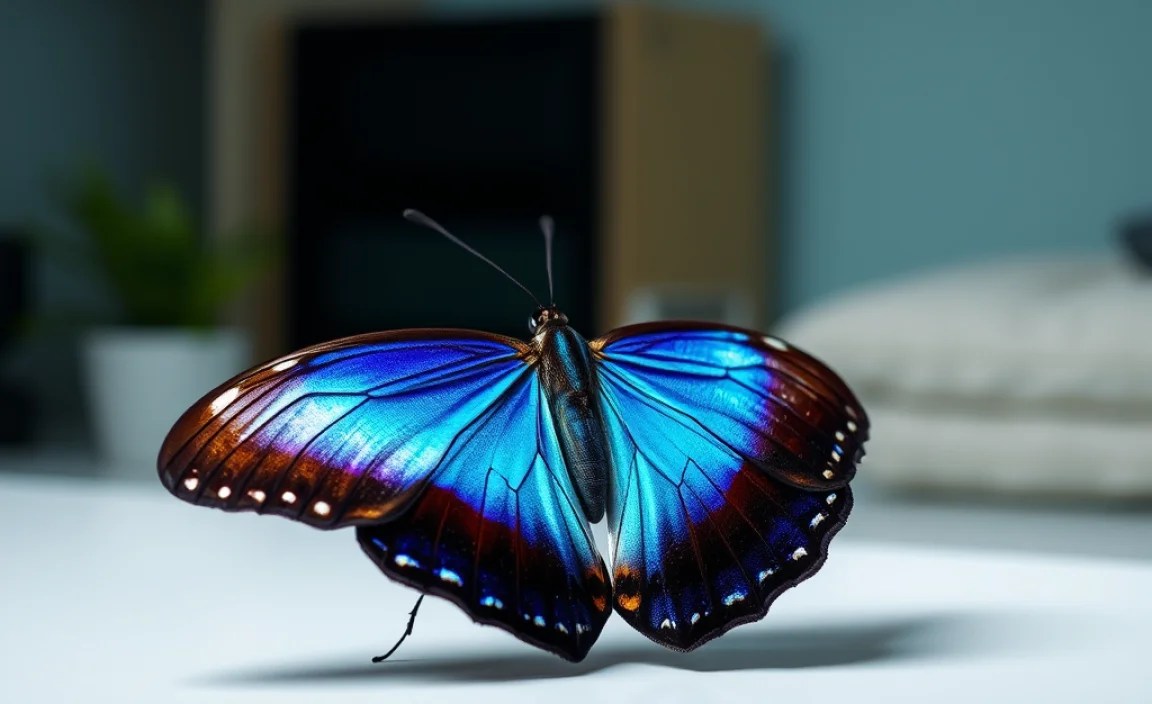
Flash coloration is more than just a pretty sight. It’s a scientific marvel. Scientists study how the Blue Morpho’s wings work. They want to understand how the butterfly creates this flashing effect. The key is the structure of the wings. The tiny scales on the wings are arranged in a special way. They reflect light in a way that creates the blue color. The angle of the scales changes as the butterfly flaps its wings. This causes the blue color to appear and disappear. The brown color on the underside of the wings also plays a role. It helps the butterfly blend in with its surroundings when it lands. Scientists use microscopes to study the wings. They also use computers to model how the light reflects off the scales. This helps them understand the science behind flash coloration.
- Scientists study the Blue Morpho’s wings.
- They use microscopes to see tiny structures.
- The wing scales reflect light to make blue.
- The scales change angle when it flaps.
- The brown underside helps it hide.
- Computers help model the light reflection.
Imagine you are a scientist studying the Blue Morpho. You would want to know everything about its wings. You would use powerful tools to zoom in on the tiny scales. You would measure the angle of the scales. You would study how they reflect light. You would also study how the butterfly moves its wings. You would want to know how fast it flaps its wings. You would want to know how the flashing effect changes with speed. All of this information would help you understand how flash coloration works. It would also help you understand how the butterfly survives in its environment. Science helps us appreciate the beauty and complexity of nature.
Fun Fact or Stat: Only male Blue Morpho butterflies have bright blue wings. Females have less vibrant colors!
What Tools Do Scientists Use?
Scientists use many tools to study flash coloration. Microscopes are very important. They allow scientists to see the tiny structures on the wings. Spectrometers measure the colors of the wings. They can tell how much light is reflected at different wavelengths. High-speed cameras record the butterfly’s flight. They can capture the flashing effect in slow motion. Computers are used to model the light reflection. They can simulate how the light interacts with the wing scales. Math is also very important. Scientists use equations to describe the light reflection. All of these tools help scientists understand flash coloration.
Why is Understanding This Important?
Understanding flash coloration is important for many reasons. It helps us learn about nature. It shows us how animals have adapted to survive. It can also inspire new technologies. Scientists are studying the Blue Morpho’s wings to create new materials. These materials could have special optical properties. They could be used to make displays or camouflage. Understanding flash coloration can also help us protect butterflies. We can learn how to create habitats that support their survival. By studying nature, we can learn and create new things. Nature is a great teacher.
Can We Copy This Technology?
Scientists are trying to copy the Blue Morpho’s wing structure. They want to create materials that can change color. This could be used to make new displays. It could also be used to make camouflage for soldiers. Imagine a uniform that can change color to match its surroundings. This would make it very hard to see the soldier. Scientists are also studying other animals that use color. They want to learn from their adaptations. By copying nature, we can create new and amazing technologies. This is called biomimicry. It is a way of using nature as inspiration.
Fun Fact or Stat: The Blue Morpho lives in the rainforests of Central and South America.
Predators and Blue Morpho Survival
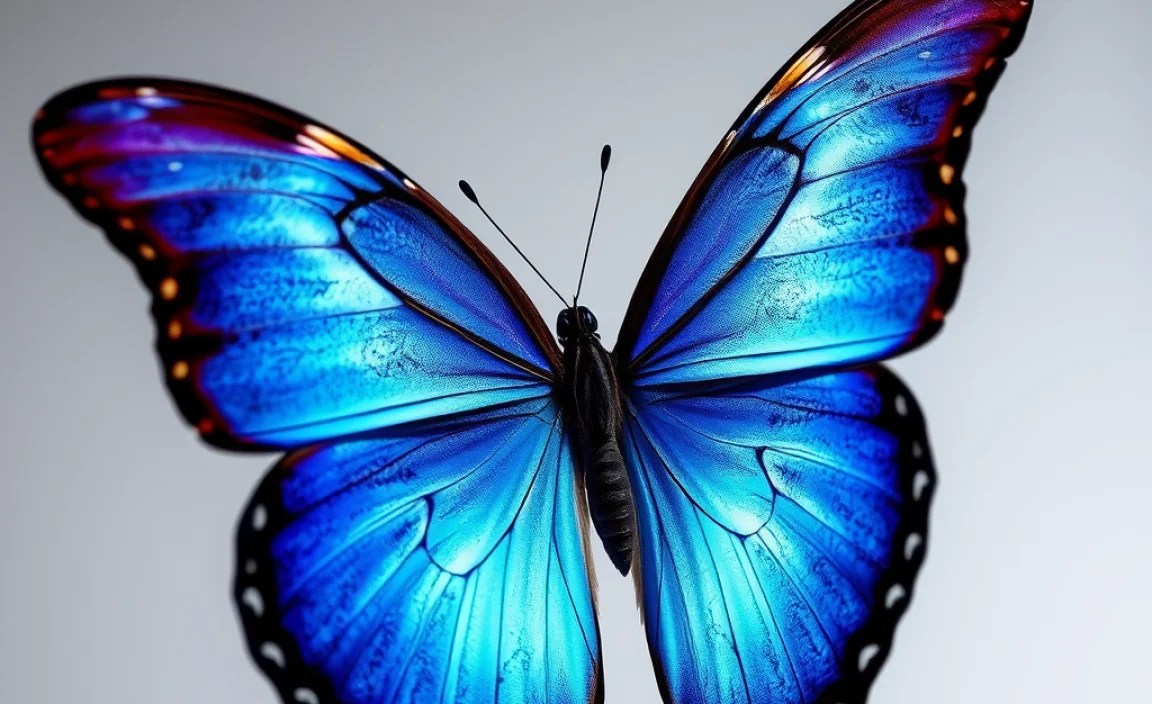
The rainforest is a dangerous place. Many animals want to eat the Blue Morpho. Birds, lizards, and even monkeys prey on these butterflies. Flash coloration is a key defense. It helps the butterflies survive. The bright blue color attracts attention. But the quick flash to brown confuses predators. They lose track of the butterfly. The brown underside of the wings helps the butterfly hide. It blends in with the leaves and branches. The Blue Morpho also flies erratically. It doesn’t fly in a straight line. This makes it harder for predators to catch. These strategies help the Blue Morpho survive in a world full of dangers. It’s a constant game of survival.
- Birds, lizards, and monkeys eat them.
- Flash coloration confuses predators.
- Brown underside helps them hide.
- They fly erratically to avoid capture.
- They live in a dangerous rainforest.
- Survival is a constant struggle.
Think about how hard it is to survive in the rainforest. Every day is a challenge. The Blue Morpho must find food. It must avoid predators. It must also find a mate. Flash coloration helps with all of these things. It helps the butterfly stay alive long enough to reproduce. This ensures that there will be more Blue Morphos in the future. The butterfly’s life is a testament to the power of adaptation. It shows how animals can evolve to survive in even the most challenging environments. The Blue Morpho is a symbol of resilience and beauty.
Fun Fact or Stat: Blue Morphos taste with sensors on their feet!
How Do Predators Hunt?
Predators have different hunting strategies. Some birds are very fast. They can catch butterflies in mid-air. Lizards use camouflage to hide. They wait for a butterfly to come close. Monkeys are very smart. They can learn to predict the butterfly’s movements. Each predator has its own way of hunting. The Blue Morpho must be ready for anything. Flash coloration is just one part of its defense. The butterfly also relies on its agility and camouflage. Survival in the rainforest is a constant battle of wits.
What Happens If Flash Coloration Fails?
Sometimes, flash coloration doesn’t work. A predator might be too fast. It might be too smart. It might just be lucky. When this happens, the Blue Morpho is in trouble. It might get caught and eaten. This is a risk that all butterflies face. But flash coloration greatly increases their chances of survival. It gives them an edge in the fight for survival. Even if it doesn’t always work, it’s still a very valuable adaptation. It’s a key part of the Blue Morpho’s success.
How Does Climate Change Affect This?
Climate change is a big threat to the Blue Morpho. The rainforest is getting warmer and drier. This can change the butterfly’s habitat. It can also affect the plants that the butterfly eats. If the rainforest changes too much, the Blue Morpho may not be able to survive. It’s important to protect the rainforest. We need to reduce climate change. This will help the Blue Morpho and other rainforest animals. We need to take care of our planet.
Fun Fact or Stat: The Blue Morpho can live for about 115 days.
Comparing Blue Morpho to Other Butterflies
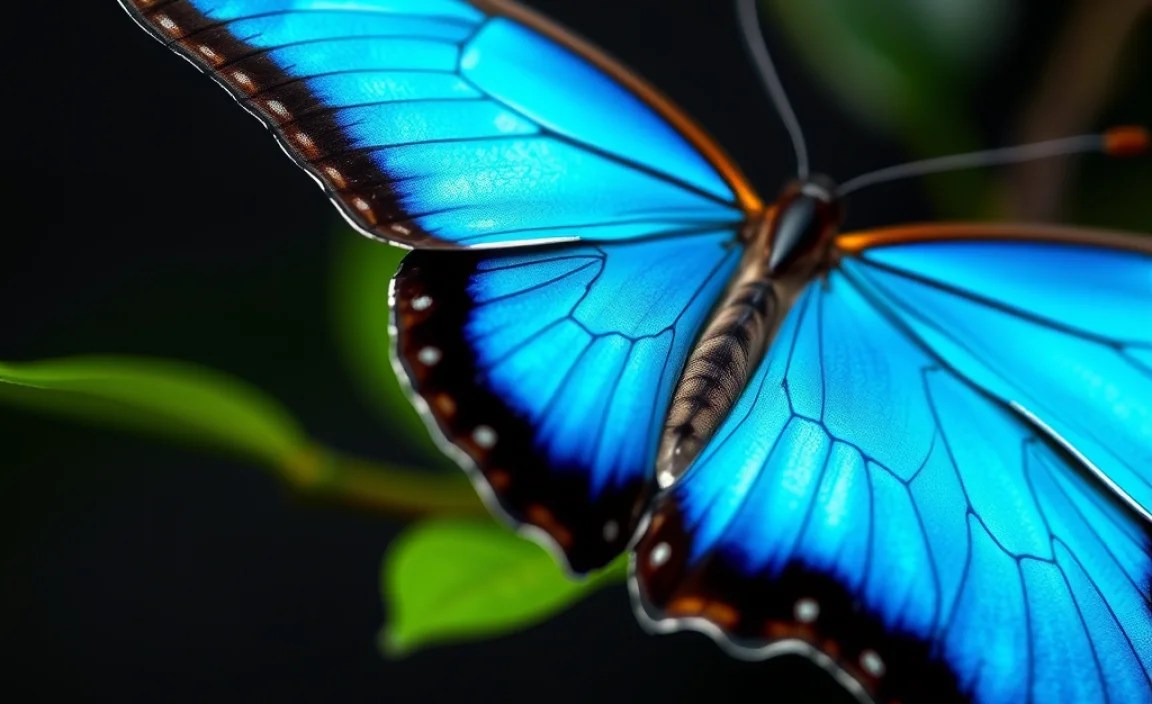
The Blue Morpho is special. But it is not the only butterfly with cool features. Many other butterflies have amazing adaptations. Some butterflies have camouflage. They blend in with leaves or bark. Some butterflies have bright colors. They warn predators that they are poisonous. Some butterflies migrate long distances. They fly thousands of miles to find food or breeding grounds. Each butterfly has its own unique way of surviving. The Blue Morpho’s flash coloration is just one example of the incredible diversity of butterflies. They fill our world with color and wonder.
- Monarchs migrate long distances.
- Some use camouflage to hide.
- Others have bright warning colors.
- Each adapts to its environment.
- Butterflies add color to our world.
- They are all unique and special.
Think about all the different kinds of butterflies you have seen. Some are small and delicate. Others are large and showy. Some are plain and brown. Others are brightly colored. Each butterfly has its own special role in the ecosystem. They pollinate flowers. They provide food for birds and other animals. They are also beautiful to look at. Butterflies are an important part of our world. We should protect them and their habitats. We can all do our part to help butterflies thrive.
Fun Fact or Stat: Butterflies taste with their feet!
What Makes the Blue Morpho Unique?
The Blue Morpho’s flash coloration is very unique. Not many other butterflies use this strategy. The combination of bright blue and brown is also unusual. The Blue Morpho’s large size makes it even more noticeable. All of these factors make the Blue Morpho a truly special butterfly. It stands out from the crowd. It is a symbol of beauty and adaptation. It is a reminder of the wonders of nature.
How Do Other Butterflies Defend Themselves?
Other butterflies use different defenses. Some butterflies are poisonous. They eat plants that contain toxins. These toxins make them taste bad to predators. Other butterflies have camouflage. They blend in with their surroundings. Some butterflies mimic other butterflies. They look like poisonous butterflies. This tricks predators into avoiding them. Each butterfly has its own way of staying safe.
What About Migration Patterns?
Some butterflies migrate long distances. The Monarch butterfly is famous for its migration. It flies thousands of miles from Canada to Mexico. Other butterflies migrate shorter distances. They move to find food or breeding grounds. Migration is a risky behavior. But it can also be very rewarding. It allows butterflies to survive in harsh environments. It helps them find the resources they need.
Fun Fact or Stat: A group of butterflies is called a flutter.
Table: Butterfly Comparison
Here is a table comparing the Blue Morpho to other butterflies:
| Butterfly | Defense Mechanism | Size | Habitat |
|---|---|---|---|
| Blue Morpho | Flash coloration | Large | Rainforest |
| Monarch | Poisonous | Medium | North America |
| Viceroy | Mimicry | Medium | North America |
| Swallowtail | Camouflage | Large | Worldwide |
| Painted Lady | Migration | Small | Worldwide |
Fun Fact or Stat: Butterflies are cold-blooded, so they need the sun to warm up.
The Impact of Habitat Loss
The Blue Morpho lives in the rainforest. Rainforests are being destroyed. People are cutting down trees for farms and cities. This is called habitat loss. Habitat loss is a big problem for the Blue Morpho. It needs the rainforest to survive. It needs the trees for food and shelter. When the rainforest is destroyed, the Blue Morpho loses its home. It becomes harder for them to find food and avoid predators. We need to protect the rainforest. This will help the Blue Morpho and other animals. We can all do our part to save the rainforest.
- Rainforests are being destroyed.
- This is called habitat loss.
- The Blue Morpho needs the forest.
- It loses its home and food.
- We must protect the rainforest.
- Help the Blue Morpho survive.
Imagine what it would be like to lose your home. You would have nowhere to sleep. You would have no place to store your food. You would be exposed to the weather. This is what happens to the Blue Morpho when the rainforest is destroyed. It loses everything it needs to survive. We need to be more careful about how we use the rainforest. We need to find ways to protect it. We can support organizations that are working to save the rainforest. We can also reduce our consumption of products that come from the rainforest. Together, we can make a difference.
Fun Fact or Stat: Some butterfly species are endangered because of habitat loss.
What Can We Do to Help?
There are many things we can do to help the Blue Morpho. We can support organizations that protect the rainforest. We can reduce our use of paper and wood. We can plant trees in our own communities. We can educate others about the importance of the rainforest. Every little bit helps. Together, we can make a big difference. We can help the Blue Morpho and other rainforest animals survive.
Why Is the Rainforest Important?
The rainforest is very important for many reasons. It provides oxygen for the planet. It helps regulate the climate. It is home to many different plants and animals. The rainforest is also a source of medicines and other products. We need to protect the rainforest for the benefit of everyone. It is a valuable resource that we cannot afford to lose.
How Does Deforestation Affect the Planet?
Deforestation is the cutting down of trees. It has many negative effects on the planet. It contributes to climate change. It reduces biodiversity. It can lead to soil erosion. Deforestation is a serious problem that we need to address. We need to find sustainable ways to use the rainforest. We need to protect it for future generations.
Fun Fact or Stat: Rainforests cover less than 6% of the Earth’s surface but contain over half of the world’s plant and animal species.
Future of Blue Morpho Flash Coloration
What will happen to the Blue Morpho in the future? It depends on us. If we protect the rainforest, the Blue Morpho will have a chance to survive. If we continue to destroy the rainforest, the Blue Morpho may disappear. We have the power to choose. We can make a difference. We can help the Blue Morpho thrive. The future of Blue Morpho flash coloration depends on our actions today. Let’s choose to protect these amazing butterflies. Let’s protect their home.
- The future is up to us.
- Protect the rainforest.
- The Blue Morpho can survive.
- We can make a difference.
- Help them thrive in nature.
Imagine a world without Blue Morphos. It would be a sadder, less colorful place. We would lose a piece of the beauty and wonder of nature. We would also lose an important part of the ecosystem. The Blue Morpho plays a role in pollinating plants. It is also a source of food for other animals. We need to protect the Blue Morpho for its own sake. We also need to protect it for the sake of the planet.
Fun Fact or Stat: Some people raise Blue Morphos in butterfly gardens.
What Research Is Being Done?
Scientists are continuing to study the Blue Morpho. They are learning more about its flash coloration. They are also studying its behavior and ecology. This research will help us protect the Blue Morpho. It will give us a better understanding of how it survives. It will also inspire new technologies. Science is a powerful tool for conservation.
How Can Kids Get Involved?
Kids can get involved in protecting the Blue Morpho. They can learn about the rainforest. They can educate their friends and family. They can support organizations that protect the rainforest. They can also reduce their consumption of products that come from the rainforest. Even small actions can make a big difference. Kids can be powerful advocates for conservation.
What Are the Long-Term Predictions?
The long-term predictions for the Blue Morpho are uncertain. It depends on how we respond to climate change and habitat loss. If we take action, the Blue Morpho has a good chance of surviving. If we do nothing, the Blue Morpho may disappear. We need to be proactive. We need to protect the rainforest. We need to reduce our impact on the planet. The future of the Blue Morpho is in our hands.
Fun Fact or Stat: The Blue Morpho is a symbol of Costa Rica.
Summary
The Blue Morpho butterfly is a beautiful and fascinating creature. Its flash coloration is a clever adaptation. It helps the butterfly avoid predators. The bright blue color on the top of its wings quickly changes to brown. This confuses predators and helps the butterfly escape. The Blue Morpho lives in the rainforests of Central and South America. Its habitat is threatened by deforestation. We need to protect the rainforest to help the Blue Morpho survive. There are many things we can do to help. We can support organizations that protect the rainforest. We can reduce our consumption of products that come from the rainforest. We can educate others about the importance of the rainforest. Together, we can make a difference.
Conclusion
The Blue Morpho butterfly is more than just a pretty insect. It is a symbol of the beauty and resilience of nature. Its flash coloration is a testament to the power of adaptation. We must protect this amazing creature. We must protect its habitat. By doing so, we can ensure that future generations will be able to enjoy the beauty of the Blue Morpho. Let’s work together to save the rainforest and the Blue Morpho.
Frequently Asked Questions
Question No 1: What is flash coloration?
Answer: Flash coloration is a special trick some animals use to stay safe. The Blue Morpho butterfly uses it. They have bright blue wings on top. But underneath, their wings are brown. When they fly, they flash blue and then brown. This quick change confuses predators. It makes it hard for predators to catch them. It is a very cool way to stay alive in the rainforest.
Question No 2: Why is the Blue Morpho blue?
Answer: The Blue Morpho is blue because of tiny structures on its wings. These structures are like tiny mirrors. They reflect light in a special way. This creates the bright blue color. It is not like paint. It is called structural coloration. The angle of the light changes the color we see. That is why the blue looks so shiny and bright on the Blue Morpho. It is a beautiful and unique adaptation.
Question No 3: Where do Blue Morphos live?
Answer: Blue Morphos live in the rainforests of Central and South America. They need the rainforest to survive. The rainforest provides food and shelter. It also provides a place to hide from predators. The rainforest is a very important habitat for the Blue Morpho. Sadly, the rainforest is being destroyed. We need to protect it to help the Blue Morpho and other rainforest animals survive. The Blue Morpho’s survival depends on the health of its rainforest home.
Question No 4: How does flash coloration help the Blue Morpho?
Answer: Flash coloration helps the Blue Morpho avoid predators. The bright blue color attracts attention. But the quick flash to brown confuses predators. They lose track of the butterfly. The brown underside of the wings helps the butterfly hide. It blends in with the leaves and branches. This combination of bright color and camouflage is very effective. It helps the Blue Morpho survive in a dangerous world. The flash coloration gives them an edge.
Question No 5: What can kids do to help Blue Morphos?
Answer: Kids can do many things to help Blue Morphos. They can learn about the rainforest. They can educate their friends and family. They can support organizations that protect the rainforest. They can also reduce their consumption of products that come from the rainforest. Even small actions can make a big difference. Kids can be powerful advocates for conservation. Every effort counts when it comes to protecting these amazing butterflies and their habitat.
Question No 6: Are Blue Morphos endangered?
Answer: Blue Morphos are not currently listed as endangered. However, their habitat is threatened. Deforestation is destroying the rainforest. This makes it harder for Blue Morphos to survive. We need to protect the rainforest to ensure that Blue Morphos do not become endangered. By taking action now, we can help protect these beautiful butterflies for future generations. The future of the Blue Morpho depends on our actions.


