
Blue Morpho Developmental Biology: The Powerful Secrets

Have you ever seen a butterfly with bright blue wings? It might have been a Blue Morpho! These butterflies are known for their amazing color. But how do they get their beautiful blue? That’s where {Blue Morpho developmental biology} comes in. It helps us understand how these butterflies grow and get their colors.
Did you know that butterflies start as tiny eggs? These eggs hatch into caterpillars. The caterpillars eat and grow. Then, they turn into a pupa, or chrysalis. Inside the pupa, something amazing happens. The caterpillar changes into a butterfly. This whole process is part of {Blue Morpho developmental biology}. It is a fascinating transformation.
Let’s learn more about these amazing butterflies. We will explore how they change and grow. We will also discover what makes their wings so blue. Get ready for a colorful adventure into the world of {Blue Morpho developmental biology}! It is a journey full of surprises.
Key Takeaways
- {Blue Morpho developmental biology} explains how these butterflies develop their unique features.
- Blue Morphos get their color from tiny structures on their wings, not pigment.
- The butterfly life cycle includes egg, larva (caterpillar), pupa, and adult stages.
- Environmental factors like temperature can affect Blue Morpho development.
- Scientists study Blue Morphos to understand genetics and adaptation.
Understanding Blue Morpho Life Cycle
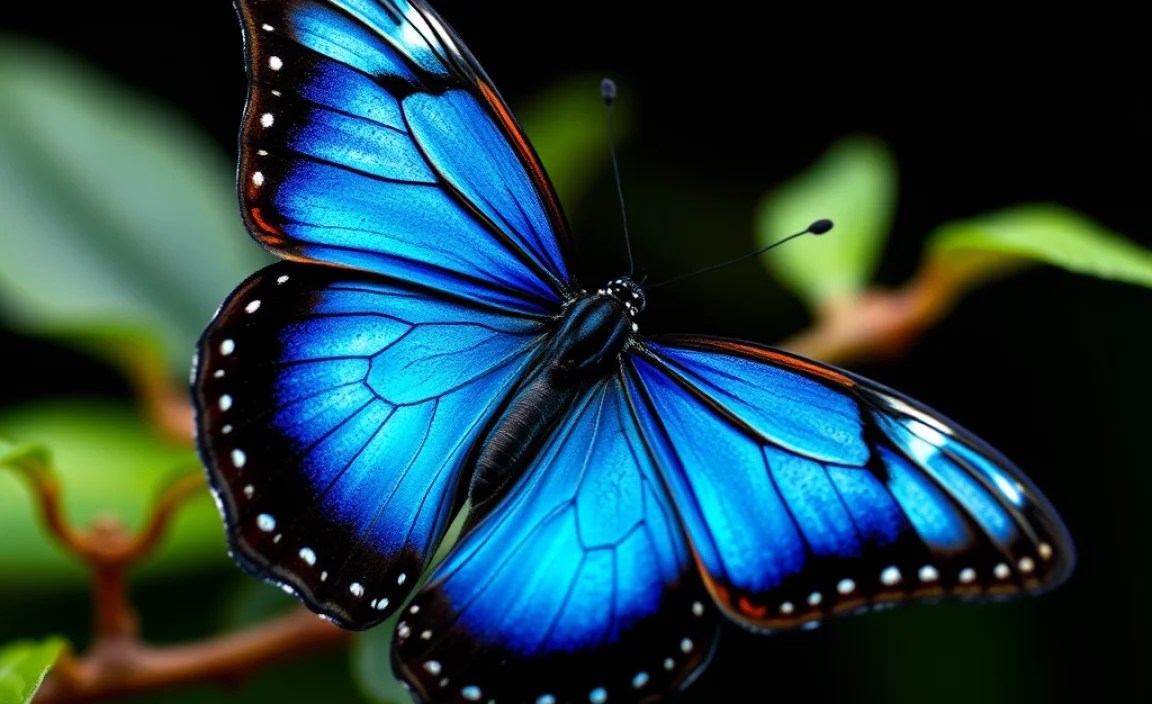
The Blue Morpho butterfly goes through a complete metamorphosis. This means it has four distinct stages. First, the female butterfly lays her eggs. These eggs are usually laid on plants that the caterpillars can eat. The eggs hatch into larvae, which we know as caterpillars. Caterpillars have one job: to eat and grow. They eat lots of leaves. As they grow, they shed their skin. This is called molting. After several molts, the caterpillar is ready to pupate. It forms a pupa, also known as a chrysalis. Inside the chrysalis, the caterpillar transforms. It changes into a beautiful butterfly. This process can take several weeks. Finally, the adult butterfly emerges. It flies off to find a mate and lay eggs, starting the cycle again. Understanding this cycle is key to {Blue Morpho developmental biology}.
- Eggs are laid on host plants.
- Caterpillars eat and grow rapidly.
- Molting occurs as the caterpillar grows.
- The pupa is a resting and transforming stage.
- Adult butterflies emerge from the pupa.
Studying the life cycle helps us understand how the Blue Morpho adapts to its environment. For instance, the timing of egg-laying is crucial. It must coincide with the availability of food for the caterpillars. The length of the pupa stage can also vary. It depends on temperature and other environmental factors. Scientists use this information to protect Blue Morphos. They can help maintain their habitats. They also monitor their populations. This ensures these beautiful butterflies continue to thrive. The intricate details of their life cycle are a testament to the wonders of nature. {Blue Morpho developmental biology} is a complex and fascinating field.
What Do Blue Morpho Caterpillars Eat?
Imagine being a tiny caterpillar with a big appetite. Blue Morpho caterpillars are like that. They need to eat a lot to grow big and strong. So, what do they eat? These caterpillars are picky eaters. They mostly eat the leaves of specific plants. These plants are called host plants. Some common host plants include pea plants and other legumes. The caterpillars have strong jaws. These jaws help them chew through the leaves. They eat almost constantly. As they eat, they grow quickly. They also shed their skin several times. This is because their skin doesn’t stretch. Each time they shed, they reveal a new, bigger layer of skin. Eating the right plants is very important. It gives the caterpillars the energy they need to transform into butterflies.
How Long Does the Pupa Stage Last?
The pupa stage is a time of great change. Inside the pupa, the caterpillar is turning into a butterfly. But how long does this take? The length of the pupa stage varies. It depends on several factors. Temperature is a big one. In warmer temperatures, the process is faster. In cooler temperatures, it takes longer. Generally, the pupa stage lasts about two to three weeks. During this time, the pupa might look still. However, lots of things are happening inside. The caterpillar’s body is breaking down. It is then reassembling into a butterfly. This is a complex and amazing process. When the butterfly is ready, the pupa cracks open. The butterfly emerges, ready to fly.
What Happens After the Butterfly Emerges?
Emerging from the pupa is a big moment for the Blue Morpho. The butterfly is finally ready to spread its wings. But it’s not quite ready to fly yet. When it first comes out, its wings are soft and crumpled. They need to fill with fluid. This fluid makes the wings expand. It takes a few hours for the wings to fully harden. During this time, the butterfly rests. It usually hangs upside down. Once the wings are dry and strong, the butterfly can fly. It will then look for food. It will also look for a mate. The adult butterfly eats nectar from flowers. It uses its long proboscis to suck up the nectar. The butterfly then flies off. It begins its new life as a beautiful, blue-winged creature.
Fun Fact or Stat: The Blue Morpho butterfly’s wings can span up to 8 inches wide!
The Science Behind Blue Wings
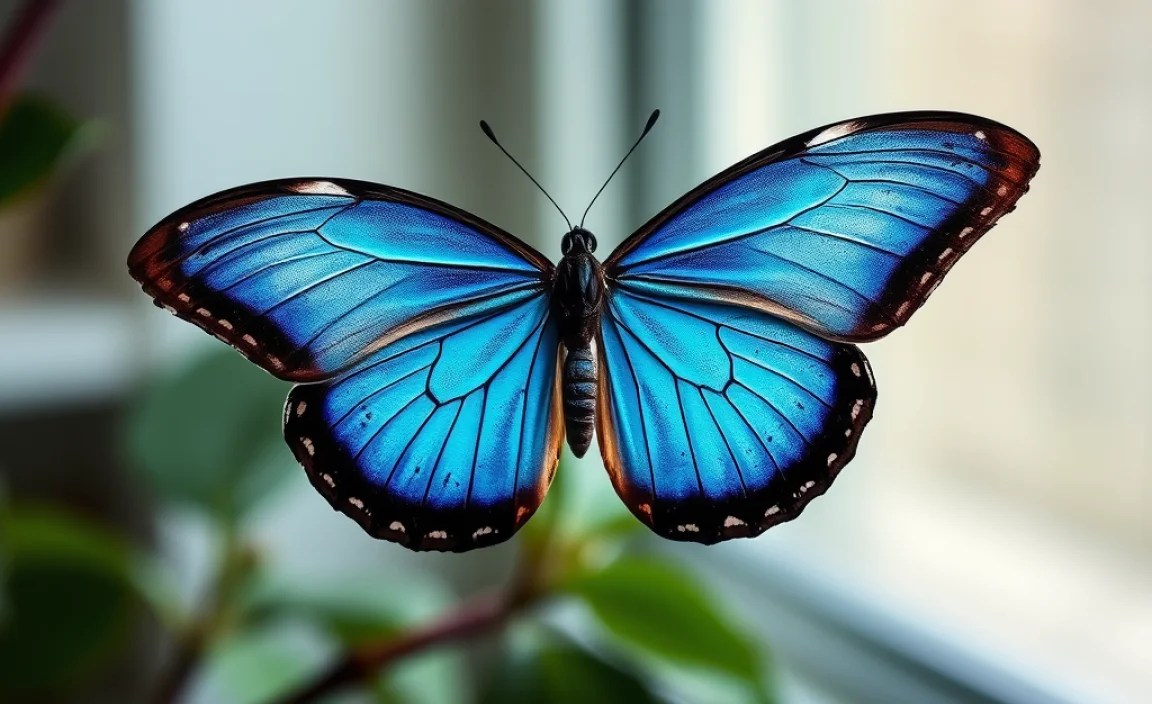
The Blue Morpho’s vibrant blue color is not from pigments. Instead, it comes from tiny structures on their wings. These structures are called scales. The scales are arranged in a special way. This arrangement causes light to bounce off the wings in a certain way. This is called structural coloration. The scales have tiny ridges and grooves. These ridges and grooves interfere with light waves. They cancel out some colors. They amplify the blue color. This is similar to how a prism creates a rainbow. But in this case, the scales create a brilliant blue. This unique adaptation helps the butterflies attract mates. It also helps them camouflage. The underside of their wings is brown. This helps them blend in with trees. Understanding this process is a key part of {Blue Morpho developmental biology}.
- Blue color comes from structural coloration.
- Tiny scales on wings create the effect.
- Scales have ridges and grooves.
- Light waves interfere with each other.
- Blue color is amplified, other colors canceled.
Scientists are studying the Blue Morpho’s wings to create new technologies. They are inspired by the way the wings reflect light. This could lead to better displays on phones and TVs. It could also lead to new types of camouflage. The Blue Morpho’s wings are a marvel of engineering. They are a testament to the power of natural selection. The arrangement of scales is very precise. It has evolved over millions of years. This precise structure allows the butterfly to display its brilliant blue color. The study of this coloration is important in {Blue Morpho developmental biology}. It shows us how evolution can create amazing things.
How Do Scales Develop on the Wings?
Wing scales are crucial for the Blue Morpho’s color. But how do these scales develop? The process starts during the pupa stage. Special cells on the wings begin to form. These cells are called scale cells. Each scale cell creates one scale. The cells make tiny structures. These structures are like tiny building blocks. They arrange themselves in a precise pattern. This pattern is determined by the butterfly’s genes. As the pupa develops, the scales grow. They become more complex. They also become more colorful. By the time the butterfly emerges, the scales are fully formed. They are ready to reflect light and create the butterfly’s beautiful blue color. The development of scales is a complex process. It requires many different genes and proteins to work together.
Why Are the Undersides of the Wings Brown?
Have you noticed that the Blue Morpho’s wings are only blue on top? The undersides are brown. Why is this? The brown color serves a very important purpose. It helps the butterfly camouflage. When the butterfly closes its wings, it blends in with trees and leaves. This makes it harder for predators to see. The brown color comes from pigments. These pigments absorb light. They don’t reflect it like the scales on the top of the wings do. The contrast between the blue and brown colors is very useful. It helps the butterfly both attract mates and hide from predators. This is a great example of how evolution can create complex adaptations.
Can Other Colors Be Created with Similar Structures?
The Blue Morpho uses tiny structures to create its blue color. But can similar structures create other colors? The answer is yes! By changing the size and shape of the structures, different colors can be produced. For example, some butterflies have green or purple colors. These colors are also created by structural coloration. Scientists are studying these butterflies to learn how to create new colors. They want to use these colors in paints and other materials. Structural coloration has many advantages over pigments. It is more vibrant and doesn’t fade over time. It is also more environmentally friendly. The possibilities are endless!
Fun Fact or Stat: The microscopic structures on a Blue Morpho’s wing are about 100 nanometers wide!
Genetic Influence on Morpho Development
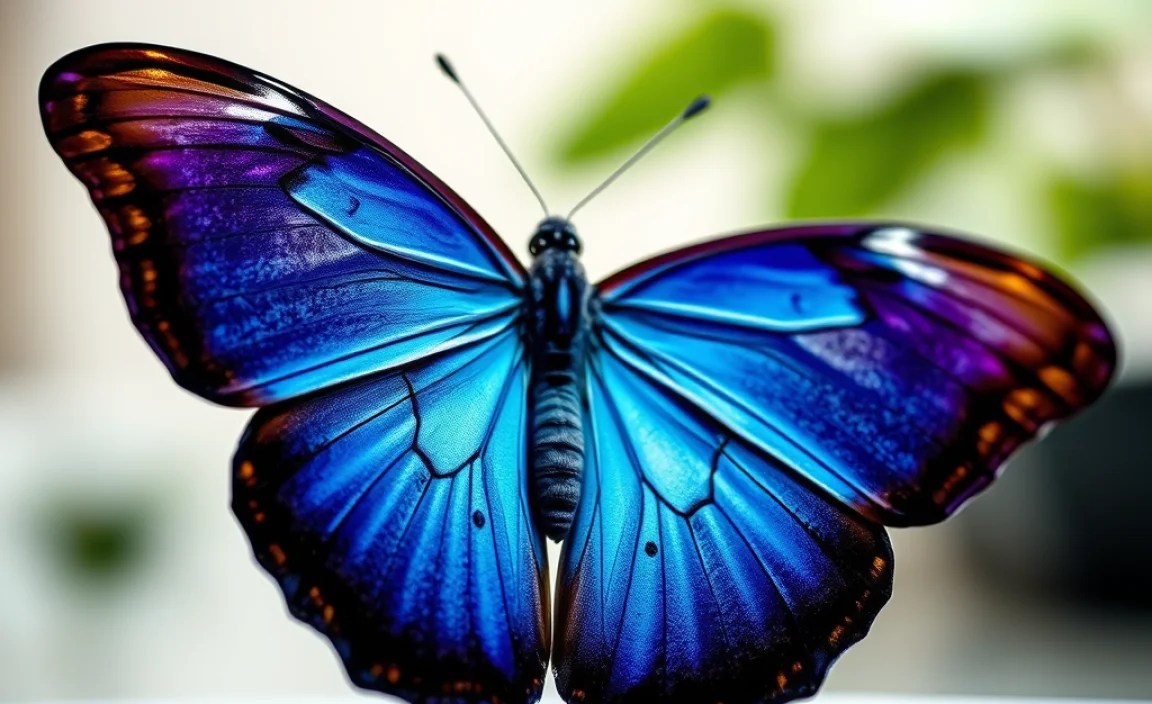
Genetics play a huge role in Blue Morpho {Blue Morpho developmental biology}. Genes are like instructions. They tell the butterfly how to grow and develop. Some genes control the size and shape of the wings. Other genes control the color of the wings. These genes are passed down from parents to offspring. This means that baby butterflies look like their parents. Sometimes, there can be changes in the genes. These changes are called mutations. Mutations can lead to new traits. For example, a mutation might cause a butterfly to have slightly different colored wings. These mutations can be helpful, harmful, or neutral. If a mutation helps the butterfly survive, it might become more common over time. This is how evolution works. Understanding the genetics of Blue Morphos helps us understand how they have evolved over millions of years.
- Genes control wing size and shape.
- Genes determine wing color.
- Mutations can lead to new traits.
- Beneficial mutations can become common.
- Genetics explain evolution.
Scientists use advanced tools to study the genes of Blue Morphos. They can compare the genes of different butterflies. This helps them understand how the butterflies are related. It also helps them understand how they have adapted to different environments. For example, some Blue Morphos live in very humid areas. Others live in drier areas. By studying their genes, scientists can learn how they have adapted to these different conditions. This information is important for conservation. It can help us protect these butterflies from extinction. Genetics is a powerful tool for understanding {Blue Morpho developmental biology}. It helps us unravel the mysteries of these beautiful creatures.
How Do Genes Determine Wing Shape?
Wing shape is very important for a butterfly. It affects how well the butterfly can fly. But how do genes determine wing shape? Certain genes act like blueprints. They tell the cells in the wing how to grow. These genes control the size and shape of the wing. They also control the pattern of veins in the wing. The veins provide support for the wing. They also help carry nutrients to the wing cells. If there are changes in these genes, the wing shape can change. For example, a mutation might cause the wing to be shorter or wider. These changes can affect the butterfly’s ability to fly. Wing shape is a complex trait. It is influenced by many different genes.
What Happens if There Is a Mutation in a Color Gene?
Imagine a gene that controls the blue color in a Blue Morpho’s wings. What would happen if there was a mutation in that gene? The mutation could have several different effects. It might cause the butterfly to have lighter blue wings. It might even cause the butterfly to have a completely different color. For example, the wings might be white or brown. The effect of the mutation depends on the specific gene. It also depends on the type of mutation. Some mutations have a big effect. Others have a small effect. In some cases, the mutation might not have any effect at all. This is because there are other genes that can compensate for the mutation.
Can Environmental Factors Affect Gene Expression?
Genes are important. But they are not the only thing that affects Blue Morpho development. Environmental factors can also play a role. These factors can affect how genes are expressed. Gene expression is the process by which genes are turned on or off. For example, temperature can affect gene expression. In warmer temperatures, certain genes might be turned on. In cooler temperatures, those genes might be turned off. This can affect the butterfly’s development. For example, temperature can affect the size and color of the wings. Diet can also affect gene expression. If a caterpillar eats a poor diet, it might not develop properly. Environmental factors and genes work together. They determine how a Blue Morpho develops.
Fun Fact or Stat: Scientists have identified over 15,000 genes in the Blue Morpho butterfly genome!
Environmental Impact on Development
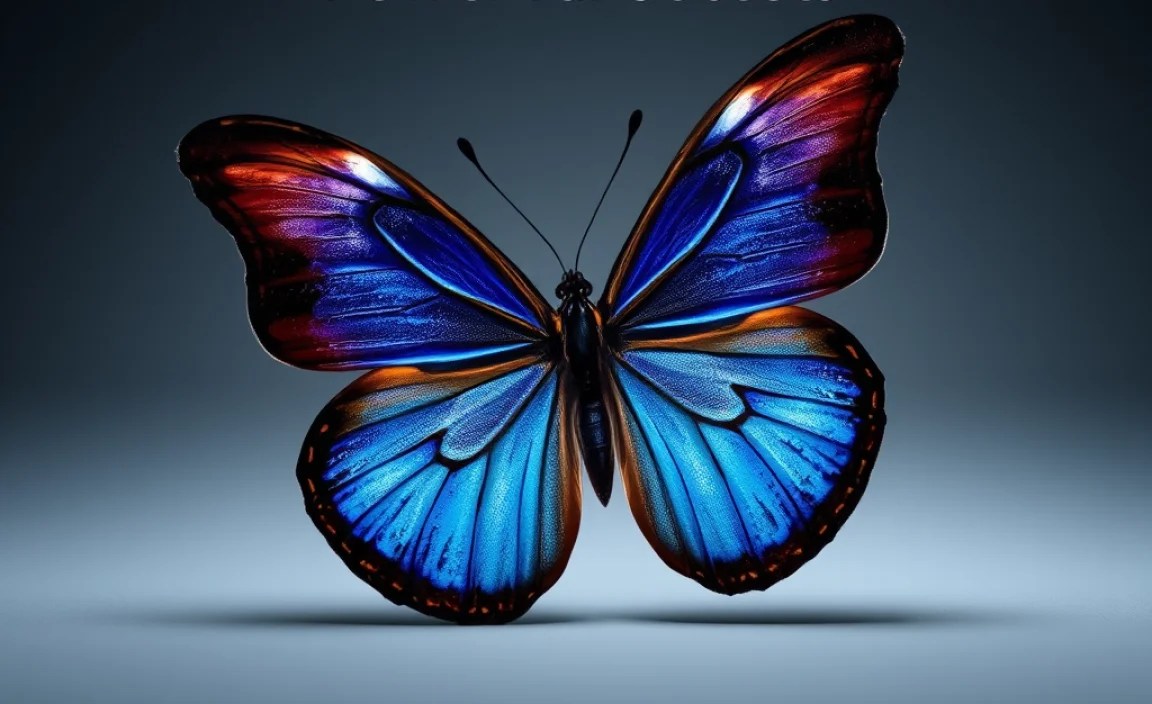
The environment has a big impact on Blue Morpho {Blue Morpho developmental biology}. Temperature, humidity, and food availability all play a role. Temperature affects how quickly the butterfly develops. In warmer temperatures, the butterfly develops faster. In cooler temperatures, it develops slower. Humidity affects the butterfly’s ability to stay hydrated. If the air is too dry, the butterfly can dry out. Food availability is crucial for caterpillars. They need to eat a lot to grow and develop. If there is not enough food, they might not survive. Pollution can also affect Blue Morphos. Pesticides and other chemicals can harm them. Habitat loss is another big threat. As forests are cut down, the butterflies lose their homes. Protecting the environment is important. It helps ensure that Blue Morphos can continue to thrive.
| Environmental Factor | Effect on Blue Morpho |
|---|---|
| Temperature | Development speed; warmer = faster |
| Humidity | Hydration levels; dry air can be harmful |
| Food Availability | Caterpillar growth and survival |
| Pollution | Harmful to all life stages |
| Habitat Loss | Reduces living space; threatens survival |
- Temperature affects development speed.
- Humidity affects hydration.
- Food availability is crucial for caterpillars.
- Pollution can harm butterflies.
- Habitat loss threatens their survival.
Climate change is a growing threat to Blue Morphos. As the climate changes, temperatures are rising. Rainfall patterns are also changing. This can disrupt the butterfly’s life cycle. It can also make it harder for them to find food and water. Scientists are studying how climate change is affecting Blue Morphos. They are also working to find ways to protect them. This includes protecting their habitats. It also includes reducing pollution. We can all do our part to help. We can reduce our carbon footprint. We can also support conservation efforts. By working together, we can help ensure that Blue Morphos continue to thrive for generations to come. {Blue Morpho developmental biology} is essential to understanding their survival needs.
How Does Temperature Affect Development Speed?
Temperature is a very important factor. It affects how quickly a Blue Morpho develops. In warmer temperatures, the butterfly develops faster. This is because the chemical reactions in its body speed up. These reactions are needed for growth and development. In cooler temperatures, the reactions slow down. This means that the butterfly takes longer to develop. If it is too cold, the butterfly might not be able to develop at all. The ideal temperature for Blue Morpho development is around 80 degrees Fahrenheit. This is why they are found in tropical areas. These areas have warm temperatures year-round.
What Happens if There Is a Drought?
A drought is a long period of time without rain. Droughts can have a big impact on Blue Morphos. They can cause plants to dry out and die. This means that there is less food for the caterpillars. Droughts can also make it harder for butterflies to find water. They need water to stay hydrated. If there is not enough water, they can die. Droughts can also increase the risk of wildfires. Wildfires can destroy butterfly habitats. This can make it even harder for them to survive. Droughts are becoming more common because of climate change. This is a serious threat to Blue Morphos.
How Can We Protect Blue Morpho Habitats?
Protecting Blue Morpho habitats is very important. It helps ensure that these butterflies can continue to thrive. There are many things we can do to help. We can support conservation organizations. These organizations work to protect forests and other habitats. We can also reduce our carbon footprint. This helps slow down climate change. We can also avoid using pesticides and other chemicals. These chemicals can harm butterflies and other wildlife. We can also plant native plants in our gardens. These plants provide food and shelter for butterflies. By working together, we can make a big difference.
Fun Fact or Stat: Blue Morphos are most active during the warmest parts of the day!
Conservation Efforts for Blue Morphos
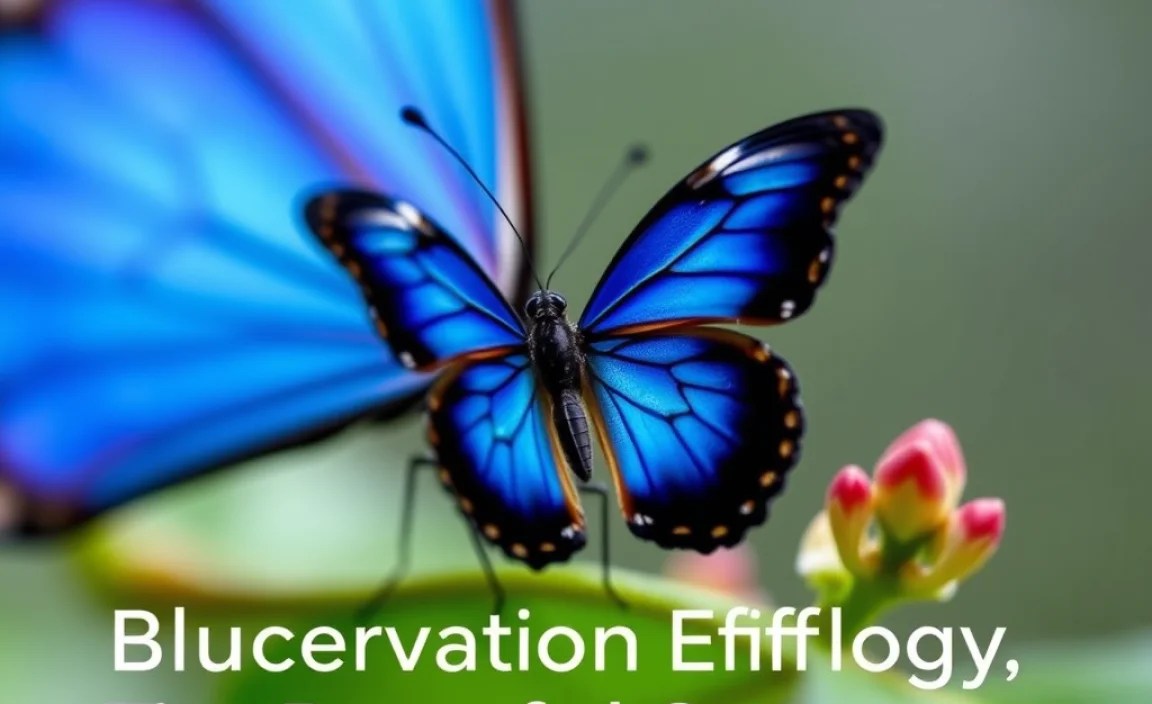
Blue Morphos are facing many threats. These threats include habitat loss, pollution, and climate change. Because of these threats, conservation efforts are very important. These efforts aim to protect the butterflies and their habitats. Some conservation organizations are working to restore forests. They are planting trees and other plants. This provides food and shelter for the butterflies. Other organizations are working to reduce pollution. They are promoting sustainable farming practices. They are also cleaning up polluted areas. Education is also an important part of conservation. By teaching people about Blue Morphos, we can raise awareness. We can also inspire people to take action. {Blue Morpho developmental biology} helps us understand their needs. This knowledge helps conservation efforts succeed.
- Habitat restoration provides food and shelter.
- Pollution reduction protects butterflies.
- Education raises awareness.
- Sustainable farming helps protect the environment.
- Research helps us understand butterfly needs.
You can help protect Blue Morphos! There are many things you can do. You can support conservation organizations. You can also reduce your carbon footprint. This helps slow down climate change. You can avoid using pesticides and other chemicals. These chemicals can harm butterflies and other wildlife. You can plant native plants in your garden. These plants provide food and shelter for butterflies. You can also spread the word about Blue Morphos. Tell your friends and family about these amazing creatures. By working together, we can make a big difference. We can help ensure that Blue Morphos continue to thrive for generations to come. Supporting {Blue Morpho developmental biology} research is also important.
How Can Zoos Help with Conservation?
Zoos can play a big role in Blue Morpho conservation. Many zoos have butterfly exhibits. These exhibits allow people to see Blue Morphos up close. This can help raise awareness about these amazing creatures. Zoos can also breed Blue Morphos. This helps increase their population. The butterflies can then be released back into the wild. Zoos can also support research. They can provide funding for scientists who are studying Blue Morphos. They can also educate visitors about conservation. This can inspire people to take action.
What Is Sustainable Farming?
Sustainable farming is a way of farming. It protects the environment. It also helps ensure that we can continue to grow food in the future. Sustainable farming practices include crop rotation. This means planting different crops in the same field each year. This helps improve soil health. It also reduces the need for pesticides. Sustainable farming also includes water conservation. This means using water wisely. It also means protecting water sources from pollution. Sustainable farming can help protect Blue Morphos. It reduces the amount of pollution in the environment. It also helps maintain healthy ecosystems.
Why Is Education Important for Conservation?
Education is a key part of conservation. When people learn about Blue Morphos, they are more likely to care about them. They are also more likely to take action to protect them. Education can take many forms. It can include school programs. It can also include museum exhibits. It can also include social media campaigns. The goal of education is to raise awareness. It is also to inspire people to take action. By educating people about Blue Morphos, we can help ensure their survival.
Fun Fact or Stat: Some conservation organizations use drones to monitor Blue Morpho populations!
Summary
Blue Morphos are amazing butterflies. They are known for their bright blue wings. Their color comes from tiny structures on their wings. These structures reflect light in a special way. The Blue Morpho life cycle includes four stages. These stages are egg, larva, pupa, and adult. Genetics play a big role in their development. Genes control wing shape and color. Environmental factors also have an impact. Temperature, humidity, and food availability all play a role. Conservation efforts are very important. These efforts aim to protect the butterflies and their habitats. {Blue Morpho developmental biology} is a complex and fascinating field. It helps us understand how these butterflies grow and thrive.
Conclusion
The Blue Morpho butterfly is a true wonder of nature. Its vibrant blue wings and complex life cycle are fascinating. Studying its {Blue Morpho developmental biology} allows us to understand the intricate processes that shape its development. By understanding these processes, we can better protect these amazing creatures. Conservation efforts are essential to ensure their survival. Let’s all do our part to help these butterflies thrive for generations to come.
Frequently Asked Questions
Question No 1: How do Blue Morpho butterflies get their blue color?
Answer: Blue Morpho butterflies do not have blue pigments in their wings. Instead, their wings have tiny structures. These structures are called scales. The scales are arranged in a way that reflects blue light. This is called structural coloration. The scales have tiny ridges and grooves. These ridges and grooves interfere with light waves. They cancel out some colors. They amplify the blue color. This creates the butterfly’s vibrant blue appearance. This is an example of the wonders of {Blue Morpho developmental biology}.
Question No 2: What do Blue Morpho caterpillars eat?
Answer: Blue Morpho caterpillars are picky eaters. They eat the leaves of specific plants. These plants are called host plants. Some common host plants include pea plants and other legumes. The caterpillars have strong jaws. These jaws help them chew through the leaves. They eat almost constantly. As they eat, they grow quickly. They also shed their skin several times. This is because their skin doesn’t stretch. Eating the right plants is very important for their {Blue Morpho developmental biology}. It gives the caterpillars the energy they need to transform into butterflies.
Question No 3: How long does it take for a Blue Morpho caterpillar to turn into a butterfly?
Answer: The transformation from caterpillar to butterfly takes time. The pupa stage lasts about two to three weeks. This is when the caterpillar is inside the chrysalis. During this time, the caterpillar’s body breaks down. It reassembles into a butterfly. The length of the pupa stage can vary. It depends on temperature and other environmental factors. Warmer temperatures can speed up the process. Cooler temperatures can slow it down. The entire process is a marvel of {Blue Morpho developmental biology}.
Question No 4: Are Blue Morpho butterflies endangered?
Answer: Blue Morpho butterflies are not currently listed as endangered. However, they face many threats. These threats include habitat loss, pollution, and climate change. Habitat loss is a big problem. As forests are cut down, the butterflies lose their homes. Pollution can also harm them. Pesticides and other chemicals can be harmful. Climate change is also a threat. It can disrupt the butterfly’s life cycle. Conservation efforts are important. They help protect these beautiful creatures.
Question No 5: What can I do to help protect Blue Morpho butterflies?
Answer: There are many things you can do to help protect Blue Morpho butterflies. You can support conservation organizations. These organizations work to protect forests and other habitats. You can also reduce your carbon footprint. This helps slow down climate change. You can avoid using pesticides and other chemicals. These chemicals can harm butterflies and other wildlife. You can also plant native plants in your garden. These plants provide food and shelter for butterflies. Every little bit helps ensure their survival. Understanding {Blue Morpho developmental biology} helps us protect them.
Question No 6: Where do Blue Morpho butterflies live?
Answer: Blue Morpho butterflies live in tropical rainforests. They are found in Central and South America. They prefer warm, humid environments. These forests provide the food and shelter. The butterflies need to survive. They are often seen flying through the trees. They are also seen near rivers and streams. These butterflies are a sign of a healthy ecosystem. Protecting these rainforests is crucial for their survival. It is also important for {Blue Morpho developmental biology} research. This ensures that we can continue to learn about these amazing creatures.


