Palos Verdes Blue Butterfly: Secret to Saving It?

Quick Summary: The Palos Verdes Blue Butterfly (PVB) is one of the rarest butterflies in the world, found only on the Palos Verdes Peninsula in California. Once thought extinct, dedicated conservation efforts are helping to bring this beautiful blue butterfly back from the brink. Learn about its life cycle, habitat, and how you can support its recovery.
Have you ever heard of a butterfly so rare it was once declared extinct? The Palos Verdes Blue Butterfly (PVB) is a tiny, brilliant gem found only in a small corner of California. For years, it seemed lost forever, but thanks to some amazing people, there’s hope. This article will guide you through the fascinating story of the PVB, its unique life, and how you can help save it. Get ready to discover a true conservation success story!
The Amazing Palos Verdes Blue Butterfly

The Palos Verdes Blue Butterfly (Glaucopsyche lygdamus palosverdesensis) is a critically endangered butterfly species native to the Palos Verdes Peninsula near Los Angeles, California. Its story is one of near-extinction, rediscovery, and ongoing conservation efforts. This tiny butterfly, with its iridescent blue wings, represents a beacon of hope for endangered species everywhere.
Discovery and Decline
The PVB was first discovered in 1977. Sadly, its population rapidly declined due to habitat loss and fragmentation caused by urban development, non-native plant invasion, and brush clearance practices aimed at fire prevention. By the early 1980s, it was feared extinct. The butterfly was officially listed as an endangered species in 1980 by the U.S. Fish and Wildlife Service.
It was believed to be extinct until its rediscovery in 1994 on a former military site, Defense Fuel Support Point (DFSP) San Pedro. This rediscovery sparked renewed conservation efforts to save the PVB from disappearing forever. Learn more about endangered species from the U.S. Fish & Wildlife Service.
A Second Chance
The rediscovery of the PVB ignited a spark of hope and spurred intensive conservation efforts. Scientists, conservationists, and volunteers began working together to understand the butterfly’s needs and create a plan for its survival. These efforts included habitat restoration, captive breeding programs, and ongoing monitoring of wild populations.
Identifying the Palos Verdes Blue Butterfly

Identifying the Palos Verdes Blue Butterfly can be tricky, especially since it’s so rare. Here’s what to look for:
- Size: Small, with a wingspan of about 1 inch.
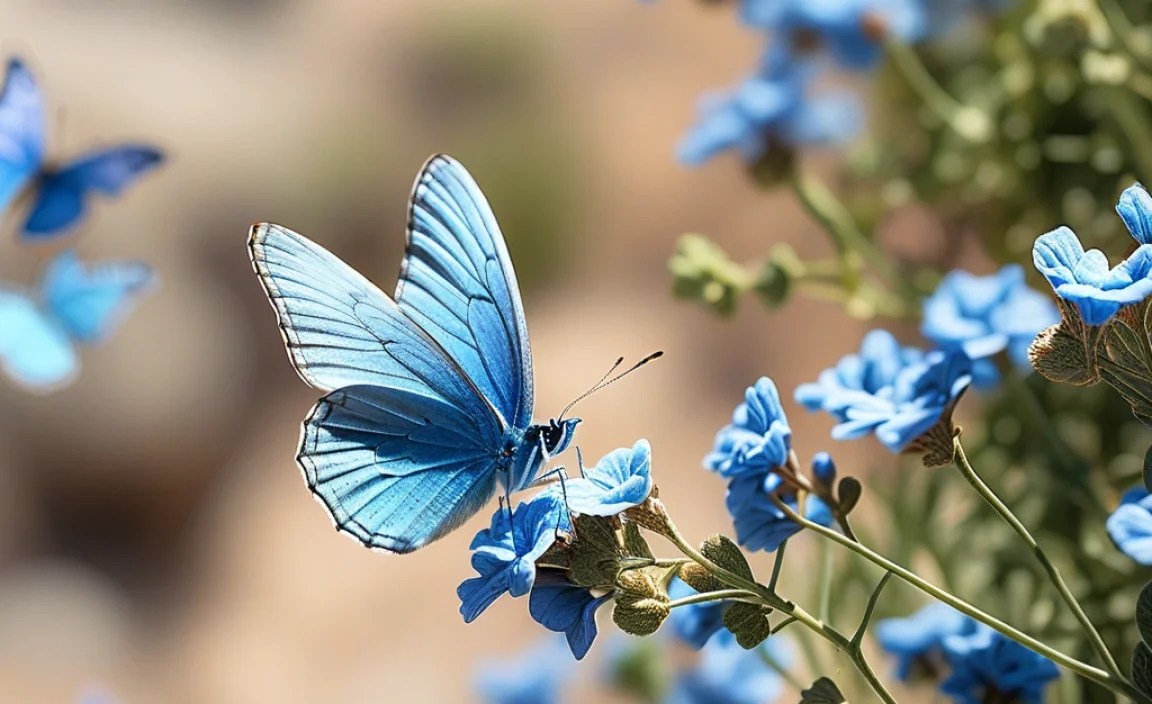
- Color: Males have bright blue wings, while females are a duller blue or brownish-gray.
- Markings: Both sexes have white-fringed wings with dark spots on the underside.
- Habitat: Found only on the Palos Verdes Peninsula in California.
It’s important to note that several other blue butterfly species exist in California. Accurate identification often requires a trained eye. Consult with local butterfly experts or conservation groups if you think you’ve spotted a PVB.
The PVB Life Cycle
Understanding the PVB’s life cycle is crucial for effective conservation. Each stage has specific needs that must be met to ensure the butterfly’s survival.
Egg Stage
The PVB life cycle begins with tiny, pearly white eggs laid singly on the leaves and stems of its host plant, the locoweed (Astragalus trichopodus lonchus). These eggs are incredibly small, making them difficult to spot in the wild. The female butterfly carefully selects the best spots to lay her eggs, ensuring the emerging larvae have access to food.
Larval Stage (Caterpillar)
Once the eggs hatch, the larvae (caterpillars) emerge. The PVB larvae are greenish-white with pink stripes. They feed exclusively on the leaves, stems, and flowers of the locoweed. This is a critical stage for growth and development. The caterpillars go through several molts (shedding their skin) as they grow larger. Conservation efforts often focus on ensuring an ample supply of locoweed for the larvae to feed on.
Pupal Stage (Chrysalis)
After several weeks of feeding, the larva transforms into a pupa, also known as a chrysalis. The chrysalis is typically brown or tan and blends in with its surroundings. This stage can last for several weeks to months. During this time, the larva undergoes a complete metamorphosis, transforming into a butterfly. The pupal stage is a vulnerable time for the butterfly, as it is immobile and susceptible to predators and environmental factors.
Adult Stage (Butterfly)
Finally, the adult butterfly emerges from the chrysalis. The adult PVB has a short lifespan, typically only a few days to a week. During this time, the butterflies focus on reproduction. The males search for females to mate with, and the females lay eggs to start the cycle anew. The adult butterflies also feed on nectar from flowers, providing them with energy for flight and reproduction.
Habitat and Diet

The PVB has very specific habitat and dietary requirements, making it particularly vulnerable to environmental changes.
Habitat Requirements
The PVB is highly dependent on a specific habitat: coastal sage scrub dominated by its host plant, the locoweed. This habitat provides the butterfly with food, shelter, and breeding grounds. The ideal habitat for the PVB includes:
- Locoweed abundance: A plentiful supply of locoweed is essential for the larvae to feed on.
- Sunlight: Open, sunny areas are needed for the butterflies to bask and regulate their body temperature.
- Shelter: Native shrubs and vegetation provide shelter from wind and predators.
- Connectivity: Patches of habitat that are connected allow butterflies to move and colonize new areas.
Diet
The PVB has a specialized diet that includes:
- Larvae: Exclusively feed on the leaves, stems, and flowers of the locoweed.
- Adults: Primarily feed on nectar from various flowering plants.
Maintaining a diverse array of flowering plants in and around PVB habitat is crucial for providing nectar sources for the adult butterflies. This can be achieved through habitat restoration and planting native wildflowers.
Threats to the Palos Verdes Blue Butterfly
Several factors threaten the survival of the Palos Verdes Blue Butterfly. Understanding these threats is essential for developing effective conservation strategies.
Habitat Loss and Fragmentation
Urban development, agriculture, and other human activities have resulted in the loss and fragmentation of the PVB’s habitat. As habitat patches become smaller and more isolated, it becomes difficult for the butterflies to move and colonize new areas. Habitat loss is the most significant threat to the PVB.
Invasive Species
Non-native plants, such as grasses and weeds, can outcompete the locoweed and other native vegetation that the PVB depends on. Invasive species can also alter the structure and composition of the habitat, making it unsuitable for the butterflies. Control and removal of invasive species are essential components of PVB conservation efforts. The California Invasive Plant Council is a helpful resource for learning more about invasive plants in California.
Brush Clearance
Brush clearance for fire prevention can destroy PVB habitat and directly kill butterflies and their larvae. While brush clearance is necessary to reduce fire risk, it should be conducted in a way that minimizes impacts on the PVB and its habitat. This can be achieved by avoiding brush clearance during the butterfly’s breeding season and by preserving patches of habitat.
Climate Change
Climate change can alter the PVB’s habitat and disrupt its life cycle. Changes in temperature and precipitation patterns can affect the growth and survival of the locoweed and other native vegetation. Climate change can also increase the frequency and intensity of wildfires, which can destroy PVB habitat. Addressing climate change is essential for the long-term survival of the PVB.
Conservation Efforts: Bringing Back the Blue
Despite the challenges, significant progress has been made in conserving the Palos Verdes Blue Butterfly. These efforts are focused on protecting and restoring habitat, managing threats, and increasing the butterfly’s population size.
Habitat Restoration
Habitat restoration involves removing invasive species, planting native vegetation, and creating suitable habitat for the PVB. Restoration efforts often focus on increasing the abundance of locoweed, the butterfly’s host plant. Habitat restoration can also involve creating corridors to connect isolated patches of habitat, allowing butterflies to move and colonize new areas.
Captive Breeding Programs
Captive breeding programs involve raising PVBs in a controlled environment and then releasing them into the wild. These programs can help to increase the butterfly’s population size and establish new populations in suitable habitat. Captive breeding is a complex and labor-intensive process, but it has been successful in boosting PVB populations.
Monitoring and Research
Monitoring and research are essential for understanding the PVB’s population dynamics, habitat requirements, and threats. Monitoring involves tracking the butterfly’s population size, distribution, and habitat condition. Research can help to identify the factors that are limiting the butterfly’s recovery and to develop more effective conservation strategies.
Partnerships and Collaboration
Conservation efforts for the PVB involve partnerships and collaboration among various organizations, including government agencies, conservation groups, and private landowners. These partnerships are essential for coordinating conservation efforts and leveraging resources. Collaboration can also help to build public support for PVB conservation.
How You Can Help the Palos Verdes Blue Butterfly
Even if you don’t live in California, there are ways you can support the conservation of the Palos Verdes Blue Butterfly.
- Support Conservation Organizations: Donate to or volunteer with organizations that are working to protect the PVB and its habitat.
- Educate Others: Spread the word about the PVB and the importance of conservation.
- Advocate for Conservation Policies: Support policies that protect endangered species and their habitats.
- Create Butterfly-Friendly Habitats: Plant native wildflowers and provide nectar sources for butterflies in your garden or community.
- Reduce Your Impact: Practice sustainable living and reduce your carbon footprint to help mitigate climate change.
Palos Verdes Blue Butterfly: Conservation Milestones
Here’s a table highlighting key milestones in the conservation of the Palos Verdes Blue Butterfly:
| Year | Milestone | Significance |
|---|---|---|
| 1977 | Palos Verdes Blue Butterfly is discovered. | Marks the initial identification of the species. |
| 1980 | Listed as an endangered species by the U.S. Fish and Wildlife Service. | Provides legal protection and recognition of its endangered status. |
| Early 1980s | Presumed extinct due to habitat loss and degradation. | Highlights the critical decline in population. |
| 1994 | Rediscovered on a former military site. | Sparks renewed conservation efforts. |
| 1990s-Present | Habitat restoration and captive breeding programs initiated. | Active measures to increase population size and habitat. |
| Ongoing | Monitoring and research to understand population dynamics and threats. | Continuous evaluation and adaptation of conservation strategies. |
Palos Verdes Blue Butterfly: Fascinating Facts
Here’s a table containing some fascinating facts about the Palos Verdes Blue Butterfly:
| Fact | Details |
|---|---|
| Scientific Name | Glaucopsyche lygdamus palosverdesensis |
| Habitat | Coastal sage scrub on the Palos Verdes Peninsula, California |
| Host Plant | Locoweed (Astragalus trichopodus lonchus) |
| Wingspan | Approximately 1 inch |
| Lifespan (Adult) | About 5-7 days |
| Endangered Status | Critically Endangered |
FAQ: Palos Verdes Blue Butterfly
What is the Palos Verdes Blue Butterfly?
It’s a very rare butterfly found only on the Palos Verdes Peninsula in California. It was once thought to be extinct but was rediscovered and is now part of a conservation effort.
Why is the Palos Verdes Blue Butterfly endangered?
Its habitat has been lost to urban development, invasive plants, and brush clearance. These factors have significantly reduced its population.
What do Palos Verdes Blue Butterfly caterpillars eat?
The caterpillars exclusively eat the leaves, stems, and flowers of the locoweed plant (Astragalus trichopodus lonchus).
How can I identify a Palos Verdes Blue Butterfly?
Males are bright blue, while females are duller blue or brownish-gray. They are small, with a wingspan of about 1 inch, and have white-fringed wings with dark spots on the underside.
What is being done to save the Palos Verdes Blue Butterfly?
Conservation efforts include habitat restoration, captive breeding programs, monitoring, and partnerships between various organizations.
How can I help the Palos Verdes Blue Butterfly?
You can support conservation organizations, educate others, advocate for conservation policies, create butterfly-friendly habitats, and reduce your environmental impact.
Where can I see the Palos Verdes Blue Butterfly?
The best chance to see one is within the Palos Verdes Peninsula, particularly in restored habitat areas. Contact local conservation groups for guided tours or viewing opportunities.
Conclusion: A Symbol of Hope
The story of the Palos Verdes Blue Butterfly is a testament to the power of conservation and the resilience of nature. While this tiny butterfly still faces many challenges, the dedication of scientists, conservationists, and volunteers has brought it back from the brink of extinction. By understanding the PVB’s life cycle, habitat, and threats, and by supporting conservation efforts, we can help ensure that this beautiful blue butterfly continues to grace the skies of California for generations to come. It serves as a potent reminder that even the smallest creatures can make a big difference, and that every effort to protect our planet’s biodiversity is worthwhile. As we continue to learn and adapt our conservation strategies, the Palos Verdes Blue Butterfly will remain a shining symbol of hope and the enduring power of nature.