
Swallowtail Butterfly vs Dragonfly: Spot the Secret!

Quick Summary: Telling the difference between a Swallowtail butterfly and a Swallowtail dragonfly is easier than you might think! Butterflies have colorful, scaled wings and long antennae with clubbed tips, while dragonflies have transparent, net-veined wings and very short, bristle-like antennae. Butterflies are often seen fluttering gracefully, while dragonflies are swift, agile fliers. These key differences in appearance and behavior make identification straightforward.
Have you ever been enjoying a sunny day, watching beautiful insects flutter around, and wondered if you were looking at a Swallowtail butterfly or a Swallowtail dragonfly? It’s a common question! Both are stunning creatures that capture our attention, but they belong to entirely different groups of insects. It can be confusing because they share a similar name. Don’t worry, with a few simple observations, you can easily tell them apart. This guide will walk you through the key differences, so you’ll be identifying them like a pro in no time!
Frequently Asked Questions (FAQs)
Here are some frequently asked questions to help you quickly understand the differences between Swallowtail butterflies and Swallowtail dragonflies:
What is the main difference between a butterfly and a dragonfly?
Butterflies have scaled wings and clubbed antennae, while dragonflies have transparent, net-veined wings and short, bristle-like antennae.
Do Swallowtail dragonflies have tails like Swallowtail butterflies?
No, Swallowtail dragonflies do not have the distinctive tail-like extensions on their wings that Swallowtail butterflies have.
Are Swallowtail butterflies and Swallowtail dragonflies related?
No, they are not closely related. Butterflies belong to the order Lepidoptera, while dragonflies belong to the order Odonata.
How can I attract Swallowtail butterflies to my garden?
Plant host plants like milkweed for Monarchs or citrus trees for Giant Swallowtails, and nectar-rich flowers like zinnias and butterfly bushes.
Are dragonflies beneficial insects?
Yes, dragonflies are highly beneficial as they prey on mosquitoes and other small flying insects.
What do Swallowtail butterfly caterpillars eat?
Swallowtail caterpillars feed on specific host plants, which vary depending on the species. For example, Black Swallowtail caterpillars eat plants in the parsley family.
Where can I find Swallowtail butterflies?
Swallowtail butterflies can be found in a variety of habitats, including gardens, meadows, woodlands, and along streams and rivers, depending on the species and location.
Swallowtail Butterfly vs. Swallowtail Dragonfly: Understanding the Difference
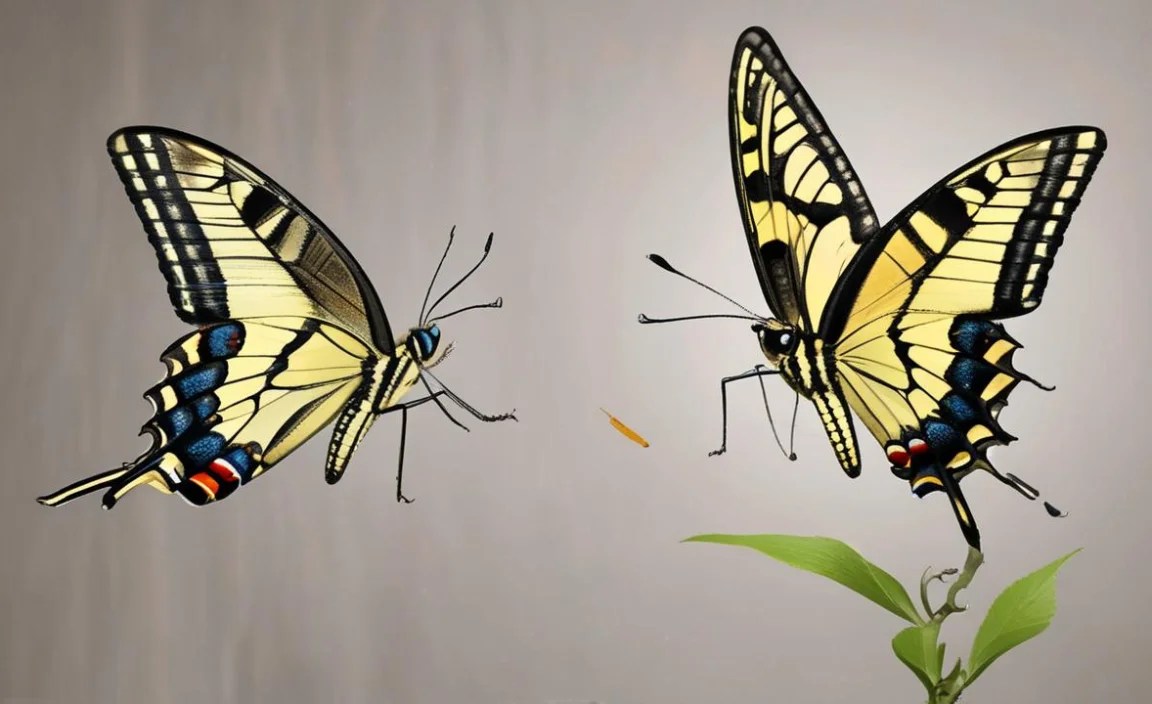
As a lifelong butterfly enthusiast, I’ve often been asked about the difference between Swallowtail butterflies and Swallowtail dragonflies. The similarity in their names can indeed be confusing! But don’t fret; these two insects are quite distinct. Let’s dive into the fascinating world of these creatures and learn how to tell them apart with ease.
What is a Swallowtail Butterfly?
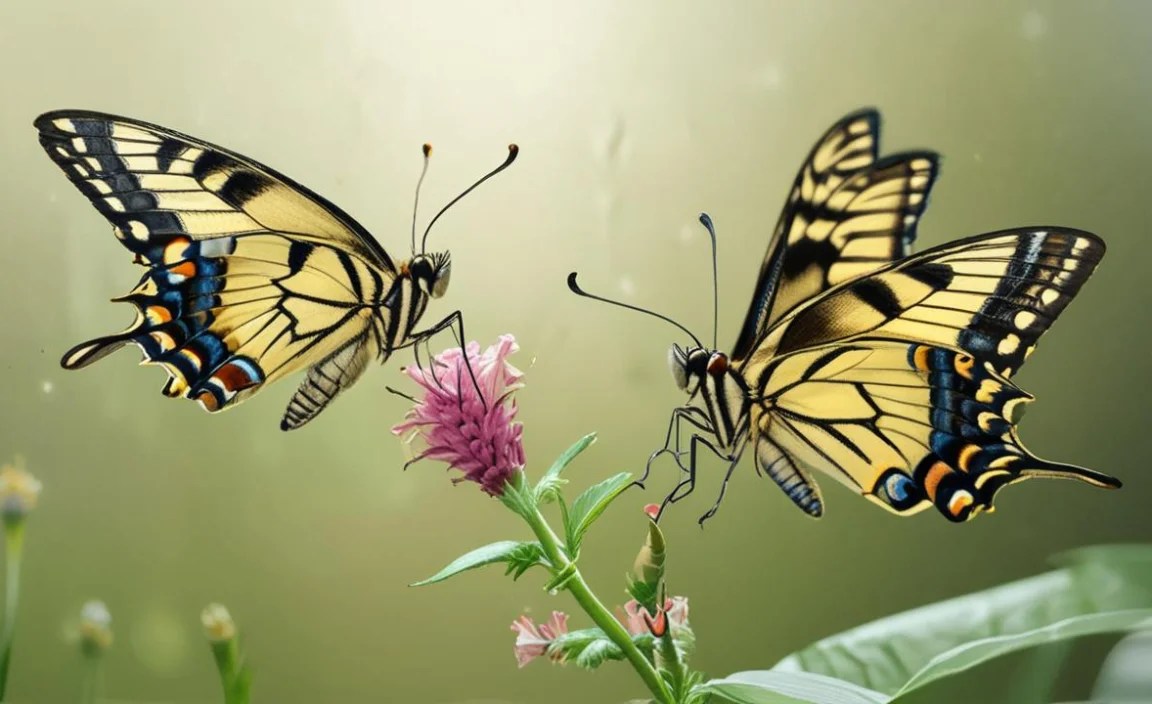
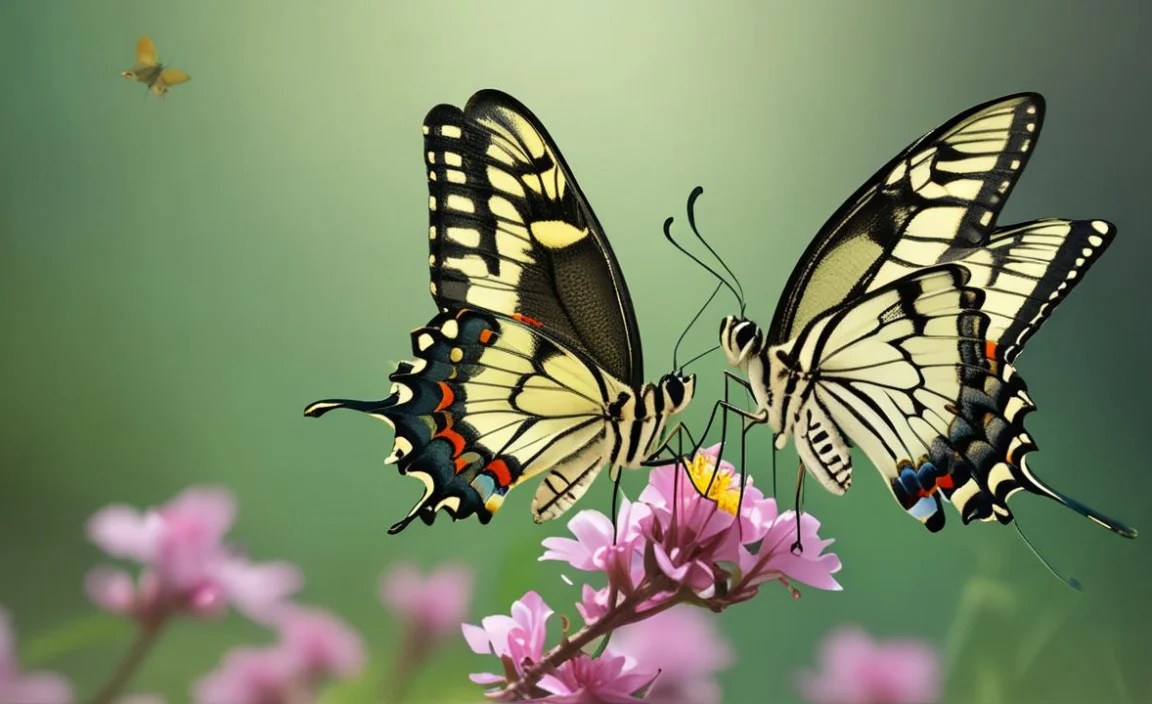
Swallowtail butterflies are among the largest and most beautiful butterflies in the world. They are known for their striking colors and the distinctive “tails” on their hindwings, which resemble those of swallows — hence the name. They belong to the family Papilionidae, which includes over 550 species found across the globe.
Characteristics of Swallowtail Butterflies
- Wings: Large, colorful wings with intricate patterns. The hindwings often have tail-like extensions.
- Antennae: Long, slender antennae with clubbed tips.
- Body: Slender body with bright colors that often match their wings.
- Flight: Graceful, fluttering flight.
- Habitat: Found in a variety of habitats, including gardens, meadows, and woodlands.
- Diet: As caterpillars, they feed on specific host plants. As adults, they feed on nectar from flowers.
Examples of Swallowtail Butterflies
- Eastern Tiger Swallowtail (Papilio glaucus): A common North American species with yellow wings and black stripes. Females can be either yellow or black.
- Black Swallowtail (Papilio polyxenes): Black wings with iridescent blue markings. The caterpillars feed on plants in the parsley family.
- Giant Swallowtail (Papilio cresphontes): The largest butterfly in North America, with brown and yellow patterned wings. Its caterpillars feed on citrus leaves.
- Spicebush Swallowtail (Papilio troilus): Dark wings with pale green markings. The caterpillars feed on spicebush and sassafras leaves.
What is a Swallowtail Dragonfly?
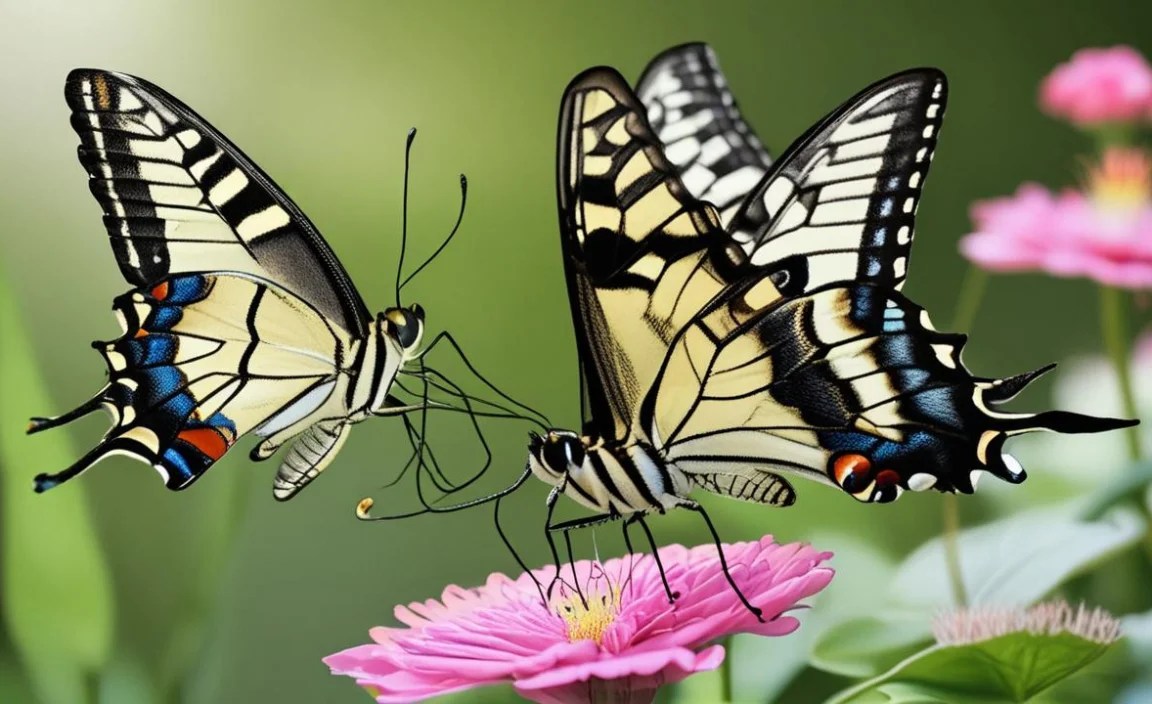
Swallowtail dragonflies, also known as Forktails, belong to the damselfly family Coenagrionidae. Damselflies are close relatives of dragonflies, both belonging to the order Odonata. The term “Swallowtail” in this case refers to the shape of the tip of their abdomen, which is forked, resembling a swallow’s tail.
Characteristics of Swallowtail Dragonflies
- Wings: Long, slender, transparent wings with a fine network of veins. They hold their wings closed above their bodies when at rest, unlike dragonflies which hold them open.
- Antennae: Very short, bristle-like antennae.
- Body: Slender, cylindrical body with bright metallic colors, often blue or green.
- Flight: Agile, darting flight. They are skilled hunters.
- Habitat: Found near freshwater habitats, such as ponds, lakes, and streams.
- Diet: Both nymphs (larvae) and adults are carnivorous, feeding on small insects.
Examples of Swallowtail Dragonflies
- Eastern Forktail (Ischnura verticalis): A common North American species with a bright green thorax and blue or orange markings on the abdomen.
- Citrine Forktail (Ischnura hastata): A small species with a yellow or orange body and black markings.
- Rambur’s Forktail (Ischnura ramburii): Found in the southeastern United States, with a blue or green thorax and a black abdomen with blue markings.
Key Differences: Swallowtail Butterfly vs. Swallowtail Dragonfly
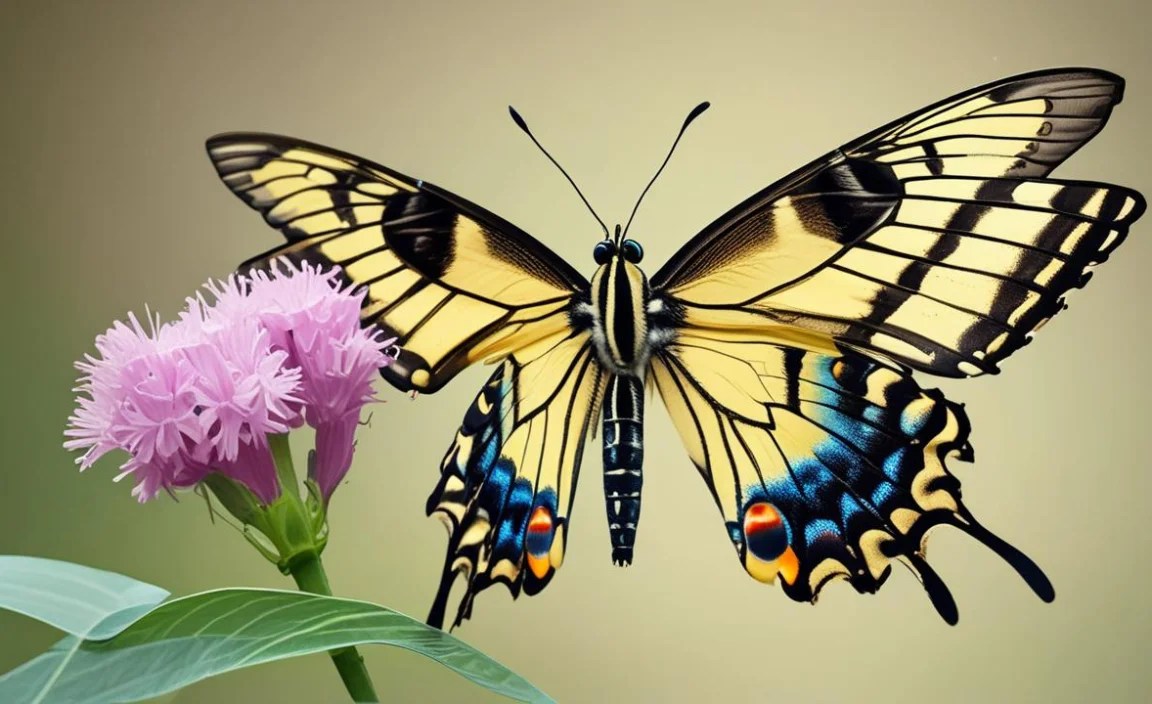
Now that we’ve introduced both insects, let’s highlight the key differences that will help you distinguish between them.
Appearance
The most noticeable differences are in their wings and antennae.
- Wings: Swallowtail butterflies have large, colorful wings covered in scales, giving them a powdery appearance. Swallowtail dragonflies have transparent, net-veined wings that are usually held closed above their bodies when resting.
- Antennae: Butterflies have long, slender antennae with a clubbed tip. Dragonflies have very short, bristle-like antennae that are barely visible.
- Tails: Swallowtail butterflies often have distinctive “tails” on their hindwings. Swallowtail dragonflies have forked tips on their abdomens.
Behavior
Their flight patterns and habitat preferences also differ significantly.
- Flight: Butterflies have a graceful, fluttering flight. Dragonflies are swift, agile fliers, often seen darting around to catch prey.
- Habitat: Butterflies are found in a variety of terrestrial habitats, including gardens, meadows, and woodlands. Dragonflies are typically found near freshwater habitats.
- Diet: Butterfly caterpillars feed on specific host plants, while adult butterflies feed on nectar. Dragonfly nymphs and adults are carnivorous, feeding on other insects.
Classification
Understanding their classification helps to understand the biological distance between them.
- Butterflies: Belong to the order Lepidoptera.
- Dragonflies: Belong to the order Odonata.
Detailed Comparison Table
Here’s a detailed table summarizing the key differences:
| Feature | Swallowtail Butterfly | Swallowtail Dragonfly |
|---|---|---|
| Order | Lepidoptera | Odonata |
| Wings | Large, colorful, scaled | Transparent, net-veined |
| Antennae | Long, clubbed | Short, bristle-like |
| Tails | Present on hindwings | Forked abdominal tips |
| Flight | Graceful, fluttering | Swift, agile |
| Habitat | Gardens, meadows, woodlands | Freshwater habitats |
| Diet (Larvae) | Specific host plants | Carnivorous (other insects) |
| Diet (Adults) | Nectar | Carnivorous (other insects) |
Lifecycle and Diet: A Closer Look
Understanding the lifecycle and dietary habits of these insects provides further insight into their distinct characteristics.
Swallowtail Butterfly Lifecycle
The butterfly lifecycle consists of four stages: egg, larva (caterpillar), pupa (chrysalis), and adult.
- Egg: Female butterflies lay their eggs on specific host plants.
- Larva (Caterpillar): The caterpillar hatches from the egg and feeds voraciously on the host plant. It molts several times as it grows.
- Pupa (Chrysalis): The caterpillar transforms into a pupa, forming a protective chrysalis. Inside the chrysalis, the caterpillar undergoes metamorphosis.
- Adult: The adult butterfly emerges from the chrysalis. It feeds on nectar from flowers and reproduces, starting the cycle anew.
The choice of host plant is crucial for Swallowtail butterflies. For instance, Black Swallowtail caterpillars rely on plants like parsley, dill, and fennel, while Spicebush Swallowtails depend on spicebush and sassafras. Gardeners can attract these beautiful butterflies by planting their preferred host plants.
Swallowtail Dragonfly Lifecycle
Dragonflies also undergo incomplete metamorphosis, consisting of three stages: egg, nymph (larva), and adult.
- Egg: Female dragonflies lay their eggs in or near water.
- Nymph (Larva): The nymph is aquatic and predatory, feeding on small insects, tadpoles, and even small fish. It molts multiple times as it grows.
- Adult: The adult dragonfly emerges from the nymph. It hunts flying insects, using its exceptional eyesight and flight skills to capture prey.
Dragonfly nymphs are voracious predators in aquatic environments. They play a crucial role in controlling mosquito populations and other small insects. Adult dragonflies continue this role, making them highly beneficial insects in gardens and natural habitats.
Ecological Roles and Importance
Both Swallowtail butterflies and Swallowtail dragonflies play important roles in their respective ecosystems.
Swallowtail Butterflies as Pollinators
Butterflies are important pollinators. As they feed on nectar, they transfer pollen from flower to flower, aiding in plant reproduction. Swallowtail butterflies, with their large size and vibrant colors, are particularly effective pollinators in gardens, meadows, and woodlands. Conserving butterfly habitats and planting butterfly-friendly gardens can help support these vital pollinators.
Swallowtail Dragonflies as Pest Control
Dragonflies are highly effective predators of mosquitoes, flies, and other small flying insects. Both dragonfly nymphs and adults are carnivorous, helping to control insect populations in aquatic and terrestrial environments. Dragonflies are considered beneficial insects because they reduce the need for chemical pest control, contributing to a healthier ecosystem.
Attracting Swallowtails to Your Garden
Creating a garden that attracts Swallowtail butterflies and dragonflies is a rewarding experience. Here are some tips to help you create a butterfly and dragonfly-friendly habitat.
For Butterflies
- Plant Host Plants: Research the host plants for Swallowtail butterflies in your area and include them in your garden. For example, plant milkweed for Monarchs, citrus trees for Giant Swallowtails, and parsley, dill, and fennel for Black Swallowtails.
- Provide Nectar Sources: Plant nectar-rich flowers that attract adult butterflies. Some popular choices include zinnias, butterfly bushes, coneflowers, and salvia.
- Offer a Water Source: Butterflies need water to stay hydrated. Provide a shallow dish of water with pebbles or stones for them to land on.
- Avoid Pesticides: Pesticides can harm or kill butterflies and their caterpillars. Use organic gardening practices to protect these beneficial insects.
For Dragonflies
- Create a Water Feature: Dragonflies need water to breed and lay their eggs. A pond, small pool, or even a large container filled with water can attract dragonflies to your garden.
- Provide Aquatic Plants: Aquatic plants provide shelter and breeding sites for dragonfly nymphs. Include plants like water lilies, cattails, and submerged vegetation in your water feature.
- Eliminate Mosquito Breeding Sites: Dragonflies are attracted to areas with abundant prey. Eliminate standing water where mosquitoes can breed to attract dragonflies to your garden.
- Avoid Pesticides: Like butterflies, dragonflies are sensitive to pesticides. Use natural pest control methods to protect these beneficial insects.
Conservation Efforts
Both Swallowtail butterflies and Swallowtail dragonflies face threats from habitat loss, pesticide use, and climate change. Supporting conservation efforts is essential to protect these beautiful and beneficial insects.
Supporting Butterfly Conservation
- Plant Native Plants: Planting native plants provides food and habitat for butterflies and other pollinators.
- Create Butterfly Gardens: Creating butterfly gardens in your yard, school, or community can provide valuable habitat for butterflies.
- Support Conservation Organizations: Donate to or volunteer with organizations that work to protect butterfly habitats and promote butterfly conservation. The Xerces Society is a great resource for learning more and getting involved.
- Educate Others: Share your knowledge and passion for butterflies with others to raise awareness about their importance and the threats they face.
Supporting Dragonfly Conservation
- Protect Freshwater Habitats: Protecting freshwater habitats, such as ponds, lakes, and streams, is crucial for dragonfly conservation.
- Reduce Pesticide Use: Reducing pesticide use in agricultural and urban areas can help protect dragonflies and other aquatic insects.
- Support Conservation Organizations: Support organizations that work to protect freshwater habitats and promote dragonfly conservation.
- Educate Others: Share your knowledge and passion for dragonflies with others to raise awareness about their importance and the threats they face.
Conclusion
Distinguishing between a Swallowtail butterfly and a Swallowtail dragonfly is all about noticing the details. Remember, butterflies have colorful, scaled wings and clubbed antennae, while dragonflies have transparent, net-veined wings and short, bristle-like antennae. By observing their appearance, behavior, and habitat preferences, you can confidently identify these fascinating insects. Whether you’re a nature enthusiast, a gardener, or simply curious about the world around you, understanding the differences between these creatures enhances your appreciation for the diversity and beauty of the natural world.


