
Easy Butterflies to Identify: A Quick, Free Guide

Quick Summary: Identifying butterflies doesn’t have to be overwhelming! Start with common species like the Monarch with its bright orange wings and black veins, or the Cabbage White, often seen fluttering around gardens. Look for distinctive colors, patterns, and sizes. Observing their behavior and preferred habitats can also offer valuable clues. With a little practice, you’ll be naming butterflies like a pro!
Butterflies are some of the most beautiful and captivating creatures in our gardens and meadows. But with so many different kinds, how do you even begin to tell them apart? It can seem daunting at first, but don’t worry! Learning to identify butterflies is easier than you think. This guide will walk you through simple steps to recognize some common species. You’ll be amazed at how quickly you can start naming these delightful insects.
We’ll cover key characteristics like wing patterns, colors, and size. Plus, we’ll explore where you’re most likely to find specific butterflies. Get ready to discover the joy of butterfly identification!
Getting Started: Basic Butterfly Anatomy
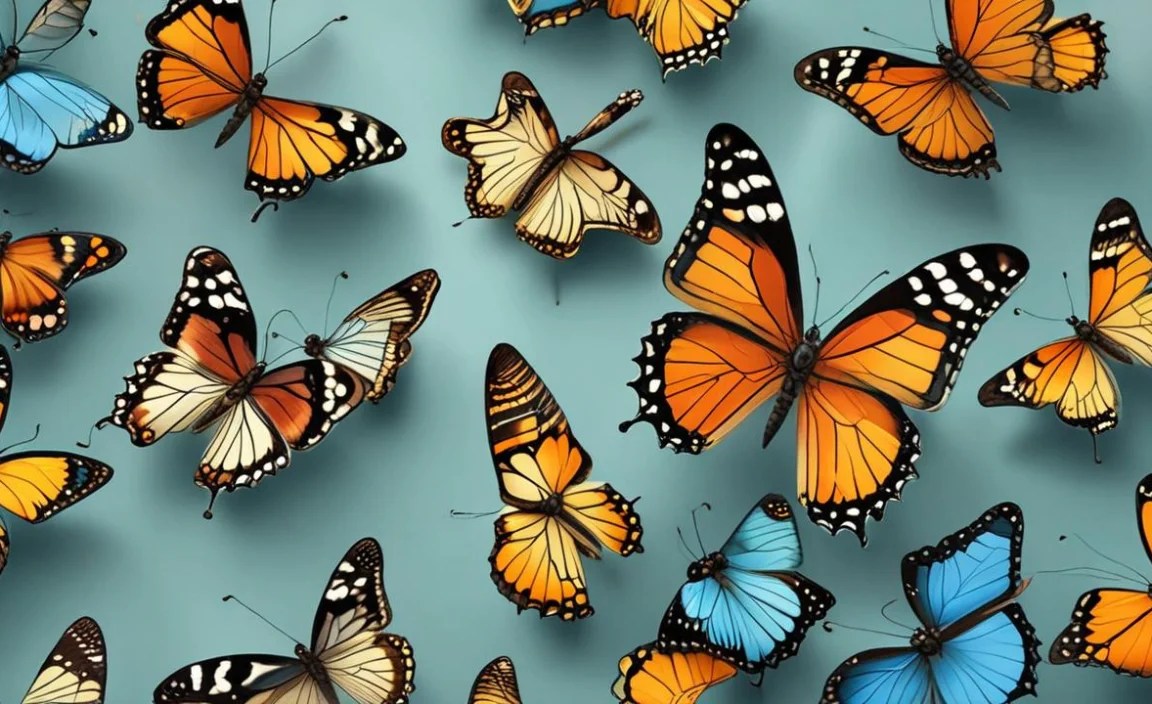
Before diving into specific species, let’s cover some butterfly basics. Knowing the different parts of a butterfly will help you identify key characteristics.
- Wings: Butterflies have four wings – two forewings and two hindwings. Pay attention to their shape, color, and patterns.
- Body: The body is divided into three parts: the head, thorax, and abdomen.
- Antennae: Butterflies use their antennae to sense their environment. They have clubbed tips, which distinguish them from moths.
Easy Butterflies to Identify: A Beginner’s Guide
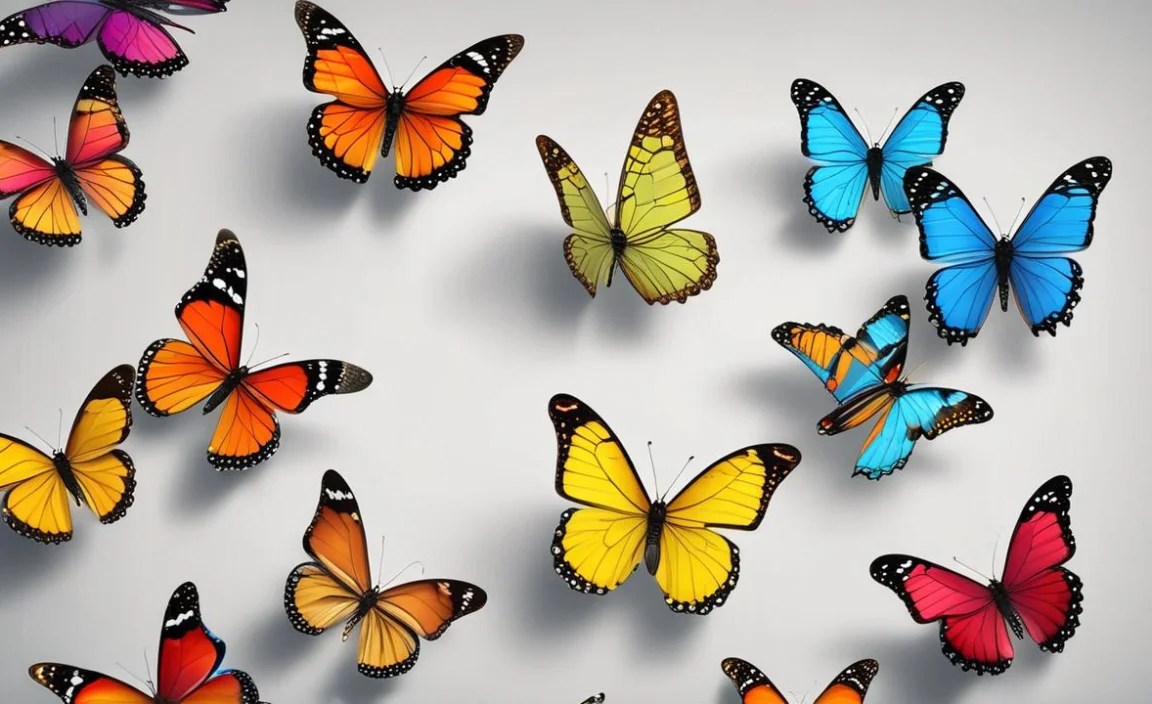
Let’s explore some of the most common and easily identifiable butterflies. We’ll focus on their key features and where you’re likely to find them.
1. Monarch (Danaus plexippus)
The Monarch is perhaps the most recognizable butterfly in North America. Its bright orange wings, adorned with black veins and a black border with white spots, make it stand out. They are famous for their incredible multi-generational migration, traveling thousands of miles.
- Key Features: Bright orange wings with black veins and borders, white spots along the edges.
- Size: Wingspan of 3.5 – 4 inches.
- Habitat: Open fields, meadows, and gardens, especially where milkweed grows (their larval food source).
- Fun Fact: Monarchs are the only butterfly known to make a two-way migration like birds.
2. Cabbage White (Pieris rapae)
The Cabbage White is a small, common butterfly often seen fluttering around gardens. It’s typically white or creamy white with a few black spots on its forewings. While seemingly simple, it can be a pest to vegetable gardens.
- Key Features: White wings with one or two black spots on the forewings.
- Size: Wingspan of 1.5 – 2 inches.
- Habitat: Gardens, fields, and urban areas.
- Fun Fact: The caterpillars of Cabbage Whites feed on cabbage, broccoli, and other cruciferous plants.
3. Eastern Tiger Swallowtail (Papilio glaucus)
The Eastern Tiger Swallowtail is a large, striking butterfly with yellow wings and black stripes, resembling a tiger. Females can be yellow or black. They are a joy to observe as they gracefully fly through woodlands and gardens.
- Key Features: Yellow wings with black stripes (males), or black wings with blue markings (some females).
- Size: Wingspan of 3 – 5.5 inches.
- Habitat: Woodlands, forests, gardens, and parks.
- Fun Fact: The Eastern Tiger Swallowtail is the state butterfly of several U.S. states.
4. Black Swallowtail (Papilio polyxenes)
The Black Swallowtail is a beautiful dark butterfly with iridescent blue markings on its hindwings. It’s often seen in gardens and fields, especially where its host plants grow.
- Key Features: Black wings with iridescent blue markings on the hindwings and yellow spots along the edges.
- Size: Wingspan of 2.5 – 4 inches.
- Habitat: Gardens, fields, and meadows.
- Fun Fact: Black Swallowtail caterpillars feed on plants in the carrot family, such as parsley, dill, and fennel.
5. Painted Lady (Vanessa cardui)
The Painted Lady is a widely distributed butterfly with orange, brown, and black markings. It’s known for its migratory behavior and can be found in various habitats.
- Key Features: Orange and brown wings with black spots and white markings.
- Size: Wingspan of 2 – 2.75 inches.
- Habitat: Fields, gardens, and open areas.
- Fun Fact: Painted Ladies are one of the most widespread butterfly species in the world, found on every continent except Antarctica and Australia.
6. Red Admiral (Vanessa atalanta)
The Red Admiral is a striking butterfly with black wings, red bands, and white spots. It’s often seen basking in the sun or feeding on nectar.
- Key Features: Black wings with red bands and white spots near the tips of the forewings.
- Size: Wingspan of 1.75 – 3 inches.
- Habitat: Woodlands, gardens, and parks.
- Fun Fact: Red Admirals hibernate as adults and can be seen on warm days even in winter.
7. Common Buckeye (Junonia coenia)
The Common Buckeye is easily identified by its prominent eyespots on its wings. These eyespots can startle predators and help the butterfly escape.
- Key Features: Brown wings with large, distinct eyespots.
- Size: Wingspan of 2 – 2.5 inches.
- Habitat: Open areas, fields, and roadsides.
- Fun Fact: The intensity of the Buckeye’s colors can vary depending on the season in which they emerge.
Butterfly Identification Table
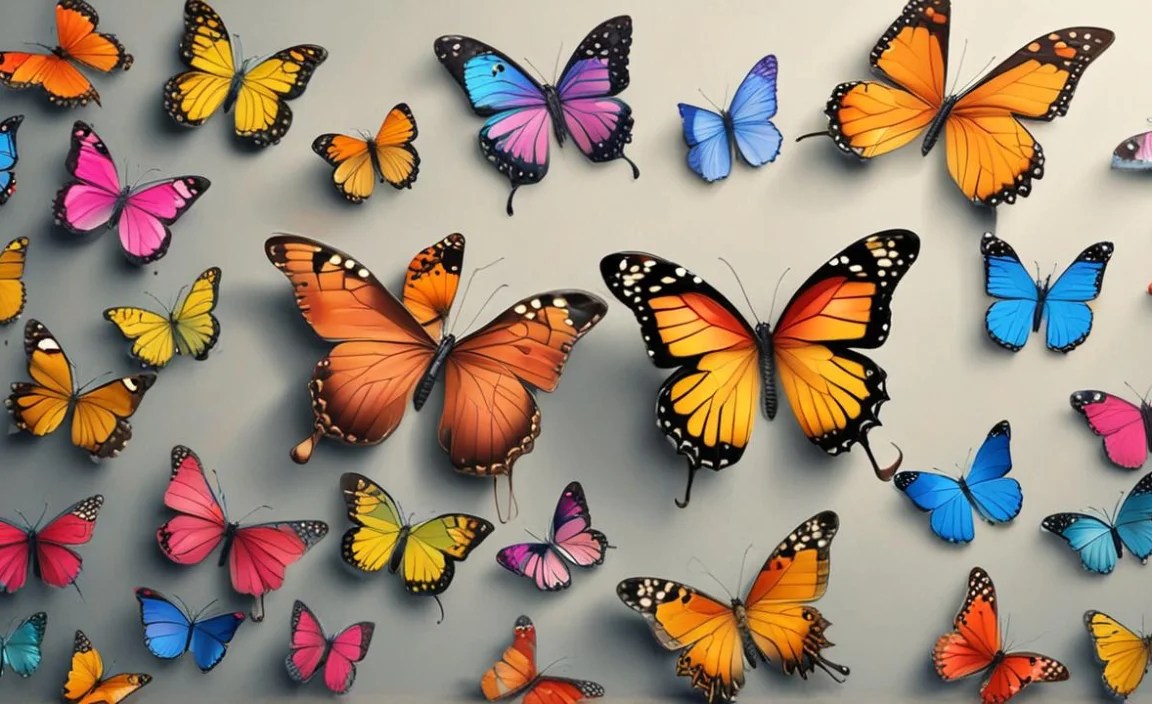
Here’s a quick reference table to help you identify these butterflies:
| Butterfly | Key Features | Size (Wingspan) | Habitat |
|---|---|---|---|
| Monarch | Orange wings with black veins and borders | 3.5 – 4 inches | Fields, gardens, milkweed areas |
| Cabbage White | White wings with black spots | 1.5 – 2 inches | Gardens, fields, urban areas |
| Eastern Tiger Swallowtail | Yellow with black stripes (males), black with blue (females) | 3 – 5.5 inches | Woodlands, gardens, parks |
| Black Swallowtail | Black with blue markings and yellow spots | 2.5 – 4 inches | Gardens, fields, meadows |
| Painted Lady | Orange and brown with black spots | 2 – 2.75 inches | Fields, gardens, open areas |
| Red Admiral | Black with red bands and white spots | 1.75 – 3 inches | Woodlands, gardens, parks |
| Common Buckeye | Brown with large eyespots | 2 – 2.5 inches | Open areas, fields, roadsides |
Tips for Successful Butterfly Identification
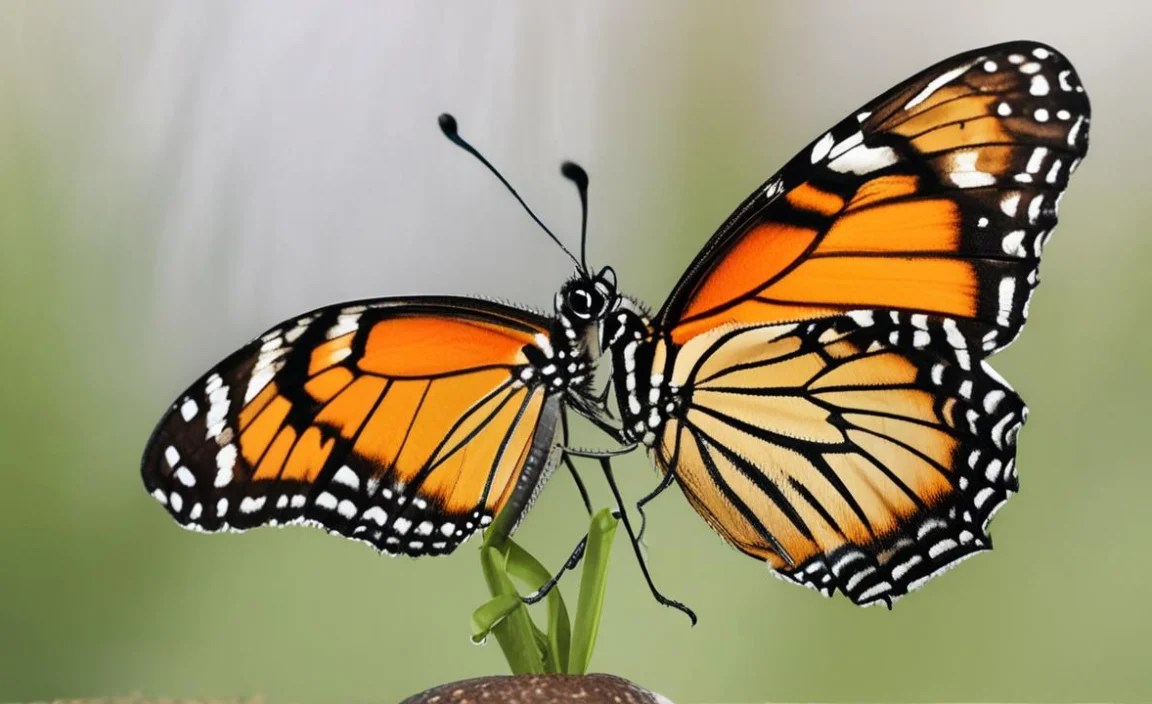
Here are some additional tips to improve your butterfly identification skills:
- Use a field guide: A good field guide, like the Butterflies and Moths of North America website, can be an invaluable resource.
- Take photos: Capture clear photos of the butterfly from different angles. This will help you compare it to images in field guides.
- Observe behavior: Note where the butterfly is feeding, its flight pattern, and any other unique behaviors.
- Consider location: The geographic location can narrow down the possibilities.
- Check host plants: Knowing which plants the caterpillars feed on can help identify the butterfly. For example, Monarchs rely on milkweed.
Attracting Butterflies to Your Garden

One of the best ways to learn about butterflies is to attract them to your garden. Here’s how:
- Plant nectar-rich flowers: Choose flowers that provide nectar for adult butterflies, such as butterfly bush, coneflowers, and zinnias.
- Provide host plants: Plant the host plants that caterpillars need to survive, like milkweed for Monarchs and parsley for Black Swallowtails.
- Offer a water source: Provide a shallow dish of water with pebbles for butterflies to land on.
- Avoid pesticides: Pesticides can harm or kill butterflies and other beneficial insects.
- Provide shelter: Plant shrubs and trees to offer butterflies protection from wind and predators.
The Importance of Butterfly Conservation
Butterflies are not just beautiful; they also play a crucial role in our ecosystem. They are pollinators, helping to fertilize plants, and they serve as food for birds and other animals. However, butterfly populations are declining due to habitat loss, pesticide use, and climate change. Organizations like the Xerces Society are dedicated to invertebrate conservation through habitat protection, pesticide reduction, and public education.
By creating butterfly-friendly habitats and supporting conservation efforts, we can help protect these important creatures for future generations. You can also contribute by reporting butterfly sightings to citizen science projects, like those found on iNaturalist.
FAQ: Identifying Butterflies
Here are some frequently asked questions about butterfly identification:
1. What’s the easiest way to start identifying butterflies?
Start with common and easily recognizable species like the Monarch or Cabbage White. Focus on their key features, such as wing color and patterns.
2. What tools do I need to identify butterflies?
A good field guide, binoculars, and a camera can be helpful. There are also many apps available for butterfly identification.
3. How can I tell the difference between a butterfly and a moth?
Butterflies typically have clubbed antennae, while moths have feathery or thread-like antennae. Butterflies are usually active during the day, while moths are often nocturnal.
4. Why is it important to identify butterflies?
Identifying butterflies helps us understand their distribution, behavior, and conservation needs. It also allows us to appreciate the diversity of life around us.
5. Where can I find resources to learn more about butterflies?
Websites like the Butterflies and Moths of North America, the Xerces Society, and local nature centers offer valuable information and resources.
6. What should I do if I find an injured butterfly?
If you find an injured butterfly, you can try to help it by placing it in a safe, sheltered location with access to nectar. You can also contact a local butterfly rescue organization for assistance.
7. How can I contribute to butterfly conservation?
You can contribute to butterfly conservation by planting butterfly-friendly gardens, avoiding pesticide use, supporting conservation organizations, and participating in citizen science projects.
Delving Deeper: Advanced Butterfly Identification
Once you’ve mastered the basics, you can delve deeper into more challenging butterfly identification. This involves looking at subtle differences in wing patterns, size, and behavior.
Using a Dichotomous Key
A dichotomous key is a tool that helps you identify organisms by asking a series of questions with two possible answers. Each answer leads you to another question until you arrive at the correct identification. These keys are often used by entomologists and can be found in field guides.
Examining Wing Venation
Wing venation, the pattern of veins on a butterfly’s wings, can be a useful characteristic for identification. Different butterfly families and genera have distinct venation patterns. This requires a closer look, but it can be a helpful tool for distinguishing between similar species.
Understanding Regional Variations
Butterflies can exhibit regional variations in color and pattern. What might be a common characteristic in one area might not be present in another. Be aware of the specific butterfly populations in your region and how they might differ from those in other areas. For example, Monarchs in different parts of the world can have slightly different appearances.
Caterpillar Identification
Identifying caterpillars can be just as rewarding as identifying adult butterflies. Knowing the host plants that caterpillars feed on can provide valuable clues to their identity. Many field guides include information and photos of caterpillars, making it easier to match them to their adult counterparts.
The Cultural Significance of Butterflies
Butterflies have held symbolic and cultural significance in many societies throughout history. They often represent transformation, rebirth, and hope. In some cultures, butterflies are seen as messengers from the spirit world. Their delicate beauty and ephemeral nature have made them a popular motif in art, literature, and mythology.
For example, in ancient Greece, butterflies were associated with Psyche, the goddess of the soul. In Japan, butterflies are often released at weddings as a symbol of marital happiness. Understanding these cultural connections can add another layer of appreciation to these fascinating insects.
Conclusion
Learning to identify butterflies is a rewarding journey that connects you with nature in a deeper way. By starting with easy-to-recognize species and gradually expanding your knowledge, you’ll soon be able to name the butterflies you see flitting around your garden and local parks. Remember to use field guides, observe their behavior, and consider their habitat. Whether you’re a seasoned naturalist or a beginner, the world of butterflies offers endless fascination and learning opportunities. So grab your binoculars, head outdoors, and start exploring the enchanting world of butterflies!


