Doris Longwing Butterfly: Discover This Beauty!

The Doris longwing butterfly (Heliconius doris) is a captivating species known for its vibrant colors and fascinating mimicry. Found in Central and South America, these butterflies display a remarkable range of color patterns, often mimicking toxic butterfly species for protection. They are also unique among butterflies for feeding on pollen, which extends their lifespan.
Have you ever been mesmerized by a butterfly’s beauty, only to wonder about its name and unique characteristics? Identifying butterflies can sometimes feel like a daunting task. With so many species fluttering around, it’s easy to feel lost. But don’t worry! I’m here to help you discover the fascinating world of the Doris longwing butterfly. Together, we’ll explore its appearance, habitat, behavior, and more, making you a butterfly expert in no time. So, let’s spread our wings and dive in!
What Makes the Doris Longwing Butterfly Special?
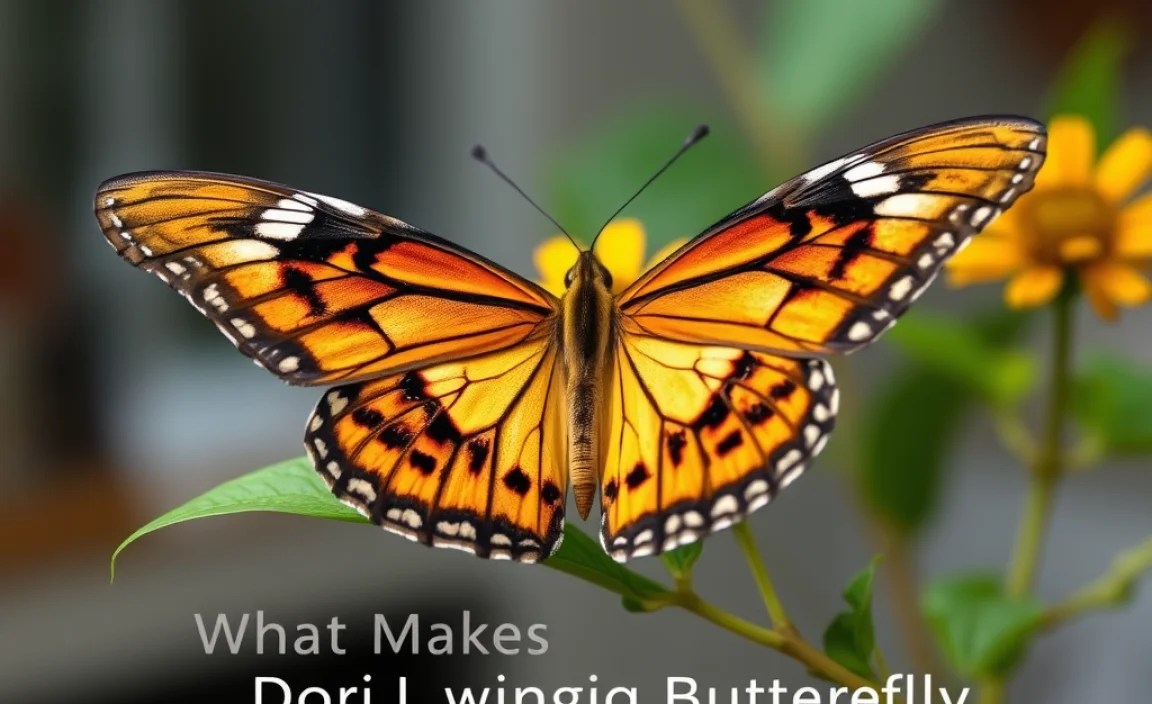
The Doris longwing butterfly isn’t just another pretty face in the butterfly world. This species boasts a unique combination of traits that sets it apart from its relatives. Let’s explore some of its most remarkable characteristics:
- Color Polymorphism: One of the most striking features of the Doris longwing is its incredible color variation. These butterflies come in a dazzling array of colors and patterns, including red, orange, yellow, blue, and even iridescent combinations.
- Mimicry: The Doris longwing is a master of mimicry. Different color forms mimic various toxic butterfly species, gaining protection from predators who have learned to avoid those warning colors.
- Pollen Feeding: Unlike most butterflies that primarily feed on nectar, the Doris longwing also consumes pollen. This unique behavior provides them with essential amino acids, increasing their lifespan and reproductive success.
- Long Lifespan: Thanks to their pollen-rich diet, Doris longwings can live for several months, much longer than many other butterfly species.
- Complex Social Behavior: These butterflies exhibit complex social behaviors, including roosting in groups and demonstrating a degree of site fidelity.
Identifying the Doris Longwing Butterfly
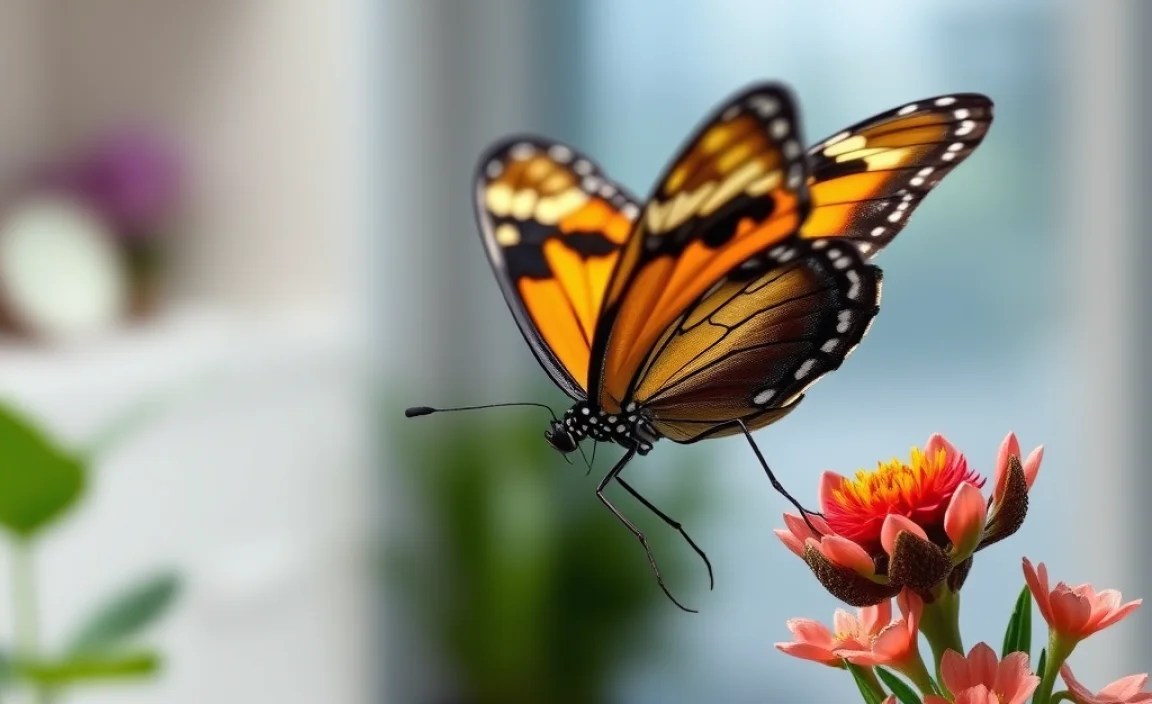
Identifying the Doris longwing can be both exciting and challenging due to its diverse color forms. Here’s a step-by-step guide to help you recognize this remarkable butterfly:
Step 1: Observe the Size and Shape
The Doris longwing is a medium-sized butterfly with a wingspan ranging from 2.8 to 3.9 inches (7 to 10 cm). Its wings are elongated, giving it a distinctive “longwing” appearance.
Step 2: Note the Color Pattern
This is where it gets interesting! The Doris longwing exhibits extreme color polymorphism. Look for combinations of the following colors:
- Red: Often seen in bold stripes or patches.
- Orange: Can appear as a background color or in distinct markings.
- Yellow: May be present in spots, bands, or as a dominant color.
- Blue: Sometimes displays iridescent blue scales, adding to its allure.
- Black: Usually forms the base color, with contrasting colored patterns overlaid.
Be aware that the color pattern will vary greatly depending on the region and the specific mimicry complex involved.
Step 3: Examine the Wing Markings
Pay close attention to the markings on the wings. These can include:
- Stripes: Longitudinal or transverse stripes of contrasting colors.
- Spots: Round or oval spots arranged in rows or scattered across the wings.
- Bands: Broad bands of color that may run along the wing margins.
- Patches: Irregularly shaped areas of color.
Step 4: Consider the Location
The Doris longwing is found in Central and South America. Knowing the geographic location can help narrow down the possibilities. They are commonly found in:
- Mexico
- Central America
- The Amazon Basin
- The Andes Mountains
Step 5: Consult a Field Guide or Online Resource
Use a reliable field guide or online resource with photographs to compare your observations. Some excellent resources include:
- Butterflies of America: A comprehensive website with detailed information and images.
- iNaturalist: A citizen science platform where you can submit photos and get help with identification.
- Local Butterfly Guides: Field guides specific to your region can provide valuable information.
Step 6: Observe the Butterfly’s Behavior
The Doris longwing has some characteristic behaviors that can aid in identification:
- Pollen Feeding: Look for them feeding on pollen in addition to nectar.
- Roosting: They often roost in groups at night.
- Flight Pattern: Their flight is generally slow and deliberate, but they can be quite agile when disturbed.
Doris Longwing Color Forms: A World of Mimicry

The Doris longwing’s color polymorphism is closely tied to its mimicry strategies. By imitating toxic butterfly species, it gains protection from predators. Here are some of the most common color forms and the species they mimic:
| Color Form | Description | Mimics | Geographic Location |
|---|---|---|---|
| Red/Black | Red stripes on a black background | Heliconius erato | Widespread |
| Orange/Black | Orange bands on a black background | Melinaea species | Amazon Basin |
| Yellow/Black | Yellow spots and bands on a black background | Heliconius melpomene | Central America |
| Blue/Black | Iridescent blue scales on a black background | Various toxic moths | Andes Mountains |
It’s important to note that these are just a few examples, and many other color forms exist. The specific mimicry complex will vary depending on the local butterfly community and the predators present.
Habitat and Distribution of the Doris Longwing

The Doris longwing butterfly is primarily found in the tropical regions of Central and South America. Here’s a closer look at its preferred habitat and distribution:
Habitat
Doris longwings thrive in a variety of habitats, including:
- Tropical Rainforests: They are commonly found in the understory and along forest edges.
- Cloud Forests: These high-altitude forests provide a cool, moist environment.
- Disturbed Habitats: They can also be found in gardens, agricultural areas, and other disturbed habitats.
They prefer areas with a rich diversity of flowering plants, especially those that provide nectar and pollen sources.
Distribution
The Doris longwing’s range extends from:
- Mexico: Southern regions of Mexico.
- Central America: Throughout Belize, Costa Rica, Guatemala, Honduras, Nicaragua, and Panama.
- South America: The Amazon Basin, the Andes Mountains, and parts of Brazil, Colombia, Ecuador, Peru, and Venezuela.
Their distribution is influenced by the availability of host plants for their larvae and the presence of the toxic butterfly species they mimic. As climate change and habitat destruction continue, their distribution may shift in the future.
The Life Cycle of the Doris Longwing

Like all butterflies, the Doris longwing undergoes a complete metamorphosis, with four distinct life stages:
1. Egg
The female Doris longwing lays her eggs on the leaves of passionflower vines (Passiflora species). These vines serve as the host plant for the larvae. The eggs are typically small and yellowish-white.
2. Larva (Caterpillar)
Once the egg hatches, the larva emerges. The caterpillar feeds voraciously on the leaves of the passionflower vine. The Doris longwing caterpillar is typically dark in color with spines or tubercles, which may help deter predators. As it grows, the caterpillar molts several times, shedding its skin to accommodate its increasing size.
3. Pupa (Chrysalis)
When the caterpillar is fully grown, it transforms into a pupa, also known as a chrysalis. The chrysalis is typically brown or green and hangs from a stem or leaf. Inside the chrysalis, the caterpillar undergoes a remarkable transformation, reorganizing its tissues to form the adult butterfly.
4. Adult Butterfly
After a period of about two weeks, the adult butterfly emerges from the chrysalis. The newly emerged butterfly’s wings are soft and crumpled. It pumps hemolymph (butterfly blood) into its wings to expand them. Once the wings are fully expanded and hardened, the butterfly is ready to fly and reproduce.
Attracting Doris Longwing Butterflies to Your Garden
If you live in an area where Doris longwing butterflies are found, you can attract them to your garden by providing the right resources. Here’s how:
1. Plant Passionflower Vines
Passionflower vines (Passiflora species) are the primary host plant for Doris longwing caterpillars. Plant several different varieties to provide a continuous food source throughout the growing season. Some popular species include Passiflora caerulea, Passiflora incarnata, and Passiflora lutea. Make sure to research which passionflower species are native to your area and best suited for your local climate.
2. Provide Nectar Sources
Adult Doris longwings feed on nectar from a variety of flowering plants. Plant a diverse selection of nectar-rich flowers that bloom at different times of the year. Some good choices include:
- Lantana
- Pentas
- Salvia
- Zinnia
- Butterfly Bush (Buddleja davidii)
3. Offer Pollen Sources
Unlike most butterflies, Doris longwings also feed on pollen. Plant flowers that produce abundant pollen, such as:
- Cosmos
- Marigolds
- Sunflowers
4. Provide a Water Source
Butterflies need water to stay hydrated. Provide a shallow dish of water with pebbles or stones for them to land on. This will prevent them from drowning.
5. Avoid Pesticides
Pesticides can be harmful to butterflies and other beneficial insects. Avoid using pesticides in your garden. If you must use them, choose organic options and apply them carefully, avoiding spraying directly on flowering plants.
6. Create a Butterfly Roosting Site
Doris longwings often roost in groups at night. Provide a sheltered area with trees or shrubs where they can rest. Plant densely branched shrubs or small trees that offer protection from wind and rain.
Conservation Status and Threats
The Doris longwing butterfly is not currently listed as endangered or threatened. However, like many butterfly species, it faces several threats:
Habitat Loss
Deforestation and habitat destruction are major threats to the Doris longwing. As forests are cleared for agriculture, logging, and urbanization, the butterfly loses its habitat and food sources. Protect and restore natural habitats by supporting conservation organizations and advocating for responsible land management practices.
Pesticide Use
Pesticides can directly kill butterflies and other beneficial insects. They can also contaminate their food sources. Reduce your use of pesticides and promote organic gardening practices.
Climate Change
Climate change can alter butterfly habitats and disrupt their life cycles. Support efforts to reduce greenhouse gas emissions and mitigate the impacts of climate change.
Collection
Over-collection can also pose a threat to butterfly populations, especially in certain areas. Support sustainable tourism and discourage the collection of butterflies from the wild.
Doris Longwing Butterfly FAQs
What do Doris longwing caterpillars eat?
Doris longwing caterpillars primarily eat the leaves of passionflower vines (Passiflora species).
How long do Doris longwing butterflies live?
Doris longwing butterflies can live for several months, which is longer than many other butterfly species, thanks to their pollen-rich diet.
Where are Doris longwing butterflies found?
They are found in Central and South America, including Mexico, the Amazon Basin, and the Andes Mountains.
What is mimicry, and how does it relate to the Doris longwing?
Mimicry is when one species evolves to resemble another species for protection. Doris longwings mimic toxic butterfly species to avoid predators.
How can I attract Doris longwing butterflies to my garden?
Plant passionflower vines for the caterpillars and nectar-rich flowers for the adults, provide a water source, and avoid pesticides.
Are Doris longwing butterflies endangered?
No, they are not currently listed as endangered, but they face threats like habitat loss and pesticide use.
What is the wingspan of the Doris longwing butterfly?
The wingspan of the Doris Longwing butterfly is typically between 2.8 to 3.9 inches (7 to 10 cm).
Conclusion
The Doris longwing butterfly is a true gem of the butterfly world, captivating us with its stunning color variations, clever mimicry, and unique pollen-feeding habits. By understanding its life cycle, habitat, and the threats it faces, we can all play a part in ensuring its survival for generations to come. Whether you’re a seasoned butterfly enthusiast or just beginning to explore the world of these amazing creatures, I hope this guide has inspired you to appreciate the beauty and ecological importance of the Doris longwing. So, let’s continue to learn, protect, and celebrate these incredible butterflies!