
Blue Morpho Dorsal Coloration ID: The Ultimate Guide

Have you ever seen a butterfly that shines like the sky? The Blue Morpho is one such butterfly. It is famous for its bright blue wings. But what about the other side? Today, we will learn about the Blue Morpho dorsal coloration ID. This means we will discover the secrets of the top side of its wings. Get ready for a colorful adventure.
Key Takeaways
- The Blue Morpho’s vibrant blue color comes from tiny structures, not pigment.
- Blue Morpho dorsal coloration ID shows brown scales that help it hide.
- These butterflies live in rainforests of Central and South America.
- Male Blue Morphos are brighter than females to attract mates.
- Their shimmering wings help them startle predators and escape danger.
Understanding Blue Morpho Dorsal Coloration ID

The Blue Morpho dorsal coloration ID is fascinating. The top side of the Blue Morpho’s wings isn’t just blue. It has brown scales too. These scales play a vital role. They help the butterfly blend in when its wings are closed. Imagine the butterfly landing on a tree. With its wings closed, it looks like a dead leaf. This camouflage protects it from birds and other predators. The bright blue is for show. The brown is for safety. The Blue Morpho dorsal coloration ID is a clever trick of nature. It is a great example of how animals adapt to survive.
- Brown scales help with camouflage.
- Camouflage protects them from predators.
- Bright blue attracts mates.
- Males are usually brighter than females.
- They live in warm, wet rainforests.
Now, let’s think about where these butterflies live. They live in rainforests. Rainforests are full of green plants and colorful flowers. The Blue Morpho needs both. The bright blue helps them find each other. The brown helps them hide. The Blue Morpho dorsal coloration ID is essential for their survival. The brown color on the dorsal side of the wing is key to helping the butterfly disguise itself. It blends in with the forest floor and tree bark. This makes it harder for predators to spot them when they are resting or feeding. It is a beautiful example of natural engineering.
Fun Fact or Stat: Blue Morpho butterflies can have a wingspan of up to 8 inches!
Why Is Camouflage Important?
Have you ever played hide-and-seek? Camouflage is like that. But it is for real life. For the Blue Morpho, camouflage is about survival. The brown color on its wings helps it hide from predators. Birds, lizards, and other animals want to eat it. If they can’t see the butterfly, they can’t catch it. The Blue Morpho dorsal coloration ID is a life-saving adaptation. Without it, these butterflies would be much easier to find. So, camouflage is not just a cool trick. It is a necessary part of their lives. It allows them to live longer and have more babies. That way, there will be more Blue Morphos in the future.
How Does It Blend In?
Imagine a butterfly with bright blue wings trying to hide. It would be like a flashing light in the forest. But the Blue Morpho has a secret. The top side of its wings is brown. This brown color looks like dead leaves or tree bark. When the butterfly lands on a tree, it disappears. The Blue Morpho dorsal coloration ID helps it blend in perfectly. The patterns and shades of brown match the environment. This makes it very hard for predators to see them. It is a clever way to stay safe. The butterfly becomes part of the forest.
What Would Happen Without It?
What if the Blue Morpho did not have brown scales? What if its wings were bright blue on both sides? Life would be much harder. Predators would spot them easily. They would be caught and eaten more often. The population of Blue Morphos might decrease. The Blue Morpho dorsal coloration ID is a crucial part of their survival strategy. It is an adaptation that has evolved over time. It helps them thrive in their rainforest habitat. Without it, their chances of survival would be much lower. So, the brown color is not just a detail. It is a vital part of their existence.
The Science Behind Blue Morpho Colors
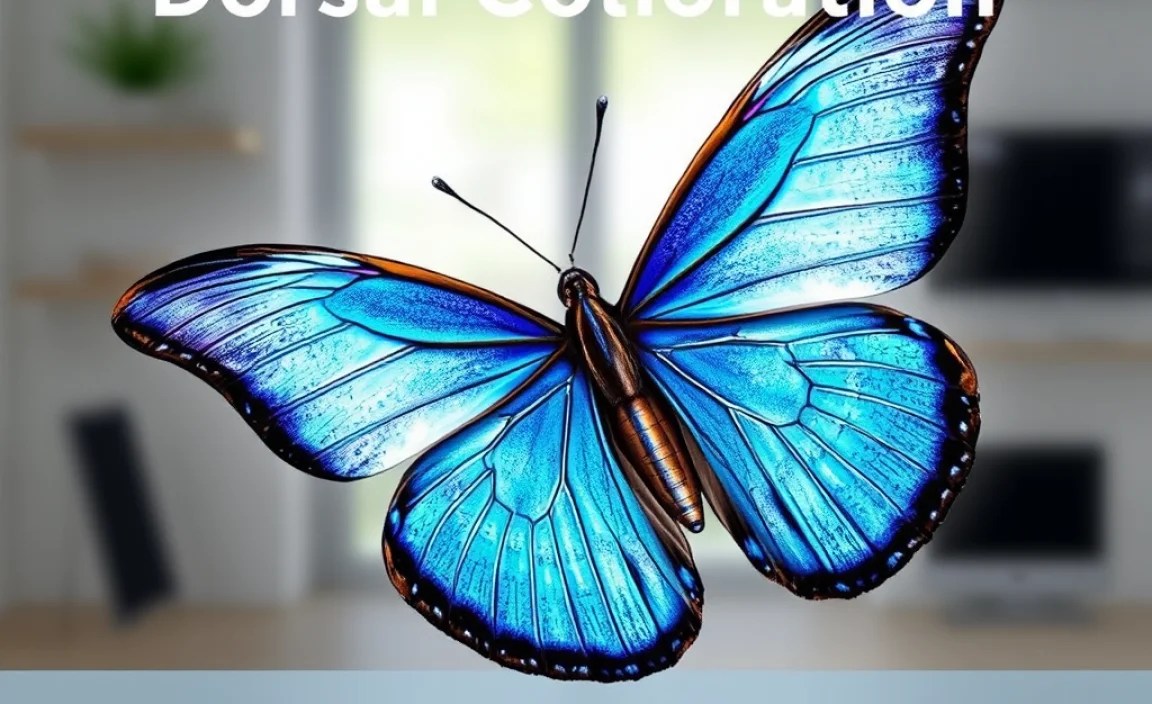
The bright blue color of the Blue Morpho is not from pigments. Pigments are what give paint its color. Instead, the color comes from tiny structures on the wings. These structures are like tiny mirrors. They reflect light in a special way. This is called structural coloration. The structures are so small you can’t see them with your eyes. They reflect blue light more than other colors. That is why we see the butterfly as blue. The Blue Morpho dorsal coloration ID also involves these structures. The brown color comes from a different arrangement of these structures. It is a complex and beautiful example of science in nature.
- Blue comes from structural coloration.
- Tiny structures reflect blue light.
- Brown color helps with camouflage.
- Pigments are not the source of the blue.
- The structures are very tiny.
- Science explains the colors.
Think about a prism. A prism is a piece of glass that bends light. When white light shines through a prism, it separates into different colors. The Blue Morpho’s wings do something similar. The tiny structures on the wings bend and reflect light. They separate the white light into different colors. But they reflect blue light the most. That is why we see the butterfly as blue. The Blue Morpho dorsal coloration ID is a result of how these structures are arranged. The brown color comes from structures that absorb more light. This is a fascinating example of how science can explain the beauty of nature. It also illustrates the complexity behind seemingly simple colors.
Fun Fact or Stat: The Blue Morpho’s wings reflect light so well that they can be seen from up to half a mile away!
What Is Structural Coloration?
Structural coloration is a fancy term. It means color that comes from the shape of things. It is not from pigments. Pigments absorb certain colors of light. They reflect others. Structural coloration is different. It uses tiny structures to bend and reflect light. The Blue Morpho is a great example. Its blue color comes from tiny structures on its wings. These structures are arranged in a special way. They reflect blue light. This is why we see the butterfly as blue. The Blue Morpho dorsal coloration ID also uses structural coloration, but in a different way to produce the brown color.
How Do Structures Create Color?
Imagine a tiny maze on the butterfly’s wings. These mazes are made of tiny structures. Light bounces around inside these mazes. Some colors get canceled out. Other colors get amplified. The Blue Morpho’s wings amplify blue light. This is why we see the butterfly as blue. The Blue Morpho dorsal coloration ID is a result of different maze-like structures. These structures absorb more light. This creates the brown color. It is like a tiny light show on the butterfly’s wings. The structures are the stage. Light is the performer. Color is the result.
Why Is It Important?
Structural coloration is important for many reasons. It can create very bright and shiny colors. These colors can be used for camouflage. They can also be used to attract mates. The Blue Morpho uses its colors for both. The bright blue attracts mates. The brown helps it hide. The Blue Morpho dorsal coloration ID is a vital adaptation. It helps the butterfly survive and reproduce. Structural coloration is also important for science. Scientists are studying it to create new materials. These materials could be used to make better screens or clothing.
Blue Morpho Habitat and Range
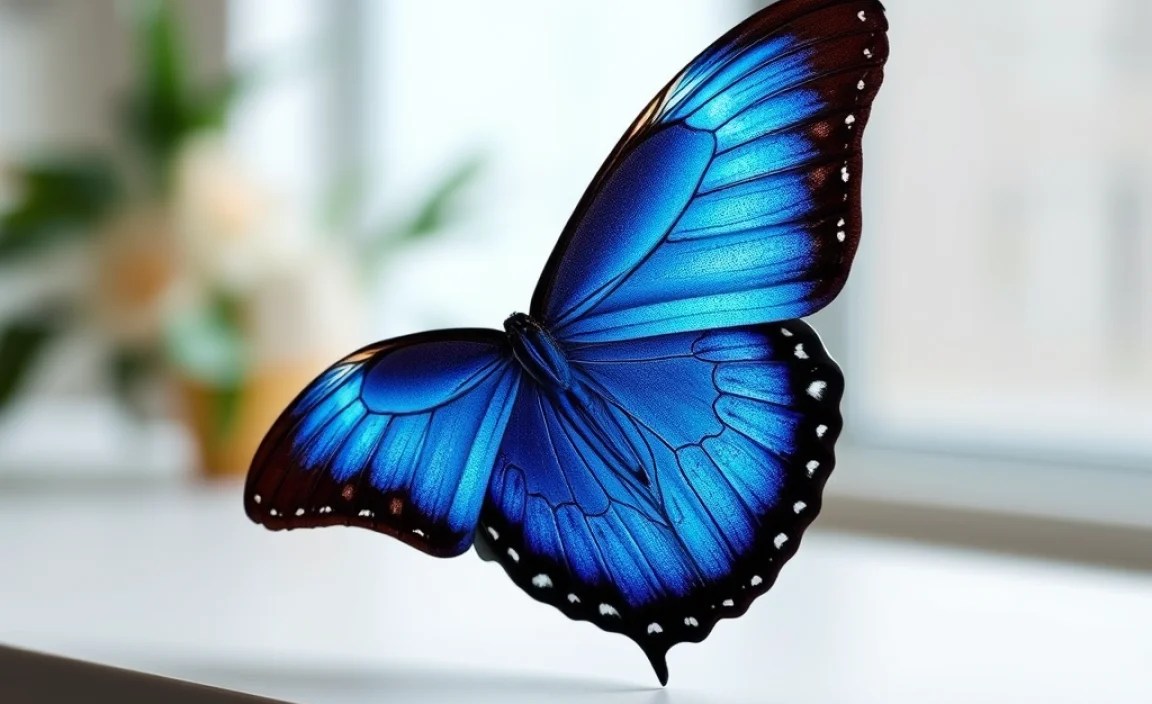
Blue Morphos live in Central and South America. They like warm, wet rainforests. These forests have lots of trees and plants. The butterflies need these plants for food. They also need them for shelter. The Blue Morpho dorsal coloration ID helps them blend in with the trees. This protects them from predators. They can be found from Mexico to Brazil. They are most common in the Amazon rainforest. This is a huge area with lots of Blue Morphos. The rainforest provides everything they need to survive. It is their perfect home.
- They live in rainforests.
- Rainforests are warm and wet.
- They eat plants and fruits.
- They need shelter from predators.
- They live in Central and South America.
- The Amazon rainforest is their home.
Imagine walking through a rainforest. It is hot and humid. There are tall trees and colorful birds. Suddenly, you see a flash of blue. It is a Blue Morpho butterfly. It flits through the trees. The Blue Morpho dorsal coloration ID helps it disappear when it closes its wings. The rainforest provides everything the Blue Morpho needs. It has food, water, and shelter. It also has other Blue Morphos. They need each other to reproduce. The rainforest is a complex ecosystem. Every plant and animal plays a role. The Blue Morpho is an important part of this system.
Fun Fact or Stat: The Blue Morpho can fly up to 12 miles per hour!
What Is a Rainforest?
A rainforest is a special kind of forest. It gets a lot of rain. It is also very warm. This makes it a great place for plants to grow. Rainforests are home to many different kinds of animals. Monkeys, frogs, and insects all live there. The Blue Morpho is one of these animals. It needs the rainforest to survive. The Blue Morpho dorsal coloration ID helps it blend in with the rainforest. This protects it from predators. Rainforests are very important to our planet. They help clean the air and provide us with resources.
Why Do They Live There?
Blue Morphos live in rainforests because they have everything they need. The rainforest provides them with food. They eat the sap of trees and the juice of fruits. The rainforest also provides them with shelter. They hide in the trees and plants. The Blue Morpho dorsal coloration ID helps them blend in. This protects them from predators. The rainforest is also warm and wet. This is the perfect climate for Blue Morphos. They cannot survive in cold or dry places. The rainforest is their ideal home.
How Does the Habitat Help Them?
The rainforest helps Blue Morphos in many ways. It provides them with food, water, and shelter. It also provides them with camouflage. The Blue Morpho dorsal coloration ID helps them blend in with the trees. This protects them from predators. The rainforest also helps them find mates. The bright blue color of the males attracts females. The rainforest is a complex ecosystem. Every plant and animal plays a role. The Blue Morpho is an important part of this system. It helps pollinate plants and provides food for other animals.
Comparing Male and Female Blue Morphos

Male and female Blue Morphos look different. Males are usually brighter blue. This helps them attract mates. Females are often duller. They have more brown on their wings. This helps them blend in. The Blue Morpho dorsal coloration ID is important for both. It helps them survive. But it serves different purposes. For males, it is about attracting attention. For females, it is about hiding. These differences are called sexual dimorphism. It is common in many animals. It helps them reproduce and survive.
- Males are brighter blue.
- Females are duller and browner.
- Males attract mates with color.
- Females hide from predators.
- Both need camouflage.
- Sexual dimorphism is common.
Think about a peacock. Male peacocks have bright, colorful feathers. Female peacocks are duller. This is similar to Blue Morphos. The males use their bright colors to attract females. The females choose the brightest males. This ensures that their offspring will be strong and healthy. The Blue Morpho dorsal coloration ID plays a role in this process. The brown color helps females hide from predators while they are laying eggs. The bright blue color helps males stand out. It is a balance between attracting mates and avoiding danger.
Fun Fact or Stat: Female Blue Morphos lay about 500 eggs in their lifetime!
Why Are Males Brighter?
Males are brighter to attract females. This is called sexual selection. Females choose the brightest males. This shows that they are healthy and strong. The bright color is a sign of good genes. The Blue Morpho dorsal coloration ID helps males stand out. The contrast between the blue and brown makes them more visible. Females are more likely to choose these males. This ensures that their offspring will inherit good genes. The brighter the male, the more likely he is to reproduce.
Why Are Females Duller?
Females are duller to hide from predators. They need to lay eggs safely. The Blue Morpho dorsal coloration ID helps them blend in. The brown color makes them look like dead leaves. This protects them from birds and other animals. If a female is too bright, she will be easily spotted. She will be caught and eaten before she can lay eggs. So, being duller is a survival advantage. It helps them reproduce and pass on their genes.
What Are the Benefits of Each?
The bright color of males helps them attract mates. This increases their chances of reproduction. The dull color of females helps them hide from predators. This increases their chances of survival. The Blue Morpho dorsal coloration ID is a balance between these two needs. Males need to be visible to attract mates. Females need to be invisible to avoid predators. Both colors are important for the survival of the species. It is a beautiful example of natural selection.
The Life Cycle of a Blue Morpho

The Blue Morpho’s life cycle is amazing. It starts as an egg. The egg hatches into a caterpillar. The caterpillar eats a lot of leaves. It grows bigger and bigger. Then, it turns into a pupa. The pupa is like a sleeping bag. Inside the pupa, the caterpillar changes. It becomes a butterfly. Finally, the butterfly emerges. It flies away and starts the cycle again. The Blue Morpho dorsal coloration ID is important at every stage. The caterpillar needs to hide from predators. The butterfly needs to attract mates and avoid danger.
- Starts as an egg.
- Egg hatches into a caterpillar.
- Caterpillar eats and grows.
- Turns into a pupa.
- Butterfly emerges from pupa.
- Butterfly reproduces and dies.
Imagine a tiny egg on a leaf. This is the beginning of a Blue Morpho’s life. The egg is very small and hard to see. When the egg hatches, a caterpillar comes out. The caterpillar is very hungry. It eats leaves all day long. It grows quickly. The Blue Morpho dorsal coloration ID is important for the caterpillar. It needs to blend in with the leaves to avoid predators. The caterpillar sheds its skin several times as it grows. Then, it turns into a pupa. The pupa is a hard shell. Inside, the caterpillar transforms into a butterfly.
Fun Fact or Stat: Blue Morpho caterpillars are cannibalistic, meaning they sometimes eat each other!
What Does the Caterpillar Eat?
The Blue Morpho caterpillar eats leaves. It is a herbivore. It eats a lot of leaves. This helps it grow quickly. The caterpillar prefers certain types of leaves. These leaves contain special chemicals. These chemicals protect the caterpillar from predators. The Blue Morpho dorsal coloration ID also helps. The caterpillar is often green or brown. This helps it blend in with the leaves. It is a master of disguise. It can hide from predators while it eats.
How Long Does It Take to Change?
The Blue Morpho’s life cycle takes about 115 days. The egg stage lasts about 10 days. The caterpillar stage lasts about 60 days. The pupa stage lasts about 25 days. The butterfly stage lasts about 20 days. The Blue Morpho dorsal coloration ID is important throughout this process. It helps the insect survive at every stage. The butterfly spends its time reproducing. It lays eggs and starts the cycle again. The life cycle is a continuous loop.
What Does the Butterfly Do?
The butterfly spends its time reproducing. It flies around looking for a mate. The male butterflies are very bright. They attract the females. The female butterflies lay eggs. They lay them on leaves. The eggs hatch and the cycle starts again. The Blue Morpho dorsal coloration ID helps the butterfly survive. It helps it attract mates and avoid predators. The butterfly is a beautiful and fascinating creature. It is an important part of the rainforest ecosystem.
Threats to Blue Morpho Populations
Blue Morpho populations face many threats. Deforestation is a big problem. Rainforests are being cut down. This destroys their habitat. Climate change is also a threat. It changes the weather patterns. This can make it harder for them to survive. Pollution can also harm them. Pesticides can kill them. Collecting them for souvenirs is also a threat. The Blue Morpho dorsal coloration ID cannot protect them from these dangers. We need to protect their habitat. We need to stop pollution and climate change. We need to protect these beautiful butterflies.
- Deforestation destroys habitat.
- Climate change affects weather.
- Pollution harms butterflies.
- Pesticides can kill them.
- Collecting them is a threat.
- Habitat loss is a big problem.
Imagine a world without Blue Morphos. It would be a sadder place. These butterflies are beautiful and important. They are part of the rainforest ecosystem. They help pollinate plants. They provide food for other animals. We need to protect them. We can do this by supporting conservation efforts. We can also reduce our impact on the environment. The Blue Morpho dorsal coloration ID is a beautiful adaptation. But it cannot protect them from human activity. We need to be responsible stewards of the planet.
Fun Fact or Stat: Some people believe that seeing a Blue Morpho butterfly brings good luck!
What Is Deforestation?
Deforestation is the cutting down of forests. This is done for many reasons. People need land for farming. They need wood for building. They need space for cities. But deforestation has many negative effects. It destroys habitats. It contributes to climate change. It reduces biodiversity. The Blue Morpho dorsal coloration ID is useless if there are no forests. Deforestation is a major threat to their survival. We need to stop deforestation to protect these butterflies and other animals.
How Does Climate Change Affect Them?
Climate change is changing the weather patterns. This can make it harder for Blue Morphos to survive. They need warm, wet rainforests. But climate change is making some areas drier. It is also causing more extreme weather events. These events can destroy their habitat. The Blue Morpho dorsal coloration ID cannot protect them from these changes. We need to reduce our carbon emissions. We need to stop climate change to protect these butterflies.
What Can We Do to Help?
We can do many things to help Blue Morphos. We can support conservation efforts. We can reduce our impact on the environment. We can recycle and reuse. We can reduce our carbon emissions. We can educate others about the importance of protecting rainforests. The Blue Morpho dorsal coloration ID is a beautiful adaptation. But it needs our help to survive. We can make a difference by taking action. We can protect these butterflies for future generations.
| Threat | Description | Impact on Blue Morphos |
|---|---|---|
| Deforestation | Cutting down rainforests for land and resources. | Destroys their habitat and food sources. |
| Climate Change | Changing weather patterns and increasing temperatures. | Alters their habitat and makes it harder to survive. |
| Pollution | Contamination of air, water, and soil with harmful substances. | Poisons them and their food sources. |
| Collecting | Catching and selling them for souvenirs or collections. | Reduces their population and disrupts the ecosystem. |
Conserving the Blue Morpho Butterfly
Conserving the Blue Morpho is important. We must protect their rainforest habitat. We can support organizations that work to save rainforests. We can also educate others about the importance of these butterflies. Sustainable practices help too. This means using resources in a way that doesn’t harm the environment. The Blue Morpho dorsal coloration ID is a fascinating adaptation. It is worth protecting. By working together, we can ensure that these beautiful butterflies thrive for years to come.
- Protect rainforest habitat.
- Support conservation groups.
- Educate others about them.
- Use sustainable practices.
- Reduce our environmental impact.
- Help butterflies thrive.
Think about the future. Imagine children being able to see Blue Morphos in the wild. This is possible if we take action now. We can support policies that protect rainforests. We can reduce our consumption of products that contribute to deforestation. We can also plant trees. Every little bit helps. The Blue Morpho dorsal coloration ID is a reminder of the beauty and complexity of nature. We must do our part to protect it. Conservation is not just about saving butterflies. It is about saving our planet.
Fun Fact or Stat: Blue Morpho butterflies taste with sensors on their feet!
Why Is Conservation Important?
Conservation is important because it protects biodiversity. Biodiversity is the variety of life on Earth. It includes all plants, animals, and microorganisms. Biodiversity is essential for a healthy planet. It provides us with food, water, and clean air. It also helps regulate the climate. The Blue Morpho dorsal coloration ID is part of this biodiversity. We need to protect it. Conservation helps us maintain a healthy planet for future generations. It is our responsibility to care for the Earth.
How Can We Help Conserve Them?
We can help conserve Blue Morphos in many ways. We can support organizations that work to protect rainforests. We can reduce our consumption of products that contribute to deforestation. We can also plant trees. We can educate others about the importance of these butterflies. The Blue Morpho dorsal coloration ID is a fascinating adaptation. We need to protect it. Every little bit helps. By working together, we can make a difference.
What Are Sustainable Practices?
Sustainable practices are ways of using resources that don’t harm the environment. This includes using renewable energy sources. It also includes reducing waste and recycling. Sustainable agriculture is another important practice. This means farming in a way that doesn’t damage the soil or pollute the water. The Blue Morpho dorsal coloration ID is a reminder of the importance of sustainability. We need to live in a way that protects the planet for future generations. Sustainable practices are essential for a healthy future.
Summary
The Blue Morpho butterfly is a stunning insect. It is known for its bright blue wings. The Blue Morpho dorsal coloration ID reveals more about its survival. The brown color on the top side helps it hide from predators. This camouflage is essential for its survival in the rainforest. The bright blue attracts mates. The brown helps it avoid danger. The Blue Morpho faces threats like deforestation and climate change. We must protect its habitat. We can support conservation efforts. We can also educate others about these beautiful butterflies. By working together, we can ensure they thrive.
Conclusion
The Blue Morpho is a remarkable butterfly. Its bright blue color is captivating. The Blue Morpho dorsal coloration ID shows its clever camouflage. This helps it survive in the rainforest. These butterflies face many challenges. We must protect them and their habitat. By understanding their adaptations, we can appreciate their importance. Let’s work together to ensure their survival. The Blue Morpho is a treasure worth saving.
Frequently Asked Questions
Question No 1: What is the Blue Morpho known for?
Answer: The Blue Morpho is famous for its shimmering blue wings. These wings are very bright and eye-catching. They help the butterfly attract mates. The blue color comes from tiny structures on the wings. These structures reflect light in a special way. The Blue Morpho dorsal coloration ID shows that the top side of the wings also has brown scales. These scales help it hide from predators. This combination of bright blue and camouflage is unique.
Question No 2: Where do Blue Morphos live?
Answer: Blue Morphos live in the rainforests of Central and South America. They need warm, wet environments to survive. These rainforests provide them with food and shelter. The Blue Morpho dorsal coloration ID helps them blend in with the trees and plants. They can be found from Mexico to Brazil. The Amazon rainforest is a particularly important habitat for them. These rainforests are essential for their survival, providing the necessary resources and climate.
Question No 3: Why are male Blue Morphos brighter than females?
Answer: Male Blue Morphos are brighter to attract females. This is called sexual selection. The brighter the male, the more likely he is to find a mate. The females choose the brightest males. This ensures that their offspring will inherit good genes. The Blue Morpho dorsal coloration ID highlights the difference. The brown color on the female’s wings helps her hide from predators. This balance is important for their survival.
Question No 4: What do Blue Morpho caterpillars eat?
Answer: Blue Morpho caterpillars eat leaves. They are herbivores. They eat a lot of leaves to grow quickly. They prefer certain types of leaves. These leaves contain special chemicals. These chemicals protect the caterpillar from predators. The Blue Morpho dorsal coloration ID is important for the caterpillar too. It needs to blend in with the leaves to avoid being eaten. The caterpillar sheds its skin several times as it grows.
Question No 5: What are the threats to Blue Morpho populations?
Answer: Blue Morpho populations face several threats. Deforestation is a major problem. This destroys their rainforest habitat. Climate change is also a threat. It changes the weather patterns. Pollution can harm them. Pesticides can kill them. Collecting them for souvenirs is also a threat. The Blue Morpho dorsal coloration ID cannot protect them from these dangers. We need to protect their habitat and stop pollution.
Question No 6: How can we help conserve Blue Morphos?
Answer: We can help conserve Blue Morphos in many ways. We can support conservation organizations. We can reduce our impact on the environment. We can recycle and reuse. We can reduce our carbon emissions. We can educate others about the importance of protecting rainforests. The Blue Morpho dorsal coloration ID is a reminder of the beauty of nature. We need to protect it. By working together, we can make a difference and save these butterflies for future generations.


