
Blue Morpho “What” Questions? Discover Secrets!

Have you ever seen a butterfly so blue it looks like the sky? That might have been a Blue Morpho. These butterflies are famous for their bright, shiny wings. But what makes them so special? And what secrets do they hide? Let’s find out more about these amazing insects.
Imagine walking through a rainforest. Suddenly, a flash of blue catches your eye. It’s a Blue Morpho butterfly, flitting through the trees. These butterflies are not only beautiful but also important to their home. They are part of the amazing world of nature. What else can we learn about them?
Butterflies are all around us. We see them in gardens and parks. But the Blue Morpho is different. It has a color that is hard to miss. Its wings seem to glow in the sunlight. So, what makes this butterfly so blue? Let’s explore the world of the Blue Morpho and answer these exciting questions.
Key Takeaways
- Blue Morpho butterflies are known for their brilliant, iridescent blue wings.
- These butterflies live in the rainforests of Central and South America.
- They eat tree sap, fruit, and even dead animals to get nutrients.
- One of the biggest “what” questions is what makes their blue color so unique?
- Blue Morphos use their bright colors to scare away predators.
What Makes Blue Morphos So Blue?
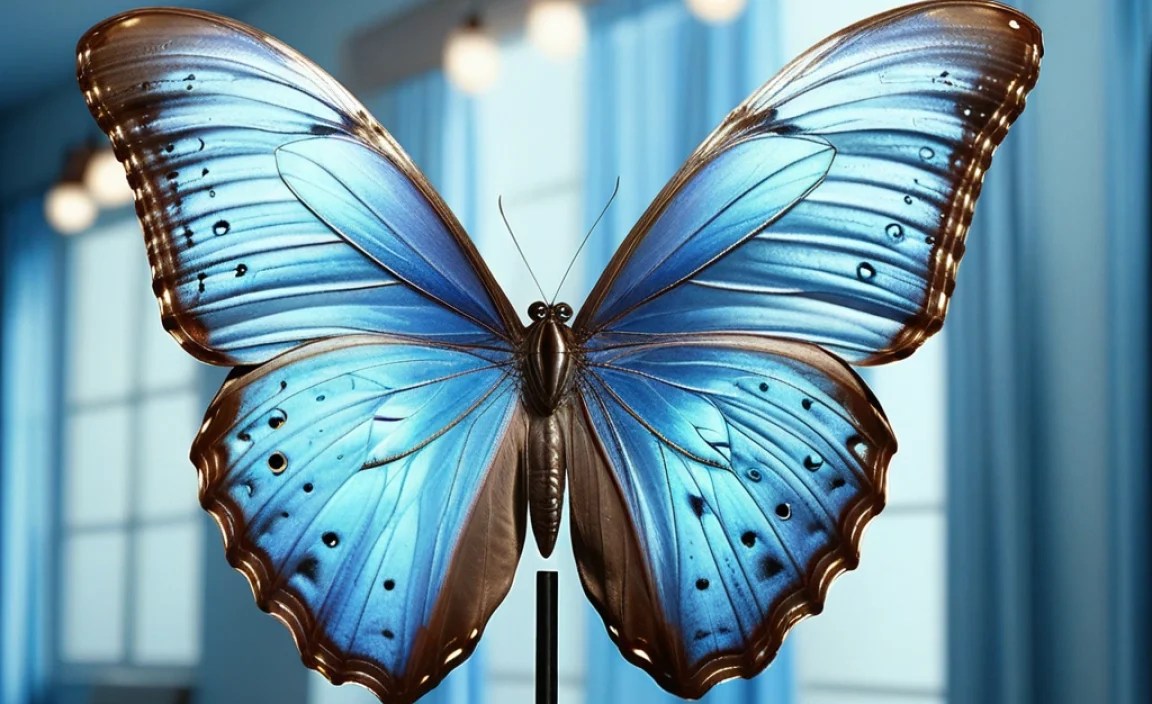
The Blue Morpho’s color isn’t from pigment. Pigments are like the colors in paints. Instead, their wings have tiny structures. These structures reflect light in a special way. This is called iridescence. The structures are like tiny mirrors. They bounce the blue light back to our eyes. This makes the butterfly look incredibly blue. Other colors are canceled out. So, we only see the bright blue. It’s like a magic trick of nature. Scientists study this to make better screens and paints. It’s amazing what nature can teach us.
- Their wings have tiny structures.
- These structures reflect blue light.
- This creates an iridescent effect.
- Pigments are not responsible for the blue color.
- The structure of the scales is key.
Have you ever wondered how a butterfly can be so blue without using blue coloring? The answer lies in the tiny scales on its wings. These scales are not smooth. They have many layers and ridges. When light hits these ridges, it bounces around. The blue light is reflected back to our eyes. Other colors are scattered. This is why we see the butterfly as blue. It’s similar to how a prism splits light into different colors. But in this case, only the blue light is reflected strongly. This process is called structural coloration. It’s a clever trick that nature uses to create amazing colors. It shows what a complex and beautiful world we live in.
How Does Iridescence Work?
Have you ever seen a soap bubble shimmer with different colors? That’s iridescence. It is similar to how a Blue Morpho’s wings work. Light waves bounce off the surface. Some waves combine and get brighter. Other waves cancel each other out. The colors you see depend on the angle of the light. The Blue Morpho’s wings have many layers. These layers cause light to interfere with itself. This interference boosts the blue color. It also cancels out other colors. This makes the blue look very bright and pure. Iridescence is a common phenomenon in nature. You can see it in bird feathers and beetle shells, too. Isn’t it amazing what light can do?
Why Is Structural Coloration Important?
Structural coloration is not just about looking pretty. It also helps the butterfly survive. The bright blue color can startle predators. It can also help the butterfly attract mates. Unlike pigments, structural colors don’t fade over time. This means the butterfly can keep its bright color for its whole life. Scientists are studying structural coloration. They want to learn how to create new materials. These materials could have amazing optical properties. Imagine clothes that change color depending on the light! Or screens that are brighter and more efficient. Nature’s designs are often the best. It’s incredible what we can learn from them.
Can Blue Morphos Change Color?
The Blue Morpho cannot change its wing color. The blue color is fixed by the structure of its scales. However, the angle at which you view the butterfly can change how bright the blue appears. This is because the iridescence changes with the angle of light. The underside of the wings is brown. This helps the butterfly camouflage when its wings are closed. So, while the butterfly can’t change from blue to red, it can appear different depending on how you look at it. This is another example of how nature uses light and color in clever ways. It’s always exciting to discover what makes each creature unique.
Fun Fact or Stat: The Blue Morpho’s wings can span up to 8 inches wide!
What Is the Blue Morpho’s Habitat?

Blue Morphos live in the rainforests of Central and South America. You can find them from Mexico to Brazil. They love warm, humid places. Rainforests provide everything they need. They need food, shelter, and water. These butterflies are often seen near streams. They also like areas with lots of trees. The trees give them shade and protection. The butterflies fly high in the canopy. Sometimes they come down to the forest floor. They search for food and mates. It’s important to protect these rainforests. This will help the Blue Morpho and other animals survive. Think about what we can do to help.
- They live in rainforests.
- Their habitat ranges from Mexico to Brazil.
- They prefer warm, humid climates.
- They need trees for shelter and food.
- They can be found near streams.
Imagine you are walking through a dense rainforest. The air is thick with moisture. You hear the sounds of birds and insects. Suddenly, you see a flash of blue. A Blue Morpho butterfly flits past. It disappears into the trees. These butterflies are perfectly adapted to their rainforest home. They have long wings that help them fly through the dense vegetation. Their bright colors help them find mates. The brown underside of their wings helps them hide from predators. The rainforest provides everything they need to survive. It is a complex and delicate ecosystem. Protecting this habitat is important. We must consider what actions we can take to ensure their survival for generations to come.
What Role Do Rainforests Play?
Rainforests are very important for the whole world. They help clean the air we breathe. They also store a lot of water. Rainforests are home to many different plants and animals. These plants and animals depend on each other to survive. The Blue Morpho is just one part of this amazing web of life. When rainforests are destroyed, it affects everything. The climate changes. Animals lose their homes. It’s important to protect these forests. We can do this by recycling and reducing our use of resources. Every little bit helps. Understanding what rainforests do is the first step.
What Threats Do They Face?
Blue Morphos face many threats in their rainforest home. One of the biggest threats is deforestation. This is when people cut down trees to make room for farms or cities. When the trees are gone, the butterflies lose their habitat. They also lose their food source. Another threat is pollution. Pollution can harm the plants that the butterflies need to survive. Climate change is also a threat. It can change the weather patterns in the rainforest. This can make it harder for the butterflies to find food and mates. It is crucial to understand what these threats are.
How Can We Help Protect Them?
There are many things we can do to help protect Blue Morphos. We can support organizations that work to protect rainforests. We can also reduce our use of products that contribute to deforestation. This includes things like palm oil and certain types of wood. We can also educate others about the importance of rainforests. The more people who know about the problem, the more likely we are to find solutions. Even small actions can make a big difference. Every effort contributes to understanding what is needed to save these butterflies and their home.
Fun Fact or Stat: Rainforests cover less than 6% of the Earth’s surface, but they contain over half of the world’s plant and animal species!
What Do Blue Morphos Eat?
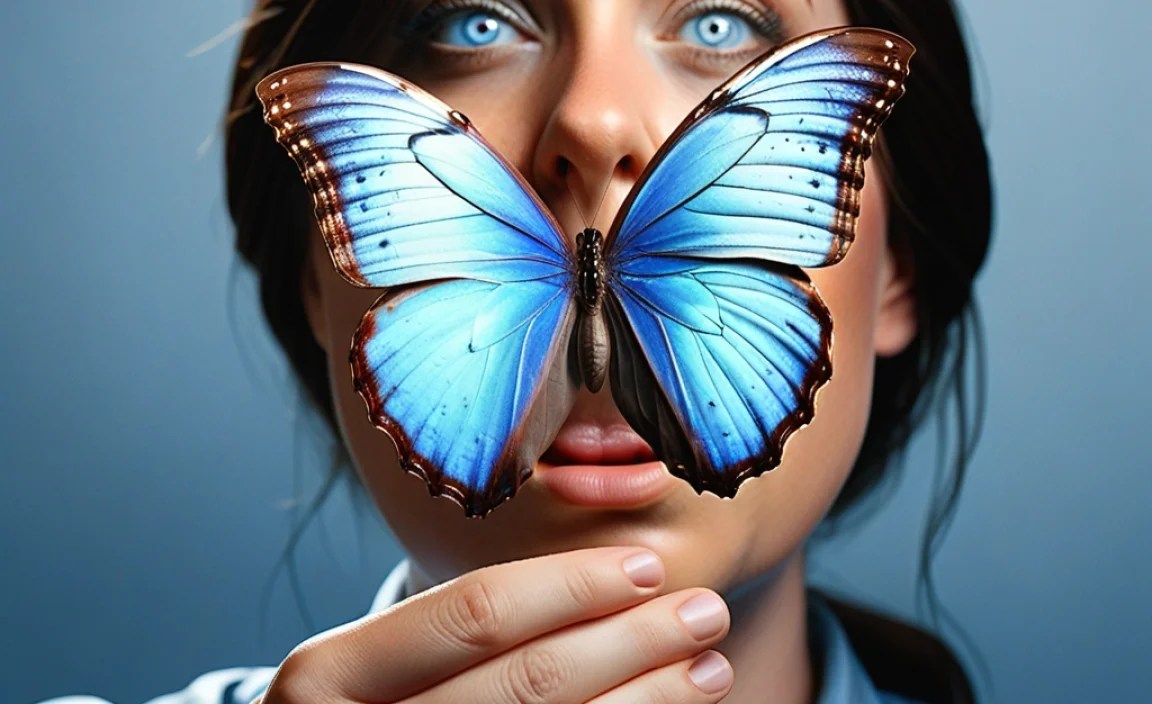
Blue Morphos don’t sip nectar from flowers like other butterflies. Instead, they have a strange diet. They eat the sap from trees. They also eat rotting fruit. Sometimes, they even eat dead animals. They use their proboscis to suck up the liquids. A proboscis is like a long straw. It helps them reach the food. This diet gives them the energy they need. They need energy to fly and reproduce. It may seem gross, but it’s important for their survival. So, what exactly do they get from these unusual foods?
- They eat tree sap.
- They eat rotting fruit.
- They sometimes eat dead animals.
- They use a proboscis to suck up liquids.
- This diet gives them energy.
- They need energy to fly and reproduce.
Imagine you are a Blue Morpho butterfly. You are hungry. You fly around looking for food. You don’t want sweet nectar. Instead, you are looking for a rotting banana. Or maybe some tree sap. You land on the food and unroll your proboscis. You suck up the liquid. It might not sound very tasty to us. But it’s perfect for you. This unusual diet gives you the nutrients you need to survive. It’s amazing how different animals can have such different diets. Thinking about what they eat helps us understand them better.
Why Don’t They Eat Nectar?
Most butterflies drink nectar from flowers. Nectar is sweet and full of energy. But Blue Morphos have different needs. Nectar doesn’t give them all the nutrients they need. They need minerals and other things. These can be found in tree sap and rotting fruit. So, they have adapted to eat these foods instead. This is an example of how animals can evolve to fit their environment. They find the best way to get what they need to survive. It’s fascinating what drives these adaptations.
What Nutrients Do They Get?
Tree sap and rotting fruit are full of important nutrients. They provide sugars for energy. They also contain minerals. These minerals help the butterfly grow and stay healthy. Dead animals can provide protein. Protein is important for building tissues. So, even though it seems gross, this diet is very nutritious for the Blue Morpho. It’s like a complete meal for them. Understanding what nutrients they need helps us protect them.
How Does Their Proboscis Work?
A butterfly’s proboscis is like a long, flexible straw. When the butterfly is not eating, the proboscis is coiled up. When it’s time to eat, the butterfly unrolls the proboscis. It then uses it to suck up liquids. The proboscis is made of two tubes that fit together. The butterfly uses muscles to create suction. This pulls the liquid up the tube. It’s a very efficient way to eat. It is interesting to think about what other adaptations butterflies have.
Fun Fact or Stat: The proboscis of a Blue Morpho can be longer than its body!
What Is the Blue Morpho’s Life Cycle?
The Blue Morpho goes through a complete metamorphosis. This means it changes a lot during its life. First, the female butterfly lays eggs. The eggs are usually laid on leaves. When the eggs hatch, caterpillars emerge. The caterpillars eat a lot of leaves. They grow very quickly. After a while, the caterpillar turns into a pupa. The pupa is also called a chrysalis. Inside the pupa, the caterpillar changes into a butterfly. Finally, the butterfly emerges from the pupa. It flies away to find a mate and lay eggs. What an amazing transformation!
- They undergo complete metamorphosis.
- Females lay eggs on leaves.
- Caterpillars hatch from the eggs.
- Caterpillars eat a lot and grow quickly.
- The caterpillar turns into a pupa.
- The butterfly emerges from the pupa.
Imagine you are a tiny Blue Morpho egg. You are attached to a leaf. You wait patiently to hatch. One day, you start to wiggle. You break out of your shell. You are now a caterpillar. You are very hungry. You start to eat the leaf you are on. You eat and eat and eat. You grow bigger and bigger. After a few weeks, you stop eating. You hang upside down from a branch. You form a hard shell around yourself. You are now a pupa. Inside the pupa, you change into a butterfly. After a few weeks, you break out of the pupa. You are now a beautiful Blue Morpho butterfly. It’s incredible what happens during metamorphosis.
What Do the Caterpillars Look Like?
Blue Morpho caterpillars look very different from the butterflies. They are usually brown or reddish-brown. They have bristles on their bodies. These bristles can irritate predators. The caterpillars eat leaves from specific plants. This helps them grow quickly. They shed their skin several times as they grow. Each time they shed their skin, they get bigger. Caterpillars play a crucial role. Think about what would happen without them!
How Long Does Each Stage Last?
The Blue Morpho’s life cycle varies. It depends on the environment. The egg stage lasts about a week. The caterpillar stage lasts several weeks. It depends on how much food is available. The pupa stage lasts about two weeks. The butterfly stage can last for a month or more. This depends on how long the butterfly can avoid predators. It’s interesting to see how each stage is different. It is key to understanding what impacts their survival.
What Happens Inside the Pupa?
The pupa stage is a time of great change. Inside the pupa, the caterpillar’s body breaks down. It then reforms into a butterfly. This process is called metamorphosis. It’s like the caterpillar is being recycled. Its parts are used to build a new body. The butterfly emerges from the pupa with wings. The wings are crumpled at first. The butterfly pumps fluid into its wings to inflate them. Once the wings are dry, the butterfly can fly. It’s amazing what happens inside the pupa.
Fun Fact or Stat: The caterpillar of the Blue Morpho is cannibalistic, meaning it sometimes eats other Blue Morpho caterpillars!
What Are the Blue Morpho’s Predators?
Blue Morphos are beautiful, but they are also a target for predators. Birds are a common predator. Lizards also eat these butterflies. Small mammals might try to catch them too. The butterflies use their bright colors to startle predators. The underside of their wings is brown. This helps them camouflage when their wings are closed. They also fly quickly and erratically. This makes it harder for predators to catch them. So, what strategies do they use to survive?
- Birds are common predators.
- Lizards also eat them.
- Small mammals might try to catch them.
- They use bright colors to startle predators.
- They use camouflage when their wings are closed.
- They fly quickly and erratically.
Imagine you are a Blue Morpho butterfly. You are flying through the rainforest. You need to be careful. There are many predators that want to eat you. A bird might swoop down from the sky. A lizard might be hiding in the leaves. A small mammal might be lurking on the ground. You need to use all your tricks to survive. You flash your bright blue wings to startle the predator. You close your wings to blend in with the trees. You fly quickly and erratically to escape. It’s a constant battle for survival. It’s important to understand what they face.
How Do Their Colors Help?
The Blue Morpho’s bright colors serve two purposes. First, they can startle predators. When a predator sees a flash of blue, it might be surprised. This gives the butterfly a chance to escape. Second, the colors can confuse predators. The butterfly’s erratic flight pattern, combined with its bright colors, can make it hard to track. This makes it harder for the predator to catch the butterfly. Color is a tool for survival. It is important to understand what makes them stand out.
What Other Defenses Do They Have?
Besides their colors, Blue Morphos have other defenses. They can fly very quickly. This makes it hard for predators to catch them. They also have a tough exoskeleton. This protects them from some predators. They can also release a bad smell. This can deter predators from eating them. These defenses help them survive in a dangerous world. It’s interesting to think about what makes each animal unique.
Do They Mimic Other Species?
Some butterflies mimic other species. This means they look like other butterflies that are poisonous or distasteful. This can deter predators from eating them. Blue Morphos do not mimic other species. They rely on their own defenses to survive. Their bright colors and erratic flight are enough to keep most predators away. It is not necessary to understand what is needed to survive.
Fun Fact or Stat: Some predators are colorblind, so the Blue Morpho’s bright blue color doesn’t affect them!
What Role Do Blue Morphos Play in the Ecosystem?
Blue Morphos play a role in their ecosystem. They are part of the food chain. They are also pollinators. When they eat tree sap and rotting fruit, they help spread seeds. This helps the plants reproduce. They also provide food for predators. This helps keep the ecosystem balanced. It’s important to protect these butterflies. They are an important part of the rainforest. So, what would happen if they disappeared?
- They are part of the food chain.
- They are pollinators.
- They help spread seeds.
- They provide food for predators.
- They help keep the ecosystem balanced.
Imagine the rainforest without Blue Morphos. The ecosystem would be different. Some plants might not get pollinated. Some predators might lose a food source. The balance of nature would be disrupted. Every species plays a role in the ecosystem. When one species disappears, it can have a ripple effect. It’s important to protect biodiversity. This means protecting all the different species of plants and animals. We must consider what we can do to protect this ecosystem.
How Do They Help Pollinate?
Blue Morphos are not as important pollinators as bees. However, they still play a role. When they feed on tree sap and rotting fruit, they can pick up pollen. They then carry this pollen to other plants. This helps the plants reproduce. Pollination is important for many plants. It helps them produce fruits and seeds. Pollinators are essential for a healthy ecosystem. It is important to think about what makes pollination important.
What Is Their Place in the Food Chain?
Blue Morphos are both predators and prey. They eat tree sap, rotting fruit, and dead animals. They are also eaten by birds, lizards, and small mammals. This makes them an important part of the food chain. They help transfer energy from plants to animals. The food chain is a complex web of life. Every species is connected to every other species. It is important to understand what makes this interconnectedness work.
Why Is Biodiversity Important?
Biodiversity is important for a healthy ecosystem. When there are many different species, the ecosystem is more resilient. This means it can better withstand changes. If one species disappears, other species can fill its role. This helps keep the ecosystem balanced. Biodiversity also provides us with many benefits. It gives us food, medicine, and other resources. It’s important to protect biodiversity. This helps protect the planet. It is necessary to understand what contributes to the delicate balance of nature.
Fun Fact or Stat: The Blue Morpho is considered an indicator species, meaning its health reflects the health of its ecosystem!
What Are Some Interesting Facts About Blue Morphos?
Blue Morphos are full of surprises. Did you know that only the males are brightly colored? The females are usually brown. This helps them camouflage when they lay eggs. These butterflies can also fly very fast. They can reach speeds of up to 20 miles per hour. They use their speed to escape predators. They also have a long lifespan for a butterfly. They can live for several months. It is interesting to learn what makes them unique.
| Fact | Details |
|---|---|
| Color | Only males are bright blue; females are brown. |
| Speed | They can fly up to 20 miles per hour. |
| Lifespan | They can live for several months. |
| Diet | They eat tree sap, rotting fruit, and dead animals. |
| Habitat | They live in rainforests from Mexico to Brazil. |
- Only the males are brightly colored.
- They can fly very fast.
- They have a long lifespan.
- They eat unusual foods.
- They live in rainforests.
Imagine you are writing a report about Blue Morphos. You want to impress your classmates with some interesting facts. You could tell them that only the male butterflies are bright blue. You could tell them that they can fly up to 20 miles per hour. You could tell them that they eat rotting fruit and dead animals. These facts will help your classmates understand how amazing these butterflies are. It’s always fun to learn new things about nature. It is key to understand what we can learn from them.
Do They Migrate?
Blue Morphos do not migrate long distances. They stay in the same area their whole lives. They move around within the rainforest to find food and mates. They do not travel to different countries or continents. This is different from some other butterflies, like Monarchs, which migrate thousands of miles. It is important to understand what makes each species different.
Are They Endangered?
Blue Morphos are not currently endangered. However, their habitat is threatened. Deforestation is destroying the rainforests where they live. This is reducing their food supply and their places to live. Climate change is also a threat. It can change the weather patterns in the rainforest. This can make it harder for them to survive. It’s important to protect their habitat. We must consider what steps we can take to help them.
How Can I See One?
If you want to see a Blue Morpho, you can visit a butterfly garden. Many butterfly gardens have Blue Morphos. You can also travel to Central or South America. You might see them in the rainforest. Be sure to go with a guide. They can help you find them. Remember to be respectful of their habitat. Do not disturb the butterflies or their environment. It is fun to think about what it would be like to see one in person.
Fun Fact or Stat: The Blue Morpho butterfly is a favorite subject for artists and photographers because of its stunning beauty!
Summary
Blue Morphos are fascinating butterflies. They are known for their bright blue wings. This color comes from the structure of their wings. They live in the rainforests of Central and South America. They eat tree sap, rotting fruit, and sometimes dead animals. Their caterpillars are brown and bristly. The butterflies have predators like birds and lizards. They use their colors and flight to escape. These butterflies play a role in their ecosystem. They help pollinate plants and provide food for other animals. Understanding what makes them special helps us appreciate nature.
Conclusion
The Blue Morpho is a beautiful and interesting butterfly. It has many unique adaptations. These adaptations help it survive in the rainforest. It is important to protect their habitat. Deforestation and climate change are threats. We can help by supporting conservation efforts. We can also reduce our impact on the environment. By learning about these butterflies, we can understand what we need to do to protect them. They are an important part of the world’s biodiversity.
Frequently Asked Questions
Question No 1: What is the Blue Morpho butterfly known for?
Answer: The Blue Morpho butterfly is best known for its striking, iridescent blue wings. This vibrant color is not due to pigments, but rather the microscopic structures on its wings. These structures reflect light in a way that creates the brilliant blue hue. This makes them one of the most recognizable and admired butterflies in the world. They are often featured in nature documentaries and photographs. They are a symbol of the beauty and diversity of the rainforest. Understanding what makes them so unique is key to appreciating their importance.
Question No 2: Where do Blue Morpho butterflies live?
Answer: Blue Morpho butterflies live in the rainforests of Central and South America. Their habitat ranges from Mexico to Brazil. They prefer warm, humid environments. These rainforests provide the perfect conditions for their survival. They need a variety of trees and plants for food and shelter. Protecting these rainforests is vital. It helps ensure the survival of the Blue Morpho and many other species. It is important to understand what factors contribute to a healthy rainforest ecosystem.
Question No 3: What do Blue Morpho butterflies eat?
Answer: Unlike many butterflies that feed on nectar, Blue Morpho butterflies have a more varied diet. They primarily consume tree sap, rotting fruit, and sometimes even the fluids from dead animals. They use their long, straw-like proboscis to suck up these liquids. This diet provides them with the necessary nutrients and minerals. It gives them energy to fly and reproduce. Understanding what they eat helps us appreciate their unique adaptations to their environment.
Question No 4: What is the life cycle of a Blue Morpho butterfly?
Answer: The Blue Morpho butterfly goes through a complete metamorphosis. This includes four stages: egg, larva (caterpillar), pupa (chrysalis), and adult. The female butterfly lays eggs on leaves. The caterpillars hatch and feed on leaves. They grow quickly, shedding their skin several times. The caterpillar then transforms into a pupa. Inside the pupa, the caterpillar changes into a butterfly. The adult butterfly emerges from the pupa. It flies off to reproduce. It’s amazing what happens during this transformation.
Question No 5: What are some of the Blue Morpho’s predators?
Answer: Blue Morpho butterflies face threats from various predators. Birds, lizards, and small mammals are among their main enemies. To defend themselves, they use their bright blue wings to startle predators. They also have a brown underside that helps them camouflage. This makes them harder to spot when their wings are closed. They also fly quickly and erratically. This makes it difficult for predators to catch them. Knowing what challenges they face helps us understand their survival strategies.
Question No 6: What role do Blue Morpho butterflies play in their ecosystem?
Answer: Blue Morpho butterflies play an important role in their ecosystem. They are part of the food chain, serving as both prey and consumers. They also help pollinate plants. When they feed on tree sap and rotting fruit, they can transfer pollen. This aids in plant reproduction. By understanding what they contribute, we recognize the importance of protecting these butterflies and their habitat to maintain a healthy ecosystem.


