
Blue Morpho Common Name Origins: Discover the Secret

Have you ever seen a butterfly so blue it seems to glow? That might have been a Blue Morpho. These butterflies are famous for their bright blue wings. But where did they get that name? The story of the {Blue Morpho common name origins} is quite interesting. Let’s explore it together!
These amazing insects live in rainforests. They fly high in the trees. People love to watch them flutter by. The Blue Morpho is a true wonder of nature. We can learn a lot from these beautiful creatures.
Key Takeaways
- The Blue Morpho got its name from its bright blue, shimmering wings.
- Morpho comes from a Greek word meaning “beautiful” or “well-formed.”
- These butterflies are found in the rainforests of Central and South America.
- The bright blue color is caused by tiny scales that reflect light.
- Understanding {Blue Morpho common name origins} helps us appreciate nature’s beauty.
Exploring the Common Name: Blue Morpho
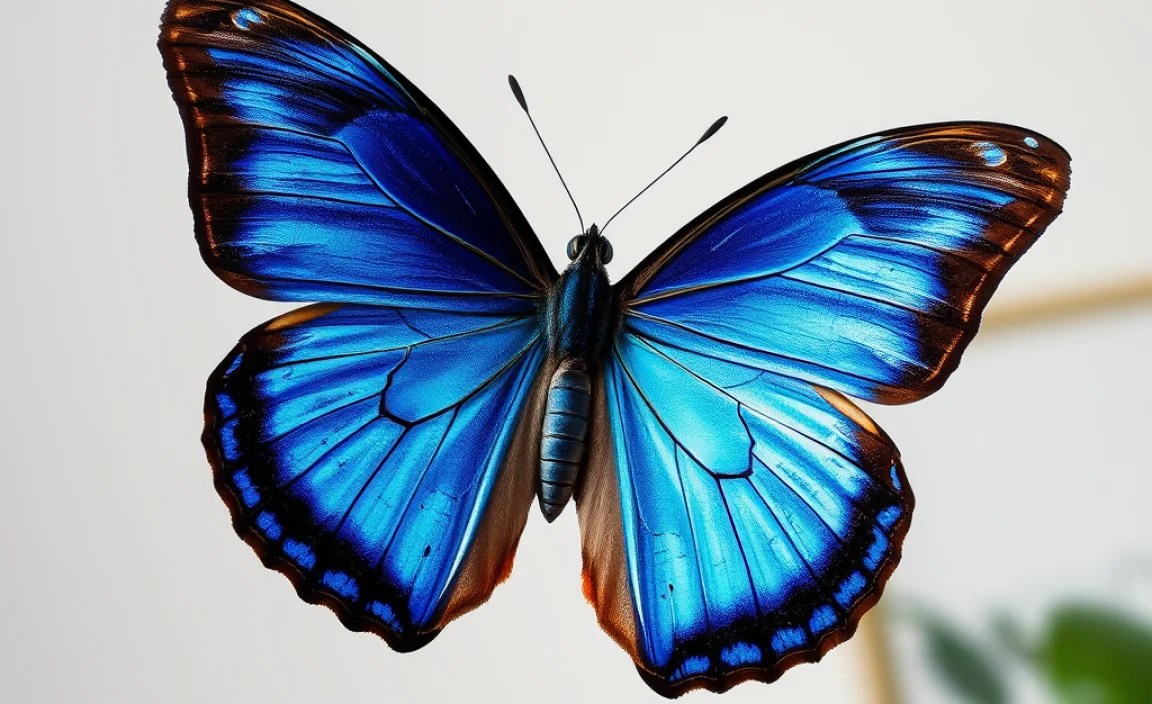
The Blue Morpho butterfly is a stunning insect. Its name tells us a lot about it. “Blue” refers to the vibrant color of its wings. But what about “Morpho”? The name Morpho comes from Greek. In Greek, Morpho was a name associated with beauty. It also meant “well-formed.” Scientists thought it was a good fit for these beautiful butterflies. So, the {Blue Morpho common name origins} combine color and beauty. Together, the words paint a vivid picture. This name helps us remember these butterflies. It also makes us think about their unique look and grace.
- The name “Blue” describes the wing color.
- “Morpho” comes from Greek for beauty.
- Scientists chose the name long ago.
- The name helps us remember them.
- It also shows their unique look.
Blue Morphos are more than just pretty faces. They play an important role in their ecosystem. As they fly, they help pollinate flowers. They also serve as food for other animals. Their bright colors can also warn predators. The butterfly’s life cycle is also fascinating. They start as tiny eggs on leaves. Then they become caterpillars, munching on plants. After that, they form a chrysalis. Inside, they change into a butterfly. Finally, they emerge with their bright blue wings. The {Blue Morpho common name origins} remind us that even a name has a story.
Why “Blue” Is Perfect
Have you ever seen a color so bright it takes your breath away? That’s the blue of a Blue Morpho‘s wings. The color is not just any blue. It is a shimmering, iridescent blue. This means it seems to change color as you move. The bright blue color comes from tiny scales on the wings. These scales reflect light in a special way. The scales do not have blue pigment. The structure of the scales makes them appear blue. This is called structural coloration. It is like a trick of the light. The name “Blue” is perfect. It captures the essence of this butterfly. It is simple and easy to remember. It also tells us what makes the Blue Morpho so special.
The Beauty Behind “Morpho”
Imagine you are an explorer in a faraway land. You see a butterfly unlike any other. What would you name it? The scientists who named the Morpho thought about beauty. They chose the name Morpho from Greek. It means “beautiful” or “well-formed.” This name reflects the butterfly’s graceful shape. It also shows its stunning colors. The name Morpho adds a sense of wonder to the butterfly. It makes us think about art and nature. The Blue Morpho is a living masterpiece. The name Morpho reminds us of that. It connects the butterfly to ancient ideas of beauty.
Combining “Blue” and “Morpho”
Why put these two words together? “Blue” and “Morpho” create a perfect name. The name Blue Morpho is easy to say. It is also easy to remember. The name tells us two important things. First, the butterfly is blue. Second, it is beautiful. The name also tells us something else. It shows that scientists pay attention to detail. They chose words that fit the butterfly perfectly. The {Blue Morpho common name origins} show how names can tell stories. The words are simple. But together, they create a powerful image. This image helps us appreciate the butterfly even more.
Fun Fact or Stat: The Blue Morpho’s wings can span up to 8 inches wide!
Scientific Classification: Morpho Genus
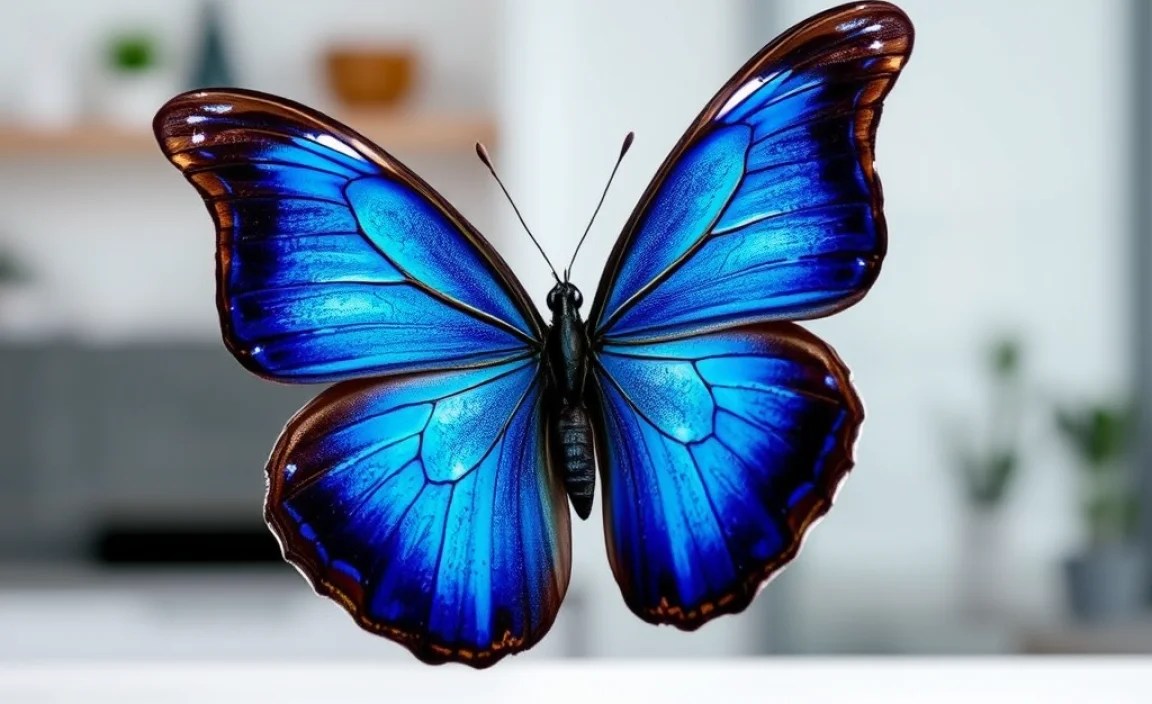
Scientists have a special way of naming living things. This is called scientific classification. The Blue Morpho belongs to the Morpho genus. A genus is a group of closely related animals or plants. The Morpho genus includes many different species of butterflies. They all share some common features. They are all large and brightly colored. Most of them have shimmering wings. The {Blue Morpho common name origins} are linked to this group. The name Morpho applies to all of them. So, when we talk about the Morpho genus, we are talking about a family of beautiful butterflies. Each species has its own unique name. But they all share the beauty of the Morpho name.
- The Morpho genus includes many butterflies.
- They are all large and brightly colored.
- They share the name Morpho.
- Each species has its own name.
- They are all part of the same family.
Understanding scientific classification is important. It helps us organize our knowledge of the natural world. It also helps us understand how different species are related. The Blue Morpho is just one member of a large family. By studying these butterflies, we can learn more about biodiversity. Biodiversity is the variety of life on Earth. It is important to protect biodiversity. This helps us ensure that future generations can enjoy these amazing creatures. The {Blue Morpho common name origins} are a small part of a larger story. This story is about life, beauty, and science.
What Is a Genus?
Have you ever heard of a family tree? A genus is like a family tree for living things. It groups together animals or plants that are closely related. For example, lions and tigers are in the same genus. They are both big cats with similar features. The Morpho genus is a group of butterflies. They all share similar characteristics. They are large, colorful, and have shimmering wings. Understanding the idea of a genus helps us. It helps us organize the natural world. It also helps us see connections between different species. The Blue Morpho is just one branch on the Morpho family tree.
Other Butterflies in the Morpho Genus
The Blue Morpho is not the only butterfly in its family. There are many other Morpho butterflies. They come in different colors and sizes. Some are brown, others are white. Some have spots, others have stripes. But they all share the beauty of the Morpho name. Some examples include the White Morpho and the Sunset Morpho. Each one is unique and special. Exploring the Morpho genus is like opening a treasure chest. You never know what beautiful surprises you will find. Each butterfly has its own story to tell. They all contribute to the beauty and diversity of the natural world.
Why Scientific Names Matter
Why do scientists use special names for living things? These names are important for communication. Common names can be confusing. The same animal might have different names in different places. Scientific names are the same all over the world. This helps scientists avoid confusion. The scientific name of the Blue Morpho is Morpho peleides. This name tells us exactly which butterfly we are talking about. It does not matter what language you speak. The scientific name is always the same. This makes it easier for scientists to share information. It also helps them study the natural world more effectively. The {Blue Morpho common name origins} connect to the scientific naming system. This system is a tool for understanding our world.
Fun Fact or Stat: There are over 80 different species of Morpho butterflies!
Geographic Distribution and Habitat

Where can you find these amazing butterflies? Blue Morphos live in Central and South America. They like to live in rainforests. Rainforests are warm and wet. They have lots of trees and plants. Blue Morphos fly high in the trees. They like to be near rivers and streams. They need a warm place to live all year. If it gets too cold, they cannot survive. Protecting rainforests is important. This helps Blue Morphos have a safe place to live. Without rainforests, these butterflies would disappear. The {Blue Morpho common name origins} are tied to this special place. It is where they got their name and beauty.
| Region | Common Habitats | Elevation | Climate |
|---|---|---|---|
| Central America | Rainforests, tropical forests | Sea level to 1,500 meters | Warm, humid, high rainfall |
| South America | Amazon basin, cloud forests | Sea level to 2,000 meters | Tropical, subtropical |
| Mexico | Southern rainforests | Sea level to 1,000 meters | Warm, humid, seasonal rainfall |
| Costa Rica | Rainforests, protected areas | Sea level to 1,800 meters | Tropical, consistent rainfall |
- They live in Central and South America.
- They prefer rainforests.
- They fly high in the trees.
- They need warm and wet places.
- Rainforest protection is important.
The Blue Morpho‘s habitat is under threat. People are cutting down rainforests. This is called deforestation. Deforestation destroys the butterfly’s home. It also harms other plants and animals. We can help protect rainforests. We can support organizations that work to save them. We can also make smart choices. We can buy products that are made in a sustainable way. This means they are made without harming the environment. The {Blue Morpho common name origins} remind us that we are all connected. We must protect their home. This way, future generations can enjoy their beauty.
Why Rainforests Are Important
Have you ever wondered why rainforests are so important? Rainforests are like the lungs of the Earth. They produce oxygen that we breathe. They also absorb carbon dioxide. This helps to regulate the climate. Rainforests are also home to many different species. They are one of the most diverse ecosystems on Earth. Protecting rainforests is important for many reasons. It helps us breathe clean air. It helps us fight climate change. It also helps us protect biodiversity. Without rainforests, the world would be a very different place. The Blue Morpho depends on the rainforest. So do we.
Threats to Their Habitat
Imagine your home is being destroyed. That is what is happening to the Blue Morpho‘s habitat. Deforestation is a major threat. People cut down trees for wood and to create farmland. This destroys the rainforest. It leaves the Blue Morpho with no place to live. Climate change is another threat. Changes in temperature and rainfall can affect the butterfly’s food supply. Pollution can also harm the rainforest. It is important to protect the Blue Morpho‘s habitat. We need to stop deforestation. We need to fight climate change. We need to reduce pollution. Only then can we ensure that these butterflies survive.
How We Can Help Protect Them
We can all help protect Blue Morphos. We can support organizations that work to save rainforests. We can also make smart choices as consumers. We can buy products that are sustainably sourced. This means they are made without harming the environment. We can also reduce our carbon footprint. We can use less energy. We can recycle. We can eat less meat. Every little bit helps. By working together, we can make a difference. We can protect the Blue Morpho and its habitat. We can ensure that future generations can enjoy their beauty. The {Blue Morpho common name origins} call us to action. We must protect this beautiful butterfly.
Fun Fact or Stat: Rainforests cover less than 6% of the Earth’s surface, but they contain over half of the world’s plant and animal species!
The Shimmering Blue Wings: Optical Illusion

The Blue Morpho‘s wings are not actually blue. They only appear to be blue. This is because of tiny structures on the wings. These structures are called scales. The scales reflect light in a special way. They cause the blue color that we see. This is called structural coloration. It is like an optical illusion. There is no blue pigment on the wings. The {Blue Morpho common name origins} are linked to this illusion. The name “Blue” is based on what we see. But the science behind it is much more complex. The shimmering effect also comes from these scales. They make the wings look like they are glowing. This is what makes the Blue Morpho so special.
- The wings appear blue because of scales.
- Scales reflect light in a special way.
- This is called structural coloration.
- There is no blue pigment.
- The wings seem to shimmer.
Structural coloration is common in nature. Many other animals use it to create colors. Birds, insects, and fish can have structural coloration. This helps them attract mates. It also helps them camouflage themselves. Understanding structural coloration is important. It helps us learn about the natural world. It also helps us develop new technologies. Scientists are studying structural coloration. They want to create new materials with special properties. The {Blue Morpho common name origins} are connected to this science. The name “Blue” reminds us of the magic of nature. It also reminds us of the power of science.
How the Scales Work
Imagine tiny mirrors on the Blue Morpho‘s wings. That is kind of what the scales are like. They are very small and layered. The layers reflect light. But they do not reflect all colors of light. They only reflect blue light. The other colors are canceled out. This is because of the way the layers are spaced. The spacing is just right to reflect blue light. This is a complex process. But the result is simple. The wings appear bright blue. Understanding this process helps us appreciate the Blue Morpho even more. It is a true wonder of nature.
Other Examples of Structural Coloration
The Blue Morpho is not the only animal with structural coloration. Many other animals use this trick of the light. Peacock feathers are a good example. They appear to be many different colors. But they only have a few pigments. The colors come from the structure of the feathers. Soap bubbles are another example. They appear to be rainbow-colored. But the colors come from the way light reflects off the bubble’s surface. Structural coloration is common in nature. It is a beautiful and fascinating phenomenon. It shows us how creative nature can be.
The Science Behind the Shimmer
The shimmering effect of the Blue Morpho‘s wings is also due to the scales. The scales are not perfectly smooth. They have tiny ridges and bumps. These imperfections scatter light in different directions. This creates a shimmering effect. It is like looking at a jewel. The light seems to dance across the surface. The shimmering effect makes the Blue Morpho even more beautiful. It is a key part of its charm. It makes it stand out from other butterflies. The {Blue Morpho common name origins} are linked to this shimmer. The name “Blue” captures the essence of this magical effect.
Fun Fact or Stat: The scales on a Blue Morpho’s wings are only about 1 micrometer thick – that’s 1/1000th of a millimeter!
Life Cycle and Metamorphosis

The Blue Morpho goes through a big change in its life. This is called metamorphosis. It starts as a tiny egg. The egg is laid on a leaf. Then, a caterpillar hatches from the egg. The caterpillar eats a lot of leaves. It grows bigger and bigger. After that, the caterpillar turns into a pupa. The pupa is inside a chrysalis. Inside the chrysalis, the caterpillar changes. It turns into a butterfly. Finally, the butterfly emerges from the chrysalis. It has bright blue wings. The {Blue Morpho common name origins} are realized at this stage. The butterfly is blue and beautiful. The whole process is amazing.
- It starts as an egg.
- Then it becomes a caterpillar.
- The caterpillar eats leaves.
- It turns into a pupa.
- The butterfly emerges.
Metamorphosis is common in insects. Many butterflies and moths go through this process. It is a way for them to adapt to different environments. The caterpillar is good at eating leaves. The butterfly is good at flying and finding nectar. The Blue Morpho‘s metamorphosis is especially dramatic. The change from caterpillar to butterfly is amazing. It is a symbol of transformation. It shows us that anything is possible. The {Blue Morpho common name origins} are part of this story. The name “Blue” represents the final stage of this transformation. It is the beautiful butterfly that we all know and love.
The Caterpillar Stage
Imagine you are a tiny caterpillar. Your job is to eat and grow. That is the life of a Blue Morpho caterpillar. They eat a lot of leaves. They can grow very quickly. They shed their skin several times. This is called molting. As they grow, they can look very different. Some are brown, others are green. Some have spines, others are smooth. The caterpillar stage is important. It is when the butterfly gets all the energy it needs. Without a healthy caterpillar stage, the butterfly cannot survive.
The Chrysalis Stage
Have you ever seen a chrysalis? It is like a sleeping bag for a butterfly. Inside the chrysalis, the caterpillar is changing. It is turning into a butterfly. This process can take several weeks. It is a time of great transformation. The chrysalis can be many different colors. Some are green, others are brown. Some even have shiny spots. The chrysalis is a safe place for the butterfly to grow. It protects it from predators. It also provides a stable environment. Without the chrysalis, the butterfly could not survive.
The Butterfly Emerges
The moment the butterfly emerges is magical. The chrysalis splits open. The butterfly slowly crawls out. Its wings are crumpled and wet. It needs to pump fluid into its wings. This makes them expand. It takes a few hours for the wings to dry and harden. Then, the butterfly can fly. The Blue Morpho emerges with its bright blue wings. It is ready to start its new life. It will fly around the rainforest. It will drink nectar from flowers. It will lay eggs. The cycle will start again. The {Blue Morpho common name origins} are fully realized at this moment. The butterfly is a symbol of beauty and transformation.
Fun Fact or Stat: The Blue Morpho caterpillar is cannibalistic, meaning it sometimes eats other caterpillars!
Diet and Feeding Habits of Blue Morpho
What do Blue Morphos eat? They do not eat leaves like their caterpillars. Instead, they drink liquids. They like to drink nectar from flowers. Nectar is a sweet juice that flowers make. They also drink sap from trees. Sometimes, they eat rotting fruit. They use their proboscis to drink. A proboscis is like a long straw. They unroll it to drink. The {Blue Morpho common name origins} are not related to their diet. But their diet helps them stay beautiful and blue. They need energy to fly and reproduce. Without food, they cannot survive.
- They drink liquids.
- They like nectar from flowers.
- They drink sap from trees.
- They eat rotting fruit.
- They use a proboscis to drink.
The Blue Morpho‘s diet is important for its survival. Nectar provides them with sugar. Sugar gives them energy. Sap provides them with minerals. Minerals are important for their health. Rotting fruit provides them with other nutrients. Nutrients are important for growth and reproduction. The butterfly’s diet is also important for the ecosystem. As they fly from flower to flower, they pollinate them. Pollination helps plants reproduce. The {Blue Morpho common name origins} remind us that everything is connected. The butterfly’s diet, its beauty, and its role in the ecosystem are all linked.
The Proboscis: A Butterfly’s Straw
Have you ever used a straw to drink a juice box? A butterfly’s proboscis is like a straw. It is a long, thin tube that they use to drink liquids. When they are not using it, they keep it curled up. When they want to drink, they unroll it. They stick it into a flower or a piece of fruit. Then, they suck up the liquid. The proboscis is a very useful tool. It allows butterflies to eat food that they could not otherwise reach. It is also a delicate tool. Butterflies have to be careful not to damage it. The proboscis is essential for the Blue Morpho‘s survival.
Why They Like Rotting Fruit
Why would a butterfly want to eat rotting fruit? It might seem strange. But rotting fruit is a good source of nutrients. It contains sugars, minerals, and other compounds. These nutrients are important for the butterfly’s health. Rotting fruit is also easy to eat. It is soft and juicy. The butterfly can easily suck up the liquid with its proboscis. Rotting fruit is not the butterfly’s only food source. But it is an important part of its diet. It helps them stay healthy and strong.
Pollination and Their Role in the Ecosystem
When Blue Morphos fly from flower to flower, they help pollinate them. Pollination is the process of transferring pollen from one flower to another. Pollen is needed for plants to reproduce. Butterflies carry pollen on their bodies. As they fly, they brush against flowers. They transfer pollen from one flower to another. This helps the plants make seeds and fruits. Pollination is important for the ecosystem. It helps plants survive and thrive. Butterflies play an important role in this process. The {Blue Morpho common name origins} are linked to this role. The butterfly’s beauty helps attract people’s attention. This can help raise awareness about the importance of pollination.
Fun Fact or Stat: Blue Morphos can taste with their feet, which helps them find food sources!
Predators and Defense Mechanisms
Blue Morphos have many predators. Birds, lizards, and insects all like to eat them. To protect themselves, they have some special defenses. Their bright blue wings can startle predators. When they fly, the blue color flashes. This makes it hard for predators to track them. They also have brown undersides on their wings. When they land, they close their wings. The brown color helps them blend in with the trees. This makes them harder to see. The {Blue Morpho common name origins} do not directly help them. But their appearance plays a role in their defense.
- They have many predators.
- Bright blue wings startle predators.
- Brown undersides help them blend in.
- They fly erratically to escape.
- They can also play dead.
The Blue Morpho‘s defense mechanisms are important for its survival. Without them, it would be easily eaten by predators. Their erratic flight patterns also help them escape. They do not fly in a straight line. They zig and zag. This makes it hard for predators to catch them. Some Blue Morphos also play dead. When they are threatened, they fall to the ground. They pretend to be dead. This can trick predators into leaving them alone. The {Blue Morpho common name origins} are a reminder of the constant struggle for survival in the rainforest.
Camouflage: Hiding in Plain Sight
Imagine you are trying to hide from someone. What would you do? You might try to blend in with your surroundings. That is what Blue Morphos do with their brown undersides. When they land, they close their wings. The brown color helps them look like a dead leaf. This makes them harder for predators to see. Camouflage is a common defense mechanism. Many animals use it to protect themselves. It is a way to hide in plain sight. The Blue Morpho‘s camouflage is not perfect. But it can help them survive.
Startling Predators with Bright Colors
Have you ever been startled by something unexpected? A loud noise, or a sudden movement? Blue Morphos use their bright blue wings to startle predators. When they fly, the blue color flashes. This can surprise predators. It gives the butterfly a chance to escape. Startling predators is a common defense mechanism. Many animals use bright colors or loud noises to scare away attackers. The Blue Morpho‘s bright blue wings are a perfect example of this strategy.
Erratic Flight Patterns: Zigging and Zagging
Imagine you are trying to catch a fly. They are hard to catch because they fly erratically. They do not fly in a straight line. They zig and zag. Blue Morphos also fly erratically. This makes it hard for predators to track them. They can quickly change direction. They can also fly up and down. This makes them hard to catch. Erratic flight patterns are a useful defense mechanism. They help butterflies escape from predators. The {Blue Morpho common name origins} are linked to this skill. The butterfly’s beauty and agility help it survive in the rainforest.
Fun Fact or Stat: Some Blue Morpho species have eyespots on their wings to further deter predators!
Summary
The Blue Morpho is a beautiful butterfly with a fascinating story. The {Blue Morpho common name origins} come from its bright blue wings and the Greek word “Morpho,” meaning beautiful. These butterflies live in the rainforests of Central and South America. Their blue color is not from pigment. It comes from the structure of their scales. This creates an optical illusion. They go through a complete metamorphosis. They change from eggs to caterpillars to pupae to butterflies. They drink nectar, sap, and rotting fruit. They defend themselves from predators. They use bright colors and camouflage.
Protecting the Blue Morpho‘s habitat is important. We can support organizations that work to save rainforests. We can also make smart choices as consumers. We must remember that everything is connected. The butterfly’s beauty, its diet, and its role in the ecosystem are all linked. The {Blue Morpho common name origins} are a reminder of the magic and complexity of nature.
Conclusion
The Blue Morpho is more than just a pretty butterfly. It is a symbol of beauty, transformation, and the interconnectedness of nature. Its bright blue wings and shimmering scales have captivated people for centuries. The {Blue Morpho common name origins} reflect its unique appearance and the ancient appreciation for beauty. By understanding the science behind its colors, its life cycle, and its role in the ecosystem, we can better appreciate this amazing creature. We must protect its habitat. We can help ensure that future generations can enjoy the beauty of the Blue Morpho.
Frequently Asked Questions
Question No 1: Where does the name “Blue Morpho” come from?
Answer: The name “Blue Morpho” comes from two things. The “Blue” part comes from the bright blue color of its wings. The “Morpho” part comes from a Greek word. The Greek word means “beautiful” or “well-formed.” So, the name combines the butterfly’s color and its beauty. The {Blue Morpho common name origins} are a mix of observation and admiration. The name is easy to remember and describes the butterfly well.
Question No 2: Are Blue Morpho butterflies really blue?
Answer: Yes, Blue Morpho butterflies appear to be blue. But the blue color is not from a pigment. It is from the structure of their wings. Tiny scales on the wings reflect light in a special way. This is called structural coloration. It is like an optical illusion. The wings only reflect blue light. This makes them appear blue to our eyes. The {Blue Morpho common name origins} are based on this visual effect.
Question No 3: Where do Blue Morpho butterflies live?
Answer: Blue Morpho butterflies live in Central and South America. They like to live in rainforests. Rainforests are warm and wet. They have lots of trees and plants. Blue Morphos fly high in the trees. They need a warm place to live all year. If it gets too cold, they cannot survive. Protecting rainforests is important. This helps Blue Morphos have a safe place to live.
Question No 4: What do Blue Morpho butterflies eat?
Answer: Blue Morpho butterflies do not eat leaves. Instead, they drink liquids. They like to drink nectar from flowers. Nectar is a sweet juice that flowers make. They also drink sap from trees. Sometimes, they eat rotting fruit. They use their proboscis to drink. A proboscis is like a long straw. They unroll it to drink. Their diet is important for their health and energy.
Question No 5: How do Blue Morpho butterflies protect themselves?
Answer: Blue Morpho butterflies have several ways to protect themselves. Their bright blue wings can startle predators. When they fly, the blue color flashes. This makes it hard for predators to track them. They also have brown undersides on their wings. When they land, they close their wings. The brown color helps them blend in with the trees. This makes them harder to see. They also fly erratically to escape.
Question No 6: Why is it important to protect Blue Morpho butterflies?
Answer: It is important to protect Blue Morpho butterflies for several reasons. They are a beautiful part of nature. They also play a role in the ecosystem. They help pollinate flowers. Their habitat is under threat from deforestation. Protecting rainforests is important for the survival of Blue Morphos. It is also important for the health of the planet. The {Blue Morpho common name origins} remind us of the beauty we need to protect.


