
Unlock Asian Butterfly Color Pattern Genes

Did you ever wonder why butterflies are so colorful? What makes their wings so bright? It’s all thanks to tiny things called genes. These genes control the colors and patterns on their wings. Today, we will explore Asian butterfly color pattern genes.
These genes are like secret codes. They tell the butterfly how to make its colors. Some butterflies have spots. Others have stripes. It’s all in their genes! Let’s learn more about these amazing Asian butterfly color pattern genes.
Key Takeaways
- Asian butterfly color pattern genes determine wing colors and patterns.
- Specific genes control different aspects of wing design in butterflies.
- Scientists study these genes to understand butterfly evolution and diversity.
- Environmental factors can also influence how these genes are expressed.
- Understanding these genes helps us protect butterfly populations better.
How Genes Impact Butterfly Colors

Have you ever seen a butterfly with bright colors? The Asian butterfly color pattern genes decide these colors. Genes are like instructions. They tell the butterfly’s body what to do. Some instructions say, “Make red.” Other instructions say, “Make blue.” When these instructions work together, they create beautiful patterns. Different genes control different parts of the wing. Some control the color of the spots. Others control the stripes. This is how butterflies get their unique looks. Scientists study these genes to learn about butterfly evolution. They want to know how butterflies change over time.
- Genes determine butterfly wing colors.
- Different genes control different patterns.
- Genes work together to make unique designs.
- Scientists study genes to understand evolution.
- Butterfly wings display colors for camouflage.
Imagine you are painting a picture. You have different colors of paint. Each color is like a gene. You use these colors to create a beautiful scene. The Asian butterfly color pattern genes are like the butterfly’s paint set. They use these genes to create their colorful wings. These genes help them attract mates. They also help them hide from predators. It’s amazing how much these tiny genes can do. Scientists are still learning about all the different genes involved in butterfly color patterns. They use special tools to study the genes. This helps them understand how butterflies evolved.
Fun Fact or Stat: Some butterfly species have over 50 different genes that control wing color patterns!
What Are Butterfly Wing Scales?
Have you ever touched a butterfly’s wing? It feels like powder. That powder is made of tiny scales. These scales are like tiny tiles. They cover the butterfly’s wing. Each scale has a color. The Asian butterfly color pattern genes control the color of these scales. The scales overlap like shingles on a roof. This creates the patterns we see. When a butterfly loses scales, it loses color. That’s why it’s important to be gentle with butterflies. Scales also help butterflies fly. They create a smooth surface. This helps the butterfly move through the air. Scientists study these scales to learn about butterfly colors.
How Do Genes Create Patterns?
Asian butterfly color pattern genes are like blueprints. They tell the butterfly’s cells what to do. Some genes turn on. Others turn off. This creates a pattern of colors. Imagine a light switch. Some switches turn on the lights. Other switches turn them off. Butterfly genes work the same way. They turn on and off to create patterns. Some genes create spots. Other genes create stripes. It’s like a secret code. The butterfly’s body knows how to read the code. This creates the beautiful patterns we see. Scientists are still learning how these genes work together.
Why Are Butterfly Patterns Important?
Butterfly patterns are very important. They help butterflies survive. Some patterns help them hide. This is called camouflage. The butterfly blends in with its surroundings. This protects it from predators. Other patterns help them attract mates. Bright colors can attract attention. This helps them find a partner. Asian butterfly color pattern genes play a big role in this. They determine the colors and patterns. These colors and patterns help butterflies survive and reproduce. Scientists study these patterns to understand how butterflies live.
The Role of Specific Genes in Wing Design

Specific genes play special roles in wing design. Some genes control the background color. Others control the spots and stripes. For example, one gene might determine if the wing is yellow or blue. Another gene might add black spots. Asian butterfly color pattern genes work together to create the final design. Scientists have identified many of these genes. They use special tools to study them. This helps them understand how each gene works. Some genes are more important than others. If a key gene is missing, the butterfly might look very different. This shows how important each gene is.
- Some genes control background color.
- Other genes add spots and stripes.
- Genes work together for the final design.
- Scientists study genes with special tools.
- Missing genes can change butterfly appearance.
Imagine building with LEGO bricks. Each brick is like a gene. Some bricks are big. Others are small. You use these bricks to build a castle. Each brick plays a role in the castle’s design. Asian butterfly color pattern genes are like the LEGO bricks. They work together to build the butterfly’s wing. Each gene has a specific job. Some genes make the wing strong. Others make it colorful. Scientists are still discovering new genes. They want to understand how each gene contributes to the overall design. This helps them understand how butterflies evolved.
Fun Fact or Stat: Certain genes can cause a butterfly to have different wing patterns on its left and right sides!
How Do Genes Interact?
Asian butterfly color pattern genes don’t work alone. They interact with each other. Some genes turn other genes on or off. This creates complex patterns. Imagine a group of friends. They work together to build a treehouse. Each friend has a different job. Some friends gather wood. Others hammer nails. They all work together to build the treehouse. Butterfly genes work the same way. They cooperate to create the wing patterns. Scientists study these interactions to understand how butterflies develop. They use computers to model how the genes work together.
What Happens If a Gene Is Mutated?
Sometimes, a gene can change. This is called a mutation. Mutations can change the butterfly’s appearance. For example, a mutation might change the color of a spot. Or it might make a stripe disappear. Asian butterfly color pattern genes are affected by mutations. Some mutations are harmful. They can make it harder for the butterfly to survive. Other mutations are helpful. They can help the butterfly blend in better. Mutations are a natural part of evolution. They help butterflies adapt to their environment. Scientists study mutations to understand how butterflies change over time.
Can Environment Affect Genes?
Yes, the environment can affect genes. This is called gene expression. The environment can turn genes on or off. For example, temperature can affect wing color. Butterflies that grow in warm temperatures might have different colors than butterflies that grow in cool temperatures. Asian butterfly color pattern genes are sensitive to the environment. This helps butterflies adapt to different conditions. Scientists study how the environment affects genes. They want to understand how butterflies respond to climate change. They also want to see if pollution affects their genes. This is a big concern these days.
Studying Asian Butterfly Color Pattern Genes
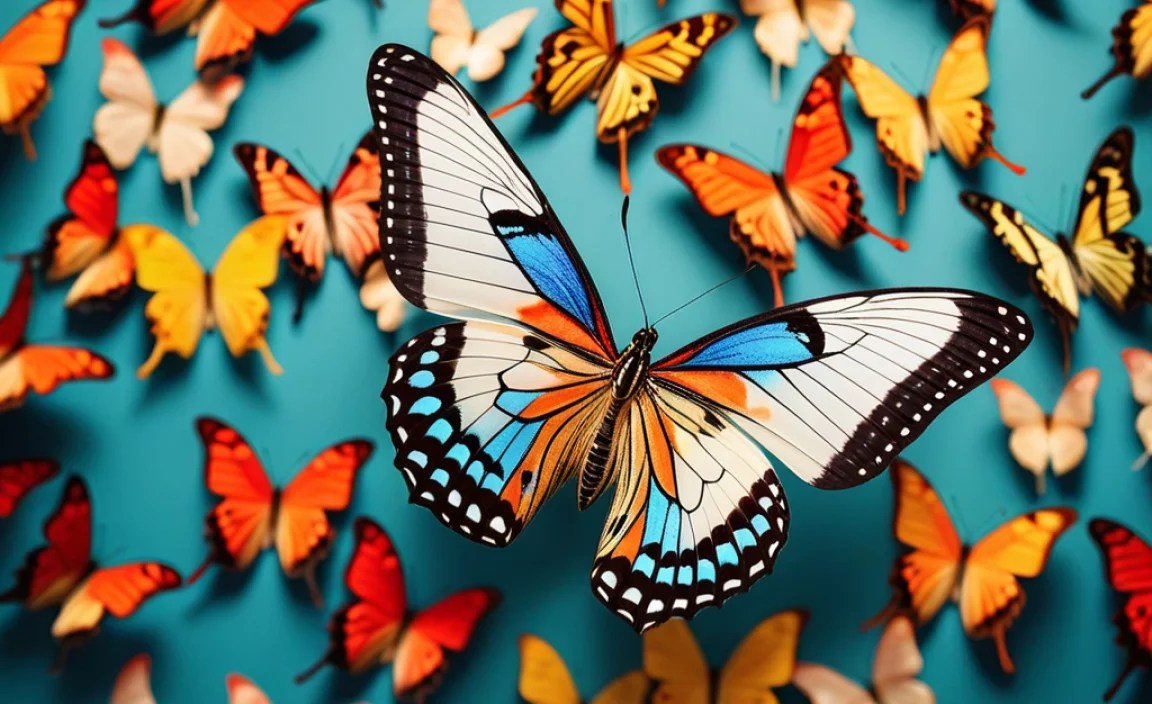
Studying Asian butterfly color pattern genes is like being a detective. Scientists use special tools to find clues. These clues help them understand how genes work. They collect butterflies from different places. Then, they study their DNA. DNA is like a blueprint for the butterfly. It contains all the instructions for building the butterfly. Scientists compare the DNA of different butterflies. This helps them find the genes that control color patterns. They also use computers to analyze the data. This helps them see how the genes interact with each other. Scientists are making new discoveries all the time.
- Scientists collect butterflies.
- They study the butterfly’s DNA.
- They compare DNA of different butterflies.
- They use computers to analyze the data.
- New discoveries are always being made.
Imagine you are trying to solve a puzzle. Each puzzle piece is like a piece of information. You put the pieces together to see the whole picture. Studying Asian butterfly color pattern genes is like solving a puzzle. Scientists gather information from different sources. They put the information together to understand how genes work. They use microscopes to look at butterfly wings. They use computers to model gene interactions. They work together to solve the puzzle. Their discoveries can help us understand evolution. They can also help us protect butterfly populations.
Fun Fact or Stat: Scientists use powerful microscopes that can magnify butterfly wings up to 10,000 times!
What Tools Do Scientists Use?
Scientists use many tools to study Asian butterfly color pattern genes. They use microscopes to look at butterfly wings. They use DNA sequencers to read the butterfly’s DNA. They use computers to analyze the data. They also use special chemicals to stain the wings. This helps them see the patterns more clearly. Scientists are always developing new tools. These tools help them study genes in more detail. They also use genetic engineering to change a gene. This helps them see what the gene does. It is important for them to know.
How Do Scientists Collect Butterflies?
Scientists collect butterflies in different ways. They use nets to catch butterflies in the wild. They also raise butterflies in the lab. This allows them to study the butterflies in a controlled environment. Asian butterfly color pattern genes are studied in these butterflies. They collect eggs and caterpillars. They feed them special food. They keep them in a warm place. When the butterflies emerge, they study their wings. They take pictures and collect DNA samples. They release the butterflies back into the wild.
Why Is This Research Important?
This research is very important. It helps us understand how butterflies evolve. It also helps us protect butterfly populations. Asian butterfly color pattern genes are important for survival. If we understand these genes, we can help butterflies adapt to climate change. We can also help them resist diseases. Butterflies are important for the environment. They pollinate flowers. They are also a food source for other animals. By protecting butterflies, we are protecting the environment. It is very important for the future.
Environmental Influences on Butterfly Wing Patterns
The environment can play a big role in butterfly wing patterns. Temperature, humidity, and sunlight can all affect the colors and patterns on a butterfly’s wings. Asian butterfly color pattern genes are not the only factor. The environment can change how these genes are expressed. For example, a butterfly that grows up in a hot climate might have darker wings than a butterfly that grows up in a cold climate. This is because darker wings absorb more heat. This helps the butterfly stay warm. The environment can also affect the size and shape of the wings. Scientists study these effects to understand how butterflies adapt to their environment.
- Temperature can affect wing color.
- Humidity can affect wing size.
- Sunlight can affect wing pattern.
- Environment changes gene expression.
- Butterflies adapt to their surroundings.
Imagine you are growing a plant. You give it water, sunlight, and fertilizer. The plant grows tall and strong. But if you don’t give it enough water, it might not grow as well. The environment affects the plant’s growth. Asian butterfly color pattern genes are like the seeds of the plant. They contain the instructions for how the butterfly should grow. But the environment can affect how those instructions are carried out. Scientists study these interactions to understand how butterflies respond to changes in the environment. This is important for protecting butterflies in a changing world.
Fun Fact or Stat: Some butterfly species change their wing patterns depending on the season!
How Does Temperature Affect Color?
Temperature can have a big impact on butterfly color. In many species, lower temperatures lead to darker wings. Darker colors absorb more sunlight. This helps the butterfly stay warm in cooler climates. Higher temperatures can lead to lighter wings. Lighter colors reflect more sunlight. This helps the butterfly stay cool in warmer climates. Asian butterfly color pattern genes are influenced by temperature. The genes respond to the temperature and produce the appropriate colors. Scientists study this to understand how butterflies adapt to different climates. This is very interesting.
What About Humidity and Wing Size?
Humidity can also affect butterfly wing size. Higher humidity can lead to larger wings. Larger wings help the butterfly fly more easily in humid conditions. Lower humidity can lead to smaller wings. Smaller wings are more efficient in dry conditions. Asian butterfly color pattern genes interact with humidity. These genes control wing development. The environment influences the final size of the wings. Scientists study this to understand how butterflies adapt to different environments. It is very important for them.
Can Pollution Affect Wing Patterns?
Yes, pollution can affect butterfly wing patterns. Pollutants in the air and water can harm butterflies. They can damage their DNA. This can lead to changes in their wing patterns. Asian butterfly color pattern genes are vulnerable to pollution. Pollution can disrupt the genes. This can cause the butterfly to develop abnormal colors or patterns. Scientists are studying the effects of pollution on butterflies. They want to understand how to protect butterflies from these harmful effects. It is a very big problem.
| Environmental Factor | Effect on Wing Pattern | Why It Matters |
|---|---|---|
| Temperature | Darker wings in colder climates, lighter in warmer | Helps butterflies regulate body temperature |
| Humidity | Larger wings in humid areas, smaller in dry areas | Affects flight efficiency in different conditions |
| Sunlight | Can influence color intensity and pattern clarity | Affects visibility and camouflage |
| Pollution | Disrupted patterns, abnormal colors | Indicates environmental stress and DNA damage |
Genetic Mutations and Color Variations
Sometimes, genes can change. These changes are called mutations. Mutations can cause variations in butterfly color patterns. Some mutations are small. They might only change the color of a spot. Other mutations are big. They might change the entire wing pattern. Asian butterfly color pattern genes are not immune to mutations. Mutations are a natural part of evolution. They can help butterflies adapt to new environments. However, some mutations can be harmful. They can make it harder for the butterfly to survive. Scientists study mutations to understand how butterflies evolve and adapt.
- Mutations are changes in genes.
- Mutations cause color variations.
- Some mutations are small.
- Other mutations are big.
- Mutations can be harmful or helpful.
Imagine you are playing with building blocks. You have a set of instructions for building a tower. But one day, you accidentally change one of the instructions. This might cause the tower to look different. Asian butterfly color pattern genes are like the instructions for building a butterfly. Mutations are like changing one of those instructions. This can cause the butterfly to have a different color pattern. Scientists study these mutations to understand how genes work. They also want to know how mutations affect the butterfly’s survival.
Fun Fact or Stat: A single gene mutation can sometimes create an entirely new butterfly species!
How Do Mutations Happen?
Mutations can happen for different reasons. Sometimes, they happen randomly. Other times, they are caused by environmental factors. Radiation and chemicals can damage DNA. This can lead to mutations. Asian butterfly color pattern genes are vulnerable to these factors. Mutations are a natural part of life. They help species adapt to changing environments. Scientists study mutations to understand evolution. They also want to know how to prevent harmful mutations. It is very important.
What Are the Different Types of Mutations?
There are different types of mutations. Some mutations change a single letter in the DNA code. These are called point mutations. Other mutations change a larger section of DNA. These are called chromosomal mutations. Asian butterfly color pattern genes can be affected by both types of mutations. Each type of mutation can have different effects on the butterfly’s appearance. Scientists study these different types of mutations. They want to understand how they affect gene function. It is very complex.
How Do Mutations Affect Survival?
Mutations can affect a butterfly’s survival in different ways. Some mutations make it harder for the butterfly to survive. For example, a mutation might make the butterfly more visible to predators. Other mutations make it easier for the butterfly to survive. For example, a mutation might make the butterfly better camouflaged. Asian butterfly color pattern genes are important for survival. Mutations in these genes can have a big impact on the butterfly’s fitness. Scientists study these effects to understand how evolution works. It is very important.
Conservation and the Future of Butterfly Genetics
Conserving butterflies is very important. Butterflies are important for the environment. They pollinate flowers. They are also a food source for other animals. Asian butterfly color pattern genes play a role in conservation. By understanding these genes, we can help butterflies adapt to climate change. We can also help them resist diseases. Conservation efforts can help protect butterfly populations. This includes protecting their habitats. It also includes reducing pollution. By working together, we can help ensure the future of butterflies.
- Butterflies are important pollinators.
- They are a food source for animals.
- Genes help butterflies adapt.
- Conservation protects habitats.
- We can ensure butterfly survival.
Imagine you are a gardener. You plant flowers and take care of them. You protect them from pests and diseases. You want them to thrive. Conserving butterflies is like being a gardener. We need to protect butterflies and their habitats. We need to reduce pollution. We need to help them adapt to climate change. Asian butterfly color pattern genes can help us do this. By understanding these genes, we can make better decisions about conservation. We can help ensure that butterflies continue to thrive for many years to come.
Fun Fact or Stat: Butterfly populations have declined by over 30% in some areas due to habitat loss and climate change!
How Can We Protect Butterfly Habitats?
Protecting butterfly habitats is crucial. We can do this in several ways. We can create butterfly gardens. We can plant native plants. We can reduce pesticide use. Asian butterfly color pattern genes are affected by habitat loss. When butterflies lose their habitats, they struggle to survive. We need to protect their homes. We can also support conservation organizations. These organizations work to protect butterfly habitats. It is very important for us all.
What Is the Role of Citizen Science?
Citizen science is important for butterfly conservation. Citizen scientists are volunteers who help collect data. They can track butterfly populations. They can monitor butterfly habitats. Asian butterfly color pattern genes can be studied using citizen science data. This data helps scientists understand how butterflies are changing. It also helps them identify areas that need protection. Anyone can become a citizen scientist. It is a great way to help butterflies.
What Does the Future Hold for Butterfly Genetics?
The future of butterfly genetics is bright. Scientists are developing new tools to study genes. They are learning more about how genes work. Asian butterfly color pattern genes will be studied in more detail. This will help us understand how butterflies evolve. It will also help us protect butterfly populations. Genetic engineering might be used to help butterflies resist diseases. The possibilities are endless. We can help butterflies thrive in the future. This is a really exciting time.
Summary
Asian butterfly color pattern genes play a vital role in the beautiful wing designs we see. These genes determine the colors, patterns, and shapes of butterfly wings. Scientists study these genes to understand butterfly evolution and adaptation. Environmental factors like temperature and humidity also influence wing patterns. Mutations in these genes can lead to variations in color and pattern. Conservation efforts are important for protecting butterfly populations. Understanding butterfly genetics helps us ensure their survival in a changing world. These genes are important to understand.
Conclusion
Asian butterfly color pattern genes are fascinating. They show how genes and the environment work together. They create the stunning diversity of butterfly wings. Studying these genes helps us understand evolution. It also helps us protect these important creatures. By conserving butterfly habitats, we can ensure that future generations can enjoy their beauty. We must learn more about these genes.
Frequently Asked Questions
Question No 1: What are genes?
Answer: Genes are like tiny instruction manuals inside your body. They tell your body how to grow and develop. Genes determine things like your eye color, hair color, and height. Asian butterfly color pattern genes determine the colors and patterns on butterfly wings. Genes are passed down from parents to their children. This is why family members often share similar traits. Genes are made of DNA. DNA is a long molecule that carries the genetic code. Each gene contains a specific set of instructions. These instructions tell the body how to make a specific protein. Proteins are the building blocks of the body.
Question No 2: How do genes determine butterfly wing color?
Answer: Genes contain instructions for making pigments. Pigments are substances that create color. Asian butterfly color pattern genes tell the butterfly’s body which pigments to make. Some genes tell the body to make red pigment. Other genes tell the body to make blue pigment. The combination of different pigments creates the butterfly’s wing color. The genes also control where the pigments are placed on the wing. This creates the butterfly’s unique patterns. These patterns can help them to attract mates or hide from predators. Butterflies are amazing creatures.
Question No 3: What is a mutation?
Answer: A mutation is a change in a gene. Mutations can happen randomly. They can also be caused by environmental factors. Some mutations are harmful. They can make it harder for the butterfly to survive. Other mutations are helpful. They can help the butterfly adapt to its environment. Asian butterfly color pattern genes can experience mutations. These mutations can change the butterfly’s wing color or pattern. Mutations are a natural part of evolution. They help species change over time. Mutations are very important to understand.
Question No 4: How does the environment affect butterfly wing patterns?
Answer: The environment can affect how genes are expressed. This means that the environment can turn genes on or off. Temperature, humidity, and sunlight can all affect butterfly wing patterns. For example, butterflies that grow up in warm temperatures might have different colors than butterflies that grow up in cool temperatures. Asian butterfly color pattern genes respond to environmental cues. This helps butterflies adapt to different conditions. The environment plays a big role in butterfly development. It’s important to protect their habitats so they can continue to thrive.
Question No 5: Why is it important to study butterfly genetics?
Answer: Studying butterfly genetics helps us understand evolution. It also helps us protect butterfly populations. Butterflies are important pollinators. They are also a food source for other animals. Asian butterfly color pattern genes are important for butterfly survival. By understanding these genes, we can help butterflies adapt to climate change. We can also help them resist diseases. Protecting butterflies is important for the environment. It’s also important for our own well-being. We must do everything we can.
Question No 6: How can I help protect butterflies?
Answer: There are many things you can do to help protect butterflies. You can plant butterfly gardens. You can use native plants. You can reduce pesticide use. You can also support conservation organizations. Educate others about the importance of butterflies. Asian butterfly color pattern genes are affected by habitat loss. By protecting butterfly habitats, you can help ensure their survival. Every small action makes a big difference. Together, we can help butterflies thrive for generations to come. We must do our part.


