
Ultimate Guide: European Butterfly Lifecycle Stages

The European butterfly lifecycle unfolds in four amazing stages: egg, larva (caterpillar), pupa (chrysalis), and adult. Each stage is unique, with its own purpose and fascinating transformations. From tiny eggs on leaves to winged beauties flitting through meadows, understanding these stages allows you to appreciate the wonder of butterflies.
Have you ever wondered how a butterfly transforms from a tiny egg into a colourful flying insect? It’s a journey of amazing changes, each stage playing a vital role. Many nature lovers and gardeners find the butterfly lifecycle fascinating but sometimes a bit confusing. Don’t worry! We’ll explore each stage of the European butterfly lifecycle together. We’ll uncover the secrets of their growth and the challenges they face. Get ready to discover the magic behind these beautiful creatures!
Frequently Asked Questions
What do butterfly eggs look like?
Butterfly eggs come in various shapes, sizes, and colours, depending on the species. They can be round, oval, or even spindle-shaped, and their colours range from white and yellow to green and brown. Some are laid singly, while others are laid in clusters.
What do caterpillars eat?
Caterpillars primarily eat leaves, but their specific diet depends on the butterfly species. Some caterpillars are very picky eaters, only feeding on a particular type of plant, while others are more general feeders.
How long does the caterpillar stage last?
The caterpillar stage can last from a few weeks to several months, depending on the species and environmental conditions like temperature and food availability. During this time, the caterpillar eats and grows rapidly, shedding its skin multiple times.
What is a chrysalis?
A chrysalis is the pupal stage of a butterfly. It’s a protective shell in which the caterpillar transforms into a butterfly. The chrysalis can be green, brown, or camouflaged to blend in with its surroundings.
How long does it take for a butterfly to emerge from the chrysalis?
The time it takes for a butterfly to emerge from the chrysalis varies depending on the species and environmental conditions. It can range from a few days to several weeks.
What do adult butterflies eat?
Adult butterflies primarily feed on nectar from flowers, using their long proboscis to sip the sweet liquid. They also drink water and sometimes feed on tree sap or rotting fruit.
How long do adult butterflies live?
The lifespan of an adult butterfly varies greatly depending on the species. Some butterflies live only a few days or weeks, while others can live for several months. Factors such as predation, weather, and availability of food sources also affect their lifespan.
The Amazing European Butterfly Lifecycle Stages

The butterfly lifecycle is a remarkable process called complete metamorphosis. This means the butterfly goes through four distinct stages, each with its own unique form and function. Let’s explore these stages in detail.
Stage 1: The Egg
The butterfly lifecycle begins with the egg. Female butterflies carefully lay their eggs on specific host plants, which will serve as food for the hatching caterpillars. These plants are crucial for the survival of the next generation.
- Appearance: Butterfly eggs come in various shapes, sizes, and colours. They can be round, oval, or spindle-shaped, and their colours range from white and yellow to green and brown. Some eggs are smooth, while others have intricate patterns on their surface.
- Location: Butterflies choose host plants carefully, often laying eggs on the underside of leaves. This provides protection from predators and harsh weather conditions. The choice of host plant is specific to each butterfly species.
- Duration: The egg stage can last from a few days to a couple of weeks, depending on the butterfly species and environmental conditions such as temperature and humidity.
Stage 2: The Larva (Caterpillar)
Once the egg hatches, the larva, or caterpillar, emerges. This is the feeding and growing stage of the butterfly lifecycle. Caterpillars are eating machines, consuming vast amounts of foliage to fuel their rapid growth.
- Appearance: Caterpillars come in a wide variety of colours, patterns, and shapes. Some are brightly coloured, while others are camouflaged to blend in with their surroundings. They have segmented bodies, true legs, and prolegs (false legs) that help them grip onto plants.
- Feeding Habits: Caterpillars are voracious eaters, feeding primarily on the leaves of their host plants. They have strong mandibles (jaws) that they use to chew through foliage. Some caterpillars are very picky eaters, only feeding on a particular type of plant, while others are more general feeders.
- Growth and Moulting: As caterpillars grow, they shed their skin multiple times in a process called moulting. Each time a caterpillar moults, it reveals a new, larger skin underneath. The number of moults varies depending on the species.
Caterpillar Defenses
Caterpillars have several strategies to protect themselves from predators:
- Camouflage: Many caterpillars are camouflaged to blend in with their surroundings, making it difficult for predators to spot them.
- Warning Colours: Some caterpillars are brightly coloured to warn predators that they are poisonous or distasteful.
- Spines and Hairs: Some caterpillars have spines or hairs that can irritate or deter predators.
- Defensive Behaviour: Some caterpillars will thrash around or drop off their host plant when threatened.
Stage 3: The Pupa (Chrysalis)
After reaching its full size, the caterpillar enters the pupa stage. The caterpillar transforms into a chrysalis, a protective shell in which it undergoes metamorphosis. This is a period of dramatic change, as the caterpillar’s body is broken down and rebuilt into a butterfly.
- Appearance: The chrysalis can be green, brown, or camouflaged to blend in with its surroundings. It may be smooth or textured, and some chrysalises have metallic markings.
- Formation: The caterpillar attaches itself to a twig or leaf using silk. It then sheds its skin one last time, revealing the chrysalis underneath.
- Metamorphosis: Inside the chrysalis, the caterpillar’s body undergoes a complete transformation. Special cells called imaginal discs develop into the wings, legs, and other body parts of the butterfly.
Stage 4: The Adult Butterfly
Finally, the adult butterfly emerges from the chrysalis. This is the reproductive stage of the butterfly lifecycle. The butterfly’s primary goal is to find a mate and lay eggs, starting the lifecycle anew.
- Emergence: When the butterfly is ready to emerge, the chrysalis splits open, and the butterfly slowly crawls out. Its wings are crumpled and wet, and it needs to pump fluid through its veins to expand them.
- Appearance: Adult butterflies have colourful wings, long legs, and antennae. They have a proboscis, a long, straw-like tongue that they use to sip nectar from flowers.
- Feeding: Adult butterflies primarily feed on nectar from flowers, using their proboscis to reach the nectar. They also drink water and sometimes feed on tree sap or rotting fruit.
- Reproduction: Adult butterflies mate and lay eggs, continuing the lifecycle. Female butterflies lay their eggs on specific host plants, ensuring that the next generation of caterpillars will have a food source.
Examples of European Butterfly Lifecycle Stages

Let’s take a closer look at the lifecycle stages of some common European butterflies.
The Monarch Butterfly (Danaus plexippus)
The Monarch butterfly is famous for its long-distance migration and striking orange and black wings.
- Egg: Monarch eggs are small, oval-shaped, and creamy white. They are laid singly on milkweed plants (Asclepias spp.).
- Caterpillar: Monarch caterpillars have black, yellow, and white stripes. They feed exclusively on milkweed leaves, which contain toxins that make them poisonous to predators.
- Chrysalis: The Monarch chrysalis is bright green with gold markings. It hangs upside down from a twig or leaf.
- Adult Butterfly: Adult Monarch butterflies have orange wings with black veins and white spots along the edges. They migrate thousands of miles each year to overwintering sites in Mexico and California.
The Small White Butterfly (Pieris rapae)
The Small White butterfly is a common sight in gardens and fields throughout Europe.
- Egg: Small White eggs are pale yellow and spindle-shaped. They are laid singly on various plants in the cabbage family (Brassicaceae).
- Caterpillar: Small White caterpillars are green with a faint yellow stripe along their sides. They feed on the leaves of cabbage, broccoli, and other cruciferous plants.
- Chrysalis: The Small White chrysalis can be green or brown, depending on its surroundings. It is attached to a stem or leaf with a silk girdle.
- Adult Butterfly: Adult Small White butterflies are white with black tips on their forewings. They are often seen flitting around gardens and fields.
The Peacock Butterfly (Aglais io)
The Peacock butterfly is known for its striking eyespots on its wings, which resemble the eyes of a peacock.
- Egg: Peacock butterfly eggs are greenish-grey and ribbed. They are laid in clusters on nettle plants (Urtica dioica).
- Caterpillar: Peacock caterpillars are black with white spots and spines. They feed on the leaves of nettle plants.
- Chrysalis: The Peacock chrysalis is brown and angular, with small spines. It is attached to a stem or leaf.
- Adult Butterfly: Adult Peacock butterflies have reddish-brown wings with prominent eyespots. They are often seen basking in the sun in gardens and woodlands.
Factors Affecting the Butterfly Lifecycle
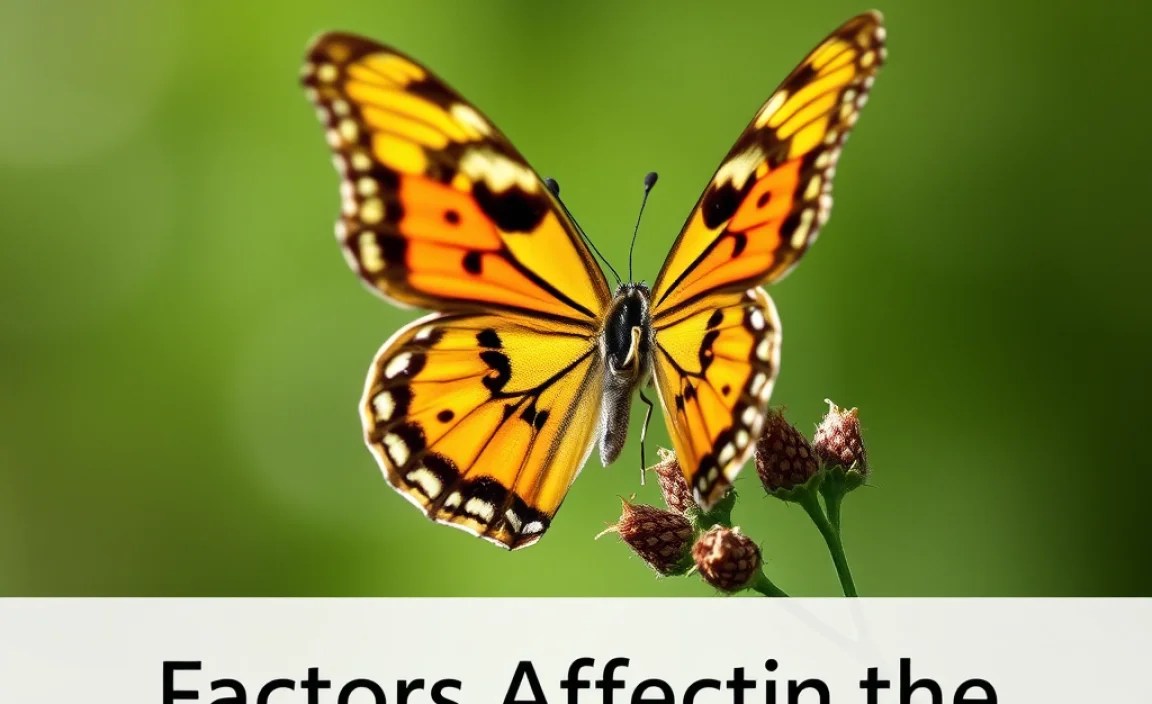
Several factors can affect the butterfly lifecycle, including:
- Temperature: Temperature plays a crucial role in the development of butterflies. Warmer temperatures generally speed up development, while cooler temperatures slow it down. In some cases, extremely cold temperatures can be fatal to butterfly eggs, caterpillars, or pupae.
- Humidity: Humidity is also important for butterfly development. High humidity can promote fungal growth, which can be harmful to butterfly eggs and caterpillars. Low humidity can cause eggs and caterpillars to dry out.
- Food Availability: Caterpillars need a constant supply of food to grow and develop. If their host plants are scarce or of poor quality, they may not be able to reach their full size or successfully pupate.
- Predation: Butterflies and their caterpillars are preyed upon by a variety of animals, including birds, insects, and spiders. Predation can significantly reduce butterfly populations.
- Habitat Loss: Habitat loss is a major threat to butterflies. As natural habitats are destroyed for agriculture, development, and other purposes, butterflies lose their food sources and breeding grounds.
- Pesticides: Pesticides can be harmful to butterflies and their caterpillars. Insecticides can directly kill butterflies, while herbicides can eliminate their host plants.
How to Support Butterflies in Your Garden

You can help support butterflies by creating a butterfly-friendly garden. Here are some tips:
- Plant Host Plants: Plant host plants that caterpillars can feed on. Some popular host plants include milkweed for Monarchs, nettles for Peacock butterflies, and cabbage for Small White butterflies.
- Plant Nectar Plants: Plant nectar plants that adult butterflies can feed on. Choose a variety of plants that bloom at different times of the year to provide a continuous source of nectar. Some popular nectar plants include buddleia, lavender, and salvia.
- Avoid Pesticides: Avoid using pesticides in your garden, as they can be harmful to butterflies and other beneficial insects.
- Provide Water: Provide a shallow dish of water with pebbles or stones for butterflies to drink from.
- Provide Shelter: Provide shelter from the wind and sun, such as trees, shrubs, and tall grasses.
- Leave Leaf Litter: Leave some leaf litter in your garden, as it provides overwintering habitat for some butterfly species.
Butterfly Conservation Efforts
Many organizations are working to conserve butterflies and their habitats. Here are some ways you can get involved:
- Support Conservation Organizations: Donate to or volunteer with organizations that are working to protect butterflies and their habitats, such as Butterfly Conservation and the Xerces Society.
- Participate in Citizen Science Projects: Participate in citizen science projects that track butterfly populations and migration patterns.
- Educate Others: Educate others about the importance of butterflies and the threats they face.
- Advocate for Conservation Policies: Advocate for policies that protect butterfly habitats and reduce pesticide use.
Butterfly Lifecycle Stages Table
Here’s a summary of the European butterfly lifecycle stages in a table format:
| Stage | Description | Duration | Key Features |
|---|---|---|---|
| Egg | The first stage of the lifecycle, laid on host plants. | A few days to a couple of weeks. | Small, various shapes and colours, laid singly or in clusters. |
| Larva (Caterpillar) | The feeding and growing stage, consumes host plant leaves. | Several weeks to months. | Segmented body, strong mandibles, moults multiple times. |
| Pupa (Chrysalis) | The transformation stage, caterpillar turns into a butterfly. | A few days to several weeks. | Protective shell, camouflaged, metamorphosis occurs inside. |
| Adult Butterfly | The reproductive stage, finds a mate and lays eggs. | A few days to several months. | Colourful wings, proboscis for feeding on nectar, long legs and antennae. |
Butterfly Host Plant Table
Here’s a table summarizing host plants for different European butterflies:
| Butterfly Species | Host Plant |
|---|---|
| Monarch Butterfly (Danaus plexippus) | Milkweed (Asclepias spp.) |
| Small White Butterfly (Pieris rapae) | Cabbage family (Brassicaceae) |
| Peacock Butterfly (Aglais io) | Nettle (Urtica dioica) |
| Swallowtail Butterfly (Papilio machaon) | Fennel, Rue, Milk Parsley |
| Holly Blue (Celastrina argiolus) | Holly, Ivy |
The European butterfly lifecycle is a fascinating journey of transformation. By understanding the different stages and the factors that affect them, we can better appreciate these beautiful creatures and help protect them for future generations. Consider planting a butterfly garden, supporting conservation organizations, or simply taking the time to observe these amazing insects in their natural habitats. Every small action contributes to their survival!
For further reading and resources, consider exploring these links:
- Butterfly Conservation
- The Xerces Society
- National Geographic – Butterflies


