
Species Identification of Microbes: A Powerful Guide

Have you ever wondered what tiny creatures live all around us? These tiny living things are called microbes. They are so small we need a microscope to see them. Figuring out what kind of microbe is present is important. Scientists use species identification of microbes to do this. It is like being a detective for tiny organisms!
Knowing which microbe is which helps us understand a lot. It can help us figure out how to stay healthy. It also helps us learn about the world around us.
Species identification of microbes is like knowing the names of all the players on a team. It is the first step in understanding what they do. Are you ready to learn more about this important science?
Key Takeaways
- Species identification of microbes helps us understand the tiny world around us.
- Scientists use different methods to identify microbes, like looking at their shape.
- Knowing the species of a microbe helps us understand if it is harmful or helpful.
- Identifying microbes helps us treat diseases and keep our environment safe.
- New technologies are making microbe identification faster and more accurate.
Why is Species Identification of Microbes Important?

Have you ever been sick and wondered what made you feel that way? Often, tiny microbes are the cause. Species identification of microbes is super important because it helps us figure out exactly which microbe is making someone sick. It is like knowing exactly which bad guy is causing trouble. Once we know which microbe is the problem, doctors can give the right medicine to make people feel better. Also, identifying microbes in food and water helps us keep them safe. This prevents people from getting sick from contaminated things. Think of it as being a superhero, protecting people from tiny invisible enemies by understanding their names and powers.
- It helps doctors choose the right medicine.
- It keeps our food and water safe.
- It helps us prevent the spread of diseases.
- It helps us understand how diseases work.
- It protects animals and plants from diseases too.
Imagine a world where we couldn’t tell the difference between helpful and harmful microbes. It would be like trying to play a game without knowing the rules! Species identification of microbes gives us the rules. It allows us to know which microbes to fight and which to leave alone. Some microbes are even our friends. They help us digest food and make important vitamins. Knowing which is which is key to staying healthy and keeping the world in balance. It is like having a secret code to understand the language of the tiny world.
How Does Identification Help?
Imagine you are a doctor trying to figure out why your patient is sick. You suspect a microbe, but which one? Species identification of microbes is like using a detective’s magnifying glass. It helps you zoom in and see the clues. Is it a bacteria, a virus, or a fungus? Does it have a certain shape or color? Does it grow in a specific way? By carefully observing these clues, you can identify the culprit. This information is crucial for choosing the right treatment and helping your patient get well. Without identification, you would be guessing, and that is not good for anyone!
Why Protect Food and Water?
Think about your favorite snack. You want it to be safe and healthy, right? Species identification of microbes plays a big role in making sure it is. Food and water can sometimes be contaminated with harmful microbes. These can make us sick if we eat or drink them. By regularly testing food and water samples, scientists can identify any dangerous microbes that might be present. This allows them to take action to remove the contamination and prevent people from getting sick. It is like having a shield that protects us from invisible dangers.
Preventing Disease Spread
Have you ever wondered how diseases spread from one person to another? Microbes are often the carriers. Understanding how these microbes move and infect people is key to stopping the spread of disease. Species identification of microbes helps us track down the sources of outbreaks. If many people get sick with the same illness, identifying the specific microbe involved can help us find the source. Then, we can take steps to prevent more people from getting sick. This could involve things like cleaning contaminated surfaces, isolating infected individuals, or developing vaccines.
Fun Fact or Stat: Some microbes are so small that millions of them could fit on the head of a pin!
Traditional Methods for Species Identification

Long ago, scientists did not have fancy machines to help them. They used their eyes and simple tools. Species identification of microbes started with looking at the shape and size of the microbes under a microscope. Some are round, some are rod-shaped, and some are spiral-shaped. Scientists also looked at how the microbes grew in special dishes called cultures. Different microbes grow in different ways. Some make colorful colonies, while others make cloudy ones. These simple observations helped scientists begin to sort microbes into different groups. It was like learning the alphabet of the microbial world.
- Microscopy helps see the shape of microbes.
- Culturing grows microbes for study.
- Staining makes microbes easier to see.
- Biochemical tests show how microbes work.
- These methods are still used today.
Imagine you are a detective trying to solve a mystery. You don’t have high-tech gadgets, but you have your sharp eyes and your knowledge of clues. That’s how early scientists approached species identification of microbes. They carefully examined each microbe. They recorded their observations and compared them to known information. This process was slow and painstaking, but it laid the foundation for modern microbial identification. It taught us that even without fancy equipment, careful observation and deduction can unlock the secrets of the tiny world.
Microscopy: Looking Closely
Have you ever used a magnifying glass to look at something small? Microscopy is like using a super-powered magnifying glass. It allows us to see microbes, which are too small to see with our eyes alone. Different types of microscopes can show us different things. Some show us the shape of the microbe. Others show us the inside parts of the microbe. By carefully examining microbes under a microscope, scientists can gather important clues about their species. It is like looking at a fingerprint to identify someone.
Culturing: Growing Microbes
Imagine you want to grow a garden. You need to provide the right conditions for your plants to thrive. Culturing microbes is similar. Scientists provide microbes with the food and environment they need to grow. They do this in special dishes called Petri dishes. Different microbes grow in different ways, forming colonies with different shapes, sizes, and colors. By observing these colonies, scientists can get clues about the species of the microbe. It is like watching how different plants grow to identify them.
Staining: Making Microbes Visible
Some microbes are hard to see, even under a microscope. Staining is like adding color to a black-and-white picture. It helps us see the microbes more clearly. Different stains react differently with different microbes. Some stains turn certain microbes purple, while others turn them pink. By observing how a microbe reacts to different stains, scientists can gather more clues about its species. It is like using different colored markers to highlight different parts of a drawing.
Fun Fact or Stat: The first microscope was invented in the late 1500s, opening a whole new world of tiny things to explore!
Modern Molecular Methods for Microbe Identification
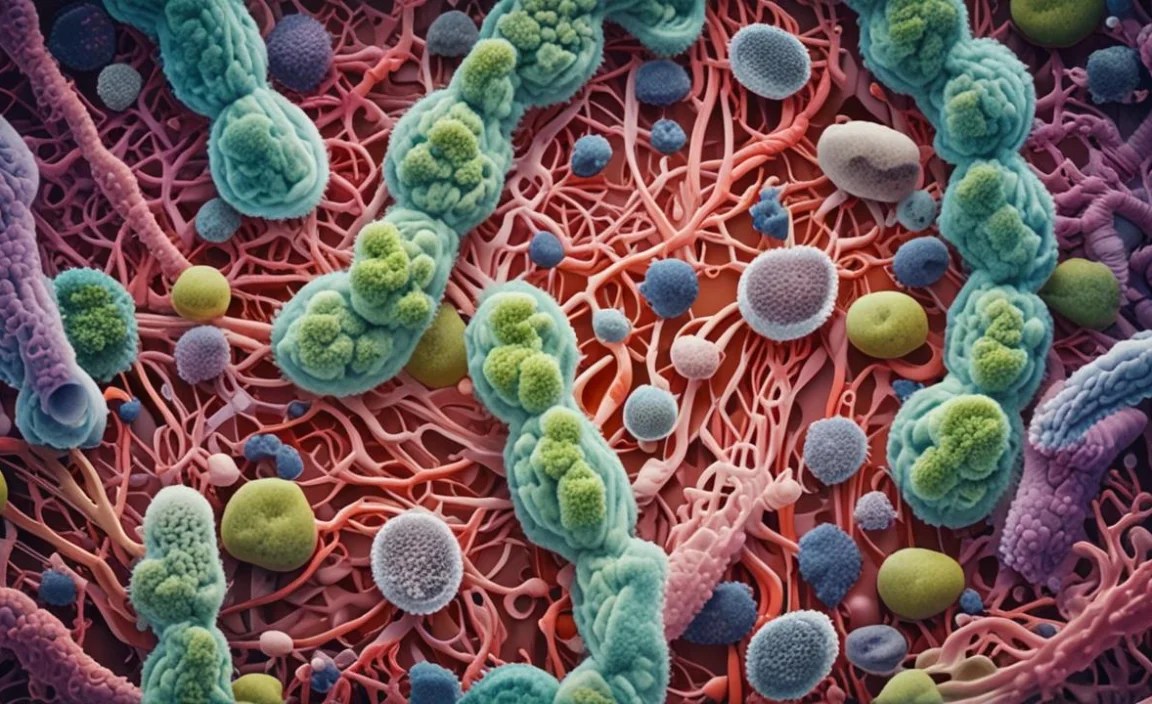
Today, scientists have amazing tools that can look at the DNA of microbes. DNA is like a blueprint that tells us everything about a living thing. Molecular methods for species identification of microbes involve looking at the DNA of the microbe to figure out exactly what it is. This is like having a super-powerful magnifying glass that can see the tiniest details. These methods are much faster and more accurate than the old ways. They allow us to identify microbes that are hard to grow in the lab. It is like having a secret code that unlocks the identity of every microbe.
- DNA sequencing reads the microbe’s code.
- PCR makes copies of specific DNA.
- These methods are very accurate.
- They can identify rare microbes.
- They are used in many labs today.
Think of DNA as a secret message that each microbe carries. Molecular methods for species identification of microbes are like having a decoder that can read that message. By analyzing the DNA, scientists can identify the microbe with certainty. This is especially helpful when dealing with microbes that are very similar to each other. Even tiny differences in their DNA can be used to tell them apart. It is like having a fingerprint for each microbe, allowing us to identify them with precision.
DNA Sequencing: Reading the Code
Imagine you have a book written in a secret language. DNA sequencing is like having a machine that can read that language. It determines the exact order of the building blocks of DNA. This order is unique to each species of microbe. By comparing the DNA sequence of an unknown microbe to a database of known sequences, scientists can identify its species. It is like matching a fingerprint to a database of fingerprints.
PCR: Making Copies of DNA
Sometimes, there is only a tiny amount of DNA available. PCR, or polymerase chain reaction, is like a copy machine for DNA. It allows scientists to make millions of copies of a specific DNA sequence. This makes it easier to analyze the DNA and identify the microbe. It is like making lots of copies of a rare book so that more people can read it.
Accuracy and Speed
Traditional methods of species identification of microbes can take days or even weeks to complete. Molecular methods are much faster. They can often provide results in a matter of hours. They are also more accurate. They can identify microbes that are difficult or impossible to identify using traditional methods. This speed and accuracy are crucial in situations where rapid diagnosis is needed, such as during a disease outbreak.
Fun Fact or Stat: The human body contains more microbial cells than human cells!
Applications of Species Identification in Medicine

When you are sick, you want to know what is making you feel bad. Species identification of microbes helps doctors figure this out. It is used to diagnose infections caused by bacteria, viruses, and fungi. Knowing the exact species of microbe causing the infection allows doctors to choose the right medicine. This makes sure that the treatment is effective and that you get better quickly. It is like having a personalized treatment plan based on the specific enemy that is attacking your body.
- Diagnosing infections quickly.
- Choosing the right antibiotics.
- Tracking disease outbreaks.
- Preventing antibiotic resistance.
- Developing new vaccines.
Imagine you are a doctor facing a patient with a mysterious illness. You suspect an infection, but you don’t know which microbe is to blame. Species identification of microbes is like having a detective’s kit that helps you solve the puzzle. By analyzing samples from the patient, you can identify the culprit and choose the right course of treatment. This can make the difference between a quick recovery and a long, difficult illness. It is like having a superpower that allows you to see the invisible enemies that threaten our health.
Choosing the Right Antibiotics
Antibiotics are medicines that kill bacteria. However, not all antibiotics work against all bacteria. Species identification of microbes is crucial for choosing the right antibiotic to treat a bacterial infection. Using the wrong antibiotic can be ineffective and can even contribute to antibiotic resistance. It is like using the wrong key to open a lock. It won’t work, and it might even damage the lock.
Tracking Disease Outbreaks
When a disease outbreak occurs, it is important to identify the source of the outbreak as quickly as possible. Species identification of microbes plays a key role in this process. By identifying the species of microbe causing the outbreak, scientists can trace the source of the infection and take steps to prevent it from spreading further. It is like following a trail of clues to find the starting point of a fire.
Preventing Antibiotic Resistance
Antibiotic resistance is a growing problem. It occurs when bacteria evolve to become resistant to antibiotics. This makes infections harder to treat. Species identification of microbes can help prevent antibiotic resistance by ensuring that antibiotics are used only when necessary and that the right antibiotic is used for each infection. It is like using resources wisely to prevent them from running out.
Fun Fact or Stat: Alexander Fleming discovered penicillin, the first antibiotic, in 1928!
The Role of Identification in Environmental Monitoring

Our environment is full of microbes. Some are helpful, and some are harmful. Species identification of microbes helps us understand what kinds of microbes are present in our water, soil, and air. This information is important for protecting our health and the health of our planet. It is like having a team of tiny environmental monitors that keep an eye on the health of our surroundings.
- Monitoring water quality.
- Assessing soil health.
- Tracking air pollution.
- Cleaning up pollution.
- Protecting ecosystems.
Imagine you are a scientist studying a polluted river. You want to know what kinds of microbes are living in the water and how they are affecting the environment. Species identification of microbes is like having a set of tools that allows you to analyze the water and identify the microbes present. This information can help you understand the source of the pollution and develop strategies to clean it up. It is like being a doctor for the environment, diagnosing problems and prescribing solutions.
Monitoring Water Quality
Water can be contaminated with harmful microbes that can make people sick. Species identification of microbes is used to monitor water quality and ensure that our drinking water is safe. By regularly testing water samples, scientists can identify any dangerous microbes that might be present and take steps to remove them. It is like having a safety net that protects us from waterborne diseases.
Assessing Soil Health
Soil is home to a vast array of microbes that play important roles in plant growth and nutrient cycling. Species identification of microbes can be used to assess soil health and determine whether the soil is suitable for growing crops. By analyzing the microbial community in the soil, scientists can identify any problems and develop strategies to improve soil health. It is like giving the soil a checkup to make sure it is healthy and productive.
Cleaning Up Pollution
Some microbes can be used to clean up pollution. This is called bioremediation. Species identification of microbes is used to identify microbes that are capable of breaking down pollutants. These microbes can then be used to clean up contaminated soil or water. It is like having tiny cleaning crews that can remove pollution from the environment.
Fun Fact or Stat: Some microbes can even eat plastic, helping to solve the problem of plastic pollution!
Future Trends in Species Identification of Microbes
Science is always changing, and so is species identification of microbes. New technologies are being developed all the time to make the process faster, more accurate, and more accessible. These new technologies will allow us to identify microbes in new and exciting ways. This will help us better understand the microbial world and protect our health and environment. It is like having a glimpse into the future of microbial science.
- Faster, cheaper sequencing.
- Portable identification devices.
- Using artificial intelligence.
- Studying entire microbial communities.
- New discoveries about microbes.
Imagine a world where you can identify a microbe with a handheld device in a matter of minutes. This is the direction that species identification of microbes is heading. New technologies are making it easier and faster to analyze microbial DNA. This will allow us to identify microbes in real-time, in the field, without the need for expensive lab equipment. It is like having a Star Trek tricorder that can scan and identify anything.
Faster, Cheaper Sequencing
DNA sequencing is becoming faster and cheaper all the time. This is making it more accessible to researchers and clinicians. As the cost of sequencing continues to decrease, it will become even more widely used for species identification of microbes. It is like the price of computers going down, making them available to more people.
Portable Identification Devices
Imagine being able to identify a microbe with a device that fits in your pocket. Portable identification devices are being developed that can do just that. These devices will allow doctors, environmental scientists, and others to identify microbes in the field, without the need for a lab. It is like having a mobile laboratory that you can take anywhere.
Using Artificial Intelligence
Artificial intelligence (AI) is being used to analyze large datasets of microbial DNA. This can help scientists identify new microbes and understand how they interact with each other. AI can also be used to predict how microbes will respond to different treatments. It is like having a super-smart computer that can analyze complex data and find patterns that humans might miss.
Fun Fact or Stat: Scientists estimate that there are millions of different species of microbes on Earth, and we have only identified a small fraction of them!
Summary
Species identification of microbes is essential for understanding the tiny world around us. It helps us identify bacteria, viruses, and fungi that can affect our health and environment. Traditional methods, like microscopy and culturing, have been used for centuries. Modern molecular methods, like DNA sequencing and PCR, are faster and more accurate. These techniques help us diagnose diseases, monitor water quality, and develop new treatments.
As technology advances, species identification of microbes is becoming more accessible and sophisticated. Faster, cheaper sequencing, portable identification devices, and artificial intelligence are revolutionizing the field. These advancements will lead to new discoveries about microbes and their roles in our world. By understanding these tiny organisms, we can better protect our health and environment.
Conclusion
Species identification of microbes is a powerful tool. It helps us understand the tiny world around us. Knowing the names and characteristics of these organisms lets us fight disease. It also helps us protect our environment. As technology improves, we will learn even more about microbes. This will lead to new ways to improve our lives and the health of our planet.
Frequently Asked Questions
Question No 1: What is species identification of microbes?
Answer: Species identification of microbes is like finding out the names of all the tiny living things around us. These tiny living things are called microbes. They are too small to see with our eyes. We need a microscope to see them. Knowing their names helps us understand what they do and how they affect us. Identifying microbes is important for keeping us healthy and protecting the environment. It is like being a detective for tiny organisms!
Question No 2: Why is it important to identify microbes?
Answer: It is important to identify microbes for many reasons. First, it helps us understand what makes us sick. Many diseases are caused by microbes. Knowing which microbe is causing the problem helps doctors give the right medicine. Second, it helps us keep our food and water safe. Harmful microbes can contaminate food and water. Identifying them allows us to remove them. Third, it helps us protect the environment. Some microbes can clean up pollution. Knowing which ones can do this helps us use them effectively. Species identification of microbes is therefore vital for health and safety.
Question No 3: How do scientists identify microbes?
Answer: Scientists use different methods to identify microbes. One way is to look at them under a microscope. They can see their shape and size. Another way is to grow them in special dishes called cultures. Different microbes grow in different ways. Scientists can also use special tests to see what the microbes can do. Modern methods use DNA. Scientists look at the DNA of the microbes to figure out exactly what they are. Species identification of microbes uses a combination of techniques.
Question No 4: What are some examples of microbes?
Answer: There are many different kinds of microbes. Some examples are bacteria, viruses, and fungi. Bacteria are single-celled organisms that can be found everywhere. Some bacteria are helpful, like the ones that help us digest food. Other bacteria are harmful and can cause diseases. Viruses are even smaller than bacteria. They can only reproduce inside of other cells. Viruses can cause diseases like the flu and chickenpox. Fungi include things like mold and yeast. Some fungi are used to make food, like bread and cheese. Species identification of microbes helps us classify all these different types.
Question No 5: How does species identification of microbes help in medicine?
Answer: In medicine, species identification of microbes is very important. It helps doctors know what is making you sick. If you have an infection, the doctor needs to know which microbe is causing it. Some infections are caused by bacteria. Some are caused by viruses. Others are caused by fungi. The doctor needs to know which one it is so they can give you the right medicine. Knowing the species helps doctors choose the right treatment. Therefore, microbe identification is a key part of medical care.
Question No 6: What is the future of species identification of microbes?
Answer: The future of species identification of microbes is very exciting. Scientists are developing new technologies that will make it faster and easier to identify microbes. One new technology is DNA sequencing. This allows scientists to read the DNA of microbes very quickly. Another new technology is portable identification devices. These devices will allow doctors and scientists to identify microbes in the field. Artificial intelligence will also play a big role. AI can analyze large amounts of data to identify new microbes and understand their behavior. Microbe identification will continue to improve with new tools and techniques.


