Species Identification AR App: Is This the Ultimate Tool?

Have you ever wondered what kind of bird is singing outside? Or what type of tree grows in your backyard? It can be tricky to name all the plants and animals around us. But what if you had a superpower to identify them instantly? Now, you can! A species identification AR app can help you discover the names of living things.
These apps use your phone’s camera. They can recognize different species using augmented reality (AR). It’s like having a nature expert in your pocket.
Imagine walking in the forest. You see a flower you have never seen before. You simply point your phone at it. The species identification AR app tells you its name and facts. These apps make learning about nature fun and easy!
Key Takeaways
- A species identification AR app helps you identify plants and animals quickly.
- These apps use your phone’s camera and augmented reality.
- You can learn about nature in a fun and interactive way.
- These apps are like having a nature expert with you all the time.
- They are great for students, hikers, and anyone curious about nature.
How Does a Species Identification AR App Work?
A species identification AR app is like a magic tool. It uses your phone’s camera to see the world around you. The app then compares what it sees to a huge library of images and information. It can recognize plants, animals, insects, and more! When you point your phone at something, the app analyzes its shape, color, and other details. It then matches these details to the species in its library. In seconds, the app tells you what it is. Some apps even offer extra information about the species. You can learn about its habitat, diet, and life cycle. These apps are constantly improving. They get smarter as more people use them and add to their knowledge base. Isn’t that neat?
- The app uses your phone’s camera.
- It compares the image to a large database.
- It analyzes shape, color, and other details.
- The app identifies the species quickly.
- You can learn more about the species.
Think of it like this: Imagine you are learning a new language. You might use a translation app to understand words you don’t know. A species identification AR app works in a similar way. It helps you “translate” the natural world. It tells you the names and facts about the plants and animals you see. These apps are not perfect. Sometimes, they might make a mistake. But they are becoming more accurate all the time. They are a great way to start learning about nature. Plus, they make exploring the outdoors even more fun. What cool technology!
What Kind of Camera Does It Use?
Most species identification AR apps use the regular camera on your smartphone or tablet. These cameras are already pretty good at capturing images. But some apps can also use special lenses. These lenses help to see tiny details. This is useful for identifying small insects or plant parts. The app’s software also plays a big role. It enhances the image to make it clearer. It also corrects for things like blurry photos or bad lighting. So, even if your camera isn’t top-of-the-line, the app can still work well. It’s amazing how much technology is packed into these little devices. It makes species identification easier than ever. You don’t need to be a professional photographer to use these apps. Anyone can point and click to learn about nature.
Is an Internet Connection Required?
Some species identification AR apps need an internet connection to work. This is because they need to access their large database of images and information. Other apps can work offline. They download the database to your phone. This is useful if you are hiking in a remote area. You might not have internet access there. But you can still use the app to identify plants and animals. Keep in mind that offline apps might have a smaller database. They might not be able to identify as many species. It’s always a good idea to check the app’s settings. See if you can download the offline database before you go exploring. That way, you’ll be prepared no matter where you are.
How Accurate Are the Apps?
The accuracy of a species identification AR app can vary. It depends on several things. These things include the quality of your camera. It also depends on the app’s database, and the lighting conditions. In good conditions, some apps can be very accurate. They can correctly identify species most of the time. But no app is perfect. They can sometimes make mistakes. This is especially true if the image is blurry. It is also true if the species is rare or unusual. It’s always a good idea to double-check the app’s identification. You can do this by comparing the image to pictures in a field guide. Or, you could ask an expert for their opinion. Remember, these apps are tools to help you learn. They are not always 100% correct.
Fun Fact or Stat: Some species identification apps boast over 95% accuracy in controlled environments!
What Can You Identify with a Species Identification AR App?

A species identification AR app can identify a wide range of living things. Many apps focus on plants. They can tell you the names of trees, flowers, and shrubs. Some apps also identify animals. This includes birds, mammals, insects, and reptiles. The more advanced apps can even identify fungi and lichens. Imagine pointing your phone at a mushroom and instantly knowing what it is! The types of species an app can identify depend on its database. Some apps have very large and detailed databases. They cover a wide range of species from all over the world. Other apps are more specialized. They might focus on a particular region or type of organism. It’s a good idea to choose an app that matches your interests and location.
- Trees
- Flowers
- Birds
- Insects
- Mammals
- Reptiles
Let’s say you are on a hike. You see a beautiful wildflower. You’ve never seen it before. You pull out your phone and open your species identification AR app. You point the camera at the flower. The app quickly analyzes the image. It tells you the flower’s name is “Mountain Laurel.” It also provides information about its habitat and blooming season. You learn that Mountain Laurel is the state flower of Pennsylvania. You never knew that! These apps can turn a simple walk in the woods into a learning adventure. They can help you appreciate the amazing diversity of life around us. What a great way to explore nature!
Can the App Identify Invasive Species?
Yes, many species identification AR apps can identify invasive species. Invasive species are plants and animals that are not native to an area. They can cause harm to the environment. They can also harm the economy and human health. It’s important to identify invasive species. This helps to control their spread. Some apps have special features that highlight invasive species. They can alert you if you find one. This information can help you report the sighting to local authorities. You can also take steps to remove the invasive species. Using a species identification AR app is a great way to contribute to conservation efforts. You can help protect native ecosystems by identifying and reporting invasive species.
What About Identifying Animal Tracks?
Some advanced species identification AR apps can even identify animal tracks. This is a cool feature for nature enthusiasts. It can help you learn about the animals that live in your area. To identify a track, you simply take a picture of it with your phone. The app analyzes the shape and size of the track. It also looks at the surrounding environment. It then compares the track to its database of animal tracks. The app tells you which animal likely made the track. This can be a fun and educational activity for kids. It can also be useful for hikers and hunters. They can use the app to track animals in the wild. Keep in mind that identifying animal tracks can be tricky. It requires some practice and knowledge of local wildlife.
Can It Recognize Different Breeds of Dogs?
Yes, some species identification AR apps are designed to recognize different breeds of dogs. These apps use similar technology to identify plants and animals. They analyze the dog’s appearance, including its size, shape, and coat color. They then compare these features to a database of dog breeds. The app tells you the dog’s breed, or the most likely breeds if it’s a mixed breed. This can be a fun way to learn about different dog breeds. It can also be useful if you are trying to identify a dog you see in the park. However, these apps are not always accurate. They can sometimes make mistakes, especially with mixed-breed dogs. It’s always a good idea to consult with a veterinarian or dog expert for a more accurate identification.
Fun Fact or Stat: Some apps can identify over 30,000 plant species!
Why Use a Species Identification AR App?
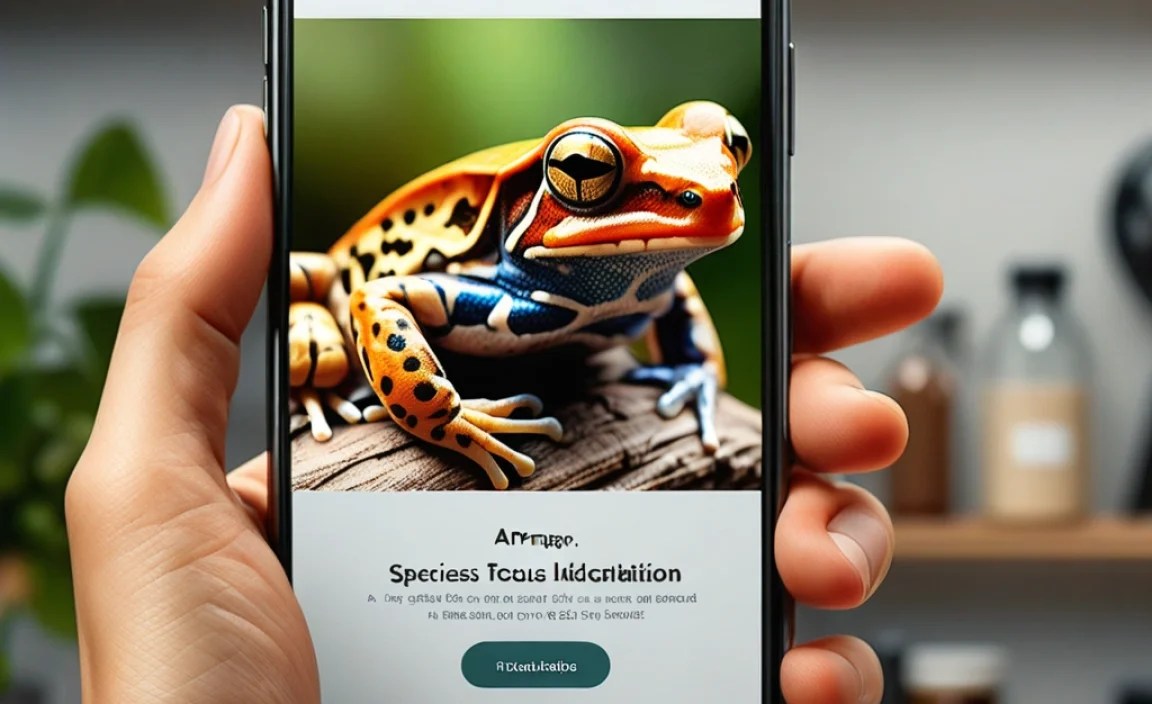
There are many reasons to use a species identification AR app. First, it’s a fun and easy way to learn about nature. You can discover the names and facts about plants and animals around you. Second, it can help you become a more observant naturalist. You will start to notice things you never saw before. Third, it can enhance your outdoor experiences. Hiking, camping, and gardening become more interesting. Fourth, it can help you contribute to citizen science. You can share your observations with researchers. Fifth, it can help you protect the environment. You can identify invasive species and report them. Finally, it’s a great way to connect with nature. You will develop a deeper appreciation for the natural world. What’s not to love?
- Fun and easy way to learn about nature
- Helps you become a more observant naturalist
- Enhances outdoor experiences like hiking and camping
- Contributes to citizen science and research
- Helps protect the environment
Imagine you are a student learning about ecosystems. Your teacher asks you to identify ten different plants in your schoolyard. In the past, this might have involved carrying around heavy field guides. You also might have spent hours flipping through pages. But now, you can simply use a species identification AR app. You can quickly identify the plants and learn about their roles in the ecosystem. This makes learning more engaging and efficient. It also allows you to spend more time observing the plants and their interactions. These apps are valuable tools for students of all ages. They make learning about science and nature more accessible and enjoyable. What a cool way to learn!
Is It Useful for Gardening?
Yes, a species identification AR app is very useful for gardening. It can help you identify plants in your garden. It can also help you diagnose plant diseases. You can quickly identify weeds and remove them. You can also learn about the specific needs of your plants. This includes their watering, sunlight, and fertilizer requirements. The app can also help you choose the right plants for your garden. It can suggest plants that are well-suited to your climate and soil conditions. Using a species identification AR app can make gardening easier and more successful. It can help you grow a healthy and beautiful garden. It is like having a gardening expert in your pocket.
Can It Help with Birdwatching?
Yes, a species identification AR app can be a great tool for birdwatching. It can help you identify birds you see in your backyard or in the wild. You can simply point your phone at the bird. The app will analyze its appearance and song. It will then tell you the bird’s name and other information. Some apps can even identify birds by their song alone. This is useful if you can’t see the bird clearly. The app can also help you learn about the bird’s habitat, diet, and behavior. Using a species identification AR app can make birdwatching more fun and rewarding. It can help you become a more knowledgeable and observant birder.
Is This Technology Useful for Hiking?
A species identification AR app is a valuable tool for hiking. It helps you identify plants and animals along the trail. You can learn about the local flora and fauna. This makes your hike more educational and enjoyable. The app can also help you avoid poisonous plants. You can identify poison ivy, poison oak, and other dangerous plants. It can also help you spot potentially dangerous animals. This includes snakes and insects. By using a species identification AR app, you can stay safe and informed while hiking. You can also deepen your appreciation for the natural world. It can turn a simple hike into an educational adventure.
Fun Fact or Stat: Users of species identification apps have contributed millions of observations to scientific databases!
What Are the Benefits of Using AR in Species Identification?

Augmented reality (AR) makes species identification apps even better. AR overlays digital information onto the real world. This means you can see the species name and information right on your phone’s screen. You can view it as you look at the plant or animal. AR can also provide helpful visual aids. It can highlight key features to help you identify the species. It can show you where to look for important characteristics. AR makes the identification process more intuitive and engaging. It can help you learn more quickly and effectively. AR also makes it easier to share your observations with others. You can take a photo or video of the species with the AR overlay. Then, you can share it with friends or on social media. AR enhances the whole experience of species identification.
- AR overlays digital information on the real world
- AR highlights key features for identification
- AR makes the identification process more intuitive
- AR helps you learn more quickly and effectively
- AR makes it easier to share observations
Imagine you are using a species identification AR app to identify a tree. The AR overlay shows you the tree’s name right on the screen. It also highlights the shape of the leaves and the pattern of the bark. You can easily compare these features to the real tree. The AR overlay also provides additional information about the tree. It tells you its height, its lifespan, and its ecological role. You can learn all this information without having to look away from the tree. The AR overlay makes the learning experience more immersive and engaging. It helps you connect with the tree in a deeper way. What a fantastic use of technology!
Does It Help with Visual Impairments?
Yes, some species identification AR apps can help people with visual impairments. These apps often have features that make them more accessible. They can use voice commands to identify species. They can also provide audio descriptions of the plant or animal. Some apps can adjust the text size and contrast. This makes it easier for people with low vision to see the information. AR can also be used to magnify the image of the species. This can help people with visual impairments see the details more clearly. Species identification AR apps can make nature more accessible to everyone. They can help people with visual impairments enjoy and learn about the natural world.
Can It Assist in Scientific Research?
Species identification AR apps can assist in scientific research. They can help researchers collect data about plant and animal populations. They can also help them monitor the spread of invasive species. The apps can be used to quickly identify species in the field. This saves researchers time and effort. The apps can also record the location of the species. This provides valuable data for mapping and analysis. Some apps allow users to upload their observations to online databases. This creates a large pool of data that researchers can use. By using species identification AR apps, citizen scientists can contribute to scientific research. They can help scientists understand and protect the natural world.
How Is It Different From Using a Book?
Using a species identification AR app is different from using a book in several ways. First, the app is much faster. You can identify a species in seconds. With a book, you have to flip through pages and compare images. Second, the app is more interactive. You can use AR to see information overlaid on the real world. Third, the app can provide more detailed information. It can include audio descriptions, videos, and links to online resources. Fourth, the app is more portable. You can carry it in your pocket. A book can be bulky and heavy. Finally, the app can be updated with new information. A book is static and cannot be easily updated. A species identification AR app offers a more convenient and engaging way to learn about nature.
Fun Fact or Stat: AR apps can reduce species identification time by up to 70% compared to traditional methods!
Choosing the Right Species Identification AR App
Choosing the right species identification AR app depends on your needs and interests. First, consider what types of species you want to identify. Some apps focus on plants, while others cover animals. Some apps are specialized for certain regions. Second, consider the app’s accuracy. Read reviews and see what other users say. Third, consider the app’s features. Does it offer AR overlays? Does it have audio descriptions? Does it allow you to upload your observations? Fourth, consider the app’s price. Some apps are free, while others require a subscription. Fifth, consider the app’s ease of use. Is it easy to navigate and understand? Finally, consider the app’s privacy policy. Make sure it protects your personal information. Take your time and choose an app that meets your needs.
- Consider the types of species you want to identify.
- Consider the app’s accuracy and reviews.
- Consider the app’s features and AR overlays.
- Consider the app’s price and subscription options.
- Consider the app’s ease of use and navigation.
Imagine you are a teacher looking for a species identification AR app for your students. You want an app that is accurate, easy to use, and engaging. You also want an app that is affordable. You start by reading reviews online. You compare different apps based on their features and accuracy. You also look for apps that are specifically designed for educational purposes. You find one app that seems to be a good fit. It has a user-friendly interface. It also has a large database of plants and animals. It offers AR overlays and audio descriptions. It is also free to download and use. You decide to try it out with your students. They love it! They find it to be a fun and effective way to learn about nature. What a great way to incorporate technology into your classroom!
What Is the Cost of These Apps?
The cost of species identification AR apps varies. Some apps are free to download and use. They may offer in-app purchases for additional features. Other apps require a one-time purchase fee. Still others require a subscription. The subscription may be monthly or yearly. Free apps may be supported by advertising. Paid apps typically offer a better user experience. They also offer more features and a larger database of species. It’s important to consider your budget. It is also important to consider your needs. Choose an app that offers the best value for your money. You should also read reviews carefully. This will help you find a reliable app at a reasonable price.
Can You Use It on Multiple Devices?
Whether you can use a species identification AR app on multiple devices depends on the app. Some apps allow you to use your account on multiple devices. Others limit you to a single device. If you plan to use the app on multiple devices, check its terms of service. See if it allows this. If you have a family subscription, you may be able to share the app with your family members. This can be a cost-effective way to use the app on multiple devices. If you are unsure, contact the app developer for clarification. They can tell you whether you can use the app on multiple devices.
Is There a Community Aspect to These Apps?
Yes, many species identification AR apps have a community aspect. They allow you to share your observations with other users. You can upload photos and videos of the species you identify. You can also comment on other users’ observations. Some apps have forums or discussion boards where you can ask questions. You can also share tips and knowledge. The community aspect can make the app more engaging and rewarding. It can also help you learn from other users. You can also contribute to the app’s database by sharing your observations. This helps improve the app’s accuracy and usefulness for everyone.
Fun Fact or Stat: Some species identification apps have communities with millions of users sharing their findings!
Examples of Species Identification AR Apps
There are many species identification AR apps available. One popular app is PlantNet. It focuses on identifying plants. It has a large database and a user-friendly interface. Another popular app is iNaturalist. It is a general-purpose app that can identify plants, animals, and fungi. It also has a strong community aspect. Seek is another app from iNaturalist. It is designed for younger users. It makes learning about nature fun and engaging. PictureThis is another popular plant identification app. It uses advanced image recognition technology. It can identify plants with high accuracy. Google Lens is a general-purpose app that can also identify species. It is integrated into the Google search engine. These are just a few examples of the many species identification AR apps available. Try out a few and see which one you like best.
- PlantNet (focuses on plants)
- iNaturalist (general-purpose)
- Seek (for younger users)
- PictureThis (plant identification)
- Google Lens (general-purpose)
Imagine you are a parent looking for a species identification AR app for your child. You want an app that is safe, educational, and fun. You come across the Seek app. It is designed for younger users and has a child-friendly interface. It also has a safety feature that prevents children from sharing personal information. You download the app and try it out with your child. They love it! They enjoy exploring the outdoors and identifying plants and animals. They learn about the natural world in a fun and engaging way. You are happy that you found an app that is both educational and safe for your child. What a great way to encourage their interest in nature!
How Does PlantNet Work?
PlantNet is a species identification AR app that focuses on identifying plants. To use it, you simply take a photo of the plant with your phone. The app analyzes the photo and compares it to its database of plants. It then tells you the name of the plant. It also provides additional information about the plant. PlantNet relies on a community of users to build its database. Users upload photos of plants they identify. This helps the app learn and improve its accuracy. PlantNet is a great tool for anyone who wants to learn more about plants. It is also a valuable resource for researchers and conservationists.
What Makes iNaturalist Special?
iNaturalist is a special species identification AR app because of its community aspect. It is a platform where users can share their observations of nature. They can also get help identifying species from other users. The app has a large and active community. This makes it a valuable resource for learning about nature. iNaturalist also contributes to scientific research. The observations shared on the app are used by scientists. They can use this data to study plant and animal populations. They can also use it to monitor the spread of invasive species. iNaturalist is a powerful tool for both learning and conservation.
What About Google Lens?
Google Lens is a general-purpose app that can also identify species. It is integrated into the Google search engine. This makes it easy to use. To identify a species, you simply point your phone at it. Google Lens will analyze the image and provide information about it. It can identify plants, animals, landmarks, and other objects. Google Lens is a convenient tool for quick identification. It may not be as accurate as specialized species identification AR apps. But it is a useful option for casual users. It is also a good option for identifying a wide range of objects, not just species.
| App Name | Focus | Cost | Community |
|---|---|---|---|
| PlantNet | Plants | Free | Yes |
| iNaturalist | General | Free | Yes |
| Seek | General (Kids) | Free | Yes |
| PictureThis | Plants | Subscription | No |
| Google Lens | General | Free | No |
Fun Fact or Stat: iNaturalist has recorded over 50 million observations of species worldwide!
Summary
A species identification AR app is a fantastic tool. It helps you learn about the world around you. These apps use your phone’s camera. They identify plants, animals, and more. Augmented reality makes it even more fun. You can see information overlaid on the real world. These apps are great for students, hikers, and gardeners. They are also useful for scientists and conservationists. There are many different apps available. Choose one that meets your needs and interests. Start exploring the natural world today!
Conclusion
Species identification AR apps make learning about nature easy and fun. They can help you identify plants, animals, and more. They can also help you contribute to scientific research. These apps are constantly improving. They are becoming more accurate and user-friendly. So, download a species identification AR app today. Start exploring the natural world! You might be surprised at what you discover.
Frequently Asked Questions
Question No 1: Are these apps really accurate?
Answer: The accuracy of species identification AR apps can vary. It depends on several factors. These include the quality of the image, the lighting conditions, and the app’s database. Some apps are more accurate than others. It’s always a good idea to double-check the app’s identification. You can do this by comparing the image to pictures in a field guide. Or, you could ask an expert for their opinion. No app is perfect. But they are becoming more accurate all the time.
Question No 2: Can I use these apps offline?
Answer: Some species identification AR apps can be used offline. Others require an internet connection. Apps that can be used offline download the database to your phone. This allows you to identify species even when you don’t have internet access. This is useful if you are hiking in a remote area. Keep in mind that offline apps might have a smaller database. They might not be able to identify as many species. It’s always a good idea to check the app’s settings. See if you can download the offline database before you go exploring.
Question No 3: Are these apps safe for kids to use?
Answer: Some species identification AR apps are designed for kids. These apps have features that make them safe and educational. They may have a child-friendly interface. They may also have safety features that prevent children from sharing personal information. It’s important to choose an app that is appropriate for your child’s age and maturity level. You should also supervise your child’s use of the app. This will ensure that they are using it safely and responsibly. Seek is one such app that is popular for kids because of its user-friendly interface.
Question No 4: Can these apps identify poisonous plants?
Answer: Yes, many species identification AR apps can identify poisonous plants. This can be very useful for hikers and gardeners. You can use the app to identify poison ivy, poison oak, and other dangerous plants. This can help you avoid getting a rash or other allergic reaction. However, it’s important to be careful. The apps are not always perfect. Always double-check the identification before touching a plant. If you are not sure, it’s best to avoid it altogether. It is better to be safe than sorry. When in doubt, don’t touch it.
Question No 5: Can these apps help me learn about conservation?
Answer: Yes, species identification AR apps can help you learn about conservation. They can help you identify invasive species. You can report them to local authorities. This can help control their spread. The apps can also help you learn about the habitat and needs of different species. This can help you understand how to protect them. By using these apps, you can become a more informed and engaged citizen scientist. You can contribute to conservation efforts in your community. It is a great way to make a difference.
Question No 6: What if the app identifies the wrong species?
Answer: If a species identification AR app identifies the wrong species, don’t worry! It happens sometimes. The apps are not perfect. The best thing to do is to double-check the identification. Compare the image to pictures in a field guide. You can also ask an expert for their opinion. If you are still not sure, it’s best to err on the side of caution. Do not touch or disturb the species. You can also report the incorrect identification to the app developer. This will help them improve the app’s accuracy in the future. Remember, these apps are tools to help you learn. They are not always 100% correct.