
Question Mark Butterfly Species: ID Guide!

Quick Summary: The Question Mark butterfly (Polygonia interrogationis) is easily identified by the silver, question-mark-shaped marking on the underside of its hindwing.
These fascinating butterflies have two distinct seasonal forms, differing in color and wing shape. They are widespread across North America, favouring woodlands and open areas, and are known for their tattered-looking wings and fondness for tree sap and rotting fruit over flower nectar.
Have you ever spotted a butterfly with wings that look like they’ve been through a battle, sporting a peculiar silver marking underneath? Chances are, you’ve met the Question Mark butterfly! Identifying butterflies can sometimes feel like a real puzzle, especially with so many similar-looking species fluttering around. This guide will help you confidently identify this unique butterfly, understand its fascinating life cycle, and even attract it to your garden.
Ready to uncover the secrets of the Question Mark butterfly? Let’s dive in!
What is the Question Mark Butterfly?

The Question Mark butterfly (Polygonia interrogationis) belongs to the Nymphalidae family, also known as the brush-footed butterflies. They get their name from the distinctive silver marking on the underside of their hindwing, which resembles a question mark. These butterflies are known for their unique wing shape, their preference for tree sap over flower nectar, and their ability to overwinter as adults.
Key Characteristics
Here are some key characteristics to help you identify the Question Mark butterfly:
- Size: Wingspan ranges from 2 to 3 inches (5 to 7.6 cm).
- Wing Shape: Irregularly shaped wings with jagged edges, often appearing tattered.
- Color: Two seasonal forms – a summer form with black spots on orange wings and a darker, winter form.
- Underside Markings: A distinct silver marking resembling a question mark on the hindwing.
- Habitat: Woodlands, forest edges, parks, and suburban areas.
Identifying the Question Mark Butterfly
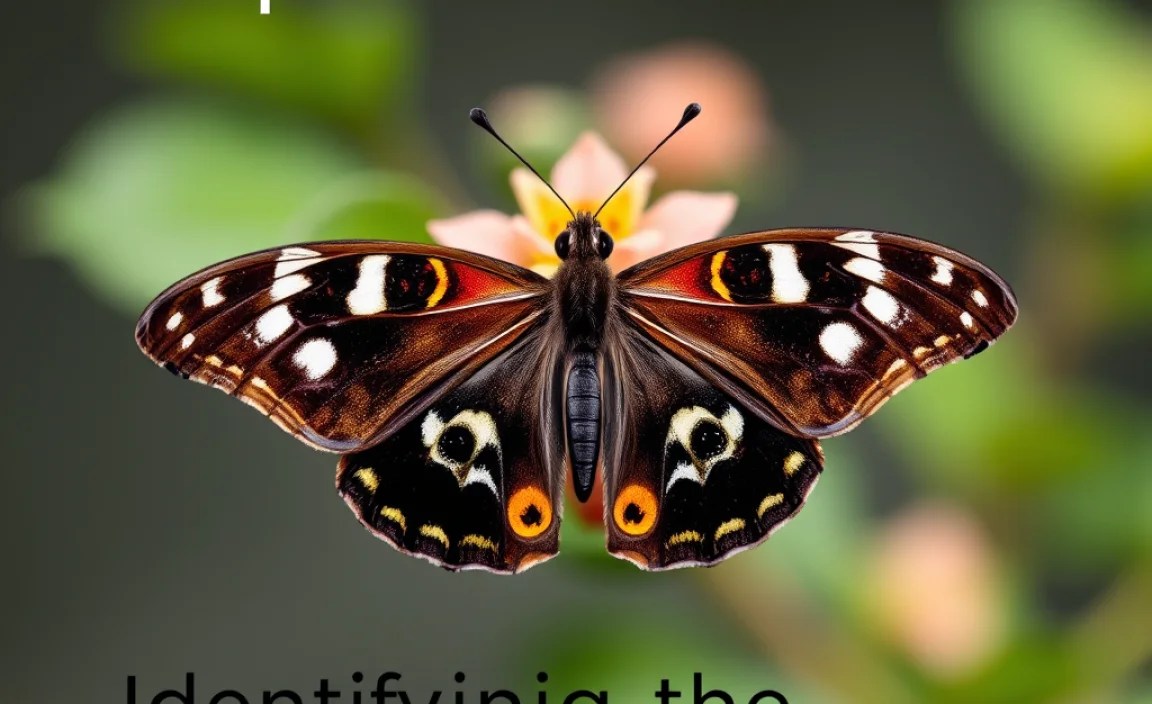
Distinguishing the Question Mark butterfly involves carefully observing its size, wing shape, color variations, and unique markings. Here’s a detailed guide to help you identify this fascinating species.
Seasonal Forms
One of the most fascinating aspects of the Question Mark butterfly is its two distinct seasonal forms:
- Summer Form: This form emerges in the summer and has bright orange wings with black spots. The hindwings have a short tail.
- Winter Form: This form emerges in the fall and has darker, reddish-brown wings with less prominent black spots. The hindwings have a longer tail.
Comparing with Similar Species
The Question Mark butterfly can sometimes be confused with other similar species, such as the Eastern Comma. Here’s a comparison to help you distinguish between them:
| Feature | Question Mark Butterfly | Eastern Comma |
|---|---|---|
| Underside Marking | Distinct silver question mark | Silver comma-shaped mark |
| Wing Shape | More irregular, jagged edges | Less jagged edges |
| Seasonal Forms | Distinct summer and winter forms | Less distinct seasonal forms |
| Color | Brighter orange in summer form | More muted orange-brown |
Detailed Identification Guide
- Observe the Wing Shape: Look for the irregular, jagged edges of the wings. The tattered appearance is a key characteristic.
- Check the Underside Markings: Examine the underside of the hindwing for the silver question mark. This is the most reliable identifying feature.
- Note the Color: Consider the time of year. In summer, the wings will be bright orange with black spots. In winter, they will be darker and reddish-brown.
- Compare with Similar Species: If you’re unsure, compare your observation with images of the Eastern Comma and other similar species.
Life Cycle of the Question Mark Butterfly

Understanding the life cycle of the Question Mark butterfly provides valuable insight into its behavior and habitat preferences. Here’s a detailed look at each stage:
Egg Stage
The life cycle begins with the egg. Female Question Mark butterflies lay their eggs singly or in small groups on the underside of host plant leaves. The eggs are small and greenish in color.
Larva (Caterpillar) Stage
Once the eggs hatch, the larvae emerge. These caterpillars are spiky and variable in color, often mimicking bird droppings to avoid predation. They feed on a variety of host plants, including:
- Elm trees (Ulmus spp.)
- Hackberry trees (Celtis spp.)
- Nettles (Urtica spp.)
Pupa (Chrysalis) Stage
After several molts, the caterpillar enters the pupa stage, forming a chrysalis. The chrysalis is typically green or brown and hangs upside down from a stem or leaf. This stage lasts for about two weeks.
Adult Butterfly Stage
Finally, the adult butterfly emerges from the chrysalis. The adult Question Mark butterfly has a lifespan of several months, during which it feeds, mates, and lays eggs, continuing the cycle. Adults overwinter, often seeking shelter in tree cavities or under loose bark.
Habitat and Distribution

The Question Mark butterfly is widespread across North America, primarily found in the eastern United States and southern Canada. They prefer habitats such as:
- Woodlands and forests
- Forest edges and clearings
- Parks and gardens
- Riparian areas
These butterflies are often seen near their host plants, which provide food for their caterpillars. They also frequent areas with rotting fruit and tree sap, which serve as important food sources for the adults.
Attracting Question Mark Butterflies to Your Garden

Creating a butterfly-friendly garden is a rewarding way to support these beautiful creatures. Here are some tips for attracting Question Mark butterflies to your garden:
Plant Host Plants
Provide food for the caterpillars by planting their host plants. Some excellent choices include:
- American Elm (Ulmus americana)
- Hackberry (Celtis occidentalis)
- Stinging Nettle (Urtica dioica)
Provide Food Sources for Adults
While Question Mark butterflies are not as attracted to flower nectar as some other species, they do feed on tree sap, rotting fruit, and occasionally nectar-rich flowers. You can attract them by:
- Leaving out overripe fruit (such as bananas or apples) in a dish.
- Planting trees that produce sap, like elms and maples.
- Offering nectar-rich flowers such as butterfly bush and zinnias as supplemental food sources.
Create a Butterfly-Friendly Environment
Butterflies need more than just food. Create a welcoming habitat by:
- Providing a shallow dish of water with pebbles for them to land on and drink.
- Offering shelter from wind and predators with shrubs and trees.
- Avoiding the use of pesticides, which can harm or kill butterflies and caterpillars.
Offer a Sunning Spot
Butterflies are cold-blooded and need to bask in the sun to warm up. Provide flat rocks or paving stones in a sunny location for them to use as sunning spots.
Conservation Status and Efforts
The Question Mark butterfly is not currently listed as endangered or threatened. However, like many butterfly species, they face threats from habitat loss, pesticide use, and climate change. Supporting butterfly conservation efforts is crucial for protecting these beautiful creatures.
How You Can Help
- Plant native host plants and nectar sources in your garden. This provides food and habitat for butterflies and caterpillars.
- Avoid using pesticides. Pesticides can harm or kill butterflies and other beneficial insects.
- Support organizations that work to protect butterfly habitats. Many organizations are dedicated to conserving butterfly populations and their habitats.
- Educate others about the importance of butterflies. Share your knowledge and passion for butterflies with friends, family, and your community.
The Xerces Society is a great resource for learning more about butterfly conservation and how you can get involved. They offer a wealth of information on creating butterfly-friendly habitats and supporting pollinator conservation efforts.
Fun Facts About Question Mark Butterflies
- The Question Mark butterfly gets its name from the silver, question-mark-shaped marking on the underside of its hindwing.
- They have two distinct seasonal forms: a summer form with bright orange wings and a winter form with darker wings.
- Question Mark butterflies are known for their tattered-looking wings, which help them blend in with their surroundings.
- Unlike many butterflies, they prefer tree sap and rotting fruit over flower nectar.
- Adult Question Mark butterflies can overwinter, seeking shelter in tree cavities or under loose bark.
Question Mark Butterfly FAQs
What does the Question Mark butterfly eat?
The Question Mark butterfly primarily feeds on tree sap, rotting fruit, and occasionally nectar from flowers.
How can I attract Question Mark butterflies to my garden?
Plant host plants like elm and hackberry trees, provide rotting fruit, offer a water source, and avoid pesticides.
What is the lifespan of a Question Mark butterfly?
The lifespan of an adult Question Mark butterfly is several months, and they can overwinter to live even longer.
How do I tell the difference between a Question Mark and an Eastern Comma?
The Question Mark has a distinct question-mark-shaped marking, while the Eastern Comma has a comma-shaped marking. The Question Mark also has more jagged wing edges.
Where do Question Mark butterflies live?
They are found in woodlands, forest edges, parks, and suburban areas across the eastern United States and southern Canada.
Why do Question Mark butterflies have tattered wings?
The irregular wing shape helps them camouflage and blend in with their surroundings, providing protection from predators.
Are Question Mark butterflies endangered?
No, they are not currently listed as endangered, but they face threats from habitat loss and pesticide use.
Conclusion
The Question Mark butterfly, with its distinctive marking and fascinating life cycle, is a true gem of the insect world. By learning to identify these butterflies, understanding their needs, and creating butterfly-friendly habitats, you can play a vital role in supporting their populations and preserving the beauty of our natural world.
So, get outside, explore your surroundings, and keep an eye out for the Question Mark butterfly. You might just be surprised by what you discover!


