Butterfly Egg Identification: Your Easy Guide!

Butterfly egg identification can be tricky, but it’s rewarding! Look for tiny, often colorful eggs on host plants. Check leaf undersides, stems, and flowers. Use a magnifying glass to observe shape and texture—round, ribbed, or cone-shaped. Note the plant species; different butterflies prefer specific hosts. Regular garden checks will help you spot these future butterflies!
Have you ever wondered how to spot the very beginning of a butterfly’s life? Finding butterfly eggs can feel like discovering hidden treasure in your garden. But with so many tiny things around, it’s easy to miss them or mistake them for something else. Don’t worry, it’s a common challenge! I’m Frances O’Brien, and I’ll guide you through simple steps to identify butterfly eggs like a pro. Together, we’ll unlock the secrets of these miniature marvels and learn how to protect them, turning your garden into a butterfly paradise. Get ready to explore the fascinating world of butterfly eggs!
What You’ll Learn
- Where to find butterfly eggs on host plants.
- How to identify eggs by shape, size, and color.
- Which plants attract specific butterfly species.
- Tips for protecting eggs from predators.
Understanding Butterfly Eggs
Butterfly eggs are the first stage in a butterfly’s life cycle. These tiny capsules hold the potential for incredible transformation. Understanding their characteristics and where to find them is key to supporting butterfly populations in your garden and beyond.
Why is Butterfly Egg Identification Important?
Identifying butterfly eggs helps you:
- Support Butterfly Populations: By recognizing and protecting eggs, you ensure more caterpillars survive to become butterflies.
- Manage Garden Pests Naturally: Knowing which eggs are beneficial butterflies helps you avoid harming them while dealing with other garden pests.
- Enhance Your Garden’s Biodiversity: Attracting specific butterflies enhances the ecological diversity of your garden.
- Educate Others: Sharing your knowledge can inspire others to appreciate and protect butterflies.
What Do Butterfly Eggs Look Like?
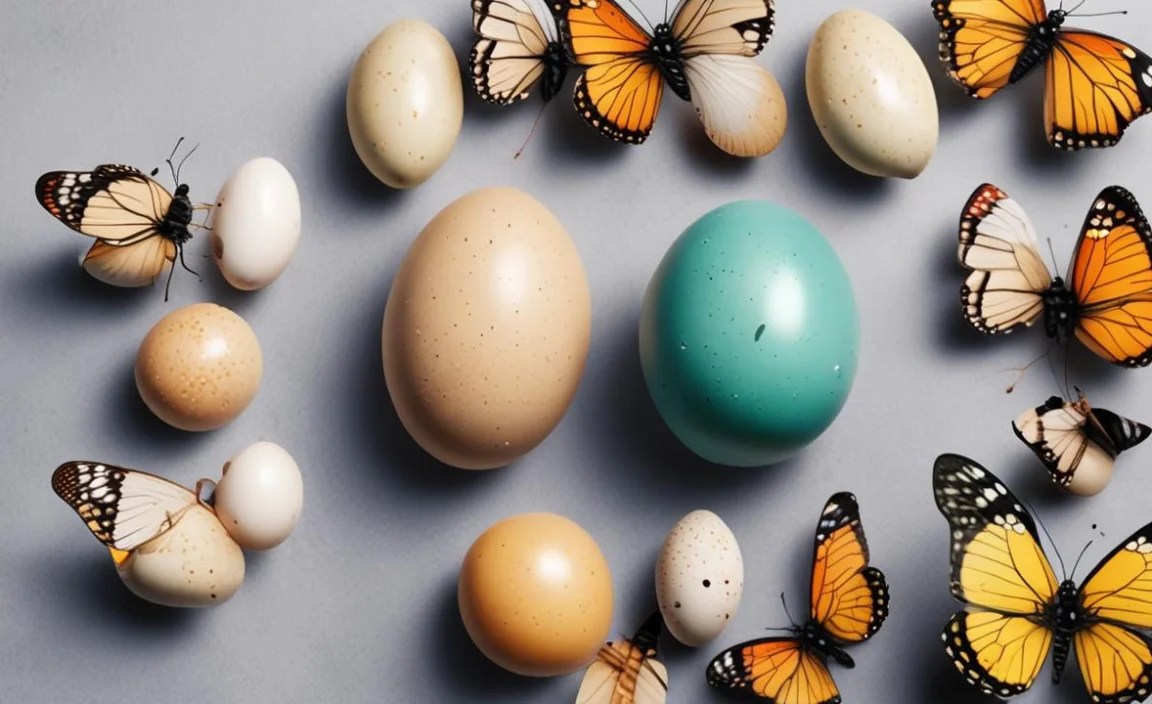
Butterfly eggs come in a variety of shapes, sizes, and colors. Here’s a general overview:
- Shape: Round, oval, cone-shaped, or ribbed.
- Size: Typically very small, ranging from 0.5 mm to 3 mm.
- Color: White, yellow, green, red, brown, or even iridescent.
- Texture: Smooth, ribbed, or textured.
Step-by-Step Guide to Butterfly Egg Identification
Identifying butterfly eggs requires a keen eye and a bit of patience. Follow these steps to become a butterfly egg detective!
Step 1: Know Your Host Plants
Butterflies are very specific about where they lay their eggs. The plant they choose is called the “host plant” because the newly hatched caterpillar will feed on it. Research which butterflies are common in your area and what their host plants are.
Some popular host plants include:
- Monarch: Milkweed (Asclepias species)
- Swallowtail: Dill, parsley, fennel, citrus trees
- Painted Lady: Thistle, mallow
- Black Swallowtail: Members of the carrot family like dill, parsley, carrots
Finding Host Plants
- Local Nurseries: Ask local nurseries for native host plants suitable for your region.
- Butterfly Gardens: Visit butterfly gardens to see which plants attract butterflies in your area.
- Online Resources: Use online databases like the Lady Bird Johnson Wildflower Center to identify native plants.
Step 2: Inspect the Plants Carefully
Butterfly eggs are often laid on the underside of leaves, stems, or flowers of the host plant. Use a magnifying glass to inspect these areas closely. Look for anything that seems out of the ordinary.
Where to Look:
- Underside of Leaves: Many butterflies lay their eggs here to protect them from direct sunlight and predators.
- Stems: Some butterflies lay eggs along the stems of the host plant.
- Flowers: A few species lay eggs on flower buds or petals.
Step 3: Identify the Egg’s Shape and Size
Butterfly eggs come in various shapes and sizes. Note the egg’s general form. Is it round, oval, cone-shaped, or something else? Measure the egg if possible, to help narrow down the possibilities.
Common Egg Shapes:
- Round: Often resembles a tiny bead.
- Oval: Slightly elongated.
- Cone-Shaped: Tapered towards the top.
- Ribbed: With vertical ridges.
Step 4: Observe the Egg’s Color and Texture
The color and texture of a butterfly egg can provide valuable clues. Note whether the egg is white, yellow, green, red, or another color. Is the surface smooth, ribbed, or textured?
Egg Color and Texture Clues:
- White or Yellow: Common in many butterfly species.
- Green: Often blends with the foliage.
- Red or Brown: Can provide camouflage or indicate maturity.
- Smooth: Simple, uniform surface.
- Ribbed: Vertical ridges running from top to bottom.
- Textured: Bumpy or patterned surface.
Step 5: Consider the Egg-Laying Pattern
Some butterflies lay their eggs singly, while others lay them in clusters or rows. The egg-laying pattern can help you identify the species.
Egg-Laying Patterns:
- Singly: One egg per location.
- Clusters: Groups of eggs together.
- Rows: Eggs laid in a line.
Step 6: Track Changes Over Time
Butterfly eggs change color and appearance as they mature. Keep an eye on the eggs you find and note any changes. This can help you confirm your identification.
Changes to Watch For:
- Color Change: Eggs may darken or develop spots as they mature.
- Hatching: The eggshell will become translucent as the caterpillar prepares to hatch.
Tools for Butterfly Egg Identification

Having the right tools can make butterfly egg identification much easier.
- Magnifying Glass: Essential for examining tiny eggs up close.
- Camera: To take photos for later comparison and identification.
- Notebook and Pen: To record your observations.
- Field Guide: A butterfly field guide for your region.
- Online Resources: Websites and apps dedicated to butterfly identification.
Butterfly Egg Identification Table
| Butterfly Species | Host Plant | Egg Shape | Egg Color | Egg-Laying Pattern |
|---|---|---|---|---|
| Monarch (Danaus plexippus) | Milkweed (Asclepias spp.) | Oval | Pale Green or Cream | Singly |
| Black Swallowtail (Papilio polyxenes) | Dill, Parsley, Fennel | Round | Yellow to Cream | Singly |
| Gulf Fritillary (Agraulis vanillae) | Passionflower (Passiflora spp.) | Oval | Orange-Red | Singly or Small Groups |
| Painted Lady (Vanessa cardui) | Thistle, Mallow | Barrel-Shaped | Green to White | Singly |
| Cabbage White (Pieris rapae) | Cabbage, Broccoli, Kale | Spindle-Shaped | Pale Yellow | Singly |
Protecting Butterfly Eggs
Once you’ve identified butterfly eggs, it’s important to protect them from predators and environmental hazards.
Common Predators
- Insects: Ants, ladybugs, lacewings, and other insects may prey on butterfly eggs.
- Spiders: Various spiders will eat butterfly eggs if they find them.
- Birds: Some birds will eat butterfly eggs, though this is less common.
How to Protect Eggs
- Inspect Regularly: Check host plants regularly and remove any visible predators.
- Provide Shelter: Plant dense foliage to provide shelter for eggs and caterpillars.
- Avoid Pesticides: Pesticides can harm or kill butterfly eggs and caterpillars.
- Relocate Eggs (If Necessary): If a plant is heavily infested with pests, you can carefully move the eggs to a safer location on the same plant or a similar host plant.
Examples of Butterfly Eggs
Let’s look at some specific examples to help you better understand what to look for.
Monarch Butterfly Eggs
Monarch butterfly eggs are typically laid on milkweed plants. They are oval-shaped and pale green or cream in color. Monarchs usually lay their eggs singly on the underside of milkweed leaves. These eggs are about 1.2 mm long and 0.9 mm wide, making them visible to the naked eye but easily overlooked.
- Host Plant: Milkweed (Asclepias spp.)
- Shape: Oval
- Color: Pale Green or Cream
- Egg-Laying Pattern: Singly
Black Swallowtail Butterfly Eggs
Black Swallowtail butterflies lay their eggs on plants in the carrot family, such as dill, parsley, and fennel. The eggs are round and start as a yellow or cream color, eventually turning reddish-brown as they mature. These eggs are laid singly on the leaves or stems of the host plant.
- Host Plant: Dill, Parsley, Fennel
- Shape: Round
- Color: Yellow to Cream, turning reddish-brown
- Egg-Laying Pattern: Singly
Gulf Fritillary Butterfly Eggs
Gulf Fritillary butterflies lay their eggs on passionflower vines. The eggs are oval-shaped and have a distinctive orange-red color. These eggs are typically laid singly or in small groups on the leaves or tendrils of the passionflower.
- Host Plant: Passionflower (Passiflora spp.)
- Shape: Oval
- Color: Orange-Red
- Egg-Laying Pattern: Singly or Small Groups
Cabbage White Butterfly Eggs
Cabbage White butterflies are common pests in vegetable gardens. They lay their eggs on plants like cabbage, broccoli, and kale. The eggs are spindle-shaped and pale yellow in color. They are usually laid singly on the underside of the leaves.
- Host Plant: Cabbage, Broccoli, Kale
- Shape: Spindle-Shaped
- Color: Pale Yellow
- Egg-Laying Pattern: Singly
Attracting Butterflies to Lay Eggs in Your Garden
To encourage butterflies to lay eggs in your garden, focus on providing the right host plants and creating a welcoming environment. Here are some tips:
- Plant a Variety of Host Plants: Offer a diverse selection of host plants to attract different butterfly species.
- Provide Nectar Sources: Plant nectar-rich flowers to attract adult butterflies, which will then lay eggs on nearby host plants.
- Avoid Pesticides: Protect butterfly eggs and caterpillars by avoiding the use of pesticides in your garden.
- Offer Shelter: Provide shrubs and trees where butterflies can take shelter from the elements.
- Create a Water Source: A shallow dish of water with pebbles can provide butterflies with a place to drink.
Additional Resources
Here are some helpful resources for further learning about butterfly egg identification and butterfly gardening:
- The Xerces Society: Offers extensive information on butterfly conservation and host plant selection.
- National Wildlife Federation: Provides resources on creating wildlife-friendly gardens.
FAQ: Butterfly Egg Identification
Q: How small are butterfly eggs?
A: Butterfly eggs are very small, typically ranging from 0.5 mm to 3 mm in size. You’ll often need a magnifying glass to see them clearly.
Q: Where do butterflies usually lay their eggs?
A: Butterflies usually lay their eggs on the underside of leaves, stems, or flowers of their specific host plants. It helps protect the eggs from sun and predators.
Q: What colors are butterfly eggs?
A: Butterfly eggs can be white, yellow, green, red, brown, or even iridescent. The color varies depending on the species.
Q: How can I protect butterfly eggs in my garden?
A: Protect butterfly eggs by regularly inspecting host plants, removing predators, providing shelter, and avoiding pesticides.
Q: What is a host plant?
A: A host plant is a specific type of plant that a butterfly lays its eggs on, and that the newly hatched caterpillar will feed on.
Q: Do butterfly eggs change color as they mature?
A: Yes, butterfly eggs often change color as they mature. They may darken or develop spots, indicating they are close to hatching.
Q: Can I move butterfly eggs to a safer location?
A: Yes, if necessary, you can carefully move butterfly eggs to a safer location on the same plant or a similar host plant to protect them from pests or other dangers.
Conclusion
Identifying butterfly eggs is a rewarding and educational experience. By understanding what to look for and where to find them, you can play an active role in supporting butterfly populations in your area. Remember to research host plants, inspect carefully, and protect the eggs from predators. With patience and practice, you’ll become a skilled butterfly egg identifier and a valuable ally in butterfly conservation. Happy gardening and happy butterfly watching!