
White Butterfly Identification North America: Easy Guide

Have you ever seen a white butterfly? They flutter around, looking like tiny white flowers. Figuring out what kind of white butterfly you see can be fun. This is especially true in North America. There are many different types of these pretty insects. White butterfly identification North America can seem hard. But with a few tips, you can become a butterfly expert.
Did you know some white butterflies are actually pests? Others are very important for gardens. Learning about them helps us protect our plants. So, let’s explore the world of white butterflies!
Key Takeaways
- White butterfly identification North America involves looking at size, markings, and location.
- Cabbage White butterflies are common pests that eat garden plants.
- Checkered Whites have black and white patterns on their wings.
- West Virginia Whites are rare and need special forest habitats.
- Protecting butterfly habitats helps all kinds of butterflies thrive.
Identifying White Butterflies in North America

White butterfly identification North America can be tricky. Many butterflies look similar at first glance. But, there are key differences. Size is one important factor. Some white butterflies are small, while others are larger. Markings on the wings are also important. Look for spots, stripes, or other patterns. The location where you see the butterfly matters too. Some species live only in certain areas. Observing these details will help you identify the butterfly correctly. It is like being a detective, but with butterflies. You need to gather clues to solve the mystery of what kind of butterfly it is.
- Size matters when identifying butterflies.
- Wing markings offer vital clues.
- Location can narrow down the possibilities.
- Observe the butterfly’s behavior.
- Take a photo for later comparison.
- Use a butterfly field guide for reference.
Remember to be patient during the identification process. Sometimes it takes time to figure out which butterfly you’ve spotted. Don’t get discouraged if you can’t identify it right away. Keep practicing your observation skills. The more you learn, the better you’ll become at white butterfly identification North America. Soon, you’ll be able to impress your friends with your butterfly knowledge! You can even start a butterfly journal to keep track of your sightings. This will help you remember the different types of butterflies you’ve seen. It’s a fun and educational hobby that connects you with nature.
Fun Fact or Stat: Over 750 butterfly species live in North America!
What Size is the Butterfly?
Have you ever noticed how butterflies come in different sizes? Size is a big clue for white butterfly identification North America. Some are tiny, like the Western Pygmy Blue. Others are big, like the Monarch. When you see a white butterfly, try to guess its size. Is it smaller than your thumb? Is it bigger than your hand? This will help you narrow down the possibilities. You can even use a ruler to measure it if it lands nearby. Remember, even small differences in size can be important for identification. So, pay close attention to this detail. It’s like being a scientist measuring something important.
What Markings Does it Have?
Imagine a butterfly’s wings as a tiny canvas. Each one has different patterns and colors. For white butterfly identification North America, markings are super important. Some white butterflies have black spots. Others have lines or borders. Look closely at the wings. Do you see any special designs? These markings are like fingerprints for butterflies. They help you tell one type from another. Sometimes, the markings are very faint. You might need to look closely in good light. But with practice, you’ll become a master at spotting these tiny details. It’s like being an artist, noticing all the little details in a painting.
Where Did You See It?
Did you know that butterflies live in different places? Some like forests, while others prefer gardens. Where you see a white butterfly gives you a clue. This helps with white butterfly identification North America. If you see a white butterfly in a forest, it might be a West Virginia White. If you see one in your garden, it could be a Cabbage White. Think about the habitat. Is it near water? Is it in a sunny field? These details help you narrow down the possibilities. It’s like being a detective, using clues to solve a mystery about where the butterfly lives.
Cabbage White Butterfly: A Common Sight
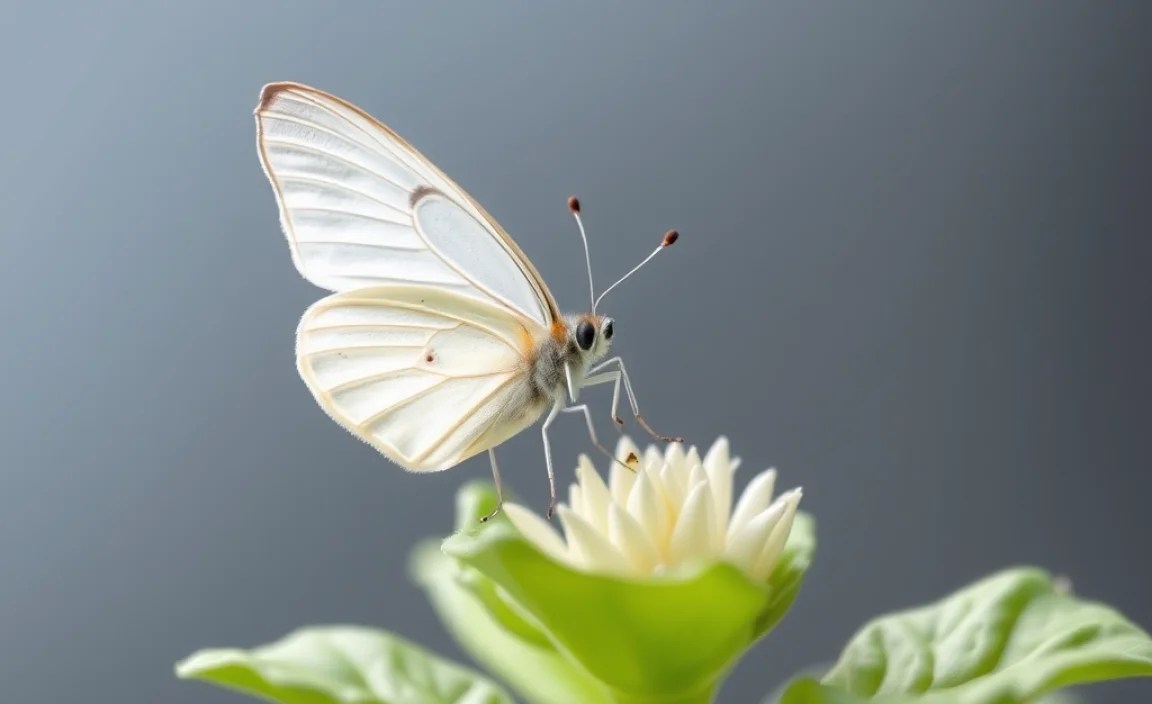
The Cabbage White butterfly is a very common white butterfly. You can see it all over North America. It is often found in gardens and fields. This butterfly can be a pest. It likes to eat cabbage and other leafy greens. The caterpillars are green and blend in with the leaves. They can cause a lot of damage to vegetable crops. White butterfly identification North America often starts with this one. It is easy to recognize because it is so common. Look for small white butterflies with a few black spots on their wings. Learning about the Cabbage White helps gardeners protect their plants. They can use nets or other methods to keep the butterflies away.
- Cabbage Whites are common in gardens.
- Caterpillars eat cabbage and related plants.
- They have small black spots on their wings.
- These butterflies are often considered pests.
- They are found throughout North America.
- Look for them in open, sunny areas.
Cabbage White butterflies are not native to North America. They came from Europe a long time ago. Now, they are one of the most widespread butterflies on the continent. They reproduce quickly and can have several generations in one year. This is why they can become such a problem for gardeners. Despite being pests, they are also part of the ecosystem. They provide food for birds and other insects. Understanding their role helps us manage them in a responsible way. White butterfly identification North America should include learning about the Cabbage White and its impact on our gardens and environment.
Fun Fact or Stat: A female Cabbage White can lay up to 300 eggs!
How to Identify Cabbage White Eggs?
Have you ever looked closely at the underside of a cabbage leaf? You might find tiny yellow eggs. These are Cabbage White butterfly eggs. Identifying them is part of white butterfly identification North America. The eggs are small and shaped like bottles. They are usually laid singly on the leaves of plants like cabbage and broccoli. Keep an eye out for these eggs in your garden. If you find them, you can remove them to protect your plants. It’s like being a plant doctor, checking for signs of trouble. Finding and removing the eggs can prevent a caterpillar invasion.
What Damage Do Cabbage White Caterpillars Cause?
Imagine your beautiful cabbage plants with holes all over them. That’s the work of Cabbage White caterpillars. These little green worms love to munch on leafy greens. They can quickly damage your plants. This makes white butterfly identification North America important for gardeners. By identifying the butterfly, you know what to expect. You can take steps to protect your vegetables. Check your plants regularly for caterpillars. Look for holes in the leaves. If you find them, you can pick them off or use other pest control methods. It’s like being a plant protector, guarding your garden from hungry invaders.
How Can You Control Cabbage Whites?
Are Cabbage White butterflies eating your garden? Don’t worry, there are ways to control them. White butterfly identification North America is the first step. Once you know what you’re dealing with, you can take action. You can use nets to cover your plants. This prevents the butterflies from laying eggs. You can also pick off the caterpillars by hand. Another option is to use organic pesticides. These are safer for the environment and your plants. Remember to read the instructions carefully before using any pesticide. It’s like being a gardener, finding the best way to protect your plants from pests.
Checkered White: Spotting the Patterns
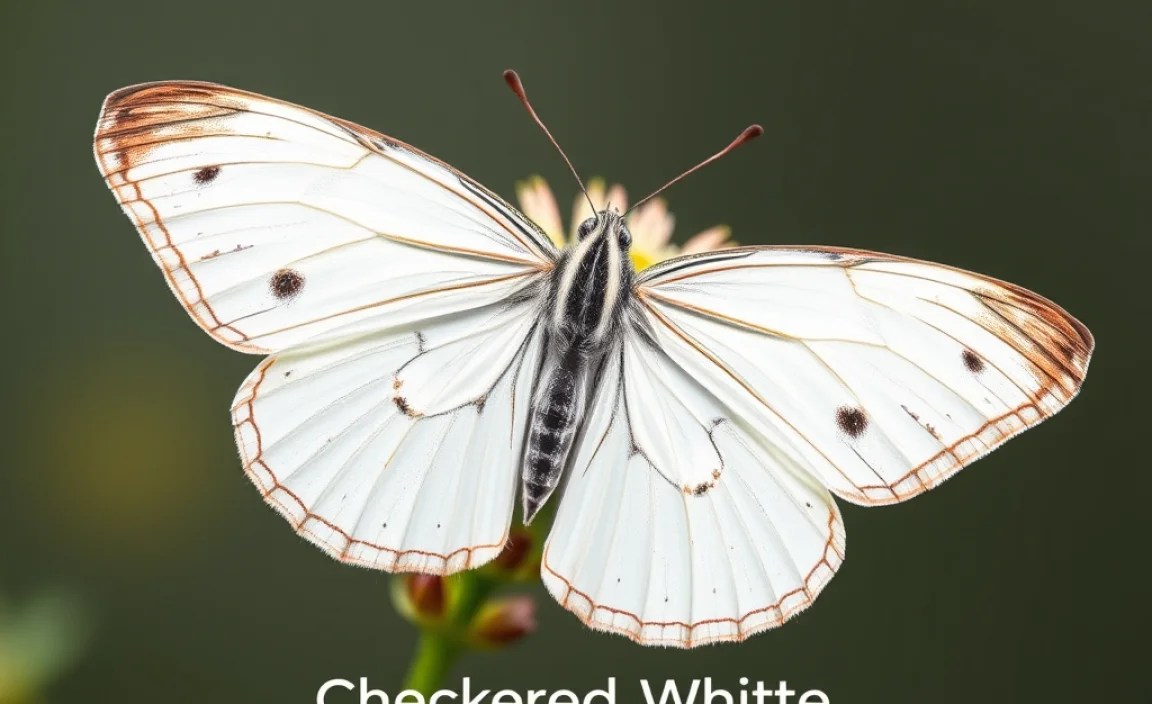
The Checkered White butterfly is easy to spot. It has a distinct black and white pattern on its wings. This pattern looks like a checkerboard. It is a key feature for white butterfly identification North America. These butterflies are found in open areas. They like fields, meadows, and roadsides. They are common in the western United States and Canada. They are also found in some parts of the eastern United States. The caterpillars eat plants in the mustard family. The Checkered White is a pretty and interesting butterfly to observe. It is a welcome sight in many gardens and natural areas.
- Checkered Whites have a checkerboard pattern.
- They live in open fields and meadows.
- They are common in the western US.
- Caterpillars eat mustard family plants.
- Look for them near roadsides.
- The pattern helps with identification.
Checkered White butterflies are active during the day. They fly quickly and erratically. This makes them fun to watch. They often visit flowers to drink nectar. They are important pollinators for many plants. They are also a food source for birds and other insects. Protecting their habitat is important for their survival. This includes preserving open fields and meadows. White butterfly identification North America helps us appreciate the diversity of butterflies. It also encourages us to protect the environment they need to thrive. By learning about these butterflies, we can become better stewards of the land.
Fun Fact or Stat: Checkered White butterflies fly very fast, up to 12 miles per hour!
What Makes the Checkered Pattern Unique?
Have you ever seen a butterfly with a perfect checkerboard design? That’s likely a Checkered White. The pattern is made up of small black squares on a white background. This unique design helps with white butterfly identification North America. No other white butterfly has quite the same look. The pattern is thought to help the butterfly blend in with its surroundings. It might also confuse predators. Whatever the reason, it makes the Checkered White easy to recognize. It’s like having a built-in disguise that also looks beautiful.
Where Do Checkered White Caterpillars Live?
Imagine a tiny caterpillar munching on a mustard plant. That could be a Checkered White caterpillar. These caterpillars live on plants in the mustard family. This includes things like wild mustard and radish plants. Knowing this helps with white butterfly identification North America. If you see a white butterfly near these plants, it might be a Checkered White. The caterpillars are usually green and blend in with the leaves. They can be hard to spot, but look closely. It’s like a treasure hunt, searching for hidden caterpillars on their favorite plants.
How Can You Attract Checkered Whites to Your Garden?
Want to see more Checkered White butterflies in your garden? You can attract them by planting their favorite foods. This is a great way to enhance white butterfly identification North America. Plant things like mustard, alyssum, and other mustard family plants. These will provide food for the caterpillars. You can also plant nectar-rich flowers for the adult butterflies. Choose flowers that are white, yellow, or purple. Make sure to avoid using pesticides, which can harm the butterflies. It’s like creating a butterfly buffet, offering them all their favorite treats.
West Virginia White: A Forest Dweller

The West Virginia White butterfly is a special kind of white butterfly. It lives in forests in the eastern United States. It is not as common as the Cabbage White. This butterfly needs specific forest habitats to survive. It is a sign of a healthy forest ecosystem. White butterfly identification North America includes recognizing this rare species. The West Virginia White has delicate white wings. It is smaller than the Cabbage White. It flies close to the ground in shady areas. Protecting its habitat is important for its survival. Losing forests means losing this beautiful butterfly.
- West Virginia Whites live in forests.
- They are found in the eastern US.
- They are smaller than Cabbage Whites.
- They need specific forest habitats.
- They fly close to the ground.
- They are a sign of healthy forests.
The West Virginia White butterfly is sensitive to changes in its environment. Pollution and habitat destruction can harm this butterfly. Conservation efforts are needed to protect its forests. This includes reducing pollution and managing forests sustainably. White butterfly identification North America plays a role in conservation. By knowing where these butterflies live, we can protect their habitats. We can also educate others about the importance of forest conservation. Every small action can make a difference. Together, we can help ensure that the West Virginia White continues to thrive in our forests.
Fun Fact or Stat: The West Virginia White butterfly has only one generation per year!
What Makes the West Virginia White Unique?
Have you ever heard of a butterfly that only lives in forests? That’s the West Virginia White. This butterfly is unique because it depends on specific forest conditions. This makes white butterfly identification North America crucial for its survival. It needs cool, shady forests with certain types of plants. These plants provide food for the caterpillars. The butterfly is very sensitive to changes in its habitat. It cannot survive in areas that are polluted or disturbed. This makes it an indicator of a healthy forest ecosystem. It’s like a forest health monitor, telling us how well the ecosystem is doing.
Why is the West Virginia White Declining?
Imagine a forest slowly disappearing. That’s what’s happening to the West Virginia White’s habitat. This butterfly is declining because of habitat loss and fragmentation. This is a key aspect of white butterfly identification North America, as it highlights the importance of conservation. Forests are being cleared for development and agriculture. This leaves the butterflies with smaller and smaller areas to live in. Pollution and climate change also threaten their survival. These factors make it harder for the butterflies to find food and reproduce. It’s like taking away their home and food, making it hard for them to survive.
How Can We Protect West Virginia Whites?
Want to help save the West Virginia White butterfly? There are many things we can do. Protecting their forest habitat is the most important thing. This is why white butterfly identification North America is important, as it enables targeted conservation efforts. Support conservation organizations that work to protect forests. Reduce pollution by using less energy and driving less. Educate others about the importance of forest conservation. You can also plant native trees and shrubs in your backyard. Every little bit helps. It’s like being a forest guardian, helping to protect these beautiful butterflies.
Other White Butterflies in North America

Besides the Cabbage White, Checkered White, and West Virginia White, other white butterflies live in North America. These butterflies may be less common or found in specific regions. White butterfly identification North America requires knowing about these other species too. Some examples include the Mustard White and Spring White. These butterflies have subtle differences in markings and habitat. Learning about them expands our knowledge of butterfly diversity. It also helps us appreciate the complexity of nature. Each butterfly has its own unique story and role in the ecosystem.
- Mustard Whites are found in the West.
- Spring Whites emerge early in the year.
- These butterflies have subtle differences.
- They contribute to butterfly diversity.
- Learn about their specific habitats.
- Knowing them helps with identification.
Exploring the world of white butterflies is an ongoing adventure. There is always something new to learn. New species may be discovered. Existing species may change their ranges. Staying curious and observant is key. White butterfly identification North America is not just about knowing names. It is about understanding the relationships between butterflies and their environment. It is about appreciating the beauty and complexity of the natural world. By continuing to learn and explore, we can become better stewards of our planet.
Fun Fact or Stat: Some white butterflies migrate long distances, just like birds!
What is the Mustard White Butterfly?
Have you ever seen a white butterfly fluttering near mustard plants? It might be a Mustard White. This butterfly is found in the western United States and Canada. Knowing this helps with white butterfly identification North America. The Mustard White is similar to the Cabbage White. But it has more rounded wings. It also has a slightly different pattern of markings. The caterpillars feed on mustard family plants. The Mustard White is an important part of the western ecosystem. It plays a role in pollination and provides food for other animals. It’s like a tiny gardener, helping to spread seeds and support the food chain.
What is the Spring White Butterfly?
Imagine seeing a white butterfly on a chilly spring day. That could be a Spring White. This butterfly emerges early in the year, as its name suggests. This timing is a key clue for white butterfly identification North America. The Spring White is found in forests in the eastern United States. It is similar to the West Virginia White. But it has slightly different wing markings. The caterpillars feed on plants in the mustard family. The Spring White is a welcome sign of spring. It is a reminder that warmer days are ahead. It’s like a messenger of spring, bringing hope and beauty after a long winter.
How Do These Butterflies Differ from Cabbage Whites?
Are you confused about the difference between Cabbage Whites and other white butterflies? Don’t worry, it’s common! Understanding the subtle differences is essential for white butterfly identification North America. Cabbage Whites are very common and have distinct black spots. Mustard Whites have rounder wings and different markings. Spring Whites emerge early in the year and live in forests. Pay attention to the details. Look at the wing shape, markings, and habitat. With practice, you’ll become a pro at telling them apart. It’s like learning a new language, where each butterfly has its own unique characteristics.
Using Field Guides for Identification
Field guides are helpful tools for white butterfly identification North America. These books show pictures and descriptions of different butterflies. They also provide information about their habitat and range. Using a field guide can make identification easier and more accurate. Look for a field guide that is specific to your region. This will help you narrow down the possibilities. Take the field guide with you when you go butterfly watching. Compare the butterflies you see to the pictures in the book. With practice, you’ll become more familiar with the different species.
- Field guides show pictures of butterflies.
- They describe butterfly markings and habitat.
- Use a field guide specific to your region.
- Take the guide with you butterfly watching.
- Compare your sightings to the pictures.
- Practice makes identification easier.
Field guides are not the only resource for white butterfly identification North America. There are also many websites and apps that can help. These online resources often have photos and videos of butterflies. They may also have interactive tools to help you identify them. Using a combination of field guides and online resources can be very effective. Remember to always be respectful of butterflies and their habitat. Observe them from a distance and avoid disturbing them. By learning about these beautiful creatures, we can help protect them for future generations.
Fun Fact or Stat: The first butterfly field guide was published in the 1800s!
What Features Should a Good Field Guide Have?
What makes a good butterfly field guide? It should have clear pictures. The pictures should show the butterflies from different angles. This aids in white butterfly identification North America. It should also have detailed descriptions of the butterflies. The descriptions should include information about their size, markings, and habitat. A good field guide should also be organized logically. It should be easy to find the information you need. Look for a field guide that is well-written and easy to understand. It’s like having a knowledgeable friend who can help you identify any butterfly you see.
How Can You Use a Field Guide Effectively?
Want to become a butterfly identification expert? Learn how to use a field guide effectively. First, familiarize yourself with the organization of the guide. This will help with white butterfly identification North America. Then, when you see a butterfly, observe it carefully. Note its size, markings, and habitat. Compare your observations to the pictures and descriptions in the field guide. Start with the most obvious characteristics. Narrow down the possibilities until you find a match. It’s like solving a puzzle, using the clues in the field guide to identify the butterfly.
Are There Online Field Guides Available?
Do you prefer using your phone or computer? You’re in luck! There are many online field guides available. These can be great resources for white butterfly identification North America. They often have more pictures and videos than printed field guides. They may also have interactive tools to help you identify butterflies. However, it’s important to choose reliable online resources. Look for websites and apps that are created by experts. Be careful about trusting information from unknown sources. It’s like being a detective, checking your sources to make sure they are accurate.
Protecting Butterfly Habitats
Protecting butterfly habitats is important for their survival. Butterflies need specific plants and environments to thrive. Habitat loss and fragmentation are major threats to butterflies. This is a key consideration for white butterfly identification North America, as it underscores the need for conservation. We can help protect butterflies by preserving and restoring their habitats. This includes planting native plants. It also includes reducing pollution and avoiding the use of pesticides. Every small action can make a big difference. By protecting butterfly habitats, we can help ensure that these beautiful creatures continue to thrive for generations to come.
- Protecting habitats helps butterflies survive.
- Plant native plants for butterflies.
- Reduce pollution to protect their environment.
- Avoid using pesticides in butterfly areas.
- Support conservation efforts for butterflies.
- Educate others about butterfly conservation.
Butterflies are important pollinators. They help plants reproduce. They are also a food source for birds and other animals. Protecting butterflies benefits the entire ecosystem. White butterfly identification North America is a step towards appreciating and conserving these vital insects. We can create butterfly-friendly gardens and parks. We can also support policies that protect butterfly habitats. By working together, we can make a positive impact on butterfly populations. Let’s all do our part to protect these beautiful and important creatures.
Fun Fact or Stat: Butterflies pollinate about one-third of the world’s food crops!
Why is Habitat Loss a Problem for Butterflies?
Imagine your home being destroyed. That’s what happens to butterflies when their habitat is lost. Habitat loss is a major problem for butterflies. It is a critical factor to consider for white butterfly identification North America, as it highlights the conservation challenges. Butterflies need specific plants to feed on. They also need places to lay their eggs and shelter from the weather. When their habitat is destroyed, they lose these essential resources. This makes it harder for them to survive and reproduce. It’s like taking away their food, shelter, and nursery, all at once.
What Can You Plant to Help Butterflies?
Want to create a butterfly-friendly garden? Plant native plants! Native plants are the best food source for butterflies. This knowledge is crucial for white butterfly identification North America, as it informs conservation strategies. They are also adapted to the local climate. This means they are easier to care for. Choose plants that provide nectar for adult butterflies. Also, choose plants that provide food for caterpillars. Some good choices include milkweed, asters, and goldenrod. It’s like creating a butterfly buffet, offering them all their favorite foods.
How Can You Reduce Pollution to Help Butterflies?
Did you know that pollution can harm butterflies? Pollution can damage their habitats and make it harder for them to survive. This makes pollution reduction a key element of white butterfly identification North America and conservation. You can reduce pollution by using less energy. Turn off lights when you leave a room. Walk or bike instead of driving. You can also avoid using pesticides and herbicides. These chemicals can harm butterflies and other beneficial insects. It’s like cleaning up their environment, making it a safer place for them to live.
| Butterfly Type | Identifying Feature | Habitat | Caterpillar Food |
|---|---|---|---|
| Cabbage White | Small, white with black spots | Gardens, fields | Cabbage, broccoli |
| Checkered White | Black and white checkerboard pattern | Open fields, roadsides | Mustard family plants |
| West Virginia White | Delicate white wings | Forests | Toothwort |
| Mustard White | Rounded wings, Western US/Canada | Fields, open woods | Mustard plants |
Summary
White butterfly identification North America can be a fun and rewarding activity. By learning about the different types of white butterflies, we can better appreciate their beauty and importance. We’ve explored the Cabbage White, a common garden pest. We also learned about the Checkered White, with its distinct pattern. And we discovered the West Virginia White, a forest dweller. We discussed the importance of using field guides and protecting butterfly habitats. Each white butterfly has its own unique story and role in the ecosystem.
Remember to observe butterflies carefully. Look at their size, markings, and habitat. Use a field guide or online resource to help with identification. Plant native plants in your garden to attract butterflies. And support conservation efforts to protect their habitats. By taking these steps, we can help ensure that these beautiful creatures continue to thrive for generations to come. The world of white butterflies is full of wonder and discovery. Let’s continue to learn and explore!
Conclusion
White butterfly identification North America is more than just naming butterflies. It’s about understanding the natural world. We learn about habitats, food sources, and conservation needs. Each butterfly tells a story about its environment. By observing and identifying these butterflies, we connect with nature. We can help protect these beautiful creatures. We can create butterfly-friendly gardens and support conservation efforts. Let’s continue to explore the world of white butterflies. Let’s appreciate their beauty and their role in our ecosystem.
Frequently Asked Questions
Question No 1: Why is it important to identify white butterflies?
Answer: Identifying white butterflies is important for several reasons. It helps us understand the biodiversity in our area. It allows us to monitor butterfly populations and track changes over time. It also helps us learn about the specific needs of different butterfly species. For example, some white butterflies are pests that can damage crops. Identifying them helps us take appropriate control measures. Other white butterflies are rare and need special protection. By knowing what kind of white butterfly we are seeing, we can take steps to protect it and its habitat. It is a step towards appreciating and conserving these vital insects. Also white butterfly identification North America helps us to understand the relationships between butterflies and their environment. It is about appreciating the beauty and complexity of the natural world.
Question No 2: What are the key features to look for when identifying white butterflies?
Answer: When identifying white butterflies, there are several key features to look for. First, consider the size of the butterfly. Some white butterflies are small, while others are larger. Next, examine the markings on the wings. Look for spots, stripes, or other patterns. The location where you see the butterfly is also important. Some species live only in certain areas. Finally, observe the butterfly’s behavior. Does it fly quickly or slowly? Does it visit specific types of flowers? These details will help you narrow down the possibilities and identify the butterfly correctly. White butterfly identification North America involves looking at size, markings, and location.
Question No 3: How can I attract more white butterflies to my garden?
Answer: To attract more white butterflies to your garden, plant their favorite food sources. This is a great way to enhance white butterfly identification North America. Plant nectar-rich flowers that provide food for adult butterflies. Good choices include asters, goldenrod, and zinnias. Also, plant host plants that provide food for caterpillars. For example, Cabbage White caterpillars eat cabbage and broccoli. Checkered White caterpillars eat mustard family plants. Avoid using pesticides, which can harm butterflies and other beneficial insects. Provide a source of water, such as a shallow dish with pebbles. With these simple steps, you can create a butterfly-friendly garden that attracts a variety of white butterflies.
Question No 4: Are white butterflies harmful to gardens?
Answer: Some white butterflies can be harmful to gardens. The Cabbage White is a common pest. Its caterpillars eat cabbage, broccoli, and other leafy greens. They can cause significant damage to vegetable crops. However, not all white butterflies are harmful. Some are important pollinators. They help plants reproduce. Even the Cabbage White provides food for birds and other insects. It is important to identify the specific type of white butterfly you are seeing. This will help you determine whether it is a threat to your garden. White butterfly identification North America helps us protect our plants.
Question No 5: Where can I find reliable information about white butterflies?
Answer: There are many sources of reliable information about white butterflies. Field guides are a great resource. Look for field guides that are specific to your region. These books show pictures and descriptions of different butterflies. They also provide information about their habitat and range. Websites and apps created by experts are also helpful. Look for resources from reputable organizations, such as universities and conservation groups. Be careful about trusting information from unknown sources. With a little research, you can find plenty of reliable information to help you with white butterfly identification North America.
Question No 6: What role do white butterflies play in the ecosystem?
Answer: White butterflies play several important roles in the ecosystem. They are pollinators. They help plants reproduce by transferring pollen from one flower to another. They are also a food source for birds, insects, and other animals. Caterpillars eat plants, helping to control plant growth. Some white butterflies are indicators of environmental health. Their presence or absence can tell us about the quality of the ecosystem. Understanding the roles of white butterflies helps us appreciate the importance of protecting them and their habitats. This understanding starts with proper white butterfly identification North America and extends to conservation efforts.


