
Blue Morpho vs Common Blue Identification: Easy ID!

Have you ever seen a butterfly so blue it looks like the sky? Or maybe one that’s small and flits around your garden? Butterflies are amazing! But blue morpho vs common blue identification can be tricky. They both have “blue” in their names, but they are very different. Let’s learn how to tell them apart.
Imagine you are in a rainforest. A huge, shiny blue butterfly flies by. That might be a blue morpho! Now, think about your backyard. A tiny blue butterfly lands on a flower. That could be a common blue. Knowing the difference is a fun adventure.
Butterflies are insects. They have six legs and three body parts. Butterflies sip nectar from flowers. They are important for plants. They help spread pollen. Learning about butterflies helps us protect them. So, let’s begin our butterfly adventure!
Key Takeaways
- Blue morpho vs common blue identification relies on size, color, and location.
- Blue morphos are large butterflies found in rainforests of Central and South America.
- Common blues are small butterflies found in meadows and gardens around the world.
- Blue morphos have bright, iridescent blue wings that shimmer in the sunlight.
- Common blues have duller blue wings, often with brown or orange spots.
Blue Morpho Vs Common Blue: Size Matters
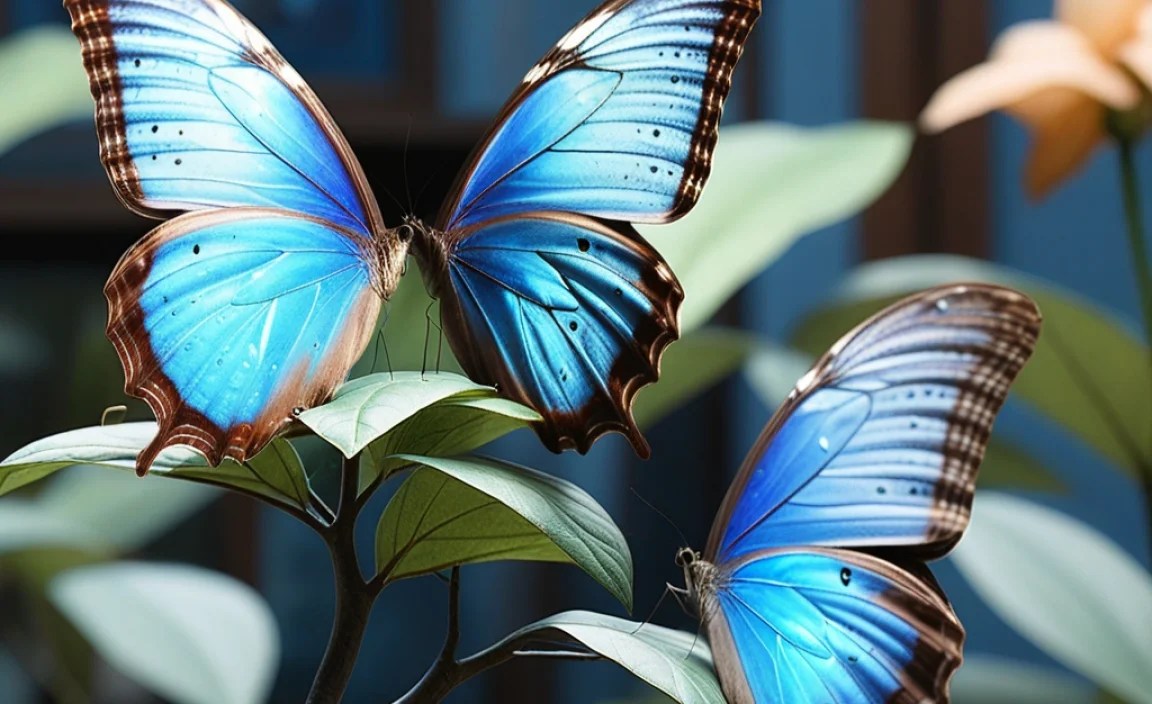
One of the easiest ways for blue morpho vs common blue identification is by their size. Blue morpho butterflies are quite large. Their wingspan can be 5 to 8 inches wide. That’s about the size of your hand! They are among the biggest butterflies in the world. When you see a large, blue butterfly, think of a blue morpho. Common blue butterflies are much smaller. They usually have a wingspan of about 1 inch. That’s about the size of your thumb. So, if you see a tiny blue butterfly, it is likely a common blue. Size is a great first step in telling them apart.
- Blue morphos are large, with wingspans up to 8 inches.
- Common blues are small, with wingspans around 1 inch.
- Size is the easiest first step in identification.
- Think of a hand versus a thumb for size comparison.
- Large size indicates a likely blue morpho butterfly.
Think about seeing a large butterfly fluttering by. Its wings are so big and blue. It is hard to miss! Now, imagine a tiny butterfly landing on a flower. You might not even notice it at first. These big size differences are a key to blue morpho vs common blue identification. It is important to remember that not all butterflies of the same species will be exactly the same size. But in general, these size differences are pretty reliable. When trying to identify butterflies, always consider their size as a starting point.
Fun Fact or Stat: The largest blue morpho species is the Morpho hecuba, with a wingspan reaching over 8 inches!
Where Do Blue Morphos Live?
Have you ever wondered where blue morphos live? They live in the rainforests of Central and South America. These butterflies love warm, humid places. They fly among the tall trees and colorful plants. Blue morphos are not found in North America or Europe naturally. So, if you see a large blue butterfly in your backyard in the United States, it is probably not a blue morpho. Unless it escaped from a butterfly garden! Most likely it is a swallowtail butterfly which can also be blue. When blue morpho vs common blue identification is needed, always consider location.
What About Common Blues?
Where do common blues live? They live in many places around the world. You can find them in Europe, Asia, North America, and Africa. They like meadows, gardens, and grassy areas. Common blues are much more widespread than blue morphos. This means you are more likely to see a common blue in your backyard. They are adaptable to different climates. So, when you see a small blue butterfly, consider that it could be a common blue because they are widely spread across the globe.
Why Location is Important
Location is very important in blue morpho vs common blue identification. If you are in a rainforest in Brazil, a large blue butterfly is likely a blue morpho. If you are in a field in England, a small blue butterfly is likely a common blue. Think about where you are seeing the butterfly. This will help you narrow down the possibilities. Remember that butterflies can sometimes travel far. But usually, they stay in their preferred habitats. So, location is a helpful clue.
Color Differences: Blue Morpho Vs Common Blue

Another key to blue morpho vs common blue identification is the color of their wings. Blue morpho butterflies are famous for their bright, iridescent blue wings. The blue color is very shiny and reflective. It looks like the wings are glowing. The underside of their wings is brown with eye spots. These spots help them hide from predators. Common blue butterflies have blue wings too, but they are not as bright. Their blue color is more muted and dull. They also have brown or orange spots on their wings. So, look closely at the color to tell them apart.
- Blue morphos have bright, iridescent blue wings.
- Common blues have duller blue wings with spots.
- The underside of blue morpho wings is brown.
- Common blues often have orange spots on their wings.
- Color is another key difference in identification.
- Iridescent blue is a sign of a blue morpho.
Imagine the sun shining on a blue morpho’s wings. They sparkle and shimmer. The blue is so intense! Now, think about a common blue’s wings. They are pretty, but not as dazzling. The color is softer. The spots add a different kind of beauty. The color difference is due to the structure of the scales on their wings. Blue morphos have special scales that reflect light in a unique way. That’s why their blue is so bright. These color differences will help you with blue morpho vs common blue identification.
Fun Fact or Stat: The iridescent blue color of the blue morpho is created by microscopic structures on its wings that reflect light!
What Makes Morpho Blue So Bright?
Why is the blue morpho’s blue so bright? It’s all about how the light bounces off its wings. The wings have tiny structures. These structures are like tiny mirrors. They reflect light in a special way. This makes the blue color very bright and shiny. This is called iridescence. It’s like the colors you see on a soap bubble. The structure of the wings is what makes the blue morpho so special. No other butterfly has blue quite like it. When trying to achieve blue morpho vs common blue identification, look for the shine.
Why are Common Blues Less Shiny?
Common blues are not as shiny as blue morphos. This is because their wings do not have the same special structures. Their wings reflect light differently. The blue color is created by different pigments. These pigments do not create the same iridescent effect. That’s why their blue is more muted. The spots on their wings also affect how light is reflected. They absorb some of the light. Making the blue appear less bright. These differences are key to blue morpho vs common blue identification.
Does Wing Shape Matter?
Wing shape can also help with blue morpho vs common blue identification. Blue morphos have broad, rounded wings. These wings are well-suited for flying in the rainforest. Common blues have more delicate wings. They are more angular in shape. The shape of the wings helps them fly in open areas. The wing shape is not as obvious as size or color. But it can be another clue. Look at the overall shape of the wings. This can help you identify the butterfly.
Habitat And Location: Where Do They Live?

Habitat and location are important factors in blue morpho vs common blue identification. Blue morphos live in tropical rainforests. They need warm, humid environments to survive. You will find them in Central and South America. They are not found in colder climates. Common blues are found in many different habitats. They can live in meadows, gardens, and grasslands. They are found in Europe, Asia, North America, and Africa. Knowing where each butterfly lives can help you identify them. Think about the climate and the plants around you.
- Blue morphos live in tropical rainforests.
- Common blues live in meadows and gardens.
- Location is a key factor in identification.
- Consider the climate and surrounding plants.
- Blue morphos need warm, humid environments.
- Common blues can live in many different climates.
Imagine you are hiking in a rainforest. The air is thick and humid. You see a flash of bright blue. It is likely a blue morpho! Now, think about walking through a meadow. The sun is shining and the grass is tall. You see a small blue butterfly flitting among the flowers. That is probably a common blue. The habitat gives you a clue. Remember that butterflies usually stay in their preferred environments. This makes habitat an important part of blue morpho vs common blue identification.
Fun Fact or Stat: Blue morphos are often found near rivers and streams in the rainforest!
What Plants Do Morphos Like?
Blue morphos like certain plants. They feed on the nectar of tropical flowers. They also like rotting fruit. The fruit provides them with energy. The rainforest is full of plants that morphos love. These plants are part of their habitat. The plants provide food and shelter. Knowing what plants they like can help you find them. These plants are not found everywhere. So, if you see these plants, you might be in blue morpho territory. This can help with blue morpho vs common blue identification.
What Plants Do Common Blues Prefer?
Common blues also like certain plants. They feed on the nectar of wildflowers. They also like clover and other small flowers. These plants are common in meadows and gardens. The plants provide them with food and a place to lay their eggs. Common blues are often found near these plants. If you see these plants, you might be in common blue territory. They are easier to spot in open areas. Use this information in your blue morpho vs common blue identification.
How Does Climate Affect Habitat?
Climate affects where butterflies can live. Blue morphos need a warm, humid climate. They cannot survive in cold temperatures. Common blues are more adaptable. They can live in a wider range of climates. This is why they are found in so many different places. The climate determines what plants can grow. The plants provide food and shelter for the butterflies. So, climate is a big factor in habitat. When you are trying to achieve blue morpho vs common blue identification, consider how climate affects where each butterfly can live.
Behavior: How Do They Fly And Act?

Behavior can also help with blue morpho vs common blue identification. Blue morphos are known for their erratic flight. They fly quickly and change direction often. This helps them avoid predators. They often fly high in the trees. Common blues have a more delicate flight. They flutter gently from flower to flower. They often fly low to the ground. Watching how they fly can give you clues about which butterfly you are seeing. Think about their speed and how they move.
- Blue morphos have an erratic, fast flight.
- Common blues have a gentle, fluttering flight.
- Morphos often fly high in the trees.
- Common blues often fly low to the ground.
- Behavior can help with identification.
- Observe their speed and movement.
Imagine watching a blue morpho fly through the rainforest. It darts and weaves between the trees. It is hard to follow! Now, think about a common blue in a garden. It floats gently from flower to flower. It seems to dance in the air. The difference in their flight is due to their size and habitat. Blue morphos need to be quick to avoid predators. Common blues can take their time in open areas. Use these observations for blue morpho vs common blue identification.
Fun Fact or Stat: Blue morphos often fly in groups, creating a stunning display of blue flashes!
What Do Morphos Eat?
Blue morphos eat different things than common blues. Morphos mainly feed on tree sap and rotting fruit. They also drink nectar from flowers. They use their proboscis to suck up the liquids. Their diet gives them energy for their fast flight. They need a lot of energy to avoid predators. The food they eat also affects their color. The pigments in the fruit can enhance their blue color. Knowing their diet can help with blue morpho vs common blue identification.
What Do Common Blues Eat?
Common blues mainly feed on flower nectar. They like small flowers like clover and daisies. They use their proboscis to sip the nectar. Their diet provides them with energy for their gentle flight. They do not need as much energy as morphos. Their diet also affects their color. The pigments in the flowers can affect the shade of blue on their wings. This is a factor when considering blue morpho vs common blue identification.
How Do They Avoid Predators?
Blue morphos avoid predators with their fast, erratic flight. They also have eye spots on the underside of their wings. These spots startle predators. The brown color of their wings also helps them blend in with the trees. Common blues avoid predators by flying low to the ground. They also have camouflage. Their wings blend in with the flowers and grass. Both butterflies have different strategies for survival. These different survival strategies are helpful when considering blue morpho vs common blue identification.
Wing Patterns: Spots, Stripes, And Markings
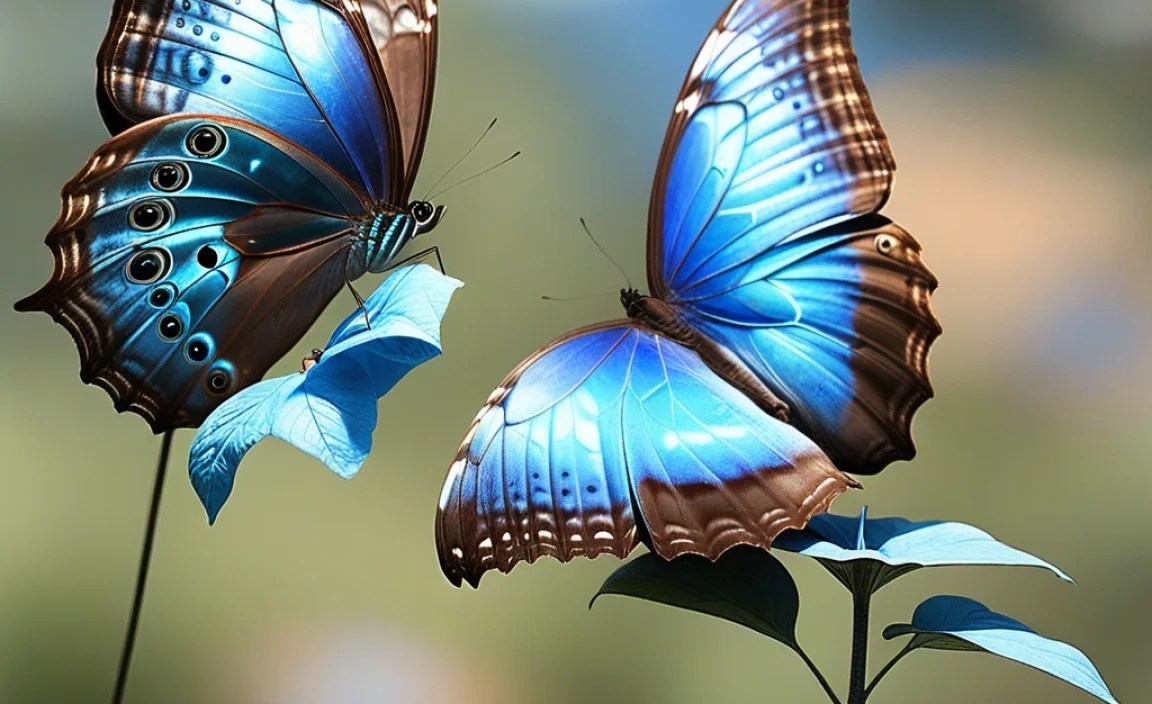
Wing patterns are another way to help with blue morpho vs common blue identification. Blue morphos have simple wing patterns. The top side of their wings is mostly blue. The underside is brown with eye spots. These spots look like eyes. They scare away predators. Common blues have more complex wing patterns. They have spots, stripes, and other markings. The patterns vary depending on the species. Looking closely at the wing patterns can help you tell them apart. Note the differences in markings.
| Feature | Blue Morpho | Common Blue |
|---|---|---|
| Size | Large (5-8 inches) | Small (1 inch) |
| Color | Bright, iridescent blue | Dull blue, often with spots |
| Habitat | Tropical rainforests | Meadows, gardens |
| Flight | Fast, erratic | Gentle, fluttering |
- Blue morphos have simple wing patterns.
- Common blues have more complex patterns.
- Morphos have eye spots on the underside.
- Common blues have spots and stripes.
- Wing patterns help with identification.
- Look closely at the markings.
Imagine looking at the underside of a blue morpho’s wings. The eye spots are large and clear. They look like real eyes! Now, think about the patterns on a common blue’s wings. There are tiny spots and lines. They create a beautiful, intricate design. The patterns are different because the butterflies live in different environments. The patterns help them survive. When considering blue morpho vs common blue identification, remember to look at the patterns on the wings.
Fun Fact or Stat: The number and size of the eye spots on a blue morpho’s wings can vary between individuals!
Why Do Morphos Have Eye Spots?
Morphos have eye spots to scare away predators. The eye spots look like the eyes of a larger animal. This can startle predators and give the morpho time to escape. The eye spots are a form of camouflage. They help the morpho blend in with its surroundings. The eye spots are an important survival tool. They help the morpho stay alive in the rainforest. This defense mechanism is a factor when considering blue morpho vs common blue identification.
Why Do Common Blues Have Spots and Stripes?
Common blues have spots and stripes for camouflage. The patterns help them blend in with the flowers and grass. This makes it harder for predators to see them. The patterns also help them attract mates. The patterns are unique to each species of common blue. This helps them identify each other. The patterns are an important part of their survival and reproduction. This is a factor when considering blue morpho vs common blue identification.
Do Male and Female Patterns Differ?
In some butterflies, male and female patterns differ. In blue morphos, the males are usually brighter blue than the females. The females may have more brown on their wings. In common blues, the males are usually more blue than the females. The females may have more brown or orange on their wings. These differences help them find mates. Looking at the patterns can help you tell males and females apart. When considering blue morpho vs common blue identification, note that there are differences between male and female butterflies.
Conservation Status: Are They Endangered?
Conservation status is important to know. It helps us protect butterflies. Blue morphos are not currently endangered. But their habitat is threatened by deforestation. This means that the rainforest is being cut down. This destroys their homes. Common blues are also not currently endangered. But their habitats are threatened by development and pollution. We need to protect their habitats to help them survive. Knowing their conservation status can help us protect them. We can all help protect butterflies and their habitats. This is important for both the blue morpho vs common blue identification.
- Blue morphos are not currently endangered.
- Common blues are also not currently endangered.
- Deforestation threatens morpho habitats.
- Development threatens common blue habitats.
- We need to protect their habitats.
- Conservation helps butterflies survive.
Imagine a world without butterflies. It would be a sad place! Butterflies are important for our ecosystem. They help pollinate plants. They are also food for other animals. We need to protect them for future generations. We can do this by protecting their habitats. We can also reduce pollution. Every little bit helps. By protecting them, we ensure that we can continue the blue morpho vs common blue identification.
Fun Fact or Stat: Many butterfly species are declining due to habitat loss and climate change!
What is Deforestation?
Deforestation is the cutting down of forests. This destroys the habitats of many animals. It also contributes to climate change. Trees absorb carbon dioxide. When they are cut down, the carbon dioxide is released into the atmosphere. This contributes to global warming. Deforestation is a major threat to blue morphos. We need to protect the rainforest to help them survive. This is crucial when considering blue morpho vs common blue identification and conservation efforts.
What is Habitat Loss?
Habitat loss is when an animal’s home is destroyed. This can be caused by deforestation, development, or pollution. When an animal loses its home, it has nowhere to live. This can lead to extinction. Habitat loss is a major threat to many butterflies. We need to protect their habitats to help them survive. This is essential when considering blue morpho vs common blue identification and conservation efforts.
How Can We Help?
We can help butterflies in many ways. We can plant butterfly gardens. This provides them with food and shelter. We can reduce pollution. This helps protect their habitats. We can support organizations that protect rainforests. Every little bit helps. By working together, we can protect butterflies for future generations. This is crucial when considering blue morpho vs common blue identification and conservation efforts.
Summary
Blue morpho vs common blue identification can be easy. Blue morphos are large, bright blue butterflies. They live in rainforests. Common blues are small, dull blue butterflies. They live in meadows and gardens. Size, color, habitat, and behavior are key differences. Blue morphos fly quickly and erratically. Common blues flutter gently. Morphos have simple wing patterns. Common blues have more complex patterns. By observing these features, you can tell them apart. Remember location matters!
Both butterflies are important for our ecosystem. Blue morphos are not currently endangered. Common blue butterflies are also not currently endangered. But their habitats are threatened. We need to protect their habitats to help them survive. By learning about these butterflies, you can help protect them. You can also share your knowledge with others. Together, we can make a difference.
Conclusion
Learning about blue morpho vs common blue identification is fun. It helps us appreciate the beauty of butterflies. We can tell them apart by their size, color, and habitat. Blue morphos are large and bright. They live in rainforests. Common blues are small and dull. They live in meadows. By observing these differences, we can identify them. We can also help protect their habitats. This ensures that future generations can enjoy these beautiful creatures.
Frequently Asked Questions
Question No 1: How can I tell a blue morpho from other blue butterflies?
Answer: Blue morphos are very large. Their wings can be up to 8 inches wide. They also have a bright, iridescent blue color. Other blue butterflies are usually smaller and have a duller blue color. Also, blue morphos live in rainforests. Other blue butterflies live in different habitats. These differences will help you in your blue morpho vs common blue identification. Also, consider their behavior when identifying the butterfly.
Question No 2: Are blue morphos poisonous?
Answer: Blue morphos are not poisonous to touch. However, they do have a defense mechanism. The underside of their wings has eye spots. These spots look like the eyes of a larger animal. This can startle predators. This helps them escape. So, while they are not poisonous, they can still defend themselves. It is important to remember this when considering blue morpho vs common blue identification.
Question No 3: What do common blue caterpillars eat?
Answer: Common blue caterpillars eat different plants depending on the species. Some eat clover. Others eat bird’s-foot trefoil. The caterpillars are very picky eaters. They only eat certain plants. The plants provide them with the nutrients they need to grow. The plants also provide them with camouflage. This helps them hide from predators. Considering their life cycles is important when considering blue morpho vs common blue identification.
Question No 4: How long do blue morphos live?
Answer: Blue morphos live for about 115 days in the wild. This is a relatively short lifespan for a butterfly. They spend most of their lives as caterpillars. The caterpillars can live for several months. The butterflies are only adults for a short time. They spend this time reproducing. Then they die. This cycle of life is a factor when considering blue morpho vs common blue identification and their life cycle in the ecosystem.
Question No 5: Can I attract common blues to my garden?
Answer: Yes, you can attract common blues to your garden. Plant flowers that they like. Clover, daisies, and bird’s-foot trefoil are good choices. Also, avoid using pesticides. Pesticides can harm the butterflies. Provide them with a source of water. A shallow dish of water with pebbles is perfect. By creating a butterfly-friendly garden, you can attract common blues. This provides an opportunity to practice blue morpho vs common blue identification right in your backyard.
Question No 6: Are blue morphos found in the United States?
Answer: Blue morphos are not naturally found in the United States. They live in the rainforests of Central and South America. However, you may see them in butterfly gardens or zoos. These places recreate their natural habitat. But they are not native to the US. So, if you see a large blue butterfly in the US, it is probably not a blue morpho. When performing blue morpho vs common blue identification, remember to consider location, color and size.


![Insect vs Butterfly: How to Tell [Easy Guide]](https://i2.wp.com/butterflyask.com/wp-content/uploads/2026/02/insect-vs-butterfly-how-to-tell-easy-guide-1-768x469.webp)


