
How to Identify Hairstreak Butterfly: Easy Guide

Have you ever seen a flash of bright color in your garden? It might be a hairstreak butterfly! These tiny butterflies are beautiful. They can be hard to spot. Do you know how to identify hairstreak butterfly? Let’s learn some cool facts. We will explore how to find these amazing insects.
These butterflies are small and fast. They love sunny spots. They often perch with their wings closed. This makes them look like leaves. It helps them hide from birds. Ready to become a butterfly expert? Let’s get started!
Key Takeaways
- Identifying hairstreak butterflies involves looking at size, color, and markings.
- Hairstreaks have small tails that look like antennae to confuse predators.
- These butterflies often perch with their wings closed, showing unique patterns.
- Look for host plants like oak, cherry, and buckthorn to find hairstreaks.
- Hairstreaks are found in various habitats, from woodlands to gardens.
How to Identify Hairstreak Butterfly: Size and Shape

One of the first steps in how to identify hairstreak butterfly is noticing their size and shape. Hairstreaks are generally small butterflies. Most have a wingspan of only one to one and a half inches. Their shape is also unique. They have delicate wings. The hindwings often have small, thread-like tails. These tails look like antennae. This is a clever trick to confuse predators. Birds might attack the tail instead of the body. This gives the butterfly a chance to escape. Their small size and unique tails are key clues.
- Hairstreaks are small butterflies.
- Their wingspan is usually 1–1.5 inches.
- They have delicate wings.
- Hindwings often have thread-like tails.
- Tails look like antennae.
When you see a small butterfly, check its size and shape. Look closely at the hindwings. Do you see those tiny tails? If so, you might have found a hairstreak! Remember, these butterflies are masters of disguise. They use their size and shape to stay safe. They can blend in with leaves and twigs. This makes them hard to spot. So, keep your eyes peeled and look carefully. With a little practice, you will become a hairstreak-spotting pro!
What is the Average Wingspan of a Hairstreak?
Have you ever wondered just how big these butterflies are? The average wingspan of a hairstreak butterfly is about one to one and a half inches. This small size is one of their defining features. Imagine holding a ruler. One and a half inches is not very long. This small size helps them hide from predators. It also allows them to move quickly through bushes and trees. Small size is one of the first things to notice.
How Do Hairstreak Tails Confuse Predators?
Imagine you are a bird looking for a tasty snack. You spot a small butterfly with what looks like antennae on both ends. Which end do you attack? This is exactly what the hairstreak butterfly wants you to think! Their tails look like antennae. This fools predators into attacking the wrong end. The butterfly can then escape. It’s a clever trick that helps them survive. This amazing adaptation is a key to their survival.
Why is Shape Important in Butterfly ID?
The shape of a butterfly’s wings can tell you a lot. Different butterfly families have different wing shapes. Hairstreaks have distinct wings. Their delicate wings and small tails set them apart. Shape is very important to identify them. It is as important as the color. Even the way the wings are attached to the body can tell you a lot about the butterfly. Take a look at the shape and size.
Fun Fact or Stat: Hairstreak butterflies are named for the thin, hair-like lines on their wings!
Color and Markings: Key to Hairstreak Identification

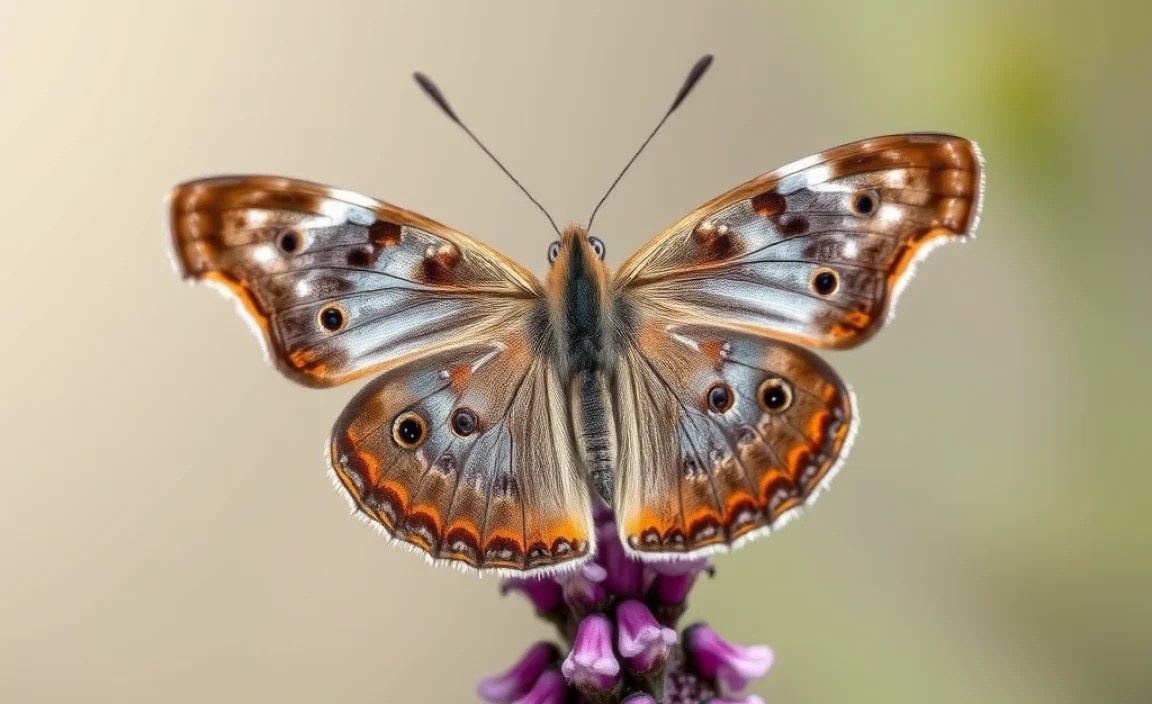
The how to identify hairstreak butterfly process relies heavily on color and markings. Hairstreaks come in many colors. You might see brown, gray, blue, or even iridescent shades. Their wings often have intricate patterns. Look for thin lines, spots, and bands. The undersides of their wings are usually more colorful than the tops. This helps them blend in when they are resting. Some species have bright orange or red spots near their tails. These spots add to the confusion for predators.
- Hairstreaks have varied colors.
- They can be brown, gray, or blue.
- Wings often have thin lines.
- Look for spots and bands.
- Undersides are usually more colorful.
- Some have orange or red spots.
Pay close attention to the colors and markings. Use a butterfly field guide to compare your observations. Note the location and size of any spots or lines. Do the colors seem bright or dull? Do the patterns match any known hairstreak species? Remember, colors and markings can vary slightly. But, they usually provide a good starting point. This is an exciting part of how to identify hairstreak butterfly. It is like solving a colorful puzzle!
What Colors are Common in Hairstreaks?
Most hairstreak butterflies display earth-tone colors. Brown, gray, and muted blues are very common. These colors help them blend in with their surroundings. Some species have metallic sheens. Others have bright orange or red markings. The colors often depend on the habitat. They also depend on what the butterfly eats as a caterpillar. So, keep an eye out for a variety of colors.
Where are the Markings Usually Located?
The markings on hairstreak butterflies are usually on the underside of the wings. This is because they often rest with their wings closed. The markings can include thin lines, spots, and bands. Some species have a row of orange or red spots near the tail. These spots can be a key identifying feature. The location of the markings is important to note.
How Do Markings Help with Camouflage?
Markings help hairstreak butterflies blend in with their surroundings. The patterns on their wings can mimic leaves or bark. This camouflage helps them hide from predators. The contrasting colors can also break up their outline. This makes it harder for predators to see them. The markings are an important part of their survival strategy. They are an essential part of their survival.
Fun Fact or Stat: The Gray Hairstreak can be found in almost every state in the United States!
Hairstreak Butterfly Behavior and Habitat

How to identify hairstreak butterfly also involves understanding their behavior and habitat. Hairstreaks are often found near their host plants. These are the plants that their caterpillars eat. Look for them near oak, cherry, and buckthorn trees. They like sunny spots. They often perch on leaves or twigs. Hairstreaks are fast fliers. They can be hard to follow. They often perch with their wings closed. This shows off the colorful undersides. They are active during the day.
- They live near host plants.
- Oak, cherry, and buckthorn are good places to look.
- They like sunny spots.
- They perch on leaves or twigs.
- They fly fast.
- They perch with wings closed.
When searching for hairstreaks, be patient and observant. Scan the trees and bushes. Look for small, fast-flying butterflies. Pay attention to the plants around you. Knowing their favorite habitats can greatly increase your chances. Understanding their behavior can also help. Watch how they perch and fly. This can give you clues about their identity. The more you know, the easier it will be.
What are Common Hairstreak Habitats?
Hairstreak butterflies can be found in a variety of habitats. They often live in woodlands, forests, and gardens. They prefer areas with plenty of trees and shrubs. You can find them in meadows and along streams. The key is to look for their host plants. If the host plants are present, the hairstreaks are sure to follow. They can even adapt to urban environments.
What is the Hairstreak’s Preferred Behavior?
Hairstreak butterflies have some interesting behaviors. They often perch with their wings closed. This helps them blend in with their surroundings. They are also fast fliers. This helps them escape from predators. They are active during the day. They often visit flowers for nectar. They also like to bask in the sun. This behavior warms them up.
Why are Host Plants Important?
Host plants are very important to hairstreak butterflies. These are the plants that their caterpillars eat. Without the host plants, the butterflies cannot survive. The female butterflies lay their eggs on or near these plants. When the caterpillars hatch, they have a ready food source. The choice of host plant varies. It depends on the species of hairstreak.
Fun Fact or Stat: Some hairstreak caterpillars have a symbiotic relationship with ants, where the ants protect the caterpillars in exchange for sugary secretions!
Comparing Different Types of Hairstreak Butterflies

To master how to identify hairstreak butterfly, you must learn to compare different types. There are many species of hairstreak butterflies. Each has unique characteristics. The Gray Hairstreak is common. The Edwards’ Hairstreak is rare. The Coral Hairstreak is beautiful. Knowing the differences can help you identify them more accurately. Look at their colors, markings, and sizes. Also, consider their habitat and behavior. Use field guides and online resources to compare them.
- Gray Hairstreak is common.
- Edwards’ Hairstreak is rare.
- Coral Hairstreak is beautiful.
- Each has unique traits.
- Compare colors and markings.
- Consider habitat and behavior.
Comparing different types of hairstreaks can be fun. It’s like being a detective. You are looking for clues to solve a mystery. The more you learn, the easier it becomes. Don’t be afraid to make mistakes. Every mistake is a learning opportunity. With practice, you’ll become an expert. Soon, you will know how to identify hairstreak butterfly.
What are the Key Differences Between Hairstreaks?
The key differences between hairstreak butterflies include color, size, and markings. Some species are brown, while others are blue or gray. Some have distinct patterns. Others have a very plain look. Some are larger than others. The location of the markings can also vary. The best way to learn the differences is to study images. Pay close attention to the details.
How Do Habitats Differ Among Hairstreak Species?
Different hairstreak species prefer different habitats. Some live in forests. Others live in meadows. Some prefer wet areas. Others prefer dry areas. The type of host plant also affects where they live. For example, hairstreaks that feed on oak trees will live near oak forests. Knowing the habitat can help you narrow down the possibilities.
What Role Does Behavior Play in Identification?
Behavior can also play a role in identifying hairstreak butterflies. Some species are very active. Others are more sedentary. Some species perch with their wings open. Others always perch with their wings closed. Some species are attracted to certain flowers. Others are not. Observing their behavior can provide clues.
| Feature | Gray Hairstreak | Edwards’ Hairstreak | Coral Hairstreak |
|---|---|---|---|
| Color | Gray with orange spots | Brown with blue | Brown with coral spots |
| Size | Small | Small to medium | Small |
| Habitat | Various | Oak forests | Woodlands |
| Host Plant | Many | Oak | Cherry |
Fun Fact or Stat: There are over 200 species of hairstreak butterflies found in North America!
Tools and Resources for Butterfly Identification
Learning how to identify hairstreak butterfly is easier with the right tools. A good butterfly field guide is essential. It will show you pictures. It will have descriptions of different species. Binoculars can help you see butterflies up close. A camera can help you record your sightings. Online resources are also helpful. Websites and apps can provide information. They can also help you connect with other butterfly enthusiasts.
- Use a butterfly field guide.
- Binoculars help you see them up close.
- A camera helps record sightings.
- Online resources are helpful.
- Websites and apps provide information.
When using these tools, be patient and thorough. Start with the basics. Learn the different butterfly families. Then, focus on the hairstreaks. Use the field guide to compare your observations. Take photos and share them online. Ask for help from experts. The more you use these tools, the better you’ll become. Learning how to identify hairstreak butterfly can be fun. It can be rewarding!
What Makes a Good Butterfly Field Guide?
A good butterfly field guide should have clear pictures. The pictures should show different views of the butterfly. It should also have detailed descriptions. The descriptions should include size, color, and markings. It should also include habitat and behavior. A good field guide should be easy to use. It should be organized logically. It should be durable.
How Can Binoculars Help with Butterfly ID?
Binoculars can help you see butterflies up close. This allows you to see details. You can see colors and markings more clearly. This is especially helpful. It helps when identifying small butterflies like hairstreaks. Look for binoculars that are lightweight. They should also be easy to focus.
Why are Online Resources Useful?
Online resources are useful for many reasons. They provide up-to-date information. They allow you to connect with other butterfly enthusiasts. You can ask questions and share your sightings. Many websites and apps have identification tools. You can upload a photo and get help.
Fun Fact or Stat: Citizen science projects like butterfly counts help scientists track butterfly populations and their habitats!
Challenges in Identifying Hairstreak Butterflies
Even with the right tools, how to identify hairstreak butterfly can be challenging. These butterflies are small and fast. They often perch with their wings closed. This makes it hard to see their colors and markings. Some species look very similar. This can make it hard to tell them apart. Weather can also be a factor. Rainy or windy days make it hard to find butterflies. But, don’t get discouraged! With practice, you will improve.
- They are small and fast.
- They perch with wings closed.
- Some species look similar.
- Weather can be a factor.
- Don’t get discouraged.
When facing challenges, stay patient and persistent. Try different locations and times of day. Focus on the key identifying features. Take good photos when you can. Share your photos with experts. Ask for their opinion. Remember that even experts make mistakes. The key is to keep learning. The key is to keep exploring.
Why is it Hard to See Their Markings?
It can be hard to see the markings on hairstreak butterflies. This is because they often perch with their wings closed. This hides the colorful undersides of their wings. They also tend to be small. Their small size makes it hard to see the details. The markings are often very fine. This makes them hard to see without binoculars.
What if Two Species Look Very Similar?
If two species look very similar, focus on the subtle differences. Look closely at the markings. Pay attention to the size and shape. Consider the habitat and behavior. Use a good field guide to compare the species. If you are still unsure, take a photo. Share it with an expert.
How Does Weather Affect Butterfly Spotting?
Weather can greatly affect butterfly spotting. Butterflies are cold-blooded. They need sunlight to warm up. On rainy or cloudy days, they are less active. They often hide under leaves. Windy days can also make it hard to spot butterflies. They may be blown around. The best time to look for butterflies is on a warm, sunny day.
Fun Fact or Stat: Some hairstreak species are so rare that they are listed as endangered, making identification and conservation efforts even more critical!
The Importance of Butterfly Conservation
Knowing how to identify hairstreak butterfly helps with conservation. Butterflies are important pollinators. They help plants reproduce. They are also part of the food chain. Many species are declining. Habitat loss is a major threat. Climate change is also a concern. By learning about butterflies, we can help protect them. We can create butterfly-friendly gardens. We can support conservation organizations.
- Butterflies are important pollinators.
- Habitat loss is a major threat.
- Climate change is also a concern.
- We can create butterfly gardens.
- We can support conservation groups.
Conservation efforts are very important. They help protect butterflies and their habitats. We can all make a difference. Plant native plants in your garden. Avoid using pesticides. Support local conservation organizations. Educate others about the importance of butterflies. Together, we can help ensure that these beautiful creatures thrive. We can ensure that people know how to identify hairstreak butterfly.
Why are Butterflies Important to the Ecosystem?
Butterflies are important to the ecosystem for several reasons. They are important pollinators. They help plants reproduce. They are also a food source for birds and other animals. Butterflies are also indicators of environmental health. A decline in butterfly populations can signal problems.
How Does Habitat Loss Affect Butterflies?
Habitat loss is a major threat to butterflies. When habitats are destroyed, butterflies lose their food and shelter. They also lose their breeding grounds. This can lead to a decline in butterfly populations. Habitat loss can be caused by development, agriculture, and deforestation.
What Can We Do to Help Butterfly Conservation?
There are many things we can do to help butterfly conservation. Plant native plants in your garden. Avoid using pesticides. Support local conservation organizations. Educate others about the importance of butterflies. Create butterfly-friendly habitats in your community. Reduce your carbon footprint to help with climate change. Every little bit helps.
Fun Fact or Stat: Butterfly gardens, even small ones, can provide crucial habitat for hairstreaks and other pollinators in urban areas!
Summary
How to identify hairstreak butterfly is a fun and rewarding activity. Hairstreaks are small butterflies. They have unique colors and markings. They often perch with their wings closed. Look for them near their host plants. Use a field guide and binoculars to help. There are many species of hairstreaks. Each has unique characteristics. Pay attention to the details. With practice, you will become an expert.
Remember to be patient and persistent. Don’t get discouraged by challenges. The more you learn, the easier it becomes. Also, remember the importance of butterfly conservation. Butterflies are important pollinators. They are part of the food chain. We can all help protect them. You can protect them when you know how to identify hairstreak butterfly.
Conclusion
Learning how to identify hairstreak butterfly is a great way to connect with nature. These small, beautiful creatures are fascinating to observe. By paying attention to their size, color, markings, behavior, and habitat, you can identify them. Remember to use the right tools. Keep practicing. Most importantly, remember the importance of butterfly conservation. Let’s all do our part to protect these amazing insects.
Frequently Asked Questions
Question No 1: What is the most important thing to look for when trying to identify a hairstreak butterfly?
Answer: When learning how to identify hairstreak butterfly, focus on the wing markings. Hairstreaks have unique lines and spots. These patterns help distinguish them from other butterflies. Look closely at the underside of the wings. This is where the most distinctive markings are usually found. Also, pay attention to the small tails on their hindwings. These tails are a key identifying feature. With practice, you’ll become better. You’ll be able to spot the subtle differences. This will help you identify the different species.
Question No 2: Where is the best place to find hairstreak butterflies?
Answer: The best place to find hairstreak butterflies is near their host plants. These are the plants that their caterpillars eat. Look for them near oak, cherry, and buckthorn trees. They also like sunny spots. They often perch on leaves or twigs. Woodlands, forests, and gardens are good places to search. Knowing their habitat can greatly increase your chances of finding them. Remember, they are fast fliers. Be patient and observant.
Question No 3: What tools do I need to identify hairstreak butterflies?
Answer: To identify hairstreak butterflies, you need a few essential tools. A good butterfly field guide is a must-have. It provides pictures and descriptions of different species. Binoculars can help you see butterflies up close. This allows you to see details that you might otherwise miss. A camera is also helpful. You can use it to record your sightings. Online resources are also useful. Websites and apps can provide additional information. These tools will help you become better at how to identify hairstreak butterfly.
Question No 4: Are hairstreak butterflies rare?
Answer: Some hairstreak butterfly species are rare, while others are quite common. It depends on the species and the location. Habitat loss and climate change can affect butterfly populations. Some species are more vulnerable than others. That’s why conservation efforts are so important. By protecting their habitats, we can help ensure that these beautiful creatures thrive. Some species are endangered. This makes it very important to know how to identify hairstreak butterfly. Knowing helps protect them.
Question No 5: How can I help protect hairstreak butterflies?
Answer: You can help protect hairstreak butterflies in several ways. Plant native plants in your garden. This provides food and shelter for butterflies and caterpillars. Avoid using pesticides. Pesticides can harm or kill butterflies. Support local conservation organizations. Educate others about the importance of butterflies. Create butterfly-friendly habitats in your community. By taking these steps, you can make a difference. You can help ensure that hairstreak butterflies thrive.
Question No 6: How do hairstreak caterpillars help with identifying the butterflies?
Answer: While the caterpillars themselves don’t directly help you identify the adult butterflies, understanding their host plants is crucial. Female hairstreaks lay their eggs on or near these plants. Knowing what plants to look for can greatly increase your chances of finding the butterflies. For example, if you know that a certain hairstreak species feeds on oak trees, you can focus your search in oak forests. It is helpful to know about the full lifecycle. This makes how to identify hairstreak butterfly much easier.


