Butterfly Species in Texas Identification: A Quick Guide

Did you know Texas has many types of butterflies? These pretty insects fly all over the state. They come in different colors and sizes. Learning about butterfly species in Texas identification can be fun. It helps us know more about nature.
Butterflies are important. They help flowers grow. They are also pretty to watch. Let’s learn how to tell them apart. We can all become butterfly experts.
Key Takeaways
- Identifying butterfly species in Texas helps us appreciate nature’s diversity.
- Look at wing patterns and colors to tell butterflies apart easily.
- Many resources, like books and websites, can help you identify butterflies.
- Some Texas butterflies are rare. Protecting them is very important.
- Knowing butterfly names makes learning about them more interesting and fun.
Butterfly Species in Texas: An Overview

Texas is home to a wide variety of butterflies. These colorful insects add beauty to our gardens and natural landscapes. Butterfly species in Texas identification can seem tricky at first. However, with a few simple tips, anyone can learn to recognize them. Butterflies play an important role in the ecosystem. They help pollinate flowers, which is essential for plant growth. By learning about different species, we can better appreciate and protect these amazing creatures. Many people enjoy butterfly watching as a hobby. It’s a great way to spend time outdoors and connect with nature. Remember to bring a field guide and a notebook to record your observations. Identifying butterflies not only enhances our knowledge but also encourages conservation efforts to preserve their habitats.
- Texas has many different butterflies.
- Butterflies help flowers grow.
- Watching butterflies is a fun hobby.
- We can protect their homes.
- Learning their names is interesting.
Understanding butterfly species in Texas identification involves more than just knowing their names. It includes understanding their life cycles, habitats, and food sources. Butterflies go through a process called metamorphosis. They start as eggs, then become caterpillars, then pupae (chrysalises), and finally, butterflies. Each stage is unique and important. Different butterflies prefer different plants for food. Some caterpillars eat only one type of plant. This is why it’s important to have a variety of native plants in your garden. By creating butterfly-friendly habitats, we can help these beautiful creatures thrive. Remember, even small actions can make a big difference in protecting butterfly populations in Texas.
What Makes a Butterfly Unique?
Have you ever wondered what makes each butterfly different? It’s all about their unique patterns and colors. These patterns help them hide from predators and attract mates. Some butterflies have bright, bold colors, while others have more muted, camouflaged patterns. The shape of their wings also varies. Some have long, narrow wings, while others have broad, rounded wings. These differences are important clues for butterfly species in Texas identification. When you see a butterfly, take a close look at its wing patterns. Notice the colors and shapes. This will help you start to identify the different species. Butterfly identification is like solving a puzzle. Each clue helps you get closer to the answer.
Why Are Butterflies Important?
Butterflies are more than just pretty insects. They play a vital role in our ecosystem. They are important pollinators, which means they help plants reproduce. As they fly from flower to flower, they carry pollen on their bodies. This pollen helps fertilize the plants, allowing them to produce seeds and fruits. Without butterflies, many plants would struggle to survive. Butterflies are also an important food source for other animals, such as birds and lizards. By understanding the importance of butterflies, we can better appreciate their role in nature and take steps to protect them. Remember, even small actions, like planting butterfly-friendly gardens, can make a big difference.
How Can We Protect Butterflies?
Protecting butterflies is important for maintaining a healthy ecosystem. There are many things we can do to help. One of the easiest ways is to plant native plants in our gardens. Native plants provide food and shelter for butterflies and their caterpillars. Avoid using pesticides, as they can harm butterflies and other beneficial insects. Create a water source for butterflies, such as a shallow dish of water with pebbles. Educate others about the importance of butterflies and how they can help protect them. By working together, we can ensure that these beautiful creatures continue to thrive in Texas. Every small effort counts in the conservation of butterfly species in Texas.
Fun Fact or Stat: The Monarch butterfly migrates thousands of miles each year, and Texas is a crucial stopover point for them!
Texas Butterfly Identification: Key Features
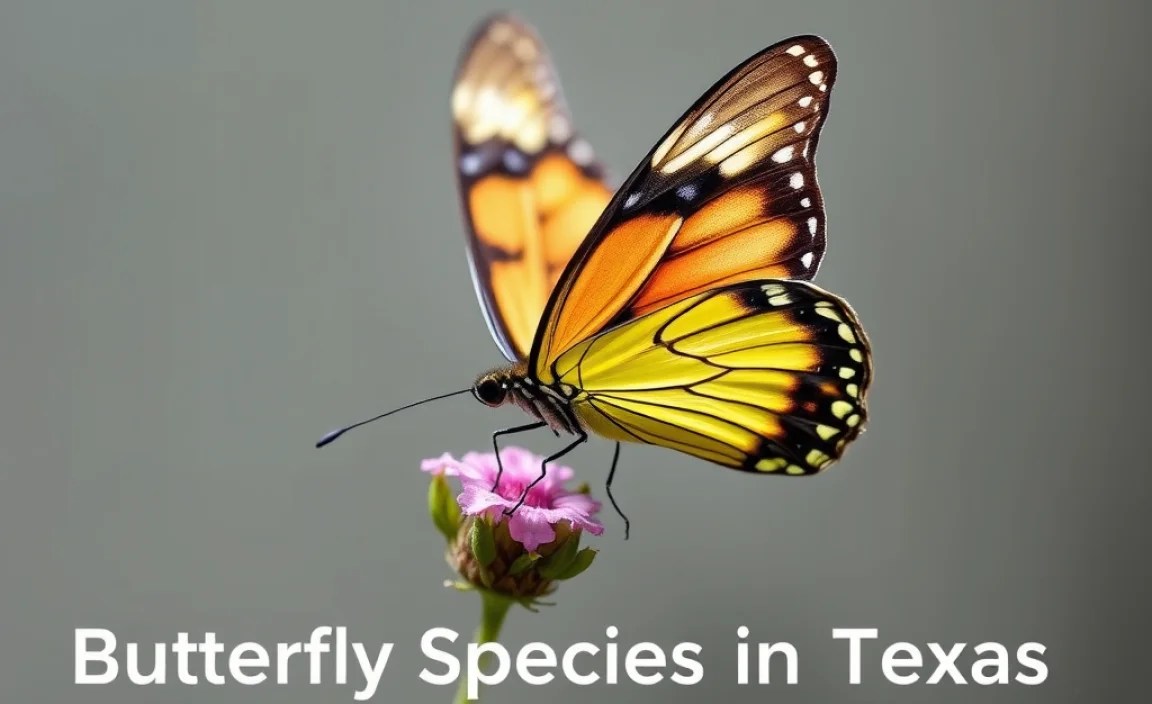
To accurately identify butterfly species in Texas, it’s essential to focus on key features. These include wing patterns, colors, size, and shape. Wing patterns are often the most distinctive characteristic. Look for spots, stripes, and other markings. Colors can also vary greatly, from bright blues and oranges to more subdued browns and grays. Size is another important factor. Some butterflies are quite large, while others are very small. The shape of the wings can also provide clues. Some butterflies have rounded wings, while others have more angular or pointed wings. By paying attention to these features, you can narrow down the possibilities and accurately identify the butterfly you’ve observed. Using a field guide or online resource can also be helpful in this process.
- Wing patterns are very important.
- Colors can help you identify butterflies.
- Size matters when identifying species.
- Shape of wings gives clues.
- Use field guides for help.
- Online resources are useful too.
Another important aspect of butterfly species in Texas identification is understanding the different butterfly families. Each family has its own set of characteristics. For example, swallowtail butterflies are known for their long tails on their hindwings. Brush-footed butterflies often have bright colors and patterns on the upper side of their wings. Skippers are small, fast-flying butterflies with hooked antennae. By learning about the different families, you can quickly narrow down the possibilities when identifying a butterfly. Pay attention to the overall appearance of the butterfly, as well as the specific details of its wings and body. Remember, practice makes perfect. The more you observe butterflies, the better you’ll become at identifying them.
What Are Swallowtail Butterflies?
Swallowtail butterflies are among the most recognizable butterflies in Texas. They are known for their distinctive “tails” on their hindwings. These tails can vary in length and shape, depending on the species. Swallowtails are typically large butterflies with bright colors, such as yellow, black, and blue. Some common swallowtails in Texas include the Giant Swallowtail, the Black Swallowtail, and the Pipevine Swallowtail. These butterflies are often seen in gardens and open fields, where they feed on nectar from flowers. Their caterpillars also have interesting behaviors. For example, the Pipevine Swallowtail caterpillar feeds exclusively on pipevine plants, which contain toxins that make the caterpillar unpalatable to predators. Identifying swallowtails is a great starting point for learning about butterfly species in Texas.
What Are Brush-Footed Butterflies?
Brush-footed butterflies are a large and diverse group of butterflies. They are called “brush-footed” because their front legs are small and brush-like. They use these legs for tasting rather than walking. Brush-footed butterflies often have bright colors and intricate patterns on the upper side of their wings. Some common brush-footed butterflies in Texas include the Monarch, the Viceroy, and the Question Mark. These butterflies are found in a variety of habitats, from forests to grasslands. Their caterpillars feed on a wide range of plants. The Monarch butterfly is famous for its long migration to Mexico. Learning about brush-footed butterflies can help you appreciate the diversity of butterfly species in Texas identification.
What Are Skipper Butterflies?
Skipper butterflies are small, fast-flying butterflies that are often overlooked. They are called “skippers” because of their rapid, darting flight. Skippers typically have hooked antennae and stout bodies. They come in a variety of colors, from brown and orange to black and white. Some common skippers in Texas include the Fiery Skipper, the Sachem, and the Clouded Skipper. These butterflies are found in a variety of habitats, including grasslands, gardens, and woodlands. Their caterpillars feed on grasses and other plants. Skippers can be challenging to identify because they are small and fast-moving. However, with practice, you can learn to recognize these interesting butterflies. Understanding skippers adds to your knowledge of butterfly species in Texas.
Fun Fact or Stat: Some butterflies can taste with their feet, which helps them find the best plants to lay their eggs on!
Common Butterfly Species Identification in Texas

Texas boasts a wide array of common butterfly species. Learning to identify these butterflies is a great starting point. The Monarch butterfly is perhaps the most well-known. It’s famous for its bright orange wings with black markings. The Gulf Fritillary is another common sight. It has bright orange wings with silver spots on the underside. The Black Swallowtail is also frequently seen. It has black wings with yellow markings and a distinctive tail. These are just a few examples of the many common butterflies in Texas. By familiarizing yourself with these species, you can build a strong foundation for butterfly species in Texas identification. Remember to use field guides and online resources to help you learn.
- Monarchs have orange and black wings.
- Gulf Fritillaries have silver spots.
- Black Swallowtails have tails.
- Learn these common species first.
- Use guides for help.
- Practice often for better results.
Identifying common butterfly species in Texas also involves understanding their habitats and behaviors. Monarch butterflies are often found in open fields and meadows. They migrate long distances to breed. Gulf Fritillaries are commonly seen in gardens and along roadsides. They are attracted to passionflower vines. Black Swallowtails are found in a variety of habitats, including gardens, fields, and woodlands. Their caterpillars feed on plants in the parsley family. By understanding where these butterflies live and what they eat, you can increase your chances of spotting them. Remember to be patient and observant. Butterfly watching is a rewarding hobby that can bring you closer to nature.
How to Spot a Monarch Butterfly
Spotting a Monarch butterfly is a treat. These butterflies are known for their bright orange wings with black veins and white spots. They are relatively large, making them easier to see. Monarchs are often found in open fields and meadows, where they feed on nectar from flowers. They are also commonly seen migrating in large groups. Look for them in the fall as they travel south to Mexico. To attract Monarchs to your garden, plant milkweed. Milkweed is the only food source for Monarch caterpillars. By providing milkweed, you can help support the Monarch population. Identifying Monarchs is an important part of understanding butterfly species in Texas.
How to Spot a Gulf Fritillary Butterfly
The Gulf Fritillary is another common butterfly in Texas. It is known for its bright orange wings with elongated shape. The underside of its wings has striking silver spots. These butterflies are often seen in gardens and along roadsides. They are attracted to passionflower vines, which serve as the food source for their caterpillars. Gulf Fritillaries are active fliers and can be seen throughout the day. To attract Gulf Fritillaries to your garden, plant passionflower vines. These vines will provide food for the caterpillars and nectar for the adult butterflies. Identifying Gulf Fritillaries is a fun way to learn about butterfly species in Texas identification.
How to Spot a Black Swallowtail Butterfly
The Black Swallowtail is a beautiful butterfly found in Texas. It has black wings with yellow markings and a distinctive tail. The females have blue markings on their hindwings. Black Swallowtails are found in a variety of habitats, including gardens, fields, and woodlands. Their caterpillars feed on plants in the parsley family, such as dill, parsley, and fennel. To attract Black Swallowtails to your garden, plant these herbs. Black Swallowtails are strong fliers and can be seen throughout the day. Look for them near their host plants. Identifying Black Swallowtails is a rewarding experience when studying butterfly species in Texas identification.
Fun Fact or Stat: Monarch butterflies can travel up to 3,000 miles during their annual migration!
Rare Butterfly Species and Identification

Texas is not only home to common butterflies but also to several rare species. These rare butterflies are often found in specific habitats. They may be threatened by habitat loss or other factors. Identifying these rare butterflies is crucial for conservation efforts. Some examples of rare butterflies in Texas include the Texas Powdered Skipper and the Regal Fritillary. The Texas Powdered Skipper is found in only a few counties in the state. The Regal Fritillary is threatened by habitat loss due to agriculture and development. By learning about these rare species, we can help protect them. Understanding butterfly species in Texas identification is key to their survival.
- Rare butterflies need our help.
- Habitat loss threatens them.
- Texas Powdered Skipper is rare.
- Regal Fritillary is also rare.
- Learn to identify them.
- Protect their homes.
Identifying rare butterfly species in Texas requires careful observation and knowledge of their specific characteristics. The Texas Powdered Skipper is a small, brown butterfly with a dusting of white powder on its wings. It is found in grasslands and open woodlands. The Regal Fritillary is a larger butterfly with orange and black markings. It is found in prairies and meadows. When identifying these butterflies, pay close attention to their size, color, and wing patterns. Also, consider the habitat in which you find them. Rare butterflies are often found in undisturbed areas with specific host plants. By working together, we can help protect these vulnerable species.
What Makes a Butterfly Rare?
A butterfly becomes rare when its population declines significantly. This can happen for several reasons. Habitat loss is a major threat. As forests and grasslands are converted to agriculture or development, butterflies lose their homes and food sources. Climate change can also impact butterfly populations. Changes in temperature and rainfall can disrupt their life cycles and food availability. Pesticide use can also harm butterflies and other beneficial insects. Rare butterflies are often highly specialized. They may rely on a specific host plant or habitat. When these resources are lost, the butterfly population suffers. Protecting rare butterflies requires a multifaceted approach. We must conserve their habitats, reduce pesticide use, and address climate change. The study of butterfly species in Texas identification helps us protect them.
How Can We Help Rare Butterflies?
Helping rare butterflies requires a community effort. One of the most important things we can do is protect their habitats. This means conserving forests, grasslands, and other natural areas. We can also create butterfly-friendly habitats in our own backyards. Plant native plants that provide food and shelter for butterflies and their caterpillars. Avoid using pesticides, as they can harm butterflies and other beneficial insects. Support organizations that are working to conserve butterfly habitats. Educate others about the importance of butterflies and how they can help protect them. By working together, we can make a difference. Even small actions can have a big impact on the survival of rare butterfly species in Texas.
What to Do if You Find a Rare Butterfly?
If you think you’ve found a rare butterfly, it’s important to take careful notes. Record the date, time, and location of your sighting. Take photos of the butterfly, if possible. Note the butterfly’s size, color, and wing patterns. Also, record the habitat in which you found the butterfly. Report your sighting to a local butterfly organization or conservation group. They can help confirm the identification and track the butterfly’s population. Avoid disturbing the butterfly or its habitat. Remember, rare butterflies are vulnerable and need our protection. Your observation can contribute to the study of butterfly species in Texas identification and their conservation.
Fun Fact or Stat: Some rare butterflies are only found in a single county in Texas!
Butterfly Habitats and Identification Clues

Different butterfly species in Texas thrive in different habitats. Understanding these habitats can provide valuable clues for identification. For example, some butterflies are found only in forests, while others prefer grasslands or deserts. The plants that grow in these habitats also play a role. Butterflies often rely on specific plants for food and shelter. By observing the habitat and the plants present, you can narrow down the possibilities. Consider the elevation, soil type, and climate of the area. These factors can influence the types of butterflies that are present. Remember to be observant and take detailed notes. The more information you gather, the better you’ll be at identifying butterflies.
- Forests have different butterflies.
- Grasslands attract other species.
- Deserts have unique butterflies.
- Plants provide food and shelter.
- Elevation affects butterfly types.
- Climate is an important factor.
When identifying butterfly species in Texas, it’s also important to consider the time of year. Some butterflies are only active during certain seasons. For example, some species emerge in the spring, while others are more common in the summer or fall. The weather conditions can also influence butterfly activity. Butterflies are typically more active on warm, sunny days. They may be less active on cloudy or rainy days. Pay attention to the temperature, humidity, and wind conditions. These factors can affect the types of butterflies you’re likely to see. Remember to be patient and persistent. Butterfly watching is a rewarding hobby that can bring you closer to nature.
Forest Habitats and Butterflies
Forest habitats provide shelter and food for many butterfly species. The dense canopy of trees creates a cool, shady environment. This is ideal for butterflies that prefer cooler temperatures. Forests also offer a variety of host plants for butterfly caterpillars. Some common forest butterflies in Texas include the Diana Fritillary and the Question Mark. These butterflies are often found near streams and woodlands. They feed on nectar from wildflowers and trees. When identifying forest butterflies, look for patterns that help them blend in with their surroundings. Camouflage is important for protection from predators. Understanding forest habitats can help you identify butterfly species in Texas.
Grassland Habitats and Butterflies
Grassland habitats are home to a different set of butterfly species. These open areas provide plenty of sunlight and wildflowers. Grassland butterflies are often brightly colored. This helps them attract mates in the open environment. Some common grassland butterflies in Texas include the Regal Fritillary and the Monarch. These butterflies feed on nectar from grasses and wildflowers. They also rely on grasses for their caterpillars to feed on. When identifying grassland butterflies, look for patterns that help them stand out against the green background. Bright colors and bold patterns are common. Exploring grassland habitats enhances your understanding of butterfly species in Texas identification.
Desert Habitats and Butterflies
Desert habitats are harsh environments. Only a few butterfly species can survive there. These butterflies are adapted to the hot, dry conditions. They often have light-colored wings that reflect sunlight. Some common desert butterflies in Texas include the Sleepy Orange and the Queen. These butterflies feed on nectar from desert wildflowers and shrubs. They also rely on drought-resistant plants for their caterpillars to feed on. When identifying desert butterflies, look for adaptations that help them survive in the extreme environment. Light colors, small size, and drought tolerance are common. Studying desert habitats expands your knowledge of butterfly species in Texas identification.
Fun Fact or Stat: Some butterflies can fly up to 30 miles per hour in open habitats!
Tools for Butterfly Species in Texas Identification
Identifying butterfly species in Texas can be easier with the right tools. Field guides are essential for any butterfly enthusiast. These books provide detailed descriptions and illustrations of different species. Binoculars can help you get a closer look at butterflies without disturbing them. A camera can be used to capture photos for later identification. Online resources, such as websites and apps, can also be helpful. These tools provide access to a wealth of information and images. Remember to use these tools responsibly and ethically. Avoid disturbing butterflies or their habitats. The goal is to observe and learn, not to harm or collect.
- Field guides are very helpful.
- Binoculars help you see better.
- Cameras capture butterfly images.
- Websites offer information.
- Apps can help with identification.
- Use tools responsibly.
When using tools for butterfly species in Texas identification, it’s important to be patient and persistent. Butterfly watching takes time and practice. Don’t get discouraged if you can’t identify every butterfly you see. The more you observe and learn, the better you’ll become. Remember to respect the environment and the butterflies themselves. Avoid touching or capturing butterflies. Observe them from a distance and allow them to continue their natural behaviors. Butterfly watching is a rewarding hobby that can bring you closer to nature. By using the right tools and techniques, you can enhance your knowledge and appreciation of these beautiful creatures.
Using Field Guides Effectively
Field guides are an invaluable resource for identifying butterflies. To use them effectively, start by familiarizing yourself with the basic organization of the guide. Most field guides are organized by butterfly family. Each family section includes descriptions and illustrations of different species. When you see a butterfly, compare it to the images and descriptions in the field guide. Pay attention to key features, such as wing patterns, colors, and size. Read the text carefully and look for clues that match the butterfly you’ve observed. If you’re unsure, try narrowing down the possibilities by considering the habitat and time of year. With practice, you’ll become more skilled at using field guides to identify butterfly species in Texas identification.
Using Binoculars for Butterfly Watching
Binoculars can greatly enhance your butterfly watching experience. They allow you to get a closer look at butterflies without disturbing them. When choosing binoculars, look for a model that is lightweight and easy to focus. A magnification of 8x or 10x is usually sufficient for butterfly watching. When using binoculars, hold them steady and focus on the butterfly. Pay attention to key features, such as wing patterns, colors, and antennae. Practice using your binoculars in different lighting conditions. This will help you become more comfortable and proficient. Remember to be respectful of the butterflies and their habitat. Observe them from a distance and avoid causing any disturbance. Binoculars are a valuable tool for enhancing your understanding of butterfly species in Texas.
Using Online Resources for Identification
Online resources offer a wealth of information for identifying butterflies. Websites and apps provide access to images, descriptions, and range maps. Many online resources also include interactive tools that can help you narrow down the possibilities. When using online resources, be sure to verify the information. Not all websites are accurate or reliable. Look for resources from reputable organizations, such as universities, museums, and conservation groups. Use multiple sources to confirm your identification. Remember to be respectful of copyright laws and give credit to the original authors and photographers. Online resources can be a valuable supplement to field guides and other tools. They can help you expand your knowledge of butterfly species in Texas identification.
| Tool | Pros | Cons | Best Use |
|---|---|---|---|
| Field Guide | Detailed info, portable | Can be outdated, limited images | In the field identification |
| Binoculars | Closer view, non-intrusive | Requires steady hands, can be bulky | Detailed observation |
| Camera | Record sightings, analyze later | Requires skill, can be expensive | Documentation and learning |
| Online Resources | Vast info, interactive | Can be unreliable, needs internet | Research and confirmation |
Fun Fact or Stat: Some apps can identify butterflies from photos you take with your phone!
Conservation Efforts for Butterfly Species in Texas
Many butterfly species in Texas face threats from habitat loss and other factors. Conservation efforts are essential to protect these vulnerable creatures. These efforts include habitat restoration, captive breeding programs, and public education. Habitat restoration involves restoring degraded areas to provide suitable homes for butterflies. Captive breeding programs aim to increase the populations of endangered species. Public education helps raise awareness about the importance of butterflies and how to protect them. By supporting these efforts, we can help ensure that butterflies continue to thrive in Texas. Remember that conservation is a shared responsibility. Every small action can make a difference.
- Butterflies need our help.
- Habitat loss is a big threat.
- Restoration helps butterflies.
- Breeding programs save species.
- Education raises awareness.
- Support conservation groups.
Supporting conservation efforts for butterfly species in Texas also involves making responsible choices in our daily lives. Reduce your use of pesticides, as they can harm butterflies and other beneficial insects. Plant native plants in your garden to provide food and shelter for butterflies. Support local businesses that are committed to sustainability. Educate your friends and family about the importance of butterflies and how to protect them. By working together, we can create a more butterfly-friendly world. Remember that even small actions can have a big impact on the survival of these beautiful creatures.
What Is Habitat Restoration?
Habitat restoration is the process of restoring degraded or damaged ecosystems. This can involve removing invasive species, planting native plants, and restoring natural water flows. Habitat restoration is essential for protecting butterflies because it provides them with suitable homes and food sources. When habitats are degraded, butterflies lose their homes and struggle to survive. Habitat restoration can help reverse this trend by creating healthy, thriving ecosystems. This benefits not only butterflies but also other wildlife and the environment as a whole. Supporting habitat restoration projects is a great way to help butterfly species in Texas.
What Are Captive Breeding Programs?
Captive breeding programs involve breeding endangered species in controlled environments. This can help increase their populations and prevent them from going extinct. Captive breeding programs are often used as a last resort when a species is on the brink of extinction. The offspring from these programs can be released into the wild to help restore populations. Captive breeding programs require careful planning and management. It is essential to ensure that the animals are healthy and genetically diverse. These programs can be a valuable tool for conserving butterfly species in Texas.
How Does Public Education Help?
Public education plays a vital role in butterfly conservation. By raising awareness about the importance of butterflies and the threats they face, we can inspire people to take action. Public education can involve a variety of activities, such as workshops, presentations, and outreach events. These activities can help people learn about butterfly biology, habitat, and conservation. Public education can also encourage people to make responsible choices in their daily lives, such as reducing pesticide use and planting native plants. By educating the public, we can create a more butterfly-friendly world. Remember that every small action can make a difference in the conservation of butterfly species in Texas.
Fun Fact or Stat: Some conservation groups use citizen scientists to monitor butterfly populations!
Summary
Butterfly species in Texas identification is a fascinating and important topic. Texas is home to a diverse array of butterflies, each with its own unique characteristics. By learning to identify these butterflies, we can better appreciate their beauty and understand their role in the ecosystem. Key features for identification include wing patterns, colors, size, and shape. Field guides, binoculars, and online resources can be helpful tools. It’s also important to understand the different habitats where butterflies are found. Conservation efforts are essential to protect these vulnerable creatures. These efforts include habitat restoration, captive breeding programs, and public education.
Remember, every small action can make a difference in the conservation of butterfly species in Texas. By planting native plants, reducing pesticide use, and supporting conservation organizations, we can help ensure that butterflies continue to thrive in Texas for generations to come. Butterfly watching is a rewarding hobby that can bring you closer to nature. Take the time to observe and appreciate these beautiful creatures. You’ll be amazed by their diversity and their importance to the environment.
Conclusion
Learning about butterfly species in Texas identification is a fun and important way to connect with nature. You can start by looking at wing patterns and colors. Remember to use field guides and online resources. Protecting butterfly habitats is very important. Plant native plants and avoid pesticides. Every effort helps butterflies thrive. Keep learning and exploring the beautiful world of butterflies. Enjoy your butterfly adventures!
Frequently Asked Questions
Question No 1: How many butterfly species are found in Texas?
Answer: Texas is home to a remarkable diversity of butterfly species. There are over 200 different types of butterflies that can be found throughout the state. This high number is due to Texas’s varied climate and geography, which provide suitable habitats for a wide range of species. From the Gulf Coast to the mountains of West Texas, butterflies thrive in different ecosystems. Some of the most common families include swallowtails, brush-footed butterflies, and skippers. Learning about butterfly species in Texas identification can be a rewarding experience, as there is always something new to discover.
Question No 2: What are some key features to look for when identifying butterflies?
Answer: When trying to identify butterflies, there are several key features to focus on. The most obvious is the wing pattern. Look closely at the colors, shapes, and markings on the wings. Some butterflies have bold patterns, while others have more subtle designs. The size of the butterfly is also important. Some species are quite large, while others are very small. The shape of the wings can also provide clues. Some butterflies have rounded wings, while others have more angular wings. Finally, consider the habitat where you found the butterfly. Different species prefer different environments. These clues help with butterfly species in Texas identification.
Question No 3: Where can I find resources to help me identify butterflies in Texas?
Answer: There are many resources available to help you identify butterflies in Texas. Field guides are a great starting point. These books provide detailed descriptions and illustrations of different species. You can find field guides at most bookstores or online retailers. Websites and apps are also valuable resources. Many websites offer images, descriptions, and range maps of different butterfly species. Some apps even allow you to identify butterflies by taking a photo. Local butterfly organizations and nature centers can also provide helpful information and resources. These tools can aid with butterfly species in Texas identification.
Question No 4: Are there any rare or endangered butterfly species in Texas?
Answer: Yes, there are several rare or endangered butterfly species in Texas. These butterflies face threats from habitat loss, climate change, and other factors. Some examples include the Texas Powdered Skipper and the Regal Fritillary. These species are found in specific habitats and require careful conservation efforts to protect them. Identifying these rare butterflies is crucial for monitoring their populations and implementing effective conservation strategies. You can contribute to the preservation of these butterflies by learning to recognize them and supporting conservation organizations that work to protect their habitats. Knowing about butterfly species in Texas identification is part of protecting them.
Question No 5: What can I do to help protect butterfly populations in Texas?
Answer: There are many things you can do to help protect butterfly populations in Texas. One of the most important is to plant native plants in your garden. Native plants provide food and shelter for butterflies and their caterpillars. Avoid using pesticides, as they can harm butterflies and other beneficial insects. Create a water source for butterflies, such as a shallow dish of water with pebbles. Support organizations that are working to conserve butterfly habitats. Educate others about the importance of butterflies and how they can help protect them. Your actions support butterfly species in Texas identification and preservation.
Question No 6: How do butterflies contribute to the ecosystem?
Answer: Butterflies play a vital role in the ecosystem. They are important pollinators, which means they help plants reproduce. As they fly from flower to flower, they carry pollen on their bodies. This pollen helps fertilize the plants, allowing them to produce seeds and fruits. Without butterflies, many plants would struggle to survive. Butterflies are also an important food source for other animals, such as birds and lizards. They are an integral part of the food web. Protecting butterflies helps maintain a healthy and balanced ecosystem. Understanding butterfly species in Texas identification is a step towards ecological conservation.