
How to Identify Viceroy vs Monarch: Easy Guide

Did you ever see two butterflies that looked the same? But were they really the same? It can be tricky. This is especially true for the monarch and viceroy butterflies. They look a lot alike. So, how to identify viceroy vs monarch? Let’s find out the key differences. This will help you tell them apart.
Imagine you are walking in a garden. A beautiful orange butterfly flits by. Is it a monarch? Or is it a viceroy trying to fool you? Both butterflies are bright orange. They both have black lines. They both have white spots. But there are some ways to tell them apart. Knowing these differences is like having a secret code. You can impress your friends with your butterfly knowledge.
Monarchs are famous for their long trips. They fly thousands of miles each year. They travel to warmer places for the winter. Viceroy butterflies don’t travel as far. They stay closer to home. Both butterflies are important for our planet. They help plants by spreading pollen. Learning about them helps us protect them.
Spotting the differences between these butterflies is fun. It’s like being a detective. You look for clues. A tiny line here. A different size there. These small things can tell you everything. So, let’s get started. We will learn how to identify viceroy vs monarch like a pro!
Key Takeaways
- The viceroy has a black line across its lower hindwing, monarchs do not.
- Monarchs are larger than viceroys; monarchs have thicker wing veins.
- Viceroy butterflies use mimicry to look like monarchs and avoid predators.
- Both butterflies are orange, black, and white, making them hard to tell apart.
- Knowing how to identify viceroy vs monarch helps us appreciate nature.
How to Identify Viceroy vs Monarch: Size

One of the first things you can notice is size. Monarchs are usually bigger than viceroys. A monarch’s wingspan can be up to four inches. That is about the size of your hand. Viceroy butterflies are smaller. Their wingspan is usually around three inches. This is closer to the size of your palm. So, if you see a large orange butterfly, it might be a monarch. But don’t stop there! Size is just one clue. You need to look at other things too. Check the wing patterns and behavior. They can give you more information. Remember, being a butterfly detective takes practice.
- Monarch wingspans can reach four inches.
- Viceroy wingspans usually reach three inches.
- Size is the first clue in identification.
- Larger butterflies are often monarchs.
- Smaller butterflies might be viceroys.
Size can be tricky because butterflies come in different sizes. Some monarchs might be smaller than average. Some viceroys might be larger than average. This is why you should always look at more than one thing. Consider the location where you saw the butterfly. Monarchs are found in many different places. Viceroy butterflies are usually found near water. They like wetlands and marshes. By combining size with other clues, you can make a better guess. Enjoy the process of learning about these amazing creatures!
Fun Fact or Stat: Monarch butterflies can fly up to 2,500 miles during their migration!
Are there size variations?
Have you ever noticed how some people are taller than others? Butterflies are the same way! Some monarchs can be smaller than others. This can make it harder to tell them apart from viceroys. Size is a good starting point. But it’s not the only thing to look at. Think of it like this: If you’re trying to guess someone’s age, you wouldn’t just look at their height. You’d also look at their face and how they act. With butterflies, you need to look at their wings and where they live, too. These extra clues will help you make a better guess.
Does location affect size?
Imagine you’re growing a plant. If you give it lots of sunlight and water, it will grow big and strong. But if it doesn’t get enough, it might stay small. The same is true for butterflies. Where a butterfly lives can affect its size. If a monarch lives in a place with plenty of food, it might grow bigger. If a viceroy lives in a place with less food, it might stay smaller. So, keep in mind that location can play a role. Always use other clues to help you figure out how to identify viceroy vs monarch.
How reliable is size alone?
Imagine you are trying to find your friend in a crowd. You know they are tall. But there are many tall people. Just knowing their height isn’t enough. You need more information, like what they are wearing. Size alone is not always reliable. It can give you a general idea. But it’s important to look at other things too. Wing patterns and behavior are very helpful. These extra details will help you tell the difference between a monarch and a viceroy.
Wing Patterns: Key to Identification
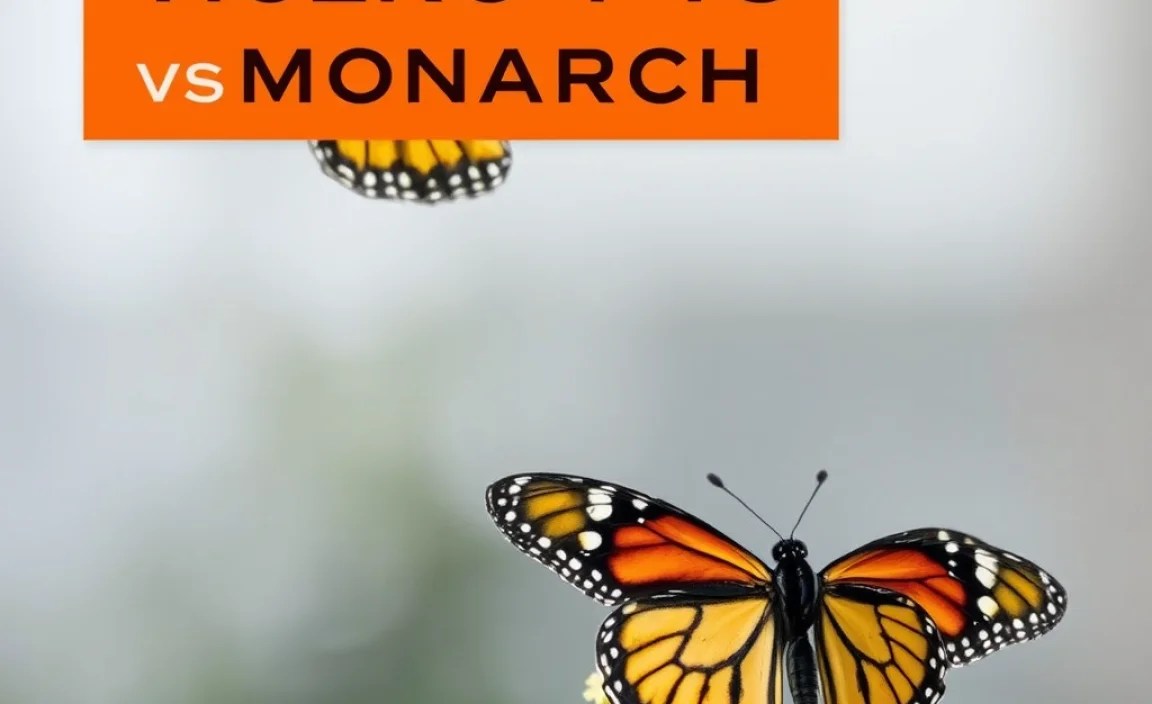
Wing patterns are super important to how to identify viceroy vs monarch. The biggest difference is a black line on the viceroy’s hindwings. This line goes across the wing. Monarchs do not have this line. They have plain orange wings with black borders. Look closely at the wings. This is the best way to tell them apart. The black line on the viceroy is like a secret code. It tells you that it is not a monarch. Wing patterns are like fingerprints for butterflies. Each type has its own special design. Pay attention to the details.
- Viceroy butterflies have a black line on hindwings.
- Monarch butterflies lack this black line.
- Wing patterns are like butterfly fingerprints.
- Look closely at the hindwings for the black line.
- This is the most reliable way to identify them.
Besides the black line, also look at the wing veins. Wing veins are the dark lines that run through the wings. On monarchs, these veins are thicker. They are easier to see. On viceroys, the veins are thinner. They are harder to spot. Think of it like looking at roads on a map. Some roads are big and bold. Others are thin and faint. The same is true for butterfly wing veins. By looking at the veins and the black line, you can become a butterfly expert.
Fun Fact or Stat: The black lines and patterns on butterfly wings help them camouflage and attract mates!
What does the viceroy’s line look like?
Imagine drawing a straight line across the bottom of a butterfly’s wing. That’s what the viceroy’s line looks like. It’s a clean, dark line that stands out. It goes from one side of the hindwing to the other. This line is not broken or spotty. It’s a solid stripe. This makes it easy to see, even from a distance. If you spot this line, you know you’ve found a viceroy. This is the best clue for how to identify viceroy vs monarch. Remember to look closely.
Why is the monarch’s wing pattern plain?
Have you ever wondered why some animals have spots and stripes? It’s often for camouflage. But monarchs don’t need to hide. They are poisonous to many predators. Their bright orange color warns animals to stay away. Because they are poisonous, they don’t need extra patterns to hide. This is why their wing pattern is plain and simple. The bright orange color does the job. It tells predators, “Don’t eat me!”
How do patterns help with camouflage?
Imagine a butterfly sitting on a leaf. If the butterfly is all one color, it might be easy to see. But if it has spots and stripes, it can blend in. Patterns help butterflies hide from predators. They break up the butterfly’s outline. This makes it harder for birds and other animals to spot them. Some butterflies even have patterns that look like eyes. These can scare away predators. So, patterns are a very important tool for survival.
Color Differences: A Subtle Clue
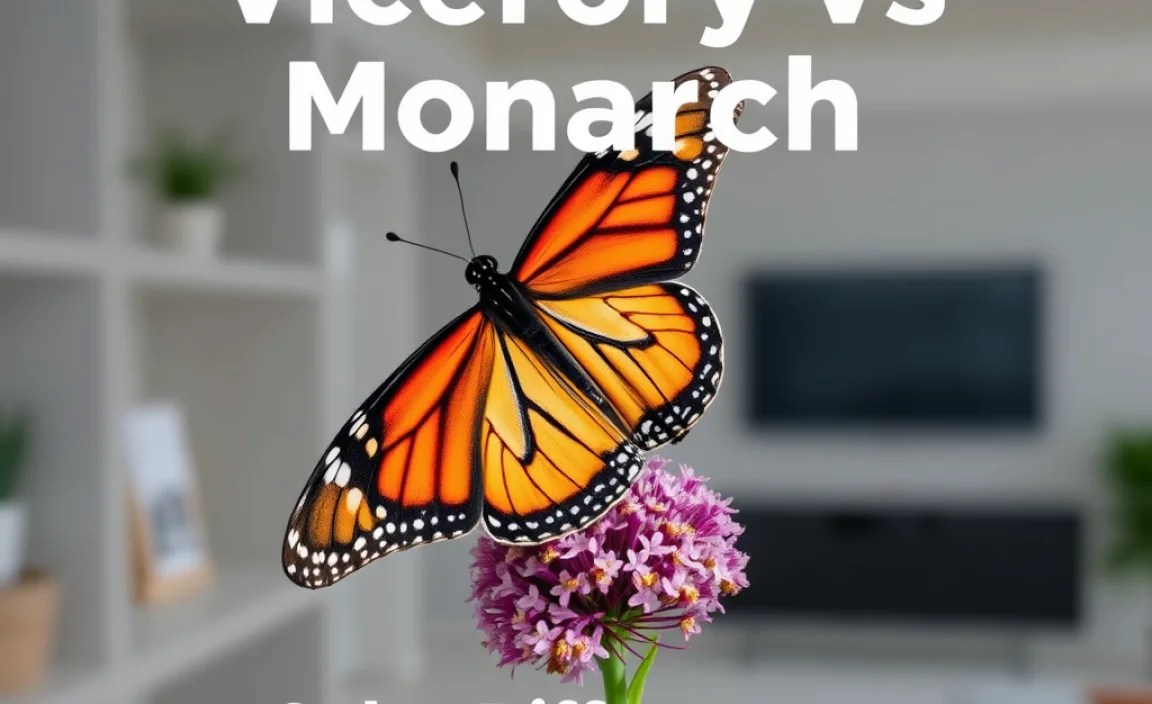
While both butterflies are orange, there are color differences. Monarchs have a bright, vibrant orange color. Viceroy butterflies tend to be a bit more reddish-orange. This difference is subtle. It can be hard to see unless you look closely. The color difference is like comparing two different shades of orange paint. One is brighter and more cheerful. The other is a little deeper and richer. Pay attention to the overall tone of the wings. This can help you learn how to identify viceroy vs monarch.
- Monarchs have a bright, vibrant orange color.
- Viceroy butterflies are more reddish-orange.
- The color difference is subtle but noticeable.
- Compare the overall tone of the wings.
- Consider the lighting when observing color.
Lighting can also affect how you see the color. In bright sunlight, both butterflies might look very similar. On a cloudy day, the color differences might be easier to spot. Think of it like looking at clothes inside versus outside. The colors can look different depending on the light. So, try to look at the butterflies in different types of light. This will help you see the true colors and better understand how to identify viceroy vs monarch.
Fun Fact or Stat: Butterfly wings get their color from tiny scales that reflect light!
How does lighting affect color perception?
Have you ever noticed how a blue shirt looks different inside than outside? Lighting can change how we see colors. Bright sunlight can make colors look brighter. Cloudy days can make colors look duller. The same thing happens with butterflies. In bright sunlight, the orange color of a monarch might seem very intense. On a cloudy day, the reddish-orange of a viceroy might be easier to see. So, pay attention to the lighting when you are trying to tell them apart.
Are there regional color variations?
Just like people from different places have different accents, butterflies can have regional color variations. A monarch in Florida might look slightly different than a monarch in Canada. This is because of differences in climate and food. The same is true for viceroys. These variations can make it harder to tell them apart. That’s why it’s important to look at all the clues, not just color. Wing patterns and size are also very important.
Is color a reliable identification factor?
Imagine you are trying to identify a type of flower. Color is a good place to start. But many flowers come in similar colors. You also need to look at the shape of the petals and the leaves. Color alone isn’t always enough. The same is true for butterflies. Color can be a helpful clue. But it’s not the most reliable factor. Always look at the wing patterns and size too. These extra details will help you be sure of how to identify viceroy vs monarch.
Behavioral Differences: Flight Patterns
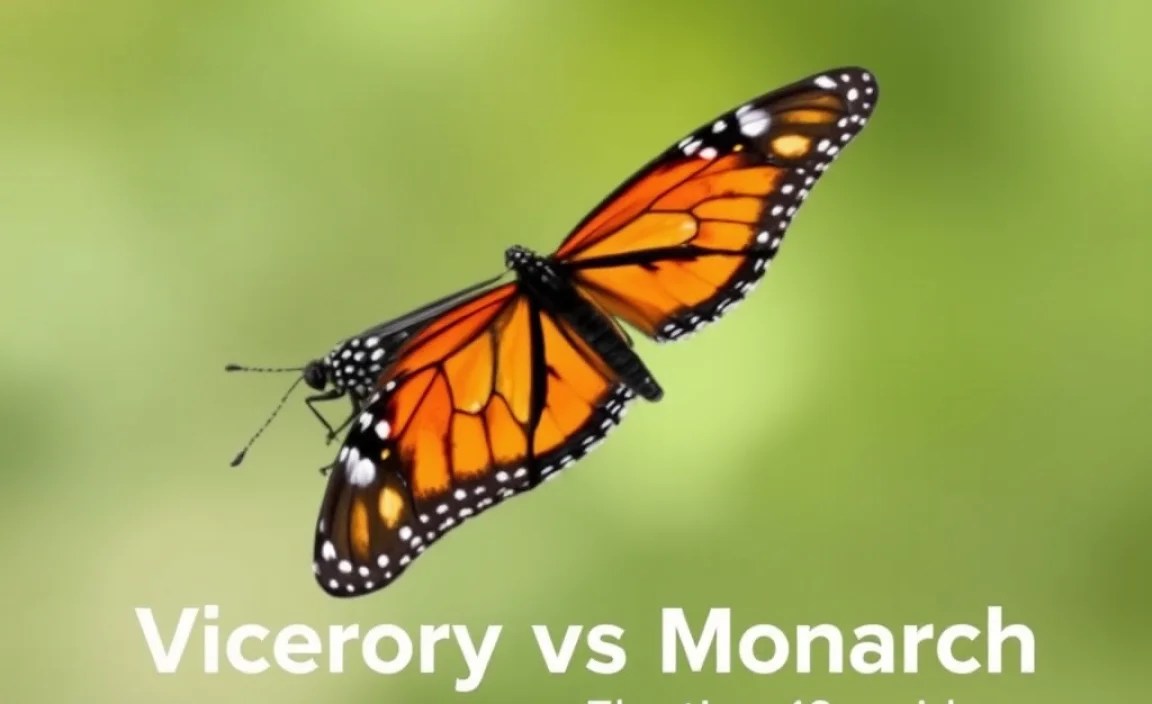
Butterflies also act differently. Monarchs have a strong, soaring flight. They glide through the air with ease. Viceroy butterflies have a quicker, more erratic flight. They flap their wings more often. Watch how they move. This can give you a clue about which butterfly you are seeing. The way they fly is like their personality. Monarchs are confident and graceful. Viceroy butterflies are more nervous and quick. These differences in flight patterns can help you learn how to identify viceroy vs monarch.
| Feature | Monarch | Viceroy |
|---|---|---|
| Size | Larger (up to 4 inches) | Smaller (around 3 inches) |
| Wing Pattern | No black line on hindwing | Black line across hindwing |
| Color | Bright orange | Reddish-orange |
| Flight | Soaring, gliding | Quick, erratic |
- Monarchs have a strong, soaring flight.
- Viceroy butterflies fly quickly and erratically.
- Watch how they move through the air.
- Flight patterns reveal butterfly personality.
- Consider flight along with other clues.
Think about how you walk. Do you stroll slowly or rush quickly? Butterflies have their own way of moving too. Monarchs are like slow walkers. They take their time and glide through the air. Viceroy butterflies are like fast walkers. They flap their wings quickly and dart around. By watching their flight, you can learn a lot about them. It’s like watching a dance. Each butterfly has its own special moves.
Fun Fact or Stat: Butterflies use their antennae to smell and find their way around!
How do monarchs glide so well?
Have you ever seen a bird soaring high in the sky without flapping its wings? Monarchs are like that. They use their large wings to catch the wind. This allows them to glide long distances with very little effort. They are experts at using air currents to travel. This is important because they fly thousands of miles during their migration. Gliding helps them save energy. It lets them travel farther on less food.
Why do viceroys fly erratically?
Viceroy butterflies fly erratically for a reason. They are trying to avoid predators. Their quick, jerky movements make it harder for birds to catch them. It’s like trying to catch a fly. They dart around so quickly that it’s hard to predict where they will go next. This erratic flight is a survival tactic. It helps them stay safe from hungry birds.
Can weather affect flight patterns?
Imagine trying to ride your bike on a windy day. It’s much harder to control. The weather can affect how butterflies fly too. On a calm day, monarchs can glide easily. Viceroy butterflies can dart around quickly. But on a windy day, both butterflies might have trouble controlling their flight. Strong winds can make it harder for them to fly in a straight line. So, weather is another thing to consider when you are watching butterflies.
Mimicry: The Viceroy’s Clever Trick

Viceroy butterflies use mimicry. This means they look like another animal to protect themselves. Viceroy butterflies mimic monarchs. Monarchs are poisonous to many predators. Birds and other animals that eat them get sick. So, predators learn to avoid monarchs. Viceroy butterflies look like monarchs. Predators avoid them too! This is a clever trick. It helps viceroys survive. This mimicry is a key part of how to identify viceroy vs monarch.
- Viceroy butterflies use mimicry.
- They mimic monarch butterflies.
- Monarchs are poisonous to predators.
- Predators avoid viceroys because they look similar.
- Mimicry is a survival tactic.
Think of it like dressing up in a costume. If you dress up like a superhero, people might think you are strong and brave. Viceroy butterflies dress up like monarchs. Predators think they are poisonous and leave them alone. This is a great example of how animals use tricks to survive. It shows how smart and adaptable they can be. Nature is full of amazing strategies.
Fun Fact or Stat: Some butterflies can taste with their feet!
Why are monarchs poisonous?
Monarchs are poisonous because of what they eat as caterpillars. Monarch caterpillars eat milkweed plants. Milkweed contains toxins that are harmful to many animals. The caterpillars store these toxins in their bodies. When they become butterflies, they are still poisonous. This poison protects them from predators. Birds that eat monarchs get sick and learn to avoid them.
How does mimicry benefit viceroys?
Imagine you are a small, tasty butterfly. Birds love to eat butterflies. But if you look like a butterfly that birds don’t like, you are safer. Viceroy butterflies benefit from mimicry. They look like monarchs, which are poisonous. Birds avoid eating viceroys because they think they will get sick. This gives viceroys a better chance of survival. Mimicry is like having a built-in bodyguard.
Are there other examples of mimicry in nature?
Mimicry is common in the natural world. Many animals use it to protect themselves. Some harmless snakes look like poisonous snakes. This scares away predators. Some insects look like leaves or twigs. This helps them blend in with their surroundings. There are many amazing examples of mimicry in nature. It shows how animals have evolved to survive in different environments.
Habitat: Where Do They Live?
Knowing where these butterflies live can help you identify them. Monarchs can be found in many different places. They live in meadows, fields, and gardens. Viceroy butterflies are usually found near water. They prefer wetlands, marshes, and streams. If you see an orange butterfly near a pond, it might be a viceroy. If you see one in a field of flowers, it might be a monarch. Habitat is another clue for how to identify viceroy vs monarch.
- Monarchs live in meadows, fields, and gardens.
- Viceroy butterflies prefer wetlands and marshes.
- Location is a helpful identification clue.
- Consider the surrounding environment.
- Look for butterflies near water sources.
Think about where you would go to find different animals. You wouldn’t look for a fish in the desert. You would look for it in a lake or river. The same is true for butterflies. Different butterflies prefer different habitats. By knowing where they like to live, you can narrow down your search. This makes it easier to identify them correctly. Always pay attention to the environment around you.
Fun Fact or Stat: Butterflies help pollinate flowers, just like bees!
Why do viceroys prefer wetlands?
Viceroy caterpillars eat willow and poplar trees. These trees grow near water. This is why viceroy butterflies are often found near wetlands. The caterpillars need these trees to survive. So, the butterflies stay close to their food source. Wetlands also provide a safe place for them to lay their eggs. The damp environment helps the eggs stay moist.
Do monarchs migrate through specific areas?
Monarchs are famous for their long migration. They travel thousands of miles each year. They fly to warmer places for the winter. They follow specific routes during their migration. These routes often pass through certain states and regions. Knowing these migration routes can help you predict where you might see monarchs. They often gather in large groups during their migration. This is an amazing sight to see.
How does habitat affect butterfly survival?
A butterfly’s habitat provides everything it needs to survive. It provides food for the caterpillars. It provides shelter from predators. It provides a place to lay eggs. If a butterfly’s habitat is destroyed, it can be hard for them to survive. This is why it’s important to protect butterfly habitats. We can help butterflies by planting flowers and trees that they need.
Summary
Distinguishing between monarch and viceroy butterflies involves looking at several features. Size is a starting point. Monarchs are larger. Viceroy butterflies are smaller. Wing patterns are key. Viceroy butterflies have a black line on their hindwings. Monarchs do not. Color is a subtle clue. Monarchs have a brighter orange color. Viceroy butterflies have a reddish-orange hue. Behavior matters. Monarchs soar and glide. Viceroy butterflies fly quickly and erratically.
Viceroy butterflies use mimicry. They look like monarchs to avoid predators. Habitat also plays a role. Monarchs live in fields and gardens. Viceroy butterflies live near water. By considering all these factors, you can learn how to identify viceroy vs monarch accurately. Knowing the differences helps us appreciate these beautiful creatures. It also helps us protect them and their habitats.
Conclusion
Learning how to identify viceroy vs monarch is a fun and rewarding experience. By looking closely at their size, wing patterns, color, behavior, and habitat, you can tell them apart. Monarchs are larger with a bright orange color and soaring flight. Viceroy butterflies are smaller with a black line on their hindwings and erratic flight. Understanding these differences allows us to appreciate the amazing diversity of nature. Keep exploring and learning about the world around you!
Frequently Asked Questions
Question No 1: What is the easiest way to tell a monarch from a viceroy?
Answer: The easiest way to tell them apart is to look at the hindwings. Viceroy butterflies have a distinct black line that goes across the hindwing. Monarchs do not have this line. Their hindwings are plain orange with black borders. This black line is like a big clue that tells you it’s a viceroy. Always check the hindwings first when you’re trying to identify these butterflies. This simple trick will help you become a butterfly expert in no time. With practice, you’ll be able to spot the difference right away!
Question No 2: Why do viceroy butterflies mimic monarchs?
Answer: Viceroy butterflies mimic monarchs for protection. Monarchs are poisonous to many predators. Birds and other animals that eat them get sick. Predators learn to avoid monarchs. Viceroy butterflies look like monarchs. Predators avoid them too! This is a clever survival strategy. It helps viceroys stay safe from being eaten. This mimicry is a great example of how animals use tricks to survive in the wild. They look like something dangerous. Predators leave them alone.
Question No 3: Are monarch butterflies endangered?
Answer: Yes, monarch butterflies are facing challenges. Their populations have declined in recent years. This is due to habitat loss and climate change. It’s important to protect their habitats. Planting milkweed, which is the only food source for monarch caterpillars, is crucial. Reducing pesticide use can also help. There are many things we can do to help monarch butterflies survive. Protecting them ensures that future generations can enjoy these beautiful creatures. Every little bit helps to support these beautiful butterflies.
Question No 4: What do monarch caterpillars eat?
Answer: Monarch caterpillars eat only one thing: milkweed plants. Milkweed is essential for their survival. The caterpillars eat the leaves of the milkweed plant. This is where they get the toxins that make them poisonous to predators. Without milkweed, monarch caterpillars cannot survive. Planting milkweed in your garden is a great way to help monarch butterflies. It provides food for the caterpillars. It also provides a place for the butterflies to lay their eggs. Every monarch starts with milkweed.
Question No 5: How can I help monarch and viceroy butterflies?
Answer: There are many things you can do to help these butterflies. Plant milkweed in your garden for monarchs. Plant willow and poplar trees near water for viceroys. Avoid using pesticides in your garden. Support organizations that protect butterfly habitats. Educate others about the importance of butterflies. Even small actions can make a big difference. By working together, we can help these amazing creatures thrive. Learning how to identify viceroy vs monarch also helps us appreciate and protect them.
Question No 6: Do viceroy butterflies also migrate?
Answer: While monarchs are famous for their long migrations, viceroy butterflies do not migrate as far. Monarchs travel thousands of miles each year. Viceroy butterflies tend to stay closer to their home ranges. They may move short distances to find better food or shelter. But they don’t undertake the long journeys that monarchs do. This difference in behavior is another way how to identify viceroy vs monarch. Viceroy butterflies do not travel far.


