
Glasswing Butterfly Glossary: Your FREE Easy Guide

The glasswing butterfly (Greta oto) is famous for its transparent wings. Understanding the terms related to it—from its unique anatomy to its fascinating life cycle—helps us appreciate this incredible insect. This glossary breaks down the jargon into easy-to-understand definitions, perfect for beginners.
Have you ever wondered what makes the glasswing butterfly’s wings transparent? Or perhaps you’re curious about its habitat and diet? Learning about these fascinating creatures can sometimes feel like navigating a whole new language. Don’t worry! This glossary will guide you through all the essential terms related to glasswing butterflies. We’ll explore everything from their anatomy and life cycle to their ecological importance. Get ready to dive into the captivating world of the glasswing butterfly!
Glasswing Butterfly Glossary: Essential Terms

Here’s a comprehensive glossary to help you understand the world of glasswing butterflies:
A
Aposematism: A warning coloration or pattern that signals to predators that the glasswing butterfly is unpalatable or toxic. This helps protect them from being eaten.
Antennae: Sensory appendages located on the head of the butterfly used to detect scents, air currents, and vibrations. Glasswing butterflies use their antennae to find food sources and potential mates.
B
Batesian Mimicry: A form of mimicry where a harmless species evolves to resemble a dangerous or unpalatable one. While not the primary defense of glasswings, their transparency can contribute to this effect by making them harder to spot.
proboscis: The long, straw-like tongue of the butterfly used for sucking nectar and other liquids. When not in use, it is coiled up under the head.
C
Camouflage: The ability to blend in with the surrounding environment. While glasswings are known for transparency, they also use camouflage by perching on foliage that allows light to pass through, making them nearly invisible.
Chrysalis: The pupal stage of a butterfly, during which it undergoes metamorphosis. The chrysalis of the glasswing butterfly is often metallic-looking and delicate.
Costa Rica: A Central American country known for its rich biodiversity, including significant populations of glasswing butterflies. Many research and conservation efforts are based here.
D
Diurnal: Active during the daytime. Glasswing butterflies are diurnal, meaning they are most active and visible during daylight hours.
E
Ecology: The study of the interactions between organisms and their environment. Understanding the ecology of glasswing butterflies is crucial for their conservation.
El Salvador: A Central American country that is part of the native territory of the Glasswing Butterfly.
Exoskeleton: The external skeleton that supports and protects the butterfly’s body. It is made of chitin and must be shed during molting.
F
Frass: The excrement of caterpillars. Monitoring frass can help determine the presence and feeding activity of glasswing butterfly larvae.
G
Greta oto: The scientific name for the glasswing butterfly. Scientific names are used to accurately identify species across different regions and languages.
Guatemala: A Central American country that is part of the native territory of the Glasswing Butterfly.
H
Habitat: The natural environment where an organism lives. The habitat of glasswing butterflies typically includes tropical rainforests with specific host plants.
Host Plant: A plant species that a butterfly larva feeds on. Glasswing butterflies rely on specific host plants, primarily in the Cestrum genus, for their caterpillars to survive.
Honduras: A Central American country that is part of the native territory of the Glasswing Butterfly.
I
Instar: A stage in the larval development of insects between molts. Glasswing butterfly larvae go through several instars as they grow.
L
Larva: The caterpillar stage of a butterfly. The larva is focused on eating and growing, molting several times as it develops.
M
Metamorphosis: The process of transformation from an immature form to an adult form in two or more distinct stages. Butterflies undergo complete metamorphosis, with four stages: egg, larva, pupa, and adult.
Migration: The seasonal movement of animals from one region to another. While glasswing butterflies are not known for long-distance migrations, they may move locally in response to changes in resources or climate.
Molting: The process of shedding the exoskeleton to allow for growth. Butterfly larvae molt several times as they grow larger.
N
Nectar: A sugary liquid produced by flowers that serves as a food source for adult butterflies. Glasswing butterflies feed on nectar from various flowers.
Nymphalidae: One of the largest families of butterflies, also known as the brush-footed butterflies. Glasswing butterflies belong to this family.
O
Oviposition: The act of a female insect laying eggs. Glasswing butterflies typically lay their eggs on specific host plants.
P
Panama: The southernmost country in Central America, and also part of the native territory of the Glasswing Butterfly.
Pheromones: Chemical signals released by animals that influence the behavior of others. Butterflies use pheromones to attract mates.
Proboscis: The long, flexible mouthpart used by butterflies to suck nectar from flowers. When not in use, it is coiled up.
Pupa: The stage in which the larva transforms into an adult butterfly. The pupa is often encased in a chrysalis.
T
Thorax: The middle section of the butterfly’s body, between the head and abdomen. The wings and legs are attached to the thorax.
Transparency: The quality of allowing light to pass through, making an object see-through. The glasswing butterfly’s wings are transparent due to the unique structure of their scales.
Tropical Rainforest: A forest ecosystem characterized by high rainfall and biodiversity. Tropical rainforests are the primary habitat of glasswing butterflies.
V
Ventral: The underside of an animal. The ventral side of a butterfly’s wings may have different patterns or colors compared to the dorsal side.
Glasswing Butterfly Anatomy: A Closer Look

Understanding the anatomy of the glasswing butterfly can provide insights into its unique adaptations and behaviors. Here’s a detailed breakdown:
| Anatomical Feature | Description | Function |
|---|---|---|
| Wings | Transparent with a thin, dark border. | Allow for flight and camouflage, reducing visibility to predators. |
| Scales | Modified, transparent scales that lack pigment. | Contribute to the wings’ transparency by minimizing light reflection and scattering. |
| Antennae | Long, slender, and club-shaped. | Sense chemicals, air currents, and vibrations in the environment. |
| Eyes | Large, compound eyes. | Provide a wide field of vision to detect movement and potential threats. |
| Proboscis | Long, coiled tube. | Used to suck nectar from flowers for nutrition. |
| Legs | Six legs, adapted for walking and perching. | Support movement on plants and other surfaces. |
| Thorax | The central part of the body. | Connects the head and abdomen, supporting the wings and legs. |
| Abdomen | The posterior part of the body. | Contains the digestive and reproductive organs. |
Life Cycle Stages of the Glasswing Butterfly

The life cycle of the glasswing butterfly involves four distinct stages, each with its unique characteristics and purpose:
- Egg:
- Laid on host plants, usually in the Cestrum genus.
- Small and often greenish or yellowish in color.
- Larva (Caterpillar):
- Eats voraciously to grow and develop.
- Goes through several instars, molting its exoskeleton as it grows.
- Often has distinctive bristles or spines for defense.
- Pupa (Chrysalis):
- Forms a protective chrysalis.
- Undergoes metamorphosis inside the chrysalis, transforming into an adult butterfly.
- The chrysalis is often metallic-looking and delicate.
- Adult:
- Emerges from the chrysalis with fully formed wings.
- Focuses on reproduction and feeding on nectar.
- Lives for several weeks to months, depending on environmental conditions.
Why Are Glasswing Butterfly Wings Transparent?

The transparency of the glasswing butterfly’s wings is due to a unique combination of factors:
- Scale Structure: The scales on their wings are arranged in a way that minimizes light reflection and scattering.
- Nanostructures: The scales have tiny nanostructures that reduce glare, making the wings appear transparent.
- Lack of Pigment: The scales lack the pigment found in other butterflies, which would otherwise absorb or reflect light.
This transparency helps the glasswing butterfly blend in with its environment, making it less visible to predators. National Geographic and other sources have detailed studies on the nanostructures of these wings.
Ecological Role and Conservation
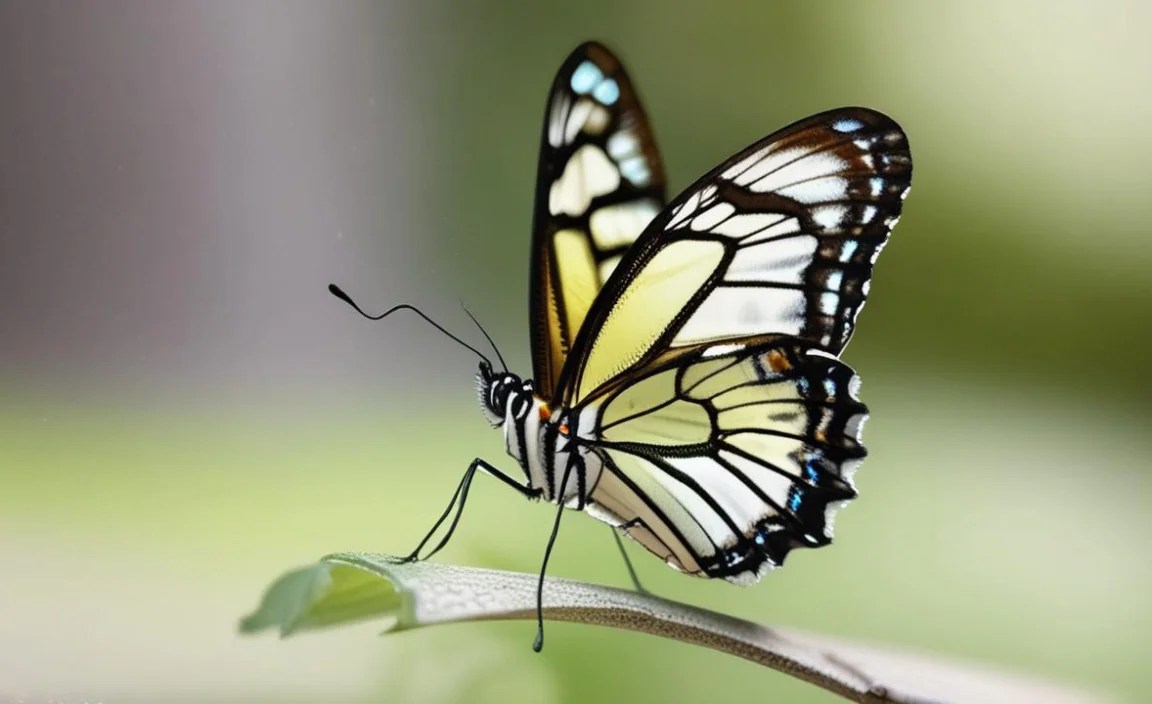
Glasswing butterflies play a vital role in their ecosystem:
- Pollination: As they feed on nectar, they help pollinate various plant species.
- Food Source: They serve as a food source for birds, reptiles, and other insects.
- Indicator Species: Their presence and health can indicate the overall health of their habitat.
However, glasswing butterflies face several threats:
- Habitat Loss: Deforestation and habitat destruction reduce their available living space.
- Pesticide Use: Pesticides can harm or kill butterflies and their larvae.
- Climate Change: Changes in temperature and rainfall patterns can disrupt their life cycle and habitat.
Conservation efforts are crucial to protect glasswing butterflies. These efforts include:
- Habitat Preservation: Protecting and restoring tropical rainforests.
- Sustainable Practices: Promoting eco-friendly agriculture and reducing pesticide use.
- Education and Awareness: Educating the public about the importance of butterflies and their conservation.
Attracting Glasswing Butterflies to Your Garden
While glasswing butterflies are primarily found in tropical regions, you can still create a butterfly-friendly garden that supports other butterfly species. Here are some tips:
- Plant Native Flowers: Choose native flowers that provide nectar for adult butterflies.
- Provide Host Plants: Include host plants for butterfly larvae to feed on.
- Avoid Pesticides: Use natural pest control methods to protect butterflies and other beneficial insects.
- Offer a Water Source: Provide a shallow dish of water with pebbles for butterflies to drink from.
- Create Shelter: Plant shrubs and trees to provide shelter from wind and predators.
Glasswing Butterfly: Fun Facts
Here are some fascinating facts about glasswing butterflies:
- The glasswing butterfly’s transparent wings allow it to camouflage effectively in the rainforest.
- They primarily feed on nectar from flowers, but they also consume the droppings of birds for essential nutrients.
- The caterpillars feed on toxic plants, making them unpalatable to predators.
- Glasswing butterflies are found in Central and South America, from Mexico to Panama.
Glasswing Butterfly: Cultural Significance and Symbolism
In many cultures, butterflies are symbols of transformation, rebirth, and beauty. The glasswing butterfly, with its unique transparent wings, carries additional layers of symbolism:
- Clarity and Transparency: The clear wings can symbolize honesty, openness, and clarity of vision.
- Adaptability: Their ability to blend in with their environment represents adaptability and resilience.
- Fragility and Strength: The delicate appearance of their wings belies their strength and ability to survive in challenging environments.
Frequently Asked Questions (FAQ)
What makes the glasswing butterfly’s wings transparent?
The glasswing butterfly’s wings are transparent due to special scales that minimize light reflection. These scales have nanostructures and lack pigment, allowing light to pass through, which helps them blend in with their surroundings.
Where do glasswing butterflies live?
Glasswing butterflies are native to Central and South America. They thrive in tropical rainforests from Mexico to Panama.
What do glasswing butterfly caterpillars eat?
Glasswing butterfly caterpillars primarily feed on plants in the Cestrum genus, which contain toxins that make the caterpillars unpalatable to predators.
Are glasswing butterflies endangered?
While not currently listed as endangered, glasswing butterflies face threats from habitat loss, pesticide use, and climate change. Conservation efforts are essential to protect their populations.
How can I attract butterflies to my garden?
You can attract butterflies by planting native flowers that provide nectar, offering host plants for larvae, avoiding pesticides, and providing a water source and shelter.
What is the lifespan of a glasswing butterfly?
The lifespan of a glasswing butterfly varies depending on environmental conditions, but they typically live for several weeks to months as adults.
Why are butterflies important to the environment?
Butterflies are important pollinators, helping to spread pollen from flower to flower as they feed on nectar. They also serve as a food source for birds and other animals, playing a vital role in the ecosystem.
Conclusion
Understanding the glasswing butterfly and its unique characteristics can deepen our appreciation for the natural world. By learning the glossary of terms associated with this fascinating creature, we can better understand its biology, ecology, and conservation needs. Whether you’re a student, a nature enthusiast, or a gardener, exploring the world of glasswing butterflies offers valuable insights into the importance of biodiversity and conservation. Let’s continue to learn and protect these delicate creatures and their habitats for future generations.


