
Garden Butterflies of the UK: Easy ID Guide

Quick Summary: Discover the vibrant world of garden butterflies in the UK! This guide helps you identify common species like the Peacock, Small Tortoiseshell, and Brimstone. Learn how to attract these beautiful creatures with butterfly-friendly plants such as Buddleja and Lavender. We’ll also cover essential conservation tips to protect these vital pollinators in your garden.
Butterflies are a delightful addition to any UK garden, bringing colour and life to our outdoor spaces. But identifying these fluttering visitors can sometimes feel like a puzzle. Are you seeing a Comma or a Small Tortoiseshell? Is that a Holly Blue or a Common Blue? Don’t worry, you’re not alone! This guide will walk you through the most common garden butterflies in the UK, teaching you how to spot them and create a welcoming habitat for these amazing insects. Get ready to transform your garden into a butterfly haven!
Identifying Common Garden Butterflies of the UK

The UK is home to a wonderful variety of butterflies, each with its own unique markings and habits. Here’s a guide to help you identify some of the most common species you might spot in your garden:
1. The Peacock (Aglais io)
The Peacock butterfly is one of the most recognizable butterflies in the UK, thanks to its striking eyespots. These eyespots serve as a defense mechanism, startling potential predators.
- Appearance: Deep reddish-brown wings with prominent blue and yellow eyespots on each wing.
- Size: Wingspan of about 5-6 cm.
- Habitat: Gardens, woodlands, and meadows.
- Foodplants: Nettle (Urtica dioica).
- Flight Period: Overwinters as an adult, so it can be seen from late winter through to late autumn.
2. The Small Tortoiseshell (Aglais urticae)
The Small Tortoiseshell is a vibrant butterfly often seen basking in the sun. Sadly, its numbers have declined in recent years, making it even more special to spot in your garden.
- Appearance: Bright orange wings with black and yellow markings and a row of blue spots along the edge.
- Size: Wingspan of about 5-5.5 cm.
- Habitat: Gardens, parks, and hedgerows.
- Foodplants: Nettle (Urtica dioica).
- Flight Period: Usually two broods, from March/April to October.
3. The Red Admiral (Vanessa atalanta)
The Red Admiral is a striking migrant butterfly that arrives in the UK each summer. It’s known for its bold colours and energetic flight.
- Appearance: Dark black wings with bright red bands and white spots.
- Size: Wingspan of about 6.5-7.5 cm.
- Habitat: Gardens, woodlands, and coastal areas.
- Foodplants: Nettle (Urtica dioica).
- Flight Period: Arrives in the UK from late spring onwards.
4. The Comma (Polygonia c-album)
The Comma butterfly is named for the small white comma-shaped mark on its underwing. Its scalloped wing edges make it easily distinguishable.
- Appearance: Orange-brown wings with dark markings and distinctive scalloped edges. The underwing has a small white comma mark.
- Size: Wingspan of about 5-5.6 cm.
- Habitat: Gardens, woodlands, and orchards.
- Foodplants: Nettle (Urtica dioica), Elm (Ulmus spp.).
- Flight Period: Overwinters as an adult, with two or three broods from March to October.
5. The Brimstone (Gonepteryx rhamni)
The Brimstone is one of the first butterflies to emerge in spring, often seen fluttering around on sunny days. Its bright yellow colour is a welcome sight after the winter months.
- Appearance: Bright yellow (male) or greenish-white (female) wings with pointed tips.
- Size: Wingspan of about 6-7 cm.
- Habitat: Gardens, woodlands, and hedgerows.
- Foodplants: Buckthorn (Rhamnus cathartica), Alder Buckthorn (Frangula alnus).
- Flight Period: Overwinters as an adult, seen from March through to October.
6. The Large White (Pieris brassicae)
The Large White, sometimes called the “Cabbage White,” is a common sight in gardens and allotments. While beautiful, its caterpillars can sometimes be a nuisance to brassica crops.
- Appearance: White wings with black tips on the forewings. Females have two black spots on each forewing.
- Size: Wingspan of about 6-7 cm.
- Habitat: Gardens, allotments, and fields.
- Foodplants: Cabbage, broccoli, and other brassicas.
- Flight Period: Two or three broods from April to October.
7. The Small White (Pieris rapae)
Similar to the Large White but smaller, the Small White is another common garden butterfly. It’s also known as the “Cabbage White” due to its caterpillars feeding on brassicas.
- Appearance: White wings with grey tips on the forewings. Females have two black spots on each forewing.
- Size: Wingspan of about 4-5 cm.
- Habitat: Gardens, allotments, and fields.
- Foodplants: Cabbage, broccoli, and other brassicas.
- Flight Period: Several broods from March to October.
8. The Common Blue (Polyommatus icarus)
The Common Blue is a delightful little butterfly found in a variety of habitats. The males are bright blue, while the females are usually brown with varying amounts of blue.
- Appearance: Male is bright blue with a brown border. Female is brown with varying amounts of blue and orange spots along the edge.
- Size: Wingspan of about 3-4 cm.
- Habitat: Grasslands, gardens, and coastal areas.
- Foodplants: Bird’s-foot Trefoil (Lotus corniculatus).
- Flight Period: Two or three broods from May to October.
9. The Holly Blue (Celastrina argiolus)
The Holly Blue is a delicate butterfly often seen flitting around trees and shrubs. It has a distinctive pale blue colour with black borders.
- Appearance: Pale blue with a narrow black border. The underwings are pale blue with small black spots.
- Size: Wingspan of about 3-4 cm.
- Habitat: Gardens, parks, and woodlands.
- Foodplants: Holly (Ilex aquifolium), Ivy (Hedera helix).
- Flight Period: Two broods from April to September.
10. The Speckled Wood (Pararge aegeria)
The Speckled Wood is a woodland butterfly often seen in dappled sunlight. It’s known for its territorial behaviour, with males often seen perching and defending their patch.
- Appearance: Brown wings with creamy yellow spots.
- Size: Wingspan of about 4-5 cm.
- Habitat: Woodlands, gardens, and hedgerows.
- Foodplants: Various grasses.
- Flight Period: Several broods from April to October.
Creating a Butterfly-Friendly Garden
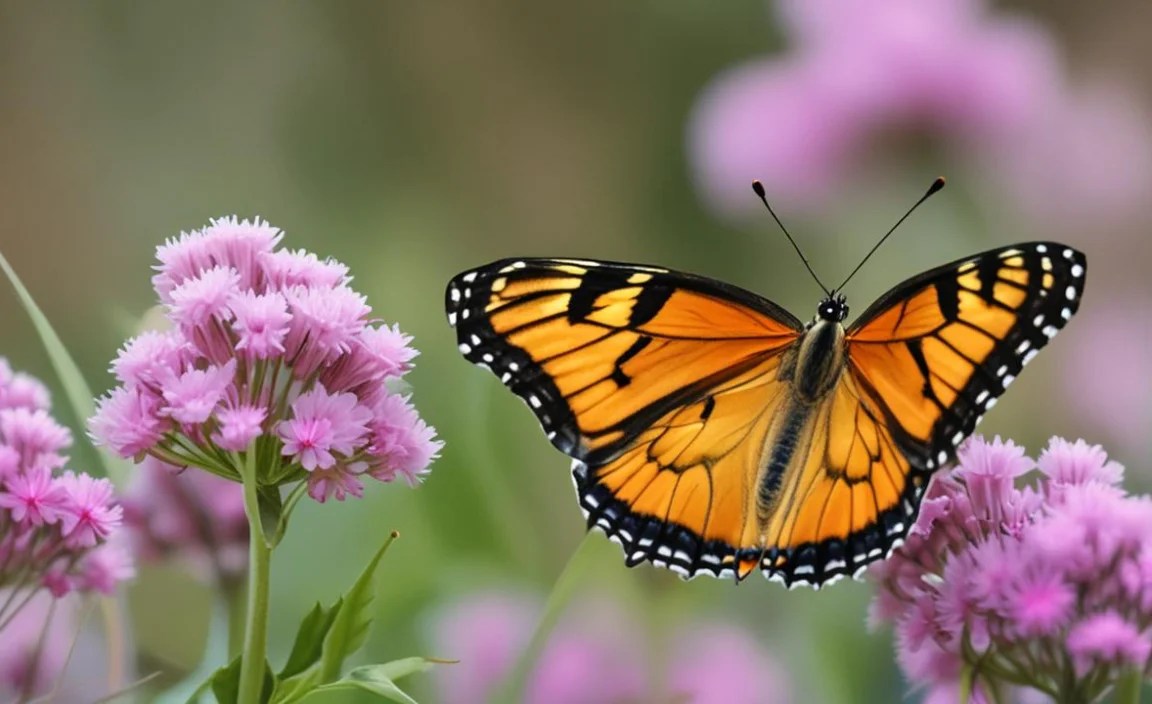
Attracting butterflies to your garden is easier than you might think! By providing the right food and habitat, you can create a haven for these beautiful creatures. Here’s how:
1. Plant Nectar-Rich Flowers
Butterflies need nectar to fuel their flight. Planting a variety of nectar-rich flowers will provide them with a constant food source. Some of the best butterfly-attracting plants include:
- Buddleja (Butterfly Bush): A classic choice, Buddleja is a magnet for butterflies.
- Lavender: Its fragrant flowers attract a wide range of pollinators.
- Sedum (Stonecrop): Provides late-season nectar for butterflies preparing for winter.
- Verbena: Tall and elegant, Verbena is a favourite of many butterfly species.
- Echinacea (Coneflower): Offers nectar and seeds for birds in the autumn.
- Phlox: A colourful addition to any garden, Phlox attracts butterflies with its sweet nectar.
- Michaelmas Daisies: Late-blooming daisies provide a valuable source of nectar in the autumn.
2. Provide Foodplants for Caterpillars
Remember, butterflies start as caterpillars! Providing the right foodplants for caterpillars is essential for supporting the entire butterfly life cycle. Some key foodplants include:
- Nettle (Urtica dioica): The foodplant for Small Tortoiseshell, Peacock, and Red Admiral caterpillars.
- Buckthorn (Rhamnus cathartica) and Alder Buckthorn (Frangula alnus): The foodplants for Brimstone caterpillars.
- Cabbage, Broccoli, and other Brassicas: The foodplants for Large White and Small White caterpillars.
- Bird’s-foot Trefoil (Lotus corniculatus): The foodplant for Common Blue caterpillars.
- Holly (Ilex aquifolium) and Ivy (Hedera helix): The foodplants for Holly Blue caterpillars.
- Various Grasses: The foodplants for Speckled Wood caterpillars.
3. Create a Sunny Basking Spot
Butterflies need to bask in the sun to warm up their flight muscles. Provide a sunny, sheltered spot in your garden where they can do this. A flat stone or a patch of bare earth works well.
4. Provide a Water Source
Butterflies also need water. A shallow dish of water with some pebbles or marbles for them to land on will provide a safe drinking spot. Make sure to keep the water clean and topped up.
5. Avoid Pesticides
Pesticides can harm butterflies and other beneficial insects. Avoid using pesticides in your garden, or choose organic alternatives.
6. Leave Some Areas Wild
Butterflies need undisturbed areas to breed and overwinter. Leave some areas of your garden wild, with long grass and wildflowers. This will provide shelter and food for butterflies and other wildlife.
Butterfly Identification Table
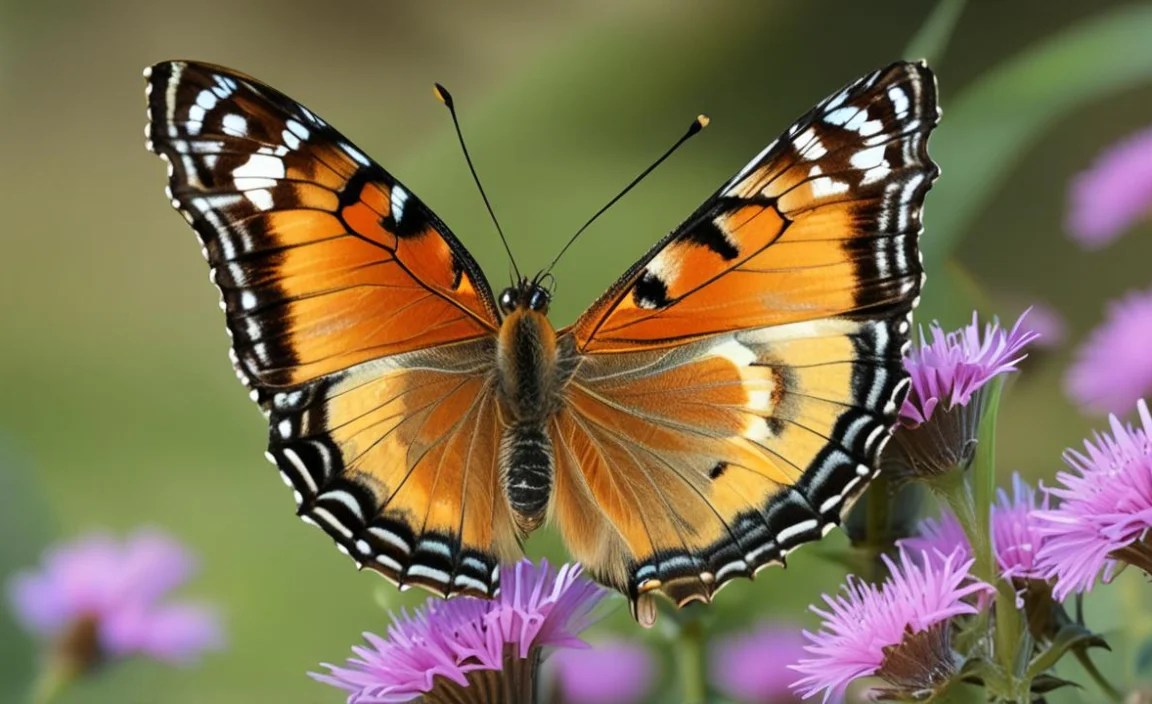
Here’s a quick reference table to help you identify common UK garden butterflies:
| Butterfly | Appearance | Wingspan (cm) | Key Foodplants |
|---|---|---|---|
| Peacock | Reddish-brown with blue and yellow eyespots | 5-6 | Nettle |
| Small Tortoiseshell | Orange with black and yellow markings, blue spots | 5-5.5 | Nettle |
| Red Admiral | Black with red bands and white spots | 6.5-7.5 | Nettle |
| Comma | Orange-brown with scalloped edges, white comma mark | 5-5.6 | Nettle, Elm |
| Brimstone | Yellow (male) or greenish-white (female) | 6-7 | Buckthorn, Alder Buckthorn |
| Large White | White with black tips (females have black spots) | 6-7 | Cabbage, Broccoli |
| Small White | White with grey tips (females have black spots) | 4-5 | Cabbage, Broccoli |
| Common Blue | Blue (male) or brown with blue (female) | 3-4 | Bird’s-foot Trefoil |
| Holly Blue | Pale blue with black border | 3-4 | Holly, Ivy |
| Speckled Wood | Brown with creamy yellow spots | 4-5 | Grasses |
Understanding Butterfly Life Cycle
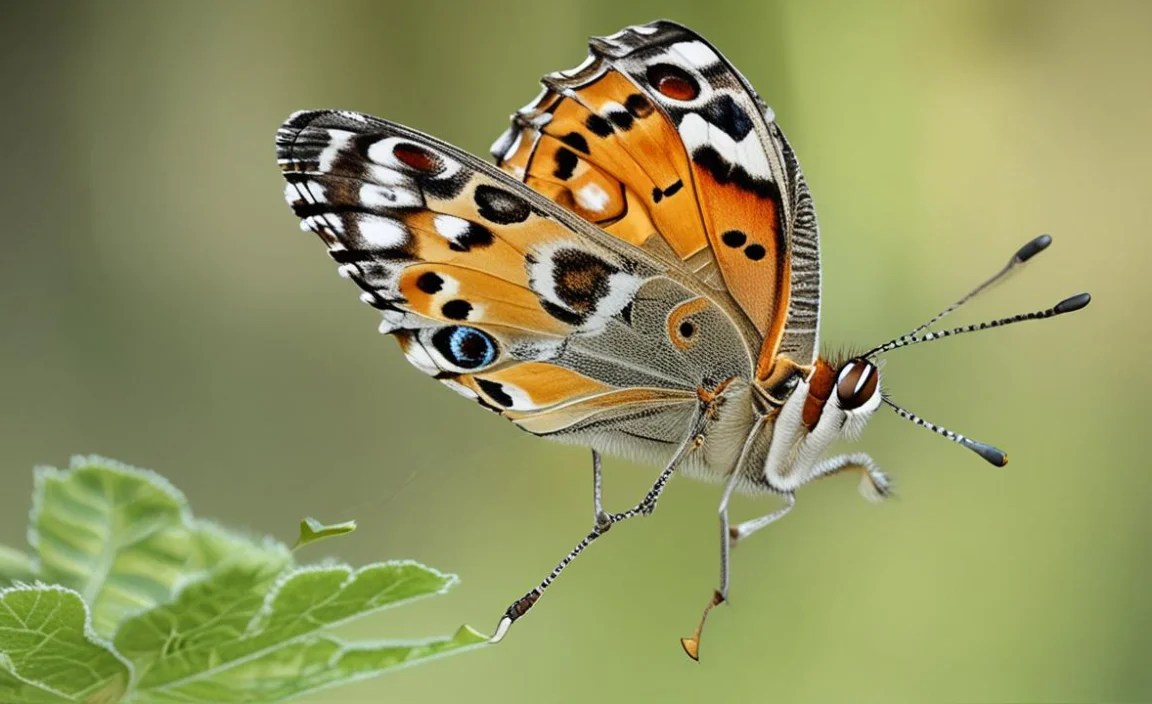
To truly appreciate the butterflies in your garden, it’s helpful to understand their life cycle. Butterflies undergo complete metamorphosis, which means they have four distinct life stages:
- Egg: Butterflies lay their eggs on or near their foodplant. The eggs can be various shapes and colors, depending on the species.
- Larva (Caterpillar): The caterpillar hatches from the egg and spends its time eating and growing. It molts its skin several times as it grows.
- Pupa (Chrysalis): Once the caterpillar is fully grown, it forms a pupa, or chrysalis. Inside the chrysalis, the caterpillar transforms into a butterfly.
- Adult (Butterfly): The adult butterfly emerges from the chrysalis. It spends its time feeding on nectar and reproducing.
Butterfly Conservation in the UK
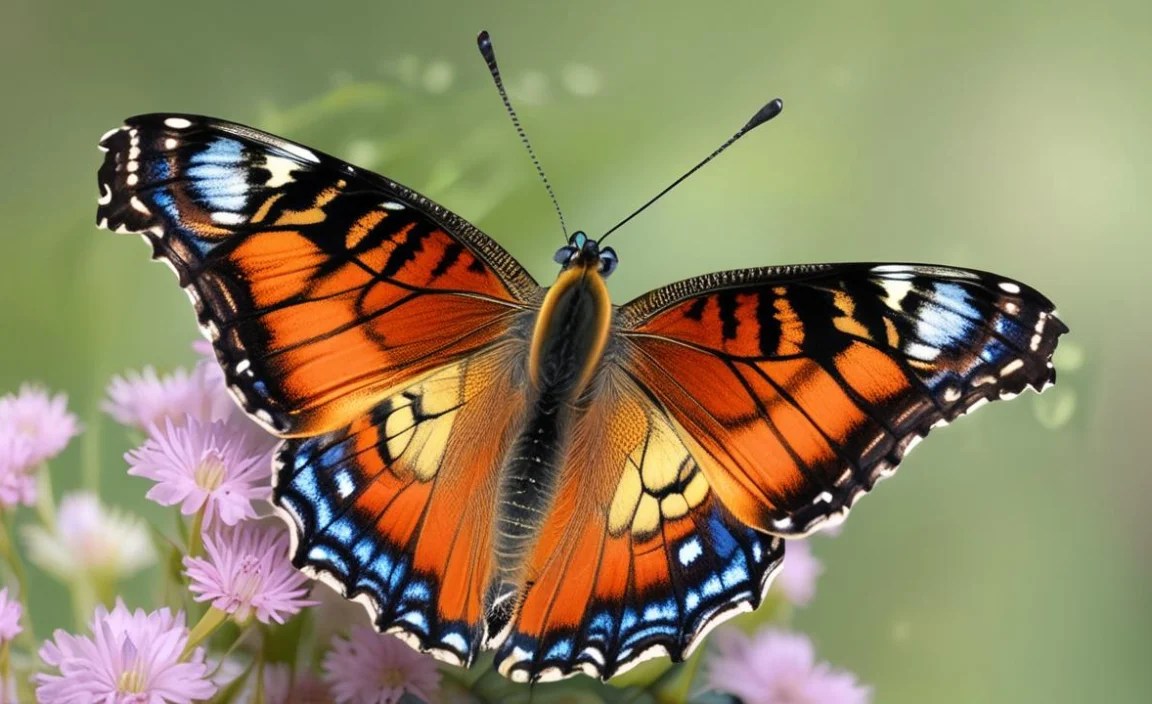
Many butterfly species in the UK are facing threats such as habitat loss, climate change, and pesticide use. You can help protect butterflies by:
- Creating a butterfly-friendly garden: As described above, planting nectar-rich flowers and foodplants, providing a water source, and avoiding pesticides can make a big difference.
- Supporting butterfly conservation organizations: Organizations like Butterfly Conservation work to protect butterflies and their habitats.
- Recording your butterfly sightings: By recording the butterflies you see in your garden, you can help scientists monitor butterfly populations and track changes over time. You can submit your sightings to organizations like iRecord.
- Educating others: Share your love of butterflies with friends, family, and neighbors. Encourage them to create butterfly-friendly gardens and support conservation efforts.
The Symbolic Meaning of Butterflies
Butterflies have long held symbolic meaning in various cultures around the world. They often represent:
- Transformation: The butterfly’s life cycle, from caterpillar to pupa to butterfly, is a powerful symbol of transformation and rebirth.
- Hope: Butterflies are often seen as a symbol of hope and new beginnings.
- Beauty: Their delicate wings and vibrant colours make them symbols of beauty and grace.
- Freedom: Butterflies are free-spirited creatures, flitting from flower to flower.
- Soul: In some cultures, butterflies are believed to represent the human soul.
Frequently Asked Questions (FAQs)
1. What is the best time of year to see butterflies in my garden?
The best time to see butterflies in your garden is generally from late spring to early autumn (May to September). Different species have different flight periods, so you might see some butterflies earlier or later in the year.
2. How can I tell the difference between a butterfly and a moth?
Butterflies and moths can be distinguished by several key features. Butterflies typically have slender, club-tipped antennae, while moths have feathery or comb-like antennae. Butterflies usually fold their wings vertically above their bodies when at rest, while moths tend to spread their wings out flat or fold them tent-like. Butterflies are generally active during the day, while moths are often active at night.
3. What are the best plants to attract butterflies to my garden?
Some of the best plants to attract butterflies include Buddleja (Butterfly Bush), Lavender, Sedum (Stonecrop), Verbena, Echinacea (Coneflower), Phlox, and Michaelmas Daisies. These plants provide nectar, a vital food source for adult butterflies.
4. How can I protect caterpillars from predators?
You can protect caterpillars by providing them with plenty of foodplants and shelter. Avoid using pesticides, which can harm caterpillars and other beneficial insects. You can also try covering vulnerable plants with netting to prevent birds from eating the caterpillars.
5. What should I do if I find an injured butterfly?
If you find an injured butterfly, you can try to help it by gently placing it in a sheltered spot with access to nectar-rich flowers or a dish of sugar water (one part sugar to four parts water). If the butterfly has a damaged wing, it may not be able to fly properly, but it can still survive if it has access to food and water. Butterfly Conservation offers guidance on helping injured butterflies on their website.
6. Why are butterfly populations declining in the UK?
Butterfly populations are declining due to a combination of factors, including habitat loss, climate change, pesticide use, and changes in agricultural practices. Protecting and restoring butterfly habitats, reducing pesticide use, and mitigating climate change are all important steps in helping to conserve these beautiful creatures.
7. Where can I report my butterfly sightings?
You can report your butterfly sightings to organizations like iRecord or Butterfly Conservation. These records help scientists monitor butterfly populations and track changes over time. Your contributions can play a valuable role in butterfly conservation efforts.
Conclusion
Creating a butterfly-friendly garden is a rewarding experience that brings beauty and life to your outdoor space. By learning to identify common garden butterflies and providing them with the food and habitat they need, you can play a part in protecting these important pollinators. So, get out there, plant some nectar-rich flowers, and enjoy the magic of butterflies in your garden!


