
Blue Morpho Defensive Strategies: Secret Survival!

Have you ever seen a flash of bright blue in the forest? It might have been a Blue Morpho butterfly! These butterflies are known for their amazing color. But how do they stay safe from predators? Let’s learn about the Blue Morpho defensive strategies. These strategies help them survive in the wild.
These butterflies have some cool ways to protect themselves. They use their wings and bodies to trick and escape danger. It is important to understand how they survive. This knowledge helps us appreciate them even more.
Key Takeaways
- Blue Morpho defensive strategies include bright colors and erratic flight to confuse predators.
- Their iridescent blue wings flash, making them hard to track in the forest.
- The undersides of their wings have eyespots that startle potential attackers.
- They often fly in groups, which helps to confuse predators even more.
- Caterpillars eat toxic plants, making the butterflies taste bad to some animals.
Understanding Blue Morpho Defensive Strategies

Blue Morpho butterflies are beautiful. They live in rainforests of Central and South America. These butterflies face many dangers from predators. Birds, lizards, and other insects want to eat them. So, Blue Morpho butterflies need good defenses. Their defensive strategies are interesting and effective. They use a combination of color, movement, and taste to stay safe. Their bright blue wings help them confuse predators. The underside of their wings has eyespots to startle attackers. They also fly in an erratic way to avoid being caught. As caterpillars, they eat toxic plants. This makes the butterflies taste bad. All these strategies help them survive. These butterflies have adapted well to their environment. They are a great example of how animals protect themselves.
- Bright blue wings help them confuse predators.
- Eyespots on the underside of wings startle attackers.
- Erratic flight makes them hard to catch.
- Caterpillars eat toxic plants.
- This makes the butterflies taste bad.
- They fly in groups to confuse predators.
The Blue Morpho’s survival depends on its defensive strategies. These strategies have evolved over time. Butterflies with better defenses are more likely to survive. They can then reproduce and pass on their genes. The bright blue color is a warning to predators. It tells them that the butterfly might not be good to eat. The eyespots mimic the eyes of a larger animal. This can scare away predators. The erratic flight pattern makes it difficult to predict their movement. Eating toxic plants is a clever way to avoid being eaten. These plants do not harm the butterfly. But they make it taste bad to predators. The Blue Morpho is a fascinating example of adaptation. Its defensive strategies are a key part of its success.
Fun Fact or Stat: Blue Morpho butterflies can live for about 115 days!
How Wing Color Helps Them Survive
Have you ever wondered why the Blue Morpho is so blue? The color isn’t from pigment, like paint. It comes from the structure of their wings. Tiny scales reflect light in a special way. This creates the bright blue color. But how does this help them survive? The bright blue is a form of camouflage. It helps them blend in with the sky. When they fly, the blue flashes. This makes it hard for predators to track them. The underside of their wings is brown. This helps them blend in with trees when they land. This combination of colors is very effective. It helps them hide and escape from danger. The Blue Morpho’s wings are more than just pretty. They are an important part of their defensive strategies.
The Role of Iridescence
What is iridescence? It’s when a surface seems to change color depending on the angle you look at it. The Blue Morpho’s wings are iridescent. This means their color shifts as they fly. This shimmering effect is caused by the tiny scales on their wings. These scales have a complex structure. They reflect light in different directions. This makes the blue color appear to change. How does this help them? The shifting color confuses predators. It makes it harder to focus on the butterfly. The iridescent effect is a key part of their defensive strategies. It adds to the camouflage and makes them harder to catch. The Blue Morpho is a master of deception.
Blending into the Environment
Imagine you are a Blue Morpho. You need to hide from predators. How do you do it? The Blue Morpho uses its wings to blend in. The bright blue helps them disappear against the sky. When they land, they close their wings. The brown underside blends with the trees. This makes them almost invisible. They also like to fly in sunny areas. The sunlight reflects off their wings. This creates a dazzling effect. This makes it even harder for predators to see them. The ability to blend in is a key part of their defensive strategies. It helps them stay safe in the rainforest. The Blue Morpho is a master of disguise.
Eyespots: A Startling Defense
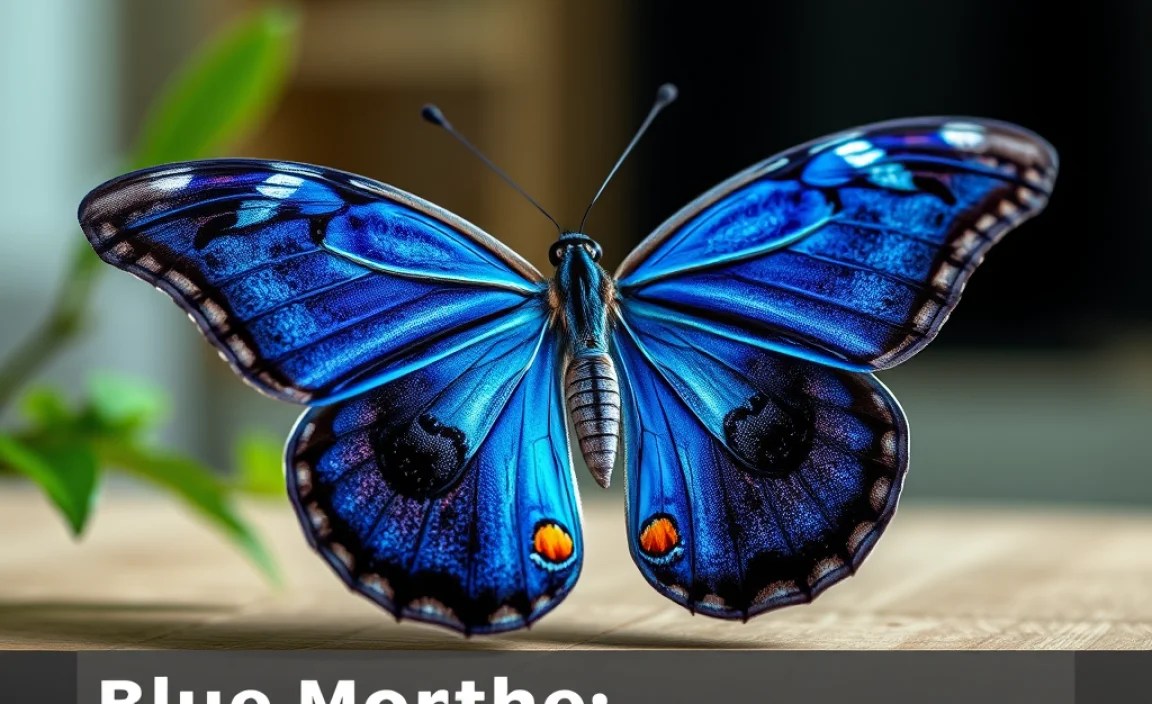
Have you ever been startled by something unexpected? Blue Morpho butterflies use this to their advantage. The underside of their wings has eyespots. These spots look like the eyes of a larger animal. When a predator gets close, the butterfly flashes its wings. The eyespots appear suddenly. This can startle the predator. It gives the butterfly a chance to escape. The eyespots are a clever defensive strategy. They trick predators into thinking they are facing a larger, more dangerous animal. The size, number, and placement of eyespots vary between Blue Morpho species. This helps them adapt to different environments and predators. This is one of the most interesting and effective Blue Morpho defensive strategies.
- Eyespots look like the eyes of a larger animal.
- Butterflies flash their wings to reveal the eyespots.
- This startles potential predators.
- It gives the butterfly a chance to escape.
- The size and number of eyespots vary.
- This helps them adapt to different environments.
The effectiveness of eyespots depends on several factors. The size and shape of the eyespots are important. The contrast between the eyespots and the rest of the wing matters. The behavior of the butterfly also plays a role. They need to flash their wings at the right moment. The predator’s reaction is also important. Some predators are more easily startled than others. Scientists study the eyespots to understand how they work. They compare different species of butterflies. They observe how predators react to the eyespots. This helps them learn more about the evolution of defensive strategies. The Blue Morpho’s eyespots are a fascinating example of how animals use deception to survive.
Fun Fact or Stat: Some butterflies have fake antennae on their wings to confuse predators!
How Eyespots Confuse Predators
Imagine you are a bird looking for a tasty snack. You spot a Blue Morpho butterfly. You fly closer to catch it. Suddenly, the butterfly flashes its wings. You see two large eyes staring back at you! You might hesitate for a moment. This hesitation gives the butterfly a chance to escape. The eyespots confuse predators in several ways. They can make the predator think it is facing a larger animal. They can also distract the predator. This makes it harder to focus on the butterfly. The eyespots are a clever trick. They help the Blue Morpho survive in a dangerous world. They are a perfect example of Blue Morpho defensive strategies.
The Evolution of Eyespots
How did eyespots evolve? It started with small spots on the wings. Butterflies with slightly larger spots were more likely to survive. Predators were more likely to be startled by them. Over time, the spots became larger and more distinct. They began to look more like eyes. This process is called natural selection. The butterflies with the best eyespots were more likely to reproduce. They passed on their genes to their offspring. This is how eyespots became such an effective defensive strategy. The evolution of eyespots is a great example of how animals adapt to their environment. The Blue Morpho is a testament to the power of evolution.
Eyespots vs. Camouflage
Eyespots and camouflage are both defensive strategies. But they work in different ways. Camouflage helps an animal blend in with its environment. This makes it harder for predators to see them. Eyespots, on the other hand, are meant to be seen. They startle or confuse predators. Some animals use both strategies. The Blue Morpho is a good example. Its brown wing undersides provide camouflage. The eyespots provide a startling surprise. Both strategies help it survive. The combination of camouflage and eyespots is very effective. It makes the Blue Morpho a master of disguise and deception.
Erratic Flight Patterns for Evasion
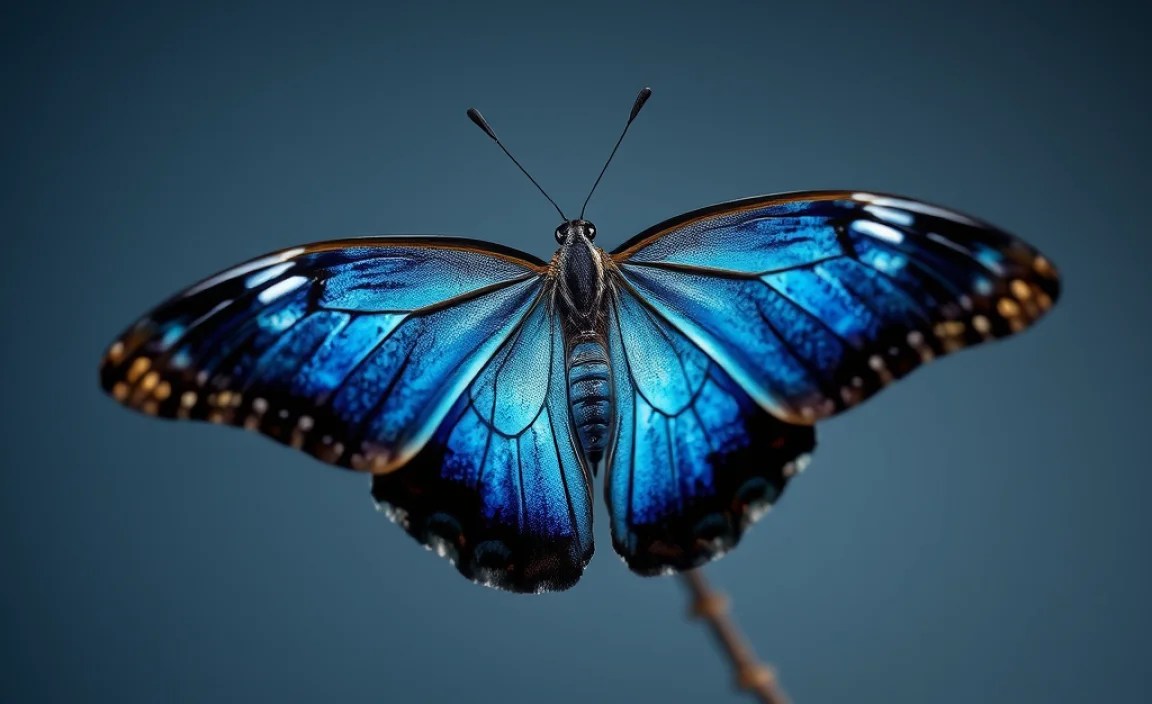
Have you ever tried to catch a fly? They are very good at dodging your hand. Blue Morpho butterflies are similar. They have an erratic flight pattern. This means they don’t fly in a straight line. They zig and zag through the air. This makes it very hard for predators to catch them. Imagine trying to follow a butterfly that is constantly changing direction. It would be very difficult! This erratic flight is a key part of their defensive strategies. It helps them escape from birds and other predators. The Blue Morpho’s flight is unpredictable. This makes it a challenging target. Their flight patterns are one of the most important Blue Morpho defensive strategies.
- Erratic flight means they don’t fly straight.
- They zig and zag through the air.
- This makes it hard for predators to catch them.
- Their flight is unpredictable.
- They change direction quickly.
- Birds find it hard to track them.
The Blue Morpho’s erratic flight is controlled by its muscles and nervous system. They can quickly change the angle of their wings. This allows them to change direction suddenly. They also use air currents to their advantage. They can glide and soar to save energy. The erratic flight is most effective when the butterfly is being chased. It can quickly escape from a predator. The Blue Morpho’s flight is not just random. It is a carefully controlled defensive strategy. It has evolved over time to help them survive. This unique flight pattern helps the butterfly live longer. It’s a crucial element of Blue Morpho defensive strategies.
Fun Fact or Stat: Butterflies can fly up to 30 miles per hour!
How Flight Patterns Confuse Predators
Think about a bird trying to catch a butterfly. The bird needs to predict where the butterfly will fly. If the butterfly flies in a straight line, it’s easy to catch. But the Blue Morpho doesn’t fly straight. It changes direction constantly. This makes it very hard for the bird to predict its movements. The bird has to keep adjusting its flight path. This takes a lot of energy. Eventually, the bird might give up. The erratic flight confuses the predator. It gives the butterfly a chance to escape. The flight pattern is a key defensive strategy.
The Physics of Butterfly Flight
Butterfly flight is complicated. The wings are not just simple flaps. They are shaped in a special way. This shape helps them create lift. The wings also twist and turn. This helps them control their flight. The Blue Morpho’s erratic flight involves rapid changes in wing angle. This creates sudden changes in direction. The butterfly uses its muscles to control its wings. It also uses its antennae to sense air currents. The physics of butterfly flight is fascinating. It helps us understand how they can fly so well.
Other Insects with Erratic Flight
The Blue Morpho is not the only insect with erratic flight. Many other insects use this strategy. Flies, moths, and dragonflies all have unpredictable flight patterns. This helps them avoid predators. It also helps them catch prey. Erratic flight is a common defensive strategy in the insect world. It’s a simple but effective way to stay safe. The Blue Morpho is just one example of how this strategy works. The goal of the strategy is survival.
Toxicity from Caterpillar Diet

Did you know that what you eat can affect your taste? It’s the same for Blue Morpho butterflies! As caterpillars, they eat certain plants. These plants contain toxins. The toxins don’t hurt the caterpillar. But they make the butterfly taste bad to predators. This is a clever defensive strategy. The butterfly is not poisonous. But it tastes bad enough to deter predators. Birds and lizards learn to avoid them. This toxicity is a form of protection. It helps them survive in the rainforest. The Blue Morpho’s diet as a caterpillar is important for its survival. It is one of the key Blue Morpho defensive strategies.
| Feature | Caterpillar | Butterfly |
|---|---|---|
| Diet | Toxic plants | Nectar, sap |
| Toxicity | Accumulates toxins | Tastes bad to predators |
| Appearance | Often brightly colored | Bright blue wings |
| Defense | Toxicity | Toxicity, eyespots, flight |
The type of plant the caterpillar eats affects how toxic the butterfly becomes. Some plants contain more toxins than others. The caterpillar stores the toxins in its body. The toxins remain in the butterfly even after it transforms. The toxins are not harmful to the butterfly. But they make it taste bitter or unpleasant to predators. The toxicity is a long-term defensive strategy. It protects the butterfly throughout its life. Predators learn to associate the bright colors with a bad taste. This helps the butterfly avoid being eaten. The Blue Morpho’s toxicity is a fascinating example of how animals use chemistry to survive.
Fun Fact or Stat: Monarch butterflies are also toxic because they eat milkweed as caterpillars!
How Toxins Deter Predators
Imagine you are a bird. You see a bright blue butterfly. It looks like a tasty meal. You catch it and take a bite. But it tastes awful! You quickly spit it out. You learn to avoid bright blue butterflies in the future. This is how toxins deter predators. The toxins don’t kill the predator. They just make the butterfly taste bad. The predator learns to associate the butterfly with a bad experience. This protects the butterfly from future attacks. The toxins are a powerful defensive strategy.
The Science Behind the Toxins
What are these toxins? They are chemicals produced by the plants. The Blue Morpho caterpillar eats these plants. The caterpillar can process the toxins. It stores them in its body. The toxins are often alkaloids or glycosides. These chemicals have a bitter taste. They can also cause stomach upset. The science behind the toxins is complex. But the result is simple: the butterfly tastes bad to predators. This is one way the Blue Morpho uses defensive strategies.
Examples of Toxic Butterflies
The Blue Morpho is not the only toxic butterfly. Many other butterflies are also toxic. Monarch butterflies eat milkweed. Milkweed contains toxins that make them taste bad. Swallowtail butterflies eat plants that contain aristolochic acids. These acids are also toxic. Toxicity is a common defensive strategy in the butterfly world. It helps them survive in a dangerous environment. The Blue Morpho joins many other insects that employ defensive strategies to survive.
Group Flight and Confusion Effect

Have you ever seen a flock of birds flying together? They move in a coordinated way. This makes it hard for a predator to focus on one bird. Blue Morpho butterflies sometimes fly in groups. This is called group flight. It can confuse predators. The predator has trouble tracking individual butterflies. The butterflies all look similar. They are moving in different directions. This makes it hard to focus on a single target. Group flight is a defensive strategy. It increases the chances that at least some butterflies will survive. It is another of the Blue Morpho defensive strategies.
- Butterflies fly in groups.
- This confuses predators.
- Predators have trouble tracking individuals.
- Butterflies move in different directions.
- This makes it hard to focus.
- Group flight increases survival chances.
The confusion effect is strongest when the group is large. The more butterflies there are, the harder it is to track them. The butterflies don’t have to coordinate their movements. They just need to fly in a general direction. The randomness of their flight adds to the confusion. Group flight is not always a defensive strategy. Sometimes, butterflies fly together to find food or mates. But when predators are present, group flight can be a lifesaver. It is a simple but effective way to increase their chances of survival. This is a well-documented Blue Morpho defensive strategy.
Fun Fact or Stat: Some butterfly migrations involve millions of butterflies!
The Science of the Confusion Effect
Why does group flight confuse predators? Scientists believe it has to do with how the brain processes information. When a predator sees a group of moving objects, it tries to track them individually. This requires a lot of mental effort. The more objects there are, the harder it becomes. Eventually, the predator’s brain becomes overloaded. It can no longer track individual targets. This is the confusion effect. It gives the butterflies a chance to escape. The science of the confusion effect is complex. But the result is clear: group flight can save lives.
Other Animals That Use Group Defense
The Blue Morpho is not the only animal that uses group defense. Many other animals use this strategy. Fish swim in schools. Birds fly in flocks. Zebras graze in herds. These groups provide protection from predators. The more eyes there are, the more likely someone is to spot danger. Grouping also makes it harder for predators to single out a target. Group defense is a common strategy in the animal kingdom. It helps animals survive in a dangerous world.
When Group Flight Is Most Effective
Group flight is most effective when the butterflies are in open areas. In dense forests, it can be harder to see the group. The butterflies also need to be relatively close together. If they are too spread out, the confusion effect is reduced. The Blue Morpho often flies in groups along rivers and streams. These open areas provide the best conditions for group flight. The location is important for this defensive strategy. The Blue Morpho knows how to stay safe.
Mimicry: Copying Other Species
Have you ever seen an animal that looks like another animal? This is called mimicry. Some Blue Morpho butterflies use mimicry as a defensive strategy. They mimic other butterflies that are toxic or distasteful. Predators learn to avoid these toxic butterflies. By looking like them, the Blue Morpho can also avoid being eaten. This is a clever way to trick predators. The Blue Morpho doesn’t have to be toxic itself. It just has to look like a toxic butterfly. This is a form of disguise. It helps them survive in the rainforest. This is an interesting example of Blue Morpho defensive strategies.
- Mimicry means looking like another animal.
- Some Blue Morpho mimic toxic butterflies.
- Predators avoid toxic butterflies.
- The Blue Morpho avoids being eaten.
- This is a form of disguise.
- They trick predators.
There are two main types of mimicry. Batesian mimicry is when a harmless animal mimics a harmful one. Müllerian mimicry is when two or more harmful animals mimic each other. The Blue Morpho uses Batesian mimicry. It mimics other butterflies that are toxic to predators. The success of mimicry depends on how accurate the mimic is. The more closely the Blue Morpho resembles the toxic butterfly, the more effective the strategy is. Mimicry is a fascinating example of evolution. It shows how animals can adapt to their environment. The Blue Morpho uses mimicry in its defensive strategies.
Fun Fact or Stat: Some butterflies mimic leaves to blend in with their surroundings!
How Mimicry Works
Imagine you are a bird. You have learned to avoid butterflies with a certain pattern. These butterflies are toxic and taste bad. Then you see a Blue Morpho butterfly. It has the same pattern as the toxic butterflies. You avoid it, even though it is not toxic. This is how mimicry works. The Blue Morpho benefits from the predator’s previous experience. It doesn’t have to be toxic itself. It just has to look like a toxic butterfly. This is a clever and effective defensive strategy. It is a good example of how the Blue Morpho employs defensive strategies.
Examples of Butterfly Mimicry
There are many examples of butterfly mimicry. Viceroy butterflies mimic Monarch butterflies. Monarch butterflies are toxic because they eat milkweed. The Viceroy butterflies are not toxic. But they look like Monarchs. This protects them from predators. Swallowtail butterflies also have many mimics. Some mimic toxic swallowtails. Others mimic other types of butterflies. Mimicry is a common strategy in the butterfly world. It helps them survive in a dangerous environment.
The Evolution of Mimicry
How did mimicry evolve? It started with slight resemblances. Some Blue Morpho butterflies looked a little like toxic butterflies. These butterflies were more likely to survive. Predators were more likely to avoid them. Over time, natural selection favored butterflies that looked more and more like toxic butterflies. This led to the evolution of mimicry. The Blue Morpho is a testament to the power of evolution. The Blue Morpho’s mimicry contributes to its defensive strategies.
Habitat and Hiding Spots
Where an animal lives is very important for its survival. The Blue Morpho lives in rainforests. Rainforests provide many hiding spots. The butterflies can hide among the trees and plants. They can also use the canopy as a refuge. The canopy is the upper layer of the rainforest. It is a dense layer of leaves and branches. It provides cover from predators. The Blue Morpho also uses specific plants for food and shelter. These plants provide a safe place to lay eggs. The habitat is an important part of their defensive strategies. The Blue Morpho has adapted to its environment. It has become a master of hiding.
- Rainforests provide many hiding spots.
- They can hide among trees and plants.
- The canopy provides cover from predators.
- Specific plants provide food and shelter.
- These plants are safe places to lay eggs.
- Habitat is important for survival.
The Blue Morpho also uses its wings to blend in with its surroundings. The brown underside of its wings helps it camouflage against tree bark. The bright blue color can also help it blend in with the sky. The butterfly chooses its hiding spots carefully. It looks for places where it can blend in and avoid detection. The Blue Morpho’s ability to use its habitat to its advantage is a key part of its defensive strategies. This makes the butterfly hard to find. It knows how to stay safe in the rainforest.
Fun Fact or Stat: Rainforests cover only about 6% of the Earth’s surface, but they contain over half of the world’s plant and animal species!
The Importance of Rainforests
Rainforests are important for many reasons. They provide habitat for countless plants and animals. They also help regulate the climate. Rainforests absorb carbon dioxide from the atmosphere. This helps to reduce global warming. Rainforests also produce oxygen. They are essential for life on Earth. Protecting rainforests is important for the survival of the Blue Morpho and many other species. This is a key element to the Blue Morpho defensive strategies.
Specific Plants Used by Blue Morphos
The Blue Morpho caterpillar eats specific plants. These plants provide them with the toxins they need for defense. The butterflies also use certain plants for nectar. Nectar is a sweet liquid that provides energy. The butterflies also lay their eggs on specific plants. These plants provide food for the caterpillars when they hatch. The Blue Morpho has a close relationship with its host plants. This relationship is essential for its survival. The plants are an important part of their lives.
How Climate Change Affects Habitats
Climate change is a major threat to rainforests. Rising temperatures and changing rainfall patterns can damage or destroy rainforest habitats. This can make it harder for the Blue Morpho and other species to survive. Protecting rainforests from climate change is essential. We need to reduce our carbon emissions. We also need to protect and restore rainforest habitats. This is important for the survival of the Blue Morpho and the planet. The Blue Morpho’s defensive strategies are less effective if there is no habitat.
Summary
Blue Morpho butterflies have many defensive strategies. They use color, movement, and taste to protect themselves. Their bright blue wings help them confuse predators. The underside of their wings has eyespots to startle attackers. They fly in an erratic way to avoid being caught. As caterpillars, they eat toxic plants. This makes the butterflies taste bad. They also fly in groups to confuse predators. They use mimicry to look like other toxic butterflies. They hide in the rainforest. All these strategies help them survive. Understanding these strategies helps us appreciate these beautiful creatures. Protecting their habitat is also crucial for their survival. The Blue Morpho is a testament to the power of adaptation.
Conclusion
The Blue Morpho butterfly is a fascinating creature. It has evolved many clever ways to survive. Its bright colors, erratic flight, and toxic taste all help to protect it from predators. These Blue Morpho defensive strategies are a testament to the power of natural selection. By understanding these strategies, we can better appreciate the complexity and beauty of nature. We must also work to protect their rainforest habitat. This will ensure that these amazing butterflies continue to thrive for generations to come.
Frequently Asked Questions
Question No 1: What are the main Blue Morpho defensive strategies?
Answer: The Blue Morpho butterfly uses several defensive strategies to survive in its rainforest habitat. These include its bright blue wings which can confuse predators with their flashing iridescence, eyespots on the underside of its wings that startle potential attackers, and an erratic flight pattern that makes it difficult to catch. Additionally, the caterpillar eats toxic plants, making the butterfly taste bad to predators, and they sometimes fly in groups to further confuse any hunters.
Question No 2: How do the Blue Morpho’s bright blue wings help it survive?
Answer: The bright blue color of the Blue Morpho’s wings is not just for show. The shimmering effect of the wings, caused by their microscopic structure, creates a flashing iridescence that can disorient predators. When the butterfly flies, the flashes of blue make it difficult for predators to track its movements. This confusion gives the Blue Morpho a better chance of escaping. This is a key part of its defensive strategies.
Question No 3: What is the purpose of the eyespots on the Blue Morpho’s wings?
Answer: The eyespots on the underside of the Blue Morpho’s wings are a form of mimicry. They resemble the eyes of a larger animal. When a predator approaches, the butterfly will suddenly flash its wings, revealing the eyespots. This can startle the predator, giving the butterfly a precious moment to escape. This is a very effective Blue Morpho defensive strategy.
Question No 4: Why does the Blue Morpho fly in an erratic pattern?
Answer: The Blue Morpho’s erratic flight pattern is another defensive strategy. By flying in an unpredictable manner, with sudden changes in direction, the butterfly makes it difficult for predators to anticipate its movements. This makes it harder to catch, as the predator has to constantly adjust its flight path, often tiring and giving up the chase. These flight patterns are a key part of Blue Morpho defensive strategies.
Question No 5: How does the Blue Morpho’s caterpillar diet contribute to its defense?
Answer: As caterpillars, Blue Morphos feed on plants that contain toxins. These toxins are not harmful to the caterpillar. However, they are stored in its body and remain even after the caterpillar transforms into a butterfly. This makes the adult butterfly taste bad to predators, deterring them from eating it. This is a clever defensive strategy that starts early in the butterfly’s life.
Question No 6: Where do Blue Morpho butterflies live?
Answer: Blue Morpho butterflies live in the rainforests of Central and South America. These forests provide them with the food, shelter, and hiding places they need to survive. Protecting these rainforests is essential for the survival of the Blue Morpho and many other species. They require the rainforest to successfully use their defensive strategies.


