
Amazon Rainforest Butterflies: Ultimate Guide!

Quick Summary: The Amazon rainforest is home to an estimated 1,500 butterfly species, representing about 10% of the world’s total. These vibrant creatures play crucial roles in pollination and the food chain. Spotting them involves visiting the Amazon, understanding their behavior, and respecting their fragile habitat. Protecting the Amazon rainforest is essential for their survival and the planet’s health.
Imagine stepping into a world bursting with color, where the air shimmers with the flight of countless butterflies. The Amazon rainforest is one such place, a haven for some of the most diverse and dazzling butterflies on Earth. But with deforestation and climate change threatening this precious ecosystem, many people wonder how they can still experience and help protect these incredible insects. Don’t worry, it’s easier than you think! This guide will show you how to safely observe Amazon rainforest butterflies, understand their fascinating lives, and contribute to their conservation. Get ready to be amazed by the beauty and importance of these winged jewels.
Exploring the World of Amazon Rainforest Butterflies

Hello, butterfly enthusiasts! I’m Frances O’Brien, and like you, I’m captivated by the enchanting world of butterflies. Today, we’re embarking on a journey to the heart of the Amazon rainforest, a realm teeming with an astonishing array of butterfly species. These aren’t just pretty faces; they’re vital players in the rainforest ecosystem.
Why Are Amazon Rainforest Butterflies So Special?
The Amazon rainforest is the most biodiverse place on Earth, and its butterfly population is no exception. Several factors contribute to this incredible diversity:
- Climate: The warm, humid climate provides ideal conditions for butterfly survival and reproduction year-round.
- Food Sources: The rainforest’s abundant plant life offers a vast array of food sources for caterpillars and nectar for adult butterflies.
- Habitat Diversity: From the forest floor to the canopy, the Amazon offers a variety of habitats, each supporting different butterfly species.
- Evolutionary History: The Amazon has been a relatively stable environment for millions of years, allowing butterflies to evolve and diversify.
How Many Butterfly Species Live in the Amazon?
Estimates vary, but scientists believe that around 1,500 butterfly species call the Amazon rainforest home. That’s approximately 10% of all known butterfly species worldwide! Some of the most iconic include:
- Morpho Butterflies: Known for their iridescent blue wings, Morphos are among the largest and most striking butterflies in the Amazon.
- Heliconius Butterflies: These butterflies are unique because they feed on pollen as adults, allowing them to live for several months.
- Swallowtail Butterflies: With their elegant tails and vibrant colors, Swallowtails are a common sight in the Amazon.
- Glasswing Butterflies: As their name suggests, Glasswings have transparent wings, providing excellent camouflage.
Identifying Common Amazon Rainforest Butterflies
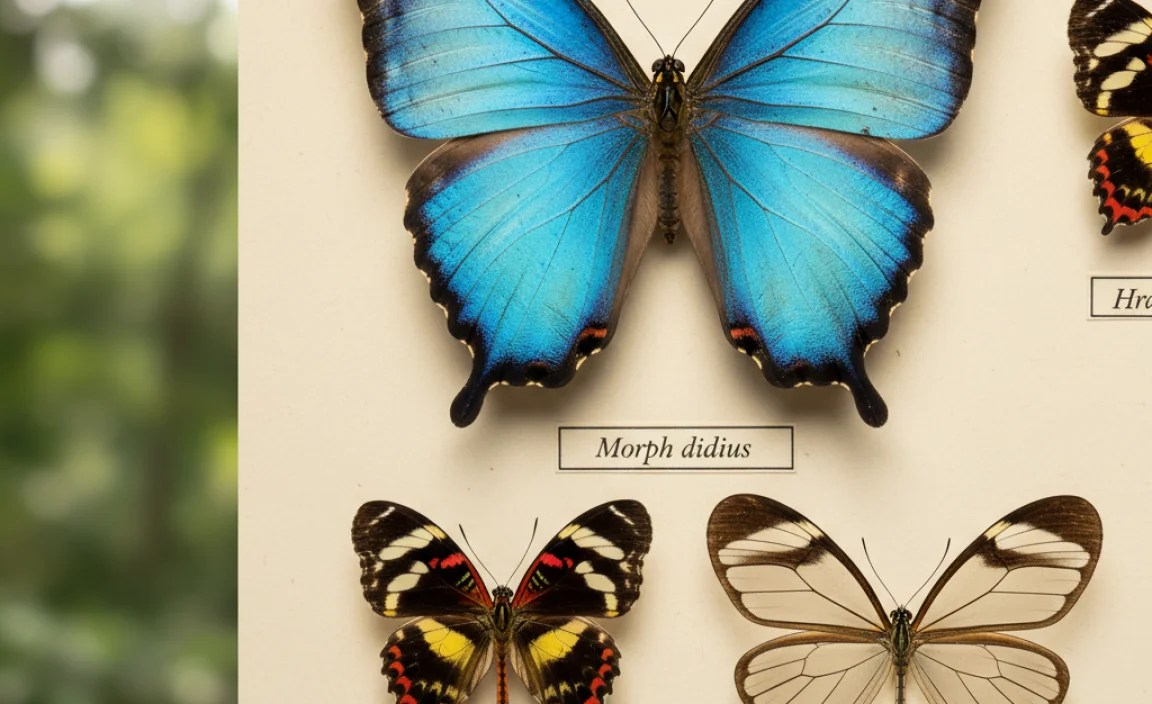
Identifying butterflies can be a rewarding experience. Here’s a guide to some of the most commonly seen species in the Amazon:
The Majestic Morpho
The Morpho butterfly is arguably the most famous butterfly of the Amazon. Its dazzling blue wings can span up to 8 inches, making it a truly impressive sight.
Key Identification Features:
- Size: Large, with a wingspan of 5-8 inches.
- Color: Iridescent blue on the upper side of the wings, brown with eyespots on the underside.
- Behavior: Flies rapidly through the forest canopy, often seen near water.
The Long-Lived Heliconius
Heliconius butterflies are known for their longevity, thanks to their unique ability to feed on pollen.
Key Identification Features:
- Size: Medium, with a wingspan of 2-4 inches.
- Color: Variable, with patterns of black, red, yellow, and orange.
- Behavior: Often seen in groups, feeding on nectar and pollen.
The Elegant Swallowtail
Swallowtail butterflies are admired for their graceful flight and distinctive tails.
Key Identification Features:
- Size: Large, with a wingspan of 3-6 inches.
- Color: Variable, with patterns of black, yellow, green, and blue.
- Behavior: Flies actively in open areas, often near flowering plants.
The Camouflaged Glasswing
Glasswing butterflies are masters of disguise, thanks to their transparent wings.
Key Identification Features:
- Size: Small to medium, with a wingspan of 2-3 inches.
- Color: Transparent wings with a narrow dark border.
- Behavior: Flies slowly in shaded areas, blending in with the background.
| Butterfly Species | Size (Wingspan) | Color | Distinguishing Features |
|---|---|---|---|
| Morpho | 5-8 inches | Iridescent Blue | Large size, bright blue wings |
| Heliconius | 2-4 inches | Black, Red, Yellow, Orange | Variable patterns, long lifespan |
| Swallowtail | 3-6 inches | Black, Yellow, Green, Blue | Elegant tails, graceful flight |
| Glasswing | 2-3 inches | Transparent with dark border | Transparent wings, excellent camouflage |
Where and When to See Amazon Rainforest Butterflies

Planning a trip to the Amazon with the goal of seeing butterflies requires some strategy. Here’s what you need to know:
Best Locations
- National Parks and Reserves: Areas like Yasuní National Park in Ecuador and Manu National Park in Peru offer excellent opportunities for butterfly watching.
- Butterfly Farms and Gardens: Many lodges and eco-tourism operators have their own butterfly farms or gardens, where you can see a variety of species up close.
- Riverbanks and Forest Edges: Butterflies are often attracted to these areas, where they can find nectar and bask in the sun.
Optimal Timing
- Dry Season: While the Amazon is always humid, the dry season (June to November) generally offers the best weather for butterfly watching.
- Morning Hours: Butterflies are most active in the morning when the sun is shining and the air is still cool.
- After Rainfall: After a rain shower, butterflies often emerge to dry their wings and feed on nectar.
Essential Gear
- Binoculars: A good pair of binoculars will help you see butterflies up close, even those high in the canopy.
- Camera: Capture the beauty of these creatures with a camera. A macro lens is ideal for close-up shots.
- Field Guide: A field guide to Amazonian butterflies will help you identify the species you encounter.
- Insect Repellent: Protect yourself from mosquito bites with a good insect repellent.
- Lightweight Clothing: Wear light-colored, long-sleeved shirts and pants to protect yourself from the sun and insects.
The Life Cycle of Amazon Rainforest Butterflies

Understanding the life cycle of butterflies adds another layer of appreciation to these incredible creatures. Like all butterflies, Amazonian species undergo complete metamorphosis.
Egg Stage
Butterfly eggs are typically laid on specific host plants, which will serve as food for the caterpillars. The eggs can vary in shape, size, and color, depending on the species.
Larva (Caterpillar) Stage
The caterpillar stage is all about eating and growing. Caterpillars consume vast amounts of plant material, molting several times as they grow larger. Many caterpillars have evolved camouflage or warning coloration to protect themselves from predators.
Pupa (Chrysalis) Stage
During the pupa stage, the caterpillar transforms into a butterfly inside a protective chrysalis. This process can take several days or weeks, depending on the species and environmental conditions.
Adult Butterfly Stage
The adult butterfly emerges from the chrysalis with fully formed wings. The butterfly’s primary goals are to reproduce and disperse. Adult butterflies feed on nectar, which provides them with the energy they need to fly and reproduce.
The Ecological Role of Butterflies in the Amazon

Butterflies play several vital roles in the Amazon rainforest ecosystem:
Pollination
Like bees, butterflies are important pollinators. As they feed on nectar, they transfer pollen from one flower to another, helping plants reproduce. Many plant species in the Amazon rely on butterflies for pollination.
Food Source
Butterflies and caterpillars serve as food for a variety of animals, including birds, lizards, and monkeys. They are an important link in the rainforest food chain.
Indicators of Environmental Health
Butterflies are sensitive to environmental changes, making them valuable indicators of ecosystem health. A decline in butterfly populations can signal problems such as habitat loss, pollution, or climate change.
Threats to Amazon Rainforest Butterflies
Sadly, Amazon rainforest butterflies face numerous threats, primarily due to human activities.
Deforestation
The most significant threat to Amazonian butterflies is deforestation. As forests are cleared for agriculture, logging, and mining, butterfly habitats are destroyed, and butterfly populations decline. According to the World Wildlife Fund, deforestation is responsible for the loss of countless species in the Amazon.
Climate Change
Climate change is also impacting Amazon rainforest butterflies. Changes in temperature and rainfall patterns can disrupt butterfly life cycles and alter the distribution of their host plants. A study by the Smithsonian Tropical Research Institute found that rising temperatures are causing butterflies to shift their ranges to higher elevations.
Pesticide Use
The use of pesticides in agriculture can have devastating effects on butterfly populations. Pesticides can kill butterflies directly or indirectly by poisoning their food sources. The Xerces Society reports that pesticide use is a major threat to butterfly conservation worldwide.
How to Help Protect Amazon Rainforest Butterflies
While the challenges are significant, there are many ways you can help protect Amazon rainforest butterflies:
Support Conservation Organizations
Donate to or volunteer with organizations that are working to protect the Amazon rainforest. Some reputable organizations include:
- Rainforest Trust: Buys and protects threatened rainforest lands.
- World Wildlife Fund (WWF): Works to conserve biodiversity and reduce human impact on the environment.
- Amazon Watch: Protects the rainforest and advances the rights of Indigenous peoples in the Amazon Basin.
Practice Sustainable Consumption
Make conscious choices about the products you buy. Avoid products that contribute to deforestation, such as beef, soy, and palm oil from unsustainable sources. Look for products that are certified by organizations like the Forest Stewardship Council (FSC).
Reduce Your Carbon Footprint
Climate change is a major threat to Amazon rainforest butterflies. Reduce your carbon footprint by:
- Using public transportation, biking, or walking instead of driving.
- Conserving energy at home by turning off lights and appliances when not in use.
- Eating a plant-based diet.
- Supporting policies that promote renewable energy and reduce greenhouse gas emissions.
Educate Others
Spread the word about the importance of Amazon rainforest butterflies and the threats they face. Talk to your friends, family, and colleagues about what they can do to help.
The Cultural Significance of Butterflies in the Amazon
Butterflies hold a special place in the cultures of many Indigenous peoples of the Amazon. They are often seen as symbols of transformation, beauty, and spirituality.
Symbolism
In some Amazonian cultures, butterflies are believed to be the spirits of ancestors or messengers from the spirit world. They may also be associated with healing, protection, and good luck.
Art and Mythology
Butterflies are often depicted in Indigenous art and mythology. They may be featured in paintings, carvings, and textiles. Stories about butterflies and their significance are passed down through generations.
Traditional Medicine
Some Indigenous communities use butterflies in traditional medicine. For example, certain butterfly species may be used to treat skin ailments or promote healing.
Frequently Asked Questions (FAQ)
Here are some frequently asked questions about Amazon rainforest butterflies:
1. What is the most common butterfly in the Amazon rainforest?
While there isn’t one single “most common” butterfly, Morpho butterflies are frequently observed due to their large size and bright blue color. They are often seen flying through the forest canopy.
2. Are Amazon rainforest butterflies poisonous?
Some Amazon rainforest butterflies are poisonous, particularly those in the Heliconius family. These butterflies obtain toxins from the plants they feed on as caterpillars, which make them unpalatable to predators.
3. How long do Amazon rainforest butterflies live?
The lifespan of Amazon rainforest butterflies varies depending on the species. Some species, like the Morpho, may only live for a few weeks, while others, like the Heliconius, can live for several months.
4. What do Amazon rainforest butterflies eat?
Adult Amazon rainforest butterflies primarily feed on nectar from flowers. Some species, like the Heliconius, also feed on pollen. Caterpillars feed on the leaves of specific host plants.
5. Can I raise Amazon rainforest butterflies at home?
Raising Amazon rainforest butterflies at home is generally not recommended. These butterflies require specific environmental conditions and host plants that may be difficult to replicate in a home environment. Additionally, it is important to respect the natural habitat of these creatures.
6. How can I identify a butterfly I saw in the Amazon?
Identifying a butterfly can be challenging, but there are several resources that can help. A field guide to Amazonian butterflies is a valuable tool. You can also consult online resources, such as butterfly identification websites and forums. Taking a photo of the butterfly can also aid in identification.
7. Are there any butterfly farms in the Amazon that I can visit?
Yes, many lodges and eco-tourism operators in the Amazon have their own butterfly farms or gardens. These farms provide a controlled environment where you can see a variety of butterfly species up close and learn about their life cycles.
Conclusion
The butterflies of the Amazon rainforest are a testament to the incredible biodiversity of our planet. By understanding their importance, the threats they face, and the ways we can help protect them, we can all contribute to ensuring their survival for generations to come. Whether you’re planning a trip to the Amazon, supporting conservation organizations, or simply spreading the word about these amazing creatures, every effort counts. Let’s work together to safeguard the future of Amazon rainforest butterflies and the rainforest they call home. After all, a world with butterflies is a world filled with beauty, wonder, and hope.


