Easy Steps in Butterfly Identification: A Simple Guide

Do you love seeing pretty butterflies? Have you ever wondered what kind it is? Learning about steps in butterfly identification can be fun. It helps us know more about nature.
Butterflies are insects. They have colorful wings. Spotting them in gardens is always a treat. Have you ever tried to name one?
It can be tricky to tell them apart. There are so many different kinds. But with a few simple steps, you can learn to identify them. It’s like being a butterfly detective.
Key Takeaways
- Using field guides and online resources are helpful steps in butterfly identification.
- Observe wing patterns and colors to distinguish butterfly species easily.
- Note the size and shape of the butterfly for accurate identification.
- Pay attention to the butterfly’s behavior and habitat preferences.
- Learn about common butterfly families in your region to narrow down choices.
What Are The Initial Steps in Butterfly Identification?

The initial steps in butterfly identification are very important. First, look closely at the butterfly. Notice its size. Is it big or small? Next, check the colors on its wings. What colors do you see? Are there any patterns? Take a picture if you can. This will help you later. Write down where you saw the butterfly. Was it in a garden? Or in the woods? All these details matter. They will help you figure out what kind of butterfly it is. It is like putting together pieces of a puzzle. Each piece of information brings you closer to solving the mystery. Have fun with it, and be patient. Learning takes time. With practice, you will become a butterfly expert.
- Observe the butterfly’s size.
- Note the colors on its wings.
- Look for patterns on the wings.
- Take a photograph if possible.
- Record the location where you saw it.
Learning about butterflies is exciting. Each butterfly has its own story. Knowing the steps in butterfly identification helps us understand their stories. It makes us better friends to the butterflies. We can also help protect their homes. When we know what butterflies need, we can plant the right flowers. We can keep their habitats safe. So, let’s keep learning. Let’s keep exploring. And let’s keep protecting these beautiful creatures. The more we know, the better we can care for our world. Remember, every little bit helps. Even just learning to name a butterfly makes a difference. You are now part of the butterfly’s story.
Fun Fact or Stat: There are over 20,000 different species of butterflies in the world!
Note the Butterfly Size
Have you ever seen a tiny butterfly? Some are as small as your fingernail. Others are as big as your hand. The size of the butterfly helps you know what kind it is. Small butterflies might be skippers or blues. Big butterflies could be swallowtails or monarchs. Look closely. Is it a small dot of color? Or a large, fluttering beauty? Knowing the size is one of the first steps in butterfly identification. It narrows down the choices. It makes the puzzle easier to solve. It’s like having a piece of the puzzle already in place. So, pay attention to the size. It’s a clue that will lead you to the answer.
Observe the Wing Colors
Imagine a butterfly with wings of bright blue. Or one with wings of sunshine yellow. Butterflies come in all colors. Their colors help them hide. They also help them attract mates. The colors can tell you a lot. Some butterflies have orange and black stripes. These might be monarchs or viceroys. Others have iridescent blues and greens. These could be morphos or swallowtails. So, look closely at the colors. Write them down. Or take a picture. The colors are important clues. They are one of the key steps in butterfly identification. They will help you unlock the butterfly’s name.
Document Wing Patterns
Wing patterns are like fingerprints. No two butterflies have the exact same pattern. Some have spots. Others have stripes. Some have intricate designs. These patterns are very important for identifying butterflies. Look for circles or lines. Note the shapes and sizes of the patterns. Are there any unique markings? These details will help you. They are like secret codes. They unlock the mystery of the butterfly’s name. Use a field guide or a website. Compare the patterns you see. This is one of the most important steps in butterfly identification. It’s like matching a key to a lock. The right pattern will open the door to the butterfly’s identity.
How to Observe Wing Shape for Butterfly Identification?

Wing shape is another vital clue. It is helpful for butterfly identification. Butterfly wings come in different shapes. Some are long and narrow. Others are round and wide. Some have tails. Others have pointy tips. Swallowtails have long tails on their hindwings. Skippers have hooked antennae and small wings. Monarchs have rounded wings. The shape of the wings helps us tell them apart. It’s like knowing the shape of a puzzle piece. If you know the shape, you can find where it fits. Pay close attention to the wing shape. It will guide you to the right answer. This is one of the important steps. It makes identifying butterflies easier and more fun.
- Note if the wings are long or round.
- Check for tails on the hindwings.
- Observe the tips of the wings.
- Consider the size of the wings.
- Look at the overall shape.
Think of each butterfly as a flying piece of art. Each has its own unique design. The wing shape is part of that design. It tells a story about the butterfly’s life. It tells us how it flies. It tells us where it lives. When you learn to see the differences in wing shapes, you become a better observer. You notice details that you never saw before. You start to understand the beauty and complexity of nature. So, take your time. Look closely at the wing shape. It will reveal the butterfly’s secrets. This is a rewarding step in butterfly identification.
Fun Fact or Stat: Some butterflies migrate thousands of miles each year!
Wing Shape and Flight Patterns
Did you know that wing shape affects how a butterfly flies? Butterflies with long, narrow wings are fast flyers. They can travel long distances. Butterflies with round wings are slower. They flutter around flowers. The shape of the wing helps the butterfly move through the air. It’s like the wings are designed for a specific job. Knowing how a butterfly flies can help you identify it. A fast-flying butterfly might be a skipper. A slow-flying butterfly might be a monarch. So, watch how the butterfly moves. It’s another clue to its identity. It is one of the more subtle steps in butterfly identification.
Tails and Wing Extensions
Some butterflies have tails on their wings. These tails are like decorations. They make the butterfly look fancy. Swallowtail butterflies are known for their tails. The tails can be long or short. They can be straight or curved. The tails help the butterfly balance. They also help it attract mates. Look closely at the tails. Are they long and elegant? Or short and stubby? The tails can tell you what kind of butterfly it is. It’s like a secret code. The tails are a clue to the butterfly’s name. Observing tails and extensions are key steps in butterfly identification.
Wing Angles and Tips
The angle of the wing tips is another clue. Some butterflies have pointy wings. Others have rounded wings. The shape of the wing tip can tell you a lot. Pointy wings might mean the butterfly is a fast flyer. Rounded wings might mean it’s a slow flyer. Look closely at the wing tips. Are they sharp and pointed? Or soft and rounded? The wing tips are like arrows. They point you to the butterfly’s identity. It’s another piece of the puzzle. The wing tip shape is one of the subtle steps in butterfly identification. It helps you narrow down the choices. It makes identifying butterflies easier.
What About Habitat and Location in Butterfly Identification?

Where you find a butterfly is important. It is one of the key steps in butterfly identification. Some butterflies live in gardens. Others live in forests. Some live near water. The place where a butterfly lives is called its habitat. Each butterfly has its favorite habitat. Monarchs like open fields with milkweed. Swallowtails like gardens and forests. Knowing the habitat helps you narrow down the choices. If you see a butterfly in a forest, it’s probably not a monarch. If you see a butterfly near water, it might be a swallowtail. So, pay attention to where you see the butterfly. It’s a clue that will help you identify it. Location matters in butterfly identification.
- Note the type of habitat.
- Consider the plants nearby.
- Observe if it is near water.
- Think about the region.
- Check if it is a common area.
Imagine you are a detective. You are looking for clues to solve a mystery. The butterfly’s habitat is one of your clues. It tells you something about the butterfly’s life. It tells you what it eats. It tells you where it sleeps. It tells you who its friends are. When you know the habitat, you understand the butterfly better. You can guess its name more easily. This is what makes butterfly identification so fun. It’s like learning a secret language. The language of nature. The language of butterflies. So, keep exploring. Keep observing. And keep learning about the habitats of butterflies.
Fun Fact or Stat: Butterflies taste with their feet!
Gardens and Flower Preferences
Butterflies love flowers. They drink nectar from flowers. Different butterflies like different flowers. Monarchs love milkweed. Swallowtails love zinnias. Some butterflies like purple flowers. Others like yellow flowers. The flowers a butterfly visits can tell you what kind it is. If you see a butterfly on milkweed, it might be a monarch. If you see a butterfly on a zinnia, it might be a swallowtail. So, pay attention to the flowers. They are like a buffet for butterflies. The flowers are one of the key steps in butterfly identification. They help you find the right name.
Forests and Woodland Areas
Some butterflies live in forests. Forests are shady and cool. They have lots of trees and plants. Forest butterflies are often brown or green. These colors help them hide. They blend in with the trees. Some forest butterflies have spots or stripes. These patterns break up their shape. This makes them harder to see. If you see a butterfly in a forest, it might be a woodland butterfly. It might be a satyr or a wood nymph. The forest is their home. Knowing this habitat makes butterfly identification easier.
Water Sources and Wetlands
Water is important for butterflies. They need water to drink. Some butterflies live near water. They like wetlands and streams. These areas have lots of plants and flowers. Water butterflies are often colorful. They stand out against the green plants. Some water butterflies have special patterns. These patterns help them attract mates. If you see a butterfly near water, it might be a wetland butterfly. It might be a swallowtail or a skipper. Water sources are vital in understanding a butterfly’s environment. The location is one of the useful steps in butterfly identification.
Using Butterfly Field Guides for Identification?
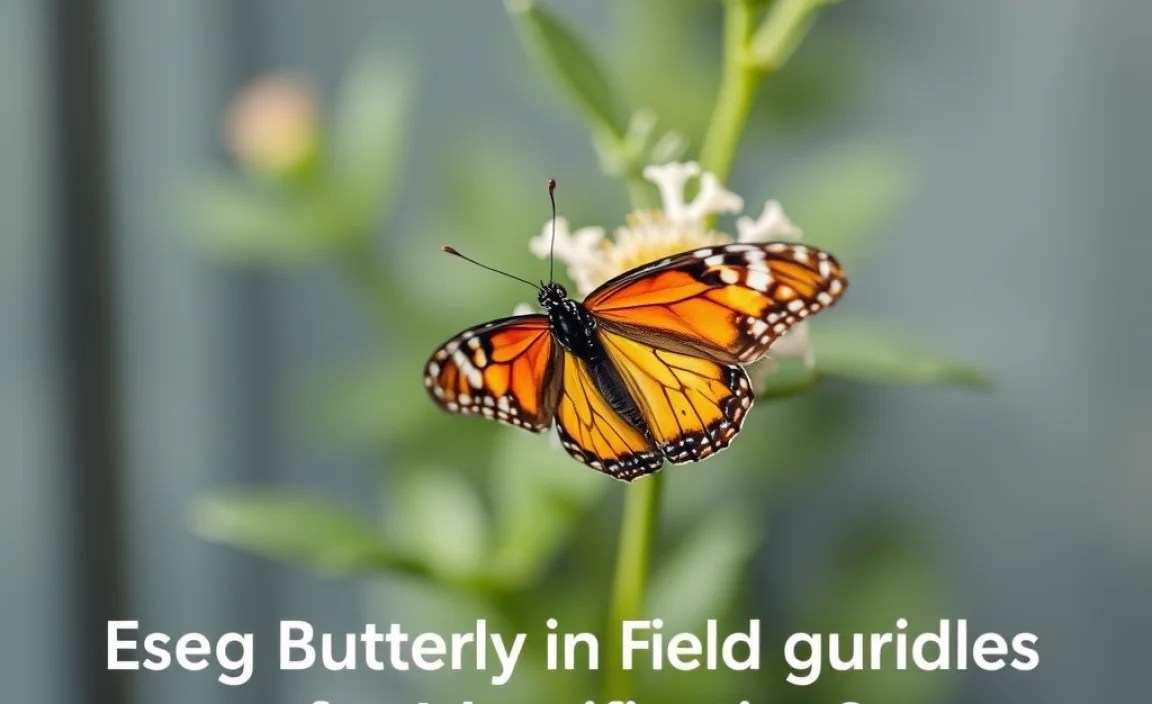
Field guides are books about butterflies. They show pictures of different butterflies. They tell you where they live. They tell you what they eat. Field guides are very helpful for butterfly identification. They are like a cheat sheet. They give you all the information you need. When you see a butterfly, you can look it up in the field guide. You can compare the picture in the book to the butterfly you saw. You can read about its habitat and food. This will help you figure out what kind of butterfly it is. Field guides make identifying butterflies easier and more fun. They are like having a butterfly expert with you.
- Choose a guide for your region.
- Learn how to use the guide.
- Compare your photos to the pictures.
- Read the descriptions carefully.
- Practice using the guide often.
Think of a field guide as a treasure map. The map leads you to the treasure. The treasure is the name of the butterfly. The field guide has all the clues you need. It shows you the different wing patterns. It tells you about the different habitats. It gives you tips on how to identify butterflies. When you use a field guide, you are learning about nature. You are becoming a better observer. You are discovering the secrets of the butterfly world. This is a rewarding step in butterfly identification. It connects you to the natural world.
Fun Fact or Stat: Butterflies can see red, green, and yellow!
Features of Good Field Guides
A good field guide is easy to use. It has clear pictures. It has simple descriptions. It focuses on butterflies in your area. The best field guides have range maps. These maps show where each butterfly lives. They also have information on butterfly behavior. They tell you when the butterflies fly. They tell you what they eat. A good field guide is a valuable tool. It helps you identify butterflies quickly and accurately. It is one of the important steps in butterfly identification.
How to Compare Photos to Field Guides
Taking photos of butterflies is helpful. It gives you a record of what you saw. You can compare your photos to the pictures in the field guide. Look for similar wing patterns. Check the colors. Note the size and shape. Compare the habitat. Where did you see the butterfly? Was it in a garden? Or in a forest? The more details you compare, the better. This will help you find the right match. It’s like finding the missing piece of a puzzle. Comparing photos and field guides are essential steps in butterfly identification.
Understanding Range Maps
Range maps show where butterflies live. Each butterfly has its own range. Some butterflies live in only one area. Others live in many areas. The range map tells you where you are likely to find a butterfly. If you see a butterfly that is not on the range map, it might be rare. Or it might be a different butterfly. Range maps are helpful for butterfly identification. They narrow down the choices. They tell you what butterflies you are likely to see. They help you understand the butterfly’s world.
Using Online Resources For Butterfly Identification?
The internet is full of information. You can use it to identify butterflies. There are websites with pictures of butterflies. Some websites let you search by color or pattern. You can also find forums where people talk about butterflies. These forums are great for asking questions. Online resources are very helpful. They can help you identify butterflies quickly and easily. They are a great addition to field guides. Using the internet is one of the useful steps in butterfly identification. It opens up a world of information.
- Find reliable butterfly websites.
- Use search filters effectively.
- Join butterfly identification forums.
- Compare photos with online images.
- Check multiple sources for accuracy.
Imagine the internet as a giant library. It has books on every subject. It also has pictures and videos. You can find information on any butterfly. You can learn about its habitat, its food, and its life cycle. The internet is a powerful tool for learning. It connects you to experts and enthusiasts around the world. You can share your photos and ask for help. You can learn from others and teach them what you know. This is a great way to learn more about butterflies. Using online resources is an important step in butterfly identification.
Fun Fact or Stat: A butterfly’s wings are transparent!
Reliable Websites for Butterfly Identification
Not all websites are the same. Some websites have wrong information. Some websites are not up-to-date. It’s important to use reliable websites. Look for websites that are run by experts. Check the website’s sources. Make sure the information is accurate. Some good websites include university websites and museum websites. These websites are usually reliable. They have accurate information. They are a great resource for butterfly identification.
Filtering Search Results Effectively
When you search for butterflies online, you might get many results. It’s important to filter your search results. Use keywords that are specific. For example, instead of searching for “butterfly,” search for “orange butterfly with black stripes.” This will give you more accurate results. You can also use filters to narrow down your search. Filter by color, size, or location. The more specific you are, the better. Filtering search results is one of the useful steps in butterfly identification. It helps you find the information you need.
Participating in Forums and Groups
Online forums are a great place to learn about butterflies. You can ask questions and get answers from experts. You can share your photos and get feedback. You can learn from others and share your knowledge. Forums are a community of butterfly lovers. They are a great resource for butterfly identification. You can join forums on websites or on social media. Just be respectful and follow the rules. Participating in forums is a great way to learn and connect with others.
What Role Does Butterfly Behavior Play in Identification?
How a butterfly acts is also important. It is one of the subtle steps in butterfly identification. Some butterflies fly quickly. Others flutter slowly. Some butterflies stay close to the ground. Others fly high in the air. Some butterflies are active during the day. Others are active at night. The way a butterfly behaves can tell you what kind it is. Monarchs fly slowly and deliberately. Skippers fly quickly and erratically. Paying attention to behavior can help you identify butterflies.
- Observe flight patterns carefully.
- Note feeding habits.
- Check resting positions.
- Consider mating behavior.
- Watch for territorial behavior.
Imagine you are watching a play. Each butterfly is an actor. They are performing a role. Their behavior is part of their character. It tells you something about who they are. When you understand their behavior, you understand them better. You can guess their name more easily. This is what makes butterfly identification so interesting. It’s like being a detective. You are looking for clues to solve a mystery. The butterfly’s behavior is one of your clues. Use it to unlock the butterfly’s identity.
Fun Fact or Stat: Butterflies use their antennae to smell!
Flight Patterns and Speed
Butterflies fly in different ways. Some fly straight. Others zigzag. Some fly fast. Others fly slow. The way a butterfly flies is called its flight pattern. The speed of its flight is also important. Skippers are known for their fast, erratic flight. Monarchs are known for their slow, graceful flight. The flight pattern and speed can help you identify butterflies. It is one of the behavioral steps in butterfly identification.
Feeding Habits and Nectar Sources
Butterflies eat nectar from flowers. Different butterflies like different flowers. Some butterflies are picky eaters. They only eat from certain flowers. Others are not picky. They eat from many different flowers. The flowers a butterfly visits can tell you what kind it is. Monarchs love milkweed. Swallowtails love zinnias. The feeding habits and nectar sources are key steps in butterfly identification.
Resting Positions and Wing Display
Butterflies rest in different positions. Some rest with their wings open. Others rest with their wings closed. Some hold their wings flat. Others hold their wings upright. The way a butterfly rests can tell you what kind it is. Monarchs often rest with their wings open. Skippers often rest with their wings closed. The resting position and wing display are important steps in butterfly identification.
How Does Butterfly Size Compare Across Species?
Size is a simple way to tell butterflies apart. Some are tiny. Others are huge. The Atlas moth is the biggest. The Western Pygmy Blue is super small. Size is one of the first steps in butterfly identification. It helps narrow down your options. Think about it. You won’t mistake a tiny blue for a giant swallowtail. Learning the size range helps a lot.
| Butterfly | Size (Wingspan) | Notes |
|---|---|---|
| Monarch | 3.5 – 4 inches | Orange and black. Famous for migration. |
| Swallowtail | 4 – 6 inches | Large, with tail-like extensions on wings. |
| Cabbage White | 1.5 – 2 inches | Small, white. Common in gardens. |
| Blue Morpho | 5 – 8 inches | Bright blue. Tropical species. |
| Skipper | 1 – 2 inches | Small, fast-flying. Hooked antennae. |
- Measure wingspan if possible.
- Compare to known objects.
- Use a ruler for accuracy.
- Check multiple sources.
- Note if it’s smaller or larger.
Have you ever noticed how different butterflies are? It’s amazing. Each has its special place. Knowing their sizes helps protect them. We learn what they need to survive. We understand their world better. That is a big part of butterfly identification. It’s not just about names. It’s about caring for nature. So, keep looking closely. Keep learning. You’re helping butterflies every time you do.
Fun Fact or Stat: Butterflies have four wings, not two!
Comparing Size to Common Objects
Sometimes it’s hard to measure a butterfly. You can compare it to something you know. Is it about the size of a quarter? A dollar bill? Or even bigger? These simple tricks help. You don’t need a ruler. Just use your eyes. This is one of the basic steps in butterfly identification. It’s easy and fun. It helps you remember what you saw.
Regional Size Variations
Did you know that butterflies can be different sizes? Even in the same kind? It depends on where they live. Food and weather matter. Butterflies in warm places might grow bigger. Butterflies in cold places might stay smaller. These changes make identifying tricky. It’s good to know about regional changes. They affect the steps in butterfly identification. Location is key.
Size as a First Identification Clue
When you see a butterfly, what do you notice first? Maybe the color. Or the pattern. But size is a great start. It helps you narrow things down. Is it tiny? It’s probably not a swallowtail. Is it huge? It’s likely not a skipper. Size is a quick way to start. It makes the other steps in butterfly identification easier. It’s like starting a puzzle with the edges.
Summary
Identifying butterflies is like solving a puzzle. You need to look at all the clues. The size, shape, and color of the wings are important. The location and habitat also matter. Behavior can give you hints. Using field guides and online resources helps. Each step brings you closer to the answer. Knowing the steps in butterfly identification helps us appreciate these beautiful creatures. It also helps us protect them. By learning about butterflies, we can help them thrive.
Remember to take your time. Observe carefully. And have fun. Butterfly identification is a journey. It’s a way to connect with nature. With practice, you’ll become a butterfly expert. So grab your field guide and get started. The butterfly world is waiting for you.
Conclusion
Learning to identify butterflies is fun. It connects you with nature. Steps in butterfly identification include looking at wing patterns. Consider the habitat and behavior. Use field guides and online tools. With practice, you will identify many butterflies. You will also help protect them. Enjoy the beauty of the butterfly world. Keep learning and exploring.
Frequently Asked Questions
Question No 1: What is the first step in identifying a butterfly?
Answer: The very first thing to do is take a good look! Observe the butterfly’s size. Note the colors and patterns on its wings. Try to get a picture. This will help you remember details later. Where did you see it? Was it in a garden, a forest, or near water? All these initial observations are key. They are the start of the steps in butterfly identification. They help narrow down the possibilities. It is like beginning a treasure hunt. Each clue leads to the next. Enjoy the process of discovery!
Question No 2: Why is it important to know the butterfly’s habitat?
Answer: Knowing the habitat is super important. Different butterflies live in different places. Some like open fields with lots of flowers. Others prefer shady forests. Some live near water. The habitat tells you a lot about the butterfly. It helps you narrow down the choices. For example, if you see a butterfly in a forest, it’s probably not a monarch. Monarchs like open fields. Knowing the habitat is one of the essential steps in butterfly identification. It’s like knowing where to look for a lost item.
Question No 3: What are some good online resources for identifying butterflies?
Answer: The internet is full of great information. Use it to help you identify butterflies. Look for websites run by museums or universities. These usually have reliable information. Search for butterfly identification guides specific to your region. Many websites allow you to search by color, pattern, or size. Online forums can also be helpful. You can ask questions and share photos. Just be sure to check multiple sources. This ensures you get accurate information. Using online resources is one of the useful steps in butterfly identification.
Question No 4: How can a field guide help me identify butterflies?
Answer: A field guide is like a butterfly encyclopedia. It has pictures and descriptions of different butterflies. It tells you where they live and what they eat. When you see a butterfly, you can look it up in the field guide. Compare the picture to the butterfly you saw. Read the description to learn more about it. A good field guide is easy to use. It has clear pictures and simple descriptions. It is one of the valuable steps in butterfly identification. It’s like having a butterfly expert with you.
Question No 5: What if I can’t identify a butterfly?
Answer: Don’t worry if you can’t identify a butterfly right away. It takes practice. Keep learning and exploring. Share your photos online. Ask for help from experts or other butterfly enthusiasts. The most important thing is to enjoy the process. Even if you don’t know the name, you can still appreciate the beauty. Over time, you will learn more and become better at it. Consider revisiting the steps in butterfly identification. Each observation is a learning opportunity.
Question No 6: Why is butterfly identification important?
Answer: Identifying butterflies is more than just a fun hobby. It helps us understand the natural world. It teaches us about different species and their habitats. When we know what butterflies need, we can help protect them. We can plant the right flowers and keep their habitats safe. Butterfly populations are declining. Knowing the steps in butterfly identification helps scientists track changes. This helps conservation efforts. By learning about butterflies, we can make a difference.