
European Butterflies Sequence Chart: Your Easy ID Guide

Quick Summary: Identifying European butterflies can be a delightful but sometimes tricky task! A sequence chart simplifies this by organizing butterflies based on shared characteristics like wing patterns, colors, and sizes. By systematically comparing an unknown butterfly to the chart, you can narrow down the possibilities and pinpoint its species with greater accuracy. It’s a helpful tool for both beginners and experienced butterfly enthusiasts.
Have you ever been captivated by a butterfly fluttering in your garden but struggled to name it? Identifying European butterflies can feel overwhelming, with so many beautiful species flitting about. It’s easy to get lost in the sheer variety of colors, patterns, and sizes. But don’t worry! There’s a simple way to bring order to this colorful chaos: using a butterfly sequence chart. This guide will walk you through creating and using a sequence chart to confidently identify the butterflies you encounter.
Why Use a Butterfly Sequence Chart?
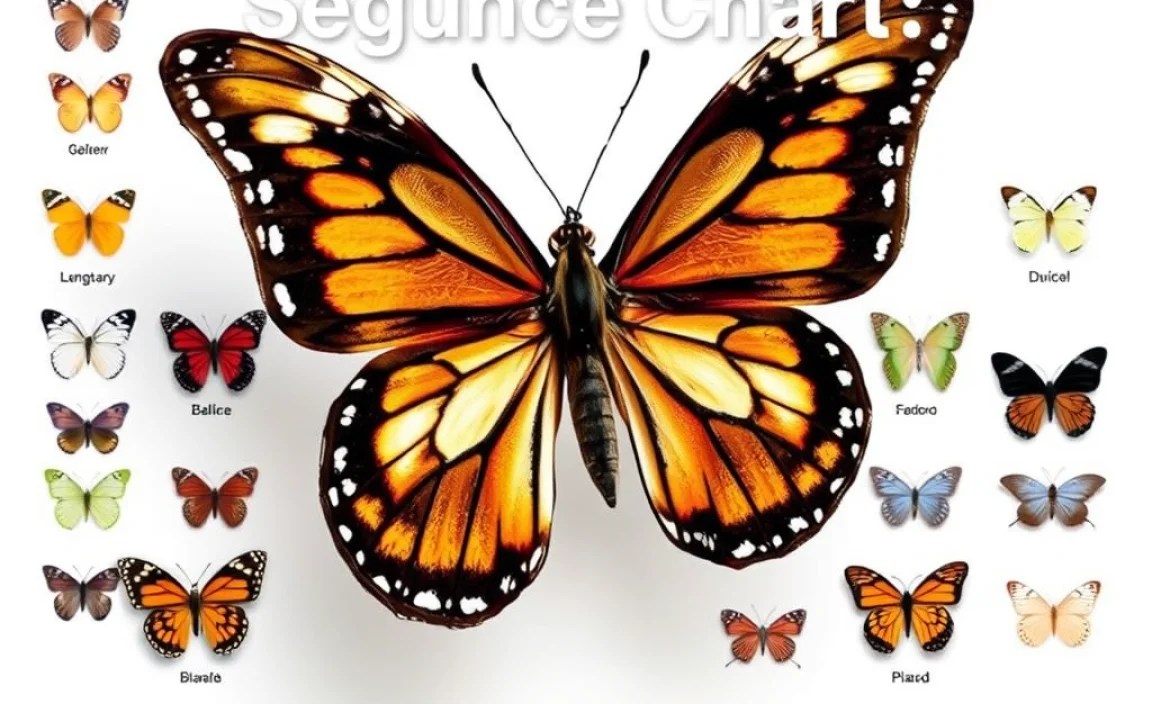
A butterfly sequence chart is a visual tool that helps you identify butterflies by systematically comparing their features. Instead of randomly flipping through a field guide, you follow a logical sequence of questions about the butterfly’s appearance. This method makes identification faster, more accurate, and even more enjoyable. Think of it as a butterfly detective kit!
- Systematic Identification: Guides you through a step-by-step process.
- Improved Accuracy: Reduces guesswork by focusing on key features.
- Educational: Helps you learn about butterfly characteristics.
- Fun for All Ages: Makes butterfly identification accessible to everyone.
Creating Your European Butterfly Sequence Chart

You can create your own chart, or use existing resources. The key is to organize the information in a way that makes sense to you. Here’s how to get started:
1. Gather Your Resources
Collect the tools and information you’ll need:
- Butterfly Field Guide: A good field guide specific to Europe is essential. Consider guides like “Butterflies of Britain and Europe” by Tom Tolman and Richard Lewington or the “Collins Butterfly Guide” by Tom Tolman.
- Notebook and Pen: For recording your observations and chart details.
- Camera: To photograph butterflies for later comparison.
- Computer and Printer (Optional): If you prefer a digital chart.
- Online Resources: Websites like Butterfly Conservation and UK Butterflies provide valuable information and images.
2. Identify Key Characteristics
Decide which features you’ll use to differentiate butterflies. Common characteristics include:
- Size: Small, medium, or large.
- Color: Dominant colors and patterns on the wings (e.g., orange, blue, brown, yellow, white).
- Wing Shape: Rounded, angular, or tailed.
- Wing Patterns: Spots, stripes, eyespots, or borders.
- Habitat: Where you found the butterfly (e.g., woodland, meadow, garden).
3. Build the Chart Structure
Start with broad categories and gradually narrow down to specific species. Here’s a basic structure:
- Initial Question: What is the dominant color of the butterfly’s wings?
- Possible Answers:
- Orange
- Blue
- Brown
- Yellow
- White
- Follow-up Questions: For each color, ask further questions about wing patterns, size, and habitat.
4. Populate the Chart with Species
Using your field guide, list the butterfly species that fit each category. For example:
Orange Butterflies
- Small Copper (Lycaena phlaeas): Small, bright orange with black spots.
- Comma (Polygonia c-album): Medium-sized, orange with ragged edges and a white ‘C’ mark.
- Marbled Fritillary (Brenthis daphne): Medium-sized, orange with complex dark markings.
Blue Butterflies
- Common Blue (Polyommatus icarus): Small, bright blue (male) or brown with blue scales (female).
- Adonis Blue (Polyommatus bellargus): Small, vibrant blue with a white-fringed wing border.
- Holly Blue (Celastrina argiolus): Small, pale blue with black borders.
5. Refine and Test Your Chart
As you use your chart, you’ll likely need to make adjustments. Add more details, clarify questions, and include additional species as you become more familiar with European butterflies.
Example of a Simple Butterfly Sequence Chart
Here’s a simplified example to illustrate how a sequence chart works:
| Question | Possible Answers | Next Step |
|---|---|---|
| 1. What is the dominant wing color? | Orange, Blue, Brown, Yellow, White | Go to the corresponding section below. |
| Orange Butterflies: | ||
| 2. Is the butterfly small and bright orange with black spots? | Yes, No | If Yes: Small Copper. If No: Go to next question. |
| 3. Is the butterfly medium-sized with ragged edges and a white ‘C’ mark? | Yes, No | If Yes: Comma. If No: Go to next question. |
| 4. Is the butterfly medium-sized with complex dark markings? | Yes, No | If Yes: Marbled Fritillary. If No: Consult your field guide. |
| Blue Butterflies: | ||
| 5. Is the butterfly small and bright blue (male) or brown with blue scales (female)? | Yes, No | If Yes: Common Blue. If No: Go to next question. |
| 6. Is the butterfly small and vibrant blue with a white-fringed wing border? | Yes, No | If Yes: Adonis Blue. If No: Go to next question. |
| 7. Is the butterfly small and pale blue with black borders? | Yes, No | If Yes: Holly Blue. If No: Consult your field guide. |
Step-by-Step Guide to Using a Butterfly Sequence Chart
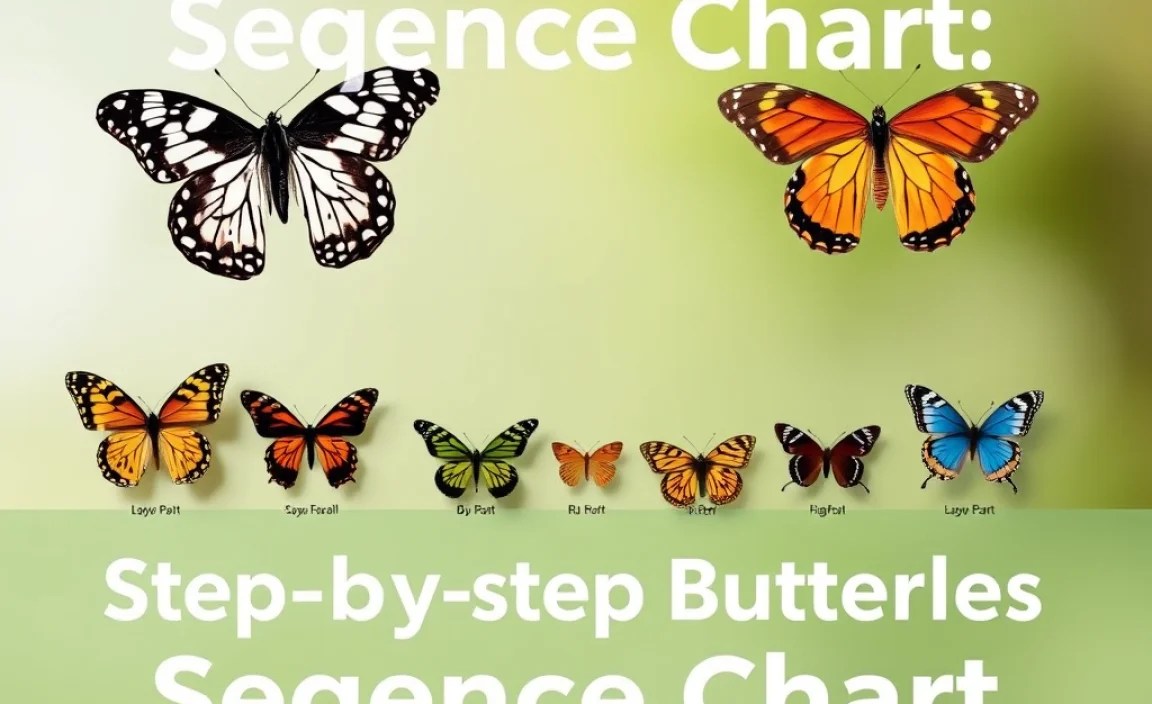
Now that you have your chart, here’s how to use it effectively:
Step 1: Observe the Butterfly
Take a good look at the butterfly before it flies away. Note its size, color, wing patterns, and any distinctive markings. A pair of binoculars can be helpful for getting a closer look without disturbing the butterfly. Pay attention to the habitat as well. Was it in a garden, a meadow, or a forest?
Step 2: Start with the First Question
Begin at the top of your sequence chart and answer the first question. For example, “What is the dominant color of the butterfly’s wings?”
Step 3: Follow the Sequence
Based on your answer, follow the corresponding path in the chart. Each answer will lead you to another question or a possible identification.
Step 4: Eliminate Possibilities
As you answer each question, you’ll eliminate butterfly species that don’t match the observed characteristics. This process narrows down the possibilities until you arrive at a likely identification.
Step 5: Confirm with Your Field Guide
Once you’ve reached a potential identification, confirm it by comparing your observations with the images and descriptions in your field guide. Pay close attention to the details of wing patterns, size, and habitat.
Step 6: Record Your Findings
Keep a record of the butterflies you identify, along with the date, location, and any interesting observations. This not only helps you track your progress but also contributes to citizen science efforts.
Tips for Accurate Butterfly Identification
Here are some additional tips to improve your butterfly identification skills:
- Consider the Season: Some butterfly species are only active during certain times of the year.
- Observe the Underside of the Wings: The underside can have different patterns than the upperside, which can aid in identification.
- Learn Butterfly Behavior: Some butterflies have distinctive flight patterns or feeding habits.
- Join a Butterfly Group: Local butterfly conservation groups offer guided walks and workshops.
- Practice Regularly: The more you practice, the better you’ll become at identifying butterflies.
Butterfly Identification Resources
Here’s a list of resources that can help you further improve your skills in butterfly identification:
- Books and Field Guides:
- “Butterflies of Britain and Europe” by Tom Tolman and Richard Lewington
- “Collins Butterfly Guide” by Tom Tolman
- “Field Guide to Butterflies of Britain and Ireland” by Jeremy Thomas and Richard Lewington
- Websites:
- Butterfly Conservation: Offers identification guides, species information, and conservation advice.
- UK Butterflies: Provides detailed information and photographs of UK butterfly species.
- Euro Butterflies: Features information on butterflies across Europe.
- Apps:
- iButterfly: An app for identifying butterflies using image recognition.
- Picture Insect: Another app that can identify butterflies and other insects from photos.
- Organizations:
- Local butterfly conservation groups: Participate in guided walks and workshops.
Attracting Butterflies to Your Garden
Once you can identify butterflies, you might want to attract them to your garden! Here’s how:
- Plant Nectar-Rich Flowers: Buddlejas, lavender, and Verbena are great choices.
- Provide Host Plants: Caterpillars need specific plants to feed on, such as nettles for Red Admirals and Holly for Holly Blues.
- Offer a Water Source: A shallow dish of water with pebbles for butterflies to land on is ideal.
- Avoid Pesticides: Pesticides can harm or kill butterflies and other beneficial insects.
- Create Shelter: Plant shrubs and trees to provide shelter from wind and rain.
Table: Host Plants for European Butterflies
| Butterfly Species | Host Plant |
|---|---|
| Swallowtail (Papilio machaon) | Wild Carrot, Fennel, Rue |
| Red Admiral (Vanessa atalanta) | Nettles |
| Painted Lady (Vanessa cardui) | Thistles, Mallows |
| Orange-tip (Anthocharis cardamines) | Garlic Mustard, Honesty |
| Holly Blue (Celastrina argiolus) | Holly, Ivy |
FAQ About European Butterfly Identification
1. What is the best field guide for European butterflies?
The “Butterflies of Britain and Europe” by Tom Tolman and Richard Lewington is highly recommended for its comprehensive coverage and detailed illustrations.
2. How can I tell the difference between a male and female butterfly?
In many species, males and females have different wing patterns or colors. For example, male Common Blue butterflies are bright blue, while females are brown with blue scales. Your field guide will provide specific details for each species.
3. What are some common mistakes people make when identifying butterflies?
Common mistakes include not considering the size of the butterfly, focusing only on the upperside of the wings, and ignoring the habitat. Always double-check your identification with a field guide.
4. Are there any apps that can help me identify butterflies?
Yes, apps like iButterfly and Picture Insect use image recognition to identify butterflies from photos. However, it’s always best to confirm the identification with a field guide.
5. How can I contribute to butterfly conservation?
You can contribute by planting butterfly-friendly gardens, avoiding pesticides, supporting butterfly conservation organizations, and reporting your butterfly sightings to citizen science projects.
6. What should I do if I find an injured butterfly?
If you find an injured butterfly, you can try offering it a sugar-water solution (one part sugar to four parts water) on a cotton ball. Place the butterfly in a safe, sheltered spot and allow it to recover. If the injury is severe, it may be best to let nature take its course.
7. How can I attract more butterflies to my garden?
Plant a variety of nectar-rich flowers that bloom throughout the butterfly season. Include host plants for caterpillars, provide a water source, and avoid using pesticides.
Conclusion
Creating and using a butterfly sequence chart is a fantastic way to deepen your understanding and appreciation of these amazing creatures. By systematically observing their characteristics and comparing them to the chart, you’ll become a confident butterfly identifier in no time. So grab your field guide, head out to your garden or local park, and start exploring the wonderful world of European butterflies. Happy butterflying!


