
European Butterfly Host Plant List: The Ultimate Guide

Choosing the right plants is key to attracting beautiful butterflies to your garden. The caterpillars of European butterflies each have their favourite plants to munch on. This list will help you discover which plants support these amazing creatures, so you can create a thriving butterfly habitat. You’ll learn about native plants that provide the perfect food source for caterpillars, ensuring they grow into healthy, colourful butterflies.
Have you ever wondered how to bring more butterflies to your garden? It’s a common question for nature lovers in Europe! You might be planting beautiful flowers, but still not seeing many butterflies fluttering around. The secret is to provide food for their caterpillars. These tiny creatures need specific plants to grow and transform into the butterflies we adore. Don’t worry, creating a butterfly-friendly garden is easier than you think! We’ll explore a list of host plants that will turn your garden into a butterfly paradise, where you can watch these magical creatures thrive. Let’s get started and make your garden a butterfly haven!
Why Host Plants Matter for European Butterflies

Butterflies are more than just pretty visitors to our gardens; they’re an essential part of the ecosystem. As pollinators, they help plants reproduce, contributing to biodiversity and a healthy environment. However, butterfly populations are declining due to habitat loss and pesticide use. By planting the right host plants, we can directly support these vital insects and help them thrive.
A host plant is a specific type of plant that a butterfly lays its eggs on. When the eggs hatch, the caterpillars feed on the leaves of this plant. Each butterfly species has its own preferred host plants, and without these, the caterpillars cannot survive. Understanding and providing these host plants is crucial for butterfly conservation.
The Butterfly Life Cycle and Host Plants
To understand why host plants are so important, let’s take a quick look at the butterfly life cycle:
- Egg: The butterfly lays its eggs on a host plant.
- Larva (Caterpillar): The egg hatches into a caterpillar, which feeds voraciously on the host plant.
- Pupa (Chrysalis): The caterpillar transforms into a pupa, or chrysalis, often attached to the host plant or nearby.
- Adult Butterfly: The pupa metamorphoses into a butterfly, which emerges and flies off to reproduce.
As you can see, the caterpillar stage is entirely dependent on the host plant. Without the right plant, the caterpillar cannot grow and develop into a healthy butterfly. This is why providing a variety of host plants is essential for supporting a diverse butterfly population in your garden.
Key European Butterfly Host Plants

Now, let’s dive into a list of specific host plants that support common European butterfly species. This list is designed to help you choose the right plants for your region and attract a variety of butterflies to your garden. Remember to select plants that are native to your area, as these are best adapted to the local climate and will provide the most benefit to local butterfly populations.
Nettle (Urtica dioica)
The common nettle is a powerhouse when it comes to supporting butterflies. Despite its stinging reputation, it’s a favourite of several butterfly species:
- Peacock Butterfly (Aglais io): The Peacock butterfly is known for the distinctive eyespots on its wings.
- Small Tortoiseshell (Aglais urticae): A very common and widespread butterfly.
- Red Admiral (Vanessa atalanta): A migratory butterfly with striking red markings.
- Comma (Polygonia c-album): Recognizable by the small white “comma” mark on its underwing.
Growing Tips: Nettles are easy to grow in a sunny or partially shaded spot. They prefer moist soil but can tolerate a range of conditions. Consider planting them in a contained area to prevent them from spreading too aggressively. You can also harvest nettles for culinary use, leaving plenty for the caterpillars.
Thistles (Cirsium and Carduus species)
Thistles might seem like weeds, but they are valuable host plants for several butterfly species:
- Painted Lady (Vanessa cardui): A migratory butterfly that can be found throughout Europe.
- Silver-spotted Skipper (Hesperia comma): Found in grasslands and open areas with plenty of sunshine.
Growing Tips: Thistles prefer sunny locations and well-drained soil. They are drought-tolerant and relatively easy to grow. Be mindful of their prickly nature when planting and maintaining them. Check local regulations as some thistle species may be considered noxious weeds.
Bird’s-foot Trefoil (Lotus corniculatus)
This low-growing plant is a favourite of several blue butterfly species:
- Common Blue (Polyommatus icarus): One of the most widespread blue butterflies in Europe.
- Adonis Blue (Lysandra bellargus): A vibrant blue butterfly found in chalk grasslands.
- Silver-studded Blue (Plebejus argus): Prefers heathland and grassland habitats.
Growing Tips: Bird’s-foot trefoil thrives in sunny locations with well-drained soil. It’s a nitrogen-fixing plant, which means it can improve soil fertility. It’s also a good choice for rock gardens and other dry areas.
Buckthorns (Rhamnus species)
Buckthorns are essential host plants for the Brimstone butterfly:
- Brimstone (Gonepteryx rhamni): A long-lived butterfly with bright yellow wings (males) or greenish-white wings (females).
Growing Tips: Buckthorns are shrubs or small trees that prefer sunny or partially shaded locations. They are adaptable to a range of soil types. Be aware that some buckthorn species are considered invasive in certain regions, so choose native species whenever possible.
Violets (Viola species)
Violets are the primary host plant for fritillary butterflies:
- High Brown Fritillary (Argynnis adippe): A large fritillary butterfly found in woodlands and grasslands.
- Dark Green Fritillary (Argynnis aglaja): Another common fritillary found in similar habitats.
- Small Pearl-bordered Fritillary (Boloria selene): Prefers damp meadows and woodlands.
Growing Tips: Violets prefer moist, shady locations. They are relatively easy to grow and can spread to form a ground cover. Choose native violet species to support local butterfly populations.
Grasses (Various species)
Many grass species serve as host plants for various skipper butterflies:
- Large Skipper (Ochlodes sylvanus): A common skipper butterfly found in grasslands and meadows.
- Small Skipper (Thymelicus sylvestris): Similar to the Large Skipper, but smaller in size.
- Essex Skipper (Thymelicus lineola): A widespread skipper butterfly found in grassy areas.
Growing Tips: Allow areas of your garden to grow wild with native grasses. This provides habitat and food for skipper caterpillars. Avoid using pesticides or herbicides in these areas.
Other Notable Host Plants
Here’s a table summarizing additional host plants and the butterflies they support:
| Host Plant | Butterfly Species | Growing Tips |
|---|---|---|
| Daisies (Bellis perennis) | Painted Lady (Vanessa cardui) | Easy to grow in lawns and meadows; prefers sunny locations. |
| Clovers (Trifolium species) | Common Blue (Polyommatus icarus) | Nitrogen-fixing plants that thrive in sunny, well-drained soil. |
| Willow (Salix species) | Purple Emperor (Apatura iris) | Prefers moist soil and sunny to partially shaded locations. Can grow into large trees. |
| Rock-rose (Helianthemum nummularium) | Brown Argus (Aricia agestis) | Prefers dry, sunny locations with well-drained soil. Ideal for rock gardens. |
| Plantain (Plantago lanceolata) | Glanville Fritillary (Melitaea cinxia) | Common in grasslands and meadows; tolerates a range of soil conditions. |
Creating a Butterfly-Friendly Garden
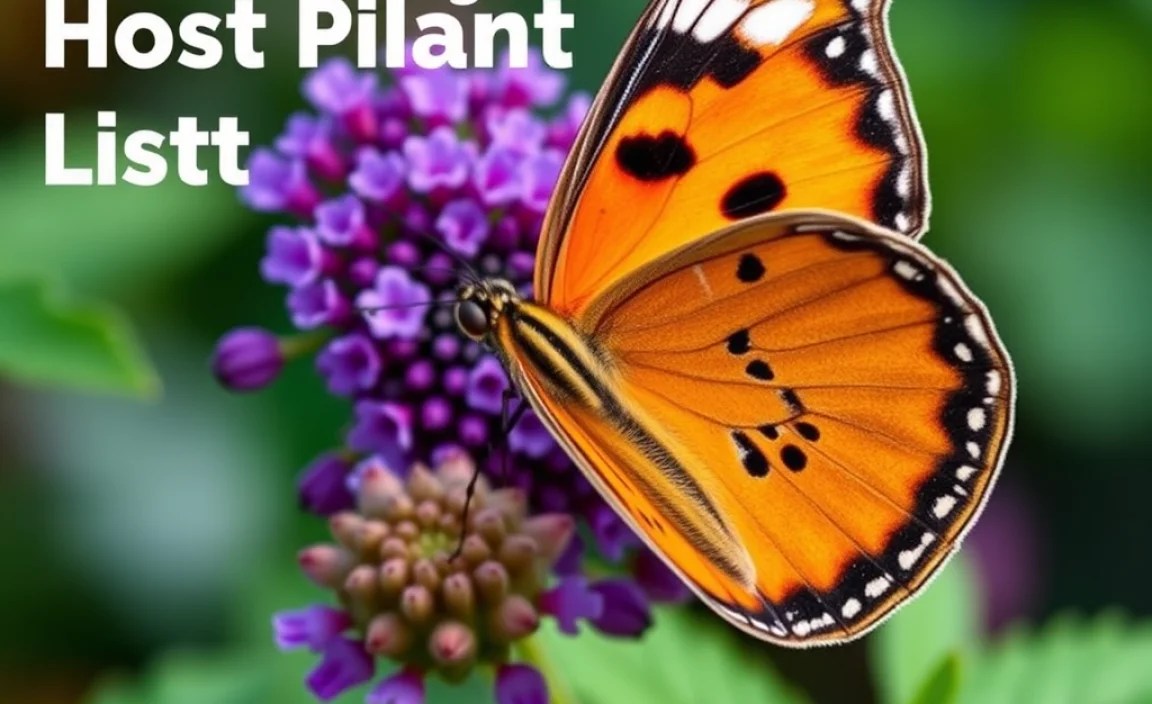
Now that you know which plants to include, let’s talk about how to create a butterfly-friendly garden. Here are some tips to help you attract and support butterflies:
- Plant Native Species: Native plants are best adapted to your local climate and will provide the most benefit to local butterfly populations.
- Provide a Variety of Host Plants: Plant a mix of different host plants to attract a wider range of butterfly species.
- Include Nectar Sources: Butterflies need nectar for energy. Plant flowers that provide nectar throughout the growing season. Good choices include lavender, buddleja (butterfly bush), and Verbena.
- Avoid Pesticides: Pesticides can harm or kill caterpillars and butterflies. Choose organic gardening methods whenever possible.
- Provide Water: Butterflies need water to drink. Create a shallow dish of water with pebbles or stones for them to land on.
- Offer Shelter: Provide shrubs and trees for butterflies to shelter from the wind and rain.
- Leave Some Areas Wild: Allow some areas of your garden to grow wild with native grasses and wildflowers. This provides habitat and food for caterpillars.
Designing Your Butterfly Garden
When designing your butterfly garden, consider the following:
- Sunlight: Most butterflies prefer sunny locations. Choose a spot that receives at least six hours of sunlight per day.
- Shelter: Provide shelter from the wind with shrubs or trees.
- Water Source: Include a shallow dish of water with pebbles or stones.
- Planting Arrangement: Plant host plants and nectar sources in clusters to make them easier for butterflies to find.
- Continuous Bloom: Choose plants that bloom at different times of the year to provide a continuous source of nectar.
Here’s a sample table showing bloom times for nectar plants that will support butterflies:
| Plant | Bloom Time | Color | Notes |
|---|---|---|---|
| Buddleja (Butterfly Bush) | Summer to Autumn | Purple, Pink, White | Attracts many butterflies; prune in spring. |
| Lavender (Lavandula) | Summer | Purple | Fragrant and drought-tolerant. |
| Verbena | Summer to Autumn | Purple, Pink, Red | Long blooming period; attracts hummingbirds too. |
| Sedum (Stonecrop) | Autumn | Pink, Red | Late-season nectar source; attracts bees and butterflies. |
| Phlox | Summer | Various | Fragrant flowers; attracts butterflies and hummingbirds. |
Frequently Asked Questions (FAQs)
Here are some frequently asked questions about European butterfly host plants:
What are host plants?
Host plants are specific plants that butterfly caterpillars eat. Butterflies lay their eggs on these plants, and when the eggs hatch, the caterpillars feed on the leaves to grow.
Why are host plants important?
Host plants are essential for butterfly survival. Without the right host plants, caterpillars cannot grow and develop into healthy butterflies. Providing host plants is crucial for butterfly conservation.
How do I choose the right host plants for my garden?
Choose plants that are native to your area. Native plants are best adapted to the local climate and will provide the most benefit to local butterfly populations. Research which butterfly species are common in your area and select host plants that support them.
Where can I find native host plants?
You can find native host plants at local nurseries that specialize in native plants. You can also check with local conservation organizations or botanical gardens for recommendations.
How can I protect host plants from being eaten by caterpillars?
It’s natural for caterpillars to eat host plants! In fact, that’s the whole point. However, if you’re concerned about the plants being completely defoliated, you can plant extra host plants or move some of the caterpillars to other plants.
Can I use pesticides in my butterfly garden?
It’s best to avoid using pesticides in your butterfly garden, as they can harm or kill caterpillars and butterflies. Choose organic gardening methods whenever possible.
What else can I do to attract butterflies to my garden?
In addition to providing host plants, you can also plant nectar sources, provide water, offer shelter, and leave some areas of your garden wild.
Conclusion
By understanding the importance of host plants and providing them in your garden, you can make a real difference in supporting European butterfly populations. Planting a butterfly garden is not only a beautiful and rewarding experience, but it’s also a valuable contribution to conservation. So, get out there, choose your host plants, and create a butterfly paradise in your own backyard. You’ll be amazed at the beauty and diversity that you attract! Happy gardening, and happy butterfly watching!


